
— Topics —
Dieting & Weight Loss
2025.08.15
The Spread of Dieting May Be Fueling the Rise in Obesity
Summary
(1) The prevalence of dieting has increased over the past several decades, paralleling the rising prevalence of overweight and obesity. This has raised concerns that dieting may, paradoxically, be contributing to obesity.
(2) Some observational studies suggest that the association between dieting and weight gain may be at least partly causal. However, some researchers argue that dieting is merely a proxy marker for a tendency to overeat.
(3) Several prospective studies have suggested that dieting for weight loss among adolescents, middle-aged women, and even individuals of normal weight is a strong predictor of future weight gain.
(4) In studies of adolescents, boys and girls who continued unhealthy weight-control behaviors—such as fasting, skipping meals, eating very little, or using food substitutes—showed the greatest increases in BMI by the 10-year follow-up.
Discussion
(5) Observational studies alone cannot establish a causal relationship between dieting and weight gain.
However, longitudinal follow-up studies and twin studies suggest that dieting itself may contribute to subsequent weight gain. In particular, people who engage in unhealthy weight-control behaviors have repeatedly been reported to experience significantly greater subsequent weight gain.
Conclusion
(6) Not all dieting leads to weight gain. However, unhealthy weight-control behaviors practiced by some individuals may increase the risk of subsequent weight gain.
(7) Recent research has shown that severe dietary restriction accompanied by substantial weight loss can trigger biological starvation responses involving changes in metabolism, hormones, and the nervous system. These responses may contribute to weight regain after weight loss and, in some individuals, even to weight gain beyond the pre-weight-loss level.
In addition, unhealthy weight-control behaviors may promote intestinal starvation, which could lead to an upward shift in the body-weight set point.
【 Full Text 】
-
Contents
-
- Recent background on dieting and obesity
- Issues and points to consider in observational studies
- Does dieting lead to weight gain?
- Conclusion
Introduction
In recent years, the number of people dieting for weight loss has been increasing worldwide. However, some have raised concerns that dieting itself may be accelerating the rise in obesity.
For example, some female actors and television announcers appear to have gained weight compared to the past. However, it is unlikely that they are habitually overeating; rather, they may be restricting their food intake in an effort to manage their weight.
In this article, I would like to explore whether the spread of dieting may be related to the rise in obesity, based on findings from observational and intervention studies.
1. Recent background on dieting and obesity
(1) In 1992, a panel of experts convened by the U.S. National Institutes of Health concluded that, with continued participation in weight-loss programs conducted in controlled settings, participants typically lose about 10% of their body weight.
However, within one year after weight loss, one-third to two-thirds of the lost weight is regained, and within five years, almost all of it is regained [1].
Studies on long-term outcomes have also shown that at least one-third of dieters regain more weight than they lost [2]. This has raised concerns that dieting may, paradoxically, produce outcomes that are directly opposite to its original purpose [2,3].
(2) The 1983 book “Dieting Makes You Fat” proposed the idea that dieting to lose weight is counterproductive for weight control because people may regain more fat than they lose with each cycle of weight loss and regain [4]. Since then, whether dieting contributes to long-term weight gain remains a controversial and actively debated topic among scientists [5,6,7].
(3) As of 1998, Americans spent over $33 billion annually on diet-related products and services [8]. Nevertheless, the prevalence of obesity has steadily increased from 30.5% (2000) to 35.7% (2010) and 42.4% (2018) [9].
The prevalence of dieting has also increased over the past several decades, paralleling the rise in the prevalence of overweight and obesity (see Table 1) [10].
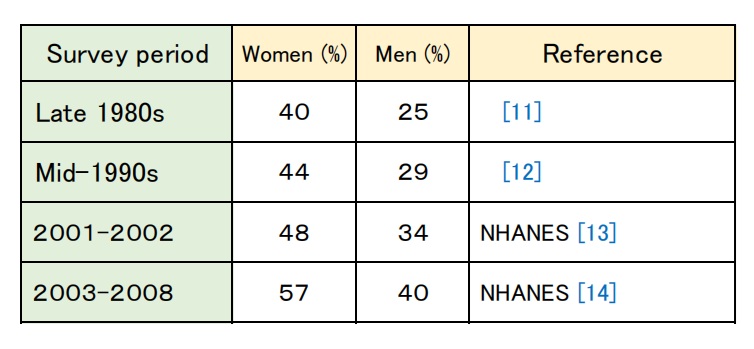
Table 1: Trends in the prevalence of dieting in the U.S.
・A cross-sectional survey conducted in England (1997-2013) found that the proportion of people attempting to lose weight increased from 39% (1997) to 47% (2013).
Across all BMI categories, the proportion of individuals attempting to lose weight showed an upward trend throughout the study period [15].
Table 2 shows the 2013 figures by BMI category.
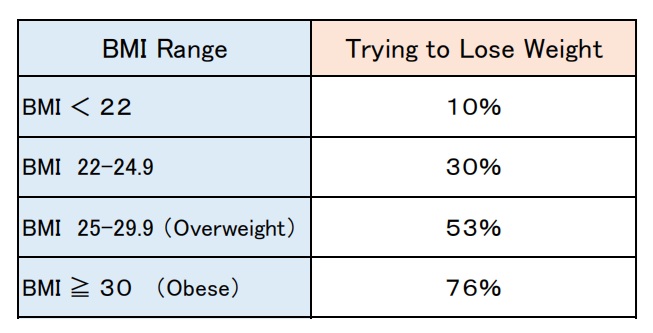
Table 2: Prevalence of weight loss attempts (2013,UK)
(4) Thus, the proportion of people attempting to lose weight has increased alongside the rising prevalence of overweight and obesity. However, this observation alone does not establish a causal relationship between the two.
Some researchers have suggested that the association between dieting and weight gain is, at least in part, causal [16,17]. Others, however, have argued that dieting is merely a proxy marker for individuals who are already prone to weight gain, and that without dieting, they would likely have gained even more weight [18].
(5) Several prospective studies have suggested that dieting is a strong predictor of future weight gain among adolescents [17,19,20], middle-aged women [21], and even individuals who were initially of normal weight [5,21,22].
・A 10-year prospective study conducted in Minnesota (1998–2009) followed 1,902 adolescents (819 males and 1,083 females) and assessed dieting status and changes in BMI at five-year intervals.
The study found that both boys and girls who reported dieting or unhealthy weight-control behaviors (Note 1) at both baseline and the 5-year follow-up experienced greater increases in BMI by the 10-year follow-up than those who did not diet [17].

Photo Credit: Freepik (photo by Prostooleh)
Note 1: Unhealthy weight-control behaviors include weight-loss practices that are generally not recommended, such as fasting, skipping meals, eating very little, and using food substitutes or diet pills.
In particular, “skipping meals” and “eating very little” were the most commonly reported unhealthy weight-control behaviors and were significantly associated with greater increases in BMI in both sexes.
The use of food substitutes (e.g. powdered products or special beverages) among males and the use of diet pills among females were associated with greater subsequent increases in BMI.
Interestingly, among girls who were overweight (25 ≤ BMI < 30) at baseline, those who continued to engage in unhealthy weight-control behaviors experienced the greatest increase in BMI over the 10-year follow-up (more than 5 BMI units), whereas those who never engaged in such behaviors showed only a minimal increase in BMI [17].
In conclusion, these findings suggest that dieting and unhealthy weight-control behaviors during adolescence may contribute to long-term weight gain [17].
(6) In 2003, an analysis of data from the 1998 National Health Interview Survey described the prevalence of specific weight-loss practices among U.S. adults (see Table 3).
Among those attempting to lose weight, only one-third reported reducing their caloric intake while increasing their physical activity [23].
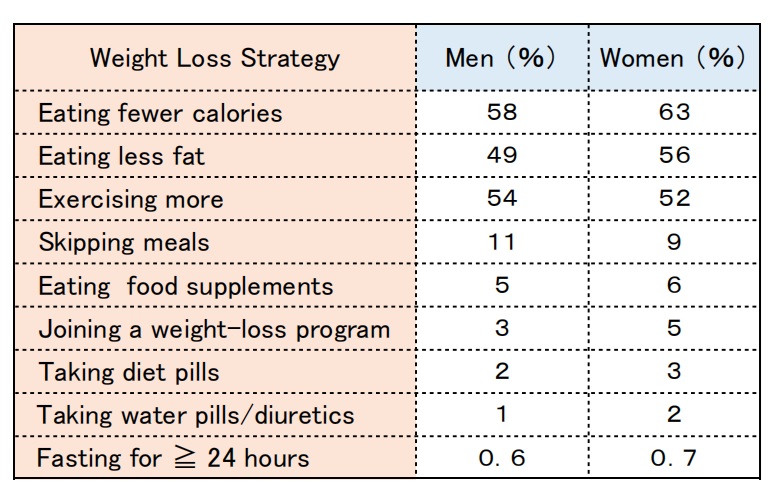
Table 3: The prevalence of weight loss strategies among U.S. adults (1998)
2. Issues and points to consider in observational studies
Previous observational studies on dieting and subsequent weight change have yielded inconsistent findings [22].
Many longitudinal observational studies have reported subsequent weight gain among self-reported dieters [17,20,21,22]. On the other hand, some studies have also reported that dieting predicts both weight loss and weight gain [24,25]. Several factors may help explain these differences in the findings.
(1) What type of dieting was followed ?
Many studies have examined whether participants were dieting at baseline, or had a history of dieting. However, relatively few have investigated the specific methods used for weight loss [21,22,26].
In addition, the terms “dieting” and “weight-loss attempts” are somewhat ambiguous and may be interpreted differently by different individuals [17].
People who adopt healthy eating and exercise habits—for example, eating more natural foods such as vegetables, reducing ultra-processed foods, eating breakfast, and exercising regularly—may be able to achieve and maintain weight loss.
In contrast, those who engage in unhealthy weight-control behaviors, such as skipping meals, eating very little, or using food substitutes (e.g. diet shakes or nutritional drinks), may experience only temporary weight loss, fail to maintain it over the long term, and eventually regain the weight.
(2) Study duration and the timing of dieting
The duration of follow-up and the timing of dieting may also influence whether long-term weight change can be evaluated accurately.
Several studies have assessed changes in body weight or BMI several years later (e.g. 2, 5, or 10 years) based on participants' dieting status at baseline [20,21,22,26].
However, people who repeatedly go on and off diets are more likely to experience substantial fluctuations in body weight.
From the perspective of body-weight homeostasis, as described by the body-weight set-point theory, individuals who were dieting at baseline may have been temporarily below their natural body weight (set point). Simply discontinuing the diet could therefore lead to subsequent weight gain.
Conversely, individuals who began dieting shortly before the end of the follow-up period may have experienced substantial weight loss because of the temporary effects of dieting.
Furthermore, when the follow-up period is as long as five or ten years, weight-control behaviors that were started or discontinued during that interval may not have been captured.
*Although not discussed here, observational studies also require caution regarding the limitations of self-reported data and the influence of confounding factors that may contribute to weight gain.
Moreover, in studies of adolescents, the natural increases in muscle mass and body weight that occur during growth should also be taken into account.
3. Does dieting lead to weight gain?
In conclusion, observational studies alone cannot establish a causal relationship between dieting and an increased risk of weight gain. However, for the following reasons, I believe that dieting is likely to contribute to weight gain.
(1) Is dieting merely a proxy marker?
One interpretation is that dieting is simply a proxy marker reflecting the global trend toward increasing body weight, rather than a cause of weight gain itself. From this perspective, it is argued that without dieting, people would gain even more weight [18].
However, the 10-year study of adolescents discussed in Section 1(5) made it possible to compare the weight trajectories of participants who were dieting at baseline but had stopped dieting five years later with those who continued dieting.
The researchers found that those who stopped dieting gained substantially less weight than those who continued dieting. Based on these findings, they did not support the claim that people would gain even more weight if they did not diet [17].
(2) Are people with a genetic predisposition to obesity more likely to diet?
Another explanation for the association regarding dieting and obesity is that dieting itself does not cause subsequent weight gain. Rather, people who are genetically prone to obesity may simply be more likely to go on a diet [6].
However, the 10-year study of adolescents yielded findings that were not consistent with this claim.
Among girls who were already overweight at baseline, those who continued to engage in unhealthy weight-control behaviors showed significantly greater increases in BMI than those who had never engaged in such behaviors. The researchers suggested that dieting itself may contribute to subsequent weight gain [17].
Furthermore, a longitudinal twin study conducted in Finland examined changes in body weight among twins with different numbers of intentional weight-loss episodes of at least five kg.
Although the study could not rule out the influence of genetic and shared family factors on weight gain, it also suggested that dieting itself may contribute to subsequent weight gain [16].
(3) Mechanisms that promote weight rebound after weight loss
Recent research has greatly improved our understanding of energy homeostasis and the mechanisms that regulate body weight.
Severe dietary restriction accompanied by substantial weight loss can trigger biological starvation responses involving changes in metabolism, hormones, and the nervous system, potentially leading to increased appetite and overeating. As a result, body weight tends to return toward its previous level and may even exceed the pre-weight-loss level in some individuals [27,28].
In addition, fasting for weight control (going without food for 24 hours) has been suggested to be associated with a greater risk of developing binge-eating disorder in the future than less severe dieting behaviors [29].
Furthermore, an overshoot in body weight during the recovery period has been documented in normal-weight participants in both the classic Minnesota Starvation Experiment and the U.S. Army Ranger multistressor study [30,31].
(4) A possible link to intestinal starvation
My intestinal starvation theory suggests that when all ingested food has been completely digested within the intestinal tract, the body may perceive this as a state in which no food is present. This may be described as a modern form of hunger that can occur even in affluent societies—a condition that may have become more likely with advances in food processing and the spread of ultra-processed foods.
Calorie-restricted dieting, especially unhealthy weight-control behaviors such as skipping meals, eating very little, or using food substitutes instead of regular meals, may further promote this intestinal starvation.
4. Conclusion
Not all dieting leads to weight gain. Some people successfully lose weight and maintain their weight loss by adopting healthy dietary patterns and regular physical activity.
In fact, adherence to the Mediterranean diet has been reported to be inversely associated with the risk of overweight, obesity, and long-term weight gain [32].

Photo Credit: Freepik (Photo by Katemangostar)
In contrast, people who adopt unhealthy weight-loss strategies—such as fasting, skipping meals, eating very little, or using food substitutes—have repeatedly been reported to experience significantly greater subsequent weight gain than those who do not diet or who follow healthy weight-loss strategies [17,33].
These approaches may therefore lead to outcomes that are contrary to their original purpose.
Recent research has shown that severe dietary restriction accompanied by substantial weight loss can trigger biological starvation responses involving changes in metabolism, hormones, and the nervous system [27,28,34]. These changes may help explain why body weight often returns after weight loss and, in some cases, even exceeds the pre-weight-loss level.
In addition to these biological responses, I believe that unhealthy weight-control behaviors, particularly dietary restriction, are also likely to promote intestinal starvation, thereby contributing to an upward shift in the body-weight set point.
<References>
[1] Methods for voluntary weight loss and control. NIH Technology Assessment Conference Panel. Ann Intern Med. 1992 Jun 1;116(11):942-9.
[2] Mann T et al. Medicare's search for effective obesity treatments: diets are not the answer. Am Psychol. 2007 Apr;62(3):220-33.
[3] Bacon L, Aphramor L. Weight science: evaluating the evidence for a paradigm shift. Nutr J. 2011 Jan 24;10:9.
[4]Cannon G, Einzig H. Dieting makes you fat. London: Century Publishing; 1983.
[5] Jacquet P et al. How dieting might make some fatter: modeling weight cycling toward obesity from a perspective of body composition autoregulation. Int J Obes (Lond). 2020 Jun;44(6):1243-1253.
[6] Hill AJ. Does dieting make you fat. Br J Nutr. 2004 Aug;92 Suppl 1:S15-8.
[7] Lowe MR. Dieting: proxy or cause of future weight gain? Obes Rev. 2015 Feb;16 Suppl 1:19-24.
[8] Cleland R et al. Commercial weight loss products and programs: what consumers stand to gain and lose. Crit Rev Food Sci Nutr. 2001 Jan;41(1):45-70.
[9] National Center for Health Statistics, National Health and Nutrition Examination Survey, 1999–2018.
[10] Montani JP et al. Dieting and weight cycling as risk factors for cardiometabolic diseases: who is really at risk? Obes Rev. 2015 Feb;16 Suppl 1:7-18.
[11] Williamson DF et al. Weight loss attempts in adults: goals, duration, and rate of weight loss. Am J Public Health. 1992 Sep;82(9):1251-7.
[12]Serdula MK et al. Prevalence of attempting weight loss and strategies for controlling weight. JAMA. 1999 Oct 13;282(14):1353-8.
[13] Weiss EC et al. Weight-control practices among U.S. adults, 2001-2002. Am J Prev Med. 2006 Jul;31(1):18-24.
[14] Yaemsiri S et al. Perceived weight status, overweight diagnosis, and weight control among US adults: the NHANES 2003-2008 Study. Int J Obes (Lond). 2011 Aug;35(8):1063-70.
[15] Piernas C et al. Recent trends in weight loss attempts: repeated cross-sectional analyses from the health survey for England. Int J Obes (Lond). 2016 Nov;40(11):1754-1759.
[16]Pietiläinen KH et al. Does dieting make you fat? A twin study. Int J Obes (Lond). 2012 Mar;36(3):456-64.
[17] Neumark-Sztainer D et al. Dieting and unhealthy weight control behaviors during adolescence: associations with 10-year changes in body mass index. J Adolesc Health. 2012 Jan;50(1):80-6.
[18] Stice E, Presnell K. Dieting and the eating disorders. In: Agras WS, editor. The Oxford Handbook of Eating Disorders. Oxford University Press; USA: 2010. pp. 148–179.
[19] Neumark-Sztainer D et al. Why does dieting predict weight gain in adolescents? : a 5-year longitudinal study. J Am Diet Assoc. 2007 Mar;107(3):448-55.
[20]Viner RM, Cole TJ. Who changes body mass between adolescence and adulthood? Factors predicting change in BMI:1970 British Birth Cohort. Int J Obes (Lond). 2006 Sep;30(9):1368-74.
[21]Korkeila M et al. Weight-loss attempts and risk of major weight gain: a prospective study in Finnish adults. Am J Clin Nutr. 1999 Dec;70(6):965-75.
[22] Sares-Jäske L et al. Self-report dieting and long-term changes in body mass index and waist circumference. Obes Sci Pract. 2019 Mar 26;5(4):291-303.
[23] Kruger J et al. Attempting to lose weight: specific practices among U.S. adults. Am J Prev Med. 2004 Jun;26(5):402-6.
[24] Bild DE et al. Correlates and predictors of weight loss in young adults: the CARDIA study. Int J Obes Relat Metab Disord. 1996 Jan;20(1):47-55. PMID: 8788322.
[25] Coakley EH et al. Predictors of weight change in men: results from the Health Professionals Follow-up Study. Int J Obes Relat Metab Disord. 1998 Feb;22(2):89-96.
[26] French SA et al. Predictors of weight change over two years among a population of working adults: the Healthy Worker Project. Int J Obes Relat Metab Disord. 1994 Mar;18(3):145-54. PMID: 8186811.
[27]Maclean PS et al. Biology's response to dieting: the impetus for weight regain. Am J Physiol Regul Integr Comp Physiol. 2011 Sep;301(3):R581-600.
[28]Ochner CN et al. Biological mechanisms that promote weight regain following weight loss in obese humans. Physiol Behav. 2013 Aug 15;120:106-13.
[29]Stice E et al. Fasting increases risk for onset of binge eating and bulimic pathology: a 5-year prospective study. J Abnorm Psychol. 2008 Nov;117(4):941-6.
[30] Keys, A, Brozek, J, Henschel, A et al. (1950) The Biology of Human Starvation. Minnesota: University of Minnesota Press.
[31] Nindl BC et al. (1997) Physical performance and metabolic recovery among lean, healthy men following a prolonged energy deficit. Int J Sports Med 18, 317–324.
[32] Lotfi K et al. Adherence to the Mediterranean Diet, Five-Year Weight Change, and Risk of Overweight and Obesity: A Systematic Review. Adv Nutr. 2022 Feb 1;13(1):152-166.
[33]Savage JS, Birch LL. Patterns of weight control strategies predict differences in women's 4-year weight gain. Obesity (Silver Spring). 2010 Mar;18(3):513-20.
[34] Mann T et al. Promoting Public Health in the Context of the "Obesity Epidemic": False Starts and Promising New Directions. Perspect Psychol Sci. 2015 Nov;10(6):706-10.
2024.02.07
A Low-Carb Diet in Japan:Reducing Carbohydrates Alone Is Not the Only Crucial Factor
-
Contents
-
<Introduction>
- What’s Locabo?
- Summary of the effects of “Locabo"
- The increasing prevalence of diabetes in Japan
- Is controlling insulin the key to weight loss?
- The widespread issue of unbalanced and low-quality diets in Japan
<The bottom line>
<Introduction>
In Japan, since around 2015, the low-carb diet-we call "Locabo" based on the English term "a low-carb"-has been catching on among many people. Japan is traditionally a rice-eating culture, but after World War II, more and more people preferred bread and noodles, and with increasingly westernized diets, many feel that we are gaining weight as well.
This time, I’d like to introduce the Locabo diet in Japan, which is believed to be effective not only for losing weight but also for lowering abnormal blood sugar levels and other lifestyle diseases.
<My stance: I will approach the issues of obesity and blood sugar abnormalities separately.>
Generally, experts advocating for carbohydrate restriction seem to believe that the cause of obesity lies not in excessive caloric intake but in carbohydrates (sugars) that elevate blood sugar levels and stimulate insulin (*1) secretion (the carbohydrate-insulin model).
Additionally, it is believed that prolonged insulin resistance or decreased insulin secretion capacity, can lead to abnormal glucose metabolism, ultimately resulting in the development of lifestyle-related diseases such as diabetes.
In other words, both obesity and symptoms like blood sugar abnormalities are thought to be part of a series of events centered around insulin. However, I believe that obesity is caused by different mechanisms related to carbohydrates, so I would like to explain them separately.
(*1) Insulin is a hormone that lowers the level of glucose in the blood. It's released into the blood by the pancreas when the glucose level goes up. Insulin helps glucose enter the body's cells, where it can be used for energy or stored for future use.
1.What’s Locabo?
"In Japan, the phrase “carbohydrate restriction diet” has been generally used, but the word “restriction” has a somewhat negative image. Therefore, we had to use some different words. We came up with the new word “Locabo” after the English phrase “low-carb” and then it spread throughout Japan.
Locabo is not strict but rather a loose carbohydrate restriction. By definition, the diet tries to keep the carbohydrate intake amount per day to around seventy to one hundred and thirty grams in total, by taking twenty to forty grams per meal, three times a day and also a dessert or sweets up to ten grams.

The difference from a strict carbohydrate restriction is that by eating at least seventy grams of carbohydrates, it avoids an extremely low-carbohydrate condition that results in “Ketosis.”
Also, a strict carbohydrate restriction diet makes food choices very limited, but Locabo has a variety of foods you can enjoy. As long as you keep adjusting carbohydrate intake, you can eat a variety of foods such as meat, fish, cheese, and vegetable dishes without thinking about calories."
[References: Satoru Yamada. The truth of carbohydrate restriction. Gentosha books, Nov. 2015, Page 114]
2. Summary of the effects of “Locabo"
The leading advocate for promoting low-carb diets in Japan is Dr. Satoru Yamada, and summarizing his thoughts, we get the following points:
(1) When blood sugar levels rise due to meals, insulin is secreted from the pancreas. Excessive insulin secretion may potentially lead to weight gain. Japanese individuals have a weaker ability to secrete insulin compared to Westerners, and many people experience blood sugar abnormalities even if they are not overweight. More than half of those who develop typeⅡdiabetes have a BMI less than twenty-five.
(2) The higher the frequency of insulin secretion and the higher the upper limit of blood sugar levels, the greater the burden on the pancreas. Over time, this burden can lead to impaired insulin secretion and the onset of diabetes. Additionally, sharp fluctuations in blood sugar levels may potentially contribute to aging, cell cancerization, cognitive disorders (Alzheimer's), and an increased risk of developing cardiovascular diseases.
(3) The only factor that raises blood sugar levels is carbohydrates. By adopting a low-carb diet, it is possible to moderate the increase in blood sugar levels.
Nutrients such as proteins, fats, and dietary fiber, aside from carbohydrates, have the ability to suppress a rapid rise in blood sugar.
In other words, fried rice can control the rapid increase in blood sugar more effectively than white rice.

(4) The belief that reducing fat intake is essential for health has been unquestionably accepted in Japan for a long time. However, various data from the twenty-first century has revealed that even if one reduces fat consumption, it may not lead to improvements in blood lipid levels or prevent heart disease and obesity.
While trans fats should be avoided, there is no need to unnecessarily restrict other types of fats. As for the intake of animal fat (saturated fat), such as those found in meat, studies indicate that, when limited to the Japanese population, there is no association with the incidence of myocardial infarction or stroke (data from 2013).
(5) Even with reduced carbohydrate intake, the brain can utilize ketones (produced from fatty acids) as an energy source. In cases of extreme carbohydrate restriction, an accumulation of ketones in the body can lead to a shift in blood acidity, potentially causing a condition known as ketoacidosis. Given the associated risks, it is advisable not to engage in extreme carbohydrate restriction.
(6) Very few individuals can sustain strict caloric limits or a low-fat diet over the long term. A more lenient approach to carbohydrate restriction is easier to adhere to since it doesn't require constant caloric monitoring, and it often yields more favorable results compared to other dietary approaches. It is important to broaden the options for individuals, exploring which dietary approach suits them best.
3.The increasing prevalence of diabetes in Japan
According to the National Health and Nutrition Survey, per capita daily intake of carbohydrates has been consistently decreasing for over sixty years. The daily intake of energy, too, increased until the early 1970’s, but has been on a declining trend since then.
Nevertheless, in recent years, the number of diabetics and latent diabetics with abnormal blood sugar levels continues to rise.
For more detailed data on this trend and other factors I can think of other than carbohydrate intake, please refer to the following article.
【Related article】Diabetes is Increasing Despite Decreased Carbohydrate Intake
4. Is controlling insulin the key to weight loss?
In terms of controlling blood sugar levels, I believe a moderately low-carb diet can be effective. However, what about the issue of obesity?
According to Gary Taubes, the author of "Why We Get Fat," the debate over whether "overeating calories" or "carbohydrates" are the cause of weight gain has been ongoing since the early 1800’s. The reason behind this is that with a low-carb diet, individuals were able to lose weight without worrying about the quantity of other calorie sources such as meat and fats.
This contradicted the calorie theory and faced strong opposition from experts who staunchly believed in it and considered fats harmful to the heart[1], but now it is said that recent intervention studies have demonstrated the significant weight loss effects of a low-carb diet[2], solidifying its position in the field.
Experts who advocate for a low-carb diet seem to believe in the carbohydrate-insulin model, suggesting that carbohydrates cause weight gain by raising blood sugar levels and promoting insulin secretion. According to this model, it is deemed acceptable to consume proteins and fats that do not stimulate insulin secretion, as long as carbohydrates are reduced, in order to compensate for calories. However, I find this explanation to be insufficient.

What I would like to add is as follows: a diet leaning towards easily digestible refined carbohydrates and proteins (processed foods) is rapidly digested. As such a diet continues, you feel hungrier, and intestinal starvation is likely to occer.
The characteristics of carbohydrates (dilution effect, push-out effect) further accelerate the occurrence of intestinal starvation.
(In other words, what is related to intestinal starvation are complex carbohydrates such as starch, rice, and flour, not simple carbohydrates like sugar.)
[Related article]
The Dilution Effect/ Pushing Out Effect of Carbohydrates
Therefore, as a countermeasure, we must do the opposite in order to lose weight; not only to reduce carbohydrates to a certain extent but also to increase the intake of foods that take longer to digest (proteins, fats, dairy products, etc.) and foods rich in fiber, so that undigested food will remain abundant in the intestines. (In this regard, the concept of glycemic index [GI] and glycemic load [GL] is very important.)

While advising to consume unlimited amounts of meat and animal fats (saturated fatty acids) doesn't seem accurate, I believe it is important to combine a variety of foods-low-GI carbohydrates, plant-based proteins such as legumes and nuts, unsaturated fatty acids found in fish and plant oils, dairy products, and fibrous vegetables, etc.-to enhance the feeling of fullness.
As a result, the diet may end up resembling a lenient low-carb diet, but my stance is that carbohydrates are not a direct cause of obesity but rather an indirect factor that can induce intestinal starvation. Therefore, I have reservations about strict carbohydrate restrictions such as the ketogenic diet.
Additionally, even if insulin is considered to promote fat storage, I do not believe it is the fundamental cause of obesity.
Some people who advocate a low-carb diet say, "As long as you adjust your insulin secretion, you can eat anything without worrying about calories, even fatty foods, cheese, and meat. And since that's how you lost weight, it was the carbohydrates, not the caloric intake, that was the reason." I don’t think this explanation is correct.
5. The widespread issue of unbalanced and low-quality diets in Japan
In recent years, as the global rise in obesity becomes a significant concern, I believe that for those who tend to gain weight, easily digestible refined carbohydrates are undeniably central factors contributing to weight gain.
However, not everyone gains weight because they eat carbohydrates; factors such as the type of carbohydrates (those with a high GI value), unbalanced diets, and irregular eating habits (such as skipping breakfast or late-night meals) are also associated with the issue.
For instance, focusing solely on caloric and/or carbohydrate "intake," might make it seem like skipping breakfast or opting for simple meals like cup noodles, "snack bread and rice balls," or fast food for lunch is a reasonable choice. It may even appear that not eating vegetables could be somewhat helpful in reducing a few carbs or calories.
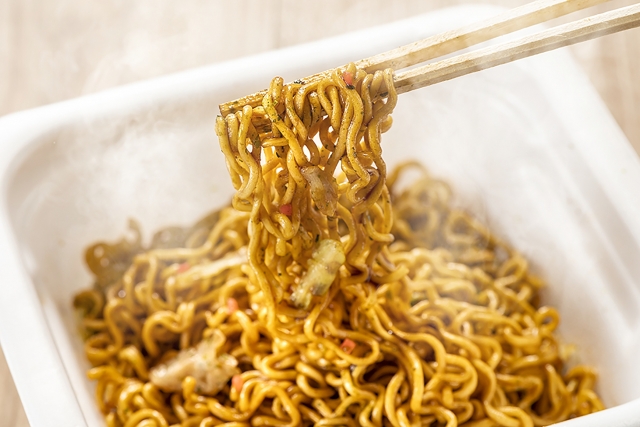
However, repeatedly consuming a “low-quality diet” low in fiber and nutrients, rich in carbohydrates, and experiencing recurrent hunger, could potentially increase the risk of developing diabetes and blood sugar abnormalities as well as obesity, don't you think?
While I cannot provide data, to the best of my knowledge, there has been a significant decline in the "quality of meals" among temporary laborers in factories and workplaces, and low-income individuals in Japan in recent years.
When trying to cut down on food expenses, carbohydrates are the cheapest source of calories available, offering a temporary sense of satisfaction.
The bottom line
(1) and (2) are summarized from the contents of "Diabetes is Increasing Despite Decreased Carbohydrate Intake."
(1) The number of diabetes patients in Japan has been steadily increasing since the estimated count began in 1997, rising from 6.9 million to reach 10 million in 2016. Including pre-diabetics with blood sugar abnormalities, the total exceeds 20 million in 2016 (approximately one in six people). Compared to Western populations, Japanese people have a weaker ability to secrete insulin, and over half of those who develop typeⅡdiabetes have a BMI lower than 25.
(2) In Japan, there has been a decreasing trend in caloric and carbohydrate intake for over fifty years. At least in the context of Japan, the rise in obesity, diabetes, and blood sugar abnormalities cannot be solely explained by the amount of caloric and carbohydrate intake alone. Factors such as high glycemic index (GI) foods, sugars, unbalanced diets, and irregular lifestyles including not eating breakfast, may be related to this increase.
(3) Focusing solely on caloric and/or carbohydrate intake might make it seem reasonable to skip breakfast, opt for quick and easy meals like instant noodles or fast food for lunch, and even consider eliminating vegetables.
However, a low-quality diet skewed towards easily digestible carbohydrates and repeated bouts of hunger, may not only increase the risk of developing health issues such as blood sugar abnormalities but also contribute to obesity.
(4) My stance is that the recent increase in (A) the risk of obesity and (B) the prevalence of blood sugar abnormalities is due to the different properties of carbohydrates.
As for (B), the major influence is how a diet containing carbohydrates raises blood glucose levels and its relationship with insulin. In contrast, (A) is associated with easily digestible carbohydrates diluting the food (nutrients) consumed and, under certain conditions, leading to intestinal starvation.
In short, in my theoretical framework, the fundamental issue with obesity is that one’s 'set-point' for body weight goes up through intestinal starvation, and carbohydrates indirectly affect that.
(5) Reducing carbohydrate intake is not the only important factor in decreasing the risk of obesity and blood sugar abnormalities. It is also important to consume low-GI grains, incorporate foods from other food groups (such as meat, fish, vegetables, nuts, dairy, seaweed, etc.) in the diet, and maintain a regular eating schedule (e.g. three meals a day).
All of these practices contribute to slowing down digestion, moderating the speed of absorption, and helping to keep blood glucose levels stable. The concepts of "second meal effect" and "resistant starch" are also important in this regard.
In terms of weight loss, it is crucial to have undigested food consistently remaining in the intestines by consuming more foods that take longer to digest (e.g. proteins, fats) and more fibrous foods.
This approach helps reduce the sensation of hunger, leading to a gradual decrease in absorption rates. Therefore, controlling hunger is, in fact, the key for achieving successful weight loss, in my opinion.
(6) I believe that simple carbohydrates like sugar are significantly related to blood sugar abnormalities. However, the cause of inducing intestinal starvation lies in complex carbohydrates (polysaccharides) such as starch and wheat flour, and not in simple sugars.
<References>
[1] Gary Taubes. Why We Get Fat. New York: Anchor books, 2011, Pages 159-160.
[2] Jason Fung. The Obesity Code. Greystone books, 2016, Page 100.
2022.12.18
The Atkins Diet: What Were the Long-Term Effects of Weight Loss?
-
Contents
-
- What is the Atkins diet?
- Comparative study of various diets in weight loss
- What were the long-term results of the Atkins diet?
- Why was obesity rare among rice-eating Asians?
- Is the Atkins also ineffective for weight loss?
<The bottom line>
1. What is the Atkins diet?
The Atkins diet is a type of low-carbohydrate diet proposed by cardiologist Robert Atkins that restricts the amount of carbohydrates for energy and instead uses "fat" as an energy source. It is characterized by limiting carbohydrates to twenty to twenty-five grams per day for the first two weeks and then gradually increasing.
According to Dr. Fung, the author of “The Obesity Code,” Dr. Atkins weighed nearly one-hundred kilograms in 1963, and when he began working as a cardiologist in New York City, he needed to lose weight.
However, he couldn’t lose weight successfully on a conventional calorie-restricted diet, so he tried the low-carb diet based on the medical literature, which worked well as advertised, and he recommended it to his patients.

In 1972, he published "Dr. Atkins' Diet Revolution," which quickly became a bestseller.
At the time, it was said that the American Medical Association still considered high fat in the diet to be a cause of heart disease and stroke, and the "low-carb diet," which allowed people to eat as much meat and fat as they wanted, was not accepted.
Despite this, the low-carb diet’s popularity, rekindled in the 1990’s, led to a trend in the Atkins diet. In 2004, twenty-six million Americans said they were on some kind of low-carb diet .
New studies started appearing around 2005, comparing the Atkins diet to other diets that were once considered the standard, and what were the results[1]?
Let's take a look. I would like to express my thoughts on this at the end of this article.
2. Comparative study of various diets in weight loss
"In 2007, the Journal of the American Medical Association published a more detailed study: Four different popular weight plans were compared in a head-to-head trial.
One clear winner emerged-the Atkins diet. The other three diets (Ornish, which has very low fat; the Zone, which balances protein, carbohydrates and fat in a 30:40:20 ratio; and a standard low-fat diet) were fairly similar with regard to weight loss.

However, in comparing the Atkins to the Ornish, it became clear that not only was weight loss better, but so was the entire metabolic profile. Blood pressure, cholesterol and blood sugars all improved to a greater extent on Dr. Atkins's diet.
In 2008, the DIRECT (Dietary Intervention Randomized Controlled Trial) study reaffirmed once again the superior short-term weight reduction of the Atkins diet. Done in Israel, it compared the Mediterranean, the low-fat and the Atkins diets.
While the Mediterranean diet held its own against the powerful, fat-reducing Atkins diet, the low-fat AHA standard was left choking in the dust–sad, tired and unloved, except by academic physicians."
(Jason Fung. The Obesity Code. Greystone Books, 2016, Pages 100-3.)
3. What were the long-term results of the Atkins diet?
"Longer-term studies of the Atkins diet failed to confirm the much hoped-for benefits.
Dr. Gary Foster from Temple University published two-year results showing that both the low-fat and the Atkins groups had lost but then regained weight at virtually the same rate. (*snip*)
A systematic review of all the dietary trials showed that much of the benefits of a low-carbohydrate approach evaporated after one year.

Greater compliance was supposed to be one of the main benefits of the Atkins approach, since there was no need for calorie counting.
However, following the severe food restrictions of Atkins proved no easier for dieters than conventional calorie counting.
Compliance was equally low in both groups, with upwards of 40 percent abandoning the diet within one year.
In hindsight, this outcome was somewhat predictable. The Atkins diet severely restricted highly indulgent foods such as cakes, cookies, ice cream and other desserts.
These foods are clearly fattening, no matter what diet you believe in. We continue to eat them simply because they are indulgent. (*snip*)The Atkins diet does not allow for this simple fact, and that doomed it to failure.
The first-hand experience of many people confirmed that the Atkins diet was not a lasting one. Millions of people abandoned the Atkins approach, and the New Diet Revolution faded into just another dietary fad. (The company Dr. Atkins founded in 1989 went bankrupt.)
But why? What happened?
One of the founding principles of the low-carbohydrate approach is that dietary carbohydrates increase blood sugars the most. High blood sugars lead to high insulin. High insulin is the key driver of obesity. Those facts seem reasonable enough. What was wrong?"
(Fung J. The Obesity Code. Pages 100-3.)
4. Why was obesity rare among rice-eating Asians?
Experts who advocate low-carbohydrate diets seem to think that carbohydrates cause weight gain because they eventually stimulate insulin secretion.
However, Dr. Fung mentioned that the carbohydrate-insulin hypothesis is incomplete. Various problems are cited, but he raised the "paradox of the Asian rice eater" and the "diet of Kitava Island, in Papua New Guinea" as notable examples.
Most Asians have been eating a diet based on refined rice as their staple food for at least the last five decades; a study conducted in the late 1990’s found that carbohydrate intake in China and Japan was similar to or rather, higher than in the U.K. and the U.S.

Nevertheless, until recently, obesity was not a significant problem in both countries.
Also, according to a study conducted by Dr. Staffan Lindeberg in 1989 on the diet of the Kitava islanders, even though they were getting sixty-nine percent of their calories from carbohydrates such as yams, sweet potatoes and cassava, etc., their insulin levels were low and few people were obese[2].
Since Dr. Fung just mentioned the paradox of the Asian rice eater, I would like to mention this.
I am Japanese and was born in 1970, and I think that I should know how our diet has changed in the last five decades, and as a result, how obesity has increased in our society.
(This is explained in more detail in the following blog.)
[Related article] Why Does the Body Perceive That It Is More Starved than in the Past?
In short, I believe that carbohydrates are a contributing cause, but not the quantity itself.
Japan was basically an agrarian society, and rice cultivation has always been important. Until at least 40-50 years ago, I believe most Japanese people had eaten a lot of rice as it is called the staple food, but at the same time, they also ate a lot of fibrous vegetable dishes using roots or stems of plants, fermented soybean product called “natto,” and fish and meat dishes. Rice cakes called “mochi” and Japanese sweets as well.
At least in my family, my father was strict about family members eating meals three times a day at a regular time, every day.
I think the recent increase in the obesity rate in Japan can be explained due to a combination of many factors, including easily digestible carbohydrates such as bread and noodles, unbalanced diets with few vegetables, eating out, instant foods, and irregular life rhythms such as skipping breakfast or late dinners.
What I have seen in my experience is that many young women who go on a diet and then come off, some of them further increase their maximum weight.
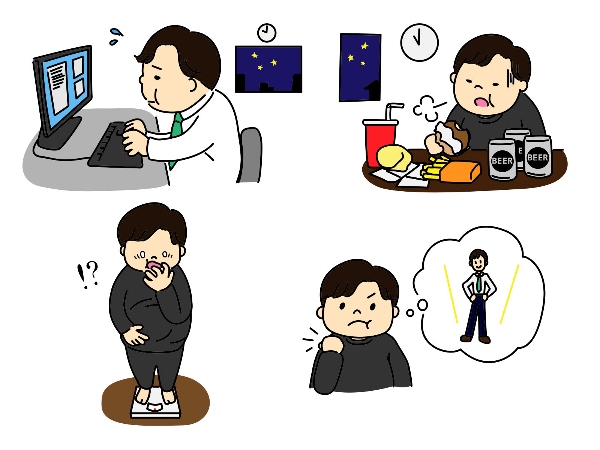
(Irregular lifestyle)
I believe that the "three factors plus one" of my intestinal starvation theory can explain how the various factors intertwine, and how weight gain occurs. It's not just the amount of carbs eaten that matter.
5. Is the Atkins also ineffective for weight loss?
The "Do calories make people fat, or carbs?" concept is said to be a debate that has been going on since the 1800’s[3], and I think both are true in some ways, but neither is perfect.
If you reduce the amount of any energy source beyond what your body needs, it’s obvious that you will lose weight in the short term. However, if you go back to your original diet, in the long run, you will also regain the weight you had lost, as various studies have confirmed, and as most people who have been on a diet have probably realized.
The reason for this is that the human body inherently has a homeostatic mechanism that drives it to return to its set point weight. So, the point is that in order to avoid rebounding, you must lower your set-point weight itself.
(For more details, please refer to the article below.)
[Related article] There Are Two Steps to Lose Weight the Right Way
In terms of this rebound in the Atkins diet in section three, I don't think it necessarily means that low-carb diets, including Atkins, are ineffective. I’m positive that it’s the one of the correct ways to lose weight.
However, if we focus too much on blood sugar and insulin levels, we lose sight of another important point.
What I mean is that the key to a low-carb diet, I believe, is not just reducing carbohydrate intake but also increasing foods that are less digestible and take longer to digest, such as fiber-rich foods, meat, fats, and dairy products.
When plenty of undigested food remains in the gastrointestinal tract, it helps to sustain a feeling of fullness and reduces hunger. In the long run, I think this approach can lower absorption rates. In particular, I believe fats and oils in the diet should not be reduced, but rather should be consumed regularly at every meal and even when having snacks.
Considering all of the above, I think that dieticians do not need to ban sweets such as chocolate, candy, ice cream, etc. so strictly. What’s most important is to make the diet sustainable without overburdening yourself, even allowing occasional indulgences in sweets.
The bottom line
(1) In the early 2000’s, the Atkins diet became a huge trend in the U.S., inspired by the low-carb diet that was rekindled in the 1990’s. In the short term, the Atkins method not only helped people lose weight, but it also significantly improved blood pressure, cholesterol, and blood glucose levels.
(2) However, in long-term studies, the subjects rebounded, as seen with low-fat diets. After one year from the end of the study, all the benefits of Atkins diets were gone.
Dr. Fung considered the "carbohydrate-insulin hypothesis" an incomplete theory. Carbohydrate intake itself was not the problem.
(3) My thoughts. If there is no change in your set-point for body weight, rebound can occur if you eat as you used to. In order to lose weight correctly, your set-point weight itself needs to be lowered.
(4) The key to a low-carb diet is not just controlling the amount of insulin released. It’s also important to reduce refined carbohydrates while increasing the intake of fiber-rich foods and those that take longer to digest.
When plenty of undigested food remains in the gastrointestinal tract, it helps sustain a feeling of fullness and alleviates hunger. Over time, I believe this approach can lead to a decrease in absorption rates.
<Reference>
[1] Jason Fung. The Obesity Code. Greystone Books, 2016, Pages 96-99.
[2] Jason Fung. The Obesity Code. Pages 103-105.
[3] Gary Taubes. Why We Get Fat. New York: Anchor Books, 2011, Pages 148-162.
2019.11.21
Weight Loss Without Rebounding Requires Two Steps
Summary
(1)Just as weight gain does, weight loss likely involves two distinct physiological processes. Under conventional calorie restriction, the body tends to perceive an energy deficit and triggers adaptive responses aimed at maintaining the previous body weight level. As a result, weight loss is difficult to sustain, and body weight often returns to its original range.
To achieve long-term weight loss without rebounding, it is necessary to lower the body’s weight “set-point” itself.
(2)Lowering this set-point likely requires at least two physiological steps.
First, before reducing body weight, it is essential to establish a physiological environment in which the body does not perceive energy deprivation. Second, within that environment, undergo a process where body fat naturally decreases over time.
Step One:
The diet is structured around foods that are nutrient-dense and slow-digesting, such as vegetables, dairy products, nuts, and certain protein-rich foods.
When intestinal contents containing less digestible matter remain in the gut for extended periods, this may be perceived by the body as a signal that food is sufficiently available. As a result, even if overall energy balance becomes slightly negative, strong adaptive responses are less likely to be triggered.
Step Two :
Sustained satiety not only helps prevent overeating, but may also gradually reduce absorption efficiency. Over the long term, coordinated interactions between the brain—particularly the hypothalamus—and peripheral organs and tissues may allow body fat to decline in a stepwise manner.
(3)Although the two-step approach may result in a dietary pattern that resembles a low-carb diet, the underlying goal is fundamentally different.
Low-carb diets primarily aim to reduce insulin secretion by restricting carbohydrate intake. In contrast, the two-step approach focuses on creating a physiological environment opposite to intestinal starvation. To achieve this, it reduces carbohydrate intake while increasing the intake of nutrient-dense foods that take longer to digest, in sufficient amounts.
【Full text】
-
Contents
-
- Two distinct physiological processes underlying weight loss
- What is required to lower the set-point for body weight?
Step one
Step two - How the two-step approach differs from low-carb diets
Although this blog is not intended as a diet guide, examining the mechanisms of weight gain inevitably requires me to also organize, in theoretical terms, the opposite process—how people lose weight.
In this article, I will outline a theory of sustainable weight loss based on my own hypothesis. This discussion is theoretical rather than practice-based, and its purpose is to share a new way of thinking free from conventional constraints.
1. Two distinct physiological processes underlying weight loss
I propose that just as weight gain involves two physiologically distinct processes, weight loss can also occur through two physiologically distinct processes.
(1) Weight decreases, but rebounds
Conventional calorie restriction and low-fat diets are designed to reduce body weight by decreasing energy intake and increasing energy expenditure. This approach often involves constant hunger.
In this blog, I use the body weight set-point hypothesis[1,2] as a framework to explain weight homeostasis.
When energy intake is severely restricted and body weight decreases, the body perceives an energy deficit and triggers adaptive responses aimed at preserving stored energy[3,4].
These responses are best understood as adaptive processes that consist of interacting changes in metabolism, neuroendocrine function, autonomic regulation, and behavior[5].
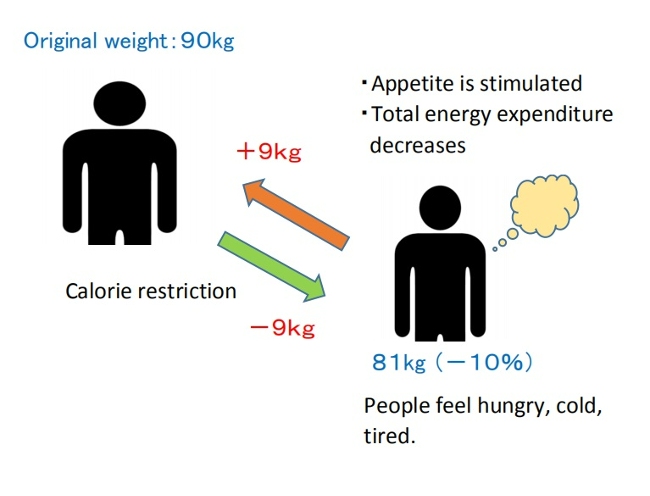
In addition, in my opinion, prolonged hunger leads the body to extract as much nutrition as possible from food, thereby increasing absorption efficiency.
In most cases, however, the body’s weight set-point itself does not change. As a result, weight loss is not sustained, and body weight is likely to return to its original range over time.
【Related article】
Biological Responses Driving Weight Rebound After Weight Loss
(2) Lowering the body weight “set-point” itself
I believe that the fundamental problem in obesity lies in an elevated body weight set-point.
Even though obese individuals have ample energy stores, they still exhibit metabolic resistance to caloric restriction, suggesting that obesity represents a physiologically stable state for some people[1]. Animal studies similarly describe obesity as a condition of energy homeostasis regulated around a higher set-point[1].
Therefore, achieving long-term weight loss requires not merely focusing on short-term energy balance, but lowering the body weight set-point itself. Relevant literature supporting this perspective is cited below.
"There appears to be a “set point” for body weight and fatness, and the problem in obesity is that the set point is too high.(*snip*)
There are two prominent findings from all the dietary studies done over the years.
First: all diets work. Second: all diets fail.
What do I mean?
Weight loss follows the same basic curve so familiar to dieters. Whether it is the Mediterranean, the Atkins or even the old fashioned low-fat, low-calorie, all diets in the short term seem to produce weight loss. Sure, they differ by amount lost–some a little more, some a little less. But they all seem to work.
However, by six to twelve months, weight loss plateaus, followed by a relentless regain, despite continued dietary compliance.(*snip*)
So all diets fail. The question is why.
Permanent weight loss is actually a two-step process. There is a short-term and a long-term (or time-dependent) problem. "
( Fung J. 2016. The obesity code. pages 62,215 )
2. What is required to lower the set-point for body weight?
In my understanding, the “two-step process” described by Doctor Fung is a conceptual framework that views obesity treatment (weight loss) as consisting of a short-term and a long-term challenge, organized primarily from a clinical and practical perspective.
On the other hand, this article focuses on the long-term problem—specifically, why the body resists weight loss and why body weight,once reduced, often returns over time[6]—and explores this issue more deeply from a physiological perspective.
Based on this analysis, I suggest that successful long-term weight loss requires at least the following two physiological steps:
(1) Before trying to lose weight, creating a physiological state in which the body does not perceive energy deprivation.
(2) Within that state, allowing body fat to decrease naturally over time.
My theory posits that weight gain accompanied by an upward shift in the body’s set-point weight is closely related to adaptive responses that arise when the body perceives a state of starvation. Therefore, I believe that reducing body weight in a sustained manner require creating the opposite physiological environment.
Many diets aim for losing weight from the very beginning. However, when the first step is skipped, the body tends to activate adaptive responses to restore homeostasis[6], which can increase the likelihood of long-term weight rebound.
Specifically, the process can be described as follows.
Step one
Rather than reducing overall food intake and enduring hunger, this approach centers the diet around nutrient-dense foods that either take longer to digest or are partially indigestible.
More specifically, this involves reducing the intake of refined carbohydrates and instead increasing consumption of foods such as whole grains, fiber-rich vegetables, nuts, dairy products, fat, and minimally processed protein foods.

Author: brgfx. Source: Freepik
As a result, intestinal contents that include less easily digestible matter remain in the gut for a longer period of time. This may not only reduce the sensation of hunger but also may be perceived by the body as a signal that food is sufficiently available. Consequently, even if overall energy balance becomes slightly negative, the body is less likely to perceive this state as energy deprivation.
Step two
As hunger diminishes, appetite tends to decrease, and absorption efficiency may also gradually decline. Eventually, I suggest that coordinated interactions between the brain—centered on the hypothalamus—and peripheral organs and tissues[7] may contribute to a gradual reduction in body fat.
Changes in absorption efficiency may not be intuitive at first glance, but consider this: consuming carbohydrates in a state of intense hunger tends to cause a rapid rise in blood glucose levels, whereas eating them several hours after a meal moderates the rise. Similarly, alcohol intoxication occurs faster on an empty stomach, but more gradually after eating.
Thus, by avoiding prolonged hunger and consuming foods that require longer digestion at appropriate intervals, absorption efficiency may gradually decrease in relative terms.
3. How the two-step approach differs from low-carb diets
The “two-step approach” proposed here may, in practice, result in a dietary pattern that resembles a low-carbohydrate diet. However, the two differ fundamentally in their starting points and underlying goals. In this section, I will clarify these differences.
▽Low-carb diets primarily aim to limit carbohydrate intake in order to suppress rapid spikes in blood glucose and reduce insulin secretion, which plays a key role in fat storage.
When energy derived from carbohydrates becomes insufficient, the body shifts to using fat as its main energy source, entering what is known as a state of ketosis. As a result, body fat tends to be utilized more readily, and body weight may decrease relatively quickly.
Another commonly cited feature of low-carb diets is that they do not require strict calorie counting, and often promote satiety through higher protein and fat intake.
▽In contrast, my own theory likewise considers diets heavily skewed toward refined carbohydrates and highly processed foods to be likely contributors to the modern obesity epidemic. However, this is not because carbohydrates themselves are inherently harmful in a direct sense.
What I emphasize instead are certain properties of carbohydrates: their rapid digestibility; the “dilution effect” that occurs when carbohydrates are consumed together with large amounts of water; and the “push-out effect,” whereby gastric contents are rapidly propelled into the intestine.

Author: brgfx. Source: Freepik
When these factors act together, all ingested food may be digested and expelled relatively quickly, potentially increasing the likelihood of intestinal starvation under specific conditions.
【Related article】
The Dilution Effect/ Pushing Out Effect of Carbohydrates
For this reason, the two-step approach aims to create a physiological environment opposite to intestinal starvation—namely, a state in which intestinal contents containing less digestible matter remain in the gut for an extended period. To achieve this, carbohydrate intake is reduced in order to weaken the dilution and push-out effects, while the relative intake of other foods—such as fiber-rich vegetables, dairy products, fats, and minimally processed protein sources—is increased.
In low-carb diets, by contrast, the central strategy is to reduce carbohydrate intake itself, while proteins and fats are consumed relatively freely as alternative energy sources. This distinction represents a fundamental difference between low-carb diets and the two-step approach described here.
References
[1]Richard E. Keesey, Matt D. Hirvonen, Body Weight Set-Points: Determination and Adjustment, The Journal of Nutrition, Volume 127, Issue 9, 1997, Pages 1875S-1883S, ISSN 0022-3166.
[2]Ganipisetti VM, Bollimunta P. Obesity and Set-Point Theory. 2023 Apr 25. In: StatPearls [Internet]. Treasure Island (FL): StatPearls Publishing; 2025 Jan–.
[3]Hall KD, Guo J. Obesity Energetics: Body Weight Regulation and the Effects of Diet Composition. Gastroenterology. 2017 May;152(7):1718-1727.e3.
[4]Egan AM, Collins AL. Dynamic changes in energy expenditure in response to underfeeding: a review. Proc Nutr Soc. 2022 May;81(2):199-212.
[5] Rosenbaum M, Leibel RL. Adaptive thermogenesis in humans. Int J Obes (Lond). 2010 Oct;34 Suppl 1(0 1):S47-55.
[6] Ochner CN et al. Biological mechanisms that promote weight regain following weight loss in obese humans. Physiol Behav. 2013 Aug 15;120:106-13.
[7] Wilson JL, Enriori PJ. A talk between fat tissue, gut, pancreas and brain to control body weight. Mol Cell Endocrinol. 2015 Dec 15;418 Pt 2:108-19.
2018.02.01
For Dieting, Meal Improvement Rather than Exercise
-
Contents
-
- Little benefit of expended calories
- Improving diet is more important
(1) Deceived by hype
(2) When proposing exercise, always provide meal coaching, too
<The bottom line>
Please read “Is Exercise Really Necessary to Lose Weight?,” first.
In the above article, we considered how exercise can really help people lose weight, but let's explore that in more detail.
1. Little benefit of expended calories
"A 250-pound man will burn three extra calories (kcal)climbing one flight of stairs, as Louis Newburgh of the University of Michigan calculated in 1942.
“He will have to climb twenty flights of stairs to rid himself of the energy contained in one slice of bread!”
So why not skip the stairs and skip the bread and call it a day?
After all, what are the chances that if a 250-pounder does climb twenty extra flights a day he won't eat the equivalent of an extra slice of bread before the day is done?"
(Gary Taubes. 2011. Why We Get Fat. Page 48.)

"Other experts took to arguing that we could lose weight by weightlifting or resistance training rather than the kind of aerobic activity, like running, that was aimed purely at increasing our expenditure of calories.
The idea here was that we could build muscle and lose fat, and so we'd be fitter even if our weight remained constant, because of the trade-off. Then the extra muscle would contribute to maintaining the fat loss, because it would burn off more calories—muscle being more metabolically active than fat.

To make this argument, though, these experts invariably ignored the actual numbers, because they, too, are unimpressive.
If we replace five pounds of fat with five pounds of muscle, which is a significant achievement for most adults, we will increase our energy expenditure by two dozen calories(kcal) a day.

Once again, we're talking about the caloric equivalent of a quarter-slice of bread, with no guarantee that we won't be two-dozen-calories-a-day hungrier because of this.
And once again we're back to the notion that it might be easier just to skip both the bread and the weightlifting."
(Taubes. Why We Get Fat. Pages 54-5.)
2. Improving diet is more important
Walking, jogging, and other forms of exercise are undoubtedly necessary for the prevention of chronic diseases, and for mental and physical health, but as we reviewed in detail in section[1] above, they are not that effective in terms of caloric expenditure.
I suspect that those who say that they have lost weight through exercise are doing so through a set of dietary improvements (such as balanced diet and how often they eat, etc.).
There is a book written by a Japanese exercise specialist, Takuro Mori, on this subject, and I would like to dive deeply into this:“Sports coach declares. For dieting, exercise should be ten percent and meals should be ninety percent”
Mr. Mori worked in a fitness club for five years, and though he is a sports coach, he says it’s impossible to lose weight only with exercise.

(1) Deceived by hype
“As an exercise instructor, I’ve seen hundreds and thousands of clients. However, what I saw there were long-time club members who had not gotten slim, and moreover, some staff who had not lost weight despite the fact that they worked as coaches in a sports club.(*snip*)
The key to successful dieting is mostly the improvement of diet and the mentality to support it.
As for exercise, I believe that it is very small in comparison to those two factors, and if we can manage to improve diet and mentality, we can get mostly good results, even if we omit the exercise guidance.
It is also true that I was deceived by various diet-related hype and believed, unknowingly, that anyone could lose weight with effective exercise....(omitted)
That is just an advertisement, so it is natural that it is an exaggeration to attract customers. Because of that, it’s manipulating people’s general perception.”
(2)When proposing exercise, always provide meal coaching, too
“Through my past exercise and diet coaching, I have become acutely aware that most people actually do not achieve results with only exercise. As I interacted with many clients, I began to see a trend in those who failed to achieve results.
They all had problems in their eating habits such as they kept eating what they liked or didn’t want to change their eating habit.

Considering the body's mechanism for losing weight, there is no more effective way to lose weight than by controlling diet, and the appropriate approach is to add the necessary amount of exercise to it.
If you pick up any diet book on the street, you will find that most of them refer to diet, even if they explain a particular exercise regimen.
Successful dieters lose weight by improving their diet (eating a balanced diet and eating more often, etc.), not by exercising. (*snip*)
It is necessary to understand the basic premise that exercise creates a beautiful body style, and if you want to lose weight and size, you must improve your diet and other aspects of your life.[1]"
This is what I wanted to tell you, but I had to quote an exercise expert because he is more convincing.
Diet books that claim, "you can lose weight with exercise," always mention improving your diet.
The trend these days seems to be changing to eating fewer carbohydrates, and eating more protein (meat, eggs, etc.), vegetables, dairy products, etc., while exercising.

You might think that exercise has contributed significantly to your weight loss since you lost weight by eating enough, but you would be mistaken.
It may be better to think that changing your eating habits can actually help you reduce weight and size, and that exercise is more about building a lean, toned body while you lose weight.
The bottom line
(1) Calories burned in exercise are not that many . Those who exercise but do not get results from dieting often have some problem with their eating habits, such as wanting to lose weight while eating what they like.
(2) To lose weight, it is more effective to review one's daily eating habits. Reducing carbohydrate intake to some extent and increasing protein, fat, dairy products, and vegetables can be helpful.
On the other hand, exercise helps to improve overall health, maintain muscle strength, and build a toned body.
(3) The reason exercise is not fundamentally helpful for weight loss is because the relationship between diet, exercise, and weight is misunderstood.
[Related article] Misunderstanding of the Relationship Between Diet, Exercise and Body Weight
References:
[1]Takuro Mori. For dieting, exercise should be ten percent and meal should be ninety percent (森 拓郎,「ダイエットは運動1割、食事9割」). 2013.
2017.06.10
Dieting (Eating Less and Exercising More) Doesn’t Work in the Long Run
-
Contents
-
- It has nothing to do with lack of willpower
- What was the long-term effect of dieting
- Cognitive dissonance
It is said that exercising and food restriction is necessary for losing weight. However, we rarely meet those who succeeded in dieting using such a method.
Japanese wrestler Bull Nakano (below) has repeatedly dieted and rebounded, but after having knee problems, it was imperative that she lose weight, so she had a gastrectomy to remove part of her stomach.
She said that “cutting the amount of foods and exercising didn’t make her thinner.”


Japanese comedian, Sugi-chan lost seven kilograms with Billy’s Boots Camp diet method, but rebounded to the same weight afterward.
In this article, I would like to introduce how conventional calorie-based diets are ineffective, based on two books: "Escape the Diet Trap" and "Why Do We Get Fat.”
Please note that most of these are quotations.
1.It has nothing to do with lack of willpower
"Ideas about what causes obesity vary. But you'll almost certainly be familiar with the idea that, at the end of the day, the problem is a product of caloric imbalance: specifically, the consumption of calories in excess of those burned through metabolism and activity. No doubt you'll also be familiar with the idea that the solution to your weight problem is simply to redress the balance by eating less and exercising more.
This advice seems to make sense. The trouble is, not only our collective experience but scientific research, too, shows that applying this advice hardly ever brings significant weight loss in the long term.
The usual explanation offered here is that those who fail with conventional tactics lack willpower and self-control. The reality, though, is that calorie-based strategies for slimming not only don't work, but simply can't work, for all but a small minority.
‘Escape the Diet Trap’ explores the reasons why traditional approaches to weight loss are a crashing failure. It reveals how eating less and exercising more causes the body to resist weight loss, and can actually predispose to weight gain over time."
(Jone Briffa. 2013. Escape the Diet Trap. Pages 1, 19.)
2.What was the long-term effect of dieting
"Limiting the studies to those where individuals were monitored for at least two years after the start of their efforts to lose weight allows us to assess the long-term success of these approaches. Many of us will know what it is to get a short-term win from eating less and exercising more but it's the long game we're interested in here.
<Study1>
Individuals with an average age of 36 and average BMI of 35.0 were prescribed a calorie-reduced diet (individuals ate about 1,000 calories less each day than the amount needed to maintain a stable weight).

Some of the individuals added exercise to this dietary restriction in the form of brisk walking for 45 minutes, 4-5 times each week.
The intervention lasted for a year, and weight was assessed another year after the end of the intervention.

Two years after embarking on a long-term (lasting at least a year) restrictive dietary regime, average weight loss was in the order of just 2 kg. Even when regular exercise is added, the weight loss still only averaged about 3 kg (about 6 lbs).
These outcomes look even more paltry when put in the context of the weight of many of the study participants. For someone of average height, a BMI of 35 works out at about 16 stone. I'd say it's unlikely that individuals of this weight would view a loss of a few pounds as a satisfying return on investment in terms of their diet and exercise efforts.
Another potential surprise is just how ineffective exercise was for the purposes of weight loss when employed as an adjunct to dietary restraint. The results from these studies suggest an additional loss of a mere 1 kg in those who were exercising regularly."
(Briffa. Escape the Diet Trap. Pages 20, 22-3.)
"Prescribing low-calorie diets for obese and overweight patients, according to a 2007 review from Tufts University, leads, at best, to “modest weight losses” that are “transient” – that is, temporary. Typically, nine or ten pounds are lost in the first six months. After a year, much of what was lost has been regained.
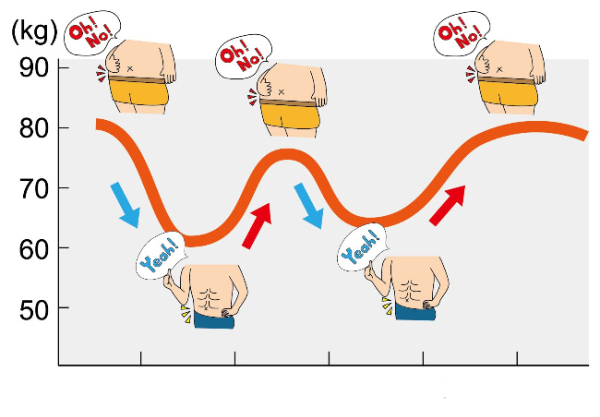
The Tufts review was an analysis of all the relevant diet trials in the medical journals since 1980. The single largest such trial ever done yields the very same answer. The researchers were from Harvard and the Pennington Biomedical Research Center, which is in Baton Rouge, Louisiana, and is the most influential academic obesity-research institute in the United States.
Together they enrolled more than eight hundred overweight and obese subjects and then randomly assigned them to eat one of four diets. These diets were marginally different in nutrient composition (proportions of protein, fat, and carbohydrates), but all were substantially the same in that the subjects were supposed to undereat by 750 calories a day, a significant amount.

The subiecte were also given “intensive behavioral counseling” to keep them on their diets, the kind of professional assistance that few of us ever get when we try to lose weight.
They were even given meal plans every two weeks to help them with the difficult chore of cooking tasty meals that were also sufficiently low in calories.
The subjects began the study, on average, fifty pounds overweight. They lost, on average, only nine pounds. And, once again, just as the Tufts review would have predicted, most of the nine pounds came off in the first six months, and most of the participants were gaining weight back after a year.
No wonder obesity is so rarely cured. Eating less –that is, undereating–simply doesn't work for more than a few months, if that."
(Gary Taubes. 2011. Why We Get Fat. Page 36-7.)
3.Cognitive dissonance

"This reality, however, hasn't stopped the authorities from recommending the approach, which makes reading such recommendations an exercise in what psychologists call “cognitive dissonance,” the tension that results from trying to hold two incompatible beliefs simultaneously.
Take, for instance, the Handbook of Obesity, a 1998 textbook edited by three of the most prominent authorities in the field–George Bray, Claude Bouchard, and W. P. T. James.
“Dietary therapy remains the cornerstone of treatment and the reduction of energy intake continues to be the basis of successful weight reduction programs," the book says.
But it then states, a few paragraphs later, that the results of such energy-reduced restricted diets "are known to be poor and not long-lasting.” So why is such an ineffective therapy the cornerstone of treatment? The Handbook of Obesity neglects to say."
(Taubes. Why We Get Fat. Page 37.)