

Topics
03/03/2025
The Rise in Obesity is Closely Linked to the Consumption of Ultra-Processed Foods
Summary
1. In 2009, a research group at the University of São Paulo proposed the NOVA classification system, which categorizes foods according to the nature, extent, and purpose of processing. NOVA divides foods into four groups:
・Unprocessed or minimally processed foods
・Processed culinary ingredients
・Processed foods (PFs)
・Ultra-processed foods (UPFs)
2. UPFs are formulations made through multiple industrial processes. They tend to be high in refined carbohydrates, added sugars, salt, and fats, making them highly energy-dense. In contrast, they are often low in dietary fiber and micronutrients.
3. In countries such as the USA and the UK, UPFs account for more than 50% of total daily energy intake. Many studies have shown that a higher proportion of energy intake derived from UPFs is associated with a greater risk of obesity.
In contrast, the consumption of unprocessed foods, such as vegetables, has been inversely associated with obesity.
4. Individuals with higher UPF consumption tend to consume fewer fruits, vegetables, nuts, and fish, and generally have lower overall diet quality.
5. Compared with whole-food meals, processed-food meals may reduce diet-induced thermogenesis (DIT), resulting in greater net energy gain. In addition, UPF-based diets have been shown to increase ad libitum energy intake.
My perspective
6. The global rise in obesity may not be fully explained by an increase in caloric intake alone. I believe that greater attention should be paid to the effects of food processing itself on human physiology.
UPFs are typically low in dietary fiber and have simplified food structures. As a result, they tend to be digested and absorbed very efficiently. As overall diet quality declines, conditions may arise in which undigested matter is less likely to remain in the intestinal tract. I propose that this may contribute to a physiological state that I refer to as intestinal starvation.
【 Full text 】
-
Contents
-
- Food classification using the NOVA system
- Issues associated with ultra-processed foods
- Consumption of UPFs and its association with obesity
- Impact of UPFs on overall diet
(1)Decline in overall diet quality
(2) Increase in net energy gain
(3) Effects on ad libitum energy intake - How UPFs may contribute to intestinal starvation
The ongoing debates surrounding various dietary approaches—such as low-carbohydrate, ketogenic, paleo, low-fat, and vegan diets—have created considerable public confusion and contributed to growing mistrust in nutritional science.
However, it is less widely recognized that diverse diets recommendations often share a common piece of advice: to avoid ultra-processed foods[1].
In fact, in many countries, rising obesity rates have been reported to closely parallel increases in the consumption of ultra-processed foods[1]. In this article, I would like to examine some of the factors that may underlie this association. Finally, I will also discuss how these issues may relate to my intestinal starvation theory.
1. Food classification using the NOVA system
NOVA (not an acronym) is the food classification system that categorizes foods based not on their nutrient content, but on the nature, extent, and purpose of food processing. It was developed in 2009 by a research group at the University of São Paulo in Brazil [2].
Conventional food classification systems have traditionally categorized foods and ingredients according to their botanical origin or animal species, and according to their nutrient composition.
As a result, whole grains may be grouped together with breakfast cereals and cookies, and fresh chicken or pork may be classified alongside chicken nuggets or sausages.
However, conventional classification systems have had important limitations when evaluating the health effects of foods [3].

The NOVA classification system divides foods into the following four groups according to the nature, extent, and purpose of processing.
(1)Unprocessed or minimally processed foods
Natural foods such as fresh fruits and vegetables, grains, milk, fish, and meat, as well as foods that have undergone minimal processing such as the removal of inedible parts, drying, grinding, pasteurization, refrigeration, freezing, or vacuum packaging.
(2)Processed culinary ingredients
Substances derived from Group 1 foods or from nature through processes that include pressing, refining, milling, or drying, such as oils, butter, sugar, and salt. These processed culinary ingredients are typically not consumed on their own.
(3)Processed foods (PFs)
These are typically made by adding Group 2 substances to Group 1 foods. Examples include canned vegetables, fruit in syrup, canned fish, cheese, and freshly made breads.
(4)Ultra-processed foods (UPFs)
These are formulations made by combining many ingredients and undergoing multiple industrial processes. Examples include breakfast cereals, soft drinks and fruit juices, sweet or savory snack foods, chocolate confectionery, instant foods, reconstituted meat products such as sausages and nuggets, and many fast-food products [3,4].
2. Issues associated with ultra-processed foods
Food processing, in essence, refers to the operations by which raw food materials are made suitable for consumption, cooking, or storage, and virtually all foods undergo some form of processing before being eaten. In other words, processing itself is not inherently harmful.
However, ultra-processed foods may contain little or none of the natural foods classified in Group 1.
Furthermore, because they are formulations produced by combining food-derived substances and additives through multiple industrial processes, they possess characteristics that differ from those of partially modified foods [3].
These foods are typically high in refined grains, added sugars, salt, and fats, making them highly energy-dense. In contrast, they are generally poor sources of dietary fiber, protein, and micronutrients.
In addition, additives such as flavorings, colorings, emulsifiers, and sweeteners are often added to mask undesirable qualities of the final product [5].
Nevertheless, since the 1980s, the consumption of UPFs has increased rapidly not only in developed countries but also in developing nations, largely driven by multinational corporations [3].
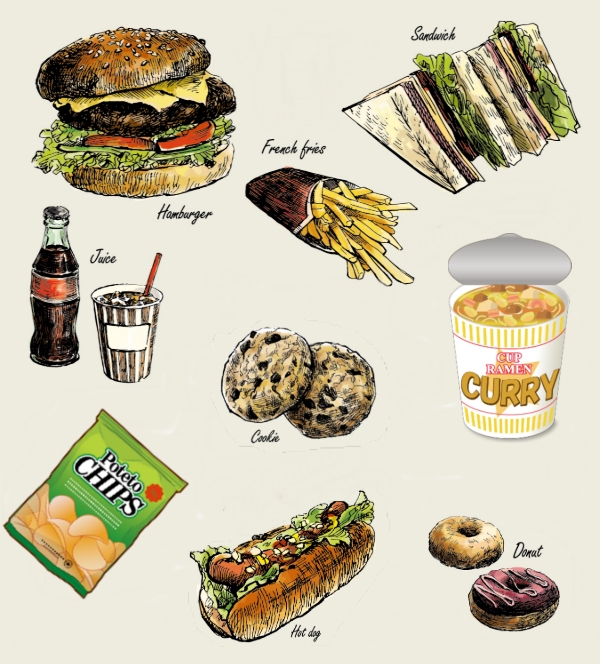
Because UPFs are highly palatable, inexpensive, convenient, and have a long shelf life, they have gained widespread popularity among consumers.
Research based on the NOVA classification system has shown that the decline in minimally processed foods and home cooking, together with the increasing replacement of traditional diets by UPFs, is associated with unhealthy nutritional profiles and a higher prevalence of several diet-related diseases [3].
3. Consumption of UPFs and its association with obesity
Studies in adults reporting the proportion of total energy intake derived from ultra-processed foods (UPFs) have shown that the proportion exceeds 50% in the USA and the UK, and reaches approximately 45–52% in Canada.
In contrast, the proportion is relatively lower in countries such as France, Spain, Brazil, and Malaysia, although it still accounts for roughly 20–36% of total energy intake [6].
♦A cross-sectional study (2005–2014) of American adults found that, on average, participants obtained 56.1% of their total energy intake from UPFs. In the highest quintile group (Note 1), UPFs accounted for 84.5% of total energy intake, whereas in the lowest quintile group, the proportion was 25.4% [7].
Note 1: Quintiles divide ranked data into five equal groups.
Increasing consumption of UPFs has been reported to be associated with rising obesity rates in many countries.
♦A cross-sectional study based on data from Brazil’s 2008–2009 Household Budget Survey found that household consumption of UPFs was positively associated with both average BMI and obesity prevalence. Individuals in the highest UPF consumption group were 37% more likely to be obese than those in the lowest consumption group [9].
♦A cross-sectional study using data from the UK National Diet and Nutrition Survey (2008–2016) found that the proportion of total energy intake derived from UPFs ranged from approximately 35% (1st quartile; Note 2) to 74% (4th quartile).
Higher UPF consumption was associated with greater BMI, waist circumference, and obesity prevalence. In addition, for every 10% increase in the proportion of total energy intake from UPFs, obesity risk increased by 18%.
Higher UPF consumption was also more common among men, smokers, younger individuals, and lower socioeconomic groups [10].
Note 2: Quartiles divide ranked data into four equal groups.
♦A prospective cohort study conducted among graduates of the University of Navarra in Spain followed 8,451 participants who were not overweight or obese at baseline for about nine years.
Participants in the highest UPF consumption group had a 26% higher risk of developing overweight or obesity than those in the lowest consumption group. In contrast to their UPF intake, this group had the lowest average vegetable consumption. Overall, higher UPF consumption was associated with lower adherence to the Mediterranean diet [11].
Similar associations have also been reported in studies conducted in 15 Latin American countries, as well as in studies from other countries, including the USA and Canada [4,7,8].
4. Impact of UPFs on overall diet
(1) Decline in overall diet quality
♦A U.S. research group used data from the National Health and Nutrition Examination Survey (2015–2018) to investigate the relationship between UPF consumption and overall diet quality.
The study included 5,919 children and 10,064 adults, and diet quality was assessed using the American Heart Association (AHA) Diet Score and the Healthy Eating Index (HEI)-2015 [12].
The results showed that overall diet quality declined substantially as UPF consumption increased. Among children, the estimated proportion with a poor diet was 31.3% in the lowest UPF consumption group, but rose to 71.6% in the highest consumption group. A similar pattern was observed among adults.

In addition, higher UPF consumption was associated with increased intake of refined grains, sugar-sweetened beverages, and added sugars, while the consumption of healthier foods such as fruits, vegetables, nuts, and fish decreased.
The researchers concluded that higher consumption of UPFs was associated with substantially lower diet quality among both children and adults.
They also noted that these findings were consistent with previous studies conducted in several countries [12].
♦An Italian research group investigated the relationship between meal timing and the degree of food processing.
An analysis of data from 8,688 participants in the Italian Nutrition & Health Survey (2010–2013) found that individuals who ate breakfast, lunch, and dinner at later times tended to consume fewer unprocessed or minimally processed foods and more processed foods and UPFs [13].
Furthermore, later meal timing was inversely associated with adherence to the Mediterranean diet [13]. The Mediterranean diet is a dietary pattern centered on fruits, vegetables, legumes, nuts, olive oil, and fish, and has been associated with a lower risk of weight gain [14].
(2) Increase in net energy gain
♦A U.S. research group conducted a crossover study to compare the effects of processed foods (PF) and whole foods (WF) on energy expenditure. Eighteen participants consumed two isocaloric sandwiches that differed only in their degree of processing.
The WF meal consisted of multigrain bread (containing whole grains and sunflower seeds) and cheddar cheese, whereas the PF meal consisted of white bread and a processed cheese product.
As a result, diet-induced thermogenesis (DIT) (Note 3) following the PF meal was 46.8% lower than that observed after the WF meal. The researchers concluded that this difference in DIT resulted in a 9.7% increase in net energy gain for the PF meal [15].
Note 3: Diet-induced thermogenesis (DIT) refers to the increase in energy expenditure that occurs for several hours following food intake.
The researchers suggested that PFs are structurally and chemically simpler, and therefore easier to digest, than WFs [15,16].
For example, during grain refining, the bran and germ are removed, resulting in the loss of micronutrients, dietary fiber, and phenolic compounds.
As a result, less energy may be required for gastrointestinal activity and metabolism, which could contribute to a reduction in DIT [15,17].
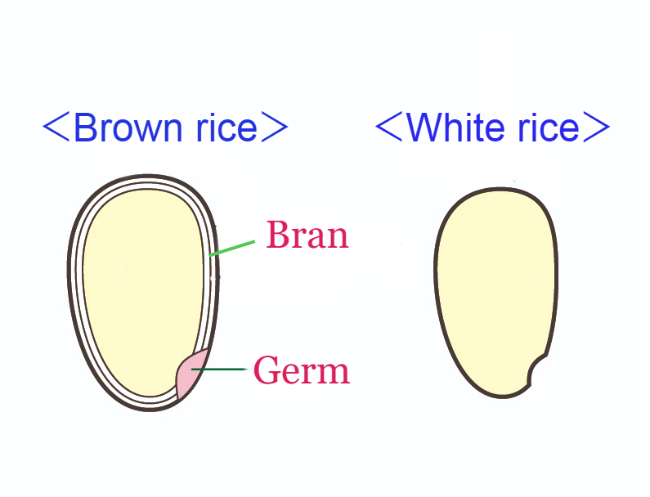
Furthermore, a reduction in dietary fiber decreases the bulk of food, which may delay the onset of satiety and ultimately contribute to an increase in total energy intake [15,18].
(3)Effects on ad libitum energy intake
In 2019, a research group at the U.S. National Institutes of Health (NIH) conducted a randomized controlled trial to examine the effects of UPFs on ad libitum energy intake in 20 weight-stable adults [19].
Participants were admitted to the NIH Clinical Center and consumed an ultra-processed diet and an unprocessed diet for two weeks each. The two diets were designed to be closely matched in presented calories, energy density, macronutrients, and other key nutritional characteristics. They were instructed to eat as much or as little as they desired.
As a result, during the ultra-processed diet period, participants consumed about 459 kcal more per day than during the unprocessed diet period and gained 0.9± 0.3 kg from baseline. In contrast, during the unprocessed diet period, participants lost 0.9± 0.3 kg [19].
Notably, the eating rate was significantly higher during the ultra-processed diet than during the unprocessed diet.
In addition, during the unprocessed diet period, levels of the appetite-suppressing hormone PYY increased, whereas levels of the hunger hormone ghrelin decreased.
The researchers suggested that the oral sensory properties of UPFs—such as their ease of chewing and swallowing—may have increased the eating rate and delayed satiety signals, ultimately leading to greater energy intake [19,20].
5. How UPFs may contribute to intestinal starvation
Until now, the global rise in obesity has often been explained in terms of a relative increase in caloric intake. Indeed, UPFs possess several characteristics that appear to support this view:
・High energy density
・High palatability and ease of consumption
・Potential to increase net energy gain through reduced DIT
・Delayed satiety, which may lead to greater ad libitum energy intake
At the same time, however, studies using the NOVA classification system has begun to highlight factors beyond calories alone.
Studies conducted in many countries have shown that the greater the proportion of total energy intake derived from UPFs, the higher the risk of obesity. However, this association may not be fully explained by an increase in caloric intake alone.
Of particular interest is the finding that lower consumption of unprocessed foods such as vegetables, poorer overall diet quality, and irregular meal timing have all been associated with higher UPF consumption.
In other words, the issue may not be UPF consumption itself alone, but also the fact that it can displace unprocessed foods and contribute to an overall deterioration in dietary balance.
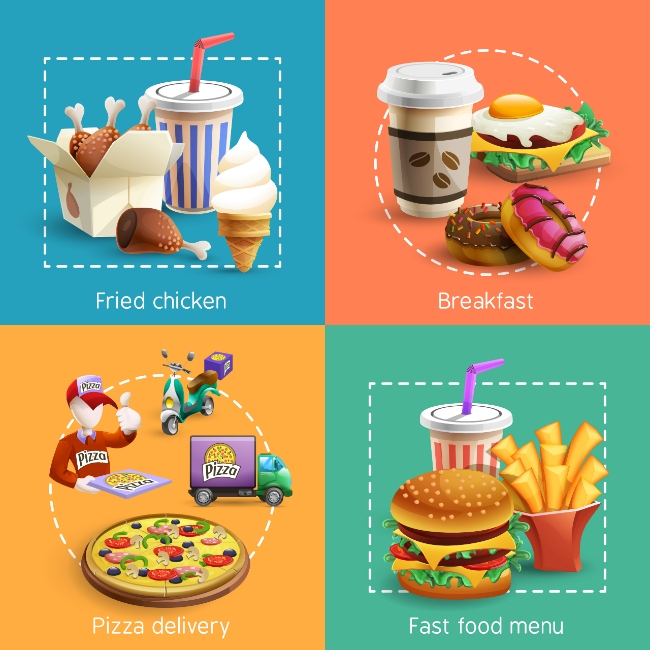
In today's food environment, where efficiency and convenience are highly valued, opportunities to consume ready-to-eat foods such as refined carbohydrates and UPFs have increased. These foods are typically soft, require little chewing, and can be consumed quickly. At the same time, the consumption of unprocessed or minimally processed foods has declined.
As a result, the intake of dietary fiber and other less digestible substances may have decreased, creating conditions in which undigested matter is less likely to remain in the intestinal tract.
The intestinal starvation theory proposes that when ingested food has been completely digested within the intestinal tract, the body may perceive this as a state in which no food is present. I believe that advances in food-processing technology and the increasing availability of ultra-processed foods since the 1970s may have contributed to the occurrence of such conditions.
<References>
[1]Katz DL, Meller S. Can we say what diet is best for health? Annu Rev Public Health. 2014;35:83-103.
[2]Monteiro CA et al. NOVA. The star shines bright. Food classification. Public Health. World Nutr. J. 2016, 7, 28–38.
[3]Monteiro CA et al. The UN Decade of Nutrition, the NOVA food classification and the trouble with ultra-processing. Public Health Nutr. 2018 Jan;21(1):5-17.
[4]Nardocci M et al. Consumption of ultra-processed foods and obesity in Canada. Can J Public Health. 2019 Feb;110(1):4-14.
[5]Fiolet T et al. Consumption of ultra-processed foods and cancer risk: results from NutriNet-Santé prospective cohort. BMJ. 2018 Feb 14;360:k322.
[6]Elizabeth L et al. Ultra-Processed Foods and Health Outcomes: A Narrative Review. Nutrients. 2020 Jun 30;12(7):1955.
[7]Juul F et al. Ultra-processed food consumption and excess weight among US adults. Br J Nutr. 2018 Jul;120(1):90-100.
[8]Ultra-processed food and drink products in Latin America: trends, impact on obesity, policy implications. Pan American Health Organization, Washington (DC) (2013)
[9]Canella DS et al. Ultra-processed food products and obesity in Brazilian households (2008-2009). PLoS One. 2014 Mar 25;9(3):e92752.
[10]Rauber F et al. Ultra-processed food consumption and indicators of obesity in the United Kingdom population (2008-2016). PLoS One. 2020 May 1;15(5):e0232676.
[11]Mendonça RD et al. Ultraprocessed food consumption and risk of overweight and obesity: the University of Navarra Follow-Up (SUN) cohort study. Am J Clin Nutr. 2016 Nov;104(5):1433-1440.
[12]Liu J et al. Consumption of Ultraprocessed Foods and Diet Quality Among U.S. Children and Adults. Am J Prev Med. 2022 Feb;62(2):252-264.
[13]Bonaccio M et al. Association between Late-Eating Pattern and Higher Consumption of Ultra-Processed Food among Italian Adults: Findings from the INHES Study. Nutrients. 2023 Mar 20;15(6):1497.
[14]Beunza JJ et al. Adherence to the Mediterranean diet, long-term weight change, and incident overweight or obesity: the Seguimiento Universidad de Navarra (SUN) cohort. Am J Clin Nutr. 2010 Dec;92(6):1484-93.
[15]Barr SB, Wright JC. Postprandial energy expenditure in whole-food and processed-food meals: implications for daily energy expenditure. Food Nutr Res. 2010 Jul 2;54.
[16]Fereidoon Shahidi. Nutraceuticals and functional foods: Whole versus processed foods. Trends in Food Science & Technology, Volume 20, Issue 9, 2009, Pages 376-387.
[17]Secor SM. Specific dynamic action: a review of the postprandial metabolic response. J Comp Physiol B. 2009 Jan;179(1):1-56.
[18]Roberts SB. High-glycemic index foods, hunger, and obesity: is there a connection? Nutr Rev. 2000 Jun;58(6):163-9.
[19]Hall KD et al. Ultra-Processed Diets Cause Excess Calorie Intake and Weight Gain: An Inpatient Randomized Controlled Trial of Ad Libitum Food Intake. Cell Metab. 2019 Jul 2;30(1):67-77.e3.
[20] de Graaf C, Kok FJ. Slow food, fast food and the control of food intake. Nat Rev Endocrinol. 2010 May;6(5):290-3.