
— Topics —
Other
2018.05.29
Misunderstanding of the Relationship Between Diet, Exercise, and Body Weight
-
Contents
-
<Introduction>
- The relationship between “diet and exercise” is the most commonly used excuse
- Expended energy will be regained
- What does “diet is the priority” mean?
<The bottom line>
<Introduction>
The fact that many people who play sports are lean, and that we see athletes who have gained a lot of weight after retiring from active sports, seems to make the formula "exercise = losing weight" true.
Most experts see it this way, but the relationship between exercise and weight should not be as simple as this.
This time, I’d like to explain the relationship between "diet, exercise, and body weight" based on my theory.
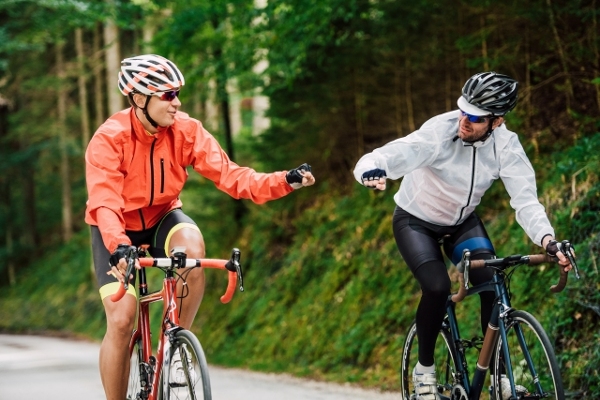
1. The relationship between “diet and exercise” is the most commonly used excuse, for specialists
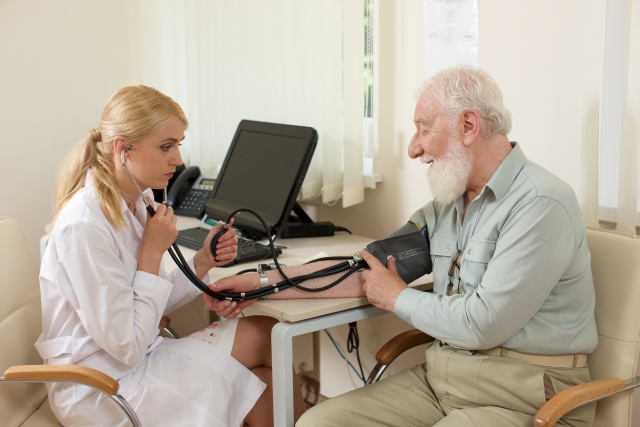
First of all, for those who have not lost weight even after exercising, physicians and specialists would say, "After all, you must be eating a lot somewhere," and for those who have not lost weight even after restricting calories, they would say, "You are not exercising enough, are you?"
That is to say, the relationship between diet and exercise has been regarded as a "calories-in/calories-out" relationship, which has been used as an excuse by experts, and the relationship has not even been considered in an in-depth manner.
2. Expended energy will be regained
First, some people think in terms like "overeating always leads to weight gain" or "exercise causes weight loss," as shown in Figure-1.
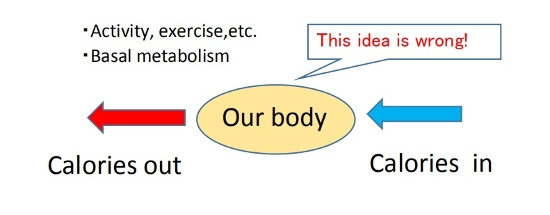
<Figure-1>
They believe that "intake and expenditure are are opposites, and we will gain or lose weight depends on the balance between the two.”
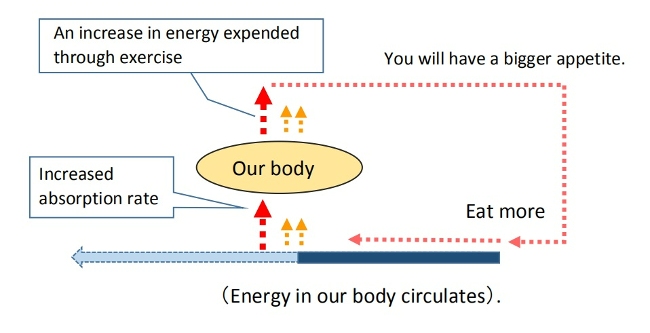
However, in reality, it should be more like Figure-2.
<Figure-2>
Since the food we consume and the energy used in our bodies are mediated by absorption, an increase in energy expenditure will increase absorption rate, which in turn increase one’s appetite through hormonal changes.
In contrast, if we increase the amount and frequency of eating when we are at rest and not hungry, the absorption rate will decrease.
Exercise certainly consumes more energy, but a counter-regulatory function-that the body tries to regain energy that it has expended-should work.
In other words, exercise is essentially a force that pushes the body in the direction of gaining strength and ultimately, storing energy (weight gain) as it tries to stimulate energy circulation and re-energize the body. (In particular, it works more strongly in resistant exercises that target muscles.)

However, whether or not you gain weight depends on how you control the way you eat.
“Diet” is always the priority.
This is why false theories emerge like, “people exercising everyday are lean no matter how much they eat.”
3. What does “diet is the priority” mean?
The simple explanation is that even though exercise ultimately pushes the body to store energy, if some undigested food is always left in the intestines, as a result, intestinal starvation does not occur and the set-point weight remains the same.
I will explain this in greater detail several ways.
(1) Not gaining weight while exercising regularly
As Dr. Briffa, the author of “Escape the Diet Trap,” says in his book, it is better to think that, "originally lean people start running marathons or playing soccer, and eventually become athletes[1].” It may be a cynical view, but I think it’s probably correct.
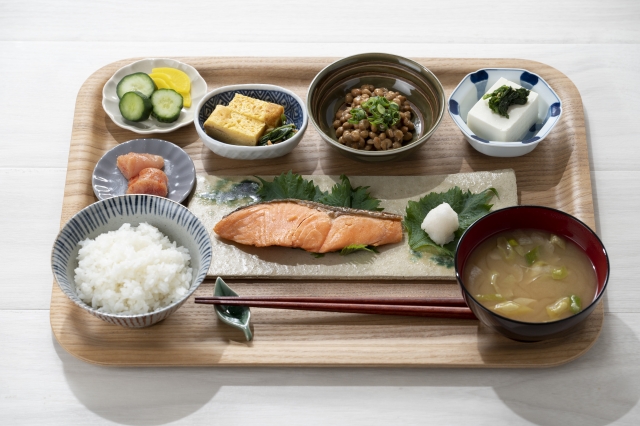
They know they never gain weight even though they eat a lot, and most athletes eat three well-balanced meals, plus other nutritional supplements and snacks.
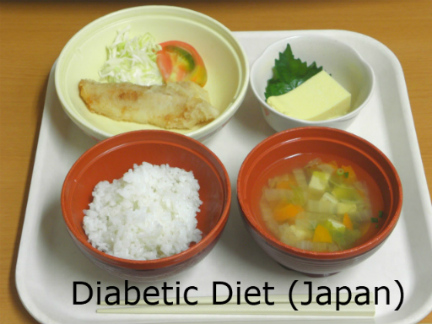
(Traditional Japanese breakfast)
This is because when we try to exercise, our mindset is that we need to be nourished and that we need to eat well.
In other words, when naturally lean people take up sports like soccer or marathon running and eat three balanced meals a day, the intestinal starvation mechanism is less likely to be induced, allowing them to maintain the same weight over many years.
(2) Putting on some weight after quitting exercise
On the other hand, there might be people who have gained 3–4 kg over the past few years because their work involves desk tasks or light physical activity, and they haven’t exercised recently.
However, the real issue, I believe, is not the lack of exercise, but rather skipping meals, eating light meals, having an unbalanced diet relying too much on carbohydrates, or irregular eating habits.

When we have nothing to do or do light physical work all day, we tend to think that we need to eat less and become less concerned about nutritional balance, don't we?
Perhaps some people might go to work without breakfast, or just have a simple lunch such as ramen noodles, a sandwich, or a hamburger.
In this case, the body's ability to take in nutrients is low compared to during exercise, but on the contrary, if you spend long periods hungry, intestinal starvation is more likely to occur, which may ultimately increase your set-point weight over time.
Additionally, when athletes retire, their caloric expenditure decreases and opportunities to eat often increase, which can lead to a few kilograms of weight gain. I see this as the same mechanism that causes weight to rebound after dieting, where the body returns to its set-point weight.
However, if there is a weight gain of more than ten kilograms over a few years, this is likely due more to changes in eating habits, as explained above, and can be attributed to weight gain caused by intestinal starvation.
(3) Gaining weight while exercising
Fighters and sumo wrestlers exercise, of course, but due to the nature of their sports, they sometimes need to increase their muscle mass or body weight. However, we often hear that it’s not easy for some fighters to gain muscle mass and weight even if they eat protein supplements in addition to their three meals.
On the other hand, those who don’t want to gain weight sometimes put on weight quite effortlessly. This is because, as I have mentioned so many times, gaining weight (meaning an increase in one’s set-point weight) requires the induction of intestinal starvation.
During high-intensity strength exercises, like barbell exercises, the body’s regulatory mechanism to restore lost energy is even more powerful than with aerobic exercise.
However, if one tries to consume more calories and nutrients every 4 to 5 hours through meals or protein supplements, some undigested food tends to remain in the intestines throughout the day, which could ultimately hinder an increase in set-point weight.
<A sumo wrestler's diet: a practical approach to increasing body weight>
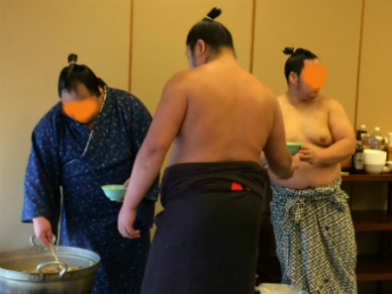
Sumo wrestlers in Japan are famous for being large and heavy, but they traditionally eat only twice a day, instead of three times a day.
Moreover, their meals are not greasy foods but mainly consist of easily digestible hot-pot dishes called “chanko” (a stew with chicken meat and vegetables, etc.) along with plenty of rice.
Therefore, the food they eat can be more easily digested, and when intestinal starvation is triggered, it can lead to weight gain, suggesting an increase in their set-point weight.
■For details on how weight is increased when intestinal starvation is induced, please refer to the article below.
[Related article]
Gaining Weight by Intestinal Starvation; What Does It Mean?
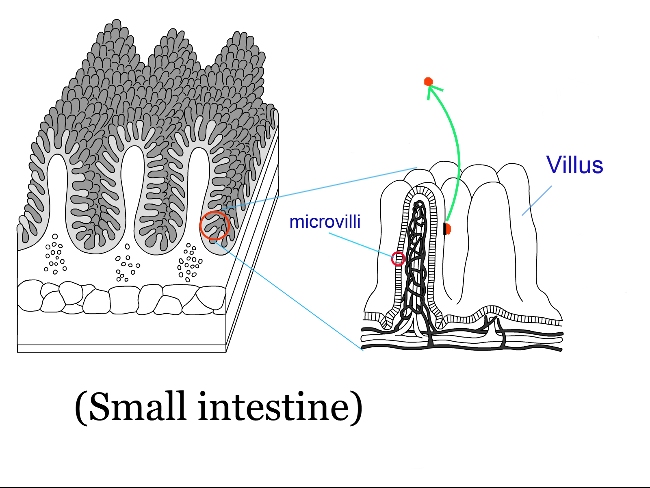
In simple terms, I believe that when all food is fully digested, microscopic substances attached to the villi (or microvilli) of the small intestine detach themselves, which expands the surface area for absorption and boosts absolute absorption capacity.
Resistance exercises that target muscles (particularly lifting) accelerate this mechanism beyond its usual rate.
In other words, the diet and exercise of sumo wrestlers provide a logical approach to increasing muscle mass and body weight.
The bottom line
(1)The relationship between diet and exercise is not simply an energy "in/out" relationship.
Exercise is essentially a force that works toward gaining strength and weight because the opposite reaction-that the body tries to regain energy that it has expended-should work (especially in the case of high-intensity exercise).
(2) However, the priority is in how we control our diet. Eating three well-balanced meals every day will help undigested food to remain in the intestines, and the set-point weight is less likely to increase.
People who are originally lean start athletics, soccer, etc., and if they eat three well-balanced meals every day, they are less likely to gain weight and maintain the same body shape over the years.
(3) People tend to skip meals or eat less when they aren’t exercising or are only doing light physical work. In such cases, the body's regulatory function to absorb nutrients and store fat are weaker than during exercise, but in contrast, people end up feeling hungrier and intestinal starvation is more likely to be caused, resulting in an increase in one's set-point weight.
(4)The way sumo wrestlers eat and exercise is a logical approach to increasing muscle strength and body weight. By eating digestible meals including a good amount of rice twice a day, they are more likely to induce intestinal starvation. Intense training further accelerates this effect.
References:
[1] Jone Briffa. Escape the Diet Trap. London: Fourth Estate, 2013, Page 223.
2017.12.07
After Gaining Weight, We Eat Too Much and Do Less Exercise
-
Contents
-
<Prologue>
- Rats don’t get fat from eating too much
- Example of not enough exercise after getting fat
Prologue
"The experts who say that we get fat because we overeat or we get fat as a result of overeating - the vast majority - are making the kind of mistake that would (or at least should) earn a failing grade in a high-school science class.
They're taking a law of nature that says absolutely nothing about why we get fat and a phenomenon that has to happen if we do get fat - overeating - and assuming these say all that needs to be said."
(Gary Taubes. 2011. Why we get fat. New York: Anchor Books, Page 76.)

This is the foundation I started writing my blog on. I’m sure that there are at least a few researchers in the world who think the same way as I do.
Even if someone insisted that, “the Earth is going around the Sun” in the sixteenth or seventeenth century where "geocentric theory" was the prevailing thought, no one would have believed him.
Many should have argued that, “if the Earth is going around the sun, our heads should go around, too.” However, now, it’s common sense that the Earth is going around the sun.
In the same way, many might not believe me when I say, “people can gain weight by intestinal starvation and it is the fundamental cause of being overweight.” However, I believe it’s the truth.
1.Rats don’t get fat from eating too much
It is said that, “eating too much and not enough exercise are the causes of gaining weight,” but here is an interesting experiment that is related to it.
"In the early 1970s, a young researcher at the University of Massachusetts named George Wade set out to study the relationship between sex hormones, weight, and appetite by removing the ovaries from rats (females,obviously) and then monitoring their subsequent weight and behavior.
The effects of the surgery were suitably dramatic: the rats would begin to eat voraciously and quickly become obese.The rat eats too much, the excess calories find their way to the fat tissue, and the animal becomes obese. This would confirm our preconception that overeating is responsible for obesity in humans as well.
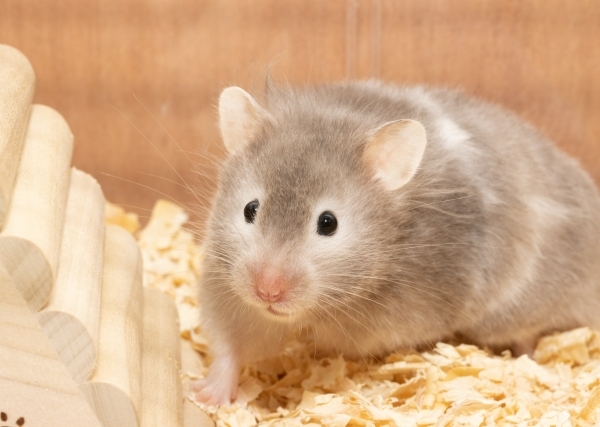
But Wade did a revealing second experiment, removing the ovaries from the rats and putting them on a strict postsurgical diet. (*snip*) The rats, postsurgery, were only allowed the same amount of food they would have eaten had they never had the surgery.
What happened is not what you'd probably think. The rats got just as fat, just as quickly. But these rats were now completely sedentary. They moved only when movement was required to get food. (*snip*)
The way Wade explained it to me, the animal doesn't get fat because it overeats, it overeats because it's getting fat. The cause and effect are reversed.
(*snip*)
The evidence that fat tissue is carefully regulated, not just a garbage can where we dump whatever calories we don't burn, is incontrovertible.(*snip*)
Those who get fat do so because of the way their fat happens to be regulated and that a conspicuous consequence of this regulation is to cause the eating behavior (gluttony) and the physical inactivity (sloth) that we so readily assume are the actual causes."
(Taubes. Why we get fat. Page 89-90, 93-4.)
<1970s>
Words of Bruce Birstrian who conducted a treatment of a low-calorie diet (600kcal/day) to thousands of obese patients at Harvard University of Medicine.
"Undereating isn't a treatment or cure for obesity; it's a way of temporarily reducing the most obvious symptom. And if undereating isn't a treatment or a cure , this certainly suggests that overeating is not a cause."
(Taubes. Why we get fat. Page 39.)
My experience is a little different from the rats’ story, but I want to tell of my experience that I gained weight not because of eating more.
When I was very thin, under forty kilograms, I couldn’t eat a lot since my stomach always felt heavy. Fatty foods and oily foods were the worst. I tried hard to gain weight, but I couldn’t.
One day, I realized that I could gain weight by eating only easy-to-digest foods (mainly carbs and a little meat) and experiencing being hungry for hours. So, I tried to eat light meals for breakfast and lunch, and I tried not to eat vegetables and fat very much until dinner. By doing so, I gradually gained weight. And when I weighed about fifty kilograms, I had more muscle and less discomfort in my stomach. I was able to eat more than before.
Those who didn’t know my experience told me, “You’re gaining weight because you’re eating more,” but that wasn’t true.
After my body adjusted to my new eating plan, I gained weight little by little by eating. As I gained weight, I gradually gained more muscle and my appetite increased. As a result, I was able to eat more than before. So, the reality was the other way around.
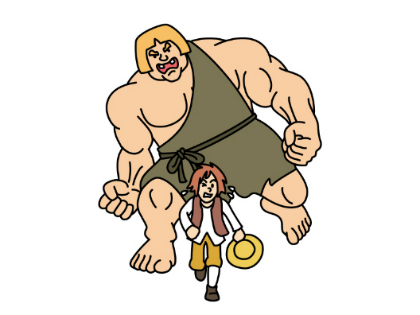
▽Maybe it’s easier for you to imagine with an extreme example.
Let’s say there is a big man who is three meters tall and weighs two-hundred-fifty kilograms. If he eats five times as much food as we do, we would not think that he has grown big because he eats so much. Rather, we would think, "He is able to eat that much because he is so big.”
"Just prior to the Second World War, European medical researchers argued that it is absurd to think about obesity as caused by overeating, because anything that makes people growーwhether in height or in weight, in muscle or in fatーwill make them overeat.
Children, for example, don't grow taller because they eat voraciously and consume more calories than they expend. They eat so muchーovereatーbecause they're growing."
(Taubes. Why we get fat. Page 9.)
2.Example of not enough exercise after getting fat
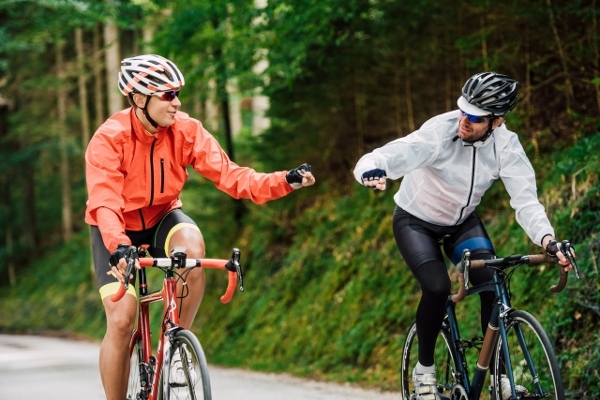
"Some people find it hard to get their head round the fact that aerobic exercise is not particularly effective for weight loss, even when faced with all the facts.
One reason for this is our experience of seeing physically fit and active individuals who are clearly lean.
Look at any elite long-distance runner or Tour de France cyclist and you're probably getting a glimpse of what it's like to have a single-digit body fat percentage. The automatic thought process is that exercise causes leanness.
However, could it that individuals who are naturally lean are simply more likely to end up as elite long-distance runners or cyclists? In other words, might their natural leanness cause certain people to be more active, rather than the other way round?
There's actually some evidence for this. In one piece of research, the relationship between physical activity and body fatness in children over a 3-year period was assessed. It was found that the more sedentary children were, the more fat they carried.
This is all to be expected, but because the study was conducted over a prolonged period the researchers were able to gauge whether sedentary behaviour preceded weight gain.
Actually, it did not. In reality, children accumulated fat first, and then became more sedentary.
The authors noted that this finding 'may explain why attempts to tackle childhood obesity by promoting PA [physical activity] have been largely unsuccessful'. "
(Jone Briffa. 2013. Escape the Diet Trap. London: Fourth Estate, Pages 223-4.)
I agree with this opinion, but I’d like to add my own opinion.
As Dr. Briffa said, I think it’s reasonable to think those who are slim aim to be marathon athletes or soccer players, etc. They at least know that they can eat a lot and not get fat. So they will eat whatever they want without hesitation, won’t they?
In other words, by eating balanced foods every meal, intestinal starvation doesn’t happen —by that, I mean their set-point for body weight doesn’t change—and they keep their current weight while getting a little more muscle.
On the other hand, when people stay at home, spending time relaxing with a book or watching television, or when doing office work or light physical labor, don’t they tend to eat less or lighter meals?

Sometimes, they may eat only light meals such as hamburgers, hot-dogs, or instant noodles for lunch. Since they don’t exercise, they don’t pay attention to eating balanced and nutritious meals.
If their diet leans toward easily digestible carbs and some protein and they are experiencing being hungry for hours, the intestinal starvation mechanism may occur and their set-point weight will go up. They end up gaining more weight.
To sum up, I’d like to say that not enough exercise or laziness won’t directly cause people to get fat. The intensity and amount of physical activity will affect the amount of food you eat as well as food choices.