
Topics
08/15/2025
The Spread of Dieting May Be Fueling the Rise in Obesity
Summary
(1) The prevalence of dieting has increased over the past several decades, paralleling the rising prevalence of overweight and obesity. This has raised concerns that dieting may, paradoxically, be contributing to obesity.
(2) Some observational studies suggest that the association between dieting and weight gain may be at least partly causal. However, some researchers argue that dieting is merely a proxy marker for a tendency to overeat.
(3) Several prospective studies have suggested that dieting for weight loss among adolescents, middle-aged women, and even individuals of normal weight is a strong predictor of future weight gain.
(4) In studies of adolescents, boys and girls who continued unhealthy weight-control behaviors—such as fasting, skipping meals, eating very little, or using food substitutes—showed the greatest increases in BMI by the 10-year follow-up.
Discussion
(5) Observational studies alone cannot establish a causal relationship between dieting and weight gain.
However, longitudinal follow-up studies and twin studies suggest that dieting itself may contribute to subsequent weight gain. In particular, people who engage in unhealthy weight-control behaviors have repeatedly been reported to experience significantly greater subsequent weight gain.
Conclusion
(6) Not all dieting leads to weight gain. However, unhealthy weight-control behaviors practiced by some individuals may increase the risk of subsequent weight gain.
(7) Recent research has shown that severe dietary restriction accompanied by substantial weight loss can trigger biological starvation responses involving changes in metabolism, hormones, and the nervous system. These responses may contribute to weight regain after weight loss and, in some individuals, even to weight gain beyond the pre-weight-loss level.
In addition, unhealthy weight-control behaviors may promote intestinal starvation, which could lead to an upward shift in the body-weight set point.
【 Full Text 】
-
Contents
-
- Recent background on dieting and obesity
- Issues and points to consider in observational studies
- Does dieting lead to weight gain?
- Conclusion
Introduction
In recent years, the number of people dieting for weight loss has been increasing worldwide. However, some have raised concerns that dieting itself may be accelerating the rise in obesity.
For example, some female actors and television announcers appear to have gained weight compared to the past. However, it is unlikely that they are habitually overeating; rather, they may be restricting their food intake in an effort to manage their weight.
In this article, I would like to explore whether the spread of dieting may be related to the rise in obesity, based on findings from observational and intervention studies.
1. Recent background on dieting and obesity
(1) In 1992, a panel of experts convened by the U.S. National Institutes of Health concluded that, with continued participation in weight-loss programs conducted in controlled settings, participants typically lose about 10% of their body weight.
However, within one year after weight loss, one-third to two-thirds of the lost weight is regained, and within five years, almost all of it is regained [1].
Studies on long-term outcomes have also shown that at least one-third of dieters regain more weight than they lost [2]. This has raised concerns that dieting may, paradoxically, produce outcomes that are directly opposite to its original purpose [2,3].
(2) The 1983 book “Dieting Makes You Fat” proposed the idea that dieting to lose weight is counterproductive for weight control because people may regain more fat than they lose with each cycle of weight loss and regain [4]. Since then, whether dieting contributes to long-term weight gain remains a controversial and actively debated topic among scientists [5,6,7].
(3) As of 1998, Americans spent over $33 billion annually on diet-related products and services [8]. Nevertheless, the prevalence of obesity has steadily increased from 30.5% (2000) to 35.7% (2010) and 42.4% (2018) [9].
The prevalence of dieting has also increased over the past several decades, paralleling the rise in the prevalence of overweight and obesity (see Table 1) [10].
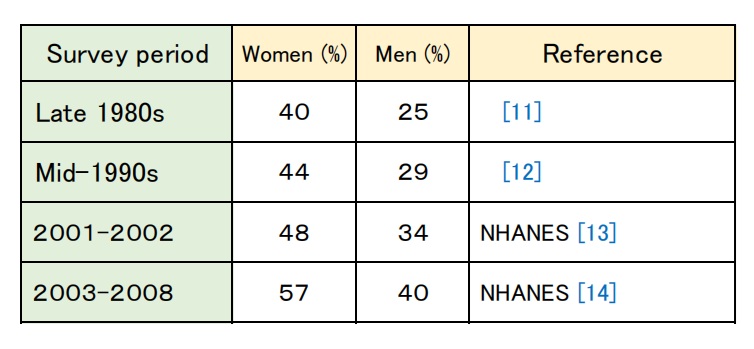
Table 1: Trends in the prevalence of dieting in the U.S.
・A cross-sectional survey conducted in England (1997-2013) found that the proportion of people attempting to lose weight increased from 39% (1997) to 47% (2013).
Across all BMI categories, the proportion of individuals attempting to lose weight showed an upward trend throughout the study period [15].
Table 2 shows the 2013 figures by BMI category.
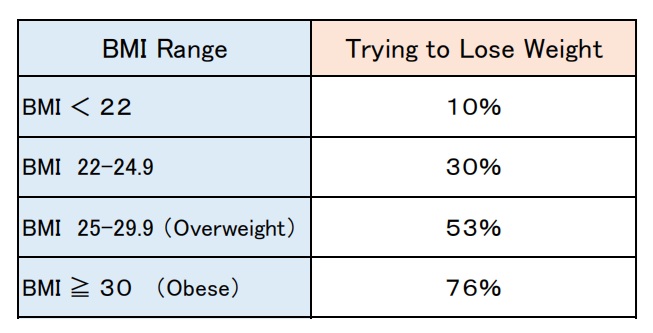
Table 2: Prevalence of weight loss attempts (2013,UK)
(4) Thus, the proportion of people attempting to lose weight has increased alongside the rising prevalence of overweight and obesity. However, this observation alone does not establish a causal relationship between the two.
Some researchers have suggested that the association between dieting and weight gain is, at least in part, causal [16,17]. Others, however, have argued that dieting is merely a proxy marker for individuals who are already prone to weight gain, and that without dieting, they would likely have gained even more weight [18].
(5) Several prospective studies have suggested that dieting is a strong predictor of future weight gain among adolescents [17,19,20], middle-aged women [21], and even individuals who were initially of normal weight [5,21,22].
・A 10-year prospective study conducted in Minnesota (1998–2009) followed 1,902 adolescents (819 males and 1,083 females) and assessed dieting status and changes in BMI at five-year intervals.
The study found that both boys and girls who reported dieting or unhealthy weight-control behaviors (Note 1) at both baseline and the 5-year follow-up experienced greater increases in BMI by the 10-year follow-up than those who did not diet [17].

Photo Credit: Freepik (photo by Prostooleh)
Note 1: Unhealthy weight-control behaviors include weight-loss practices that are generally not recommended, such as fasting, skipping meals, eating very little, and using food substitutes or diet pills.
In particular, “skipping meals” and “eating very little” were the most commonly reported unhealthy weight-control behaviors and were significantly associated with greater increases in BMI in both sexes.
The use of food substitutes (e.g. powdered products or special beverages) among males and the use of diet pills among females were associated with greater subsequent increases in BMI.
Interestingly, among girls who were overweight (25 ≤ BMI < 30) at baseline, those who continued to engage in unhealthy weight-control behaviors experienced the greatest increase in BMI over the 10-year follow-up (more than 5 BMI units), whereas those who never engaged in such behaviors showed only a minimal increase in BMI [17].
In conclusion, these findings suggest that dieting and unhealthy weight-control behaviors during adolescence may contribute to long-term weight gain [17].
(6) In 2003, an analysis of data from the 1998 National Health Interview Survey described the prevalence of specific weight-loss practices among U.S. adults (see Table 3).
Among those attempting to lose weight, only one-third reported reducing their caloric intake while increasing their physical activity [23].
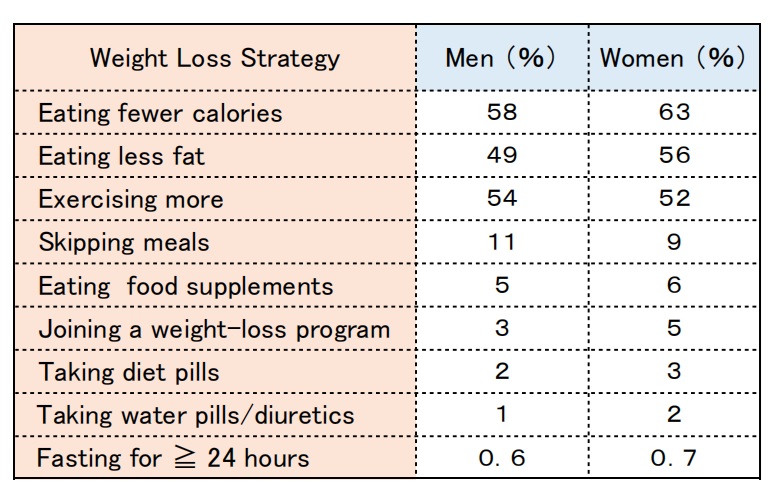
Table 3: The prevalence of weight loss strategies among U.S. adults (1998)
2. Issues and points to consider in observational studies
Previous observational studies on dieting and subsequent weight change have yielded inconsistent findings [22].
Many longitudinal observational studies have reported subsequent weight gain among self-reported dieters [17,20,21,22]. On the other hand, some studies have also reported that dieting predicts both weight loss and weight gain [24,25]. Several factors may help explain these differences in the findings.
(1) What type of dieting was followed ?
Many studies have examined whether participants were dieting at baseline, or had a history of dieting. However, relatively few have investigated the specific methods used for weight loss [21,22,26].
In addition, the terms “dieting” and “weight-loss attempts” are somewhat ambiguous and may be interpreted differently by different individuals [17].
People who adopt healthy eating and exercise habits—for example, eating more natural foods such as vegetables, reducing ultra-processed foods, eating breakfast, and exercising regularly—may be able to achieve and maintain weight loss.
In contrast, those who engage in unhealthy weight-control behaviors, such as skipping meals, eating very little, or using food substitutes (e.g. diet shakes or nutritional drinks), may experience only temporary weight loss, fail to maintain it over the long term, and eventually regain the weight.
(2) Study duration and the timing of dieting
The duration of follow-up and the timing of dieting may also influence whether long-term weight change can be evaluated accurately.
Several studies have assessed changes in body weight or BMI several years later (e.g. 2, 5, or 10 years) based on participants' dieting status at baseline [20,21,22,26].
However, people who repeatedly go on and off diets are more likely to experience substantial fluctuations in body weight.
From the perspective of body-weight homeostasis, as described by the body-weight set-point theory, individuals who were dieting at baseline may have been temporarily below their natural body weight (set point). Simply discontinuing the diet could therefore lead to subsequent weight gain.
Conversely, individuals who began dieting shortly before the end of the follow-up period may have experienced substantial weight loss because of the temporary effects of dieting.
Furthermore, when the follow-up period is as long as five or ten years, weight-control behaviors that were started or discontinued during that interval may not have been captured.
*Although not discussed here, observational studies also require caution regarding the limitations of self-reported data and the influence of confounding factors that may contribute to weight gain.
Moreover, in studies of adolescents, the natural increases in muscle mass and body weight that occur during growth should also be taken into account.
3. Does dieting lead to weight gain?
In conclusion, observational studies alone cannot establish a causal relationship between dieting and an increased risk of weight gain. However, for the following reasons, I believe that dieting is likely to contribute to weight gain.
(1) Is dieting merely a proxy marker?
One interpretation is that dieting is simply a proxy marker reflecting the global trend toward increasing body weight, rather than a cause of weight gain itself. From this perspective, it is argued that without dieting, people would gain even more weight [18].
However, the 10-year study of adolescents discussed in Section 1(5) made it possible to compare the weight trajectories of participants who were dieting at baseline but had stopped dieting five years later with those who continued dieting.
The researchers found that those who stopped dieting gained substantially less weight than those who continued dieting. Based on these findings, they did not support the claim that people would gain even more weight if they did not diet [17].
(2) Are people with a genetic predisposition to obesity more likely to diet?
Another explanation for the association regarding dieting and obesity is that dieting itself does not cause subsequent weight gain. Rather, people who are genetically prone to obesity may simply be more likely to go on a diet [6].
However, the 10-year study of adolescents yielded findings that were not consistent with this claim.
Among girls who were already overweight at baseline, those who continued to engage in unhealthy weight-control behaviors showed significantly greater increases in BMI than those who had never engaged in such behaviors. The researchers suggested that dieting itself may contribute to subsequent weight gain [17].
Furthermore, a longitudinal twin study conducted in Finland examined changes in body weight among twins with different numbers of intentional weight-loss episodes of at least five kg.
Although the study could not rule out the influence of genetic and shared family factors on weight gain, it also suggested that dieting itself may contribute to subsequent weight gain [16].
(3) Mechanisms that promote weight rebound after weight loss
Recent research has greatly improved our understanding of energy homeostasis and the mechanisms that regulate body weight.
Severe dietary restriction accompanied by substantial weight loss can trigger biological starvation responses involving changes in metabolism, hormones, and the nervous system, potentially leading to increased appetite and overeating. As a result, body weight tends to return toward its previous level and may even exceed the pre-weight-loss level in some individuals [27,28].
In addition, fasting for weight control (going without food for 24 hours) has been suggested to be associated with a greater risk of developing binge-eating disorder in the future than less severe dieting behaviors [29].
Furthermore, an overshoot in body weight during the recovery period has been documented in normal-weight participants in both the classic Minnesota Starvation Experiment and the U.S. Army Ranger multistressor study [30,31].
(4) A possible link to intestinal starvation
My intestinal starvation theory suggests that when all ingested food has been completely digested within the intestinal tract, the body may perceive this as a state in which no food is present. This may be described as a modern form of hunger that can occur even in affluent societies—a condition that may have become more likely with advances in food processing and the spread of ultra-processed foods.
Calorie-restricted dieting, especially unhealthy weight-control behaviors such as skipping meals, eating very little, or using food substitutes instead of regular meals, may further promote this intestinal starvation.
4. Conclusion
Not all dieting leads to weight gain. Some people successfully lose weight and maintain their weight loss by adopting healthy dietary patterns and regular physical activity.
In fact, adherence to the Mediterranean diet has been reported to be inversely associated with the risk of overweight, obesity, and long-term weight gain [32].

Photo Credit: Freepik (Photo by Katemangostar)
In contrast, people who adopt unhealthy weight-loss strategies—such as fasting, skipping meals, eating very little, or using food substitutes—have repeatedly been reported to experience significantly greater subsequent weight gain than those who do not diet or who follow healthy weight-loss strategies [17,33].
These approaches may therefore lead to outcomes that are contrary to their original purpose.
Recent research has shown that severe dietary restriction accompanied by substantial weight loss can trigger biological starvation responses involving changes in metabolism, hormones, and the nervous system [27,28,34]. These changes may help explain why body weight often returns after weight loss and, in some cases, even exceeds the pre-weight-loss level.
In addition to these biological responses, I believe that unhealthy weight-control behaviors, particularly dietary restriction, are also likely to promote intestinal starvation, thereby contributing to an upward shift in the body-weight set point.
<References>
[1] Methods for voluntary weight loss and control. NIH Technology Assessment Conference Panel. Ann Intern Med. 1992 Jun 1;116(11):942-9.
[2] Mann T et al. Medicare's search for effective obesity treatments: diets are not the answer. Am Psychol. 2007 Apr;62(3):220-33.
[3] Bacon L, Aphramor L. Weight science: evaluating the evidence for a paradigm shift. Nutr J. 2011 Jan 24;10:9.
[4]Cannon G, Einzig H. Dieting makes you fat. London: Century Publishing; 1983.
[5] Jacquet P et al. How dieting might make some fatter: modeling weight cycling toward obesity from a perspective of body composition autoregulation. Int J Obes (Lond). 2020 Jun;44(6):1243-1253.
[6] Hill AJ. Does dieting make you fat. Br J Nutr. 2004 Aug;92 Suppl 1:S15-8.
[7] Lowe MR. Dieting: proxy or cause of future weight gain? Obes Rev. 2015 Feb;16 Suppl 1:19-24.
[8] Cleland R et al. Commercial weight loss products and programs: what consumers stand to gain and lose. Crit Rev Food Sci Nutr. 2001 Jan;41(1):45-70.
[9] National Center for Health Statistics, National Health and Nutrition Examination Survey, 1999–2018.
[10] Montani JP et al. Dieting and weight cycling as risk factors for cardiometabolic diseases: who is really at risk? Obes Rev. 2015 Feb;16 Suppl 1:7-18.
[11] Williamson DF et al. Weight loss attempts in adults: goals, duration, and rate of weight loss. Am J Public Health. 1992 Sep;82(9):1251-7.
[12]Serdula MK et al. Prevalence of attempting weight loss and strategies for controlling weight. JAMA. 1999 Oct 13;282(14):1353-8.
[13] Weiss EC et al. Weight-control practices among U.S. adults, 2001-2002. Am J Prev Med. 2006 Jul;31(1):18-24.
[14] Yaemsiri S et al. Perceived weight status, overweight diagnosis, and weight control among US adults: the NHANES 2003-2008 Study. Int J Obes (Lond). 2011 Aug;35(8):1063-70.
[15] Piernas C et al. Recent trends in weight loss attempts: repeated cross-sectional analyses from the health survey for England. Int J Obes (Lond). 2016 Nov;40(11):1754-1759.
[16]Pietiläinen KH et al. Does dieting make you fat? A twin study. Int J Obes (Lond). 2012 Mar;36(3):456-64.
[17] Neumark-Sztainer D et al. Dieting and unhealthy weight control behaviors during adolescence: associations with 10-year changes in body mass index. J Adolesc Health. 2012 Jan;50(1):80-6.
[18] Stice E, Presnell K. Dieting and the eating disorders. In: Agras WS, editor. The Oxford Handbook of Eating Disorders. Oxford University Press; USA: 2010. pp. 148–179.
[19] Neumark-Sztainer D et al. Why does dieting predict weight gain in adolescents? : a 5-year longitudinal study. J Am Diet Assoc. 2007 Mar;107(3):448-55.
[20]Viner RM, Cole TJ. Who changes body mass between adolescence and adulthood? Factors predicting change in BMI:1970 British Birth Cohort. Int J Obes (Lond). 2006 Sep;30(9):1368-74.
[21]Korkeila M et al. Weight-loss attempts and risk of major weight gain: a prospective study in Finnish adults. Am J Clin Nutr. 1999 Dec;70(6):965-75.
[22] Sares-Jäske L et al. Self-report dieting and long-term changes in body mass index and waist circumference. Obes Sci Pract. 2019 Mar 26;5(4):291-303.
[23] Kruger J et al. Attempting to lose weight: specific practices among U.S. adults. Am J Prev Med. 2004 Jun;26(5):402-6.
[24] Bild DE et al. Correlates and predictors of weight loss in young adults: the CARDIA study. Int J Obes Relat Metab Disord. 1996 Jan;20(1):47-55. PMID: 8788322.
[25] Coakley EH et al. Predictors of weight change in men: results from the Health Professionals Follow-up Study. Int J Obes Relat Metab Disord. 1998 Feb;22(2):89-96.
[26] French SA et al. Predictors of weight change over two years among a population of working adults: the Healthy Worker Project. Int J Obes Relat Metab Disord. 1994 Mar;18(3):145-54. PMID: 8186811.
[27]Maclean PS et al. Biology's response to dieting: the impetus for weight regain. Am J Physiol Regul Integr Comp Physiol. 2011 Sep;301(3):R581-600.
[28]Ochner CN et al. Biological mechanisms that promote weight regain following weight loss in obese humans. Physiol Behav. 2013 Aug 15;120:106-13.
[29]Stice E et al. Fasting increases risk for onset of binge eating and bulimic pathology: a 5-year prospective study. J Abnorm Psychol. 2008 Nov;117(4):941-6.
[30] Keys, A, Brozek, J, Henschel, A et al. (1950) The Biology of Human Starvation. Minnesota: University of Minnesota Press.
[31] Nindl BC et al. (1997) Physical performance and metabolic recovery among lean, healthy men following a prolonged energy deficit. Int J Sports Med 18, 317–324.
[32] Lotfi K et al. Adherence to the Mediterranean Diet, Five-Year Weight Change, and Risk of Overweight and Obesity: A Systematic Review. Adv Nutr. 2022 Feb 1;13(1):152-166.
[33]Savage JS, Birch LL. Patterns of weight control strategies predict differences in women's 4-year weight gain. Obesity (Silver Spring). 2010 Mar;18(3):513-20.
[34] Mann T et al. Promoting Public Health in the Context of the "Obesity Epidemic": False Starts and Promising New Directions. Perspect Psychol Sci. 2015 Nov;10(6):706-10.