
— Topics —
Body-Weight Set Point & Homeostasis
2025.12.30
Biological Responses Driving Weight Rebound After Weight Loss
Summary
・When individuals lose weight through calorie restriction, adaptive responses involving coordinated changes in metabolism, neuroendocrine function, autonomic regulation, and behavior are triggered, which may promote weight rebound. These responses help explain why calorie-restricted diets often fail to produce lasting weight loss.
(1) Metabolic adaptation
Calorie-restricted weight loss reduces resting energy expenditure beyond what would be predicted from changes in body composition. This adaptation occurs in both formerly obese and naturally lean individuals, creating conditions that favor weight rebound.
(2) Endocrine function
Hormones secreted by the gastrointestinal tract and adipose tissue, including leptin and ghrelin, regulate appetite, food intake, and energy expenditure. Calorie restriction can reduce satiety and increase hunger, thereby promoting overeating.
(3) Food reward and addiction-like processes
Palatable foods activate reward-related neural circuits through neurotransmitters such as dopamine. The desire to experience this pleasure again can motivate further eating. Calorie restriction and fasting may heighten the reward value of food, especially energy-dense, highly palatable foods.
(4) Inhibitory control and binge eating
Short-term dieting success may result from enhanced inhibitory responses that temporarily suppress the desire to eat. However, prolonged dietary restriction may strengthen reward-related responses and weaken inhibitory control, making cravings increasingly difficult to resist.
(5) Fat cell size and number
Weight loss reduces the size of adipocytes (fat cells), but their number generally remains unchanged. Smaller fat cells may break down less fat and become more prone to storing it again, thereby promoting the regain of lost body fat.
(6) Intestinal starvation
Unlike the responses described in (1)–(5), my proposed intestinal starvation hypothesis suggests that the body may interpret the complete digestion of food, leaving no undigested matter in the intestinal tract, as a signal of starvation.
Conclusion
Some researchers argue that the biological forces promoting weight rebound after weight loss are extremely powerful and difficult to overcome.
In my view, rather than trying to overcome these responses, long-term weight management requires adopting eating and lifestyle habits that minimize their activation in the first place.
【Full text】
-
Contents
-
- Various mechanisms that promote weight rebound
(1)Metabolic adaptation
(2) Endocrine Function
(3) Food reward and addiction-like processes
(4) Inhibitory control and binge eating
(5) Fat cell size and number
(6) Intestinal starvation - Conclusion
- Various mechanisms that promote weight rebound
Introduction
The conventional prescription that people with obesity should “eat less and exercise more” remains widely used as a standard approach to weight management, despite repeated reports of its low long-term success rate [1].
At the same time, recent findings from genetics, epidemiology, physiology, and related fields have increasingly shown that body weight and body fat are biologically regulated within a certain range. These findings are helping to establish a biological framework that may explain why long-term success with weight-loss dieting is so difficult to achieve.
Following weight loss, adaptive responses are triggered through coordinated changes in metabolism, neuroendocrine function, autonomic nervous system activity, and even behavior. These responses have been shown to resist the maintenance of weight loss [4].
In this article, I will briefly introduce the biological mechanisms that may promote post-weight-loss weight rebound—or, in some cases, further weight gain. I will also explain how these mechanisms relate to, and differ from, my proposed “intestinal starvation” theory.
【Related Article】
The Spread of Dieting May Be Fueling the Rise in Obesity
1.Various mechanisms that promote weight rebound
(1) Metabolic adaptation
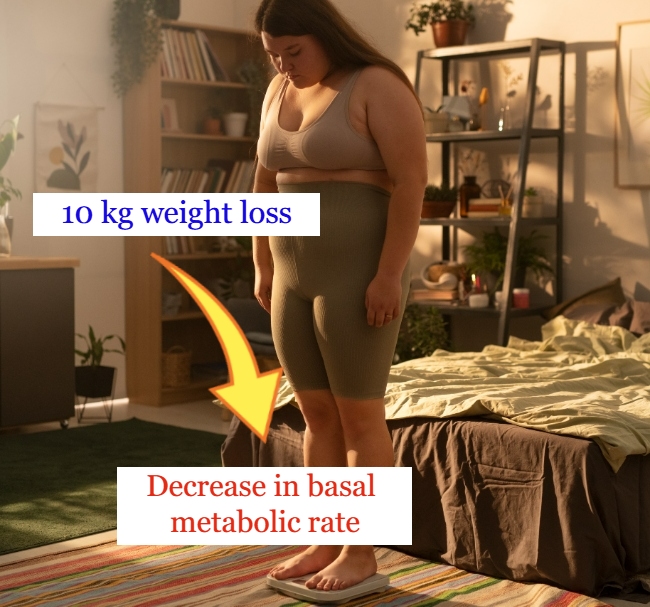
Energy restriction is associated with a reduction in resting energy expenditure (REE) [5]. Many studies have reported that behavioral weight loss leads to a greater decrease in both resting and total energy expenditure than would be predicted based on changes in body composition and the thermic effect of food [4,6].
This phenomenon, known as adaptive thermogenesis (AT) or metabolic adaptation, creates conditions that favor regaining lost weight [7].
Metabolic adaptation can be viewed as the body's survival response: when the body perceives a state of starvation, it reduces the energy cost of living in an attempt to prolong survival.
Interestingly, this response also appears to occur in individuals with obesity and does not seem to be diminished by the amount of energy stored as body fat [7,8].
(Author: rawpixel.com / Source: Freepik)
However, regarding the timing of its onset, the evidence is inconsistent [9]. Some studies have detected adaptive thermogenesis (AT) within a week of energy restriction, which has been associated with rapid declines in insulin secretion, depletion of glycogen stores, and loss of intracellular and extracellular fluid [10].
In contrast, a growing body of evidence suggests that underfeeding-associated AT takes weeks to develop, in association with reduced leptin secretion following the loss of body fat, among other physiological adaptations [9,11,12].
Although the persistence of AT also remains a subject of debate [7], some studies indicate that this metabolic adaptation may continue for years even after energy balance has been reestablished at a lower weight [13].
(2) Endocrine function
A number of hormones secreted from the gastrointestinal tract and adipose tissue are known to play key roles in regulating appetite, food intake, energy expenditure, and body weight [14,15].
Leptin is a hormone secreted by fat cells that helps regulate body weight by suppressing appetite and influencing energy expenditure. High leptin levels signal to the brain that energy stores are sufficient, whereas low leptin levels indicate that energy stores are low [16].
It has been shown that leptin levels drop within 24 hours of energy restriction [17]. Interestingly, many studies have reported a greater reduction in leptin levels than would be expected based on the loss of body fat [18,19].
It has been suggested that the primary role of leptin may be the prevention of starvation, rather than weight regulation per se [15,20]. When leptin levels fall below a certain threshold—the point at which specific physiological responses are triggered (Note1)—starvation defense mechanisms are activated, even if substantial fat stores remain [17]. This leads to a reduction in metabolic rate and physical activity, as well as an increase in hunger [21,22].
Furthermore, in individuals who have lost weight, an increase in the appetite-stimulating hormone ghrelin, along with decreases in the post-meal satiety signals peptide YY (PYY) and cholecystokinin (CCK), has been observed [23]. As a result, diet-induced weight loss may simultaneously reduce satiety and increase hunger, potentially promoting overeating [15].
Note 1: It has been suggested that this threshold rises as fat mass increases [17].
(3) Food reward and addiction-like processes
Food reward refers to the brain's reward response to food, which generates pleasure and satisfaction from eating, as well as the motivation to eat again. This process involves activation of the brain's reward circuitry, where neurotransmitters such as dopamine are released, leading to feelings of pleasure and increased appetite.

(Author: rawpixel.com / Source: Freepik)
The regulation of food intake is influenced by a close interaction between homeostatic and non-homeostatic (hedonic) factors.
The former is driven by the body's nutritional needs, monitoring available energy in the blood and fat stores to maintain energy balance. The latter, in contrast, is largely associated with the brain's reward system [24,25].
Although food intake is primarily regulated by homeostatic mechanisms, reward-related signals can easily override normal satiety signals that help maintain a stable body weight, potentially leading to overeating [25,26].
Modern neuroimaging studies using fMRI have shown that both nutritional status (e.g. hunger vs. satiety) and different food stimuli (e.g. high- vs. low-calorie foods, appetizing vs. bland foods) can alter activity in the brain's reward circuitry [27–29].
Recent studies in healthy individuals indicate that short- or long-term caloric restriction, as well as fasting, may increase the reward value of food—especially high-calorie, palatable foods [27,30].
These findings may help explain why calorie-restricted diets often fail in the long term [28,30].
Food addiction: similarities and differences from drug addiction
While drugs and food share certain characteristics, they also differ in important ways.
Drugs of abuse, such as cocaine, act directly on the brain's dopamine circuitry, whereas food influences these circuits more indirectly. Signals from taste and smell, nutrient sensors in the digestive tract [31], and hormones released during digestion and nutrient absorption all communicate with the brain, thereby influencing the dopamine system [25].

Although it remains debated whether specific food components such as sugar, sweeteners, salt, or fat can promote addiction-like processes [25], highly palatable and calorie-dense foods—such as chocolate, ice cream, cookies, and salty snacks—can serve as powerful rewards.
In today's stress-filled society, these foods provide pleasure and comfort, leading some researchers to draw parallels between "food addiction" and drug addiction [32,33].
(4) Inhibitory control and binge eating
Food intake is primarily regulated by three interacting neural systems: the homeostatic, reward-related, and inhibitory systems [15].
The inhibitory system—mainly involving the brain region responsible for self-control and decision-making—helps regulate eating behavior and inhibit excessive food intake [34].
Cognitive control of food reward
In humans, the urge to seek and consume palatable foods can be moderated by executive functions—the cognitive processes involved in self-control and decision-making.
One of the central dilemmas in daily life is balancing one's internal goals (e.g. cutting back on sweets to maintain health and weight control) against the immediate reward of eating tempting foods. This conflict is particularly challenging when highly desirable foods, such as donuts or pizza, are readily available [25].

(Source: Freepik)
The short-term success of dieting suggests that increased inhibitory neural responses can temporarily override the neurobiological drive to consume highly palatable, high-calorie foods [35].
However, recent evidence indicates that reward-related neural activity also increases alongside inhibitory neural activity [36].
In simple terms, as dietary restriction continues, it may become increasingly difficult to resist the urge to eat appetizing, high-reward foods.
Prospective studies in young individuals, as well as rodent experiments, suggest that severe caloric restriction, characterized by 24-hour fasting or fat-free diets, may increase the risk of developing binge eating and bulimia in the future [37,38].
(5) Fat cell size and number
Weight-loss dieting may reduce the size, but not the number, of fat cells [39]. It remains unclear whether hyperplasia (an increase in adipocyte number) contributes to weight rebound in weight-suppressed individuals [15]. However, in a study of obese rats, adipocyte hyperplasia was observed following refeeding after fasting [40].
In humans, a similar possibility has been suggested.
Normally, when energy availability is low, triglycerides stored in adipose tissue are broken down to supply energy to the body's cells.
However, the rate of lipolysis (fat breakdown) appears to be related to adipocyte size and cell surface area [41], meaning that as fat cells shrink, their rate of lipolysis tends to decline.
If size-reduced adipocytes undergo functional changes that favor fat storage over fat breakdown, they may gradually re-expand, potentially promoting the regain of lost body fat.[15,42,43].

(Author: brgfx / Source: Freepik)
(6) Intestinal starvation
The mechanisms described in Sections (1)–(5) are generally thought to represent a series of anti-starvation (or anti-weight-loss) responses (Note 2) that occur in association with energy restriction and weight loss [15].
In contrast, my intestinal starvation hypothesis proposes that when all ingested food is completely digested and no undigested matter remains in the intestinal tract, the body may interpret this condition as a starvation signal.
Intestinal starvation may occur not only during strict dietary restriction for weight loss (e.g. skipping meals or eating extremely small amounts of food), but also during more moderate dieting or even everyday eating habits that are not intended for weight loss, such as skipping breakfast, eating a light lunch, having dinner late at night, or eating only two meals a day.
Furthermore, in my intestinal starvation hypothesis, adaptive responses to intestinal starvation may lead to weight gain suggestive of an upward shift in the body-weight set point. This weight gain may involve not only body fat but also lean body mass, including skeletal muscle. Therefore, this mechanism may differ from conventional models of obesity, in which weight gain is explained primarily by an increase in body fat.
【Related article】
How Intestinal Starvation Can Lead to Weight Gain
Note 2: Because these responses are activated despite adequate energy stores, some researchers prefer the term “anti-weight-loss” rather than anti-starvation mechanisms [15].
2. Conclusion
At present, the causal relationship between the biological responses described in Sections (1)–(5) and post-weight-loss weight rebound has not yet been fully established [15]. Nevertheless, many people who have experienced weight rebound after dieting may find that these mechanisms are consistent with their own experiences.
Some researchers have pointed out that the biological forces that resist weight loss and promote the recovery of lost weight are extremely powerful and difficult to overcome for most individuals attempting to lose weight through behavioral interventions. They have also suggested that achieving long-term weight loss will require the development of interventions that weaken these biological responses themselves [15].
I generally agree with this perspective, although my approach differs somewhat.
In my opinion, achieving long-term weight loss depends not only on developing interventions that weaken these biological responses, but also on adopting dietary and lifestyle habits that minimize activation of the body's anti-starvation (or anti-weight-loss) mechanisms in the first place.
Specifically, it is important to appropriately regulate energy intake while reducing the consumption of refined carbohydrates and ultra-processed foods.
At the same time, I believe that naturally derived foods—such as vegetables, seaweed, dairy products, minimally processed meat and fish, and nuts—should be actively included in the diet.
In particular, I consider it beneficial to consume adequate amounts of foods containing less digestible components, as well as foods that take longer to digest (Note 2).
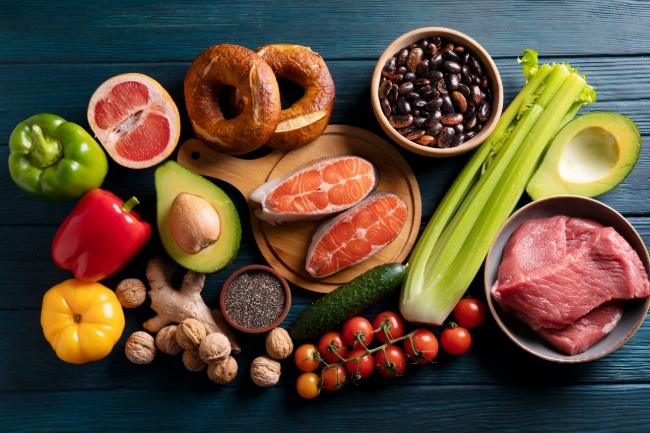
Maintaining this type of dietary pattern may help prolong satiety and reduce feelings of hunger. Over the long term, I propose that it may also facilitate the transmission, via the gut-brain axis, of information to the brain indicating that food remains sufficiently available.
Note 2. I do not believe that foods high in fat should necessarily be avoided. Depending on the overall composition of the diet and how such foods are consumed, they can be incorporated appropriately.
【Related Article】
Weight Loss Without Rebounding Requires Two Steps
<References>
[1] Bacon L, Aphramor L. Weight science: evaluating the evidence for a paradigm shift. Nutr J. 2011 Jan 24;10:9.
[2-3] Deleted
[4] Rosenbaum M, Leibel RL. Adaptive thermogenesis in humans. Int J Obes (Lond). 2010 Oct;34 Suppl 1(0 1):S47-55.
[5]Jiménez Jaime T et al. Effect of calorie restriction on energy expenditure in overweight and obese adult women. Nutr Hosp. 2015 Jun 1;31(6):2428-36.
[6]Johannsen DL et al. Metabolic slowing with massive weight loss despite preservation of fat-free mass. J Clin Endocrinol Metab. 2012 Jul;97(7):2489-96.
[7]Hall KD, Guo J. Obesity Energetics: Body Weight Regulation and the Effects of Diet Composition. Gastroenterology. 2017 May;152(7):1718-1727.e3.
[8]Leibel RL, Rosenbaum M, Hirsch J. Changes in energy expenditure resulting from altered body weight. N Engl J Med. 1995 Mar 9;332(10):621-8.
[9]Egan AM, Collins AL. Dynamic changes in energy expenditure in response to underfeeding: a review. Proc Nutr Soc. 2022 May;81(2):199-212.
[10]Heinitz S et al. Early adaptive thermogenesis is a determinant of weight loss after six weeks of caloric restriction in overweight subjects. Metabolism. 2020 Sep;110:154303.
[11] Dulloo AG, Seydoux J, Jacquet J. Adaptive thermogenesis and uncoupling proteins: a reappraisal of their roles in fat metabolism and energy balance. Physiol Behav. 2004 Dec 30;83(4):587-602.
[12]Müller MJ, Enderle J, Bosy-Westphal A. Changes in Energy Expenditure with Weight Gain and Weight Loss in Humans. Curr Obes Rep. 2016 Dec;5(4):413-423.
[13]Fothergill E et al. Persistent metabolic adaptation 6 years after "The Biggest Loser" competition. Obesity (Silver Spring). 2016 Aug;24(8):1612-9.
[14]Schwartz MW et al. Central nervous system control of food intake. Nature. 2000 Apr 6;404(6778):661-71.
[15]Ochner CN et al. Biological mechanisms that promote weight regain following weight loss in obese humans. Physiol Behav. 2013 Aug 15;120:106-13.
[16]Hebebrand J et al. The role of hypoleptinemia in the psychological and behavioral adaptation to starvation: Implications for anorexia nervosa. Neurosci Biobehav Rev. 2022 Oct;141:104807.
[17]Leibel RL. The role of leptin in the control of body weight. Nutr Rev. 2002 Oct;60(10 Pt 2):S15-9; discussion S68-84, 85-7.
[18]Löfgren P et al. Long-term prospective and controlled studies demonstrate adipose tissue hypercellularity and relative leptin deficiency in the postobese state. J Clin Endocrinol Metab. 2005 Nov;90(11):6207-13.
[19]Rosenbaum M et al. Effects of weight change on plasma leptin concentrations and energy expenditure. J Clin Endocrinol Metab. 1997 Nov;82(11):3647-54.
[20]Ahima RS et al. Role of leptin in the neuroendocrine response to fasting. Nature. 1996 Jul 18;382(6588):250-2.
[21] Rosenbaum M et al. Energy intake in weight-reduced humans. Brain Res. 2010 Sep 2;1350:95-102.
[22]Kissileff HR et al. Leptin reverses declines in satiation in weight-reduced obese humans. Am J Clin Nutr. 2012 Feb;95(2):309-17.
[23] Sumithran P et al. Long-term persistence of hormonal adaptations to weight loss. N Engl J Med. 2011 Oct 27;365(17):1597-604.
[24]Chaptini L, Peikin S. Neuroendocrine regulation of food intake. Curr Opin Gastroenterol. 2008 Mar;24(2):223-9.
[25]Alonso-Alonso M et al. Food reward system: current perspectives and future research needs. Nutr Rev. 2015 May;73(5):296-307.
[26]Begg DP, Woods SC. The endocrinology of food intake. Nat Rev Endocrinol. 2013 Oct;9(10):584-97.
[27]Goldstone AP et al. Fasting biases brain reward systems towards high-calorie foods. Eur J Neurosci. 2009 Oct;30(8):1625-35.
[28]Siep N et al. Hunger is the best spice: an fMRI study of the effects of attention, hunger and calorie content on food reward processing in the amygdala and orbitofrontal cortex. Behav Brain Res. 2009 Mar 2;198(1):149-58.
[29]Haase L, Cerf-Ducastel B, Murphy C. Cortical activation in response to pure taste stimuli during the physiological states of hunger and satiety. Neuroimage. 2009 Feb 1;44(3):1008-21.
[30] Stice E, Burger K, Yokum S. Caloric deprivation increases responsivity of attention and reward brain regions to intake, anticipated intake, and images of palatable foods. Neuroimage. 2013 Feb 15;67:322-30.
[31] de Araujo IE et al. Food reward in the absence of taste receptor signaling. Neuron. 2008 Mar 27;57(6):930-41.
[32]Avena NM, Rada P, Hoebel BG. Sugar and fat bingeing have notable differences in addictive-like behavior. J Nutr. 2009 Mar;139(3):623-8.
[33]Berthoud HR, Zheng H, Shin AC. Food reward in the obese and after weight loss induced by calorie restriction and bariatric surgery. Ann N Y Acad Sci. 2012 Aug;1264(1):36-48.
[34]Pannacciulli N et al. Less activation of the left dorsolateral prefrontal cortex in response to a meal: a feature of obesity. Am J Clin Nutr. 2006 Oct;84(4):725-31.
[35]DelParigi A et al. Successful dieters have increased neural activity in cortical areas involved in the control of behavior. Int J Obes (Lond). 2007 Mar;31(3):440-8.
[36]Burger KS, Stice E. Relation of dietary restraint scores to activation of reward-related brain regions in response to food intake, anticipated intake, and food pictures. Neuroimage. 2011 Mar 1;55(1):233-9.
[37]Stice E, Davis K, Miller NP, Marti CN. Fasting increases risk for onset of binge eating and bulimic pathology: a 5-year prospective study. J Abnorm Psychol. 2008 Nov;117(4):941-6.
[38]Ogawa R et al. Chronic food restriction and reduced dietary fat: risk factors for bouts of overeating. Physiol Behav. 2005 Nov 15;86(4):578-85.
[39]Gurr MI et al. Adipose tissue cellularity in man: the relationship between fat cell size and number, the mass and distribution of body fat and the history of weight gain and loss. Int J Obes. 1982;6(5):419-36. PMID: 7174187.
[40]Yang MU, Presta E, Björntorp P. Refeeding after fasting in rats: effects of duration of starvation and refeeding on food efficiency in diet-induced obesity. Am J Clin Nutr. 1990 Jun;51(6):970-8.
[41]Arner P. Control of lipolysis and its relevance to development of obesity in man. Diabetes Metab Rev. 1988 Aug;4(5):507-15. PMID: 3061758.
[42]MacLean PS et al. The role for adipose tissue in weight regain after weight loss. Obes Rev. 2015 Feb;16 Suppl 1(Suppl 1):45-54.
[43]MacLean PS et al. Peripheral metabolic responses to prolonged weight reduction that promote rapid, efficient regain in obesity-prone rats. Am J Physiol Regul Integr Comp Physiol. 2006 Jun;290(6):R1577-88.
2024.10.14
The Growing Importance of Body-Weight Set Point Theory: How Can the Recent Rise in Obesity Be Explained?
Summary
(1)The body weight set point model
In 1953, Gordon C. Kennedy proposed that the accumulation of body fat may be physiologically regulated. Later, in 1982, nutritionists William Bennett and Joel Gurin expanded on this concept and developed the “set-point theory.”
(2)Body-weight homeostasis
When an individual loses weight, the body not only reduces energy expenditure beyond what would be predicted from changes in body composition and the thermic effect of food, but also increases appetite through hormonal regulation and alters food preferences. As a result, conditions are created that make weight rebound more likely.
In contrast, temporary weight gain caused by overeating is also thought to trigger compensatory mechanisms that act to return body weight toward its set-point range. However, these mechanisms may be weaker than those that resist weight loss.
A person’s body-weight set point is thought to be established from childhood through adolescence and to remain relatively stable thereafter. However, it has also been suggested that it may shift in response to major environmental changes such as marriage, childbirth, or migration.
Currently, set-point theory has become an important framework for explaining why body weight is not regulated solely by willpower or simple calorie calculations.
(3)Limitations of the set-point model
The set-point model, which proposes that body weight is regulated within a certain range, does not fully explain the sharp rise in obesity observed primarily in Western countries since the 1970s. In response to this limitation, some researchers have suggested that while metabolic resistance to maintaining weight loss is strong, physiological resistance to sustained fat gain may not persist over the long term.
(4)Questions regarding the high-energy diet hypothesis
Animal studies have reported irreversible weight gain following the long-term consumption of high-energy diets. In humans, however, some individuals remain lean despite consuming similarly high-calorie diets, and the hypothesis does not readily account for phenomena such as weight gain associated with social class or major environmental changes.
(5)Intestinal starvation as an alternative perspective
The recent rise in obesity cannot be fully explained by excess energy intake alone. Irreversible weight gain reflecting an upward shift in the body-weight set point may instead be triggered when the body perceives that “food is scarce.”
Since the 1970s, advances in food processing and the resulting changes in the food environment may have increased the likelihood of a physiological state in which the body perceives that ingested food has been completely digested within the intestinal tract—what I refer to as “intestinal starvation.”
【 Full text 】
-
Contents
-
- Advances in understanding set-point theory
- Limitations of the set-point model
- Environmental and behavioral factors influencing the body-weight set point
I view the human body as possessing a homeostatic system that attempts to maintain body weight within a certain range, and from this perspective, I believe that the concept of a body-weight set point carries important implications.
In this article, I will discuss the background and challenges of set-point theory, which has received renewed attention in recent years. I believe that understanding the environmental and behavioral factors that may contribute to upward shifts in the body-weight set point is important for addressing the growing problem of obesity.
1. Advances in understanding set-point theory
Obesity and weight loss attempts
♦An obese individual who insists that a lean friend has consistently eaten more than the fat person does, may well be telling the truth.(*snip*)
The group of obese patients who are greatly in need of our understanding are those who keep to a calorie intake of perhaps 1,000 kcal per day, yet lose less than one kg per week. There is no doubt whatsoever that such people exist, and can be studied in a metabolic ward under conditions where 'cheating' is virtually impossible without being detected.
Usually these are middle-aged women who have been perhaps 40 kg overweight, and who have already lost about 20 kg. They are often depressed, hypothermic, and have a low metabolic rate. The nature of this metabolic adaptation to a low-calorie diet is not known (as of 1973), but it is a phenomenon that has been recognized since before the 1920s (J S Garrow, 1973)[1].
♦For obese individuals, a certain amount of weight loss is possible through a range of treatments, but long-term maintenance of weight loss is much more challenging, and in most cases, the weight is regained [2]. In a meta-analysis of 29 long-term weight loss studies, more than half of the lost weight was regained within two years, and by five years, more than 80% of lost weight was regained [3,4].
In addition, studies of those who are successful at sustained weight loss indicate that the maintenance of reduced body fat will probably require close attention to energy intake and expenditure, perhaps for life [5].
Energy expenditure in obesity
♦The hypometabolic thesis had fallen out of favor by 1930, when more accurate calculations of body-surface area indicated that the metabolic rates of obese individuals were normal [6].
♦Total energy expenditure (TEE) in a day consists of three components: diet-induced thermogenesis (DIT), physical activity energy expenditure (PAEE), and resting energy expenditure (REE).
When comparing hypothetical men weighing 100 kg and 70 kg, the man weighing 100 kg has a higher TEE [7].
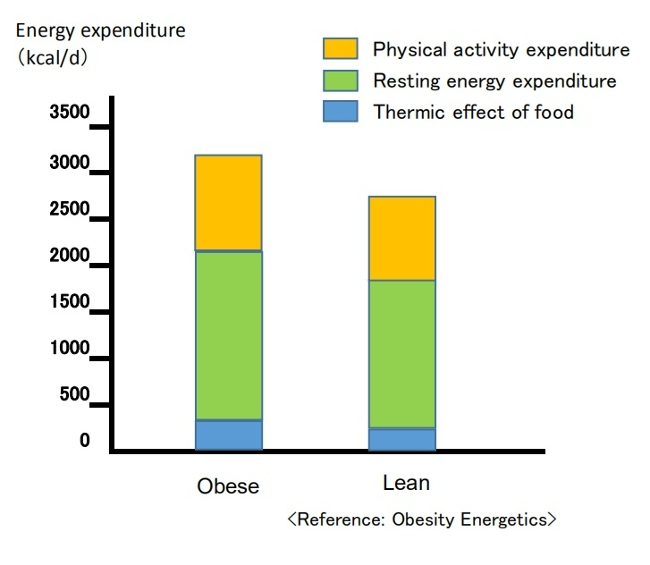
Breakdown of energy expenditure in average 100-kg and 70-kg men
Contrary to popular belief, people with obesity generally have a higher absolute REE compared to leaner subjects. This is because obesity increases both body fat and metabolically active fat-free mass [7,8].
PAEE can be subdivided into "voluntary exercise" and “activities of daily living.” Despite typically engaging in less physical activity, obese individuals often have a daily energy cost for physical activity similar to that of non-obese individuals since PAEE is proportional to body weight [7,9]. Additionally, due to greater food intake, their DIT also tends to be higher [7].
Dynamic changes in energy expenditure
♦Obesity prevention is often erroneously described as a simple bookkeeping matter of balancing caloric intake and expenditure [10].
In this model, energy intake and expenditure are considered independent parameters determined solely by behavior. It is assumed that an obese person can steadily lose weight by eating less and/or moving more at a rate of one pound for every 3,500 kcal (or one kg for every 7,200 kcal) of accumulated dietary caloric deficit [7,11]. This view has been referred to as a “static model” of weight loss, but it has been shown to be physiologically impossible [7,12].
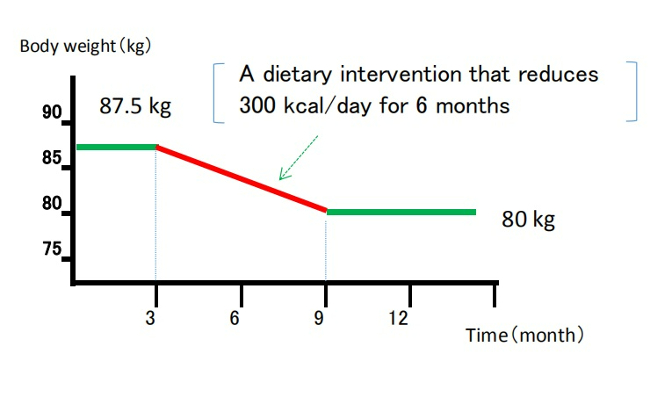
Static model of weight loss
(Despite being recognized as overly simplistic, the 3,500 kcal rule continues to appear in scientific literature and has been cited in over 35,000 educational weight-loss websites as of 2013.) [12,13]
♦It is now understood that energy intake and expenditure are interdependent variables, influenced by each other and by homeostatic signals triggered by changes in body weight [7,14].
Attempts to alter energy balance through diet or exercise are countered by physiological adaptations that resist weight loss [7].
Body weight set point theory
♦In recent years, the influence of homeostatic control has become increasingly recognized, and growing evidence suggests that the body employs physiological mechanisms to regulate energy balance and maintain body weight around a genetically and environmentally determined set point [12].
In 1953, Kennedy proposed that body fat storage is regulated [15]. In 1982, nutritional researchers William Bennett and Joel Gurin expanded on Kennedy's concept when they developed the set-point theory [16]. The model has been widely adopted, and strengthened particularly after the discovery of leptin in the 1990s [7,12].
When an individual loses weight, the body significantly reduces energy expenditure to a degree that is often greater than predicted based on changes in body composition or the thermic effect of food. This process also causes an increase in appetite through hormonal regulation and alters food preferences through behavioral changes, to drive body weight back toward its set-point range[7,16].
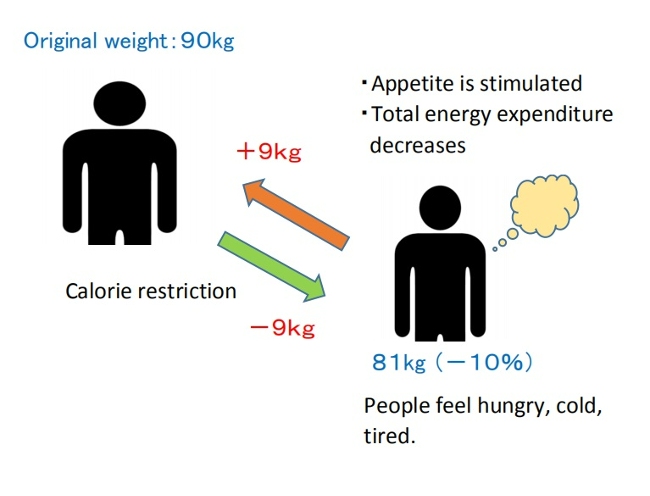
Set-point model of weight loss
♦Weight-loss studies have shown that the magnitude of fat stores in the body is protected by mechanisms mediated by the central nervous system, which adjust energy intake (EI) and expenditure (EE) via signals from adipose tissue, the gastrointestinal tract, and endocrine organs to maintain homeostasis and resist weight change as proposed by the set-point model [12,17].
♦The body's protective metabolic mechanism that attempts to preserve energy stores during an energy crisis is known as adaptive thermogenesis (AT) or metabolic adaptation [7,12].
AT is defined as the underfeeding-associated fall in resting energy expenditure (REE), independent of changes in body composition [12].
♦Maintenance of a 10% or greater reduction in body weight in lean or obese individuals is accompanied by about 20 to 25% decline in 24-hour energy expenditure. This decrease in weight maintenance calories is 10–15% greater than predicted based solely on changes in fat and lean mass [17,18].
Since obese individuals also display these compensatory metabolic adjustments in response to dietary restriction, obesity may be considered a natural physiological state for some people. Experimental studies on obesity in animals similarly suggest a view of obesity as a condition of body energy regulation at an elevated set point [19].
♦A meta-analysis of cross-sectional studies investigating adaptive thermogenesis (AT) by comparing formerly obese subjects who had lost weight with BMI-matched subjects who were never obese, found a 3–5% lower resting energy expenditure (REE) in formerly obese subjects compared to never obese controls [20].
This effect means, for example, that if an obese woman reduced her weight from 100 kg to 70 kg, she would have to consume fewer calories to remain at 70 kg than a woman who had consistently weighed 70 kg [6]. Similar results have been confirmed in animal experiments involving obese and normal-weight rats.
This suggests that the frequent claim made by obese people that they eat the same or less than their lean friends but lose no weight, must be given more credence than it is ordinarily accorded [19].
♦On the other hand, as shown in overfeeding experiments on prisoners in Vermont in the 1960s (Doctor Ethan Sims), weight gain due to temporary overeating also triggers compensatory mechanisms that bring body weight back toward its set-point range.
However, some researchers point out that these may be weaker than the mechanisms that resist weight loss.
This asymmetry could be due to the evolutionary advantage of storing fat to survive during periods of food scarcity or starvation [16,17].

♦In addition, hyperphagia (overeating) has been demonstrated following experimental semi-starvation and short-term underfeeding, which is probably the result of homeostatic signals resulting from the loss of both body fat and lean tissue [7,21].
♦This theory also suggests that a person's body-weight set point is established early in life and remains relatively stable unless altered by specific conditions. However, the set point may change throughout one’s life due to factors such as marriage, childbirth, menopause, aging, and disease [16].
On the other hand, the set-point theory remains hypothetical because the molecular mechanisms involved in set-point regulation have not yet been fully elucidated, and some researchers may consider the theory overly simplistic [16].
2. Limitations of the set-point model
On the other hand, some researchers have pointed out important limitations of the body-weight set-point model.
If a homeostatic system truly exists to maintain body weight within a certain range, a fundamental question arises: why do so many individuals in Western countries continue to gain weight gradually throughout majority of their adult lives? In particular, this model does not adequately explain the increasing prevalence of obesity observed in many societies worldwide since around the 1970s [22].
In response, some researchers have suggested that while metabolic resistance to sustaining a reduced body weight is strong, metabolic resistance to sustained increased adiposity may not be physiologically long-lasting. Indeed, the steady increase in obesity prevalence supports the idea that the human body may be physiologically more permissive of weight gain than of weight loss [17,23].
■Animal studies using rats have shown that during the first 3–4 weeks of exposure to a high-fat diet, increases in energy expenditure and activation of the sympathetic nervous system (SNS) can be observed.
However, these compensatory responses were no longer evident after a few months of high-fat diet consumption [17,24].
Furthermore, another rat study has reported that long-term consumption of highly palatable, high-energy diet—such as potato chips and cheese crackers—led to irreversible weight gain, suggesting an upward shift in the body-weight set point [19,25].

These explanations that continuous consumption of high-calorie diet leads to an increase in the body-weight set point may sound plausible at first. However, in my opinion, if body weight changes in only one direction in response to a single external factor, it can no longer be considered a true “set point.”
Moreover, when this hypothesis is applied to humans, it fails to account for the fact that some individuals remain lean despite frequently consuming similarly high-calorie foods. In practice, several contradictions can be identified, including the following:
(1) Obesity is frequently observed among low-income populations in Western countries, as well as among relatively affluent groups in developing countries [22, 27, 28].
(2) Since the 1950s, the coexistence of undernutrition and obesity within poor populations has been documented worldwide [29].
(3) A substantial number of individuals gain weight following major life or environmental changes—such as entering university, marriage, childbirth, or migration from Asia to Western countries [22].
I propose that upward shifts in the body-weight set point are associated with adaptive responses to intestinal starvation.
The next section provides a more detailed explanation of this mechanism.
3. Environmental and behavioral factors influencing the body-weight set point
At present, many international organizations classify obesity as a chronic disease.
Some researchers interested in the body-weight set-point theory have argued that determining whether obesity, as a chronic condition, is treatable requires a clear understanding of how genetic and environmental factors interact to regulate the set point. At the same time, it is also true that many important environmental and social influences remain insufficiently explained [22].
In this article, I will introduce the concept of “intestinal starvation” as a complementary perspective to address these challenges. The key points are outlined below in four parts.
(1) Limitations of the positive energy balance hypothesis
It is generally assumed that weight gain requires a positive energy balance, and the recent rise in obesity is often explained by increased consumption of high-calorie foods and reduced levels of physical activity. Paradoxically, however, the fact that obesity rates have increased in parallel with the growing prevalence of dieting aimed at weight loss [30] suggests that our current understanding of energy balance may warrant reconsideration [12].
What I want to emphasize is that while short-term weight gain due to overeating can be explained by excess energy intake, long-term and potentially irreversible weight gain may instead be triggered by energy deprivation or by the body’s perception that food is scarce. This pattern is also consistent with the phenomenon in which body weight increases beyond its previous level following experimental starvation or weight-loss dieting.
【Related Articles】The Spread of Dieting May Be Fueling the Rise in Obesity
(2) Changes in digestion and absorption brought about by food processing
It is certainly true that high-calorie foods have become increasingly common since the 1970s. However, an even more important factor affecting the human body may be the rise of food processing—particularly ultra-processing. As food processing advanced, hard-to-digest components were gradually removed, while softer and more easily digestible components became increasingly dominant.
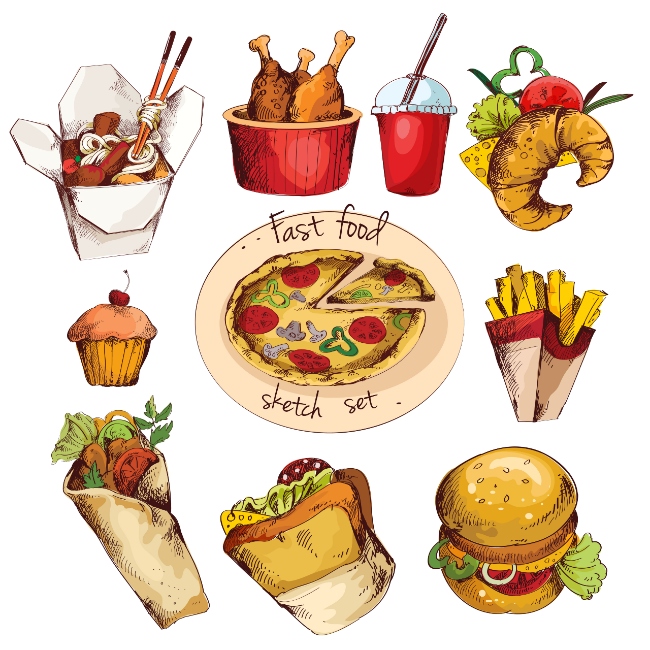
As a result, substantial changes may have occurred in the rate of digestion and absorption, as well as in the gut environment.
Intestinal starvation appears to be associated with the frequent consumption of refined carbohydrates and (ultra-)processed foods, and may help explain both the rise in obesity since the 1970s and why obesity can occur frequently not only in developed countries, but also in certain regions of the developing world.
【Related Article】
The Rise in Obesity is Closely Linked to the Consumption of Ultra-Processed Foods
(3) Intestinal starvation as a multifactorial model
Intestinal starvation is a physiological state that is more likely to occur when four factors overlap simultaneously. This concept provides a framework for understanding obesity as a chronic condition arising from interactions between genetic and environmental factors.
【Related Article】Three (+1) Factors That Accelerate “Intestinal Starvation”
(4) Why does the body resist weight loss in obese individuals?
In cases of weight gain that may reflect an upward shift in the body-weight set point through intestinal starvation, the overall efficiency of nutrient absorption may increase. In other words, from the perspective of energy homeostasis, the balance point at which energy intake and expenditure are matched may itself shift to a higher level. This perspective may help explain why even obese individuals with substantial body fat often exhibit compensatory metabolic responses to caloric restriction.
【Related Article】How Intestinal Starvation Can Lead to Weight Gain
As mentioned in the section 2, an animal study in rats reported that 90 days of exposure to a “high-energy diet” resulted in irreversible weight gain suggestive of an upward shift in the body-weight set point (Rolls et al., 1980). However, the “fattening diet” used in this experiment consisted mainly of commercially available, highly palatable foods such as potato chips, cheese crackers, and cookies [25]. At the same time, these foods were also highly refined carbohydrates and (ultra-)processed foods.
In contrast, the solid chow provided to the control group consisted of cracked grains, soybean meal, fish meal, and similar ingredients, and may have contained larger amounts of less digestible matter, such as dietary fiber and the tough cell walls of plants. In this respect, the composition of the control diet may have resembled that of human diets commonly seen more than 50 years ago.
Therefore, I believe that caution is needed before concluding that the long-term consumption of a high-energy diet directly caused weight gain suggestive of an upward shift in the body-weight set point.
<References>
[1]Garrow JS. Diet and obesity. Proc R Soc Med. 1973 Jul;66(7):642-4. PMID: 4741395; PMCID: PMC1645095.
[2]Wu T, Gao X, Chen M, van Dam RM. Long-term effectiveness of diet-plus-exercise interventions vs. diet-only interventions for weight loss: a meta-analysis. Obes Rev. 2009;10(3):313–323.
[3] Hall KD, Kahan S. Maintenance of Lost Weight and Long-Term Management of Obesity. Med Clin North Am. 2018 Jan;102(1):183-197.
[4]Anderson JW, Konz EC, Frederich RC, Wood CL. Long-term weight-loss maintenance: a meta-analysis of US studies. Am J Clin Nutr. 2001 Nov;74(5):579-84.
[5]Wing RR, Hill JO. Successful weight loss maintenance. Annu Rev Nutr. 2001;21:323-41.
[6]Jou C. The biology and genetics of obesity--a century of inquiries. N Engl J Med. 2014 May 15;370(20):1874-7.
[7]Hall KD, Guo J. Obesity Energetics: Body Weight Regulation and the Effects of Diet Composition. Gastroenterology. 2017 May;152(7):1718-1727.e3.
[8]Nelson KM, Weinsier RL, Long CL, et al. Prediction of resting energy expenditure from fat-free mass and fat mass. Am J Clin Nutr. 1992;56:848–856.
[9]Westerterp KR. Physical activity, food intake, and body weight regulation: insights from doubly labeled water studies. Nutr Rev. 2010;68:148–154.
[10] Levine DI. The curious history of the calorie in U.S. policy: a tradition of unfulfilled promises. Am J Prev Med. 2017;52:125–129.
[11] Hall KD, Chow CC. Why is the 3500 kcal per pound weight loss rule wrong? Int J Obes (Lond). 2013 Dec;37(12):1614.
[12] Egan AM, Collins AL. Dynamic changes in energy expenditure in response to underfeeding: a review. Proc Nutr Soc. 2022 May;81(2):199-212. doi: 10.1017/S0029665121003669. Epub 2021 Oct 4. PMID: 35103583.
[13]Thomas DM, Martin CK, Lettieri S et al. (2013) Can a weight loss of one pound a week be achieved with a 3500-kcal deficit? Commentary on a commonly accepted rule. In Int J Obes 37, 1611–1613.)
[14]Hall KD, Heymsfield SB, Kemnitz JW et al. Energy balance and its components: implications for body weight regulation. Am J Clin Nutr. 2012 Apr;95(4):989-94.
[15]KENNEDY GC. The role of depot fat in the hypothalamic control of food intake in the rat. Proc R Soc Lond B Biol Sci. 1953 Jan 15;140(901):578-96.
[16] Ganipisetti VM, Bollimunta P. Obesity and Set-Point Theory. 2023 Apr 25. In: StatPearls [Internet]. Treasure Island (FL): StatPearls Publishing; 2024 Jan–. PMID: 37276312.
[17] Rosenbaum M, Leibel RL. Adaptive thermogenesis in humans. Int J Obes (Lond). 2010 Oct;34 Suppl 1(0 1):S47-55.
[18] Leibel R, Rosenbaum M, Hirsch J. Changes in energy expenditure resulting from altered body weight. N Eng J Med. 1995;332:621–28.
[19] Richard E. Keesey, Matt D. Hirvonen, Body Weight Set-Points: Determination and Adjustment, The Journal of Nutrition, Volume 127, Issue 9, 1997, Pages 1875S-1883S, ISSN 0022-3166.
[20]Astrup A, Gøtzsche PC, van de Werken K, et al. Meta-analysis of resting metabolic rate in formerly obese subjects. Am J Clin Nutr. 1999 Jun;69(6):1117-22.
[21] Dulloo AG, Jacquet J, Girardier L. Poststarvation hyperphagia and body fat overshooting in humans: a role for feedback signals from lean and fat tissues. Am J Clin Nutr. 1997;65:717–723.
[22]Speakman JR, Levitsky DA, Allison DB, et al. Set points, settling points and some alternative models: theoretical options to understand how genes and environments combine to regulate body adiposity. Dis Model Mech. 2011 Nov;4(6):733-45.
[23] Schwartz MW, Woods SC, Seeley RJ, et al. Is the energy homeostasis system inherently biased toward weight gain? Diabetes. 2003 Feb;52(2):232-8.
[24] Corbett SW, Stern JS, Keesey RE. Energy expenditure in rats with diet-induced obesity. Am J Clin Nutr. 1986 Aug;44(2):173-80.
[25] Rolls B.J., Rowe E.A., Turner R.C. Persistent obesity in rats following a period of consumption of a mixed high energy diet. J Physiol. 1980 Jan;298:415-27.
[26](Deleted)
[27] Dykes J et al. Socioeconomic gradient in body size and obesity among women: the role of dietary restraint, disinhibition and hunger in the Whitehall II study. International Journal of Obesity 2004 Feb,:262-68.
[28] Poskitt EM. Countries in transition: underweight to obesity non-stop? Ann Trop Paediatr. 2009 Mar;29(1):1-11.
[29] Gary Taubes. 2011. Why we get fat. New York: Anchor Books. Pages 15-32.
[30] Montani JP, Schutz Y, Dulloo AG. Dieting and weight cycling as risk factors for cardiometabolic diseases: who is really at risk? Obes Rev. 2015 Feb;16 Suppl 1:7-18.
2024.06.20
Overfeeding Studies and Obesity: Is Weight Gained Through Short-Term Overfeeding Maintained?
Summary
1. In the late 1960s, an overfeeding experiment conducted by Ethan Sims et al. in Vermont resulted in an average weight gain of approximately 9–11 kg over about 200 days. However, when participants returned to their usual diets after the experiment, most returned to near their original weight.
2. George Bray, who had participated in this study as a co-investigator, conducted an overfeeding experiment on himself in 1972 and gained about 10 kg over 10 weeks. After the experiment ended, however, his weight declined rapidly, returning to baseline within about six weeks.
3. In 1990, an overfeeding study involving 12 pairs of identical twins resulted in an average weight gain of 8.1 kg over 100 days, approximately 67% of which was body fat. However, there was substantial individual variation in weight gain, suggesting that genetic factors play an important role in determining changes in body weight and body composition.
4. In 1995, Leibel et al. examined energy expenditure (EE) after body weight was reduced by 10–20% below the usual weight or increased by 10% through overfeeding. The results suggested that maintaining body weight below or above its usual level induces changes in EE that oppose the change in weight, potentially acting to return body weight toward its previous level.
5. A decrease or increase in EE beyond what would be predicted from changes in body weight and body composition is referred to as “metabolic adaptation.” While metabolic adaptation during weight loss has been observed relatively consistently, findings are mixed as to whether a similar adaptation occurs during overfeeding to dissipate excess energy.
Discussion
6. Metabolic adaptation during weight loss and the EE response to overfeeding may not necessarily be symmetrical.
7. Overfeeding experiments lasting only a few weeks to a few months do not directly replicate the mechanisms underlying obesity that develops gradually over several years. It may therefore be necessary to distinguish weight gain caused by short-term overfeeding from obesity that develops over the long term.
8. I believe this difference can be explained using the concept of a “body-weight set point.”
In this model, obesity that develops over the long term involves an upward shift in the body-weight set point due to genetic and environmental factors, whereas temporary weight gain caused by overfeeding occurs without a change in the set point itself.
【Full text】
-
Contents
-
- Can overeating alone make people obese?
- Subsequent overfeeding studies
- Can metabolism explain the return of body weight after overfeeding?
- Discussion
1. Can overeating alone make people obese?
Until the 1960s, obesity was widely attributed primarily to “overeating” and a “lack of willpower,” and relatively little research focused on the biology of obesity itself. However, this view was significantly influenced by overfeeding experiments conducted by Professor Ethan Sims and his colleagues in the late 1960s [1].
Sims et al. conducted a long-term overfeeding study among inmates at the Vermont State Prison, with the goal of increasing their body weight by approximately 15–30%.
The results showed substantial individual variation in both the amount of weight gained and the energy intake required to reach the target weight.
In many participants, endocrine and metabolic changes similar to those seen in naturally occurring obesity were also observed, suggesting that many of these changes might be consequences of obesity rather than its causes [2,3].

Subsequent reports indicated that the overfeeding experiment lasted about 200 days and that the 20 participants gained an average of about 9–11 kg. However, when their energy intake returned to normal levels after the experiment, most participants returned to near their original weight over the following weeks and months. Only two were reported to have maintained the weight they had gained [2,3].
Professor George Bray, who had participated in Sims's overfeeding study as a co-investigator, also conducted an overfeeding experiment on himself in 1972, gaining approximately 10 kg over 10 weeks.
After the experiment ended, however, his weight declined rapidly, returning to baseline within about six weeks. Four volunteers who later underwent similar overfeeding experiments also eventually returned to their baseline weight.
Bray noted that this tendency for gained weight to return toward its previous level contrasts with the difficulty obese individuals often experience in maintaining a lower weight after weight loss [1].

These overfeeding experiments showed that weight gained through short-term overfeeding is not necessarily easy to maintain over the long term. Furthermore, they suggest that biological factors not fully explained by energy intake alone may be involved in the development and maintenance of obesity [1].
2. Subsequent overfeeding studies
■In 1990, researchers at Laval University conducted an overfeeding study involving 12 pairs of sedentary male identical twins. Each participant's daily energy requirements were measured before the experiment, after which they consumed an additional 1,000 kcal per day over a 100-day period (six days per week, for a total of 84 days). The participants lived in a university dormitory and were under staff supervision 24 hours a day [4].
On average, body weight increased by 8.1 kg, of which 5.4 kg (approximately 67%) was body fat. However, there was substantial individual variation in weight gain, ranging from 4.3 to 13.3 kg [4].

(Source: Magnific)
By comparing differences within and between twin pairs, the study suggested that genetic factors play an important role in determining changes in body weight and body composition even under the same degree of energy surplus [4].
Four months after the experiment ended, the twins had lost approximately 7 of the 8 kg they had gained during overfeeding, returning to near their baseline weight [5].
■Leaf and Antonio reviewed overfeeding studies conducted up to 2017 that reported changes in body weight and body composition. They identified 25 studies that reported changes in fat mass (FM) and fat-free mass (FFM) in addition to weight gain, with study durations ranging from 9 to 100 days. With the exception of four studies, all involved populations with low levels of habitual physical activity [6]. Because the studies had different objectives, changes in body weight several months after the overfeeding period were not necessarily reported.
The review summarized the 25 studies according to dietary composition.
Among them, 10 studies used diets relatively high in carbohydrates and fat and relatively low in protein (11–15% of total energy intake). In these studies, most of the weight gained was FM, accounting for approximately 60–70% of the total weight gain. The authors also noted that, in the absence of exercise, much of the increase in FFM may reflect increases in body water rather than skeletal muscle [6,7].
In contrast, even with a similar energy surplus, higher-protein diets were associated with less gain in FM and more favorable changes in body composition [6,8].
3. Can metabolism explain the return of body weight after overfeeding?
Energy expenditure (EE) increases with overfeeding and weight gain. This is because resting energy expenditure, diet-induced thermogenesis, and energy expenditure from physical activity all increase[9].
An increase in EE beyond what would be predicted from changes in body weight and body composition is referred to as “metabolic adaptation” [9,10].
Historically, this concept is thought to have originated from early observations that body weight did not increase as much as expected despite increased food intake. Researchers hypothesized that there might be an adaptive mechanism of energy expenditure that acts to dissipate excess energy [1,10].
Subsequent studies have made it possible to strictly control energy intake and examine the various components of EE in greater detail [10]. However, studies have produced inconsistent findings regarding the extent to which metabolic adaptation occurs in response to overfeeding [11,12,13].
■In 1995, Leibel et al. examined energy expenditure (EE) in 18 individuals with obesity and 23 who had never been obese after their body weight was reduced by 10–20% below their usual weight or increased by 10% through overfeeding.
They found that when body weight was maintained at 10% or more below the usual level, total daily EE decreased by approximately 6–8 kcal/kg FFM.
In contrast, when body weight was maintained at 10% above the usual level, EE increased by approximately 8–9 kcal/kg FFM.
Similar changes were observed in both individuals with obesity and those who had never been obese [9].
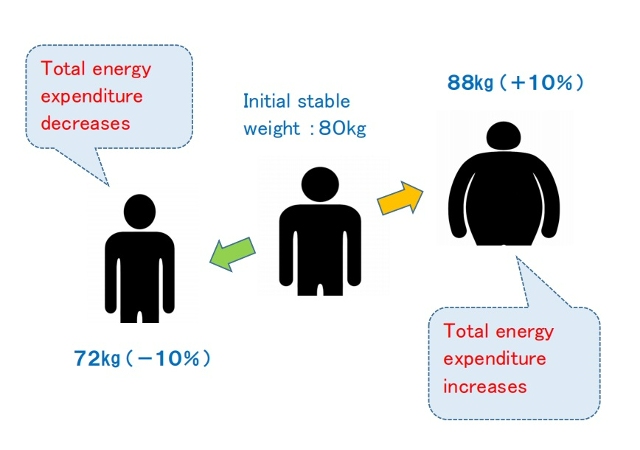
The study suggested that maintaining body weight below or above its usual level may induce changes in EE that oppose the change in weight, potentially acting to return body weight toward its previous level [9].
■Johannsen et al. studied 35 young adults (mean BMI, 25.6 ± 2.3) who consumed a diet providing 40% more energy than their baseline energy requirements for eight weeks. Sleeping metabolic rate (SMR), sedentary 24-hour energy expenditure (24h-EE), and other measures were assessed before and after overfeeding.
On average, participants gained 7.5 kg (range, 2.3–10.7 kg), of which 4.2 kg—more than half—was fat. Overfeeding increased SMR, sedentary 24h-EE, and EE on average, although there was substantial individual variation in these responses [10].

(Source: Magnific)
In addition, participants whose SMR was lower than predicted at baseline retained more of the fat gained during overfeeding six months after the experiment.
In contrast, those whose sedentary 24h-EE was higher than predicted after overfeeding lost more fat over the following six months [10].
The researchers noted that EE responses to overfeeding vary considerably among individuals and suggested that metabolic characteristics sometimes described as “thrifty” and “spendthrift” phenotypes [14,15] may be related to how body weight and body fat return toward their previous levels after overfeeding [10].
4. Discussion
(1) Metabolic adaptation to overfeeding
During weight loss, metabolic adaptation—a reduction in EE beyond what would be expected—is observed relatively consistently. In contrast, findings are inconsistent as to whether a similar metabolic adaptation occurs during overfeeding to dissipate excess energy [10].
Some studies have reported metabolic adaptation in response to overfeeding [4,7,16], whereas others have found that much of the increase in EE can be explained by the normal increase in energy requirements associated with gains in body weight and changes in body composition [12,13,17,18]. In the study by Johannsen et al., no clear metabolic adaptation to overfeeding was observed overall, although there was substantial individual variation in the response [10].
These findings suggest that metabolic adaptation during weight loss and the EE response to overfeeding may not necessarily be symmetrical.
(2) Temporary weight gain and long-term obesity
As discussed above, there is substantial individual variation in how body weight and EE respond to overfeeding. However, most overfeeding experiments last only a few weeks to a few months and therefore do not fully replicate the processes underlying obesity that develops gradually over several years.
I believe this difference may be explained using the concept of a “body-weight set point.”
For example, if a person whose weight is normally stable at 70 kg temporarily increases to 73 kg as a result of overeating, this can be viewed as a change caused by increased energy intake.
Using a glass of water as an analogy, this would be like water swelling above the rim of a full glass due to surface tension (Fig. 1).
Conversely, maintaining a weight of 65 kg by reducing food intake could be compared to a temporary drop in the water level.
In either case, the size of the glass itself—that is, the body-weight set point—remains unchanged.
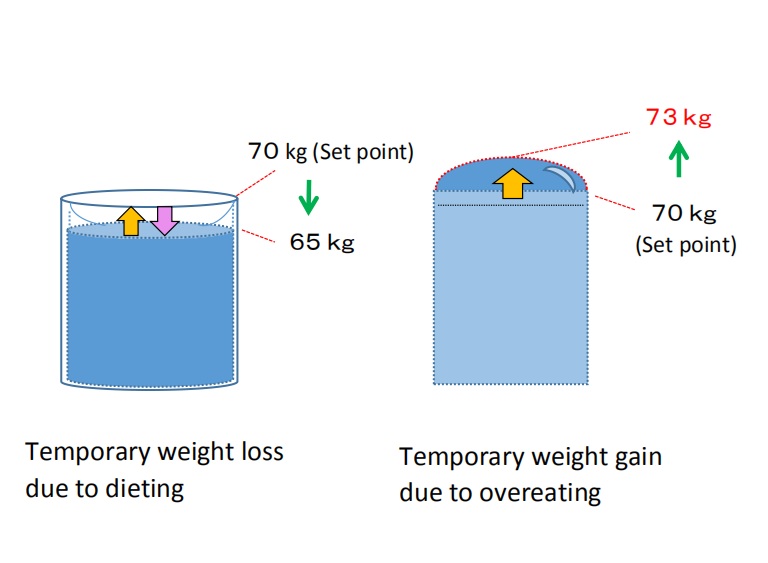
Fig. 1. A glass-of-water analogy (1)
On the other hand, if a person whose weight had been stable at 70 kg gradually comes to maintain a stable weight of 80 kg over several years, this could be viewed as the glass itself becoming larger—in other words, as an upward shift in the body-weight set point (Fig. 2).
In this model, the set point itself is considered to change over the long term in response to genetic and environmental factors.
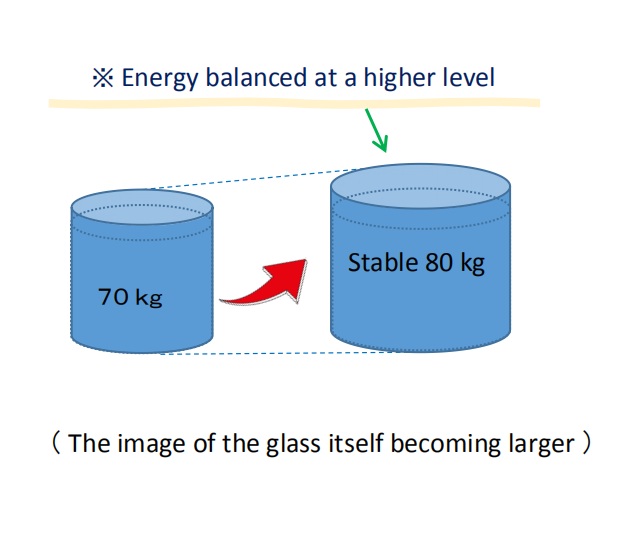
Fig. 2. A glass-of-water analogy (2)
I believe that an upward shift in the body-weight set point may involve adaptive physiological responses that occur when the body perceives a state of starvation. However, this has not been directly demonstrated by overfeeding experiments; rather, it is a hypothesis proposed in this blog.
Final thoughts
What these overfeeding studies show is that although overfeeding can increase body weight, the weight gained is not necessarily maintained. Weight gain resulting from short-term overfeeding may therefore need to be distinguished from obesity as a chronic condition that develops over several years.
As Bray has pointed out, the history of these overfeeding and underfeeding studies suggests that preventing and treating obesity may require more than the traditional advice to simply “eat less and exercise more” [1].
<References>
[1]Bray GA. The pain of weight gain: self-experimentation with overfeeding. Am J Clin Nutr. 2020 Jan 1;111(1):17-20.
[2]Sims EA et al. Experimental obesity in man. Trans Assoc Am Physicians. 1968;81:153-70. PMID: 5721398.
[3]Sims EA et al. Endocrine and metabolic effects of experimental obesity in man. Recent Prog Horm Res. 1973;29:457-96. doi: 10.1016/b978-0-12-571129-6.50016-6. PMID: 4750591.
[4]Bouchard C et al. The response to long-term overfeeding in identical twins. N Engl J Med. 1990 May 24;322(21):1477-82.
[5] Bouchard C et al. Overfeeding in identical twins: 5-year postoverfeeding results. Metabolism. 1996 Aug;45(8):1042-50.
[6]Leaf A, Antonio J. The Effects of Overfeeding on Body Composition: The Role of Macronutrient Composition - A Narrative Review. Int J Exerc Sci. 2017 Dec 1;10(8):1275-1296.
[7]Norgan NG, Durnin JV. The effect of 6 weeks of overfeeding on the body weight, body composition, and energy metabolism of young men. Am J Clin Nutr. 1980 May;33(5):978-88.
[8].Bray GA et al. Effect of protein overfeeding on energy expenditure measured in a metabolic chamber. Am J Clin Nutr. 2015 Mar;101(3):496-505.
[9]Leibel RL, Rosenbaum M, Hirsch J. Changes in energy expenditure resulting from altered body weight. N Engl J Med. 1995 Mar 9;332(10):621-8.
[10]Johannsen DL et al. Metabolic adaptation is not observed after 8 weeks of overfeeding but energy expenditure variability is associated with weight recovery. Am J Clin Nutr. 2019 Oct 1;110(4):805-813.
[11]Westerterp, K. Metabolic adaptations to over—and underfeeding—still a matter of debate?. Eur J Clin Nutr 67, 443–445 (2013).
[12]Ravussin E et al. Short-term, mixed-diet overfeeding in man: no evidence for "luxuskonsumption". Am J Physiol. 1985 Nov;249(5 Pt 1):E470-7.
[13]Diaz EO et al. Metabolic response to experimental overfeeding in lean and overweight healthy volunteers. Am J Clin Nutr. 1992 Oct;56(4):641-55.
[14]Reinhardt M et al. A Human Thrifty Phenotype Associated With Less Weight Loss During Caloric Restriction. Diabetes. 2015 Aug;64(8):2859-67.
[15]Schlögl M et al. Energy Expenditure Responses to Fasting and Overfeeding Identify Phenotypes Associated With Weight Change. Diabetes. 2015 Nov;64(11):3680-9.
[16] Webb P, Annis JF. Adaptation to overeating in lean and overweight men and women. Hum Nutr Clin Nutr. 1983 Mar;37(2):117-31.
[17] Forbes GB et al. Deliberate overfeeding in women and men: energy cost and composition of the weight gain. Br J Nutr. 1986 Jul;56(1):1-9.
[18]Roberts SB et al. Energy expenditure and subsequent nutrient intakes in overfed young men. Am J Physiol. 1990 Sep;259(3 Pt 2):R461-9.
2016.03.15
The Two Distinct Processes Behind Weight Gain
-
Contents
-
- When body weight returns to its original set point (A)
- When the body-weight set point itself increases (B)
- The coexistence of mechanisms A and B in weight gain
In everyday conversation, weight gain is often understood simply as “an increase in body weight (usually body fat)” compared with the past. However, this expression may lump together multiple processes that are physiologically distinct.
To make the discussion easier to follow, the complex phenomena involved in weight gain are deliberately divided here into two processes as a hypothetical framework.
For example, the idea that eating high-calorie foods leads to weight gain is widely shared. In contrast, understanding phenomena such as weight rebound after dieting—sometimes resulting in greater weight gain than before—requires a more explicitly physiological perspective.
I believe that because these qualitatively different processes of weight gain have often been discussed without clear distinction, misleading information about weight loss may have spread, leading many people to engage in dieting practices that are not necessarily appropriate or effective.
【Related article】
The Increasingly Important "Set-Point" Theory of Body Weight
1. When body weight returns to its original set point (A)
The first type of “weight gain” reflects, and arises as part of, the body’s homeostatic drive to return to its set point (Fig. 1A).
Many people who are overweight, or tend to gain weight easily, deliberately try to keep their body weight lower by reducing their daily caloric intake and/or increasing physical activity.
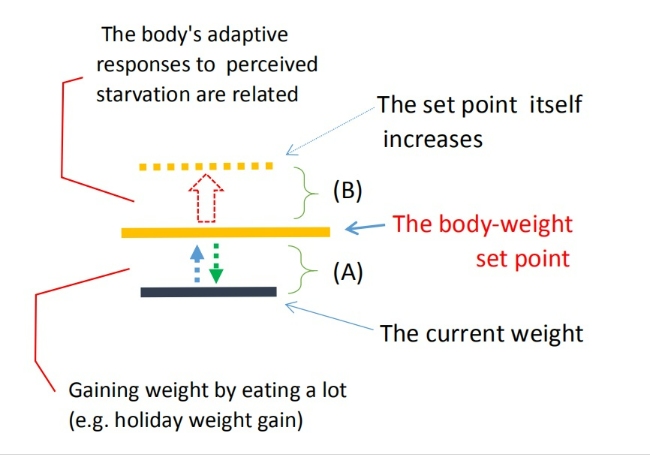
Fig. 1. The two distinct processes of weight gain
Under such conditions, the body often acts in the direction of restoring the set point for body weight. So it is no surprise that if they begin eating more and caloric intake increases, their weight naturally increases.
(Note: Temporary overeating may cause body weight to increase slightly beyond the body-weight set point. However, such weight gain is typically transient and is unlikely to reflect a true change in the set point itself.)
In many countries, people often talk about “holiday weight gain” or say that high-calorie foods inevitably make them gain weight. Some also claim, “I gain weight as soon as I eat a little more.”
But in most cases, these experiences can be explained by the homeostatic mechanism that pulls body weight back toward its set point—meaning that the person is simply repeating small cycles of “mini-diets” followed by “mini-rebounds.”
A helpful analogy is a glass of water: the water level may rise or fall temporarily, but the size of the glass itself does not change(Fig. 2).
Similarly, when temporary overeating pushes body weight slightly above the set point, it is like water swelling above the rim of a full glass due to surface tension.
Fig. 2. A glass-of-water analogy (1)
2. When the body-weight set point itself increases (B)
In contrast, the second type of “weight gain” refers to cases in which the body-weight set point itself gradually increases (Fig. 1B).
I propose that an upward shift in the body-weight set point is associated with the body’s adaptive responses to perceived starvation. Broadly speaking, the body is thought to perceive starvation through two major pathways: one is a severe energy deficit caused by excessive caloric restriction, and the other is what I describe in this blog as “intestinal starvation.”
【Related article】
Biological Responses Driving Weight Rebound After Weight Loss
Here, I will focus on the latter—cases in which an increase in the body-weight set point is thought to be primarily associated with intestinal starvation.
This pattern can be observed in people who are mindful of their caloric intake and keep breakfast or lunch light—such as opting for a simple burger or sandwich, or instant noodles—yet still find themselves saying, “I’ve gained three kilos over the past year,” or “I’m ten kilos heavier than I was three years ago.”
This phenomenon cannot be adequately explained by simple calorie balance alone. Rather, it suggests the possible involvement of intestinal starvation—which may be induced during prolonged periods of hunger—as well as other regulatory mechanisms in elevating the body-weight set point.
For example, imagine someone who had never exceeded 70 kg but, over the course of a year, reaches a new high and stabilizes around 80 kg.
In this situation, the body-weight set point can be considered to have shifted upward from 70 kg to 80 kg, meaning that the baseline at which energy intake and expenditure are balanced has itself moved higher.
An increase in the body-weight set point can be likened, in the glass-of-water analogy introduced earlier, to the glass itself gradually becoming larger (Fig. 3).
Fig. 3. A glass-of-water analogy (2)
Such a shift may contribute to more fundamental differences between individuals who tend to gain weight easily and those who remain lean.
Indeed, research on set-point theory suggests that, for some individuals, obesity may represent a “natural physiological state” in which energy balance is stably maintained at a relatively high set point for body weight[1].
3. The coexistence of mechanisms A and B in weight gain
In real-world weight gain and post-diet rebound, the mechanism for maintaining body weight (A) and the mechanism by which the set point itself increases (B) often operate simultaneously or in an overlapping manner.
For example, the common observation that most people return to their original weight after dieting can be understood as the result of a homeostatic, weight-preserving mechanism (A) described above.
In contrast, when body weight not only returns to baseline but also exceeds the previous level, a mechanism (B) that raises the set point itself may be involved. This is because, during the process of caloric restriction, conditions may arise under which the body comes to perceive itself as being in a state of starvation.
■Sumo wrestlers in Japan are well known for eating large meals and becoming very heavy. In reality, however, their weight gain can be understood as involving a combination of mechanisms (A) and (B) described above.
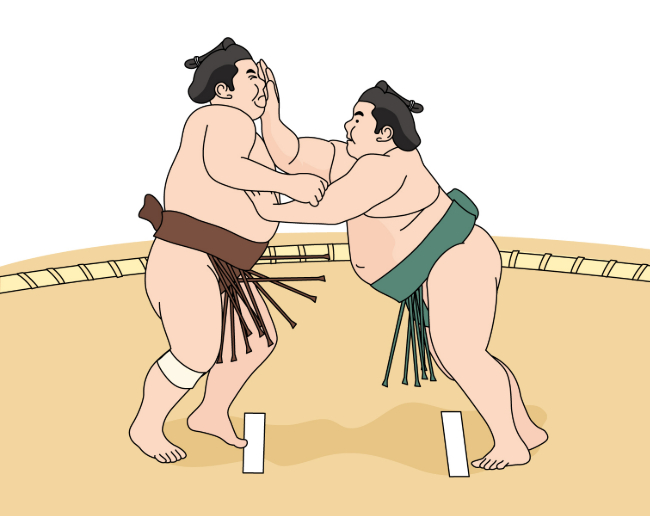
Specifically, their weight gain can be explained by a model in which the body-weight set point first increases through intestinal starvation (B), after which actual body weight rises toward this elevated set point as a result of increased food intake, consistent with mechanism (A).
From the outside, it may simply appear that they become heavier because they eat a lot.
However, the underlying process can be considered fundamentally similar to the mechanism observed in people who regain weight after dieting and ultimately become heavier than before.
【Related article】
Why Are Sumo Wrestlers So Fat?; Six Reasons They’ve Adapted to the Gut Starvation Mechanism
<References>
[1] Richard E. Keesey, Matt D. Hirvonen, Body Weight Set-Points: Determination and Adjustment, The Journal of Nutrition, Volume 127, Issue 9, 1997, Pages 1875S-1883S, ISSN 0022-3166.
2016.03.03
The Set-Point Weight; The Precondition Regarding the Rebound Effect
-
Contents
-
- Each person has the ability to maintain their present condition
- Encounter with the set-point theory
1. Each person has the ability to maintain their present condition
First of all, I want to explain the most important point. It's the assumption that each person has the ability to maintain their present condition, also known as preserving current stasis in the body.
I recognize that this is the precondition of everyone regarding weight control.
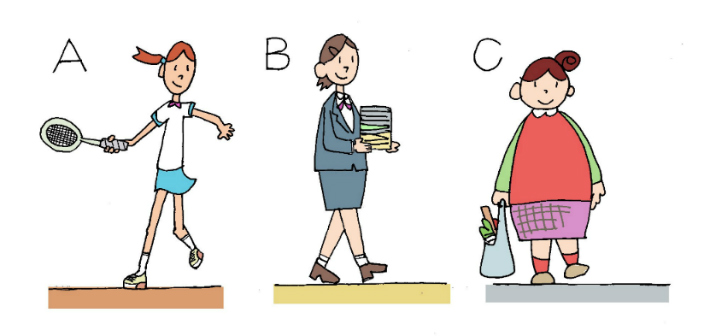
For example, there are three women:
(A) 48kg・・・who can't gain weight even if she eats a lot.
(B) 58kg・・・who can easily gain two kilos if she lets her guard down and eats a little more.
(C) 85kg・・・ 〃
All through the year, we get thinner when we are busy, and we gain a little fat when we aren’t active and eat a lot. Although everyone repeats the same pattern, even if we don't calculate calories strictly, the body shape of person won't change so easily. Fat people are fat and thin people are thin.
In other words, I believe that each person has a stable weight based on their body's homeostatic functions, which I initially defined as their "base weight."
[Base weight] = The stable weight one returns to after spending 3-5 days relaxing without excessive exercise or work, while consuming calories based on their daily energy needs.
However, despite the lack of official proof or definition, some researchers have already used the concepts of 'set-point weight.' Additionally, my "base weight" can be confused with "baseline weight," which is used in some studies. Therefore, I will use 'set-point weight' or ‘set-point’ for body weight going forward."
In this example, Person A's set-point weight is forty-eight kilograms. However, for Persons B and C, the weights they quickly revert to when they let their guard down and eat a lot—sixty kilograms and eighty-seven kilograms, respectively—can be considered their actual set-point weight. This means that their homeostatic functions are working to maintain those weights.
So, it’s difficult to assume a person’s body and weight condition only with caloric intake.
Consider the example above, that if A continues an intake of 100kcal over her recommended daily caloric intake every day for several months or years, the assumption is that it will accumulate into fat and she will eventually gain weight up to the eighty-kilogram level. This is wrong (She might gain weight but that is a different mechanism).
In general, people who are overweight are more likely to be restricting calories and eating modestly, so their current weight is often lower than their set-point weight. On the other hand, thin people don't have caloric restrictions, so their current weight and their set-point weight are often close. (Temporary overeating may lead to further weight gain beyond the body’s set-point, but I believe this weight gain is temporary and does not alter one’s set- point weight.)
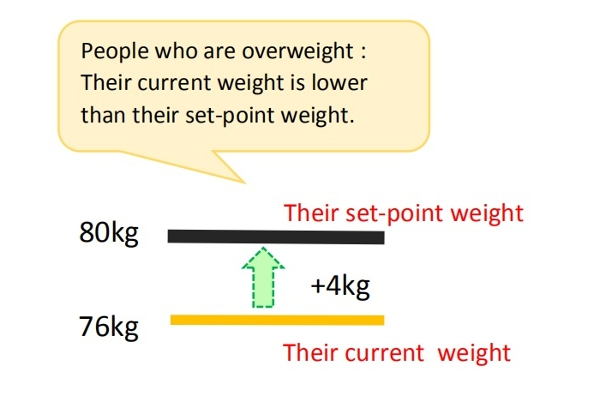
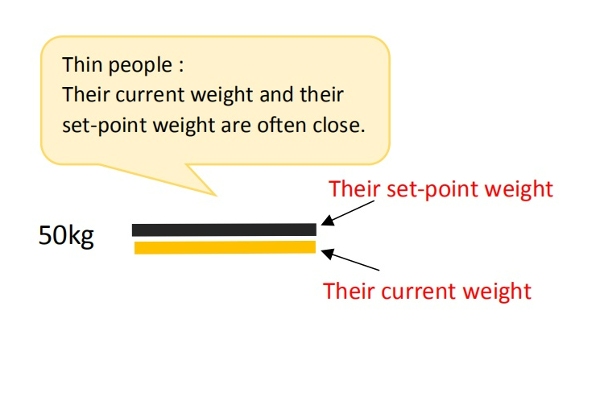
Therefore, ‘thin A’ won't gain weight even if she eats a lot, and B and C will gain weight immediately as soon as they eat a lot.
▽Example of Hozumi Hasegawa, the professional boxer who defended his title ten times as the twenty-sixth Champion of WBC World bantamweight class.
The Bantamweight limit is fifty-three-point-five kilograms(53.5kg). As his body got older, losing weight became harder. For a defending match, he had to lose more than ten kilograms in a month.

But, as soon as the match was over and he started to eat, his weight increased ten kilograms in a few days. The rate of going back to his set-point weight was fast. Those who have tried diets and eat less than usual might have experienced this. Often, it's called the rebound effect.
2. Encounter with the set-point theory
Most of us do not consciously adjust our daily energy intake and expenditure. Nevertheless, an individual's body weight remains relatively stable.
Individual body weight variance is typically only 0.5% over periods of 6 to 10 weeks[1,2] (Khosha and Billewicz 1964). According to cross-sectional data, weight changes over longer periods of time are still modest, and even diabetic individuals display coefficients of body weight variation of only 3.7– 4.6% over a period of five years[1,3] (Goodner and Oglive 1974).
With the global increase in obesity since the 1970’s, these coefficients of body weight variation may no longer be as accurate. However, many people still stay lean (especially in Asia), and, in fact, even those who are overweight or obese manage to maintain their weight, heavy as they may be, for many years[4].
In other words, despite some fluctuations in weight in daily life, there must be an internal regulatory mechanism that works to keep weight and fat within a certain range over the long haul.
■In recent years, the role of homeostatic regulation has been acknowledged, and there is growing evidence that the body employs physiological mechanisms to control energy balance and maintain body weight at a genetically and environmentally determined "set-point."[5]
When a person loses weight, the body substantially lowers energy expenditure, often more than expected based on changes in body composition or the thermic effect of food.
Additionally, it triggers hormonal changes that increase appetite and modifies food preferences through behavioral adaptations, aiming to restore body weight to its set-point range[6].
This feedback mechanism is known to apply not only to weight loss but also to temporary overeating[7].
When I started writing this blog, I had no knowledge of the theory about the body's "set-point," but it almost aligned with what I had always believed. I now believe that understanding the set-point theory is crucial in preventing the spread of obesity and proposing effective weight loss methods.
In particular, to explain the global rise in obesity since the 1970’s, I believe it is essential to understand how (I) genetic and biological factors, and (II) environmental and behavioral factors combine to increase the body’s set-point for weight. I believe my intestinal starvation theory can contribute to this understanding.
For more details, please refer to the articles below.
[Related article]
The Increasingly Important "Set-Point" Theory of Body Weight
References:
[1]Richard E. Keesey, Matt D. Hirvonen. Body Weight Set-Points: Determination and Adjustment. The Journal of Nutrition, Volume 127, Issue 9, 1997, Pages 1875S-1883S, ISSN 0022-3166.
[2]KHOSLA T, BILLEWICZ WZ. MEASUREMENT OF CHANGE IN BODY-WEIGHT. Br J Nutr. 1964;18:227-39.
[3]Goodner CJ, Ogilvie JT. Homeostasis of body weight in a diabetes clinic population. Diabetes 1974 Apr;23(4):318-26.
[4] Gary Taubes. 2011. Why we get fat. New York: Anchor books, Page 59.
[5]Egan AM, Collins AL. Dynamic changes in energy expenditure in response to underfeeding: a review. Proc Nutr Soc. 2022 May;81(2):199-212. doi: 10.1017/S0029665121003669. Epub 2021 Oct 4. PMID: 35103583.
[6]Ganipisetti VM, Bollimunta P. Obesity and Set-Point Theory. 2023 Apr 25. In: StatPearls [Internet]. Treasure Island (FL): StatPearls Publishing; 2024 Jan–. PMID: 37276312.
[7]Bray GA.The pain of weight gain: self-experimentation with overfeeding. Am J Clin Nutr. 2020 Jan 1;111(1):17-20.