

Topics
11/25/2026
Can Obesity in Adulthood Be Predicted from Parental and Childhood BMI?
Summary
1. This article examines the association between parental BMI and BMI in adult offspring, as well as the persistence of obesity from childhood into adulthood, based on four studies, including two reviews.
2. Most studies found that children tended to have a higher BMI when their parents had a higher BMI. Children with at least one parent who was overweight or obese were more likely to be obese in adulthood. This association tended to be even stronger when both parents were obese.
3. Individuals who were obese during childhood or adolescence were more likely to be obese in adulthood than those who were not. In particular, obesity during adolescence was more likely to persist into adulthood than obesity during childhood.
4. The study by Whitaker et al. showed that as children grew older, their own obesity status became more important than parental obesity in predicting obesity in adulthood.
Discussion
5. It is difficult to distinguish whether the association between parental and offspring BMI is due to genetic factors or environmental factors shared by family members based on these studies alone. In reality, both factors may be involved.
6. Although childhood obesity is an important predictor of obesity in adulthood, it does not determine whether a person will be obese as an adult. Simmonds et al. reported that approximately 70% of adults with obesity had not been obese during childhood or adolescence.
【Full text】
-
Contents
-
- Studies on the Association Between Parental and Offspring BMI and the Persistence of Obesity
- What the research findings tell us
(1) Parental BMI is associated with children's BMI
(2) Persistence of obesity from childhood into adulthood
- Discussion of the research findings
(1) Is the association between parental and offspring BMI due to genetics or environment?
(2) Differences in obesity classification criteria between childhood and adulthood
(3) Does childhood obesity determine obesity in adulthood?
- Studies on the Association Between Parental and Offspring BMI and the Persistence of Obesity
Introduction
Over the past several decades, the prevalence of being overweight and being obese has increased worldwide. This raises important questions about how obesity develops and persists across generations and throughout an individual's life.
For example, are children whose parents are obese more likely to develop obesity themselves? And are children with obesity likely to remain obese into adulthood?
In this article, I will examine findings from previous studies on the association between parental and offspring BMI and obesity, as well as the persistence of obesity from childhood into adulthood.
[Related article]
Is Obesity Genetic or Environmental? :Insights from Adoption and Twin Studies
Based on the WHO classification for adults
1. Studies on the association between parental and offspring BMI and the persistence of obesity
Whitaker et al. (1997)
Whitaker et al. investigated the association between parental obesity and obesity in their children during adulthood, as well as the likelihood that childhood obesity (Note 1) would persist into adulthood.
They analyzed medical records of 854 individuals born in Washington State, USA, between 1965 and 1971, along with records of their parents. The children's height and weight were measured a median of nine times between the ages of 1 and 17. The mean age at their final measurement in adulthood was 24.5 years. The prevalence of obesity in adulthood (ages 21–29) in this cohort was 16%, with 135 individuals classified as obese [1].
Across all childhood age groups, children with at least one obese parent were more likely to be obese in adulthood.
In particular, among children younger than ten, parental obesity was strongly associated with an increased risk of obesity in adulthood, regardless of whether the children themselves were obese [1].
Furthermore, among children aged 3-9, both parental obesity and the children's own obesity status were important predictors of adult obesity. However, as the children grew older, their own obesity status became increasingly important in predicting obesity in adulthood [1].
(Author: Wirestock / Source: Magnific)
Note 1: In this study, childhood obesity was defined as a BMI at or above the 85th percentile for children of the same age and sex (approximately the highest 15%). In contrast, under current standard U.S. criteria, a BMI from the 85th to below the 95th percentile is classified as “overweight,” while a BMI at or above the 95th percentile is classified as “obese.”
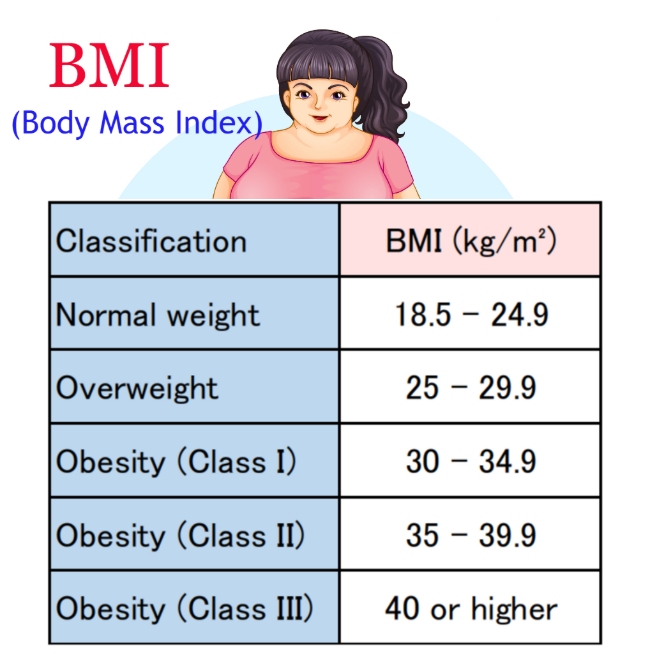
In this study, adult obesity was defined as a BMI of 27.8 or higher for men and 27.3 or higher for women.
Lake et al. (1997)
Lake et al. investigated the association between parental obesity and children's BMI, as well as whether the tracking of BMI from childhood into adulthood differed according to parental obesity status.
They analyzed data from a long-term follow-up study of individuals born in the U. K. in 1958 (6,540 males and 6,207 females). The children’s height and weight were recorded at ages 7, 11, 16, 23, and 33, while their parents' height and weight were self-reported when the participants were 11 years old [2].
The results showed that, at every age examined, the higher the parents' BMI, the higher their children's mean BMI tended to be. In addition, children with at least one parent who was overweight or obese were more likely to be obese by age 33. This association was particularly pronounced when both parents were obese: compared with those whose parents both had BMIs within the normal range, the odds ratios for obesity at age 33 were 8.4 for men and 6.8 for women [2].
Furthermore, when both parents were obese, the correlation between BMI at ages 7 and 33 was strongest: children with a higher BMI at age 7 tended to have a higher BMI at age 33 as well [2].
Zhang et al. (2024)
Zhang et al. reviewed and analyzed 46 observational studies involving adult offspring (aged 18 and older) to examine the association between parental BMI and adult offspring BMI, as well as whether the strength of this association differed between fathers and mothers. The studies were conducted in Europe, Asia, Australia, and North and South America, and included 26 cohort studies and 20 cross-sectional studies [3].
The results showed that, in most studies, higher parental BMI was associated with higher BMI in adult offspring. In addition, adult offspring were more likely to be overweight or obese when both parents were overweight or obese than when only one parent was[3].

(Source: Magnific)
Maternal and paternal BMI showed associations of similar strength with adult offspring BMI, with no clear differences observed across parent–offspring gender combinations (mother–daughter, mother–son, father–daughter, and father–son) [4,5].
These findings did not provide strong support for the hypothesis that the intrauterine environment associated with higher maternal BMI makes a substantial contribution to obesity in offspring [6], [3,7].
Simmonds et al. (2016)
Simmonds et al. conducted a systematic review and meta-analysis of 15 prospective cohort studies involving approximately 200,000 participants to examine how well obesity in childhood (ages 7–11) and adolescence (ages 12–18) predicts obesity in adulthood (age 20 and older) [8].
The results showed that individuals who were obese during childhood or adolescence were approximately five times as likely to be obese in adulthood as those who were not. In addition, about 55% of children with obesity remained obese in adolescence, while approximately 80% of adolescents with obesity remained obese into adulthood. Furthermore, about 70% of those who were obese during adolescence continued to be obese after age 30 [8].
On the other hand, approximately 70% of adults with obesity were not classified as obese during childhood or adolescence [8].
These findings suggest that although obesity in childhood or adolescence often persists into adulthood, many cases of adult obesity cannot be predicted from childhood obesity alone.
2. What the research findings tell us
(1) Parental BMI is associated with children's BMI
Most studies found that children tended to have a higher BMI when their parents had a higher BMI. Even when only one parent was overweight or obese, children were more likely to be obese in adulthood than those whose parents both had BMIs within the normal range. This association tended to be even stronger when both parents were obese (Note 2).
Note 2: The criteria used to classify overweight and obesity in childhood and adulthood may vary across studies.
(2) Persistence of obesity from childhood into adulthood
Studies by Whitaker, Lake, and Simmonds showed that children with a higher BMI tended to have a higher BMI in adulthood as well. In particular, individuals who were obese during childhood or adolescence were more likely to remain obese in adulthood than those who were not.
In addition, obesity during adolescence was more likely to persist into adulthood than obesity during childhood. The study by Whitaker et al. showed that as children grew older, their own obesity status became an increasingly important predictor of obesity in adulthood.
3. Discussion of the research findings
(1) Is the association between parental and offspring BMI due to genetics or environment?
Previous studies have shown an association between parental BMI and children's BMI.
However, these studies alone cannot easily distinguish whether this association is due to genetic factors or environmental factors, such as diet and lifestyle habits shared by family members. In reality, both factors may be involved.

(Author: Studioredcup / Source: Magnific)
(2) Differences in obesity classification criteria between childhood and adulthood
In adults, overweight and obesity are classified based on BMI, which is calculated from height and weight. In contrast, because BMI changes with growth during childhood and adolescence, classification is based on how a child's BMI compares with that of other children of the same age and sex. As a result, individuals who were not classified as obese during childhood may be classified as obese in adulthood.
These differences in classification criteria may affect the study results. However, the fact that different criteria are used does not mean that obesity does not persist from childhood into adulthood.
(3) Does childhood obesity determine obesity in adulthood?
Previous studies have shown that individuals who were obese during childhood or adolescence are more likely to remain obese in adulthood. However, childhood obesity does not necessarily persist into adulthood.
Whitaker et al. suggested that, particularly for young children aged 1-9, there are opportunities to prevent or treat obesity through interventions targeting children's physical activity and diet, even when their parents are obese [1].
On the other hand, when focusing on adults with obesity, Simmonds et al. reported that approximately 70% had not been obese during childhood or adolescence [8].
In other words, although childhood obesity is an important predictor of obesity in adulthood, it does not determine whether a person will become obese as an adult.
Furthermore, even individuals who were not classified as obese during childhood may develop obesity in adulthood.

(Source: Magnific)
<References>
[1] Whitaker RC et al. Predicting obesity in young adulthood from childhood and parental obesity. N Engl J Med. 1997 Sep 25;337(13):869-73.
[2]Lake JK, Power C, Cole TJ. Child to adult body mass index in the 1958 British birth cohort: associations with parental obesity. Arch Dis Child. 1997;77(5):376–381.
[3] Zhang J et al. Body mass index in parents and their adult offspring: A systematic review and meta-analysis. Obes Rev. 2024;25:e13644.
[4] Hu Y et al. Familial correlation and aggregation of body mass index and blood pressure in Chinese Han population. BMC Public Health. 2013 Jul 26;13:686.
[5] Zalbahar N et al. Parental pre-pregnancy BMI influences on offspring BMI and waist circumference at 21 years. Aust N Z J Public Health. 2016 Dec;40(6):572-578.
[6] Desai M, Ross MG. Fetal programming of adipose tissue: effects of intrauterine growth restriction and maternal obesity/high-fat diet. Semin Reprod Med. 2011 May;29(3):237-45.
[7] Bond TA et al. Exploring the causal effect of maternal pregnancy adiposity on offspring adiposity: Mendelian randomisation using polygenic risk scores. BMC Med. 2022 Feb 1;20(1):34.
[8]Simmonds M et al. Predicting adult obesity from childhood obesity: a systematic review and meta-analysis. Obes Rev. 2016;17:95–107.