
Topics
10/21/2018
Do Carbohydrates Make Us Fat or Do Too Many Calories?: The Debate Since the 1800's
-
Contents
-
- Low carbohydrates go way back
- The reason why doctors couldn’t accept carbohydrate restriction
- Carbohydrates and fat have opposite properties. My thoughts
<The bottom line >
First, as many of you know, even carbohydrates contain four kcal of energy per gram. So, some readers may think, "After all, isn't being overweight ultimately caused by too many calories?"
But if you think, "too many calories are the cause," you should try to reduce the total amount of calories in your overall diet, mostly focusing on fat/oil intake, which has nine kcal per gram.
On the other hand, the argument that “too many carbohydrates cause weight gain” allows you to eat any amount of meat and fatty/oily foods as long as you cut back on carbs.
In this article, I will look back on the historical argument of whether carbohydrates or calories are the cause of weight gain, and at the end of this article, I would like to share my thoughts.
1.Low carbohydrates go way back
In Japan, a low-carb diet was trendy around 2015, but when we look around the world, this way was repeatedly conducted since the 1800’s. Please note that there are many quoted parts. I needed to share this information with you to explain my theory.
"Jean Anthelme Brillat-Savarin was born in 1755. (*snip*) His passion, though, was always food and drink, or what he called the “pleasures of the table.” He began writing down his thoughts on the subject in the 1790s; Brillat-Savarin published them in a book, The Physiology of Taste, in December 1825. (*snip*)
“Tell me what you eat,” Brillat-Savarin memorably wrote, “and I shall tell you what you are." (*snip*)
Over the course of thirty years, he wrote, he had held more than five hundred conversations with dinner companions who were “threatened or afflicted with obesity,” one “fat man” after another, declaring their devotion to bread, rice, pasta, and potatoes. This led Brillat-Savarin to conclude that the roots of obesity were obvious.

The first was a natural predisposition to fatten. “Some people,” he wrote, “in whom the digestive forces manufacture, all things being equal, a greater supply of fat are, as it were, destined to be obese.”
The second was “the starches and flours which man uses as the base of his daily nourishment,” and he added that “starch produces this effect more quickly and surely when it is used with sugar."

This , of course, made the cure obvious as well, ...(*snip*) (Brillat-Savarin wrote) ...”It can be deduced, as an exact consequence, that a more or less rigid abstinence from everything that is starchy or floury will lead to the lessening of weight.” (*snip*)
What Brillat-Savarin wrote in 1825 has been repeated and reinvented numerous times since. Up through the 1960s, it was the conventional wisdom, what our parents or our grandparents instinctively believed to be true."
(Gary Taubes. Why We Get Fat. New York: Anchor Books, 2011, Pages 148-149.)
(*snip*)
"By the time, a French physician and retired military surgeon named Jean-Francois Dancel had come to the same conclusions as his countryman Brillat-Savarin. Dancel presented his thoughts on obesity in 1844 to the French Academy of Sciences and then published a book, Obesity, or Excessive Corpulence: The Various Causes and the Rational Means of a Cure.
Dancel claimed that he could cure obesity “without a single exception” if he could induce his patients to live “chiefly upon meat," and partake “only of a small quantity of other food."
Dancel argued that physicians of his era believed obesity to be incurable because the diets they prescribed to cure it were precisely those that happened to cause it. (*snip*)

“All food which is not flesh ―all food rich in carbon and hydrogen [i.e., carbohydrates] ―must have a tendency to produce fat,” wrote Dancel. (*snip*)
Dancel also noted that carnivorous animals are never fat, whereas herbivores, living exclusively on plants, often are."
(Taubes. Why We Get Fat. Pages 151-2.)
"Until the early years of the twentieth century, physicians typically considered obesity a disease, and a virtually incurable one, against which, as with cancer, it was reasonable to try anything. Inducing patients to eat less and/or exercise more was just one of many treatments that might be considered. (*snip*)
<1950's>
The effects of a carbohydrate-restricted diets were then confirmed in the 1950s by Margaret Ohlson, head of the nutrition department at Michigan State University, and by her student Charlotte Young.
When overweight students were put on conventional semi-starvation diets, Ohlson reported, they lost little weight and “reported a lack of ‘pep’ throughout... [and] they were discouraged because they were always conscious of being hungry.”
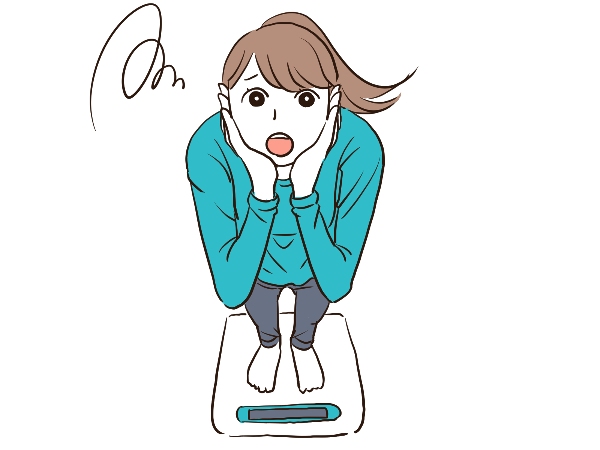
When they ate only a few hundred carbohydrate calories a day but plenty of protein and fat, they lost an average of three pounds per week and “reported a feeling of well-being and satisfaction. Hunger between meals was not a problem.”
The reports continued into the 1970s. (*snip*)
The diets were prescribed for obese adults and children, for men and women, and the result were invariably the same. The dieters lost weight with little effort and felt little or no hunger while doing so."
(Taubes. Why We Get Fat. Pages 151, 157-8.)
2.The reason why doctors couldn’t accept carbohydrate restriction
As you can see, by cutting back on carbohydrates and eating more of other foods such as meat and greasy food, the problem of being overweight seems to be solved...but this is where the "calorie principle" comes into play.
"By the 1960s, obesity had come to be perceived as an eating disorder. (*snip*)
Adiposity 101 was discussed in the physiology, endocrinology, and biochemistry journals, but rarely crossed over into the medical journals or the literature on obesity itself.
When it did, as in a lengthy article in The Journal of the American Medical Association in 1963, it was ignored. Few doctors were willing to accept a cure for obesity predicated on the notion that fat people can eat large portions of any food, let alone as much as they want. This simply ran contrary to what had now come to be accepted as the obvious reason why fat people get fat to begin with, that they eat too much.

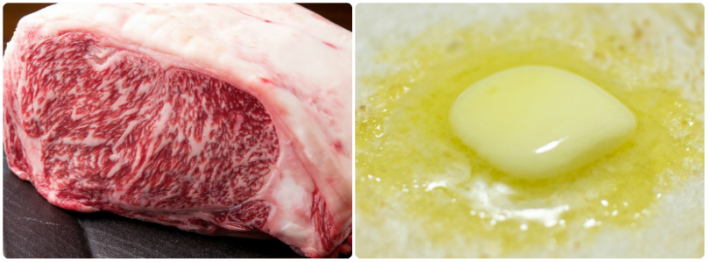
But there was another problem as well. Health officials had come to believe that dietary fat causes heart disease, and that carbohydrates are what these authorities would come to call “heart-healthy."(*snip*)
After all, if dietary fat causes heart attacks, then a diet that replaces carbohydrates with more fatty foods threatens to kill us, even if it slims us down in the process. As a result, doctors and nutritionists started attacking carbohydrate-restricted diets."
(Taubes. Why We Get Fat. Pages 159-60.)
(*snip*)(In 1965)
"The Times article, 'New Diet Decried by Nutritionists: Dangers Are Seen in Low Carbohydrate Intake,' quoted Harvard's Jean Mayer as claiming that to prescribe carbohydrate-restricted diets to the public was 'the equivalent of mass murder.' (*snip*)
Well, first, as the Times explained, 'It is a medical fact that no dieter can lose weight unless he cuts down on excess calories, either by taking in fewer of them, or by burning them up.' We now know that this is not a medical fact, but the nutritionists didn't in 1965, and most of them still don't.
Second, because these diets restrict carbohydrates, they compensate by allowing more fat. It's the high-fat nature of the diets, the Times explained, that prompted Mayer to make the mass murder accusation."
(Taubes. Why We Get Fat. Page 161.)

3. Carbohydrates and fat have opposite properties. My thoughts
I ‘d like to talk about this controversy.
Several studies have shown that how we combine the three macronutrients (protein, fat, and carbohydrates) in the diet produces different results in body fat accumulation. It is thought that even the same one calorie has different energy used for digestion and absorption, different hormones to stimulate, and different pathways of how the calorie is metabolized in the body.
Of course I think these studies are great, but the point I'd like to add based on my theory is that "carbohydrates and fat are close to having opposite properties in their digestive processes."
First, refined carbohydrates are more easily digested than meats and fats, and the "dilution effect" or "push-out effect" they have makes our digestion go even faster and makes us feel hungrier.
If we eat an unbalanced diet that lacks vegetables, fat, and dairy products,etc., we are ultimately more prone to inducing intestinal starvation.
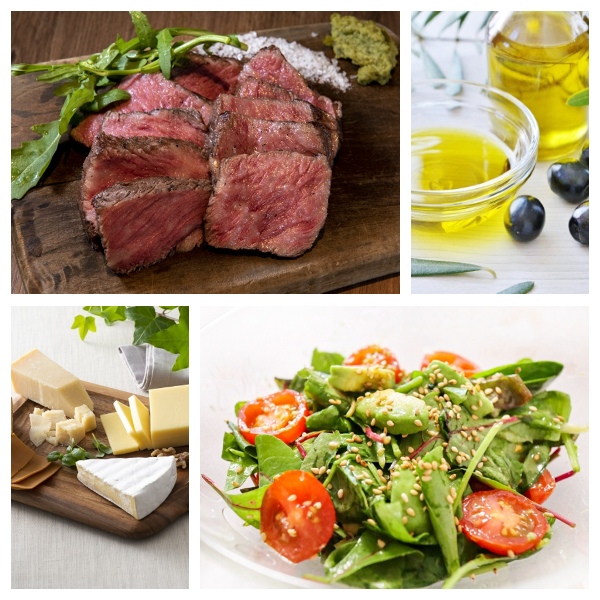
In contrast, fats and meats are less digestible. The time required for digestion depends on the quantity and type of food consumed, how we prepare food, or individual differences in digestive ability, but it is generally estimated to be 3-4 hours for proteins and 6-8 hours for fats.
In particular, when fat enters the duodenum, cholecystokinin, a hormone that promotes fat digestion and absorption, is secreted.
However, it is said that these hormones also inhibit the function of the stomach and slow down the gastric emptying process, which can cause stomach upset or bloating.
Plus, a diet low in carbohydrates and high in protein and fat sends dense nutrients to the digestive system, which slows overall digestion. As a result, I believe that it suppresses hunger and in turn, causes the absorption rate to decrease.
That is to say, depending on how we structure our diets, there may be a weight-loss effect even with increased caloric intake (for those who can digest protein and fat quickly, the weight-loss effect may be less pronounced) .
The bottom line
(1) From the early 1800’s through the 1960’s, several studies had shown that overweight people could lose weight without difficulty by replacing some carbohydrates in their diet with a lot of meat and fat. By that time, however, obesity was understood as an eating disorder, and this diet method was discussed only in physiology, endocrinology, etc.
(2) From the 1960’s to the late 1970’s, few physicians accepted the idea that fat people could lose weight by eating lots of meat and fat, because it obviously violated the "calorie principle.”
(3) In addition, health experts came to believe that fat in the diet caused heart disease and that carbohydrates were "heart-healthy." As a result, doctors and nutritionists began attacking low-carb diets.
(4) My thoughts: Both sides have a point, but the caloric intake does not determine everything. Different combinations of foods, even with the same calories, have different effects on weight management. In particular, carbohydrates and fat are close to having opposite properties in their digestive processes.
05/30/2018
Why Do We Gain Weight even Though We Eat Small Portions of Food?
-
Contents
-
- A woman friend who eventually put on some weight
- A colleague who gained three kilograms in a year
- "Just reduce calories" is a mistake
It is said that the cause of weight gain is the caloric intake exceeding calories burned through metabolism and activity. For this reason, I see people dieting by only reducing the amount of food they eat, and putting up with being hungry over long hours.
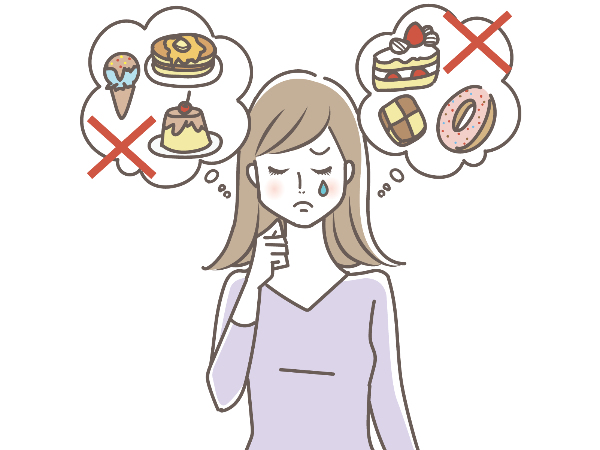
For example, they eat only a rice ball and a piece of fried chicken, or a hamburger and a drink for lunch. These people say they are hungry but continue experiencing hunger for long periods of time.
In my opinion, people like this not only do not diet well, but they also tend to gain weight eventually.
1. A woman friend who eventually put on some weight
When I was working part-time at a restaurant in college, there was a woman who wasn’t that overweight, but she started dieting anyway.
She wasn’t slim, but she wasn’t overweight, either. To me, she looked healthy and fit. I thought she was okay as she was. But it seemed that she started dieting because she wanted to get slim.

Therefore, she only ate half of her meal, such as rice and meat/fish dish and never any vegetables. She was always saying, “I’m starving...” but continued experiencing hunger and stopped eating snacks.
As a result, not only did she not lose weight, but she also gained a little weight.
2. A colleague who gained three kilograms in a year
The same goes for my colleague, T, who worked as a cook in the kitchen at a nursing home. When I first met him, he was a stocky guy (about 170cm tall and 70 kilos).
He wasn’t overweight but he was on a diet, saying he had gained three kilos which shattered his previous weight level in the last year.
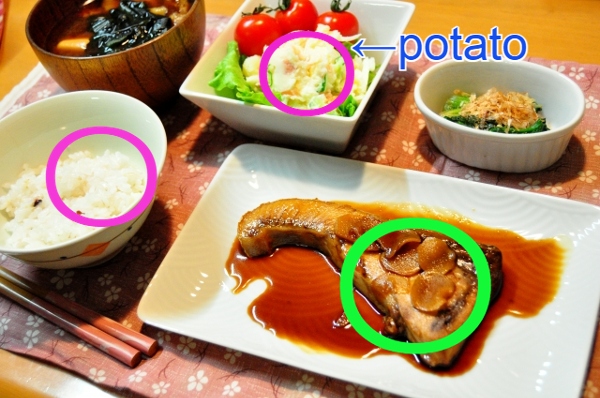
In his case, he was working before six a.m., but he hardly ever ate breakfast.
For lunch, he only ate a small bowl of rice and meat or fish. He almost never ate vegetable dishes such as salad and simmered vegetables (traditional Japanese vegetable stew).
He gained two more kilos in the following year.
3. "Just reduce calories" is a mistake
What's wrong with this is, that the people previously mentioned thought that in order to lose weight, they only needed to reduce calories from carbohydrates, meat, and fat, etc. Furthermore, they thought they had to be hungry in order to lose weight.
As a result, I can posit that intestinal starvation was induced because they didn’t consume fiber from vegetables, fat, and dairy products, etc. very much, causing the set-point weight to increase.

There are two ways in which the intestinal starvation mechanism occurs.
(1) Eating regular or big portions of an unbalanced meal, but not eating as often (e.g. skipping breakfast and eating two meals a day) and experiencing hunger over many hours.
(2)Eating small portions as seen in dieters or pregnant women, sometimes skewed towards digestible carbohydrates and protein, etc. Even if they eat three times a day, they often experience hunger over many hours.
In conclusion, whether you eat a good amount of food or a small portion of food, if your diet consists of mostly digestible carbs and some protein, an imbalance of food in the intestines remains the same. If you don’t eat anything else and experience hunger over many hours, it leads to the similar effect in view of creating intestinal starvation.
Eating vegetable dishes, dairy products and fat/oil, etc. is important with regards to preventing intestinal starvation, but those people in the previous examples were only conscious of caloric intake, and chose not to eat them.
05/29/2018
Misunderstanding of the Relationship Between Diet, Exercise, and Body Weight
-
Contents
-
<Introduction>
- The relationship between “diet and exercise” is the most commonly used excuse
- Expended energy will be regained
- What does “diet is the priority” mean?
<The bottom line>
<Introduction>
The fact that many people who play sports are lean, and that we see athletes who have gained a lot of weight after retiring from active sports, seems to make the formula "exercise = losing weight" true.
Most experts see it this way, but the relationship between exercise and weight should not be as simple as this.
This time, I’d like to explain the relationship between "diet, exercise, and body weight" based on my theory.
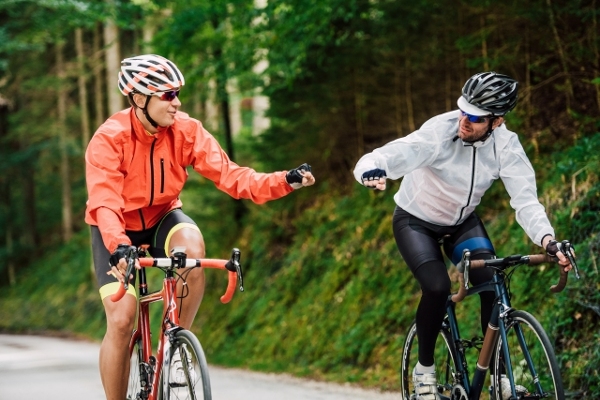
1. The relationship between “diet and exercise” is the most commonly used excuse, for specialists
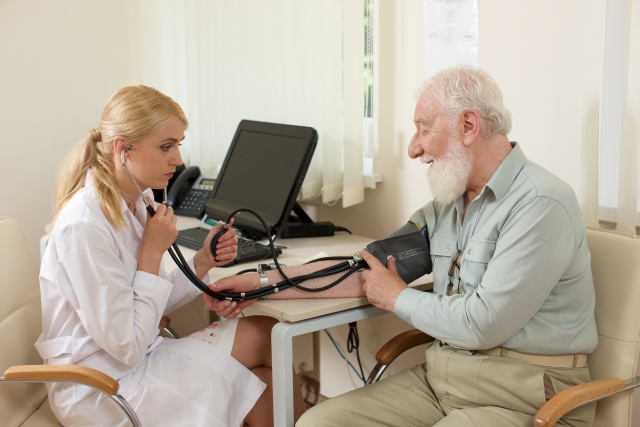
First of all, for those who have not lost weight even after exercising, physicians and specialists would say, "After all, you must be eating a lot somewhere," and for those who have not lost weight even after restricting calories, they would say, "You are not exercising enough, are you?"
That is to say, the relationship between diet and exercise has been regarded as a "calories-in/calories-out" relationship, which has been used as an excuse by experts, and the relationship has not even been considered in an in-depth manner.
2. Expended energy will be regained
First, some people think in terms like "overeating always leads to weight gain" or "exercise causes weight loss," as shown in Figure-1.
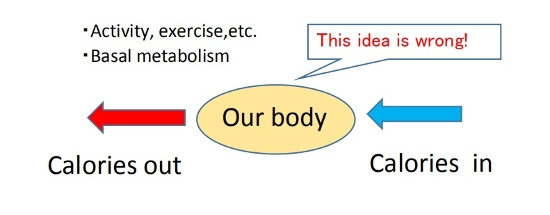
<Figure-1>
They believe that "intake and expenditure are are opposites, and we will gain or lose weight depends on the balance between the two.”
However, in reality, it should be more like Figure-2.
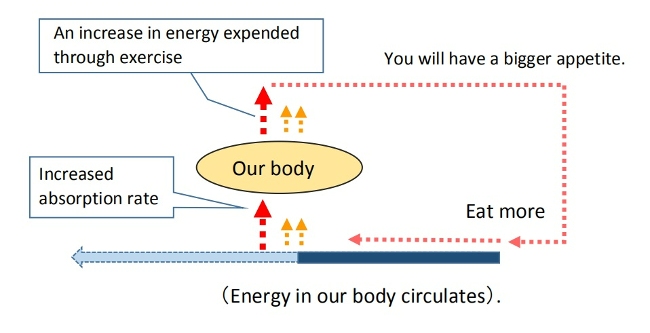
<Figure-2>
Since the food we consume and the energy used in our bodies are mediated by absorption, an increase in energy expenditure will increase absorption rate, which in turn increase one’s appetite through hormonal changes.
In contrast, if we increase the amount and frequency of eating when we are at rest and not hungry, the absorption rate will decrease.
Exercise certainly consumes more energy, but a counter-regulatory function-that the body tries to regain energy that it has expended-should work.
In other words, exercise is essentially a force that pushes the body in the direction of gaining strength and ultimately, storing energy (weight gain) as it tries to stimulate energy circulation and re-energize the body. (In particular, it works more strongly in resistant exercises that target muscles.)

However, whether or not you gain weight depends on how you control the way you eat.
“Diet” is always the priority.
This is why false theories emerge like, “people exercising everyday are lean no matter how much they eat.”
3. What does “diet is the priority” mean?
The simple explanation is that even though exercise ultimately pushes the body to store energy, if some undigested food is always left in the intestines, as a result, intestinal starvation does not occur and the set-point weight remains the same.
I will explain this in greater detail several ways.
(1) Not gaining weight while exercising regularly
As Dr. Briffa, the author of “Escape the Diet Trap,” says in his book, it is better to think that, "originally lean people start running marathons or playing soccer, and eventually become athletes[1].” It may be a cynical view, but I think it’s probably correct.
They know they never gain weight even though they eat a lot, and most athletes eat three well-balanced meals, plus other nutritional supplements and snacks.
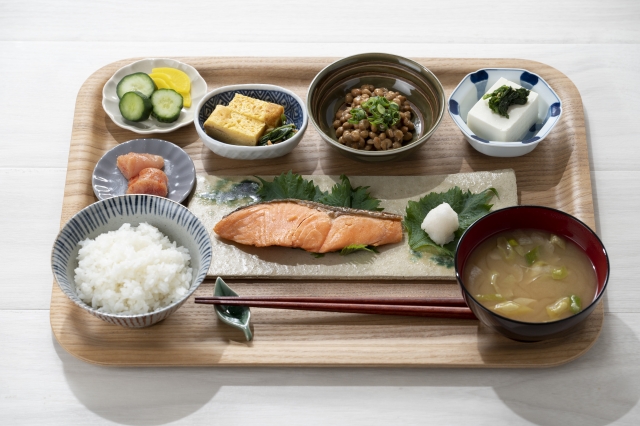
(Traditional Japanese breakfast)
This is because when we try to exercise, our mindset is that we need to be nourished and that we need to eat well.
In other words, when naturally lean people take up sports like soccer or marathon running and eat three balanced meals a day, the intestinal starvation mechanism is less likely to be induced, allowing them to maintain the same weight over many years.
(2) Putting on some weight after quitting exercise
On the other hand, there might be people who have gained 3–4 kg over the past few years because their work involves desk tasks or light physical activity, and they haven’t exercised recently.
However, the real issue, I believe, is not the lack of exercise, but rather skipping meals, eating light meals, having an unbalanced diet relying too much on carbohydrates, or irregular eating habits.

When we have nothing to do or do light physical work all day, we tend to think that we need to eat less and become less concerned about nutritional balance, don't we?
Perhaps some people might go to work without breakfast, or just have a simple lunch such as ramen noodles, a sandwich, or a hamburger.
In this case, the body's ability to take in nutrients is low compared to during exercise, but on the contrary, if you spend long periods hungry, intestinal starvation is more likely to occur, which may ultimately increase your set-point weight over time.
Additionally, when athletes retire, their caloric expenditure decreases and opportunities to eat often increase, which can lead to a few kilograms of weight gain. I see this as the same mechanism that causes weight to rebound after dieting, where the body returns to its set-point weight.
However, if there is a weight gain of more than ten kilograms over a few years, this is likely due more to changes in eating habits, as explained above, and can be attributed to weight gain caused by intestinal starvation.
(3) Gaining weight while exercising
Fighters and sumo wrestlers exercise, of course, but due to the nature of their sports, they sometimes need to increase their muscle mass or body weight. However, we often hear that it’s not easy for some fighters to gain muscle mass and weight even if they eat protein supplements in addition to their three meals.
On the other hand, those who don’t want to gain weight sometimes put on weight quite effortlessly. This is because, as I have mentioned so many times, gaining weight (meaning an increase in one’s set-point weight) requires the induction of intestinal starvation.
During high-intensity strength exercises, like barbell exercises, the body’s regulatory mechanism to restore lost energy is even more powerful than with aerobic exercise.
However, if one tries to consume more calories and nutrients every 4 to 5 hours through meals or protein supplements, some undigested food tends to remain in the intestines throughout the day, which could ultimately hinder an increase in set-point weight.
<A sumo wrestler's diet: a practical approach to increasing body weight>
Sumo wrestlers in Japan are famous for being large and heavy, but they traditionally eat only twice a day, instead of three times a day.
Moreover, their meals are not greasy foods but mainly consist of easily digestible hot-pot dishes called “chanko” (a stew with chicken meat and vegetables, etc.) along with plenty of rice.
Therefore, the food they eat can be more easily digested, and when intestinal starvation is triggered, it can lead to weight gain, suggesting an increase in their set-point weight.
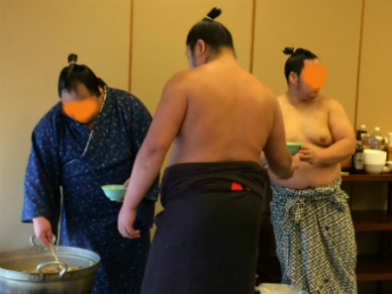
■For details on how weight is increased when intestinal starvation is induced, please refer to the article below.
[Related article]
Gaining Weight by Intestinal Starvation; What Does It Mean?
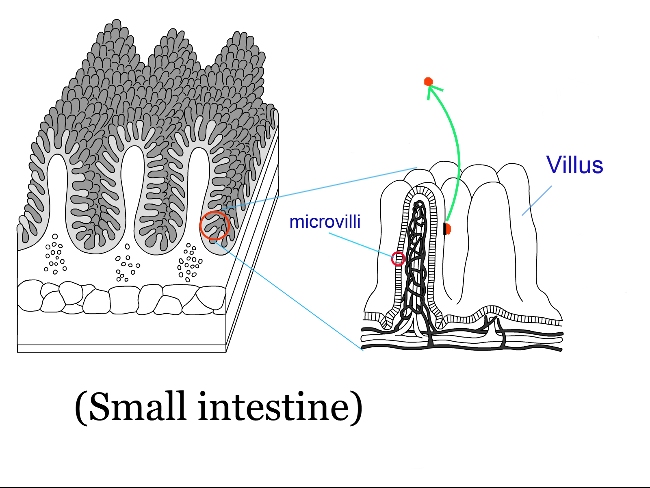
In simple terms, I believe that when all food is fully digested, microscopic substances attached to the villi (or microvilli) of the small intestine detach themselves, which expands the surface area for absorption and boosts absolute absorption capacity.
Resistance exercises that target muscles (particularly lifting) accelerate this mechanism beyond its usual rate.
In other words, the diet and exercise of sumo wrestlers provide a logical approach to increasing muscle mass and body weight.
The bottom line
(1)The relationship between diet and exercise is not simply an energy "in/out" relationship.
Exercise is essentially a force that works toward gaining strength and weight because the opposite reaction-that the body tries to regain energy that it has expended-should work (especially in the case of high-intensity exercise).
(2) However, the priority is in how we control our diet. Eating three well-balanced meals every day will help undigested food to remain in the intestines, and the set-point weight is less likely to increase.
People who are originally lean start athletics, soccer, etc., and if they eat three well-balanced meals every day, they are less likely to gain weight and maintain the same body shape over the years.
(3) People tend to skip meals or eat less when they aren’t exercising or are only doing light physical work. In such cases, the body's regulatory function to absorb nutrients and store fat are weaker than during exercise, but in contrast, people end up feeling hungrier and intestinal starvation is more likely to be caused, resulting in an increase in one's set-point weight.
(4)The way sumo wrestlers eat and exercise is a logical approach to increasing muscle strength and body weight. By eating digestible meals including a good amount of rice twice a day, they are more likely to induce intestinal starvation. Intense training further accelerates this effect.
References:
[1] Jone Briffa. Escape the Diet Trap. London: Fourth Estate, 2013, Page 223.
02/01/2018
For Dieting, Meal Improvement Rather than Exercise
-
Contents
-
- Little benefit of expended calories
- Improving diet is more important
(1) Deceived by hype
(2) When proposing exercise, always provide meal coaching, too
<The bottom line>
Please read “Is Exercise Really Necessary to Lose Weight?,” first.
In the above article, we considered how exercise can really help people lose weight, but let's explore that in more detail.
1. Little benefit of expended calories
"A 250-pound man will burn three extra calories (kcal)climbing one flight of stairs, as Louis Newburgh of the University of Michigan calculated in 1942.
“He will have to climb twenty flights of stairs to rid himself of the energy contained in one slice of bread!”
So why not skip the stairs and skip the bread and call it a day?
After all, what are the chances that if a 250-pounder does climb twenty extra flights a day he won't eat the equivalent of an extra slice of bread before the day is done?"
(Gary Taubes. 2011. Why We Get Fat. Page 48.)

"Other experts took to arguing that we could lose weight by weightlifting or resistance training rather than the kind of aerobic activity, like running, that was aimed purely at increasing our expenditure of calories.
The idea here was that we could build muscle and lose fat, and so we'd be fitter even if our weight remained constant, because of the trade-off. Then the extra muscle would contribute to maintaining the fat loss, because it would burn off more calories—muscle being more metabolically active than fat.

To make this argument, though, these experts invariably ignored the actual numbers, because they, too, are unimpressive.
If we replace five pounds of fat with five pounds of muscle, which is a significant achievement for most adults, we will increase our energy expenditure by two dozen calories(kcal) a day.
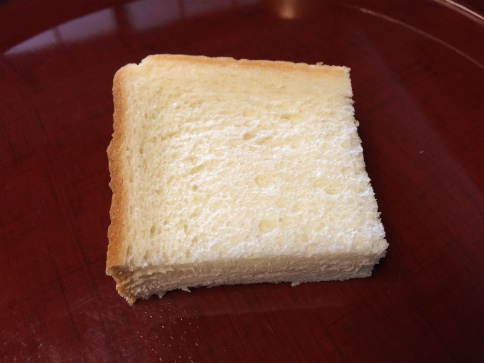
Once again, we're talking about the caloric equivalent of a quarter-slice of bread, with no guarantee that we won't be two-dozen-calories-a-day hungrier because of this.
And once again we're back to the notion that it might be easier just to skip both the bread and the weightlifting."
(Taubes. Why We Get Fat. Pages 54-5.)
2. Improving diet is more important
Walking, jogging, and other forms of exercise are undoubtedly necessary for the prevention of chronic diseases, and for mental and physical health, but as we reviewed in detail in section[1] above, they are not that effective in terms of caloric expenditure.
I suspect that those who say that they have lost weight through exercise are doing so through a set of dietary improvements (such as balanced diet and how often they eat, etc.).
There is a book written by a Japanese exercise specialist, Takuro Mori, on this subject, and I would like to dive deeply into this:“Sports coach declares. For dieting, exercise should be ten percent and meals should be ninety percent”
Mr. Mori worked in a fitness club for five years, and though he is a sports coach, he says it’s impossible to lose weight only with exercise.

(1) Deceived by hype
“As an exercise instructor, I’ve seen hundreds and thousands of clients. However, what I saw there were long-time club members who had not gotten slim, and moreover, some staff who had not lost weight despite the fact that they worked as coaches in a sports club.(*snip*)
The key to successful dieting is mostly the improvement of diet and the mentality to support it.
As for exercise, I believe that it is very small in comparison to those two factors, and if we can manage to improve diet and mentality, we can get mostly good results, even if we omit the exercise guidance.
It is also true that I was deceived by various diet-related hype and believed, unknowingly, that anyone could lose weight with effective exercise....(omitted)
That is just an advertisement, so it is natural that it is an exaggeration to attract customers. Because of that, it’s manipulating people’s general perception.”
(2)When proposing exercise, always provide meal coaching, too
“Through my past exercise and diet coaching, I have become acutely aware that most people actually do not achieve results with only exercise. As I interacted with many clients, I began to see a trend in those who failed to achieve results.
They all had problems in their eating habits such as they kept eating what they liked or didn’t want to change their eating habit.
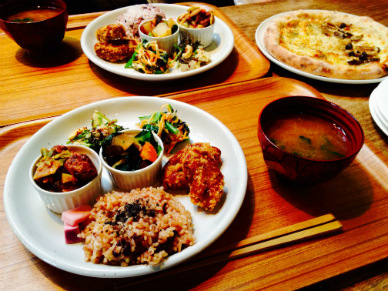
Considering the body's mechanism for losing weight, there is no more effective way to lose weight than by controlling diet, and the appropriate approach is to add the necessary amount of exercise to it.
If you pick up any diet book on the street, you will find that most of them refer to diet, even if they explain a particular exercise regimen.
Successful dieters lose weight by improving their diet (eating a balanced diet and eating more often, etc.), not by exercising. (*snip*)
It is necessary to understand the basic premise that exercise creates a beautiful body style, and if you want to lose weight and size, you must improve your diet and other aspects of your life.[1]"
This is what I wanted to tell you, but I had to quote an exercise expert because he is more convincing.
Diet books that claim, "you can lose weight with exercise," always mention improving your diet.
The trend these days seems to be changing to eating fewer carbohydrates, and eating more protein (meat, eggs, etc.), vegetables, dairy products, etc., while exercising.

You might think that exercise has contributed significantly to your weight loss since you lost weight by eating enough, but you would be mistaken.
It may be better to think that changing your eating habits can actually help you reduce weight and size, and that exercise is more about building a lean, toned body while you lose weight.
The bottom line
(1) Calories burned in exercise are not that many . Those who exercise but do not get results from dieting often have some problem with their eating habits, such as wanting to lose weight while eating what they like.
(2) To lose weight, it is more effective to review one's daily eating habits. Reducing carbohydrate intake to some extent and increasing protein, fat, dairy products, and vegetables can be helpful.
On the other hand, exercise helps to improve overall health, maintain muscle strength, and build a toned body.
(3) The reason exercise is not fundamentally helpful for weight loss is because the relationship between diet, exercise, and weight is misunderstood.
[Related article] Misunderstanding of the Relationship Between Diet, Exercise and Body Weight
References:
[1]Takuro Mori. For dieting, exercise should be ten percent and meal should be ninety percent (森 拓郎,「ダイエットは運動1割、食事9割」). 2013.
01/31/2018
Is Exercise Really Necessary to Lose Weight?
-
Contents
-
- Exercise is good for your health, but what about losing weight?
- Some reasons to doubt the weight-loss benefits of exercise
- Energy expenditure and intake are closely linked
- Evidence that exercise has no effect on weight loss was ignored
<The bottom line>
Prologue
"Imagine you're invited to a celebratory dinner.
The chef's talent is legendary, and the invitation says that this particular dinner is going to be a feast of monumental proportions. Bring your appetite, you're told—come hungry.
How would you do it?

You might try to eat less over the course of the day,—maybe even skip lunch, or breakfast and lunch. You might go to the gym for a particularly vigorous workout, or go for a longer run or swim than usual, to work up an appetite. You might even decide to walk to the dinner, rather than drive, for the same reason.
Now let's think about this for a moment. The instructions that we're constantly being given to lose weight–eat less and exercise more —are the very same things we'll do if our purpose is to make ourselves hungry, to build up an appetite, to eat more.
Now the existence of an obesity epidemic coincident with half a century of advice to eat less and exercise more begins to look less paradoxical."
(Gary Taubes. 2011. Why We Get Fat. Page 40.)
1. Exercise is good for your health, but what about losing weight?
“It's now commonly believed that sedentary behavior is as much a cause of our weight problems as how much we eat. And because the likelihood that we'll get heart disease, diabetes, and cancer increases the fatter we become, the supposedly sedentary nature of our lives is now considered a causal factor in these diseases as well.
Regular exercise is now seen as an essential means of prevention for all the chronic ailments of our day.

(*snip*)Faith in the health benefit of physical activity is now so deeply ingrained in our consciousness that it's often considered the one fact in the controversial science of health and lifestyle that must never be questioned.(*snip*)
But the question I want to explore here is not whether exercise is fun or good for us or a necessary adjunct of a healthy lifestyle, as the authorities are constantly telling us, but whether it will help us maintain our weight if we're lean, or lose weight if we're not.
The answer appears to be no. (*snip*)
The ubiquitous faith in the belief that the more calories we expend, the less we’ll weigh is based ultimately on one observation and one assumption.
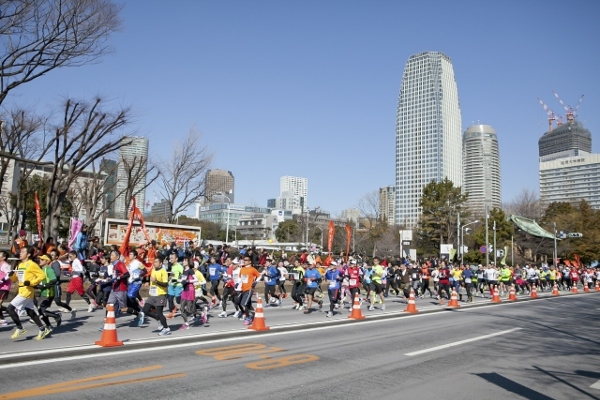
The observation is that people who are lean tend to be more physically active than those of us who aren't. This is undisputed. Marathon runners as a rule are not overweight or obese.
But this observation tells us nothing about whether runners would be fatter if they didn't run or if the pursuit of distance running as a full-time hobby will turn a fat man or Woman into a lean marathoner."
(Taubes. Why We Get Fat. Page 41, 46.)
2. Some reasons to doubt the weight-loss benefits of exercise
In the following article, I believe I mentioned that adding exercise to a conventional calorie-restricted diet has not been very effective, and I will try to explore why. I would like to address the following five points.
【Related article】 Dieting Doesn’t Work in the Long Run
(I)Overweight among the poor
"In the United States, Europe, and other developed nations, the poorer people are, the fatter they're likely to be. It's also true that the poorer we are, the more likely we are to work at physically demanding occupations, to earn our living with our bodies rather than our brains. (*snip*)
They may not belong to health clubs or spend their leisure time training for their next marathon, but they're far more likely than those more affluent to work in the fields and in factories, as domestics and gardeners, in the mines and on construction sites.

That the poorer we are the fatter we're likely to be is one very good reason to doubt the assertion that the amount of energy we expend on a day-to-day basis has any relation to whether we get fat.
If factory workers can be obese, as I discussed earlier, and oil-field laborers, it's hard to imagine that the day-to-day expenditure of energy makes much of a difference. "
(Taubes. Why We Get Fat. Page 41-2.)
(II) Exercise makes you hungrier
Many people have probably realized that exercise and manual labor will make them feel "hungrier" and have a greater appetite than in a sedentary life such as a desk job. Some of you may have exercised to lose weight, but ended up eating chocolate or other sweets because you were tired and then regretted your own weak will and "lack of self-control.”
(III) Increased absorption rate
The effect of aerobic or anaerobic exercise on body fat loss is said to be different, but either way, I believe the energy once expended through exercise will basically come back.
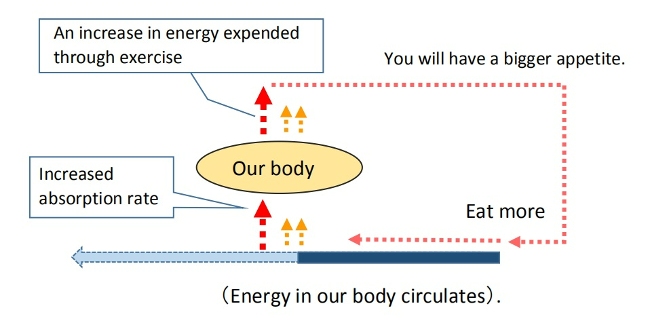
When we exercise, our muscles need energy. Depending on the intensity of the exercise, energy is produced mainly from blood glucose, muscle glycogen, and fatty acids from fat cells. Of course, energy expenditure will increase once, but then I believe the body will increase its absorption rate to absorb more nutrients from food in the intestines to compensate for those lost nutrients.

“Increased absorption rate” might be difficult to understand but think of it this way: When a person drinks alcohol on an empty stomach or drinks alcohol after exercising, it will make them more intoxicated or a person turns redder than usual (AKA the Asian glow).
And, if you are not a drinker, eating or drinking something sweet after exercise may cause your blood sugar to rise more rapidly than usual.
(IV) Become less active at other times
It is said that when people increase their amount of exercise, they naturally tend to become inactive the rest of their lives.
For example, after completing a thirty-minute jog, one may end up relaxing on the couch for a couple of hours because of the fatigue, or may become less active than usual over the course of the day.[1]

(V)Small amount of body fat burned
Body fat is a stored form of energy, so it is not used immediately. Therefore, in the case of high-intensity anaerobic exercise that stresses the muscles, ATP and creatine phosphate stored in the muscles are used as an energy source for about 15 seconds from the start. After that, what is being expended is blood glucose and glycogen, the fast-acting energy source stored in the muscles.
In aerobic exercise such as jogging, which is said to burn more body fat, there is a concept of a fat-burning zone (low-intensity exercise that keeps your heart rate between 60 and 69 percent of maximum heart rate), but even in this case, about fifty percent of the calories burned come from fat.[2].
Even if the calories burned in thirty minutes of jogging are two hundred kcal, that does not all translate into a reduction in body fat.
3. Energy expenditure and intake are closely linked
In section [2] above, I explained about increased absorption rate, having a bigger appetite, and becoming inactive after exercise, but I will quote again from "Why We Get Fat" for a more scientific explanation.
"The very notion that expending more energy than we take in-eating less and exercising more-can cure us of our weight problem, make us permanently leaner and lighter, is based on yet another assumption about the laws of thermodynamics that happens to be incorrect.
The assumption is that the energy we consume and the energy we expend have little influence on each other, that we can consciously change one and it will have no consequence on the other, and vice versa. (*snip*)
Intuitively we know this isn't true, and the research in both animals and humans, going back a century, confirms it. People who semi-starve themselves, or who are semi-starved during wars, famines, or scientific experiments, are not only hungry all the time but lethargic, and they expend less energy. And increasing physical activity does increase hunger; exercise does work up an appetite. (*snip*)

In short, the energy we consume and the energy we expend are dependent on each other. Mathematicians would say they are dependent variables, not independent variables, as they have typically been treated. Change one, and the other changes to compensate. (*snip*)
Anyone who argues differently is treating an extraordinarily complex living organism as though it were a simple mechanical device. (*snip*)
In 2007, Jeffrey Flier, dean of Harvard Medical School and his wife and colleague in obesity research, Terry Maratos-Flier, published an article in Scientific American called “What Fuels Fat.”
In it, they described the intimate link between appetite and energy expenditure, making clear that they are not simply variables that an individual can consciously decide to change with the only effect being that his or her fat tissue will get smaller or larger to compensate. "
(Taubes. Why We Get Fat. Page 77-8.)
4. Evidence that exercise has no effect on weight loss was ignored
"As it turns out, very little evidence exists to support the belief that the number of calories we expend has any effect on how fat we are.
In August 2007, the American Heart Association (AHA) and the American College of Sports Medicine (ACSM) addressed this evidence in a particularly damning manner when they published joint guidelines on physical activity and health. (*snip*) Thirty minutes of moderately vigorous physical activity, they said, five days a week, was necessary to “maintain and promote health.”
But when it came to the question of how exercising affects our getting fat or staying lean, these experts could only say: “It is reasonable to assume that persons with relatively high daily energy expenditures would be less likely to gain weight over time, compared with those who have low energy expenditures. So far, data to support this hypothesis are not particularly compelling." (*snip*)

From the late 1970s onward, the primary factor fueling the belief that we can maintain or lose weight through exercise seemed to be the researchers' desire to believe it was true and their reluctance to acknowledge otherwise publicly.
Although one couldn't help being “underwhelmed” by the actual evidence, as Judith Stern, Mayer's former student, wrote in 1986, it would be “shortsighted” to say that exercise was ineffective, because it meant ignoring the possible contributions of exercise to the prevention of obesity and to the maintenance of any weight loss that might have been induced by diet. (*snip*)
As for the researchers themselves, they invariably found a way to write their articles and reviews that allowed them to continue to promote exercise and physical activity, regardless of what the evidence actually showed.
One common method was (and still is) to discuss only the results that seem to support the belief that physical activity and energy expenditure can determine how fat we are, while simply ignoring the evidence that refutes the notion, even if the latter is in much more plentiful supply."
(Taubes. Why We Get Fat. Page 43-4, 53-4.)
The bottom line
(1) The idea that the more calories we burn, the lighter we weigh is based on the observation that "lean people tend to be physically more active than those who are not." However, there is little evidence to support this.
(2) Everyone would probably agree that "lean people tend to be more physically active than those who are not." However, it is not as simple as, "if you increase caloric expenditure through exercise, you will lose weight.” The relationship between exercise and weight is more complex.
【See more】Misunderstanding of the Relationship Between Diet, Exercise and Body Weight
(3) Calories consumed and calories expended are interconnected, and if you exercise more, you will feel hungrier and have a bigger appetite. Even if you keep your caloric intake the same, your body will try to regain lost energy source and nutrients due to increased absorption rate after exercise.
(4) The problem with being overweight is that one's set-point for body weight is elevated, and while energy expenditure through exercise may lead to temporary weight loss, it is not effective in the long run.
As we’ll see in more detail in the following blogs, it is more important to improve dietary balance and intake methods (when or how often you eat, etc.) in combination with exercise.
【Related article】 For Dieting, Meal Improvement Rather than Exercise
References:
[1]Dr. John Briffa. Escape the Diet Trap. London: Fourth Estate, 2013, Page 222.
[2]University of Hawai‘i at Mānoa Food Science and Human Nutrition Program.「Fuel Sources for Exercise」. 2018.