<?xml version="1.0" encoding="UTF-8" ?>

<rdf:RDF
 xmlns="http://purl.org/rss/1.0/"
 xmlns:rdf="http://www.w3.org/1999/02/22-rdf-syntax-ns#"
 xmlns:dc="http://purl.org/dc/elements/1.1/"
 xmlns:content="http://purl.org/rss/1.0/modules/content/"
 xml:lang="ja"
>

<channel rdf:about="https://www.en-futoraba.com/topics/feed/rss10/">
<title>How People Gain Weight Through Intestinal Starvation Topics</title>
<link>https://www.en-futoraba.com/topics/</link>
<description>Topics</description>
<dc:language>ja</dc:language>
<dc:date>2026-05-05T21:11:22+09:00</dc:date>
<items>
<rdf:Seq>
<rdf:li rdf:resource="https://www.en-futoraba.com/topics/2025/12/22129/" />
<rdf:li rdf:resource="https://www.en-futoraba.com/topics/2025/08/22128/" />
<rdf:li rdf:resource="https://www.en-futoraba.com/topics/2025/03/22127/" />
<rdf:li rdf:resource="https://www.en-futoraba.com/topics/2024/10/22126/" />
<rdf:li rdf:resource="https://www.en-futoraba.com/topics/2024/06/22125/" />
<rdf:li rdf:resource="https://www.en-futoraba.com/topics/2024/02/22124/" />
<rdf:li rdf:resource="https://www.en-futoraba.com/topics/2024/02/22096/" />
<rdf:li rdf:resource="https://www.en-futoraba.com/topics/2023/11/22091/" />
<rdf:li rdf:resource="https://www.en-futoraba.com/topics/2023/10/22092/" />
<rdf:li rdf:resource="https://www.en-futoraba.com/topics/2023/09/22093/" />
<rdf:li rdf:resource="https://www.en-futoraba.com/topics/2023/09/22094/" />
<rdf:li rdf:resource="https://www.en-futoraba.com/topics/2023/02/22123/" />
<rdf:li rdf:resource="https://www.en-futoraba.com/topics/2022/12/22122/" />
<rdf:li rdf:resource="https://www.en-futoraba.com/topics/2022/11/22121/" />
<rdf:li rdf:resource="https://www.en-futoraba.com/topics/2022/10/22120/" />
<rdf:li rdf:resource="https://www.en-futoraba.com/topics/2022/10/22119/" />
<rdf:li rdf:resource="https://www.en-futoraba.com/topics/2022/09/22118/" />
<rdf:li rdf:resource="https://www.en-futoraba.com/topics/2022/06/22117/" />
<rdf:li rdf:resource="https://www.en-futoraba.com/topics/2022/05/22116/" />
<rdf:li rdf:resource="https://www.en-futoraba.com/topics/2021/10/22114/" />
</rdf:Seq>
</items>
</channel>

<item rdf:about="https://www.en-futoraba.com/topics/2025/12/22129/">
<title>Biological Responses Driving Weight Rebound After Weight Loss</title>
<link>https://www.en-futoraba.com/topics/2025/12/22129/</link>
<description>Summary


When individuals lose weight through calorie restriction, adaptive responses involving coordinated changes in metabolism, neuroendocrine function, autonomic regulation, and behavior are triggered, ultimately promoting weight rebound. These responses may help explain why calorie-restricted diets frequently fail to produce lasting weight loss.

&#160; &#160;&#160;
(1) Metabolic adaptation
Weight loss induced by calorie restriction leads to a significant reduction in resting energy expenditure beyond what would be predicted from changes in body composition. This metabolic adaptation occurs in both formerly obese individuals and naturally lean individuals who have lost weight, creating conditions that favor weight rebound.

&#160; &#160;&#160;
(2) Endocrine function
A wide range of hormones secreted from the gastrointestinal tract and adipose tissue&#8212;such as leptin, ghrelin, peptide YY, and cholecystokinin&#8212;play essential roles in regulating appetite, food intake, and energy expenditure. A calorie-restricted diet simultaneously decreases satiety and increases hunger, which can promote overeating.
&#160; &#160;&#160;
(3) Food reward and addiction-like processes
When we eat palatable foods, neurotransmitters such as dopamine are released, activating reward-related neural circuits. The desire to experience this pleasure again motivates the next eating episode. Calorie restriction and fasting can heighten the reward value of food, especially energy-dense, highly palatable foods.

&#160; &#160; &#160;
(4) Inhibitory system and binge eating&#160;
Short-term dieting success can be attributed to enhanced inhibitory neural responses that temporarily suppress the desire to eat. However, as dietary restrictions continue, activation of reward-related brain regions may begin to override inhibitory control, making it increasingly difficult to resist cravings for palatable foods.

&#160; &#160;&#160;
(5) Adipose cellularity
Weight loss reduces the size of adipocytes (fat cells), but their number generally remains unchanged. However, some researchers have pointed out that the possibility of new fat cells forming (hyperplasia) during weight rebound cannot be completely ruled out. If hyperplasia does occur, these fat cells could enlarge again, potentially promoting further expansion of overall adipose tissue.

&#160; &#160;&#160;
(6) Intestinal starvation
Unlike the situations described in (1)&#8211;(5), intestinal starvation does not arise from a marked deficiency in energy.

&#160; &#160;&#160;
Conclusion
Some researchers argue that the biological forces driving weight rebound after weight loss are extremely powerful and difficult to overcome. In my opinion, rather than trying to fight these responses, it is more important to avoid triggering them strongly in the first place.
Specifically, instead of enduring prolonged hunger, it is helpful to consume more nutrient-dense, minimally processed foods while adjusting caloric intake. Doing so helps sustain satiety and reduce hunger&#8212;key factors in supporting long-term weight management.


【Full text】


 Contents
 
 Various mechanisms that promote weight rebound (1)Metabolic adaptation (2) Endocrine Function (3) Food Reward and Addiction-Like Processes (4) Inhibitory system and binge eating (5) Adipose cellularity&#160; (6) Intestinal starvation Conclusion 


Introduction


The prescription for people with obesity to &#8221;eat less and exercise more&#8221;remains a widely used approach to weight management, despite its well-documented failures[1]. It has been suggested that most of the weight lost through dieting is regained over the long term[2].&#160;
According to research in genetics, epidemiology, and physiology, body fat and body weight are known to be tightly regulated. When a person attempts to maintain weight loss, adaptive responses involving coordinated changes in metabolic, neuroendocrine, autonomic, and behavioral functions are triggered, acting to oppose the maintenance of the reduced weight[4].
In this post, I&#8217;d like to take a brief look at these biological mechanisms that may drive weight rebound and even promote further weight gain after dieting. I will also explain how my theory of intestinal starvation differs from these mechanisms.
【Related Articles】&#160;The Spread of Dieting May Be Fueling the Rise in Obesity
&#160; &#160; &#160; &#160; &#160; &#160; &#160; &#160;


１．Various mechanisms that promote weight rebound
&#160; &#160; &#160;(1) Metabolic adaptation


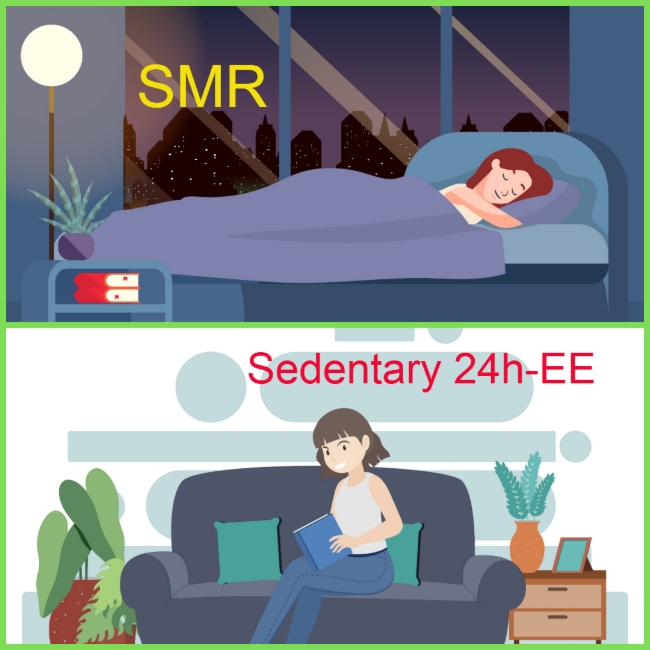
Energy restriction is associated with a reduction in resting energy expenditure (REE)[5].

Many studies have reported that behavioral weight loss leads to a greater decrease in both resting and total energy expenditure than would be predicted based on changes in body composition and the thermic effects of food[4,6].


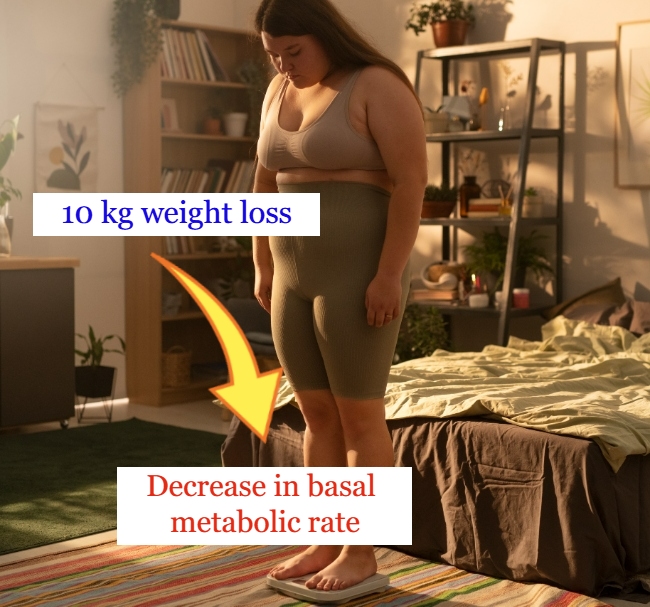
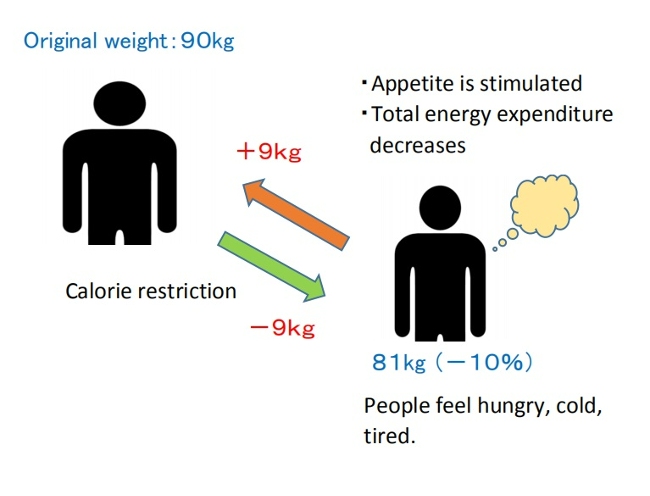
This phenomenon, known as adaptive thermogenesis (AT) or metabolic adaptation, creates conditions that favor regaining lost weight[7].&#160;
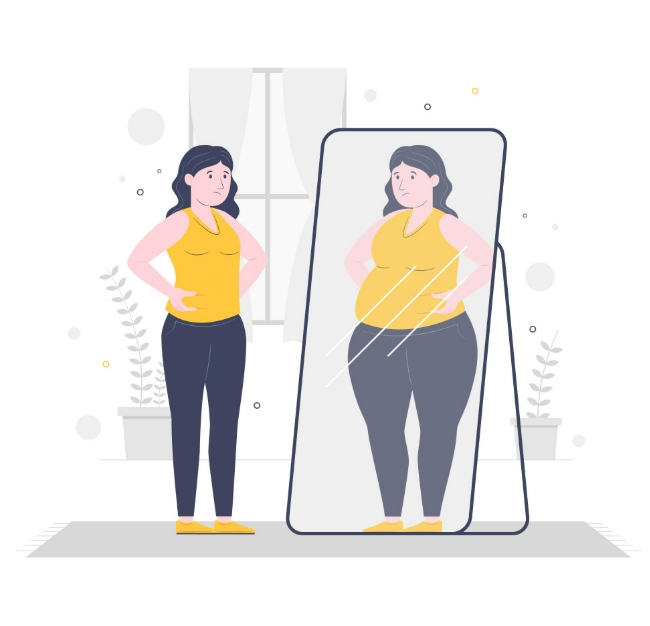
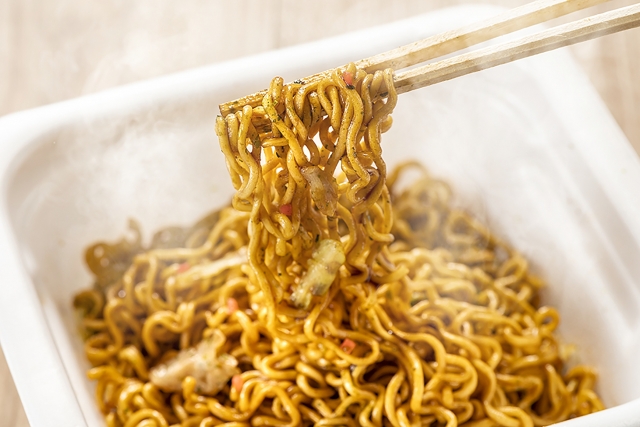
Metabolic adaptation can be interpreted teleologically as the body&#039;s survival response: when the body perceives a state of starvation, it reduces the energy costs of living in an attempt to prolong life. Interestingly, this response also appears to occur in individuals with obesity and does not seem to be diminished by the quantity of energy stored as body fat[7,8].


(Author: rawpixel.com / Source: Freepik)


However, regarding the timing of its onset, there is inconsistent evidence[9]. Some studies have detected adaptive thermogenesis (AT) within a week of energy restriction, which has been associated with rapid declines in insulin secretion, depletion of glycogen stores, and loss of intra-and extra cellular fluid[10].

In contrast, a growing body of evidence suggests that underfeeding-associated AT takes weeks to develop[11], primarily in association with reduced leptin secretion resulting from the reduction of stored fat[9,12].&#160;

Although the persistence of AT also remains a subject of debate[7], some studies indicate that this metabolic adaptation may continue for years even after energy balance has been reestablished at a lower weight[13].&#160;


(2) Endocrine function


A number of hormones secreted from the gastrointestinal tract and adipose tissue are known to play key roles in regulating appetite, food intake, energy expenditure, and body weight[14,15].

Leptin is a hormone secreted by fat cells that helps regulate body weight by suppressing appetite through stimulation of the satiety center and by increasing energy expenditure. High leptin levels are interpreted by the brain that energy reserves are high, whereas low leptin levels indicate that energy reserves are low[16].
&#160;It has been shown that leptin levels drop within 24 hours of energy restriction[17]. Interestingly, many studies have reported a greater reduction in leptin levels than would be expected for given losses of adipose tissue[18,19].&#160;
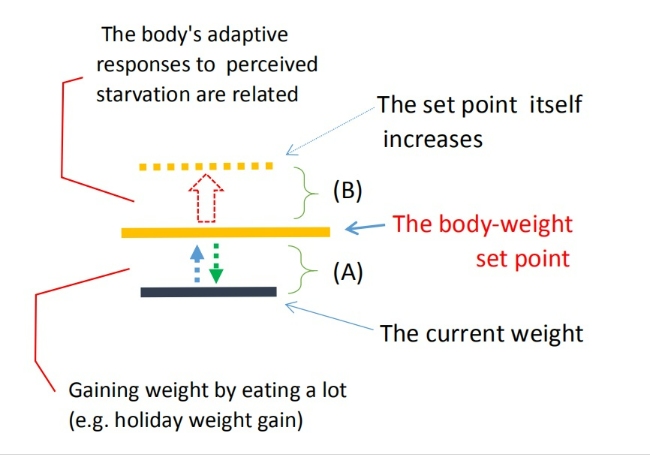
It has been suggested that the primary role of leptin may be the prevention of starvation, rather than weight regulation per se[15,20]. When leptin levels fall below a certain threshold&#8212;the point at which specific physiological responses are triggered(*1)&#8212;starvation defense mechanisms are activated, even if substantial fat stores remain[17]. This leads to a reduction in metabolic rate and physical activity, as well as an increase in hunger[21,22].
(* 1) It has been suggested that this threshold rises as fat mass increases[17].


Furthermore, in individuals who have lost weight, an increase in the appetite-stimulating hormone ghrelin, along with decreases in the post-meal satiety signals peptide YY (PYY) and cholecystokinin (CCK), has been observed[23]. 
As a result, behavioral weight loss can simultaneously induce a decrease in satiety and an increase in hunger, potentially promoting overeating[15].


(3) Food reward and addiction-like processes


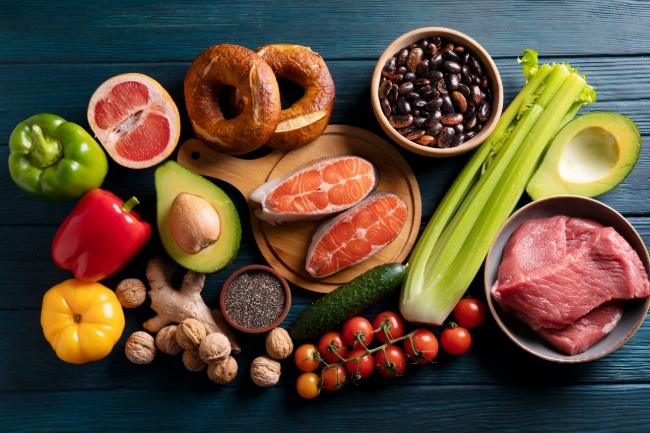
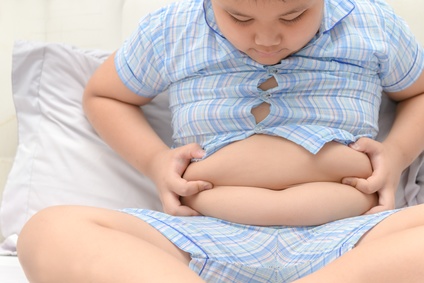
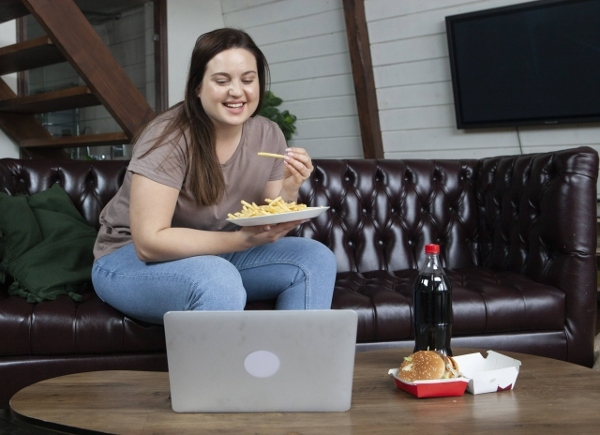
Food reward refers to the brain&#8217;s mechanism that generates pleasure and satisfaction from eating, as well as the motivation or desire to eat again. This process involves activation of the brain&#8217;s reward circuitry, where neurotransmitters such as dopamine are released, leading to feelings of well-being and increased appetite.


(Author: rawpixel.com / Source: Freepik)


The regulation of food intake is influenced by a close interaction between homeostatic and non-homeostatic (hedonic) factors. 
The former is related to nutritional needs, monitoring available energy in the blood and fat stores to maintain energy balance. The latter, in contrast, is largely associated with the brain&#8217;s reward system[24,25].
Although the mechanisms that determine how much we eat are largely homeostatic, reward-related signals can easily override these normal satiety signals that help maintain a stable body weight, potentially leading to overeating[25,26].


Modern neuroimaging studies using fMRI have shown that both nutritional status (e.g., hunger vs. satiety) and different food stimuli (e.g., high vs. low calorie, appetizing vs. bland foods) can alter activity in the brain&#8217;s reward circuitry[27,28,29].
Recent studies in healthy individuals indicate that short-or long-term caloric restriction, as well as fasting, may increase the reward value of food&#8212;especially for high-calorie, palatable items[27,30].&#160;
These findings may help explain why calorie-restricted diets for weight loss often fail in the long term[28,30].


&#60;Food Addiction and Its Differences from Drug Addiction&#62;
While drugs and food share certain characteristics, they also differ in qualitative and quantitative ways. 
Drugs of abuse, such as cocaine, act directly on the brain&#8217;s dopamine circuitry, whereas food influences the same circuits more indirectly. Signals from taste and smell, nutrient sensors in the digestive tract[31], and hormones released during digestion and absorption of ingested food all communicate with the brain and activate the dopamine system[25].


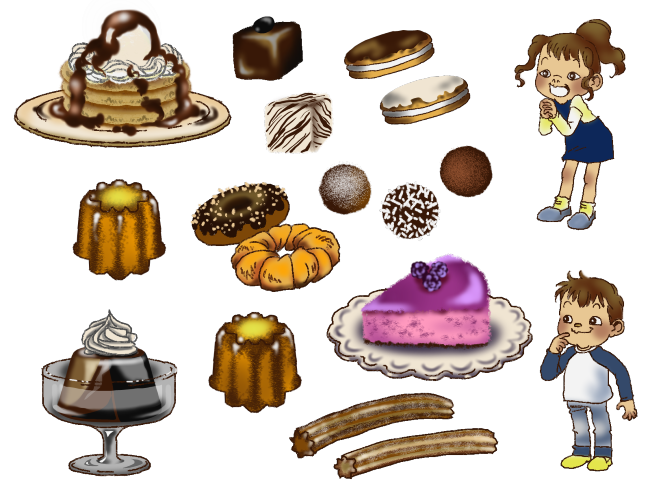
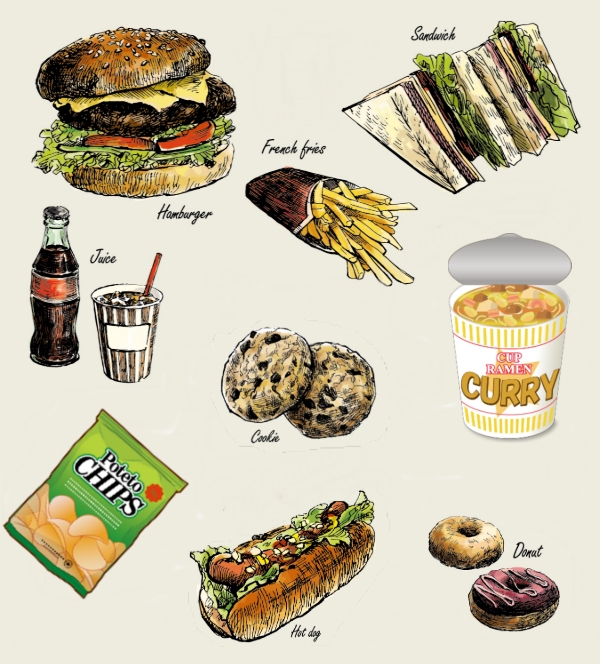
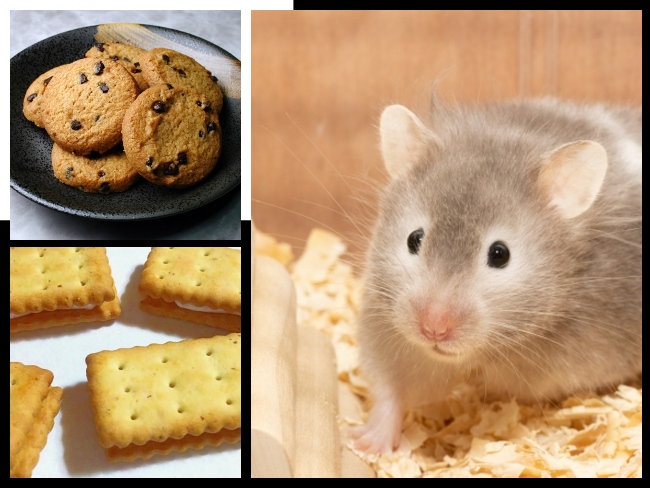
Although it remains debated whether specific food components such as sugar, sweeteners, salt, or fat can prompt addictive processes[25], highly palatable and calorie-dense foods&#8212;such as chocolate, ice cream, cookies, and salty snacks&#8212;can serve as powerful rewards. 
In today&#8217;s stress-filled society, these foods provide pleasure and comfort, leading some researchers to draw parallels between &#8220;food addiction&#8221; and drug addiction[32,33].&#160;


(4) Inhibitory system and binge eating


Food intake is primarily regulated by three interactive neural systems: the homeostatic, reward-related, and inhibitory systems[15].
The inhibitory system&#8212;mainly involving the brain region responsible for self-control and decision-making&#8212;helps regulate eating behavior and inhibit excess food intake[34].


&#60;Cognitive control of food reward&#62;
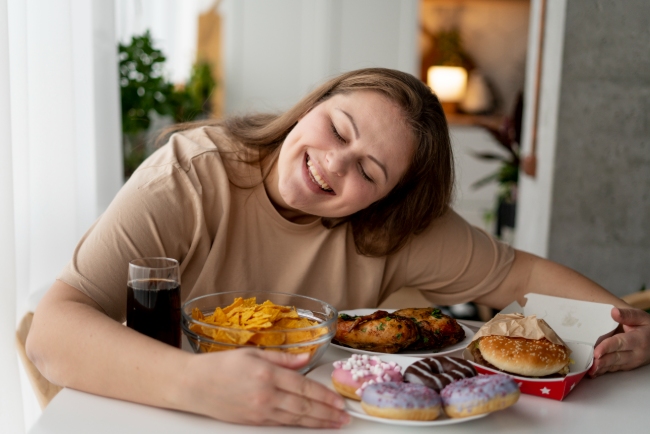
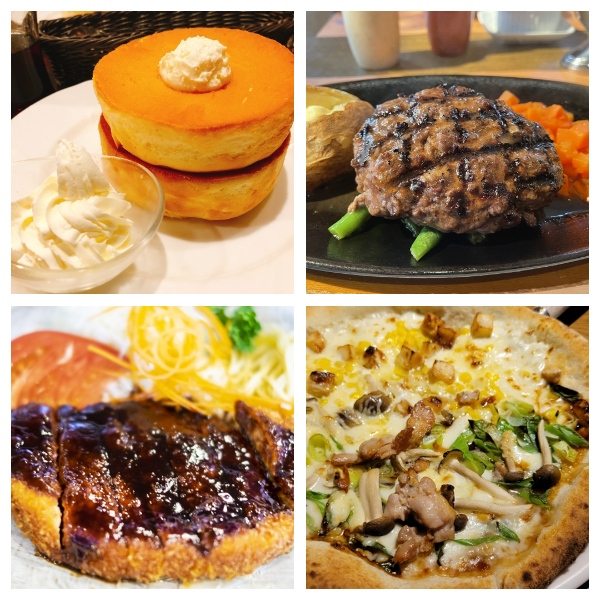
In humans, the urge to seek and consume palatable foods can be moderated by cognition, specifically&#160; executive functions. One of the central dilemmas in daily life is balancing one&#8217;s internal goals (e.g., cutting back on sweets to maintain health and weight control) against the immediate reward of eating tempting foods. This conflict is particularly challenging when highly desirable foods, like donuts or pizza, are readily available[25].


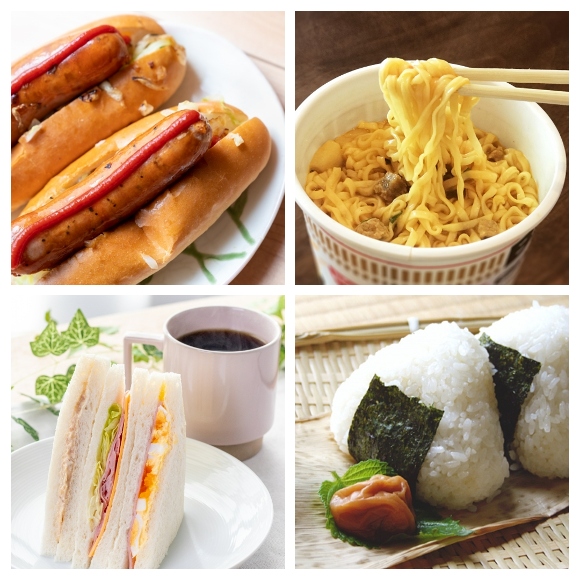
(Source: Freepik)


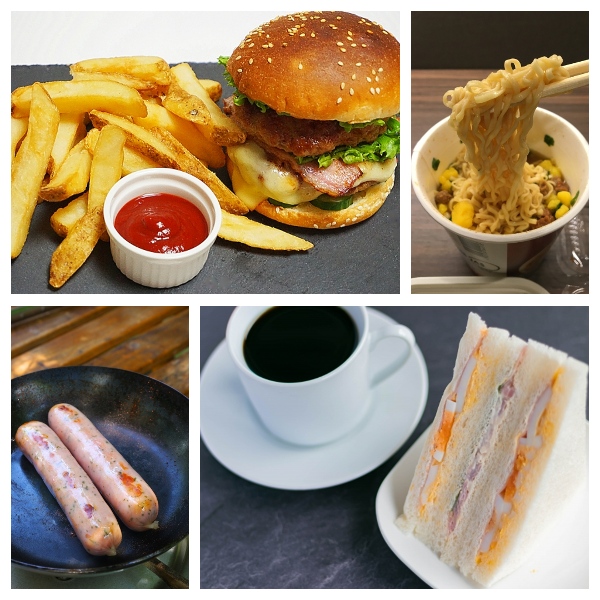
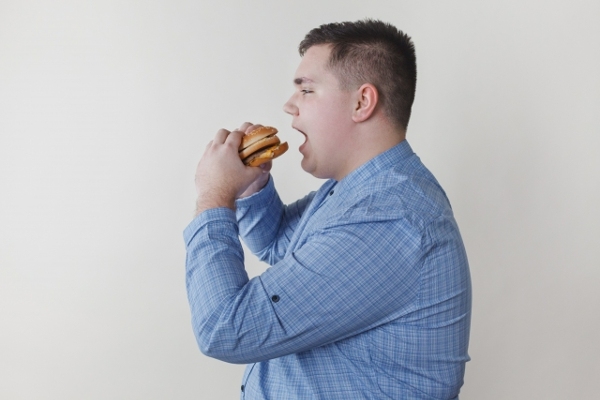
The short-term success in dieting suggests that an increase in inhibitory neural responses can temporarily override the neurobiological drive to consume highly palatable high-calorie foods[35].
However, recent evidence indicates that reward-related neural signaling is activated in conjunction with inhibitory signaling[36]. 
In simple terms, as dietary restriction continues, it may become increasingly difficult to resist the urge to eat appetizing, high-reward foods.


Prospective studies in young individuals, as well as animal experiments in rodents, suggest that severe caloric restriction, characterized by 24-hour fasting or fat-free diets, may increase the risk of developing binge eating and bulimia in the future[37,38].
&#160; &#160; &#160;&#160;


(5) Adipose cellularity


Weight loss dieting may reduce the size but not the number of fat cells[39]. It remains unclear whether hyperplasia (an increase in adipocyte number) contributes to weight rebound in weight-suppressed individuals[15]. However, in a study with obese rats, adipocyte hyperplasia has been observed following refeeding after fasting[40].
In humans, a similar possibility has been suggested[15].


Normally, when energy availability is low, triglycerides stored in fat tissue are broken down to supply energy to cells. 
However, the rate of lipolysis (fat breakdown) appears to be related to adipocyte size and cellular surface area[41]&#8212;meaning that as fat cells shrink, their rate of lipolysis tends to decline.
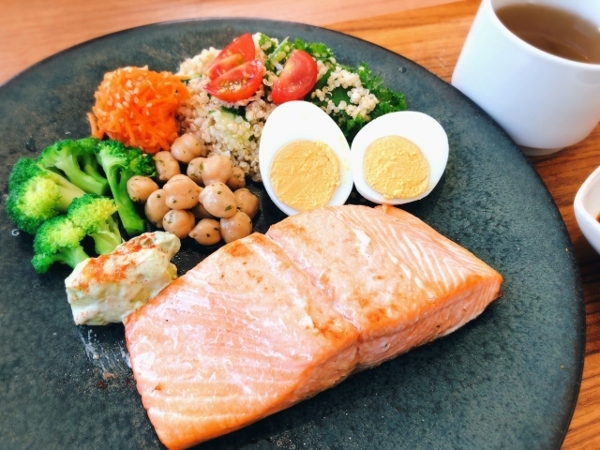
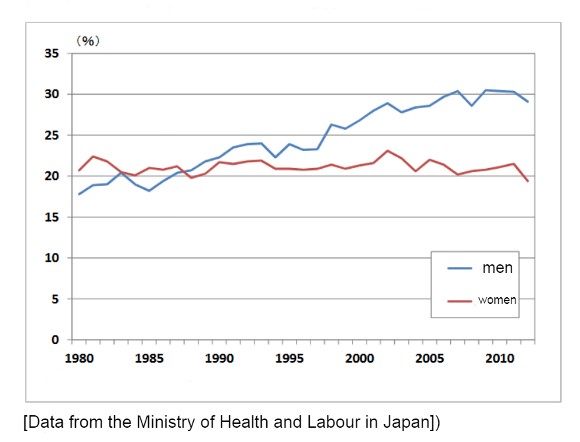
If size-reduced adipocytes are functionally modified to break down less and store more fat, these cells may become enlarged, potentially promoting the overall expansion of adipose tissue[15,42].


(Author: brgfx / Source: Freepik)


(6) Intestinal starvation


The reactions described in section 1 to 5 are thought to represent a series of anti-starvation or anti-weight loss mechanisms(* 2) triggered by glycogen depletion or a significant decrease in stored body fat[15].

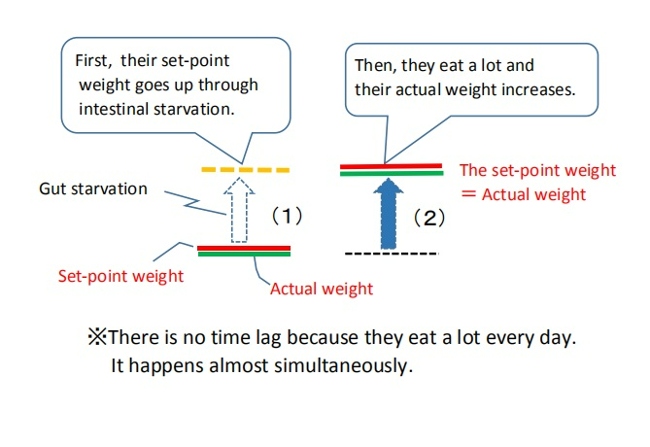
In contrast, intestinal starvation does not result from a depletion of energy. While it can occur under strict dietary restrictions aimed at weight loss&#8212;such as skipping meals or eating only very small portions&#8212;it may also be triggered by more casual dieting, or lifestyle habits not directly related to dieting, such as skipping breakfast, eating light lunches, having late dinners, or eating two meals a day.
【Related article】
Defining &#34;Intestinal Starvation&#34;: Its Relevance to the Multifactorial Model of Obesity


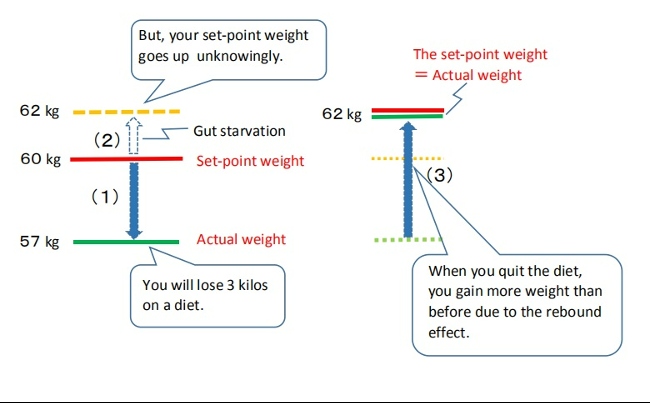
I also believe that when intestinal starvation is induced, it leads to overall weight gain, suggesting an increase in body&#8217;s set-point weight. This increase likely involves not only body fat but also lean tissue such as muscle mass. Therefore, it may differ from weight gain mechanisms characterized by abnormal increases in abdominal and total body fat.

(* 2) Some researchers prefer the term &#34;anti-weight loss&#34; mechanism rather than anti-starvation, because these responses operate despite the presence of adequate energy stores[15].


２. Conclusion


Although a direct causal relationship between the five mechanisms (section 1-5) discussed here and weight rebound has not yet been proven[15], many people who have experienced rebounding after dieting may find these explanations relatable.
Some researchers point out that &#8220;the biological forces resisting weight loss and driving weight rebound are so powerful that most individuals attempting to lose weight through behavioral interventions are unlikely to overcome them.&#8221; At the same time, they emphasize the need to develop new strategies that can weaken these biological mechanisms in order to achieve long-term weight loss[15].

In my opinion, rather than trying to overcome these powerful biological forces, what&#8217;s truly important is to avoid triggering the anti-starvation (or anti-weight loss) mechanisms in the first place.
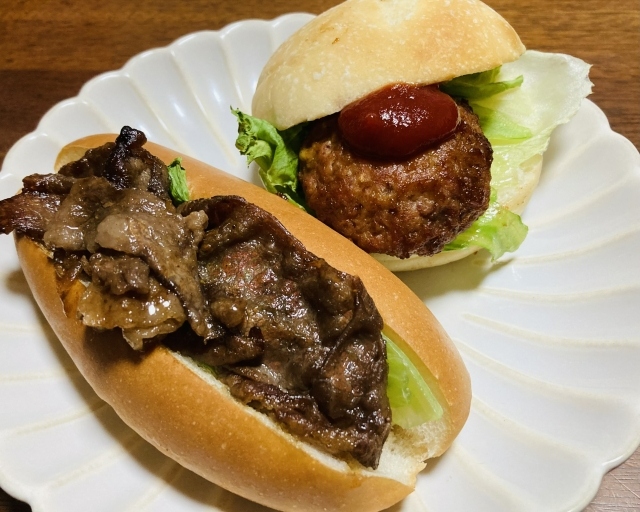
Currently, obesity is widely believed to result from excess caloric intake and/or lack of physical activity. Consequently, the common advice is to &#8220;eat less and exercise more.&#8221;&#160;However, many people try to reduce calories by eating light meals or very small portions (e.g., a simple sandwich, a simple burger) and endure extended periods of hunger. As the findings on food reward and inhibitory systems indicate, this approach clearly ignores the body&#8217;s natural biological mechanisms.
I would rather recommend the following approach:


&#160; &#160;&#160;
&#8226; Mainly reduce refined carbohydrates and adjust total caloric intake&#8212;but avoid extreme restrictions.
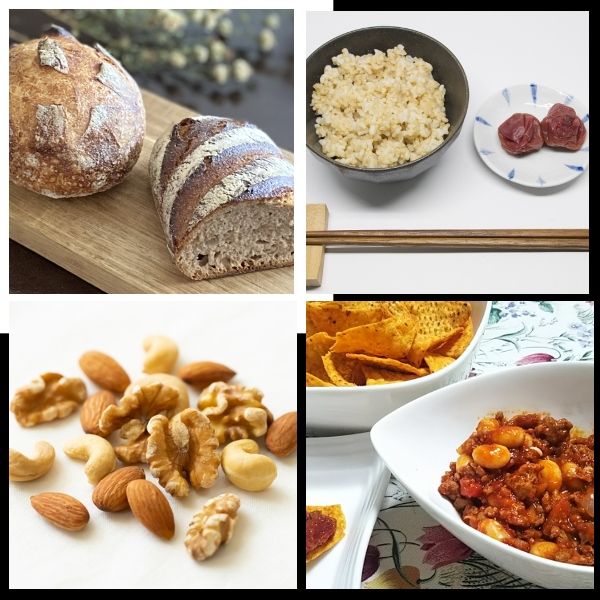
&#8226; Increase other foods, such as fiber-rich vegetables, seaweed, dairy products, minimally processed meats and fish, and nuts. In particular, emphasize foods that are harder to digest or take longer to break down (* 2).
(* 2) Even high-calorie foods like oils and nuts can be appropriate depending on how they&#8217;re consumed.
&#160; &#160; &#160; &#160; &#160; &#160;&#160;

By maintaining this dietary approach, the signal that &#34;there is sufficient food available&#34; may be transmitted through the gut-brain axis. Sustaining satiety and reducing hunger is key.
Moreover, nutrient-sensing systems in the digestive tract and other parts of the body have also been indicated to contribute to the generation of food reward during and after a meal[43]. By chewing slowly and savoring each bite, you can gain not only the immediate reward from taste buds but also a longer-lasting sense of satisfaction that extends well beyond the end of the meal[44].


The current obesity epidemic is often described as a mismatch between our modern, food-abundant environment and biological response patterns that evolved under food-scarce conditions[44,45].&#160;
From this perspective, I believe that in an environment where palatable food is readily available, even extended periods of hunger in daily life may actually promote long-term increases in body fat depending on how we combine foods.
&#160; &#160; &#160; &#160; &#160; &#160; &#160;&#160;


Home
&#160; &#160;&#160;


Back to the posts list


&#60;References&#62;
[1] Bacon L, Aphramor L. Weight science: evaluating the evidence for a paradigm shift. Nutr J. 2011 Jan 24;10:9.&#160;

[2]National Institutes of Health Technology Assessment Conference Panel (1993) Methods for voluntary weight loss and control. Ann Intern Med 119, 764&#8211;770.

[3] Deleted

[4] Rosenbaum M, Leibel RL. Adaptive thermogenesis in humans. Int J Obes (Lond). 2010 Oct;34 Suppl 1(0 1):S47-55.&#160;

[5]Jim&#233;nez Jaime T et al. Effect of calorie restriction on energy expenditure in overweight and obese adult women. Nutr Hosp. 2015 Jun 1;31(6):2428-36.&#160;

[6]Johannsen DL et al. Metabolic slowing with massive weight loss despite preservation of fat-free mass. J Clin Endocrinol Metab. 2012 Jul;97(7):2489-96.&#160;

[7]Hall KD, Guo J. Obesity Energetics: Body Weight Regulation and the Effects of Diet Composition. Gastroenterology. 2017 May;152(7):1718-1727.e3.&#160;

[8]Leibel RL, Rosenbaum M, Hirsch J. Changes in energy expenditure resulting from altered body weight. N Engl J Med. 1995 Mar 9;332(10):621-8.&#160;

[9]Egan AM, Collins AL. Dynamic changes in energy expenditure in response to underfeeding: a review. Proc Nutr Soc. 2022 May;81(2):199-212.&#160;

[10]Heinitz S et al. Early adaptive thermogenesis is a determinant of weight loss after six weeks of caloric restriction in overweight subjects. Metabolism. 2020 Sep;110:154303.&#160;

[11] Dulloo AG, Seydoux J, Jacquet J. Adaptive thermogenesis and uncoupling proteins: a reappraisal of their roles in fat metabolism and energy balance. Physiol Behav. 2004 Dec 30;83(4):587-602.&#160;

[12]M&#252;ller MJ, Enderle J, Bosy-Westphal A. Changes in Energy Expenditure with Weight Gain and Weight Loss in Humans. Curr Obes Rep. 2016 Dec;5(4):413-423.&#160;

[13]Fothergill E et al. Persistent metabolic adaptation 6 years after &#34;The Biggest Loser&#34; competition. Obesity (Silver Spring). 2016 Aug;24(8):1612-9.&#160;

[14]Schwartz MW et al. Central nervous system control of food intake. Nature. 2000 Apr 6;404(6778):661-71.&#160;

[15]Ochner CN et al. Biological mechanisms that promote weight regain following weight loss in obese humans. Physiol Behav. 2013 Aug 15;120:106-13.&#160;

[16]Hebebrand J et al. The role of hypoleptinemia in the psychological and behavioral adaptation to starvation: Implications for anorexia nervosa. Neurosci Biobehav Rev. 2022 Oct;141:104807.&#160;

[17]Leibel RL. The role of leptin in the control of body weight. Nutr Rev. 2002 Oct;60(10 Pt 2):S15-9; discussion S68-84, 85-7.&#160;

[18]L&#246;fgren P et al. Long-term prospective and controlled studies demonstrate adipose tissue hypercellularity and relative leptin deficiency in the postobese state. J Clin Endocrinol Metab. 2005 Nov;90(11):6207-13.&#160;

[19]Rosenbaum M et al. Effects of weight change on plasma leptin concentrations and energy expenditure. J Clin Endocrinol Metab. 1997 Nov;82(11):3647-54.&#160;

[20]Ahima RS et al. Role of leptin in the neuroendocrine response to fasting. Nature. 1996 Jul 18;382(6588):250-2.&#160;

[21] Rosenbaum M et al. Energy intake in weight-reduced humans. Brain Res. 2010 Sep 2;1350:95-102.&#160;

[22]Kissileff HR et al. Leptin reverses declines in satiation in weight-reduced obese humans. Am J Clin Nutr. 2012 Feb;95(2):309-17.&#160;

[23] Sumithran P et al. Long-term persistence of hormonal adaptations to weight loss. N Engl J Med. 2011 Oct 27;365(17):1597-604.&#160;

[24]Chaptini L, Peikin S. Neuroendocrine regulation of food intake. Curr Opin Gastroenterol. 2008 Mar;24(2):223-9.&#160;

[25]Alonso-Alonso M et al. Food reward system: current perspectives and future research needs. Nutr Rev. 2015 May;73(5):296-307.&#160;

[26]Begg DP, Woods SC. The endocrinology of food intake. Nat Rev Endocrinol. 2013 Oct;9(10):584-97.&#160;

[27]Goldstone AP et al. Fasting biases brain reward systems towards high-calorie foods. Eur J Neurosci. 2009 Oct;30(8):1625-35.&#160;

[28]Siep N et al. Hunger is the best spice: an fMRI study of the effects of attention, hunger and calorie content on food reward processing in the amygdala and orbitofrontal cortex. Behav Brain Res. 2009 Mar 2;198(1):149-58.&#160;

[29]Haase L, Cerf-Ducastel B, Murphy C. Cortical activation in response to pure taste stimuli during the physiological states of hunger and satiety. Neuroimage. 2009 Feb 1;44(3):1008-21.&#160;

[30] Stice E, Burger K, Yokum S. Caloric deprivation increases responsivity of attention and reward brain regions to intake, anticipated intake, and images of palatable foods. Neuroimage. 2013 Feb 15;67:322-30.&#160;

[31] de Araujo IE et al. Food reward in the absence of taste receptor signaling. Neuron. 2008 Mar 27;57(6):930-41.&#160;

[32]Avena NM, Rada P, Hoebel BG. Sugar and fat bingeing have notable differences in addictive-like behavior. J Nutr. 2009 Mar;139(3):623-8.&#160;

[33]Berthoud HR, Zheng H, Shin AC. Food reward in the obese and after weight loss induced by calorie restriction and bariatric surgery. Ann N Y Acad Sci. 2012 Aug;1264(1):36-48.&#160;

[34]Pannacciulli N et al. Less activation of the left dorsolateral prefrontal cortex in response to a meal: a feature of obesity. Am J Clin Nutr. 2006 Oct;84(4):725-31.&#160;

[35]DelParigi A et al. Successful dieters have increased neural activity in cortical areas involved in the control of behavior. Int J Obes (Lond). 2007 Mar;31(3):440-8.&#160;

[36]Burger KS, Stice E. Relation of dietary restraint scores to activation of reward-related brain regions in response to food intake, anticipated intake, and food pictures. Neuroimage. 2011 Mar 1;55(1):233-9.&#160;

[37]Stice E, Davis K, Miller NP, Marti CN. Fasting increases risk for onset of binge eating and bulimic pathology: a 5-year prospective study. J Abnorm Psychol. 2008 Nov;117(4):941-6.&#160;

[38]Ogawa R et al. Chronic food restriction and reduced dietary fat: risk factors for bouts of overeating. Physiol Behav. 2005 Nov 15;86(4):578-85.&#160;

[39]Gurr MI et al. Adipose tissue cellularity in man: the relationship between fat cell size and number, the mass and distribution of body fat and the history of weight gain and loss. Int J Obes. 1982;6(5):419-36. PMID: 7174187.

[40]Yang MU, Presta E, Bj&#246;rntorp P. Refeeding after fasting in rats: effects of duration of starvation and refeeding on food efficiency in diet-induced obesity. Am J Clin Nutr. 1990 Jun;51(6):970-8.&#160;

[41]Arner P. Control of lipolysis and its relevance to development of obesity in man. Diabetes Metab Rev. 1988 Aug;4(5):507-15. PMID: 3061758.

[42]MacLean PS et al. Peripheral metabolic responses to prolonged weight reduction that promote rapid, efficient regain in obesity-prone rats. Am J Physiol Regul Integr Comp Physiol. 2006 Jun;290(6):R1577-88.&#160;

[43]Sclafani A, Ackroff K. The relationship between food reward and satiation revisited. Physiol Behav. 2004 Aug;82(1):89-95.&#160;

[44]Berthoud HR, Lenard NR, Shin AC. Food reward, hyperphagia, and obesity. Am J Physiol Regul Integr Comp Physiol. 2011 Jun;300(6):R1266-77.&#160;

[45]Speakman JR. Thrifty genes for obesity, an attractive but flawed idea, and an alternative perspective: the &#039;drifty gene&#039; hypothesis. Int J Obes (Lond). 2008 Nov;32(11):1611-7.&#160;


</description>
<dc:creator></dc:creator>
<dc:subject></dc:subject>
<dc:date>2025-12-30T00:00:00+09:00</dc:date>
<content:encoded><![CDATA[
<h4 class="cms-content-parts-sin176692477053872800 cparts-editsite--mainttl" id="cms-editor-textarea-sin176692477053877200"><br>Summary</h4>
<div class="cms-content-parts-sin176692230309392400 box parts_text_type02 cparts-id120--01 lay-margin-b--3 lay-padding--2" data-selectable="cparts-animate cparts-animate--slideInUp:上へスライド,cparts-animate cparts-animate--slideInDown:下へスライド,cparts-animate cparts-animate--slideInLeft:左へスライド,cparts-animate cparts-animate--slideInRight:右へスライド" data-original="cms-content-parts-sin176692230309392400 box parts_text_type02 cparts-id120--01 lay-margin-b--3 lay-padding--2" style="background:#FDEFFC">
<div class="lay-row lay-no-gutters">
<div class="lay-col12-12">
<div class="cparts-editsite--txt cparts-txt-block lay-reset-child" id="cms-editor-minieditor-sin176692230309396400">
<p><span style="font-size: large;">When individuals lose weight through calorie restriction, <span style="background-color: rgb(255, 255, 153);">adaptive responses involving coordinated changes in metabolism, neuroendocrine function, autonomic regulation, and behavior are triggered, ultimately promoting weight rebound.</span> These responses may help explain why calorie-restricted diets frequently fail to produce lasting weight loss.</span></p>
<p></p>
<p><span style="font-size: large;">&#160; &#160;&#160;<br />
(1) <u><strong>Metabolic adaptation</strong></u><br />
Weight loss induced by calorie restriction leads to <span style="background-color: rgb(204, 255, 204);">a significant reduction in resting energy expenditure </span>beyond what would be predicted from changes in body composition. This metabolic adaptation occurs in both formerly obese individuals and naturally lean individuals who have lost weight, creating conditions that favor weight rebound.</span></p>
<p></p>
<p><span style="font-size: large;">&#160; &#160;&#160;<br />
(2) <u><strong>Endocrine function</strong></u><br />
A wide range of hormones secreted from the gastrointestinal tract and adipose tissue&#8212;such as leptin, ghrelin, peptide YY, and cholecystokinin&#8212;play essential roles in regulating appetite, food intake, and energy expenditure. </span><span style="background-color: rgb(255, 255, 153);"><span style="font-size: large;">A calorie-restricted diet simultaneously decreases satiety and increases hunger, which can promote overeating.</span></span></p>
<p><span style="font-size: large;">&#160; &#160;&#160;<br />
(3) <u><strong>Food reward and addiction-like processes</strong></u><br />
When we eat palatable foods, <span style="background-color: rgb(204, 255, 204);">neurotransmitters such as dopamine are released,</span> activating reward-related neural circuits. The desire to experience this pleasure again motivates the next eating episode. </span><span style="background-color: rgb(255, 255, 153);"><span style="font-size: large;">Calorie restriction and fasting can heighten the reward value of food, especially energy-dense, highly palatable foods.</span></span></p>
<p></p>
<p><span style="font-size: large;">&#160; &#160; &#160;<br />
(4) <u><strong>Inhibitory system and binge eating&#160;</strong></u><br />
Short-term dieting success can be attributed to enhanced inhibitory neural responses that temporarily suppress the desire to eat. However, as dietary restrictions continue, </span><span style="background-color: rgb(255, 255, 153);"><span style="font-size: large;">activation of reward-related brain regions may begin to override inhibitory control, making it increasingly difficult to resist cravings for palatable foods.</span></span></p>
<p></p>
<p><span style="font-size: large;">&#160; &#160;&#160;<br />
(5) <u><strong>Adipose cellularity</strong></u><br />
Weight loss reduces the size of adipocytes (fat cells), but their number generally remains unchanged. However, some researchers have pointed out that the possibility of new fat cells forming (hyperplasia) during weight rebound cannot be completely ruled out. </span><span style="background-color: rgb(255, 255, 153);"><span style="font-size: large;">If hyperplasia does occur, these fat cells could enlarge again, potentially promoting further expansion of overall adipose tissue.</span></span></p>
<p></p>
<p><span style="font-size: large;">&#160; &#160;&#160;<br />
(6) <u><strong>Intestinal starvation</strong></u><br />
Unlike the situations described in (1)&#8211;(5), intestinal starvation does not arise from a marked deficiency in energy.</span></p>
<p></p>
<p><span style="font-size: large;">&#160; &#160;&#160;<br />
<u><strong>Conclusion</strong></u><br />
Some researchers argue that the biological forces driving weight rebound after weight loss are extremely powerful and difficult to overcome. In my opinion, rather than trying to fight these responses, it is more important to avoid triggering them strongly in the first place.</span></p>
<p><span style="font-size: large;">Specifically, instead of enduring prolonged hunger,</span><span style="background-color: rgb(204, 255, 204);"><span style="font-size: large;"> it is helpful to consume more nutrient-dense, minimally processed foods while adjusting caloric intake. Doing so helps sustain satiety and reduce hunger&#8212;key factors in supporting long-term weight management.</span></span></p>
<div></div>
</div>
</div>
</div>
</div>
<div class="cms-content-parts-sin176692516569829400 cparts-id119 lay-margin-b--3 box" data-selectable="cparts-animate cparts-animate--slideInUp:上へスライド,cparts-animate cparts-animate--slideInDown:下へスライド,cparts-animate cparts-animate--slideInLeft:左へスライド,cparts-animate cparts-animate--slideInRight:右へスライド">
<div class="lay-row">
<div class="lay-col12-xs-12 lay-col12-md-12 lay-col12-lg-12">
<div class="cparts-editsite--txt cparts-txt-block lay-reset-child" id="cms-editor-minieditor-sin176692516569832000">
<p style="text-align: center;"><span style="font-size: x-large;">【Full text】</span></p>
</div>
</div>
</div>
</div>
<div class="cms-content-parts-sin176498228419763500 box cparts-id127 lay-margin-b--3" data-selectable="cparts-animate cparts-animate--slideInUp:上へスライド,cparts-animate cparts-animate--slideInDown:下へスライド,cparts-animate cparts-animate--slideInLeft:左へスライド,cparts-animate cparts-animate--slideInRight:右へスライド" data-original="cms-content-parts-sin176498228419763500 box cparts-id127 lay-margin-b--3" style="background:#B8E9F2">
<div class="lay-row">
<div class="lay-col12-12">
<div class="explanList">
<dl>
    <dt class="cparts-txt-block lay-reset-child" id="cms-editor-minieditor-sin176498228419767600">
    <p><strong><span style="font-size: large;"><font color="#005e72">Contents</font></span></strong></p>
    </dt>
    <dd class="cparts-txt-block lay-reset-child" id="cms-editor-minieditor-sin176498228419768200"><ol>         <li><span style="font-size: large;">Various mechanisms that promote weight rebound<br />         </span><span style="font-size: medium;">(1)Metabolic adaptation<br />         (2) Endocrine Function<br />         (3) Food Reward and Addiction-Like Processes<br />         (4) Inhibitory system and binge eating<br />         (5) Adipose cellularity&#160;<br />         (6) Intestinal starvation</span></li>         <li><span style="font-size: large;">Conclusion</span></li>     </ol></dd>
</dl>
</div>
</div>
</div>
</div>
<h4 class="cms-content-parts-sin176498231270834400" id="cms-editor-textarea-sin176498231270837800">Introduction</h4>
<div class="cms-content-parts-sin176498218956535900 cparts-id119 lay-margin-b--3 box" data-selectable="cparts-animate cparts-animate--slideInUp:上へスライド,cparts-animate cparts-animate--slideInDown:下へスライド,cparts-animate cparts-animate--slideInLeft:左へスライド,cparts-animate cparts-animate--slideInRight:右へスライド">
<div class="lay-row">
<div class="lay-col12-xs-12 lay-col12-md-12 lay-col12-lg-12">
<div class="cparts-txt-block lay-reset-child" id="cms-editor-minieditor-sin176498218956539900">
<p><span style="font-size: large;">The prescription for people with obesity to &#8221;eat less and exercise more&#8221;remains a widely used approach to weight management, despite its well-documented failures<span style="color: rgb(0, 0, 255);">[1]</span>. It has been suggested that most of the weight lost through dieting is regained over the long term<span style="color: rgb(0, 0, 255);">[2]</span>.&#160;</span></p>
<p><span style="font-size: large;">According to research in genetics, epidemiology, and physiology, body fat and body weight are known to be tightly regulated. When a person attempts to maintain weight loss, <span style="background-color: rgb(204, 255, 255);">adaptive responses involving coordinated changes in metabolic, neuroendocrine, autonomic, and behavioral functions are triggered, acting to oppose the maintenance of the reduced weight</span><span style="color: rgb(0, 0, 255);">[4]</span>.</span></p>
<p><span style="font-size: large;">In this post, I&#8217;d like to take a brief look at these biological mechanisms that may drive weight rebound and even promote further weight gain after dieting. I will also explain how my theory of intestinal starvation differs from these mechanisms.</span></p>
<p><span style="font-size: medium;">【Related Articles】&#160;<a href="https://www.en-futoraba.com/topics/2025/08/22128/" class="btn03">The Spread of Dieting May Be Fueling the Rise in Obesity</a></span></p>
<div>&#160; &#160; &#160; &#160; &#160; &#160; &#160; &#160;</div>
</div>
</div>
</div>
</div>
<h3 class="cms-content-parts-sin176498233470003500" id="cms-editor-textarea-sin176498233470007400">１．Various mechanisms that promote weight rebound</h3>
<h4 class="cms-content-parts-sin176498235329803000" id="cms-editor-textarea-sin176498235329807000">&#160; &#160; &#160;<br>(1) Metabolic adaptation</h4>
<div class="cms-content-parts-sin176498313580690300 cparts-id119 lay-margin-b--3 box" data-selectable="cparts-animate cparts-animate--slideInUp:上へスライド,cparts-animate cparts-animate--slideInDown:下へスライド,cparts-animate cparts-animate--slideInLeft:左へスライド,cparts-animate cparts-animate--slideInRight:右へスライド">
<div class="lay-row">
<div class="lay-col12-xs-12 lay-col12-md-12 lay-col12-lg-12">
<div class="cparts-txt-block lay-reset-child" id="cms-editor-minieditor-sin176498313580694200">
<p><span style="background-color: rgb(255, 255, 153);"><span style="font-size: large;">Energy restriction is associated with a reduction in <strong>resting energy expenditure </strong>(REE)</span></span><span style="font-size: large;"><span style="color: rgb(0, 0, 255);">[5]</span>.</span></p>
<p></p>
<p><span style="font-size: large;">Many studies have reported that behavioral weight loss leads to a greater decrease in both resting and total energy expenditure than would be predicted based on changes in body composition and the thermic effects of food<span style="color: rgb(0, 0, 255);">[4,6]</span>.</span></p>
</div>
</div>
</div>
</div>
<div class="cms-content-parts-sin176498245370263700 box cparts-id409--02 lay-margin-b--3" col-flex="1-2" data-selectable="cparts-animate cparts-animate--slideInUp:上へスライド,cparts-animate cparts-animate--slideInDown:下へスライド,cparts-animate cparts-animate--slideInLeft:左へスライド,cparts-animate cparts-animate--slideInRight:右へスライド">
<div class="lay-row">
<div class="lay-col12-xs-12 lay-col12-md-6 lay-col12-lg-6">
<div class="cparts-txt-block lay-reset-child" id="cms-editor-minieditor-sin176498245370267800">
<p><span style="font-size: large;">This phenomenon, known as <strong>adaptive thermogenesis </strong>(AT) or <strong>metabolic adaptation</strong>, creates conditions that favor regaining lost weight<span style="color: rgb(0, 0, 255);">[7]</span>.&#160;</span></p>
<p><span style="font-size: large;">Metabolic adaptation can be interpreted teleologically as the body's survival response: when the body perceives a state of starvation, it reduces the energy costs of living in an attempt to prolong life. <span style="background-color: rgb(255, 255, 153);">Interestingly, this response also appears to occur in individuals with obesity and does not seem to be diminished by the quantity of energy stored as body fat</span><span style="color: rgb(0, 0, 255);">[7,8]</span>.</span></p>
<div></div>
</div>
</div>
<div class="lay-col12-xs-12 lay-col12-md-6 lay-col12-lg-6">
<div class="cparts-img-block lay-img-width--max lay-margin-b--1"><img alt="Decrease in basal metabolic rate" class="cms-easy-edit" id="cms-editor-image-sin176498245370268200" src="https://www.en-futoraba.com/images/blog10/images20251230224338.jpg" width="330" /></div>
<div class="cparts-caption-block lay-reset-child lay-font-size--s cms-easy-edit" id="cms-editor-minieditor-sin176498245370268400">
<p style="text-align: center;"><span style="color: rgb(255, 102, 0);">(Author: rawpixel.com / Source: Freepik)</span></p>
</div>
</div>
</div>
</div>
<div class="cms-content-parts-sin176498248266354300 cparts-id119 lay-margin-b--3 box" data-selectable="cparts-animate cparts-animate--slideInUp:上へスライド,cparts-animate cparts-animate--slideInDown:下へスライド,cparts-animate cparts-animate--slideInLeft:左へスライド,cparts-animate cparts-animate--slideInRight:右へスライド">
<div class="lay-row">
<div class="lay-col12-xs-12 lay-col12-md-12 lay-col12-lg-12">
<div class="cparts-txt-block lay-reset-child" id="cms-editor-minieditor-sin176498248266364600">
<p><span style="font-size: large;">However, regarding the timing of its onset, there is inconsistent evidence<span style="color: rgb(0, 0, 255);">[9]</span>. Some studies have detected adaptive thermogenesis (AT) within a week of energy restriction, which has been associated with rapid declines in <strong>insulin</strong> secretion, depletion of <strong>glycogen</strong> stores, and loss of intra-and extra cellular fluid<span style="color: rgb(0, 0, 255);">[10]</span>.</span></p>
<p></p>
<p><span style="font-size: large;">In contrast, a growing body of evidence suggests that underfeeding-associated AT takes weeks to develop<span style="color: rgb(0, 0, 255);">[11]</span>, <span style="background-color: rgb(204, 255, 204);">primarily in association with reduced <strong>leptin</strong> secretion resulting from the reduction of stored fat</span><span style="color: rgb(0, 0, 255);">[9,12]</span>.&#160;</span></p>
<p></p>
<p><span style="font-size: large;">Although the persistence of AT also remains a subject of debate<span style="color: rgb(0, 0, 255);">[7]</span>, some studies indicate that this metabolic adaptation may continue for years even after energy balance has been reestablished at a lower weight<span style="color: rgb(0, 0, 255);">[13]</span>.&#160;</span></p>
</div>
</div>
</div>
</div>
<h4 class="cms-content-parts-sin176498251703925500" id="cms-editor-textarea-sin176498251703929500"><br />
(2) Endocrine function</h4>
<div class="cms-content-parts-sin176498249569081000 cparts-id119 lay-margin-b--3 box" data-selectable="cparts-animate cparts-animate--slideInUp:上へスライド,cparts-animate cparts-animate--slideInDown:下へスライド,cparts-animate cparts-animate--slideInLeft:左へスライド,cparts-animate cparts-animate--slideInRight:右へスライド">
<div class="lay-row">
<div class="lay-col12-xs-12 lay-col12-md-12 lay-col12-lg-12">
<div class="cparts-txt-block lay-reset-child" id="cms-editor-minieditor-sin176498249569085000">
<p><span style="font-size: large;">A number of hormones secreted from the gastrointestinal tract and adipose tissue are known to play key roles in regulating appetite, food intake, energy expenditure, and body weight<span style="color: rgb(0, 0, 255);">[14,15]</span>.</span></p>
<p></p>
<p><span style="background-color: rgb(255, 255, 153);"><strong><span style="font-size: large;">Leptin</span></strong><span style="font-size: large;"> is a hormone secreted by fat cells that helps regulate body weight by suppressing appetite through stimulation of the satiety center and by increasing energy expenditure.</span></span><span style="font-size: large;"> High leptin levels are interpreted by the brain that energy reserves are high, whereas low leptin levels indicate that energy reserves are low<span style="color: rgb(0, 0, 255);">[16]</span>.</span></p>
<p><span style="font-size: large;">&#160;It has been shown that leptin levels drop within 24 hours of energy restriction<span style="color: rgb(0, 0, 255);">[17]</span>. Interestingly, many studies have reported a greater reduction in leptin levels than would be expected for given losses of adipose tissue<span style="color: rgb(0, 0, 255);">[18,19]</span>.&#160;</span></p>
<p><span style="font-size: large;">It has been suggested that <span style="background-color: rgb(204, 255, 255);">the primary role of leptin may be the <strong>prevention of starvation</strong>, rather than weight regulation per se</span><span style="color: rgb(0, 0, 255);">[15,20]</span>. <span style="background-color: rgb(204, 255, 255);">When leptin levels fall below a certain threshold&#8212;the point at which specific physiological responses are triggered<span style="font-size: medium;"><span style="color: rgb(255, 102, 0);">(*1)</span></span>&#8212;starvation defense mechanisms are activated, even if substantial fat stores remain</span><span style="color: rgb(0, 0, 255);">[17]</span>. This leads to a reduction in metabolic rate and physical activity, as well as an increase in hunger<span style="color: rgb(0, 0, 255);">[21,22]</span>.</span></p>
<p><span style="color: rgb(255, 102, 0);"><span style="font-size: medium;">(* 1) It has been suggested that this threshold rises as fat mass increases<span style="color: rgb(0, 0, 255);">[17]</span>.</span></span></p>
<p></p>
<p><span style="font-size: large;"><br />
Furthermore, in individuals who have lost weight, an increase in the appetite-stimulating hormone <strong>ghrelin</strong>, along with decreases in the post-meal satiety signals <strong>peptide YY</strong> (PYY) and <strong>cholecystokinin</strong> (CCK), has been observed<span style="color: rgb(0, 0, 255);">[23]</span>. </span></p>
<p><span style="font-size: large;">As a result, <span style="background-color: rgb(255, 255, 153);">behavioral weight loss can simultaneously induce a decrease in satiety and an increase in hunger, potentially promoting overeating</span><span style="color: rgb(0, 0, 255);">[15]</span>.<br />
</span></p>
</div>
</div>
</div>
</div>
<h4 class="cms-content-parts-sin176498355814706700" id="cms-editor-textarea-sin176498355814711100"><br />
(3) Food reward and addiction-like processes</h4>
<div class="cms-content-parts-sin176498357088778300 cparts-id119 lay-margin-b--3 box" data-selectable="cparts-animate cparts-animate--slideInUp:上へスライド,cparts-animate cparts-animate--slideInDown:下へスライド,cparts-animate cparts-animate--slideInLeft:左へスライド,cparts-animate cparts-animate--slideInRight:右へスライド">
<div class="lay-row">
<div class="lay-col12-xs-12 lay-col12-md-12 lay-col12-lg-12">
<div class="cparts-txt-block lay-reset-child" id="cms-editor-minieditor-sin176498357088783900">
<p><span style="background-color: rgb(204, 255, 204);"><strong><span style="font-size: large;">Food reward</span></strong><span style="font-size: large;"> refers to the brain&#8217;s mechanism that generates pleasure and satisfaction from eating, as well as the motivation or desire to eat again.</span></span><span style="font-size: large;"> This process involves activation of the brain&#8217;s reward circuitry, where neurotransmitters such as <strong>dopamine</strong> are released, leading to feelings of well-being and increased appetite.</span></p>
<div></div>
</div>
</div>
</div>
</div>
<div class="cms-content-parts-sin176498359129758200 box cparts-id409--01 lay-margin-b--3" col-flex="1-2" data-selectable="cparts-animate cparts-animate--slideInUp:上へスライド,cparts-animate cparts-animate--slideInDown:下へスライド,cparts-animate cparts-animate--slideInLeft:左へスライド,cparts-animate cparts-animate--slideInRight:右へスライド">
<div class="lay-row">
<div class="lay-col12-xs-12 lay-col12-md-6 lay-col12-lg-6">
<div class="cparts-img-block lay-img-width--max lay-margin-b--1"><img alt="Food reward,dopamine" class="cms-easy-edit" id="cms-editor-image-sin176498359129762100" src="https://www.en-futoraba.com/images/blog10/images20251228215623.jpg" width="330" /></div>
<div class="cparts-caption-block lay-reset-child lay-font-size--s cms-easy-edit" id="cms-editor-minieditor-sin176498359129762500">
<p style="text-align: center;"><span style="color: rgb(255, 102, 0);">(Author: rawpixel.com / Source: Freepik)</span></p>
</div>
</div>
<div class="lay-col12-xs-12 lay-col12-md-6 lay-col12-lg-6">
<div class="cparts-txt-block lay-reset-child" id="cms-editor-minieditor-sin176498359129762800">
<p><span style="background-color: rgb(204, 255, 204);"><span style="font-size: large;">The regulation of food intake is influenced by a close interaction between <strong>homeostatic</strong> and <strong>non-homeostatic </strong>(hedonic) factors.</span></span><span style="font-size: large;"> </span></p>
<p><span style="font-size: large;">The former is related to nutritional needs, monitoring available energy in the blood and fat stores to maintain energy balance. The latter, in contrast, is largely associated with the brain&#8217;s reward system<span style="color: rgb(0, 0, 255);">[24,25]</span>.</span></p>
<p><span style="font-size: large;">Although the mechanisms that determine how much we eat are largely homeostatic, <span style="background-color: rgb(255, 255, 153);">reward-related signals can easily override these normal satiety signals that help maintain a stable body weight, potentially leading to overeating</span><span style="color: rgb(0, 0, 255);">[25,26]</span>.</span></p>
<div></div>
</div>
</div>
</div>
</div>
<div class="cms-content-parts-sin176498361556991800 cparts-id119 lay-margin-b--3 box" data-selectable="cparts-animate cparts-animate--slideInUp:上へスライド,cparts-animate cparts-animate--slideInDown:下へスライド,cparts-animate cparts-animate--slideInLeft:左へスライド,cparts-animate cparts-animate--slideInRight:右へスライド">
<div class="lay-row">
<div class="lay-col12-xs-12 lay-col12-md-12 lay-col12-lg-12">
<div class="cparts-txt-block lay-reset-child" id="cms-editor-minieditor-sin176498361556995800">
<p><span style="font-size: large;">Modern neuroimaging studies using fMRI have shown that both <strong>nutritional status</strong> (e.g., hunger vs. satiety) and different <strong>food stimuli </strong>(e.g., high vs. low calorie, appetizing vs. bland foods) can alter activity in the brain&#8217;s reward circuitry<span style="color: rgb(0, 0, 255);">[27,28,29]</span>.</span></p>
<p><span style="font-size: large;">Recent studies in healthy individuals indicate that <span style="background-color: rgb(204, 255, 255);">short-or long-term caloric restriction, as well as fasting, may increase the reward value of food&#8212;especially for high-calorie, palatable items</span><span style="color: rgb(0, 0, 255);">[27,30]</span>.&#160;</span></p>
<p><span style="font-size: large;">These findings may help explain why calorie-restricted diets for weight loss often fail in the long term<span style="color: rgb(0, 0, 255);">[28,30]</span>.</span></p>
</div>
</div>
</div>
</div>
<div class="cms-content-parts-sin176498362508498500 cparts-id119 lay-margin-b--3 box" data-selectable="cparts-animate cparts-animate--slideInUp:上へスライド,cparts-animate cparts-animate--slideInDown:下へスライド,cparts-animate cparts-animate--slideInLeft:左へスライド,cparts-animate cparts-animate--slideInRight:右へスライド">
<div class="lay-row">
<div class="lay-col12-xs-12 lay-col12-md-12 lay-col12-lg-12">
<div class="cparts-txt-block lay-reset-child" id="cms-editor-minieditor-sin176498362508507000">
<h5><span style="font-size: large;">&#60;Food Addiction and Its Differences from Drug Addiction&#62;</span></h5>
<p><span style="font-size: large;">While drugs and food share certain characteristics, they also differ in qualitative and quantitative ways. </span></p>
<p><span style="font-size: large;">Drugs of abuse, such as cocaine, act directly on the brain&#8217;s dopamine circuitry, <span style="background-color: rgb(204, 255, 255);">whereas food influences the same circuits more<strong> indirectly</strong>. Signals from taste and smell, nutrient sensors in the digestive tract<span style="color: rgb(0, 0, 255);">[31]</span>, and hormones released during digestion and absorption of ingested food all communicate with the brain and activate the dopamine system</span><span style="color: rgb(0, 0, 255);">[25]</span>.</span></p>
<div></div>
</div>
</div>
</div>
</div>
<div class="cms-content-parts-sin176498442398282800 box cparts-id437--01 lay-margin-b--3" col-flex="1-2" data-selectable="cparts-animate cparts-animate--slideInUp:上へスライド,cparts-animate cparts-animate--slideInDown:下へスライド,cparts-animate cparts-animate--slideInLeft:左へスライド,cparts-animate cparts-animate--slideInRight:右へスライド">
<div class="lay-row">
<div class="cparts-img-block lay-img-width--max lay-col12-xs-12 lay-col12-md-6 lay-col12-lg-6"><img alt="Addiction-like processes" class="cms-easy-edit" id="cms-editor-image-sin176498442398286900" src="https://www.en-futoraba.com/images/blog10/images20251228215700.png" width="330" /></div>
<div class="lay-col12-xs-12 lay-col12-md-6 lay-col12-lg-6">
<div class="cparts-txt-block lay-reset-child" id="cms-editor-minieditor-sin176498442398287300">
<p><span style="font-size: large;">Although it remains debated whether specific food components such as sugar, sweeteners, salt, or fat can prompt addictive processes<span style="color: rgb(0, 0, 255);">[25]</span>, highly palatable and calorie-dense foods&#8212;such as chocolate, ice cream, cookies, and salty snacks&#8212;can serve as powerful rewards. </span></p>
<p><span style="background-color: rgb(204, 255, 204);"><span style="font-size: large;">In today&#8217;s stress-filled society, these foods provide pleasure and comfort, leading some researchers to draw parallels between &#8220;<strong>food addiction</strong>&#8221; and drug addiction</span></span><span style="font-size: large;"><span style="color: rgb(0, 0, 255);">[32,33]</span>.&#160;</span></p>
</div>
</div>
</div>
</div>
<h4 class="cms-content-parts-sin176498446787104200" id="cms-editor-textarea-sin176498446787110000"><br />
(4) Inhibitory system and binge eating</h4>
<div class="cms-content-parts-sin176498449167077100 cparts-id119 lay-margin-b--3 box" data-selectable="cparts-animate cparts-animate--slideInUp:上へスライド,cparts-animate cparts-animate--slideInDown:下へスライド,cparts-animate cparts-animate--slideInLeft:左へスライド,cparts-animate cparts-animate--slideInRight:右へスライド">
<div class="lay-row">
<div class="lay-col12-xs-12 lay-col12-md-12 lay-col12-lg-12">
<div class="cparts-txt-block lay-reset-child" id="cms-editor-minieditor-sin176498449167081100">
<p><span style="background-color: rgb(255, 255, 153);"><span style="font-size: large;">Food intake is primarily regulated by three interactive neural systems: the homeostatic, reward-related, and inhibitory systems</span></span><span style="font-size: large;"><span style="color: rgb(0, 0, 255);">[15]</span>.</span></p>
<p><span style="font-size: large;">The <strong>inhibitory system</strong>&#8212;mainly involving the brain region responsible for self-control and decision-making&#8212;helps regulate eating behavior and inhibit excess food intake<span style="color: rgb(0, 0, 255);">[34]</span>.</span></p>
<div></div>
</div>
</div>
</div>
</div>
<div class="cms-content-parts-sin176498450133312700 cparts-id119 lay-margin-b--3 box" data-selectable="cparts-animate cparts-animate--slideInUp:上へスライド,cparts-animate cparts-animate--slideInDown:下へスライド,cparts-animate cparts-animate--slideInLeft:左へスライド,cparts-animate cparts-animate--slideInRight:右へスライド">
<div class="lay-row">
<div class="lay-col12-xs-12 lay-col12-md-12 lay-col12-lg-12">
<div class="cparts-txt-block lay-reset-child" id="cms-editor-minieditor-sin176498450133348500">
<h5><span style="font-size: large;">&#60;Cognitive control of food reward&#62;</span></h5>
<p><span style="font-size: large;">In humans, the urge to seek and consume palatable foods can be moderated by cognition, specifically&#160; executive functions. One of the central dilemmas in daily life is balancing one&#8217;s internal goals (e.g., cutting back on sweets to maintain health and weight control) against the immediate reward of eating tempting foods. This conflict is particularly challenging when highly desirable foods, like donuts or pizza, are readily available<span style="color: rgb(0, 0, 255);">[25]</span>.</span></p>
<div></div>
</div>
</div>
</div>
</div>
<div class="cms-content-parts-sin176498451808973200 box cparts-id409--01 lay-margin-b--3" col-flex="1-2" data-selectable="cparts-animate cparts-animate--slideInUp:上へスライド,cparts-animate cparts-animate--slideInDown:下へスライド,cparts-animate cparts-animate--slideInLeft:左へスライド,cparts-animate cparts-animate--slideInRight:右へスライド">
<div class="lay-row">
<div class="lay-col12-xs-12 lay-col12-md-6 lay-col12-lg-6">
<div class="cparts-img-block lay-img-width--max lay-margin-b--1"><img alt="Binge eating" class="cms-easy-edit" id="cms-editor-image-sin176498451808978800" src="https://www.en-futoraba.com/images/blog10/images20251228215735.jpg" width="330" /></div>
<div class="cparts-caption-block lay-reset-child lay-font-size--s cms-easy-edit" id="cms-editor-minieditor-sin176498451808979300">
<p style="text-align: center;"><span style="color: rgb(255, 102, 0);"><span style="font-size: medium;">(Source: Freepik)</span></span></p>
<div></div>
</div>
</div>
<div class="lay-col12-xs-12 lay-col12-md-6 lay-col12-lg-6">
<div class="cparts-txt-block lay-reset-child" id="cms-editor-minieditor-sin176498451808979500">
<p><span style="background-color: rgb(204, 255, 255);"><span style="font-size: large;">The short-term success in dieting suggests that an increase in <strong>inhibitory neural responses</strong> can temporarily override the neurobiological drive to consume highly palatable high-calorie foods</span></span><span style="font-size: large;"><span style="color: rgb(0, 0, 255);">[35]</span>.</span></p>
<p><span style="font-size: large;">However, recent evidence indicates that reward-related neural signaling is activated in conjunction with inhibitory signaling<span style="color: rgb(0, 0, 255);">[36]</span>. </span></p>
<p><span style="font-size: large;">In simple terms, </span><span style="background-color: rgb(255, 255, 153);"><span style="font-size: large;">as dietary restriction continues, it may become increasingly difficult to resist the urge to eat appetizing, high-reward foods.</span></span></p>
<div></div>
</div>
</div>
</div>
</div>
<div class="cms-content-parts-sin176498492789805100 cparts-id119 lay-margin-b--3 box" data-selectable="cparts-animate cparts-animate--slideInUp:上へスライド,cparts-animate cparts-animate--slideInDown:下へスライド,cparts-animate cparts-animate--slideInLeft:左へスライド,cparts-animate cparts-animate--slideInRight:右へスライド">
<div class="lay-row">
<div class="lay-col12-xs-12 lay-col12-md-12 lay-col12-lg-12">
<div class="cparts-txt-block lay-reset-child" id="cms-editor-minieditor-sin176498492789812000">
<p><span style="font-size: large;">Prospective studies in young individuals, as well as animal experiments in rodents, suggest that severe caloric restriction, characterized by 24-hour fasting or fat-free diets, may increase the risk of developing <strong>binge eating</strong> and <strong>bulimia</strong> in the future<span style="color: rgb(0, 0, 255);">[37,38]</span>.<br />
&#160; &#160; &#160;&#160;</span></p>
</div>
</div>
</div>
</div>
<h4 class="cms-content-parts-sin176498496530932800" id="cms-editor-textarea-sin176498496530939100">(5) Adipose cellularity</h4>
<div class="cms-content-parts-sin176498497602011100 cparts-id119 lay-margin-b--3 box" data-selectable="cparts-animate cparts-animate--slideInUp:上へスライド,cparts-animate cparts-animate--slideInDown:下へスライド,cparts-animate cparts-animate--slideInLeft:左へスライド,cparts-animate cparts-animate--slideInRight:右へスライド">
<div class="lay-row">
<div class="lay-col12-xs-12 lay-col12-md-12 lay-col12-lg-12">
<div class="cparts-txt-block lay-reset-child" id="cms-editor-minieditor-sin176498497602016700">
<p><span style="font-size: large;">Weight loss dieting may reduce the size but not the number of fat cells<span style="color: rgb(0, 0, 255);">[39]</span>. It remains unclear whether <strong>hyperplasia</strong> (an increase in adipocyte number) contributes to weight rebound in weight-suppressed individuals<span style="color: rgb(0, 0, 255);">[15]</span>. However, in a study with obese rats, adipocyte hyperplasia has been observed following refeeding after fasting<span style="color: rgb(0, 0, 255);">[40]</span>.</span></p>
<p><span style="font-size: large;">In humans, a similar possibility has been suggested<span style="color: rgb(0, 0, 255);">[15]</span>.</span></p>
<div></div>
</div>
</div>
</div>
</div>
<div class="cms-content-parts-sin176498499373533900 box cparts-id409--02 lay-margin-b--3" col-flex="1-2" data-selectable="cparts-animate cparts-animate--slideInUp:上へスライド,cparts-animate cparts-animate--slideInDown:下へスライド,cparts-animate cparts-animate--slideInLeft:左へスライド,cparts-animate cparts-animate--slideInRight:右へスライド">
<div class="lay-row">
<div class="lay-col12-xs-12 lay-col12-md-6 lay-col12-lg-6">
<div class="cparts-txt-block lay-reset-child" id="cms-editor-minieditor-sin176498499373537900">
<p><span style="font-size: large;">Normally, when energy availability is low, <strong>triglycerides</strong> stored in fat tissue are broken down to supply energy to cells. </span></p>
<p><span style="font-size: large;">However, </span><span style="background-color: rgb(204, 255, 204);"><span style="font-size: large;">the rate of lipolysis (fat breakdown) appears to be related to adipocyte size and <strong>cellular surface area</strong><span style="color: rgb(0, 0, 255);">[41]</span>&#8212;meaning that as fat cells shrink, their rate of lipolysis tends to decline.</span></span></p>
<p><span style="font-size: large;">If size-reduced adipocytes are functionally modified to break down less and store more fat, these cells may become enlarged, potentially promoting the overall expansion of adipose tissue<span style="color: rgb(0, 0, 255);">[15,42]</span>.</span></p>
</div>
</div>
<div class="lay-col12-xs-12 lay-col12-md-6 lay-col12-lg-6">
<div class="cparts-img-block lay-img-width--max lay-margin-b--1"><img alt="An increase in body fat" class="cms-easy-edit" id="cms-editor-image-sin176498499373538300" src="https://www.en-futoraba.com/images/blog10/images20251228215802.jpg" width="330" /></div>
<div class="cparts-caption-block lay-reset-child lay-font-size--s cms-easy-edit" id="cms-editor-minieditor-sin176498499373538600">
<p style="text-align: center;"><span style="font-size: medium;"><span style="color: rgb(255, 102, 0);">(Author: brgfx / Source: Freepik)</span></span></p>
<div></div>
</div>
</div>
</div>
</div>
<h4 class="cms-content-parts-sin176498882095987100" id="cms-editor-textarea-sin176498882095991000">(6) Intestinal starvation</h4>
<div class="cms-content-parts-sin176508779082021900 cparts-id119 lay-margin-b--3 box" data-selectable="cparts-animate cparts-animate--slideInUp:上へスライド,cparts-animate cparts-animate--slideInDown:下へスライド,cparts-animate cparts-animate--slideInLeft:左へスライド,cparts-animate cparts-animate--slideInRight:右へスライド">
<div class="lay-row">
<div class="lay-col12-xs-12 lay-col12-md-12 lay-col12-lg-12">
<div class="cparts-txt-block lay-reset-child" id="cms-editor-minieditor-sin176508779082026000">
<p><span style="font-size: large;">The reactions described in section 1 to 5 are thought to represent a series of <strong>anti-starvation</strong> or <strong>anti-weight loss</strong> mechanisms<span style="color: rgb(255, 102, 0);"><span style="font-size: small;">(* 2)</span></span> triggered by glycogen depletion or a significant decrease in stored body fat<span style="color: rgb(0, 0, 255);">[15]</span>.</span></p>
<p></p>
<p><span style="font-size: large;">In contrast,<span style="background-color: rgb(204, 255, 255);"> intestinal starvation does not result from a depletion of energy.</span> While it can occur under strict dietary restrictions aimed at weight loss&#8212;such as skipping meals or eating only very small portions&#8212;it may also be triggered by more casual dieting, or lifestyle habits not directly related to dieting, such as skipping breakfast, eating light lunches, having late dinners, or eating two meals a day.<br />
</span><span style="font-size: medium;">【Related article】<br />
<a href="https://www.en-futoraba.com/topics/2016/10/22088/" class="btn03">Defining &#34;Intestinal Starvation&#34;: Its Relevance to the Multifactorial Model of Obesity</a></span></p>
<p></p>
<p></p>
<p><br />
<span style="font-size: large;">I also believe that when intestinal starvation is induced,<span style="background-color: rgb(204, 255, 204);"> it leads to overall weight gain, suggesting an increase in body&#8217;s set-point weight. This increase likely involves not only body fat but also lean tissue such as muscle mass.</span> Therefore, it may differ from weight gain mechanisms characterized by abnormal increases in abdominal and total body fat.</span></p>
<p></p>
<p><span style="color: rgb(255, 102, 0);"><span style="font-size: large;">(* 2) Some researchers prefer the term &#34;anti-weight loss&#34; mechanism rather than anti-starvation, because these responses operate despite the presence of adequate energy stores<span style="color: rgb(0, 0, 255);">[15]</span>.</span></span></p>
<div></div>
</div>
</div>
</div>
</div>
<h3 class="cms-content-parts-sin176498917577998100" id="cms-editor-textarea-sin176498917578038500">２. Conclusion</h3>
<div class="cms-content-parts-sin176498919766861200 cparts-id119 lay-margin-b--3 box" data-selectable="cparts-animate cparts-animate--slideInUp:上へスライド,cparts-animate cparts-animate--slideInDown:下へスライド,cparts-animate cparts-animate--slideInLeft:左へスライド,cparts-animate cparts-animate--slideInRight:右へスライド">
<div class="lay-row">
<div class="lay-col12-xs-12 lay-col12-md-12 lay-col12-lg-12">
<div class="cparts-txt-block lay-reset-child" id="cms-editor-minieditor-sin176498919766895600">
<p><span style="font-size: large;">Although a direct causal relationship between the five mechanisms (section 1-5) discussed here and weight rebound has not yet been proven<span style="color: rgb(0, 0, 255);">[15]</span>, many people who have experienced rebounding after dieting may find these explanations relatable.</span></p>
<p><span style="font-size: large;">Some researchers point out that <span style="background-color: rgb(204, 255, 255);">&#8220;the <strong>biological forces</strong> resisting weight loss and driving weight rebound are so powerful that most individuals attempting to lose weight through behavioral interventions are unlikely to overcome them.&#8221;</span> At the same time, they emphasize the need to develop new strategies that can weaken these biological mechanisms in order to achieve long-term weight loss<span style="color: rgb(0, 0, 255);">[15]</span>.</span></p>
<p><span style="font-size: large;"><br />
In my opinion, rather than trying to overcome these powerful biological forces, <span style="background-color: rgb(204, 255, 255);">what&#8217;s truly important is to <strong>avoid triggering</strong> the anti-starvation (or anti-weight loss) mechanisms</span> in the first place.</span></p>
<p><span style="font-size: large;">Currently, obesity is widely believed to result from excess caloric intake and/or lack of physical activity. Consequently, the common advice is to &#8220;eat less and exercise more.&#8221;&#160;</span><span style="font-size: large;">However, many people try to reduce calories by eating light meals or very small portions (e.g., a simple sandwich, a simple burger) and endure extended periods of hunger. As the findings on food reward and inhibitory systems indicate, this approach clearly ignores the body&#8217;s natural biological mechanisms.</span></p>
<p><span style="font-size: large;">I would rather recommend the following approach:</span></p>
<div></div>
</div>
</div>
</div>
</div><div class="cms-content-parts-sin176498920858312600 cparts-id119 lay-margin-b--3 box" data-selectable="cparts-animate cparts-animate--slideInUp:上へスライド,cparts-animate cparts-animate--slideInDown:下へスライド,cparts-animate cparts-animate--slideInLeft:左へスライド,cparts-animate cparts-animate--slideInRight:右へスライド" data-original="cms-content-parts-sin176498920858312600 cparts-id119 lay-margin-b--3 box" style="background:#FFFFCC">
<div class="lay-row">
<div class="lay-col12-xs-12 lay-col12-md-12 lay-col12-lg-12">
<div class="cparts-txt-block lay-reset-child" id="cms-editor-minieditor-sin176498920858347400">
<p><span style="font-size: large;">&#160; &#160;&#160;<br />
&#8226; Mainly reduce refined carbohydrates and adjust total caloric intake&#8212;but avoid extreme restrictions.</span></p>
<p><span style="font-size: large;">&#8226; Increase other foods, such as fiber-rich vegetables, seaweed, dairy products, minimally processed meats and fish, and nuts. In particular, emphasize foods that are harder to digest or take longer to break down <span style="font-size: small;"><span style="color: rgb(255, 102, 0);">(* 2)</span></span>.</span><br />
<span style="color: rgb(255, 102, 0);"><span style="font-size: medium;">(* 2) Even high-calorie foods like oils and nuts can be appropriate depending on how they&#8217;re consumed.</span></span></p>
<p>&#160; &#160; &#160; &#160; &#160; &#160;&#160;</p>
<p></p>
<p><span style="font-size: large;">By maintaining this dietary approach, <span style="background-color: rgb(204, 255, 204);">the signal that &#34;there is sufficient food available&#34; may be transmitted through the <strong>gut-brain axis</strong>.</span> Sustaining satiety and reducing hunger is key.</span></p>
<p><span style="font-size: large;">Moreover, <strong>nutrient-sensing</strong> systems in the digestive tract and other parts of the body have also been indicated to contribute to the generation of food reward during and after a meal<span style="color: rgb(0, 0, 255);">[43]</span>. By chewing slowly and savoring each bite, <span style="background-color: rgb(204, 255, 204);">you can gain not only the immediate reward from taste buds but also a longer-lasting sense of satisfaction that extends well beyond the end of the meal</span><span style="color: rgb(0, 0, 255);">[44]</span>.</span></p>
<div></div>
</div>
</div>
</div>
</div>
<div class="cms-content-parts-sin176499022432207700 cparts-id119 lay-margin-b--3 box" data-selectable="cparts-animate cparts-animate--slideInUp:上へスライド,cparts-animate cparts-animate--slideInDown:下へスライド,cparts-animate cparts-animate--slideInLeft:左へスライド,cparts-animate cparts-animate--slideInRight:右へスライド">
<div class="lay-row">
<div class="lay-col12-xs-12 lay-col12-md-12 lay-col12-lg-12">
<div class="cparts-txt-block lay-reset-child" id="cms-editor-minieditor-sin176499022432215900">
<p><span style="font-size: large;">The current obesity epidemic is often described as a <strong>mismatch </strong>between our modern, food-abundant environment and biological response patterns that evolved under food-scarce conditions<span style="color: rgb(0, 0, 255);">[44,45]</span>.&#160;</span></p>
<p><span style="font-size: large;">From this perspective, I believe that in an environment where palatable food is readily available, even extended periods of hunger in daily life may actually promote long-term increases in body fat depending on how we combine foods.</span><br />
&#160; &#160; &#160; &#160; &#160; &#160; &#160;&#160;</p>
<div></div>
</div>
</div>
</div>
</div>

<div class="cms-content-parts-sin176499026138537900 cparts-id119--02 box lay-margin-b--3" col-flex="1-2" data-selectable="cparts-animate cparts-animate--slideInUp:上へスライド,cparts-animate cparts-animate--slideInDown:下へスライド,cparts-animate cparts-animate--slideInLeft:左へスライド,cparts-animate cparts-animate--slideInRight:右へスライド">
<div class="lay-row">
<div class="lay-col12-xs-12 lay-col12-md-6 lay-col12-lg-6">
<div class="cparts-txt-block lay-reset-child" id="cms-editor-minieditor-sin176499026138541200">
<p><a href="https://www.en-futoraba.com/" class="btn03">Home</a><br />
&#160; &#160;&#160;</p>
</div>
</div>
<div class="lay-col12-xs-12 lay-col12-md-6 lay-col12-lg-6">
<div class="cparts-txt-block lay-reset-child" id="cms-editor-minieditor-sin176499026138541500">
<p><a href="https://www.en-futoraba.com/outline/table/" class="btn03">Back to the posts list</a></p>
</div>
</div>
</div>
</div>
<div class="cms-content-parts-sin176537489205259100 cparts-id119 lay-margin-b--3 box" data-selectable="cparts-animate cparts-animate--slideInUp:上へスライド,cparts-animate cparts-animate--slideInDown:下へスライド,cparts-animate cparts-animate--slideInLeft:左へスライド,cparts-animate cparts-animate--slideInRight:右へスライド" data-original="cms-content-parts-sin176537489205259100 cparts-id119 lay-margin-b--3 box" style="background: #FFDDFF;">
<div class="lay-row">
<div class="lay-col12-xs-12 lay-col12-md-12 lay-col12-lg-12">
<div class="cparts-txt-block lay-reset-child" id="cms-editor-minieditor-sin176537489205263600">
<p><span style="font-size: medium;"><span style="color: rgb(0, 0, 255);">&#60;References&#62;<br />
[1] Bacon L, Aphramor L. <a href="https://pmc.ncbi.nlm.nih.gov/articles/PMC3041737/" target="_blank">Weight science: evaluating the evidence for a paradigm shift.</a> Nutr J. 2011 Jan 24;10:9.&#160;</span></span></p>
<p></p>
<p><span style="font-size: medium;"><span style="color: rgb(0, 0, 255);">[2]<a href="https://pubmed.ncbi.nlm.nih.gov/1580453/" target="_blank">National Institutes of Health Technology Assessment Conference Panel (1993) Methods for voluntary weight loss and control. </a>Ann Intern Med 119, 764&#8211;770.</span></span></p>
<p></p>
<p><span style="font-size: medium;"><span style="color: rgb(0, 0, 255);">[3] Deleted</span></span></p>
<p></p>
<p><span style="font-size: medium;"><span style="color: rgb(0, 0, 255);">[4] Rosenbaum M, Leibel RL. <a href="https://pmc.ncbi.nlm.nih.gov/articles/PMC3673773/" target="_blank">Adaptive thermogenesis in humans. </a>Int J Obes (Lond). 2010 Oct;34 Suppl 1(0 1):S47-55.&#160;</span></span></p>
<p></p>
<p><span style="font-size: medium;"><span style="color: rgb(0, 0, 255);">[5]Jim&#233;nez Jaime T et al. <a href="https://pubmed.ncbi.nlm.nih.gov/26040348/" target="_blank">Effect of calorie restriction on energy expenditure in overweight and obese adult women.</a> Nutr Hosp. 2015 Jun 1;31(6):2428-36.&#160;</span></span></p>
<p></p>
<p><span style="font-size: medium;"><span style="color: rgb(0, 0, 255);">[6]Johannsen DL et al. <a href="https://academic.oup.com/jcem/article/97/7/2489/2834464" target="_blank">Metabolic slowing with massive weight loss despite preservation of fat-free mass.</a> J Clin Endocrinol Metab. 2012 Jul;97(7):2489-96.&#160;</span></span></p>
<p></p>
<p><span style="font-size: medium;"><span style="color: rgb(0, 0, 255);">[7]Hall KD, Guo J. <a href="https://pmc.ncbi.nlm.nih.gov/articles/PMC5568065/" target="_blank">Obesity Energetics: Body Weight Regulation and the Effects of Diet Composition.</a> Gastroenterology. 2017 May;152(7):1718-1727.e3.&#160;</span></span></p>
<p></p>
<p><span style="font-size: medium;"><span style="color: rgb(0, 0, 255);">[8]Leibel RL, Rosenbaum M, Hirsch J. <a href="https://www.nejm.org/doi/full/10.1056/NEJM199503093321001" target="_blank">Changes in energy expenditure resulting from altered body weight. </a>N Engl J Med. 1995 Mar 9;332(10):621-8.&#160;</span></span></p>
<p></p>
<p><span style="font-size: medium;"><span style="color: rgb(0, 0, 255);">[9]Egan AM, Collins AL. <a href="https://www.cambridge.org/core/journals/proceedings-of-the-nutrition-society/article/dynamic-changes-in-energy-expenditure-in-response-to-underfeeding-a-review/DBDADC073C7056204EE29143C09F9703" target="_blank">Dynamic changes in energy expenditure in response to underfeeding: a review.</a> Proc Nutr Soc. 2022 May;81(2):199-212.&#160;</span></span></p>
<p></p>
<p><span style="font-size: medium;"><span style="color: rgb(0, 0, 255);">[10]Heinitz S et al. <a href="https://www.sciencedirect.com/science/article/abs/pii/S0026049520301670" target="_blank">Early adaptive thermogenesis is a determinant of weight loss after six weeks of caloric restriction in overweight subjects.</a> Metabolism. 2020 Sep;110:154303.&#160;</span></span></p>
<p></p>
<p><span style="font-size: medium;"><span style="color: rgb(0, 0, 255);">[11] Dulloo AG, Seydoux J, Jacquet J. <a href="https://www.sciencedirect.com/science/article/abs/pii/S0031938404004135" target="_blank">Adaptive thermogenesis and uncoupling proteins: a reappraisal of their roles in fat metabolism and energy balance. </a>Physiol Behav. 2004 Dec 30;83(4):587-602.&#160;</span></span></p>
<p></p>
<p><span style="font-size: medium;"><span style="color: rgb(0, 0, 255);">[12]M&#252;ller MJ, Enderle J, Bosy-Westphal A. <a href="https://www.nejm.org/doi/full/10.1056/NEJM199503093321001" target="_blank">Changes in Energy Expenditure with Weight Gain and Weight Loss in Humans. </a>Curr Obes Rep. 2016 Dec;5(4):413-423.&#160;</span></span></p>
<p></p>
<p><span style="font-size: medium;"><span style="color: rgb(0, 0, 255);">[13]Fothergill E et al. <a href="https://onlinelibrary.wiley.com/doi/full/10.1002/oby.21538" target="_blank">Persistent metabolic adaptation 6 years after &#34;The Biggest Loser&#34; competition.</a> Obesity (Silver Spring). 2016 Aug;24(8):1612-9.&#160;</span></span></p>
<p></p>
<p><span style="font-size: medium;"><span style="color: rgb(0, 0, 255);">[14]Schwartz MW et al. <a href="https://www.nature.com/articles/35007534" target="_blank">Central nervous system control of food intake. </a>Nature. 2000 Apr 6;404(6778):661-71.&#160;</span></span></p>
<p></p>
<p><span style="font-size: medium;"><span style="color: rgb(0, 0, 255);">[15]Ochner CN et al. <a href="https://pmc.ncbi.nlm.nih.gov/articles/PMC3797148/" target="_blank">Biological mechanisms that promote weight regain following weight loss in obese humans.</a> Physiol Behav. 2013 Aug 15;120:106-13.&#160;</span></span></p>
<p></p>
<p><span style="font-size: medium;"><span style="color: rgb(0, 0, 255);">[16]Hebebrand J et al. <a href="https://www.sciencedirect.com/science/article/abs/pii/S0149763422002962" target="_blank">The role of hypoleptinemia in the psychological and behavioral adaptation to starvation: Implications for anorexia nervosa. </a>Neurosci Biobehav Rev. 2022 Oct;141:104807.&#160;</span></span></p>
<p></p>
<p><span style="font-size: medium;"><span style="color: rgb(0, 0, 255);">[17]Leibel RL. <a href="https://onlinelibrary.wiley.com/doi/pdf/10.1301/002966402320634788" target="_blank">The role of leptin in the control of body weight.</a> Nutr Rev. 2002 Oct;60(10 Pt 2):S15-9; discussion S68-84, 85-7.&#160;</span></span></p>
<p></p>
<p><span style="font-size: medium;"><span style="color: rgb(0, 0, 255);">[18]L&#246;fgren P et al. <a href="https://academic.oup.com/jcem/article-abstract/90/11/6207/2838473?redirectedFrom=PDF" target="_blank">Long-term prospective and controlled studies demonstrate adipose tissue hypercellularity and relative leptin deficiency in the postobese state.</a> J Clin Endocrinol Metab. 2005 Nov;90(11):6207-13.&#160;</span></span></p>
<p></p>
<p><span style="font-size: medium;"><span style="color: rgb(0, 0, 255);">[19]Rosenbaum M et al. <a href="https://academic.oup.com/jcem/article-abstract/82/11/3647/2865985?redirectedFrom=fulltext" target="_blank">Effects of weight change on plasma leptin concentrations and energy expenditure. </a>J Clin Endocrinol Metab. 1997 Nov;82(11):3647-54.&#160;</span></span></p>
<p></p>
<p><span style="font-size: medium;"><span style="color: rgb(0, 0, 255);">[20]Ahima RS et al. <a href="https://www.nature.com/articles/382250a0" target="_blank">Role of leptin in the neuroendocrine response to fasting. </a>Nature. 1996 Jul 18;382(6588):250-2.&#160;</span></span></p>
<p></p>
<p><span style="font-size: medium;"><span style="color: rgb(0, 0, 255);">[21] Rosenbaum M et al. <a href="https://www.sciencedirect.com/science/article/abs/pii/S0006899310012667" target="_blank">Energy intake in weight-reduced humans.</a> Brain Res. 2010 Sep 2;1350:95-102.&#160;</span></span></p>
<p></p>
<p><span style="font-size: medium;"><span style="color: rgb(0, 0, 255);">[22]Kissileff HR et al. <a href="https://www.sciencedirect.com/science/article/pii/S0002916523026448" target="_blank">Leptin reverses declines in satiation in weight-reduced obese humans. </a>Am J Clin Nutr. 2012 Feb;95(2):309-17.&#160;</span></span></p>
<p></p>
<p><span style="font-size: medium;"><span style="color: rgb(0, 0, 255);">[23] Sumithran P et al. <a href="https://www.nejm.org/doi/full/10.1056/NEJMoa1105816" target="_blank">Long-term persistence of hormonal adaptations to weight loss. </a>N Engl J Med. 2011 Oct 27;365(17):1597-604.&#160;</span></span></p>
<p></p>
<p><span style="font-size: medium;"><span style="color: rgb(0, 0, 255);">[24]Chaptini L, Peikin S. <a href="https://pubmed.ncbi.nlm.nih.gov/18301275/" target="_blank">Neuroendocrine regulation of food intake. </a>Curr Opin Gastroenterol. 2008 Mar;24(2):223-9.&#160;</span></span></p>
<p></p>
<p><span style="font-size: medium;"><span style="color: rgb(0, 0, 255);">[25]Alonso-Alonso M et al. <a href="https://pmc.ncbi.nlm.nih.gov/articles/PMC4477694/" target="_blank">Food reward system: current perspectives and future research needs.</a> Nutr Rev. 2015 May;73(5):296-307.&#160;</span></span></p>
<p></p>
<p><span style="font-size: medium;"><span style="color: rgb(0, 0, 255);">[26]Begg DP, Woods SC. <a href="https://www.nature.com/articles/nrendo.2013.136" target="_blank">The endocrinology of food intake. </a>Nat Rev Endocrinol. 2013 Oct;9(10):584-97.&#160;</span></span></p>
<p></p>
<p><span style="font-size: medium;"><span style="color: rgb(0, 0, 255);">[27]Goldstone AP et al. <a href="https://pubmed.ncbi.nlm.nih.gov/19811532/" target="_blank">Fasting biases brain reward systems towards high-calorie foods.</a> Eur J Neurosci. 2009 Oct;30(8):1625-35.&#160;</span></span></p>
<p></p>
<p><span style="font-size: medium;"><span style="color: rgb(0, 0, 255);">[28]Siep N et al. <a href="https://www.sciencedirect.com/science/article/abs/pii/S0166432808005974" target="_blank">Hunger is the best spice: an fMRI study of the effects of attention, hunger and calorie content on food reward processing in the amygdala and orbitofrontal cortex.</a> Behav Brain Res. 2009 Mar 2;198(1):149-58.&#160;</span></span></p>
<p></p>
<p><span style="font-size: medium;"><span style="color: rgb(0, 0, 255);">[29]Haase L, Cerf-Ducastel B, Murphy C. <a href="https://www.sciencedirect.com/science/article/abs/pii/S1053811908010689" target="_blank">Cortical activation in response to pure taste stimuli during the physiological states of hunger and satiety.</a> Neuroimage. 2009 Feb 1;44(3):1008-21.&#160;</span></span></p>
<p></p>
<p><span style="font-size: medium;"><span style="color: rgb(0, 0, 255);">[30] Stice E, Burger K, Yokum S. <a href="https://www.sciencedirect.com/science/article/abs/pii/S1053811912011408" target="_blank">Caloric deprivation increases responsivity of attention and reward brain regions to intake, anticipated intake, and images of palatable foods.</a> Neuroimage. 2013 Feb 15;67:322-30.&#160;</span></span></p>
<p></p>
<p><span style="font-size: medium;"><span style="color: rgb(0, 0, 255);">[31] de Araujo IE et al. <a href="https://www.sciencedirect.com/science/article/pii/S0896627308001190" target="_blank">Food reward in the absence of taste receptor signaling.</a> Neuron. 2008 Mar 27;57(6):930-41.&#160;</span></span></p>
<p></p>
<p><span style="font-size: medium;"><span style="color: rgb(0, 0, 255);">[32]Avena NM, Rada P, Hoebel BG. <a href="https://www.sciencedirect.com/science/article/pii/S0022316623000068" target="_blank">Sugar and fat bingeing have notable differences in addictive-like behavior.</a> J Nutr. 2009 Mar;139(3):623-8.&#160;</span></span></p>
<p></p>
<p><span style="font-size: medium;"><span style="color: rgb(0, 0, 255);">[33]Berthoud HR, Zheng H, Shin AC. <a href="https://pmc.ncbi.nlm.nih.gov/articles/PMC3464359/" target="_blank">Food reward in the obese and after weight loss induced by calorie restriction and bariatric surgery.</a> Ann N Y Acad Sci. 2012 Aug;1264(1):36-48.&#160;</span></span></p>
<p></p>
<p><span style="font-size: medium;"><span style="color: rgb(0, 0, 255);">[34]Pannacciulli N et al. <a href="https://www.sciencedirect.com/science/article/pii/S0002916523290917" target="_blank">Less activation of the left dorsolateral prefrontal cortex in response to a meal: a feature of obesity.</a> Am J Clin Nutr. 2006 Oct;84(4):725-31.&#160;</span></span></p>
<p></p>
<p><span style="font-size: medium;"><span style="color: rgb(0, 0, 255);">[35]DelParigi A et al. <a href="https://www.nature.com/articles/0803431" target="_blank">Successful dieters have increased neural activity in cortical areas involved in the control of behavior. </a>Int J Obes (Lond). 2007 Mar;31(3):440-8.&#160;</span></span></p>
<p></p>
<p><span style="font-size: medium;"><span style="color: rgb(0, 0, 255);">[36]Burger KS, Stice E. <a href="https://www.sciencedirect.com/science/article/abs/pii/S1053811910015910" target="_blank">Relation of dietary restraint scores to activation of reward-related brain regions in response to food intake, anticipated intake, and food pictures.</a> Neuroimage. 2011 Mar 1;55(1):233-9.&#160;</span></span></p>
<p></p>
<p><span style="font-size: medium;"><span style="color: rgb(0, 0, 255);">[37]Stice E, Davis K, Miller NP, Marti CN. <a href="https://pmc.ncbi.nlm.nih.gov/articles/PMC2850570/" target="_blank">Fasting increases risk for onset of binge eating and bulimic pathology: a 5-year prospective study. </a>J Abnorm Psychol. 2008 Nov;117(4):941-6.&#160;</span></span></p>
<p></p>
<p><span style="font-size: medium;"><span style="color: rgb(0, 0, 255);">[38]Ogawa R et al. <a href="https://www.sciencedirect.com/science/article/abs/pii/S0031938405003458" target="_blank">Chronic food restriction and reduced dietary fat: risk factors for bouts of overeating. Physiol Behav.</a> 2005 Nov 15;86(4):578-85.&#160;</span></span></p>
<p></p>
<p><span style="font-size: medium;"><span style="color: rgb(0, 0, 255);">[39]Gurr MI et al. <a href="https://pubmed.ncbi.nlm.nih.gov/7174187/" target="_blank">Adipose tissue cellularity in man: the relationship between fat cell size and number, the mass and distribution of body fat and the history of weight gain and loss.</a> Int J Obes. 1982;6(5):419-36. PMID: 7174187.</span></span></p>
<p></p>
<p><span style="font-size: medium;"><span style="color: rgb(0, 0, 255);">[40]Yang MU, Presta E, Bj&#246;rntorp P. <a href="https://www.sciencedirect.com/science/article/abs/pii/S0002916523168158" target="_blank">Refeeding after fasting in rats: effects of duration of starvation and refeeding on food efficiency in diet-induced obesity.</a> Am J Clin Nutr. 1990 Jun;51(6):970-8.&#160;</span></span></p>
<p></p>
<p><span style="font-size: medium;"><span style="color: rgb(0, 0, 255);">[41]Arner P. <a href="https://pubmed.ncbi.nlm.nih.gov/3061758/" target="_blank">Control of lipolysis and its relevance to development of obesity in man.</a> Diabetes Metab Rev. 1988 Aug;4(5):507-15. PMID: 3061758.</span></span></p>
<p></p>
<p><span style="font-size: medium;"><span style="color: rgb(0, 0, 255);">[42]MacLean PS et al. <a href="https://journals.physiology.org/doi/full/10.1152/ajpregu.00810.2005" target="_blank">Peripheral metabolic responses to prolonged weight reduction that promote rapid, efficient regain in obesity-prone rats.</a> Am J Physiol Regul Integr Comp Physiol. 2006 Jun;290(6):R1577-88.&#160;</span></span></p>
<p></p>
<p><span style="font-size: medium;"><span style="color: rgb(0, 0, 255);">[43]Sclafani A, Ackroff K. <a href="https://www.sciencedirect.com/science/article/abs/pii/S0031938404001970" target="_blank">The relationship between food reward and satiation revisited.</a> Physiol Behav. 2004 Aug;82(1):89-95.&#160;</span></span></p>
<p></p>
<p><span style="font-size: medium;"><span style="color: rgb(0, 0, 255);">[44]Berthoud HR, Lenard NR, Shin AC. <a href="https://pmc.ncbi.nlm.nih.gov/articles/PMC3119156/" target="_blank">Food reward, hyperphagia, and obesity. </a>Am J Physiol Regul Integr Comp Physiol. 2011 Jun;300(6):R1266-77.&#160;</span></span></p>
<p></p>
<p><span style="font-size: medium;"><span style="color: rgb(0, 0, 255);">[45]Speakman JR. <a href="https://www.nature.com/articles/ijo2008161" target="_blank">Thrifty genes for obesity, an attractive but flawed idea, and an alternative perspective: the 'drifty gene' hypothesis.</a> Int J Obes (Lond). 2008 Nov;32(11):1611-7.&#160;</span></span></p>
<div></div>
</div>
</div>
</div>
</div>
]]></content:encoded>
</item>

<item rdf:about="https://www.en-futoraba.com/topics/2025/08/22128/">
<title>The Spread of Dieting May Be Fueling the Rise in Obesity</title>
<link>https://www.en-futoraba.com/topics/2025/08/22128/</link>
<description>Summary


(1) Alongside the rising prevalence of being overweight and being obese, the prevalence of dieting has also steadily increased over the past several decades. There is concern that dieting may paradoxically be contributing to obesity.

&#160; &#160;
(2) Several observational studies suggest that there is at least a partial causal relationship between dieting and weight gain, while some researchers argue that dieting is merely a proxy marker for a tendency to overeat.

&#160; &#160;
(3) Some prospective studies have found that dieting for weight loss&#8212;particularly among adolescents, middle-aged women, and individuals within the normal weight range&#8212;is one of the strongest predictors of future weight gain. Social pressure to achieve an ideal slim body, along with a fear of fatness, may drive some people to engage in extreme calorie-restricted diets.

&#160; &#160; &#160; &#160;
(4) In prospective studies of adolescents, the largest ten-year increases in BMI were observed in both males and females who consistently engaged in unhealthy weight control behaviors, such as skipping meals or eating very little. 
Some researchers point out that dieting in adolescence is likely to promote behavior patterns&#8212;such as binge eating, skipping breakfast, and insufficient vegetable intake&#8212;that are counterproductive to long-term weight management.


&#60;Conclusion&#62;
(5) Some observational studies suggest that dieting itself, independent of genetic factors, may predict an increase in BMI. In long-term clinical studies such as starvation experiments, which involve severe caloric restriction, weight overshooting has also been observed after the restrictions were lifted.

&#160; &#160;
(6) (My thoughts) Not all diets, but some forms of dietary restriction and unhealthy weight control behaviors&#8212;such as skipping meals&#8212;practiced by certain individuals may be contributing to overall weight gain at the population level.

&#160; &#160; &#160;&#160;
(7) Weight loss through dietary restriction has been found to trigger a biological starvation response&#8212;accompanied by metabolic, hormonal, and neurological changes&#8212;which may help explain why body weight can end up higher than the pre-diet level.


【 Full Text 】


 Contents


 Recent trends in dieting and obesity&#160;
 Problems and points to note in the observational study
 Is there a causal relationship between dieting and weight gain?&#160;
 Conclusion: My thoughts


&#60;Introduction&#62; In recent years, more and more people around the world are going on diets to lose weight. However, some have raised concerns that dieting itself may be contributing to the rise in obesity.&#160; For example, have you ever noticed that actresses or female TV announcers seem to have gained weight compared to how they looked in the past? To me, it&#8217;s hard to believe they&#8217;re simply overeating. On the contrary, I suspect they may actually be dieting&#8212;such as skipping meals or eating smaller portions&#8212;because they don&#8217;t want to gain weight.&#160; In this article, I&#8217;d like to explore whether there is a link between the prevalence of dieting and the rise in obesity, based on findings from observational and clinical studies. &#160; &#160; &#160; &#160;&#160;
1. Recent trends in dieting and obesity&#160;


(1) In 1992, a panel of experts convened by the U.S. National Institutes of Health concluded: &#8220;With continued participation in weight-loss programs conducted in controlled settings, participants typically lose about 10% of their body weight. However, within one year after weight loss, one-third to two-thirds of the weight is regained, and within five years, almost all of it is regained [1].&#8221;　　　　　　　　　
In addition, studies on long-term outcomes have shown that at least one-third of dieters regain more weight than they lost [2], raising concerns that dieting may paradoxically be promoting exactly the opposite of what it is intended to achieve[2,3].


(2) The notion that dieting to lose weight is counterproductive for weight control in that people may regain more fat than they lose through each cycle of weight loss/regain was embodied in the 1983 book &#8220;Dieting Makes You Fat[4].&#8221; Since then, whether dieting leads to weight gain remains a controversial and frequently debated topic among scientists [5,6,7].


(3) As of 1998, Americans spent over $33 billion annually on diet-related products and services [8]. Nevertheless, the prevalence of obesity (BMI &#8805; 30) has steadily increased&#8212;from 30.5% in 2000 to 35.7% in 2010, and 42.4% in 2018 [9].

The prevalence of dieting has also continued to rise over the past several decades (see Table 1) alongside the increasing rates of obesity [10].


Table 1: Trends in the prevalence of dieting in the U.S.


In the United Kingdom as well, the age-standardized prevalence of weight loss attempts rose from 39% in 1997 to 47% in 2013. 
The number of people trying to lose weight has increased each year across all BMI categories [15].


Table 2: Prevalence of weight loss attempts by BMI category (2013,UK)


(4) While some researchers have suggested that the link between dieting and weight gain may be at least partially causal [16,17], others have argued that dieting is a proxy marker for a tendency to overeat and that without dieting, individuals would gain even more weight [18].

&#160; &#160;&#160;
(5) Several prospective studies suggest that dieting to lose weight during adolescence [17,19,20], among middle-aged women [21], or by individuals who were initially within the normal weight range [5,21,22] are the strongest and most consistent predictors of future weight gain.


(6) A 10-year prospective study conducted in Minnesota (1998&#8211;2009) tracked dieting behaviors and BMI changes among adolescents every five years. A total of 1,902 participants (819 males and 1,083 females) completed the study.
Both males and females who consistently engaged in dieting and unhealthy weight control behaviors (such as skipping meals, eating very little, using food substitutes or diet pills) at both the start of the study (Time 1) and five years later (Time 2) had higher baseline BMIs, and showed greater increases in BMI after ten years (Time 3), as compared to those who did not diet.&#160;


Photo Credit: Freepik (photo by Prostooleh)


(＊1) 43.7% of females and 18.7% of males reported persistent use (at both Time 1 and Time 2) of unhealthy weight control behaviors.)


In particular, &#34;eating very little&#34; and &#34;skipping meals&#34; were by far the most commonly reported behaviors, and both predicted statistically significant greater BMI increases in both females and males.
Of particular concern was that respondents who were overweight (25 &#8804; BMI &#60; 30) at Time 1 and continued to engage in dieting or unhealthy weight control behaviors, showed substantial increases in BMI. 
For example, overweight females who practiced unhealthy weight control behaviors at both Time 1 and Time 2 experienced an average BMI increase of 5.19 units over the 10-year study period, whereas those who did not use any unhealthy behaviors saw only a 0.15-unit increase [17].


(7) The 1998 U.S. National Health Interview Survey investigated the prevalence of weight loss strategies among U.S. adults (see Table 3). 
Only one-third of those attempting to lose weight reported eating fewer calories and exercising more [23].&#160;


Table 3: The prevalence of weight loss strategies among U.S. adults (1998)


2. Problems and points to note in the observational study


While the majority of longitudinal observational cohort studies have shown subsequent weight gain among self-report dieters, some of the findings have suggested that dieting predicts both weight loss and weight gain, and the results have not always been consistent.
I would like to explore the possible reasons for this and other important points to consider.
&#160; &#160; &#160;&#160;


(1)&#160;What kind of dieting was involved?


Many studies have examined whether participants were dieting or their history of dieting at the start, but not so many have investigated specific dieting behavior.
Of course, people who followed a healthy and sustainable approach to weight loss&#8212;e.g., eating more vegetables, reducing ultra-processed foods, eating breakfast, and exercising&#8212;may have been able to maintain their weight loss. On the other hand, those who followed the wrong kind of diet that only produced short-term results may have ultimately ended up failing.&#160;


(2)&#160;Study duration and timing of dieting


In some studies, dieting status was assessed only at the beginning, and changes in BMI were then tracked several years later (e.g., after 2, 5, or 10 years). However, from a homeostasis perspective, individuals who were dieting at the start of the study may already have had a body weight below their original weight (meaning set-point weight) .
Additionally, if someone begins (or stops) dieting during the study period, or starts dieting shortly before the study ends, it may be difficult to accurately determine the causal relationship between dieting and weight change.


(3)&#160;BMI tends to increase during adolescence


An increase in BMI does not necessarily mean an increase in body fat. During adolescence (from junior high through high school), muscle mass also increases significantly, so a certain amount of BMI gain is not unusual. This is something to keep in mind when conducting observational studies in this age group.


(4) Confounding factors


Confounding factors are variables that can influence the relationship between a specific exposure and an outcome.
For example, when studying the link between alcohol consumption and cancer, smoking is known to increase cancer risk as well. Since people who drink alcohol often smoke, smoking becomes a confounding factor.
When examining the causal relationship between dieting and obesity, it&#8217;s important to account for other potential confounding factors (*2).

(*2) For example: alcohol consumption, smoking cessation, lack of physical activity, insufficient intake of calcium or micronutrients, socioeconomic status, childbirth, and sleep deprivation are all associated with weight gain.


3.&#160;Is there a causal relationship between dieting and weight gain?


Throughout this blog, I&#8217;ve explained that calorie-restricted diets&#8212;such as skipping meals&#8212;may induce intestinal starvation, which could lead to weight gain－meaning an increase in the body&#8217;s set-point weight.&#160;So it&#8217;s not at all surprising that the rise in dieting may be linked to the rise in obesity.
However, this time, I&#8217;d like to set aside my own ideas and explore this causal relationship based on what can be interpreted from observational and clinical studies.
&#160; &#160;&#160;


(1) First, let&#8217;s look at the claim that &#8220;dieting is merely a proxy marker for a tendency to overeat, and without dieting, people would gain even more weight.&#8221;


In the 10-year study of adolescents discussed in Section 1-(6), researchers were able to track the trajectories of those who were dieting at the start (Time 1) but either stopped dieting or continued dieting five years later (Time 2).
They found that those who stopped dieting gained significantly less weight compared to those who continued dieting. This finding does not support the claim that people would gain more weight if they didn&#8217;t diet[17].&#160;


(2) Another idea regarding dieting and obesity is that &#8221;it&#8217;s not dieting itself that causes subsequent weight gain, but rather that people who are genetically prone to obesity are more likely to go on a diet[6].&#8221;&#160;In other words, even if the dieting is unsuccessful, the weight gain is attributed to genetic factors.


This claim was also contradicted by the results of a 10-year study on adolescents.
Among girls who were overweight at baseline (Time 1) and continued dieting or engaged in unhealthy weight control behaviors (such as skipping meals or eating very little) at both Time 1 and Time 2, BMI increased by 5.19 units over the 10-year period. In contrast, overweight girls who did not engage in any dieting or unhealthy weight control behaviors showed only a 0.15-unit increase in BMI.&#160;This suggests that dieting itself may have had a significant impact on weight gain[17].

In addition, a longitudinal twin study conducted in Finland examined weight changes in identical and fraternal twins who differed in the number of lifetime intentional weight loss episodes of more than five&#8201;kg. The findings suggests that frequent intentional weight loss (dieting) may lead to weight gain over time, independent of genetic factors[16].


(3) Why is dieting a stronger predictor of weight gain among adolescents and individuals with a normal weight?


According to previous studies, many young people are concerned about their body shape and size due to social pressure to achieve an ideal lean figure[28]. Additionally, for individuals who are within the normal weight range (BMI under 25) but have recently experienced gradual weight gain, dieting is motivated by a fear of fatness rather than by a desire to become thin[29].

Several studies have pointed out the prevalence of unhealthy weight control behaviors among adolescents (especially girls), such as skipping meals, eating very little, using appetite suppressants or laxatives, vomiting, binge eating, and incidental exercise[17, 30].


A five-year longitudinal study of adolescents found that dieting was associated with an increase in binge eating (males and females), a decrease in breakfast consumption (males and females) , reduced intake of fruits and vegetables (females), and decreased physical activity (males). In other words, dieting among adolescents may actually increase the risk of unhealthy eating and activity behaviors, potentially leading to counterproductive patterns for long-term weight management[19].


(4) Clinical studies, starvation experiments
&#160; &#160; &#160; &#160; &#160; &#160;&#160;


Weight overshooting in normal-weight subjects during experimental semi-starvation and the recovery period, has been documented in the classic Minnesota Starvation Experiment (1945&#8211;46) and the U.S. Army Ranger multi-stress experiments[31].
&#160; &#160;&#160;
In the Minnesota study, healthy men with an average weight of 69.3 kg lost more than 25% of their body weight during six months of semi-starvation. However, during the ad libitum refeeding period following 12 weeks of restricted rehabilitation, a hyperphagic response (incessant sensation of desire to eat）persisted, and as a result, their weight eventually exceeded their pre-starvation level[32,33].
&#160; &#160; &#160;
In more recent years, similar body weight and fat overshooting have also been reported in young men at the US Army Ranger School. They lost about 12% of their body weight during 8&#8211;9 weeks of training under multiple stressors, including energy deficit and sleep deprivation, but at week 5 in the post-training recovery phase, their body weight had overshot by 5 kg, primarily due to increased fat mass[34].


＜Summary of this section＞


● Some observational studies suggest that dieting itself, regardless of genetic factors, may predict an increase in BMI.&#160;
● Of particular concern for weight gain is unhealthy dieting in adolescents and normal weight individuals.&#160;
● Some researchers point out that unhealthy dieting is likely to encourage behavioral patterns that are counterproductive to long-term weight management.&#160;
● In long-term clinical studies involving severe caloric restrictions, weight overshooting has been observed after the restrictions were lifted.


4. Conclusion: My thoughts


Not all diets lead to weight gain.
Some people succeed in losing weight and keeping it off by adopting a healthy eating pattern that suits them&#8212;for example, starting the day with breakfast, eating a balanced diet, reducing refined carbohydrates and ultra-processed foods, increasing vegetable intake, and exercising.
For instance, a systematic review analyzing six prospective cohort studies on the Mediterranean diet found that adherence to the Mediterranean diet was inversely associated with the risk of overweight and obesity, as well as with weight gain over five years[35].&#160;


Photo Credit: Freepik (Photo by Katemangostar)


However, obesity prevention and treatment are still often discussed solely from the perspective of &#8220;eating fewer calories and burning more,&#8221; leading many people to choose low-fat diets, skip breakfast or lunch, or endure long hours of hunger with nothing but small portions of fast food.
In particular, some young people, driven by social pressure or a fear of fatness, resort to extreme calorie restriction&#8212;such as skipping meals or eating very little&#8212;which raises concerns about both their health and weight gain over time[17].

&#160; &#160; &#160;&#160;
While it&#8217;s difficult to prove causality through observational studies, I believe that the behaviors (such as dietary restriction) practiced by some individuals may be contributing to overall weight gain at the population level.&#160;
&#160; &#160; &#160;&#160;
From an evolutionary perspective, it makes sense that the body would conserve its energy stores by reducing energy expenditure during times of scarcity, such as famine, and then quickly replenish those stores (body fat) when food is abundant [36]. In modern societies where tasty, easily digestible foods&#8212;such as refined carbohydrates and ultra-processed foods&#8212;are widely available, I believe that extreme dietary restriction can sometimes backfire.

According to previous studies, weight loss through dietary restriction has been found to trigger a biological starvation response&#8212;accompanied by metabolic, hormonal, and neurological changes&#8212;[37]which may help explain why body weight can end up increasing beyond the pre-diet level.
&#160; &#160; &#160;&#160;
In the next article, I&#8217;d like to discuss various mechanisms that may promote weight gain after weight loss, including my intestinal starvation theory.
&#160; &#160; &#160; &#160;&#160;


Home


Back to the posts list


&#60;References&#62;

[1] Methods for voluntary weight loss and control. NIH Technology Assessment Conference Panel. Ann Intern Med. 1992 Jun 1;116(11):942-9.&#160;

[2] Mann T et al. Medicare&#039;s search for effective obesity treatments: diets are not the answer. Am Psychol. 2007 Apr;62(3):220-33.&#160;

[3] Bacon L, Aphramor L. Weight science: evaluating the evidence for a paradigm shift. Nutr J. 2011 Jan 24;10:9.&#160;
[4]Cannon G, Einzig H. Dieting makes you fat. London: Century Publishing; 1983.

[5] Jacquet P et al. How dieting might make some fatter: modeling weight cycling toward obesity from a perspective of body composition autoregulation. Int J Obes (Lond). 2020 Jun;44(6):1243-1253.&#160;

[6] Hill AJ. Does dieting make you fat. Br J Nutr. 2004 Aug;92 Suppl 1:S15-8.&#160;

[7] Lowe MR. Dieting: proxy or cause of future weight gain? Obes Rev. 2015 Feb;16 Suppl 1:19-24.&#160;

[8] Cleland R et al. Commercial weight loss products and programs: what consumers stand to gain and lose. Crit Rev Food Sci Nutr. 2001 Jan;41(1):45-70.&#160;

[9] National Center for Health Statistics, National Health and Nutrition Examination Survey, 1999&#8211;2018.

[10] Montani JP et al. Dieting and weight cycling as risk factors for cardiometabolic diseases: who is really at risk? Obes Rev. 2015 Feb;16 Suppl 1:7-18.&#160;

[11] Williamson DF et al. Weight loss attempts in adults: goals, duration, and rate of weight loss. Am J Public Health. 1992 Sep;82(9):1251-7.&#160;
[12]Serdula MK et al. Prevalence of attempting weight loss and strategies for controlling weight. JAMA. 1999 Oct 13;282(14):1353-8.

[13] Weiss EC et al. Weight-control practices among U.S. adults, 2001-2002. Am J Prev Med. 2006 Jul;31(1):18-24.&#160;

[14] Yaemsiri S et al. Perceived weight status, overweight diagnosis, and weight control among US adults: the NHANES 2003-2008 Study. Int J Obes (Lond). 2011 Aug;35(8):1063-70.&#160;

[15] Piernas C et al. Recent trends in weight loss attempts: repeated cross-sectional analyses from the health survey for England. Int J Obes (Lond). 2016 Nov;40(11):1754-1759.&#160;
[16]Pietil&#228;inen KH et al. Does dieting make you fat? A twin study. Int J Obes (Lond). 2012 Mar;36(3):456-64.&#160;

[17] Neumark-Sztainer D et al. Dieting and unhealthy weight control behaviors during adolescence: associations with 10-year changes in body mass index. J Adolesc Health. 2012 Jan;50(1):80-6.&#160;

[18] Stice E, Presnell K. Dieting and the eating disorders. In: Agras WS, editor. The Oxford Handbook of Eating Disorders. Oxford University Press; USA: 2010. pp. 148&#8211;179.

[19] Neumark-Sztainer D et al. Why does dieting predict weight gain in adolescents? : a 5-year longitudinal study. J Am Diet Assoc. 2007 Mar;107(3):448-55.&#160;

[20]Viner RM, Cole TJ. Who changes body mass between adolescence and adulthood? Factors predicting change in BMI:1970 British Birth Cohort. Int J Obes (Lond). 2006 Sep;30(9):1368-74.&#160;

[21]Korkeila M et al. Weight-loss attempts and risk of major weight gain: a prospective study in Finnish adults. Am J Clin Nutr. 1999 Dec;70(6):965-75.&#160;

[22] Sares-J&#228;ske L et al. Self-report dieting and long-term changes in body mass index and waist circumference. Obes Sci Pract. 2019 Mar 26;5(4):291-303.&#160;

[23] Kruger J et al. Attempting to lose weight: specific practices among U.S. adults. Am J Prev Med. 2004 Jun;26(5):402-6.&#160;

[24] Bild DE et al. Correlates and predictors of weight loss in young adults: the CARDIA study. Int J Obes Relat Metab Disord. 1996 Jan;20(1):47-55. PMID: 8788322.

[25] Coakley EH et al. Predictors of weight change in men: results from the Health Professionals Follow-up Study. Int J Obes Relat Metab Disord. 1998 Feb;22(2):89-96.

[26] French SA et al. Predictors of weight change over two years among a population of working adults: the Healthy Worker Project. Int J Obes Relat Metab Disord. 1994 Mar;18(3):145-54. PMID: 8186811.

[27] Chaput JP et al. Risk factors for adult overweight and obesity in the Quebec Family Study. Obesity (Silver Spring). 2009 Oct;17(10):1964-70.&#160;

[28]Field AE et al. Family, peer, and media predictors of becoming eating disordered. Arch Pediatr Adolesc Med. 2008 Jun;162(6):574-9.&#160;

[29] Chernyak Y, Lowe MR. Motivations for dieting: Drive for Thinness is different from Drive for Objective Thinness. J Abnorm Psychol. 2010 May;119(2):276-81.&#160;

[30] Stice E et al. Naturalistic weight-reduction efforts prospectively predict growth in relative weight and onset of obesity among female adolescents. J Consult Clin Psychol. 1999 Dec;67(6):967-74.&#160;

[31] Dulloo AG et al. How dieting makes some fatter: from a perspective of human body composition autoregulation. Proc Nutr Soc. 2012 Aug;71(3):379-89.&#160;

[32] Keys A et al. (1950) The Biology of Human Starvation. Minnesota: University of Minnesota Press.

[33] Jason Fung. The Obesity Code. Greystone Books, 2016, Pages 36-39.

[34]Nindl BC et al. Physical performance and metabolic recovery among lean, healthy men following a prolonged energy deficit. Int J Sports Med. 1997 Jul;18(5):317-24.&#160;

[35]Lotfi K et al. Adherence to the Mediterranean Diet, Five-Year Weight Change, and Risk of Overweight and Obesity: A Systematic Review. Adv Nutr. 2022 Feb 1;13(1):152-166.&#160;

[36] van Baak M. Adaptive thermogenesis during over- and underfeeding in man. Br J Nutr. 2004 Mar;91(3):329-30.&#160;

[37] Mann T et al. Promoting Public Health in the Context of the &#34;Obesity Epidemic&#34;: False Starts and Promising New Directions. Perspect Psychol Sci. 2015 Nov;10(6):706-10.&#160;


</description>
<dc:creator></dc:creator>
<dc:subject></dc:subject>
<dc:date>2025-08-15T00:00:00+09:00</dc:date>
<content:encoded><![CDATA[
<h4 class="cms-content-parts-sin175517512288257300" id="cms-editor-textarea-sin175517512288261700">Summary</h4>
<div class="cms-content-parts-sin175508470775694000 box parts_text_type02 cparts-id120--01 lay-margin-b--3 lay-padding--2" data-selectable="cparts-animate cparts-animate--slideInUp:上へスライド,cparts-animate cparts-animate--slideInDown:下へスライド,cparts-animate cparts-animate--slideInLeft:左へスライド,cparts-animate cparts-animate--slideInRight:右へスライド" data-original="cms-content-parts-sin175508470775694000 box parts_text_type02 cparts-id120--01 lay-margin-b--3 lay-padding--2" style="background:#FDEFFC">
<div class="lay-row lay-no-gutters">
<div class="lay-col12-12">
<div class="cparts-txt-block lay-reset-child" id="cms-editor-minieditor-sin175508470775705100">
<p><span style="font-size: large;">(1) Alongside the rising prevalence of being overweight and being obese, the prevalence of dieting has also steadily increased over the past several decades. There is concern that dieting may paradoxically be contributing to obesity.</span></p>
<p></p>
<p><span style="font-size: large;">&#160; &#160;<br />
(2) Several observational studies suggest that <span style="background-color: rgb(255, 255, 153);">there is at least a partial causal relationship between dieting and weight gain</span>, while some researchers argue that </span><span style="background-color: rgb(255, 255, 153);"><span style="font-size: large;">dieting is merely a proxy marker for a tendency to overeat.</span></span></p>
<p></p>
<p><span style="font-size: large;">&#160; &#160;<br />
(3) Some prospective studies have found that dieting for weight loss&#8212;<span style="background-color: rgb(204, 255, 204);">particularly among adolescents, middle-aged women, and individuals within the normal weight range</span>&#8212;is one of the strongest predictors of future weight gain. Social pressure to achieve an ideal slim body, along with a fear of fatness, may drive some people to engage in extreme calorie-restricted diets.</span></p>
<p></p>
<p><span style="font-size: large;">&#160; &#160; &#160; &#160;<br />
(4) In prospective studies of adolescents, the largest ten-year increases in BMI were observed in both males and females who consistently engaged in <span style="background-color: rgb(255, 255, 153);">unhealthy weight control behaviors, such as skipping meals or eating very little.</span> <br />
Some researchers point out that dieting in adolescence is likely to promote behavior patterns&#8212;such as binge eating, skipping breakfast, and insufficient vegetable intake&#8212;that are counterproductive to long-term weight management.</span></p>
<p></p>
<p></p>
<p><span style="font-size: large;"><br />
</span><strong><span style="font-size: large;">&#60;Conclusion&#62;</span></strong></p>
<p><span style="font-size: large;">(5) Some observational studies suggest that <span style="background-color: rgb(204, 255, 204);">dieting itself, independent of genetic factors, may predict an increase in BMI.</span> In long-term clinical studies such as starvation experiments, which involve severe caloric restriction, weight overshooting has also been observed after the restrictions were lifted.</span></p>
<p></p>
<p><span style="font-size: large;">&#160; &#160;<br />
(6) (My thoughts) </span><span style="background-color: rgb(204, 255, 204);"><span style="font-size: large;">Not all diets, but some forms of dietary restriction and unhealthy weight control behaviors&#8212;such as skipping meals&#8212;practiced by certain individuals may be contributing to overall weight gain at the population level.</span></span></p>
<p></p>
<p><span style="font-size: large;">&#160; &#160; &#160;&#160;<br />
(7) Weight loss through dietary restriction has been found to trigger a biological starvation response&#8212;accompanied by metabolic, hormonal, and neurological changes&#8212;which may help explain why body weight can end up higher than the pre-diet level.</span></p>
</div>
</div>
</div>
</div>
<div class="cms-content-parts-sin175508471960079700 cparts-id119 lay-margin-b--3 box" data-selectable="cparts-animate cparts-animate--slideInUp:上へスライド,cparts-animate cparts-animate--slideInDown:下へスライド,cparts-animate cparts-animate--slideInLeft:左へスライド,cparts-animate cparts-animate--slideInRight:右へスライド">
<div class="lay-row">
<div class="lay-col12-xs-12 lay-col12-md-12 lay-col12-lg-12">
<div class="cparts-txt-block lay-reset-child" id="cms-editor-minieditor-sin175508471960089300">
<p style="text-align: center;"><span style="font-size: x-large;">【 Full Text 】</span></p>
</div>
</div>
</div>
</div>
<div class="cms-content-parts-sin175508425848239800 box cparts-id127 lay-margin-b--3" data-selectable="cparts-animate cparts-animate--slideInUp:上へスライド,cparts-animate cparts-animate--slideInDown:下へスライド,cparts-animate cparts-animate--slideInLeft:左へスライド,cparts-animate cparts-animate--slideInRight:右へスライド" data-original="cms-content-parts-sin175508425848239800 box cparts-id127 lay-margin-b--3" style="background:#B8E9F2">
<div class="lay-row">
<div class="lay-col12-12">
<div class="explanList">
<dl>
    <dt class="cparts-txt-block lay-reset-child" id="cms-editor-minieditor-sin175508425848243800">
    <p><strong><span style="font-size: large;">Contents</span></strong></p>
    </dt>
    <dd class="cparts-txt-block lay-reset-child" id="cms-editor-minieditor-sin175508425848244200">
    <ol>
        <li><span style="font-size: large;">Recent trends in dieting and obesity&#160;</span></li>
        <li><span style="font-size: large;">Problems and points to note in the observational study</span></li>
        <li><span style="font-size: large;">Is there a causal relationship between dieting and weight gain?&#160;</span></li>
        <li><span style="font-size: large;">Conclusion: My thoughts</span></li>
    </ol>
    </dd>
</dl>
</div>
</div>
</div>
</div>
<div id="cms-editor-minieditor-sin175471666073311900" class="cms-content-parts-sin175471666073319600"><p><span style="font-size: large;">&#60;Introduction&#62;</span></p> <p><span style="font-size: large;">In recent years, more and more people around the world are going on diets to lose weight. However, some have raised concerns that dieting itself may be contributing to the rise in obesity.&#160;</span></p> <p><span style="font-size: large;">For example, have you ever noticed that actresses or female TV announcers seem to have gained weight compared to how they looked in the past? To me, it&#8217;s hard to believe they&#8217;re simply overeating. On the contrary,<span style="background-color: rgb(255, 255, 153);"> I suspect they may actually be dieting&#8212;such as skipping meals or eating smaller portions</span>&#8212;because they don&#8217;t want to gain weight.&#160;</span></p> <p><span style="font-size: large;">In this article, I&#8217;d like to explore whether there is a link between the prevalence of dieting and the rise in obesity, based on findings from observational and clinical studies.<br /> &#160; &#160; &#160; &#160;&#160;</span></p></div>
<h3 class="cms-content-parts-sin175471675555380100" id="cms-editor-textarea-sin175471675555387200">1. Recent trends in dieting and obesity&#160;</h3>
<div class="cms-content-parts-sin175471673868156400 cparts-id119 lay-margin-b--3 box" data-selectable="cparts-animate cparts-animate--slideInUp:上へスライド,cparts-animate cparts-animate--slideInDown:下へスライド,cparts-animate cparts-animate--slideInLeft:左へスライド,cparts-animate cparts-animate--slideInRight:右へスライド" data-original="cms-content-parts-sin175471673868156400 cparts-id119 lay-margin-b--3 box" style="background:#EEEEEE">
<div class="lay-row">
<div class="lay-col12-xs-12 lay-col12-md-12 lay-col12-lg-12">
<div class="cparts-txt-block lay-reset-child" id="cms-editor-minieditor-sin175471673868161300">
<p><span style="font-size: large;">(1) In 1992, a panel of experts convened by the U.S. National Institutes of Health concluded: &#8220;With continued participation in weight-loss programs conducted in controlled settings, participants typically lose about 10% of their body weight. However, <span style="background-color: rgb(204, 255, 255);">within one year after weight loss, one-third to two-thirds of the weight is regained, and within five years, almost all of it is regained </span><span style="color: rgb(0, 0, 255);">[1]</span>.&#8221;　　　　　　　　　</span></p>
<p><span style="font-size: large;">In addition, studies on long-term outcomes have shown that <span style="background-color: rgb(204, 255, 255);">at least one-third of dieters regain more weight than they lost </span><span style="color: rgb(0, 0, 255);">[2]</span>, raising concerns that dieting may paradoxically be promoting exactly the opposite of what it is intended to achieve<span style="color: rgb(0, 0, 255);">[2,3]</span>.</span></p>
<p></p>
<p><span style="font-size: large;"><br />
(2) The notion that dieting to lose weight is counterproductive for weight control in that people may regain more fat than they lose through each cycle of weight loss/regain was embodied in the 1983 book &#8220;Dieting Makes You Fat<span style="color: rgb(0, 0, 255);">[4]</span>.&#8221; Since then, whether dieting leads to weight gain remains a controversial and frequently debated topic among scientists <span style="color: rgb(0, 0, 255);">[5,6,7]</span>.</span></p>
</div>
</div>
</div>
</div>
<div class="cms-content-parts-sin175471717067996700 box cparts-id409--02 lay-margin-b--3" col-flex="1-2" data-selectable="cparts-animate cparts-animate--slideInUp:上へスライド,cparts-animate cparts-animate--slideInDown:下へスライド,cparts-animate cparts-animate--slideInLeft:左へスライド,cparts-animate cparts-animate--slideInRight:右へスライド" data-original="cms-content-parts-sin175471717067996700 box cparts-id409--02 lay-margin-b--3" style="background:#EEEEEE">
<div class="lay-row">
<div class="lay-col12-xs-12 lay-col12-md-6 lay-col12-lg-6">
<div class="cparts-txt-block lay-reset-child" id="cms-editor-minieditor-sin175471717068036200">
<p><span style="font-size: large;">(3) As of 1998, Americans spent over $33 billion annually on diet-related products and services <span style="color: rgb(0, 0, 255);">[8]</span>. Nevertheless, the prevalence of obesity (BMI &#8805; 30) has steadily increased&#8212;from <strong>30.5</strong>% in 2000 to <strong>35.7</strong>% in 2010, and <strong>42.4</strong>% in 2018 <span style="color: rgb(0, 0, 255);">[9]</span>.</span></p>
<p></p>
<p><span style="background-color: rgb(255, 255, 153);"><span style="font-size: large;">The prevalence of dieting has also continued to rise over the past several decades (see Table 1) alongside the increasing rates of obesity</span></span><span style="font-size: large;"> <span style="color: rgb(0, 0, 255);">[10]</span>.</span></p>
</div>
</div>
<div class="lay-col12-xs-12 lay-col12-md-6 lay-col12-lg-6">
<div class="cparts-img-block lay-img-width--max lay-margin-b--1"><img alt="The prevalence of dieting to lose weight" class="cms-easy-edit" id="cms-editor-image-sin175471717068036900" src="https://www.en-futoraba.com/images/blog6/images20250812212949.jpg" width="330" /></div>
<div class="cparts-caption-block lay-reset-child lay-font-size--s cms-easy-edit" id="cms-editor-minieditor-sin175471717068037100">
<p><span style="font-size: medium;"><span style="color: rgb(255, 102, 0);">Table 1: Trends in the prevalence of dieting in the U.S.</span></span></p>
</div>
</div>
</div>
</div>
<div class="cms-content-parts-sin175471744091879100 box cparts-id409--02 lay-margin-b--3" col-flex="1-2" data-selectable="cparts-animate cparts-animate--slideInUp:上へスライド,cparts-animate cparts-animate--slideInDown:下へスライド,cparts-animate cparts-animate--slideInLeft:左へスライド,cparts-animate cparts-animate--slideInRight:右へスライド" data-original="cms-content-parts-sin175471744091879100 box cparts-id409--02 lay-margin-b--3" style="background:#EEEEEE">
<div class="lay-row">
<div class="lay-col12-xs-12 lay-col12-md-6 lay-col12-lg-6">
<div class="cparts-txt-block lay-reset-child" id="cms-editor-minieditor-sin175471744091883100">
<p><span style="font-size: large;">In the United Kingdom as well, the age-standardized prevalence of weight loss attempts rose from 39% in 1997 to 47% in 2013. </span></p>
<p><span style="font-size: large;">The number of people trying to lose weight has increased each year across all BMI categories <span style="color: rgb(0, 0, 255);">[15]</span>.</span></p>
</div>
</div>
<div class="lay-col12-xs-12 lay-col12-md-6 lay-col12-lg-6">
<div class="cparts-img-block lay-img-width--max lay-margin-b--1"><img alt="The prevalence of weight loss attempts by BMI" class="cms-easy-edit" id="cms-editor-image-sin175471744091883500" src="https://www.en-futoraba.com/images/blog6/images20250812213019.jpg" width="330" /></div>
<div class="cparts-caption-block lay-reset-child lay-font-size--s cms-easy-edit" id="cms-editor-minieditor-sin175471744091883700">
<p><span style="font-size: medium;"><span style="color: rgb(255, 102, 0);">Table 2: Prevalence of weight loss attempts by BMI category (2013,UK)</span></span></p>
</div>
</div>
</div>
</div>
<div class="cms-content-parts-sin175471789229270800 cparts-id119 lay-margin-b--3 box" data-selectable="cparts-animate cparts-animate--slideInUp:上へスライド,cparts-animate cparts-animate--slideInDown:下へスライド,cparts-animate cparts-animate--slideInLeft:左へスライド,cparts-animate cparts-animate--slideInRight:右へスライド" data-original="cms-content-parts-sin175471789229270800 cparts-id119 lay-margin-b--3 box" style="background:#EEEEEE">
<div class="lay-row">
<div class="lay-col12-xs-12 lay-col12-md-12 lay-col12-lg-12">
<div class="cparts-txt-block lay-reset-child" id="cms-editor-minieditor-sin175471789229274800">
<p><span style="font-size: large;">(4) While some researchers have suggested that <span style="background-color: rgb(255, 255, 153);">the link between dieting and weight gain may be at least partially causal<span style="color: rgb(0, 0, 255);"> </span></span><span style="color: rgb(0, 0, 255);">[16,17]</span>, others have argued that <span style="background-color: rgb(255, 255, 153);">dieting is a proxy marker for a tendency to overeat</span> and that without dieting, individuals would gain even more weight <span style="color: rgb(0, 0, 255);">[18]</span>.</span></p>
<p></p>
<p><span style="font-size: large;">&#160; &#160;&#160;<br />
(5) Several prospective studies suggest that </span><span style="background-color: rgb(204, 255, 255);"><span style="font-size: large;">dieting to lose weight during adolescence <span style="color: rgb(0, 0, 255);">[17,19,20]</span>, among middle-aged women <span style="color: rgb(0, 0, 255);">[21]</span>, or by individuals who were initially within the normal weight range <span style="color: rgb(0, 0, 255);">[5,21,22]</span> are the strongest and most consistent predictors of future weight gain.</span></span></p>
</div>
</div>
</div>
</div>
<div class="cms-content-parts-sin175471790636225300 box cparts-id409--02 lay-margin-b--3" col-flex="1-2" data-selectable="cparts-animate cparts-animate--slideInUp:上へスライド,cparts-animate cparts-animate--slideInDown:下へスライド,cparts-animate cparts-animate--slideInLeft:左へスライド,cparts-animate cparts-animate--slideInRight:右へスライド" data-original="cms-content-parts-sin175471790636225300 box cparts-id409--02 lay-margin-b--3" style="background:#EEEEEE">
<div class="lay-row">
<div class="lay-col12-xs-12 lay-col12-md-6 lay-col12-lg-6">
<div class="cparts-txt-block lay-reset-child" id="cms-editor-minieditor-sin175471790636229100">
<p><span style="font-size: large;">(6) A 10-year prospective study conducted in Minnesota (1998&#8211;2009) tracked dieting behaviors and BMI changes among adolescents every five years. A total of 1,902 participants (819 males and 1,083 females) completed the study.</span></p>
<p><span style="font-size: large;">Both males and females who consistently engaged in dieting and <span style="background-color: rgb(204, 255, 204);">unhealthy weight control behaviors (such as skipping meals, eating very little, using food substitutes or diet pills)</span> at both the start of the study (<strong>Time 1</strong>) and five years later (<strong>Time 2</strong>) had higher baseline BMIs, and showed greater increases in BMI after ten years (<strong>Time 3</strong>), as compared to those who did not diet.&#160;</span></p>
</div>
</div>
<div class="lay-col12-xs-12 lay-col12-md-6 lay-col12-lg-6">
<div class="cparts-img-block lay-img-width--max lay-margin-b--1"><img alt="" class="cms-easy-edit" id="cms-editor-image-sin175471790636229500" src="https://www.en-futoraba.com/images/blog6/Adolescents.jpg" width="330" /></div>
<div class="cparts-caption-block lay-reset-child lay-font-size--s cms-easy-edit" id="cms-editor-minieditor-sin175471790636229700">
<p style="text-align: left;"><span style="color: rgb(0, 0, 255);"><span style="font-size: medium;">Photo Credit: Freepik (photo by Prostooleh)</span></span></p>
</div>
</div>
</div>
</div>
<div class="cms-content-parts-sin175506394677691300 cparts-id119 lay-margin-b--3 box" data-selectable="cparts-animate cparts-animate--slideInUp:上へスライド,cparts-animate cparts-animate--slideInDown:下へスライド,cparts-animate cparts-animate--slideInLeft:左へスライド,cparts-animate cparts-animate--slideInRight:右へスライド" data-original="cms-content-parts-sin175506394677691300 cparts-id119 lay-margin-b--3 box" style="background:#EEEEEE">
<div class="lay-row">
<div class="lay-col12-xs-12 lay-col12-md-12 lay-col12-lg-12">
<div class="cparts-txt-block lay-reset-child" id="cms-editor-minieditor-sin175506394677695600">
<p><span style="font-size: medium;"><span style="color: rgb(255, 102, 0);">(<strong>＊1</strong>) 43.7% of females and 18.7% of males reported persistent use (at both Time 1 and Time 2) of unhealthy weight control behaviors.)</span></span></p>
</div>
</div>
</div>
</div>
<div class="cms-content-parts-sin175471836081555100 cparts-id119 lay-margin-b--3 box" data-selectable="cparts-animate cparts-animate--slideInUp:上へスライド,cparts-animate cparts-animate--slideInDown:下へスライド,cparts-animate cparts-animate--slideInLeft:左へスライド,cparts-animate cparts-animate--slideInRight:右へスライド" data-original="cms-content-parts-sin175471836081555100 cparts-id119 lay-margin-b--3 box" style="background:#EEEEEE">
<div class="lay-row">
<div class="lay-col12-xs-12 lay-col12-md-12 lay-col12-lg-12">
<div class="cparts-txt-block lay-reset-child" id="cms-editor-minieditor-sin175471836081564000">
<p><span style="font-size: large;">In particular, </span><span style="background-color: rgb(255, 255, 153);"><span style="font-size: large;">&#34;eating very little&#34; and &#34;skipping meals&#34; were by far the most commonly reported behaviors, and both predicted statistically significant greater BMI increases in both females and males.</span></span></p>
<p><span style="font-size: large;">Of particular concern was that respondents who were overweight (25 &#8804; BMI &#60; 30) at Time 1 and continued to engage in dieting or unhealthy weight control behaviors, showed substantial increases in BMI. </span></p>
<p><span style="font-size: large;">For example, <span style="background-color: rgb(204, 255, 204);">overweight females who practiced unhealthy weight control behaviors at both Time 1 and Time 2 experienced an average BMI increase of <strong>5.19</strong> units over the 10-year study period, whereas those who did not use any unhealthy behaviors saw only a <strong>0.15</strong>-unit increase </span><span style="color: rgb(0, 0, 255);">[17]</span>.</span></p>
</div>
</div>
</div>
</div>
<div class="cms-content-parts-sin175471837190381400 box cparts-id409--02 lay-margin-b--3" col-flex="1-2" data-selectable="cparts-animate cparts-animate--slideInUp:上へスライド,cparts-animate cparts-animate--slideInDown:下へスライド,cparts-animate cparts-animate--slideInLeft:左へスライド,cparts-animate cparts-animate--slideInRight:右へスライド" data-original="cms-content-parts-sin175471837190381400 box cparts-id409--02 lay-margin-b--3" style="background:#EEEEEE">
<div class="lay-row">
<div class="lay-col12-xs-12 lay-col12-md-6 lay-col12-lg-6">
<div class="cparts-txt-block lay-reset-child" id="cms-editor-minieditor-sin175471837190388400">
<p><span style="font-size: large;">(7) The 1998 U.S. National Health Interview Survey investigated the prevalence of weight loss strategies among U.S. adults (see Table 3). </span></p>
<p><span style="font-size: large;">Only one-third of those attempting to lose weight reported eating fewer calories and exercising more <span style="color: rgb(0, 0, 255);">[23]</span>.&#160;</span></p>
</div>
</div>
<div class="lay-col12-xs-12 lay-col12-md-6 lay-col12-lg-6">
<div class="cparts-img-block lay-img-width--max lay-margin-b--1"><img alt="Weight loss strategies among US adults" class="cms-easy-edit" id="cms-editor-image-sin175471837190388800" src="https://www.en-futoraba.com/images/blog6/images20250812213113.jpg" width="330" /></div>
<div class="cparts-caption-block lay-reset-child lay-font-size--s cms-easy-edit" id="cms-editor-minieditor-sin175471837190389000">
<p><span style="color: rgb(255, 102, 0);"><span style="font-size: medium;">Table 3: The prevalence of weight loss strategies among U.S. adults (1998)</span></span></p>
</div>
</div>
</div>
</div>
<h3 class="cms-content-parts-sin175471866851807400" id="cms-editor-textarea-sin175471866851809600">2. Problems and points to note in the observational study</h3>
<div class="cms-content-parts-sin175471869178975500 cparts-id119 lay-margin-b--3 box" data-selectable="cparts-animate cparts-animate--slideInUp:上へスライド,cparts-animate cparts-animate--slideInDown:下へスライド,cparts-animate cparts-animate--slideInLeft:左へスライド,cparts-animate cparts-animate--slideInRight:右へスライド">
<div class="lay-row">
<div class="lay-col12-xs-12 lay-col12-md-12 lay-col12-lg-12">
<div class="cparts-txt-block lay-reset-child" id="cms-editor-minieditor-sin175471869179013400">
<p><span style="font-size: large;">While the majority of longitudinal observational cohort studies have shown subsequent weight gain among self-report dieters, some of the findings have suggested that dieting predicts both weight loss and weight gain, and the results have not always been consistent.<br />
</span><span style="font-size: large;">I would like to explore the possible reasons for this and other important points to consider.<br />
&#160; &#160; &#160;&#160;</span></p>
</div>
</div>
</div>
</div>
<h4 class="cms-content-parts-sin175471870805478800" id="cms-editor-textarea-sin175471870805482500">(1)&#160;What kind of dieting was involved?</h4>
<div class="cms-content-parts-sin175471871755764100 cparts-id119 lay-margin-b--3 box" data-selectable="cparts-animate cparts-animate--slideInUp:上へスライド,cparts-animate cparts-animate--slideInDown:下へスライド,cparts-animate cparts-animate--slideInLeft:左へスライド,cparts-animate cparts-animate--slideInRight:右へスライド">
<div class="lay-row">
<div class="lay-col12-xs-12 lay-col12-md-12 lay-col12-lg-12">
<div class="cparts-txt-block lay-reset-child" id="cms-editor-minieditor-sin175471871755766100">
<p><span style="font-size: large;">Many studies have examined whether participants were dieting or their history of dieting at the start, </span><span style="background-color: rgb(255, 255, 153);"><span style="font-size: large;">but not so many have investigated specific dieting behavior.</span></span></p>
<p><span style="font-size: large;">Of course, people who followed a healthy and sustainable approach to weight loss&#8212;e.g., eating more vegetables, reducing ultra-processed foods, eating breakfast, and exercising&#8212;may have been able to maintain their weight loss. On the other hand, those who followed the wrong kind of diet that only produced short-term results may have ultimately ended up failing.&#160;</span></p>
</div>
</div>
</div>
</div>
<h4 class="cms-content-parts-sin175471873096645000" id="cms-editor-textarea-sin175471873096682800">(2)&#160;Study duration and timing of dieting</h4>
<div class="cms-content-parts-sin175471874153083800 cparts-id119 lay-margin-b--3 box" data-selectable="cparts-animate cparts-animate--slideInUp:上へスライド,cparts-animate cparts-animate--slideInDown:下へスライド,cparts-animate cparts-animate--slideInLeft:左へスライド,cparts-animate cparts-animate--slideInRight:右へスライド">
<div class="lay-row">
<div class="lay-col12-xs-12 lay-col12-md-12 lay-col12-lg-12">
<div class="cparts-txt-block lay-reset-child" id="cms-editor-minieditor-sin175471874153087800">
<p><span style="font-size: large;">In some studies, dieting status was assessed only at the beginning, and changes in BMI were then tracked several years later (e.g., after 2, 5, or 10 years). However, from a homeostasis perspective, </span><span style="background-color: rgb(255, 255, 153);"><span style="font-size: large;">individuals who were dieting at the start of the study may already have had a body weight below their original weight (meaning set-point weight) .</span></span></p>
<p><span style="font-size: large;">Additionally, if someone begins (or stops) dieting during the study period, or starts dieting shortly before the study ends, it may be difficult to accurately determine the causal relationship between dieting and weight change.</span></p>
</div>
</div>
</div>
</div>
<h4 class="cms-content-parts-sin175471875500942700" id="cms-editor-textarea-sin175471875500945800">(3)&#160;BMI tends to increase during adolescence</h4>
<div class="cms-content-parts-sin175471876360560700 cparts-id119 lay-margin-b--3 box" data-selectable="cparts-animate cparts-animate--slideInUp:上へスライド,cparts-animate cparts-animate--slideInDown:下へスライド,cparts-animate cparts-animate--slideInLeft:左へスライド,cparts-animate cparts-animate--slideInRight:右へスライド">
<div class="lay-row">
<div class="lay-col12-xs-12 lay-col12-md-12 lay-col12-lg-12">
<div class="cparts-txt-block lay-reset-child" id="cms-editor-minieditor-sin175471876360564700">
<p><span style="font-size: large;">An increase in BMI does not necessarily mean an increase in body fat. <span style="background-color: rgb(255, 255, 153);">During adolescence (from junior high through high school), muscle mass also increases significantly, so a certain amount of BMI gain is not unusual.</span> This is something to keep in mind when conducting observational studies in this age group.</span></p>
</div>
</div>
</div>
</div>
<h4 class="cms-content-parts-sin175471877765029400" id="cms-editor-textarea-sin175471877765041100">(4) Confounding factors</h4>
<div class="cms-content-parts-sin175506583319146900 box cparts-id437--01 lay-margin-b--3" col-flex="1-2" data-selectable="cparts-animate cparts-animate--slideInUp:上へスライド,cparts-animate cparts-animate--slideInDown:下へスライド,cparts-animate cparts-animate--slideInLeft:左へスライド,cparts-animate cparts-animate--slideInRight:右へスライド">
<div class="lay-row">
<div class="lay-col12-xs-12 lay-col12-md-6 lay-col12-lg-6">
<div class="cparts-txt-block lay-reset-child" id="cms-editor-minieditor-sin175506583319150900">
<p><span style="background-color: rgb(255, 255, 153);"><span style="font-size: large;">Confounding factors are variables that can influence the relationship between a specific exposure and an outcome.</span></span></p>
<p><span style="font-size: large;">For example, when studying the link between alcohol consumption and cancer, smoking is known to increase cancer risk as well. Since people who drink alcohol often smoke, smoking becomes a confounding factor.</span></p>
<p><span style="font-size: large;">When examining the causal relationship between dieting and obesity, it&#8217;s important to account for other potential confounding factors <span style="color: rgb(255, 102, 0);">(*2)</span>.</span></p>
<p></p>
<p><span style="color: rgb(255, 102, 0);"><span style="font-size: medium;">(*2) For example: alcohol consumption, smoking cessation, lack of physical activity, insufficient intake of calcium or micronutrients, socioeconomic status, childbirth, and sleep deprivation are all associated with weight gain.</span></span></p>
</div>
</div>
<div class="cparts-img-block lay-img-width--max lay-col12-xs-12 lay-col12-md-6 lay-col12-lg-6"><img alt="" class="cms-easy-edit" id="cms-editor-image-sin175506583319151300" src="https://www.en-futoraba.com/images/blog6/Confounder.jpg" width="330" /></div>
</div>
</div>
<h3 class="cms-content-parts-sin175472912706431300" id="cms-editor-textarea-sin175472912706435500">3.&#160;Is there a causal relationship between dieting and weight gain?</h3>
<div class="cms-content-parts-sin175472915443644000 cparts-id119 lay-margin-b--3 box" data-selectable="cparts-animate cparts-animate--slideInUp:上へスライド,cparts-animate cparts-animate--slideInDown:下へスライド,cparts-animate cparts-animate--slideInLeft:左へスライド,cparts-animate cparts-animate--slideInRight:右へスライド">
<div class="lay-row">
<div class="lay-col12-xs-12 lay-col12-md-12 lay-col12-lg-12">
<div class="cparts-txt-block lay-reset-child" id="cms-editor-minieditor-sin175472915443676700">
<p><span style="font-size: large;">Throughout this blog, I&#8217;ve explained that calorie-restricted diets&#8212;such as skipping meals&#8212;may induce intestinal starvation, which could lead to weight gain－meaning an increase in the body&#8217;s set-point weight.&#160;</span><span style="font-size: large;">So it&#8217;s not at all surprising that the rise in dieting may be linked to the rise in obesity.</span></p>
<p><span style="font-size: large;">However, this time, I&#8217;d like to set aside my own ideas and explore this causal relationship based on what can be interpreted from observational and clinical studies.<br />
&#160; &#160;&#160;</span></p>
</div>
</div>
</div>
</div>
<div class="cms-content-parts-sin175472916333937300 cparts-id119 lay-margin-b--3 box" data-selectable="cparts-animate cparts-animate--slideInUp:上へスライド,cparts-animate cparts-animate--slideInDown:下へスライド,cparts-animate cparts-animate--slideInLeft:左へスライド,cparts-animate cparts-animate--slideInRight:右へスライド" data-original="cms-content-parts-sin175472916333937300 cparts-id119 lay-margin-b--3 box" style="background:#D4DCD3">
<div class="lay-row">
<div class="lay-col12-xs-12 lay-col12-md-12 lay-col12-lg-12">
<div class="cparts-txt-block lay-reset-child" id="cms-editor-minieditor-sin175472916333944700">
<p><span style="font-size: large;">(1) First, let&#8217;s look at the claim that &#8220;dieting is merely a proxy marker for a tendency to overeat, and without dieting, people would gain even more weight.&#8221;</span></p>
<div></div>
</div>
</div>
</div>
</div>
<div class="cms-content-parts-sin175472917250810200 cparts-id119 lay-margin-b--3 box" data-selectable="cparts-animate cparts-animate--slideInUp:上へスライド,cparts-animate cparts-animate--slideInDown:下へスライド,cparts-animate cparts-animate--slideInLeft:左へスライド,cparts-animate cparts-animate--slideInRight:右へスライド">
<div class="lay-row">
<div class="lay-col12-xs-12 lay-col12-md-12 lay-col12-lg-12">
<div class="cparts-txt-block lay-reset-child" id="cms-editor-minieditor-sin175472917250812400">
<p><span style="font-size: large;">In the 10-year study of adolescents discussed in Section 1-(6), researchers were able to track the trajectories of those who were dieting at the start (<strong>Time 1</strong>) but either stopped dieting or continued dieting five years later (<strong>Time 2</strong>).</span></p>
<p><span style="background-color: rgb(204, 255, 255);"><span style="font-size: large;">They found that those who stopped dieting gained significantly less weight compared to those who continued dieting. This finding does not support the claim that people would gain more weight if they didn&#8217;t diet</span></span><span style="font-size: large;"><span style="color: rgb(0, 0, 255);">[17]</span>.&#160;</span></p>
</div>
</div>
</div>
</div>
<div class="cms-content-parts-sin175472962507593600 cparts-id119 lay-margin-b--3 box" data-selectable="cparts-animate cparts-animate--slideInUp:上へスライド,cparts-animate cparts-animate--slideInDown:下へスライド,cparts-animate cparts-animate--slideInLeft:左へスライド,cparts-animate cparts-animate--slideInRight:右へスライド" data-original="cms-content-parts-sin175472962507593600 cparts-id119 lay-margin-b--3 box" style="background:#D4DCD3">
<div class="lay-row">
<div class="lay-col12-xs-12 lay-col12-md-12 lay-col12-lg-12">
<div class="cparts-txt-block lay-reset-child" id="cms-editor-minieditor-sin175472962507606600">
<p><span style="font-size: large;">(2) Another idea regarding dieting and obesity is that &#8221;it&#8217;s not dieting itself that causes subsequent weight gain, but rather that people who are genetically prone to obesity are more likely to go on a diet<span style="color: rgb(0, 0, 255);">[6].</span>&#8221;&#160;</span><span style="font-size: large;">In other words, even if the dieting is unsuccessful, the weight gain is attributed to genetic factors.</span></p>
</div>
</div>
</div>
</div>
<div class="cms-content-parts-sin175472963519220300 cparts-id119 lay-margin-b--3 box" data-selectable="cparts-animate cparts-animate--slideInUp:上へスライド,cparts-animate cparts-animate--slideInDown:下へスライド,cparts-animate cparts-animate--slideInLeft:左へスライド,cparts-animate cparts-animate--slideInRight:右へスライド">
<div class="lay-row">
<div class="lay-col12-xs-12 lay-col12-md-12 lay-col12-lg-12">
<div class="cparts-txt-block lay-reset-child" id="cms-editor-minieditor-sin175472963519256400">
<p><span style="font-size: large;">This claim was also contradicted by the results of a 10-year study on adolescents.</span></p>
<p><span style="font-size: large;">Among girls who were overweight at baseline (<strong>Time 1</strong>) and </span><span style="background-color: rgb(204, 255, 204);"><span style="font-size: large;">continued dieting or engaged in unhealthy weight control behaviors (such as skipping meals or eating very little) at both <strong>Time 1</strong> and<strong> Time 2</strong>, BMI increased by <strong>5.19</strong> units over the 10-year period. In contrast, overweight girls who did not engage in any dieting or unhealthy weight control behaviors showed only a <strong>0.15</strong>-unit increase in BMI.&#160;</span></span><span style="font-size: large;">This suggests that dieting itself may have had a significant impact on weight gain<span style="color: rgb(0, 0, 255);">[17]</span>.</span></p>
<p><span style="font-size: large;"><br />
In addition, a longitudinal twin study conducted in Finland examined weight changes in identical and fraternal twins who differed in the number of lifetime intentional weight loss episodes of more than five&#8201;kg. The findings suggests that <span style="background-color: rgb(255, 255, 153);">frequent intentional weight loss (dieting) may lead to weight gain over time, independent of genetic factors</span><span style="color: rgb(0, 0, 255);">[16]</span>.</span></p>
</div>
</div>
</div>
</div>
<div class="cms-content-parts-sin175472918177813800 cparts-id119 lay-margin-b--3 box" data-selectable="cparts-animate cparts-animate--slideInUp:上へスライド,cparts-animate cparts-animate--slideInDown:下へスライド,cparts-animate cparts-animate--slideInLeft:左へスライド,cparts-animate cparts-animate--slideInRight:右へスライド" data-original="cms-content-parts-sin175472918177813800 cparts-id119 lay-margin-b--3 box" style="background:#D4DCD3">
<div class="lay-row">
<div class="lay-col12-xs-12 lay-col12-md-12 lay-col12-lg-12">
<div class="cparts-txt-block lay-reset-child" id="cms-editor-minieditor-sin175472918177817800">
<p><span style="font-size: large;">(3) Why is dieting a stronger predictor of weight gain among adolescents and individuals with a normal weight?</span></p>
<div></div>
</div>
</div>
</div>
</div>
<div class="cms-content-parts-sin175472992518279200 cparts-id119 lay-margin-b--3 box" data-selectable="cparts-animate cparts-animate--slideInUp:上へスライド,cparts-animate cparts-animate--slideInDown:下へスライド,cparts-animate cparts-animate--slideInLeft:左へスライド,cparts-animate cparts-animate--slideInRight:右へスライド">
<div class="lay-row">
<div class="lay-col12-xs-12 lay-col12-md-12 lay-col12-lg-12">
<div class="cparts-txt-block lay-reset-child" id="cms-editor-minieditor-sin175472992518281900">
<p><span style="font-size: large;">According to previous studies, many young people are concerned about their body shape and size <span style="background-color: rgb(204, 255, 255);">due to social pressure to achieve an ideal lean figure</span><span style="color: rgb(0, 0, 255);">[28]</span>. Additionally, for individuals who are within the normal weight range (BMI under 25) but have recently experienced gradual weight gain, <span style="background-color: rgb(204, 255, 255);">dieting is motivated by a fear of fatness</span> rather than by a desire to become thin<span style="color: rgb(0, 0, 255);">[29]</span>.</span></p>
<p></p>
<p><span style="font-size: large;">Several studies have pointed out the prevalence of <span style="background-color: rgb(204, 255, 204);">unhealthy weight control behaviors</span> among adolescents (especially girls), <span style="background-color: rgb(204, 255, 204);">such as skipping meals, eating very little, using appetite suppressants or laxatives, vomiting, binge eating, and incidental exercise</span><span style="color: rgb(0, 0, 255);">[17, 30]</span>.</span></p>
<p></p>
<p><span style="font-size: large;"><br />
A five-year longitudinal study of adolescents found that dieting was associated with an increase in binge eating (males and females), a decrease in breakfast consumption (males and females) , reduced intake of fruits and vegetables (females), and decreased physical activity (males). In other words, <span style="background-color: rgb(204, 255, 204);">dieting among adolescents may actually increase the risk of unhealthy eating and activity behaviors, potentially leading to counterproductive patterns for long-term weight management</span><span style="color: rgb(0, 0, 255);">[19]</span>.</span></p>
</div>
</div>
</div>
</div>
<div class="cms-content-parts-sin175472993470189300 cparts-id119 lay-margin-b--3 box" data-selectable="cparts-animate cparts-animate--slideInUp:上へスライド,cparts-animate cparts-animate--slideInDown:下へスライド,cparts-animate cparts-animate--slideInLeft:左へスライド,cparts-animate cparts-animate--slideInRight:右へスライド" data-original="cms-content-parts-sin175472993470189300 cparts-id119 lay-margin-b--3 box" style="background:#D4DCD3">
<div class="lay-row">
<div class="lay-col12-xs-12 lay-col12-md-12 lay-col12-lg-12">
<div class="cparts-txt-block lay-reset-child" id="cms-editor-minieditor-sin175472993470195300">
<p><span style="font-size: large;">(4) Clinical studies, starvation experiments<br />
&#160; &#160; &#160; &#160; &#160; &#160;&#160;</span></p>
</div>
</div>
</div>
</div>
<div class="cms-content-parts-sin175472994429010400 cparts-id119 lay-margin-b--3 box" data-selectable="cparts-animate cparts-animate--slideInUp:上へスライド,cparts-animate cparts-animate--slideInDown:下へスライド,cparts-animate cparts-animate--slideInLeft:左へスライド,cparts-animate cparts-animate--slideInRight:右へスライド">
<div class="lay-row">
<div class="lay-col12-xs-12 lay-col12-md-12 lay-col12-lg-12">
<div class="cparts-txt-block lay-reset-child" id="cms-editor-minieditor-sin175472994429015000">
<p><span style="font-size: large;">Weight overshooting in normal-weight subjects during experimental semi-starvation and the recovery period, has been documented in the classic Minnesota Starvation Experiment (1945&#8211;46) and the U.S. Army Ranger multi-stress experiments<span style="color: rgb(0, 0, 255);">[31]</span>.</span></p>
<p><span style="font-size: large;">&#160; &#160;&#160;<br />
In the Minnesota study, healthy men with an average weight of 69.3 kg lost more than <strong>25%</strong> of their body weight during six months of semi-starvation. However, <span style="background-color: rgb(204, 255, 255);">during the ad libitum refeeding period following 12 weeks of restricted rehabilitation, a <strong>hyperphagic</strong> response (incessant sensation of desire to eat）persisted, and as a result, their weight eventually exceeded their pre-starvation level</span><span style="color: rgb(0, 0, 255);">[32,33]</span>.</span></p>
<p><span style="font-size: large;">&#160; &#160; &#160;<br />
In more recent years, similar body weight and fat overshooting have also been reported in young men at the US Army Ranger School. They lost about 12% of their body weight during 8&#8211;9 weeks of training under multiple stressors, including energy deficit and sleep deprivation, but <span style="background-color: rgb(204, 255, 204);">at week 5 in the post-training recovery phase, their body weight had overshot by 5 kg, primarily due to increased fat mass</span><span style="color: rgb(0, 0, 255);">[34]</span>.</span></p>
</div>
</div>
</div>
</div>
<h4 class="cms-content-parts-sin175497766292036500" id="cms-editor-textarea-sin175497766292042000"><br />
＜Summary of this section＞</h4>
<div class="cms-content-parts-sin175497767345415300 cparts-id119 lay-margin-b--3 box" data-selectable="cparts-animate cparts-animate--slideInUp:上へスライド,cparts-animate cparts-animate--slideInDown:下へスライド,cparts-animate cparts-animate--slideInLeft:左へスライド,cparts-animate cparts-animate--slideInRight:右へスライド" data-original="cms-content-parts-sin175497767345415300 cparts-id119 lay-margin-b--3 box" style="background:#FFFFCC">
<div class="lay-row">
<div class="lay-col12-xs-12 lay-col12-md-12 lay-col12-lg-12">
<div class="cparts-txt-block lay-reset-child" id="cms-editor-minieditor-sin175497767345422500">
<p><span style="font-size: large;">● Some observational studies suggest that dieting itself, regardless of genetic factors, may predict an increase in BMI.&#160;</span></p>
<p><span style="font-size: large;">● Of particular concern for weight gain is unhealthy dieting in adolescents and normal weight individuals.&#160;</span></p>
<p><span style="font-size: large;">● Some researchers point out that unhealthy dieting is likely to encourage behavioral patterns that are counterproductive to long-term weight management.&#160;</span></p>
<p><span style="font-size: large;">● In long-term clinical studies involving severe caloric restrictions, weight overshooting has been observed after the restrictions were lifted.</span></p>
</div>
</div>
</div>
</div>
<h3 class="cms-content-parts-sin175497812627720600" id="cms-editor-textarea-sin175497812627724500">4. Conclusion: My thoughts</h3>
<div class="cms-content-parts-sin175497817116235400 box cparts-id409--02 lay-margin-b--3" col-flex="1-2" data-selectable="cparts-animate cparts-animate--slideInUp:上へスライド,cparts-animate cparts-animate--slideInDown:下へスライド,cparts-animate cparts-animate--slideInLeft:左へスライド,cparts-animate cparts-animate--slideInRight:右へスライド">
<div class="lay-row">
<div class="lay-col12-xs-12 lay-col12-md-6 lay-col12-lg-6">
<div class="cparts-txt-block lay-reset-child" id="cms-editor-minieditor-sin175497817116238600">
<p><span style="font-size: large;">Not all diets lead to weight gain.</span></p>
<p><span style="font-size: large;">Some people succeed in losing weight and keeping it off by adopting a healthy eating pattern that suits them&#8212;for example, starting the day with breakfast, eating a balanced diet, reducing refined carbohydrates and ultra-processed foods, increasing vegetable intake, and exercising.</span></p>
<p><span style="font-size: large;">For instance, a systematic review analyzing six prospective cohort studies on the Mediterranean diet found that adherence to the Mediterranean diet was inversely associated with the risk of overweight and obesity, as well as with weight gain over five years<span style="color: rgb(0, 0, 255);">[35]</span>.&#160;</span></p>
</div>
</div>
<div class="lay-col12-xs-12 lay-col12-md-6 lay-col12-lg-6">
<div class="cparts-img-block lay-img-width--max lay-margin-b--1"><img alt="Men and women cutting vegetables" class="cms-easy-edit" id="cms-editor-image-sin175497817116239000" src="https://www.en-futoraba.com/images/blog6/images20250812213155.jpg" width="330" /></div>
<div class="cparts-caption-block lay-reset-child lay-font-size--s cms-easy-edit" id="cms-editor-minieditor-sin175497817116239200">
<p><span style="color: rgb(0, 0, 255);"><span style="font-size: medium;">Photo Credit: Freepik (Photo by Katemangostar)</span></span></p>
<div></div>
</div>
</div>
</div>
</div>
<div class="cms-content-parts-sin175497819183412500 cparts-id119 lay-margin-b--3 box" data-selectable="cparts-animate cparts-animate--slideInUp:上へスライド,cparts-animate cparts-animate--slideInDown:下へスライド,cparts-animate cparts-animate--slideInLeft:左へスライド,cparts-animate cparts-animate--slideInRight:右へスライド">
<div class="lay-row">
<div class="lay-col12-xs-12 lay-col12-md-12 lay-col12-lg-12">
<div class="cparts-txt-block lay-reset-child" id="cms-editor-minieditor-sin175497819183416500">
<p><span style="font-size: large;">However, <span style="background-color: rgb(204, 255, 255);">obesity prevention and treatment are still often discussed solely from the perspective of &#8220;eating fewer calories and burning more,&#8221;</span> leading many people to choose low-fat diets, skip breakfast or lunch, or endure long hours of hunger with nothing but small portions of fast food.</span></p>
<p><span style="font-size: large;">In particular, some young people, driven by social pressure or a fear of fatness, resort to extreme calorie restriction&#8212;such as skipping meals or eating very little&#8212;which raises concerns about both their health and weight gain over time<span style="color: rgb(0, 0, 255);">[17]</span>.</span></p>
<p></p>
<p><span style="font-size: large;">&#160; &#160; &#160;&#160;<br />
While it&#8217;s difficult to prove causality through observational studies,</span><span style="background-color: rgb(204, 255, 204);"><span style="font-size: large;"> I believe that the behaviors (such as dietary restriction) practiced by some individuals may be contributing to overall weight gain at the population level.&#160;</span></span></p>
<p><span style="font-size: large;">&#160; &#160; &#160;&#160;<br />
</span><font size="4">From an evolutionary perspective, it makes sense that the body would conserve its energy stores by reducing energy expenditure during times of scarcity, such as famine, and then quickly replenish those stores (body fat) when food is abundant <span style="color: rgb(0, 0, 255);">[36]</span>. </font><span style="background-color: rgb(204, 255, 204);"><font size="4">In modern societies where tasty, easily digestible foods&#8212;such as refined carbohydrates and ultra-processed foods&#8212;are widely available, I believe that extreme dietary restriction can sometimes backfire.</font></span></p>
<p></p>
<p><span style="font-size: large;">According to previous studies, <span style="background-color: rgb(204, 255, 255);">weight loss through dietary restriction has been found to trigger a biological starvation response&#8212;accompanied by metabolic, hormonal, and neurological changes</span>&#8212;<span style="color: rgb(0, 0, 255);">[37]</span>which may help explain why body weight can end up increasing beyond the pre-diet level.</span></p>
<p><span style="font-size: large;">&#160; &#160; &#160;&#160;<br />
In the next article, I&#8217;d like to discuss various mechanisms that may promote weight gain after weight loss, including my intestinal starvation theory.<br />
&#160; &#160; &#160; &#160;&#160;</span></p>
</div>
</div>
</div>
</div>
<div class="cms-content-parts-sin175497824564006700 cparts-id119--02 box lay-margin-b--3" col-flex="1-2" data-selectable="cparts-animate cparts-animate--slideInUp:上へスライド,cparts-animate cparts-animate--slideInDown:下へスライド,cparts-animate cparts-animate--slideInLeft:左へスライド,cparts-animate cparts-animate--slideInRight:右へスライド">
<div class="lay-row">
<div class="lay-col12-xs-12 lay-col12-md-6 lay-col12-lg-6">
<div class="cparts-txt-block lay-reset-child" id="cms-editor-minieditor-sin175497824564018000">
<p><span style="font-size: medium;"><a href="https://www.en-futoraba.com/" class="btn03">Home</a></span></p>
</div>
</div>
<div class="lay-col12-xs-12 lay-col12-md-6 lay-col12-lg-6">
<div class="cparts-txt-block lay-reset-child" id="cms-editor-minieditor-sin175497824564018600">
<p><span style="font-size: medium;"><a href="https://www.en-futoraba.com/outline/table/" class="btn03">Back to the posts list</a></span></p>
</div>
</div>
</div>
</div>
<div class="cms-content-parts-sin175507422261179100 cparts-id119 lay-margin-b--3 box" data-selectable="cparts-animate cparts-animate--slideInUp:上へスライド,cparts-animate cparts-animate--slideInDown:下へスライド,cparts-animate cparts-animate--slideInLeft:左へスライド,cparts-animate cparts-animate--slideInRight:右へスライド" data-original="cms-content-parts-sin175507422261179100 cparts-id119 lay-margin-b--3 box" style="background: #FFDDFF;">
<div class="lay-row">
<div class="lay-col12-xs-12 lay-col12-md-12 lay-col12-lg-12">
<div class="cparts-txt-block lay-reset-child" id="cms-editor-minieditor-sin175507422261183400">
<p><span style="font-size: medium;"><span style="color: rgb(0, 0, 255);">&#60;References&#62;</span></span></p>
<p></p>
<p><span style="font-size: medium;"><span style="color: rgb(0, 0, 255);">[1] </span></span><span style="color: rgb(0, 0, 255);"><a href="https://pubmed.ncbi.nlm.nih.gov/1580453/" target="_blank"><span style="font-size: medium;">Methods for voluntary weight loss and control.</span></a></span><span style="font-size: medium;"><span style="color: rgb(0, 0, 255);"> NIH Technology Assessment Conference Panel. Ann Intern Med. 1992 Jun 1;116(11):942-9.&#160;</span></span></p>
<p></p>
<p><span style="font-size: medium;"><span style="color: rgb(0, 0, 255);">[2] Mann T et al. </span></span><span style="color: rgb(0, 0, 255);"><a href="https://pubmed.ncbi.nlm.nih.gov/17469900/" target="_blank"><span style="font-size: medium;">Medicare's search for effective obesity treatments: diets are not the answer. </span></a></span><span style="font-size: medium;"><span style="color: rgb(0, 0, 255);">Am Psychol. 2007 Apr;62(3):220-33.&#160;</span></span></p>
<p></p>
<p><span style="font-size: medium;"><span style="color: rgb(0, 0, 255);">[3] Bacon L, Aphramor L. </span></span><span style="color: rgb(0, 0, 255);"><a href="https://nutritionj.biomedcentral.com/articles/10.1186/1475-2891-10-9" target="_blank"><span style="font-size: medium;">Weight science: evaluating the evidence for a paradigm shift. </span></a></span><span style="font-size: medium;"><span style="color: rgb(0, 0, 255);">Nutr J. 2011 Jan 24;10:9.&#160;</span></span></p>
<p><span style="font-size: medium;"><span style="color: rgb(0, 0, 255);">[4]Cannon G, Einzig H. Dieting makes you fat. London: Century Publishing; 1983.</span></span></p>
<p></p>
<p><span style="font-size: medium;"><span style="color: rgb(0, 0, 255);">[5] Jacquet P et al. </span></span><span style="color: rgb(0, 0, 255);"><a href="https://www.nature.com/articles/s41366-020-0547-1" target="_blank"><span style="font-size: medium;">How dieting might make some fatter: modeling weight cycling toward obesity from a perspective of body composition autoregulation.</span></a></span><span style="font-size: medium;"><span style="color: rgb(0, 0, 255);"> Int J Obes (Lond). 2020 Jun;44(6):1243-1253.&#160;</span></span></p>
<p></p>
<p><span style="font-size: medium;"><span style="color: rgb(0, 0, 255);">[6] Hill AJ. </span></span><span style="color: rgb(0, 0, 255);"><a href="https://www.cambridge.org/core/services/aop-cambridge-core/content/view/B8280EBC148620CE1C333A39542AD2AB/S0007114504001680a.pdf/does_dieting_make_you_fat.pdf" target="_blank"><span style="font-size: medium;">Does dieting make you fat. </span></a></span><span style="font-size: medium;"><span style="color: rgb(0, 0, 255);">Br J Nutr. 2004 Aug;92 Suppl 1:S15-8.&#160;</span></span></p>
<p></p>
<p><span style="font-size: medium;"><span style="color: rgb(0, 0, 255);">[7] Lowe MR. </span></span><span style="color: rgb(0, 0, 255);"><a href="https://web.math.princeton.edu/~sswang/obr12252.pdf" target="_blank"><span style="font-size: medium;">Dieting: proxy or cause of future weight gain? Obes Rev.</span></a></span><span style="font-size: medium;"><span style="color: rgb(0, 0, 255);"> 2015 Feb;16 Suppl 1:19-24.&#160;</span></span></p>
<p></p>
<p><span style="font-size: medium;"><span style="color: rgb(0, 0, 255);">[8] Cleland R et al. </span></span><span style="color: rgb(0, 0, 255);"><a href="https://www.ftc.gov/reports/commercial-weight-loss-products-programs-what-consumers-stand-gain-lose" target="_blank"><span style="font-size: medium;">Commercial weight loss products and programs: what consumers stand to gain and lose.</span></a></span><span style="font-size: medium;"><span style="color: rgb(0, 0, 255);"> Crit Rev Food Sci Nutr. 2001 Jan;41(1):45-70.&#160;</span></span></p>
<p></p>
<p><span style="font-size: medium;"><span style="color: rgb(0, 0, 255);">[9] </span></span><span style="color: rgb(0, 0, 255);"><a href="https://www.niddk.nih.gov/health-information/health-statistics/overweight-obesity" target="_blank"><span style="font-size: medium;">National Center for Health Statistics, National Health and Nutrition Examination Survey, 1999&#8211;2018.</span></a></span></p>
<p></p>
<p><span style="font-size: medium;"><span style="color: rgb(0, 0, 255);">[10] Montani JP et al. </span></span><span style="color: rgb(0, 0, 255);"><a href="https://pubmed.ncbi.nlm.nih.gov/25614199/" target="_blank"><span style="font-size: medium;">Dieting and weight cycling as risk factors for cardiometabolic diseases: who is really at risk?</span></a></span><span style="font-size: medium;"><span style="color: rgb(0, 0, 255);"> Obes Rev. 2015 Feb;16 Suppl 1:7-18.&#160;</span></span></p>
<p></p>
<p><span style="font-size: medium;"><span style="color: rgb(0, 0, 255);">[11] Williamson DF et al. </span></span><span style="color: rgb(0, 0, 255);"><a href="https://pmc.ncbi.nlm.nih.gov/articles/PMC1694328/" target="_blank"><span style="font-size: medium;">Weight loss attempts in adults: goals, duration, and rate of weight loss.</span></a></span><span style="font-size: medium;"><span style="color: rgb(0, 0, 255);"> Am J Public Health. 1992 Sep;82(9):1251-7.&#160;</span></span></p>
<p><span style="font-size: medium;"><span style="color: rgb(0, 0, 255);">[12]Serdula MK et al. </span></span><span style="color: rgb(0, 0, 255);"><a href="https://pubmed.ncbi.nlm.nih.gov/10527182/" target="_blank"><span style="font-size: medium;">Prevalence of attempting weight loss and strategies for controlling weight. </span></a></span><span style="font-size: medium;"><span style="color: rgb(0, 0, 255);">JAMA. 1999 Oct 13;282(14):1353-8.</span></span></p>
<p></p>
<p><span style="font-size: medium;"><span style="color: rgb(0, 0, 255);">[13] Weiss EC et al. </span></span><span style="color: rgb(0, 0, 255);"><a href="https://www.sciencedirect.com/science/article/abs/pii/S074937970600136X" target="_blank"><span style="font-size: medium;">Weight-control practices among U.S. adults, 2001-2002.</span></a></span><span style="font-size: medium;"><span style="color: rgb(0, 0, 255);"> Am J Prev Med. 2006 Jul;31(1):18-24.&#160;</span></span></p>
<p></p>
<p><span style="font-size: medium;"><span style="color: rgb(0, 0, 255);">[14] Yaemsiri S et al. </span></span><span style="color: rgb(0, 0, 255);"><a href="https://www.nature.com/articles/ijo2010229" target="_blank"><span style="font-size: medium;">Perceived weight status, overweight diagnosis, and weight control among US adults: the NHANES 2003-2008 Study</span></a></span><span style="font-size: medium;"><span style="color: rgb(0, 0, 255);">. Int J Obes (Lond). 2011 Aug;35(8):1063-70.&#160;</span></span></p>
<p></p>
<p><span style="font-size: medium;"><span style="color: rgb(0, 0, 255);">[15] Piernas C et al. </span></span><span style="color: rgb(0, 0, 255);"><a href="https://www.nature.com/articles/ijo2016141" target="_blank"><span style="font-size: medium;">Recent trends in weight loss attempts: repeated cross-sectional analyses from the health survey for England.</span></a></span><span style="font-size: medium;"><span style="color: rgb(0, 0, 255);"> Int J Obes (Lond). 2016 Nov;40(11):1754-1759.&#160;</span></span></p>
<p><span style="font-size: medium;"><span style="color: rgb(0, 0, 255);">[16]Pietil&#228;inen KH et al. </span></span><span style="color: rgb(0, 0, 255);"><a href="https://www.nature.com/articles/ijo2011160" target="_blank"><span style="font-size: medium;">Does dieting make you fat? A twin study.</span></a></span><span style="font-size: medium;"><span style="color: rgb(0, 0, 255);"> Int J Obes (Lond). 2012 Mar;36(3):456-64.&#160;</span></span></p>
<p></p>
<p><span style="font-size: medium;"><span style="color: rgb(0, 0, 255);">[17] Neumark-Sztainer D et al. </span></span><span style="color: rgb(0, 0, 255);"><a href="https://pmc.ncbi.nlm.nih.gov/articles/PMC3245517/" target="_blank"><span style="font-size: medium;">Dieting and unhealthy weight control behaviors during adolescence: associations with 10-year changes in body mass index.</span></a></span><span style="font-size: medium;"><span style="color: rgb(0, 0, 255);"> J Adolesc Health. 2012 Jan;50(1):80-6.&#160;</span></span></p>
<p></p>
<p><span style="font-size: medium;"><span style="color: rgb(0, 0, 255);">[18] Stice E, Presnell K. </span></span><span style="color: rgb(0, 0, 255);"><a href="https://scholar.google.com/scholar_lookup?title=The%20Oxford%20Handbook%20of%20Eating%20Disorders&#38;author=E%20Stice&#38;author=K%20Presnell&#38;publication_year=2010&#38;" target="_blank"><span style="font-size: medium;">Dieting and the eating disorders.</span></a></span><span style="font-size: medium;"><span style="color: rgb(0, 0, 255);"> In: Agras WS, editor. The Oxford Handbook of Eating Disorders. Oxford University Press; USA: 2010. pp. 148&#8211;179.</span></span></p>
<p></p>
<p><span style="font-size: medium;"><span style="color: rgb(0, 0, 255);">[19] Neumark-Sztainer D et al. </span></span><span style="color: rgb(0, 0, 255);"><a href="https://www.sciencedirect.com/science/article/abs/pii/S0002822306026800" target="_blank"><span style="font-size: medium;">Why does dieting predict weight gain in adolescents? : a 5-year longitudinal study. </span></a></span><span style="font-size: medium;"><span style="color: rgb(0, 0, 255);">J Am Diet Assoc. 2007 Mar;107(3):448-55.&#160;</span></span></p>
<p></p>
<p><span style="font-size: medium;"><span style="color: rgb(0, 0, 255);">[20]Viner RM, Cole TJ. </span></span><span style="color: rgb(0, 0, 255);"><a href="https://www.nature.com/articles/0803183" target="_blank"><span style="font-size: medium;">Who changes body mass between adolescence and adulthood? Factors predicting change in BMI:1970 British Birth Cohort.</span></a></span><span style="font-size: medium;"><span style="color: rgb(0, 0, 255);"> Int J Obes (Lond). 2006 Sep;30(9):1368-74.&#160;</span></span></p>
<p></p>
<p><span style="font-size: medium;"><span style="color: rgb(0, 0, 255);">[21]Korkeila M et al. </span></span><span style="color: rgb(0, 0, 255);"><a href="https://pubmed.ncbi.nlm.nih.gov/10584040/" target="_blank"><span style="font-size: medium;">Weight-loss attempts and risk of major weight gain: a prospective study in Finnish adults. </span></a></span><span style="font-size: medium;"><span style="color: rgb(0, 0, 255);">Am J Clin Nutr. 1999 Dec;70(6):965-75.&#160;</span></span></p>
<p></p>
<p><span style="font-size: medium;"><span style="color: rgb(0, 0, 255);">[22] Sares-J&#228;ske L et al. </span></span><span style="color: rgb(0, 0, 255);"><a href="https://onlinelibrary.wiley.com/doi/full/10.1002/osp4.336" target="_blank"><span style="font-size: medium;">Self-report dieting and long-term changes in body mass index and waist circumference.</span></a></span><span style="font-size: medium;"><span style="color: rgb(0, 0, 255);"> Obes Sci Pract. 2019 Mar 26;5(4):291-303.&#160;</span></span></p>
<p></p>
<p><span style="font-size: medium;"><span style="color: rgb(0, 0, 255);">[23] Kruger J et al. </span></span><span style="color: rgb(0, 0, 255);"><a href="https://pubmed.ncbi.nlm.nih.gov/15165656/" target="_blank"><span style="font-size: medium;">Attempting to lose weight: specific practices among U.S. adults.</span></a></span><span style="font-size: medium;"><span style="color: rgb(0, 0, 255);"> Am J Prev Med. 2004 Jun;26(5):402-6.&#160;</span></span></p>
<p></p>
<p><span style="font-size: medium;"><span style="color: rgb(0, 0, 255);">[24] Bild DE et al. </span></span><span style="color: rgb(0, 0, 255);"><a href="https://pubmed.ncbi.nlm.nih.gov/8788322/" target="_blank"><span style="font-size: medium;">Correlates and predictors of weight loss in young adults: the CARDIA study.</span></a></span><span style="font-size: medium;"><span style="color: rgb(0, 0, 255);"> Int J Obes Relat Metab Disord. 1996 Jan;20(1):47-55. PMID: 8788322.</span></span></p>
<p></p>
<p><span style="font-size: medium;"><span style="color: rgb(0, 0, 255);">[25] Coakley EH et al. </span></span><span style="color: rgb(0, 0, 255);"><a href="https://www.nature.com/articles/0800549" target="_blank"><span style="font-size: medium;">Predictors of weight change in men: results from the Health Professionals Follow-up Study.</span></a></span><span style="font-size: medium;"><span style="color: rgb(0, 0, 255);"> Int J Obes Relat Metab Disord. 1998 Feb;22(2):89-96.</span></span></p>
<p></p>
<p><span style="font-size: medium;"><span style="color: rgb(0, 0, 255);">[26] French SA et al.</span></span><span style="color: rgb(0, 0, 255);"><a href="https://pubmed.ncbi.nlm.nih.gov/8186811/" target="_blank"><span style="font-size: medium;"> Predictors of weight change over two years among a population of working adults: the Healthy Worker Project.</span></a></span><span style="font-size: medium;"><span style="color: rgb(0, 0, 255);"> Int J Obes Relat Metab Disord. 1994 Mar;18(3):145-54. PMID: 8186811.</span></span></p>
<p></p>
<p><span style="font-size: medium;"><span style="color: rgb(0, 0, 255);">[27] Chaput JP et al. </span></span><span style="color: rgb(0, 0, 255);"><a href="https://pubmed.ncbi.nlm.nih.gov/19360005/" target="_blank"><span style="font-size: medium;">Risk factors for adult overweight and obesity in the Quebec Family Study.</span></a></span><span style="font-size: medium;"><span style="color: rgb(0, 0, 255);"> Obesity (Silver Spring). 2009 Oct;17(10):1964-70.&#160;</span></span></p>
<p></p>
<p><span style="font-size: medium;"><span style="color: rgb(0, 0, 255);">[28]Field AE et al. </span></span><span style="color: rgb(0, 0, 255);"><a href="https://pmc.ncbi.nlm.nih.gov/articles/PMC3652375/" target="_blank"><span style="font-size: medium;">Family, peer, and media predictors of becoming eating disordered.</span></a></span><span style="font-size: medium;"><span style="color: rgb(0, 0, 255);"> Arch Pediatr Adolesc Med. 2008 Jun;162(6):574-9.&#160;</span></span></p>
<p></p>
<p><span style="font-size: medium;"><span style="color: rgb(0, 0, 255);">[29] Chernyak Y, Lowe MR. </span></span><span style="color: rgb(0, 0, 255);"><a href="https://pubmed.ncbi.nlm.nih.gov/20455600/" target="_blank"><span style="font-size: medium;">Motivations for dieting: Drive for Thinness is different from Drive for Objective Thinness.</span></a></span><span style="font-size: medium;"><span style="color: rgb(0, 0, 255);"> J Abnorm Psychol. 2010 May;119(2):276-81.&#160;</span></span></p>
<p></p>
<p><span style="font-size: medium;"><span style="color: rgb(0, 0, 255);">[30] Stice E et al. </span></span><span style="color: rgb(0, 0, 255);"><a href="https://pmc.ncbi.nlm.nih.gov/articles/PMC1071192/" target="_blank"><span style="font-size: medium;">Naturalistic weight-reduction efforts prospectively predict growth in relative weight and onset of obesity among female adolescents.</span></a></span><span style="font-size: medium;"><span style="color: rgb(0, 0, 255);"> J Consult Clin Psychol. 1999 Dec;67(6):967-74.&#160;</span></span></p>
<p></p>
<p><span style="font-size: medium;"><span style="color: rgb(0, 0, 255);">[31] Dulloo AG et al. </span></span><span style="color: rgb(0, 0, 255);"><a href="https://www.cambridge.org/core/journals/proceedings-of-the-nutrition-society/article/how-dieting-makes-some-fatter-from-a-perspective-of-human-body-composition-autoregulation/8A3D55F5F6A104E0A7D08C5D83021D17" target="_blank"><span style="font-size: medium;">How dieting makes some fatter: from a perspective of human body composition autoregulation.</span></a></span><span style="font-size: medium;"><span style="color: rgb(0, 0, 255);"> Proc Nutr Soc. 2012 Aug;71(3):379-89.&#160;</span></span></p>
<p></p>
<p><span style="font-size: medium;"><span style="color: rgb(0, 0, 255);">[32] Keys A et al. (1950) </span></span><span style="color: rgb(0, 0, 255);"><a href="https://www.jstor.org/stable/10.5749/j.ctv9b2tqv" target="_blank"><span style="font-size: medium;">The Biology of Human Starvation. </span></a></span><span style="font-size: medium;"><span style="color: rgb(0, 0, 255);">Minnesota: University of Minnesota Press.</span></span></p>
<p></p>
<p><span style="font-size: medium;"><span style="color: rgb(0, 0, 255);">[33] Jason Fung. The Obesity Code. Greystone Books, 2016, Pages 36-39.</span></span></p>
<p></p>
<p><span style="font-size: medium;"><span style="color: rgb(0, 0, 255);">[34]Nindl BC et al. </span></span><span style="color: rgb(0, 0, 255);"><a href="https://pubmed.ncbi.nlm.nih.gov/9298770/" target="_blank"><span style="font-size: medium;">Physical performance and metabolic recovery among lean, healthy men following a prolonged energy deficit.</span></a></span><span style="font-size: medium;"><span style="color: rgb(0, 0, 255);"> Int J Sports Med. 1997 Jul;18(5):317-24.&#160;</span></span></p>
<p></p>
<p><span style="font-size: medium;"><span style="color: rgb(0, 0, 255);">[35]Lotfi K et al. </span></span><span style="color: rgb(0, 0, 255);"><a href="https://www.sciencedirect.com/science/article/pii/S2161831322005348#:~:text=Combining%2015%20effect%20sizes%20from,Q%2Dtest%20%3D%200.031" target="_blank"><span style="font-size: medium;">Adherence to the Mediterranean Diet, Five-Year Weight Change, and Risk of Overweight and Obesity: A Systematic Review. </span></a></span><span style="font-size: medium;"><span style="color: rgb(0, 0, 255);">Adv Nutr. 2022 Feb 1;13(1):152-166.&#160;</span></span></p>
<p></p>
<p><span style="font-size: medium;"><span style="color: rgb(0, 0, 255);">[36] van Baak M. </span></span><span style="color: rgb(0, 0, 255);"><a href="https://www.cambridge.org/core/services/aop-cambridge-core/content/view/DF9E06E5CE68B30B203D12FA08EE7BF1/S0007114504000443a.pdf/adaptive-thermogenesis-during-over-and-underfeeding-in-man.pdf" target="_blank"><span style="font-size: medium;">Adaptive thermogenesis during over- and underfeeding in man.</span></a></span><span style="font-size: medium;"><span style="color: rgb(0, 0, 255);"> Br J Nutr. 2004 Mar;91(3):329-30.&#160;</span></span></p>
<p></p>
<p><span style="font-size: medium;"><span style="color: rgb(0, 0, 255);">[37] Mann T et al. </span></span><span style="color: rgb(0, 0, 255);"><a href="https://pmc.ncbi.nlm.nih.gov/articles/PMC4654677/" target="_blank"><span style="font-size: medium;">Promoting Public Health in the Context of the &#34;Obesity Epidemic&#34;: False Starts and Promising New Directions.</span></a><span style="font-size: medium;"> Perspect Psychol Sci. 2015 Nov;10(6):706-10.&#160;</span><br />
</span></p>
<p></p>
</div>
</div>
</div>
</div>
]]></content:encoded>
</item>

<item rdf:about="https://www.en-futoraba.com/topics/2025/03/22127/">
<title>The Rise in Obesity is Closely Linked to the Consumption of Ultra-Processed Foods</title>
<link>https://www.en-futoraba.com/topics/2025/03/22127/</link>
<description>Summary


(1) The NOVA classification system, developed in 2009 by a research group at the University of S&#227;o Paulo, categorizes foods into four groups based on the degree and purpose of processing rather than type or their nutritional content. 【1】Unprocessed or minimally processed foods 【2】Processed culinary ingredients 【3】Processed foods (PFs) 【4】Ultra-processed foods&#160; (UPFs) Ultra-processed foods (UPFs) are formulations made from multiple ingredients and undergo numerous industrial processes. They include sweet or savory snacks, confectioneries, instant foods, processed meat products such as sausages and ham, and most fast foods. Increased UPF consumption is believed to be linked to rising rates of obesity and diet-related diseases. (2) UPFs are high in refined carbohydrates, added sugars, salt, saturated fats, and trans fats, making them energy-dense. On the other hand, they are poor sources of fiber, protein, and micronutrients. Additionally, they often contain flavorings, colorings, emulsifiers, preservatives, and other cosmetic additives. (3) Since the 1980&#8217;s, UPF consumption has surged not only in developed countries but also in developing nations. UPFs now account for more than 50% of total daily energy intake on average in the U.S., U.K., and Canada. (4) Several studies examining the relationship between UPF consumption and obesity have clearly shown that higher UPF intake is associated with an increased risk of obesity. In contrast, greater consumption of natural foods, such as vegetables, has been found to be inversely correlated with obesity. (5) A U.S. research group found that individuals with high UPF consumption tend to eat fewer natural foods, such as fruits, vegetables, and fish, leading to a significant decline in overall diet quality. (6) Processed food diets may result in lower diet-induced thermogenesis (DIT) compared to whole-food diets, potentially increasing net energy intake. Additionally, UPF diets may lead to overeating because they provide less satiety and make individuals feel hungrier than unprocessed food diets. ＜My thought&#62; (7) Generally, UPFs are considered to promote obesity when consumed in excess due to their high energy density. However, I want to highlight the risk of &#8220;ultra-processing&#8221; itself. Since UPFs are low in nutrients and fiber, and are easily digested, if a diet is skewed toward refined carbohydrates and UPFs while lacking natural foods like vegetables, it can lead to intestinal starvation, potentially raising the body&#039;s set-point weight. (8) It is not an overstatement to say that the sharp rise in being overweight, obesity, and many lifestyle-related diseases coincided with the rapid industrialization of food processing in the 1970&#8217;s and 80&#8217;s. (9) The World Obesity Federation (WOF) warns that without policy changes and effective obesity prevention measures, more than half of the global population will be classified as obese or overweight by 2035. In my opinion, instead of focusing solely on &#8220;calories,&#8221; policies need to emphasize factors such as the degree of food processing, the number of chews, and the digestibility of food. &#160; &#160; &#160; &#160; &#160; &#160; &#160;


【 Full text 】


 Contents


 Food classification by NOVA
 The Issues with Ultra-Processed Foods
 Consumption of UPFs and its association with obesity
 Impact of UPFs on overall diet
 (1) Decrease in overall diet quality
 (2) Increase in net energy intake
 (3)Effects on ad libitum energy intake
 Why do UPFs cause weight gain?
 Desired future measures


The endless diet wars among factions in various diets&#8212;such as low-carb, ketogenic, paleo, low-fat, and vegan&#8212;have caused substantial public confusion and fostered mistrust in nutritional science. However, it is not widely known that diverse diets recommendations often share a common piece of advice: to avoid ultra-processed foods[1].
Empirical evidence has shown that the rising obesity rates closely parallel the increased consumption of ultra-processed foods in many countries.
In this discussion, I&#8217;d like to explore the reasons behind this and, finally, mention how it relates to my intestinal starvation theory.

1. Food classification by NOVA


NOVA (not a acronym) is the food classification that categorizes foods based on the degree and purpose of food processing, rather than their nutritional content. It was developed in 2009 by a research group at the University of S&#227;o Paulo in Brazil[2].


Conventional food classification systems categorize foods and ingredients based on their botanical origin or animal species, and nutrient composition. 
As a result, whole grains are often grouped with breakfast cereals or cookies, and fresh chicken or pork are often classified alongside chicken nuggets or sausages. 
When considering their their impact on health and disease, conventional food classifications no longer worked well[3].


NOVA classifies foods into four groups based on the nature, extent, and purpose of the industrial processing they undergo.


(1)Unprocessed or minimally processed foods
Fresh fruits and vegetables, and other natural foods (such as grains, milk, fish, and meat) that have undergone processes like removing inedible parts, drying, grinding, pasteurization, chilling, freezing, or vacuum-packaging.

(2)Processed culinary ingredients
Substances derived from Group 1 foods or from nature through processes that include pressing, refining, milling, or drying, such as oils, butter, sugar, and salt. These processed culinary ingredients are typically not consumed on their own.

(3)Processed foods (PFs)
These are typically made by adding Group 2 substances to Group 1 foods. Examples include canned vegetables, fruit in syrup, canned fish, cheese, and freshly made breads.

(4)Ultra-processed foods (UPFs)
These are formulations created by combining many ingredients and undergoing a sequence of industrial processes.&#160;Examples include breakfast cereals, soft drinks and fruit juices, sweet or savory snacks, confectioneries, instant foods, reconstituted meat products such as sausages and nuggets, and most fast food items[3,4].


2. The issues with ultra-processed foods


Food processing, in essence, refers to &#8220;various operations by which raw foodstuffs are made suitable for consumption, cooking, or storage,&#8221; and virtually all foods undergo some form of processing before being eaten. Therefore, processing itself is not inherently bad.&#160;
However, ultra-processed foods are not modified foods but formulations made mostly or entirely from substances derived from foods and additives through multiple industrial processes, with little to no Group 1 natural foods[3].


These foods are high in refined grains, added sugars, salt, saturated fats, and trans fats, making them energy-dense. On the other hand, they are poor sources of dietary fiber, protein, and micronutrients.
Additionally, flavorings, colorings, emulsifiers, non-sugar sweeteners, and other cosmetic additives are often added to these products to mask undesirable qualities of the final product[5].
Nevertheless, since the 1980s, the consumption of ultra-processed foods (UPFs) has rapidly increased not only in developed countries but also in developing nations, largely driven by transnational corporations.&#160;


UPFs are highly appealing because they are hyper-palatable and addictive, inexpensive, have a long shelf life, and can be consumed anytime, anywhere[3].
The evidence based on the NOVA classification so far suggests that the decline in minimally processed foods and home cooking, alongside the replacement of food supplies with ultra-processed foods, is associated with unhealthy nutritional profiles and an increase in several diet-related diseases[3].


3. Consumption of UPFs and its association with obesity


In studies on adults reporting the proportion of total daily energy intake from UPFs, the highest levels (on average) were reported in the USA (55.1&#8211;56.1%), followed by the UK (53&#8211;54.3%), Canada (45.1&#8211;51.9%), France (29.9&#8211;35.9%), Brazil (20&#8211;29.6%), Spain (24.4%), and Malaysia (23%)[6].

A cross-sectional study (2005&#8211;2014) on American adults, who were found to consume an average of&#160; 56.1% of their total energy intake from UPFs, revealed significant differences across quintiles. Those in the highest quintile (Note 1) consumed 84.5% of their total energy intake from UPFs, while those in the lowest quintile accounted for 25.4%[7].&#160;
&#160;(Note 1: Quintile refers to one of five equal measurements that a set of things can be divided into)


&#9830;A cross-sectional time series study conducted in fifteen Latin American countries revealed that sales of UPFs were associated with changes in body weight in twelve of these countries from 2000 to 2009[8].
A cross-sectional study based on data from Brazil&#8217;s 2008&#8211;2009 Household Budget Survey found that household availability of UPFs was positively correlated with both the average BMI and obesity prevalence. Those in the highest quartile (Note 2) of household consumption of UPFs were 37% more likely to be obese compared to those in the lowest quartile[9].&#160;
(Note 2: Quartile refers to one of four equal measurements that a set of things can be divided into)


&#9830;A study involving 6,143 participants from the UK National Diet and Nutrition Survey (2008&#8211;2016) classified foods recorded in four-day food diary according to the NOVA system. Consumption of UPFs was associated with increases in BMI, waist circumference, and obesity rates in both men and women. For every 10% increase in UPF consumption, the obesity rate increased by 18%.&#160;
Higher consumption of UPFs was observed among men, white British individuals, smokers, younger people, and those in lower social class groups[10].


&#9830;A cross-sectional study involving 19,363 adults aged 18 and older from the 2004 Canadian Community Health Survey, found that individuals in the highest quintile of UPF consumption were 32% more likely to be obese compared to those in the lowest quintile. Higher UPF intake was associated with being male, younger age, lower educational attainment, physical inactivity, smoking, and being born in Canada[4].


&#9830;A prospective cohort study conducted since 1999 among graduates of the University of Navarra in Spain tracked 8,451 participants who were not overweight at baseline for about nine years. Those in the highest quartile of UPF consumption had a 26% higher risk of developing overweight or obesity compared to those in the lowest quartile.
Moreover, on average, they consumed more fast food, fried foods, processed meats, and sugar-sweetened beverages, while, in contrast, their vegetable intake was the lowest. A higher consumption of UPFs was associated with lower adherence to the Mediterranean diet[11].


3. Impact of UPFs on overall diet

(1) Decrease in overall diet quality


&#9830;A U.S. research group analyzed data on 5,919 children and 10,064 adults from the National Health and Nutrition Examination Survey (2015-2018) to investigate the relationship between UPF consumption and overall diet quality. Diet quality was assessed using the American Heart Association (AHA) diet score and Healthy Eating Index (HEI)-2015 score.


The estimated proportion of children with a poor diet gradually increased from 31.3&#160;% in the lowest quintile of UPF consumption to 71.6&#160;% in the highest quintile. Similarly, among adults, this proportion rose from 18.1&#160;% in the lowest quintile to 59.7&#160;% in the highest quintile.
As UPF intake increased, the consumption of healthy foods such as fruits, vegetables, nuts, and fish significantly decreased, while the intake of unhealthy foods such as refined grains, sugar-sweetened beverages, and added sugars increased.


The research group concluded that higher consumption of UPFs was associated with substantially lower diet quality among children and adults. These findings were consistent with previous studies conducted in several countries[12].


&#9830;An Italian research group hypothesized that meal timing could also be linked to food processing and conducted a study to test this. They analyzed data on 8,688 individuals from the Italian Nutrition &#38; Health Survey (INHES), conducted between 2010 and 2013. Subjects were classified as early or late eaters based on the population&#8217;s median timing for breakfast, lunch, and dinner.
Results showed that late eaters (breakfast after 7 AM, lunch after 1 PM, and dinner after 8 PM) were less likely to consume unprocessed or minimally processed foods compared to early eaters, while they consumed more processed foods (PFs) and UPFs. Late eating was also inversely associated with adherence to the Mediterranean diet[13].
The Mediterranean diet, which primarily consists of fruits, vegetables, legumes, nuts, olive oil, and fish, has been shown to be linked to reduced weight gain[14].


(2) Increase in net energy intake


A group of researchers in the U.S. conducted a crossover comparative study to ascertain the net energy intake of two different diets: one consisting of specific processed foods and the other of an isocaloric whole-food (WF) diet. Eighteen subjects consumed two types of sandwiches with the same calorie content but differing in processing levels.
The WF meal consisted of multigrain bread (containing whole sunflower seeds and whole-grain kernels) and cheddar cheese, while the PF meal consisted of white bread and a processed cheese product.
In this study, diet-induced thermogenesis (DIT)(Note 3) after consuming the PF meal was 46.8&#160;% lower than that of the WF meal. The researchers concluded that this difference in DIT led to a 9.7&#160;% increase in net energy-gain for the PF meal[15].
(Note 3)&#160; Diet induced thermogenesis (DIT) is the process by which the body increases its energy expenditure for several hours in response to food intake.


Regarding the significant reduction in diet-induced thermogenesis (DIT) observed with the PF meal, the researchers provided the following analysis:
Compared to whole foods, PFs are characterized by lower nutrient density (a lower content and diversity of nutrients per calorie), less dietary fiber, and an excess of simple carbohydrates. As a result, PFs are structurally and chemically simpler than whole foods, making them easier to digest[15,16].


In grain refinement, most of the bran and germ&#160;are removed, resulting in the loss of nutrients (such as vitamins, minerals, and proteins), fiber, and phenols they provide.
Consequently, PFs tend to have fewer metabolites, leading to reduced enzyme production and peristalsis (Note 4), easier absorption, and less secondary metabolism&#8212;all of which contribute to lower DIT[15, 17].
Additionally, the loss of fiber reduces meal bulk and tends to slow satiety, both of which can lead to an increase in daily caloric intake[15, 18].
(Note 4：the repeated movements made by the muscle walls in the digestive tract tightening and then relaxing)


(3)Effects on ad libitum energy intake


A group of U.S. researchers conducted a randomized controlled trial to determine the effects of ultra-processed versus unprocessed diets on ad libitum energy intake in twenty adults with stable body weight. Subjects were randomly assigned to either the ultra-processed or calorie-matched unprocessed diet for two weeks, followed by the alternate diet for another two weeks.
In this experiment, participants were allowed to eat additional food after meals. As a result, they consumed more energy (459&#177;105 kcal /day) during the ultra-processed diet and gained 0.4&#177;0.1 kg of body fat. In contrast, they lost 0.3&#177;0.1 kg of body fat during the unprocessed diet.

Fasting blood tests showed that levels of the appetite-suppressing hormone peptide YY (PYY) increased during the unprocessed diet as compared with both the ultra-processed diet and baseline. Also, levels of the hunger hormone ghrelin decreased during the unprocessed diet compared to baseline. This suggests that participants felt less hungry during the unprocessed diet, whereas the ultra-processed diet provided less satiety, making participants feel hungrier[19].&#160;
&#160; &#160; &#160; &#160; &#160; &#160;


4. Why do UPFs cause weight gain?


I would like to explain the link between consumption of UPFs and an increase in obesity from the perspective of intestinal starvation.
Since the development of the NOVA classification, various studies have focused on the degree of food processing rather than calorie content, which is noteworthy.


In the past, factors such as refined carbohydrates, fast food, late-night eating, lack of vegetables, wealth, and poverty have been discussed as causes of being overweight. However, how these factors interact had not been clearly proven.
This time, research has shown that increased UPF consumption itself is linked to an overall decline in diet quality, lack of vegetables, late-night eating, and lower-income groups in developed countries.


Through this blog, I have explained that a combination of factors&#8212;such as an unbalanced diet leaning toward refined carbohydrates and UPFs, a lack of vegetables, and an irregular lifestyle&#8212;can induce intestinal starvation, potentially raising the body&#039;s set-point weight.

UPFs are often high in energy density, so they are generally believed to promote obesity when overeaten.&#160;However, I believe the biggest issue is the &#34;ultra-processing&#34; itself, as these foods are digested and absorbed more quickly than natural foods.

If the diet is skewed toward refined carbohydrates and UPFs, and the overall diet quality declines, blood sugar levels can fluctuate sharply. Additionally, since these foods leave nothing behind in the intestines after digestion, intestinal starvation can be triggered (Note 5).
The fact that adherence to the Mediterranean diet and the consumption of natural foods like vegetables are inversely correlated with obesity supports my perspective.

In Japan, In my opinion, the consumption of UPFs such as instant foods, cookies, sweet bread, and chocolate confection is not necessarily low.&#160;However, one reason Japan&#8217;s obesity rate is lower than in Western countries may be its rice-based food culture, and the fact that many Japanese people still follow traditional eating habits.&#160;
(Note 5: Foods high in fat, such as ice cream, take longer to digest and may help prevent intestinal starvation.)


5. Desired future measures


The World Obesity Federation (WOF) warns that if policy directions remain unchanged and no effective measures are taken to prevent and treat obesity, more than half of the global population will be classified as overweight or obese by 2035. 
I think this suggests that past policies focused solely on &#34;calories in/ calories out&#34; have not been particularly effective.&#160;
What we need now is a shift in focus from &#34;calories&#34; to factors such as the degree of food processing, the number of chews, and digestibility in policymaking.


With traditional dietary habits in many parts of the world, minimally processed natural foods were gradually digested in the digestive tract, allowing energy and nutrients to enter the bloodstream over several hours, while indigestible components like fiber helped maintain gut health. 
Even if refined carbohydrates&#8212;such as white rice or bread&#8212;were included, the overall dietary quality likely remained high.
Even when people felt hungry, fiber and other undigested matter remained in the gut. As a result, there was little need to worry about caloric intake.


However, many people today prefer soft foods that require little chewing and have become overly reliant on refined carbohydrates and UPFs. These diets are low in nutrients and fiber, making them easy to digest, allowing the body to absorb large amounts of energy with minimal effort. Moreover, once all the food is fully digested in the intestines, a signal that &#8220;there is no food&#8221; might be sent to the brain. Such dietary habits were likely rare, if not nonexistent, in human history&#8212;at least until around 1970. It is not an overstatement to say that the sharp rise in being overweight, obesity, and many lifestyle-related diseases coincided with the rapid industrialization of food processing in the 1970&#8217;s and 80&#8217;s. &#160; &#160; &#160; &#160; &#160; &#160; &#160; &#160;


Home


Back to the posts list


&#60;References&#62;[1]Katz DL, Meller S. Can we say what diet is best for health?&#160; Annu Rev Public Health. 2014;35:83-103.&#160;[2]Monteiro CA et al. NOVA. The star shines bright. Food classification. Public Health. World Nutr. J. 2016, 7, 28&#8211;38.[3]Monteiro CA et al. The UN Decade of Nutrition, the NOVA food classification and the trouble with ultra-processing. Public Health Nutr. 2018 Jan;21(1):5-17.&#160;[4]Nardocci M et al. Consumption of ultra-processed foods and obesity in Canada. Can J Public Health. 2019 Feb;110(1):4-14.&#160;[5]Fiolet T et al. Consumption of ultra-processed foods and cancer risk: results from NutriNet-Sant&#233; prospective cohort. BMJ. 2018 Feb 14;360:k322.&#160;[6]Elizabeth L et al. Ultra-Processed Foods and Health Outcomes: A Narrative Review. Nutrients. 2020 Jun 30;12(7):1955.&#160;[7]Juul F et al. Ultra-processed food consumption and excess weight among US adults. Br J Nutr. 2018 Jul;120(1):90-100.&#160;[8]Ultra-processed food and drink products in Latin America: trends, impact on obesity, policy implications. Pan American Health Organization, Washington (DC) (2013)[9]Canella DS et al. Ultra-processed food products and obesity in Brazilian households (2008-2009). PLoS One. 2014 Mar 25;9(3):e92752.&#160;[10]Rauber F et al. Ultra-processed food consumption and indicators of obesity in the United Kingdom population (2008-2016). PLoS One. 2020 May 1;15(5):e0232676.&#160;[11]Mendon&#231;a RD et al. Ultraprocessed food consumption and risk of overweight and obesity: the University of Navarra Follow-Up (SUN) cohort study. Am J Clin Nutr. 2016 Nov;104(5):1433-1440.&#160;[12]Liu J et al. Consumption of Ultraprocessed Foods and Diet Quality Among U.S. Children and Adults. Am J Prev Med. 2022 Feb;62(2):252-264.&#160;[13]Bonaccio M et al. Association between Late-Eating Pattern and Higher Consumption of Ultra-Processed Food among Italian Adults: Findings from the INHES Study. Nutrients. 2023 Mar 20;15(6):1497.&#160;[14]Beunza JJ et al. Adherence to the Mediterranean diet, long-term weight change, and incident overweight or obesity: the Seguimiento Universidad de Navarra (SUN) cohort.&#160; Am J Clin Nutr. 2010 Dec;92(6):1484-93.&#160;[15]Barr SB, Wright JC. Postprandial energy expenditure in whole-food and processed-food meals: implications for daily energy expenditure. Food Nutr Res. 2010 Jul 2;54.&#160;[16]Fereidoon Shahidi. Nutraceuticals and functional foods: Whole versus processed foods. Trends in Food Science &#38; Technology, Volume 20, Issue 9, 2009, Pages 376-387.　[17]Secor SM. Specific dynamic action: a review of the postprandial metabolic response. J Comp Physiol B. 2009 Jan;179(1):1-56.&#160;[18]Roberts SB. High-glycemic index foods, hunger, and obesity: is there a connection? Nutr Rev. 2000 Jun;58(6):163-9.&#160;[19]Hall KD et al. Ultra-Processed Diets Cause Excess Calorie Intake and Weight Gain: An Inpatient Randomized Controlled Trial of Ad Libitum Food Intake. Cell Metab. 2019 Jul 2;30(1):67-77.e3.&#160;[20] World Obesity Federation.&#160;　　　　


</description>
<dc:creator></dc:creator>
<dc:subject></dc:subject>
<dc:date>2025-03-03T00:00:00+09:00</dc:date>
<content:encoded><![CDATA[
<h4 class="cms-content-parts-sin174087749276939900" id="cms-editor-textarea-sin174087749276943600">Summary</h4>
<div class="cms-content-parts-sin174087722298242000 box parts_text_type02 cparts-id120--01 lay-margin-b--3 lay-padding--2" data-selectable="cparts-animate cparts-animate--slideInUp:上へスライド,cparts-animate cparts-animate--slideInDown:下へスライド,cparts-animate cparts-animate--slideInLeft:左へスライド,cparts-animate cparts-animate--slideInRight:右へスライド" data-original="cms-content-parts-sin174087722298242000 box parts_text_type02 cparts-id120--01 lay-margin-b--3 lay-padding--2" style="background:#FDEFFC">
<div class="lay-row lay-no-gutters">
<div class="lay-col12-12">
<div class="cparts-txt-block lay-reset-child" id="cms-editor-minieditor-sin174087722298247000"><p><span style="font-size: large;">(1) The NOVA classification system, developed in 2009 by a research group at the University of S&#227;o Paulo, categorizes foods into four groups <span style="background-color: rgb(255, 255, 153);">based on the degree and purpose of processing rather than type or their nutritional content.</span><br /> 【1】Unprocessed or minimally processed foods<br /> 【2】Processed culinary ingredients<br /> 【3】Processed foods (PFs)<br /> 【4】Ultra-processed foods&#160; (UPFs)</span></p> <p></p> <p><span style="background-color: rgb(255, 255, 153);"><span style="font-size: large;">Ultra-processed foods (UPFs) are <strong>formulations </strong>made from multiple ingredients and undergo numerous industrial processes.</span></span><span style="font-size: large;"> They include sweet or savory snacks, confectioneries, instant foods, processed meat products such as sausages and ham, and most fast foods.<br /> Increased UPF consumption is believed to be linked to rising rates of obesity and diet-related diseases.</span></p> <p><span style="font-size: large;"><br /> (2) </span><span style="background-color: rgb(255, 255, 153);"><span style="font-size: large;">UPFs are high in refined carbohydrates, added sugars, salt, saturated fats, and trans fats, making them <strong>energy-dense</strong>. On the other hand, they are poor sources of fiber, protein, and micronutrients.</span></span><br /> <span style="font-size: large;">Additionally, they often contain flavorings, colorings, emulsifiers, preservatives, and other cosmetic additives.</span></p> <p></p> <p></p> <p><span style="font-size: large;"><br /> (3) Since the 1980&#8217;s, UPF consumption has surged not only in developed countries but also in developing nations. </span><span style="background-color: rgb(255, 255, 153);"><span style="font-size: large;">UPFs now account for more than 50% of total daily energy intake on average in the U.S., U.K., and Canada.</span></span></p> <p></p> <p></p> <p><span style="font-size: large;"><br /> (4) Several studies examining the relationship between UPF consumption and obesity have clearly shown that <span style="background-color: rgb(255, 255, 153);">higher UPF intake is associated with an increased risk of obesity.</span> In contrast, </span><span style="background-color: rgb(255, 255, 153);"><span style="font-size: large;">greater consumption of natural foods, such as vegetables, has been found to be inversely correlated with obesity.</span></span></p> <p></p> <p></p> <p><span style="font-size: large;"><br /> (5) A U.S. research group found that individuals with high UPF consumption tend to eat fewer natural foods, such as fruits, vegetables, and fish, </span><span style="background-color: rgb(255, 255, 153);"><span style="font-size: large;">leading to a significant decline in overall diet quality.</span></span></p> <p></p> <p></p> <p><span style="font-size: large;"><br /> (6) <span style="background-color: rgb(255, 255, 153);">Processed food diets may result in lower <strong>diet-induced thermogenesis</strong> (DIT) compared to whole-food diets, potentially increasing net energy intake.</span> Additionally, UPF diets may lead to overeating because they provide less satiety and make individuals feel hungrier than unprocessed food diets.</span></p> <p></p> <p><span style="font-size: large;"><br /> </span><strong><span style="font-size: large;">＜My thought&#62;</span></strong><br /> <span style="font-size: large;">(7) Generally, UPFs are considered to promote obesity when consumed in excess due to their high energy density. However, I want to highlight the risk of &#8220;<strong>ultra-processing</strong>&#8221; itself. Since UPFs are low in nutrients and fiber, and are easily digested,</span><span style="background-color: rgb(204, 255, 204);"><span style="font-size: large;"> if a diet is skewed toward refined carbohydrates and UPFs while lacking natural foods like vegetables, it can lead to intestinal starvation, potentially raising the body's set-point weight.</span></span></p> <p></p> <p></p> <p><span style="font-size: large;"><br /> (8) It is not an overstatement to say that </span><span style="background-color: rgb(204, 255, 204);"><span style="font-size: large;">the sharp rise in being overweight, obesity, and many lifestyle-related diseases coincided with the rapid industrialization of food processing in the 1970&#8217;s and 80&#8217;s.</span></span></p> <p></p> <p></p> <p><span style="font-size: large;"><br /> (9) The World Obesity Federation (WOF) warns that without policy changes and effective obesity prevention measures, more than half of the global population will be classified as obese or overweight by 2035. </span><span style="background-color: rgb(204, 255, 204);"><span style="font-size: large;">In my opinion, instead of focusing solely on &#8220;calories,&#8221; policies need to emphasize factors such as the degree of food processing, the number of chews, and the digestibility of food.</span></span></p> <p><span style="font-size: large;">&#160; &#160; &#160; &#160; &#160; &#160; &#160;</span></p></div>
</div>
</div>
</div>
<div class="cms-content-parts-sin174089482594305500 cparts-id119 lay-margin-b--3 box" data-selectable="cparts-animate cparts-animate--slideInUp:上へスライド,cparts-animate cparts-animate--slideInDown:下へスライド,cparts-animate cparts-animate--slideInLeft:左へスライド,cparts-animate cparts-animate--slideInRight:右へスライド">
<div class="lay-row">
<div class="lay-col12-xs-12 lay-col12-md-12 lay-col12-lg-12">
<div class="cparts-txt-block lay-reset-child" id="cms-editor-minieditor-sin174089482594314600">
<p style="text-align: center;"><span style="font-size: x-large;">【 Full text 】</span></p>
</div>
</div>
</div>
</div>
<div class="cms-content-parts-sin174087754062202300 box cparts-id127 lay-margin-b--3" data-selectable="cparts-animate cparts-animate--slideInUp:上へスライド,cparts-animate cparts-animate--slideInDown:下へスライド,cparts-animate cparts-animate--slideInLeft:左へスライド,cparts-animate cparts-animate--slideInRight:右へスライド" data-original="cms-content-parts-sin174087754062202300 box cparts-id127 lay-margin-b--3" style="background:#B8E9F2">
<div class="lay-row">
<div class="lay-col12-12">
<div class="explanList">
<dl>
    <dt class="cparts-txt-block lay-reset-child" id="cms-editor-minieditor-sin174087754062206500">
    <p><strong><span style="font-size: large;"><font color="#005e72">Contents</font></span></strong></p>
    </dt>
    <dd class="cparts-txt-block lay-reset-child" id="cms-editor-minieditor-sin174087754062206900">
    <ol>
        <li><span style="font-size: large;">Food classification by NOVA</span></li>
        <li><span style="font-size: large;">The Issues with Ultra-Processed Foods</span></li>
        <li><span style="font-size: large;">Consumption of UPFs and its association with obesity</span></li>
        <li><span style="font-size: large;">Impact of UPFs on overall diet<br />
        (1) Decrease in overall diet quality<br />
        (2) Increase in net energy intake<br />
        (3)Effects on ad libitum energy intake</span></li>
        <li><span style="font-size: large;">Why do UPFs cause weight gain?</span></li>
        <li><span style="font-size: large;">Desired future measures</span></li>
    </ol>
    </dd>
</dl>
</div>
</div>
</div>
</div>
<div id="cms-editor-minieditor-sin174053609431358000" class="cms-content-parts-sin174053609431365200">
<p><span style="font-size: large;">The endless diet wars among factions in various diets&#8212;such as low-carb, ketogenic, paleo, low-fat, and vegan&#8212;have caused substantial public confusion and fostered mistrust in nutritional science. <span style="background-color: rgb(255, 255, 153);">However, it is not widely known that diverse diets recommendations often share a common piece of advice: to avoid ultra-processed foods</span><span style="color: rgb(0, 0, 255);">[1]</span>.</span></p>
<p><span style="font-size: large;">Empirical evidence has shown that the rising obesity rates closely parallel the increased consumption of ultra-processed foods in many countries.</span></p>
<p><span style="font-size: large;">In this discussion, I&#8217;d like to explore the reasons behind this and, finally, mention how it relates to my intestinal starvation theory.</span></p>
</div>
<h3 class="cms-content-parts-sin174053719978467800" id="cms-editor-textarea-sin174053719978473800">1. Food classification by NOVA</h3>
<div class="cms-content-parts-sin174053722863545700 cparts-id119 lay-margin-b--3 box" data-selectable="cparts-animate cparts-animate--slideInUp:上へスライド,cparts-animate cparts-animate--slideInDown:下へスライド,cparts-animate cparts-animate--slideInLeft:左へスライド,cparts-animate cparts-animate--slideInRight:右へスライド">
<div class="lay-row">
<div class="lay-col12-xs-12 lay-col12-md-12 lay-col12-lg-12">
<div class="cparts-txt-block lay-reset-child" id="cms-editor-minieditor-sin174053722863550500">
<p><strong><span style="font-size: large;">NOVA </span></strong><span style="font-size: large;">(not a acronym) is the food classification that categorizes foods based on the degree and purpose of food processing, rather than their nutritional content. It was developed in 2009 by a research group at the University of S&#227;o Paulo in Brazil<span style="color: rgb(0, 0, 255);">[2]</span>.</span></p>
</div>
</div>
</div>
</div>
<div class="cms-content-parts-sin174053724907137600 box cparts-id437--01 lay-margin-b--3" col-flex="1-2" data-selectable="cparts-animate cparts-animate--slideInUp:上へスライド,cparts-animate cparts-animate--slideInDown:下へスライド,cparts-animate cparts-animate--slideInLeft:左へスライド,cparts-animate cparts-animate--slideInRight:右へスライド">
<div class="lay-row">
<div class="lay-col12-xs-12 lay-col12-md-6 lay-col12-lg-6">
<div class="cparts-txt-block lay-reset-child" id="cms-editor-minieditor-sin174053724907141800">
<p><span style="font-size: large;">Conventional food classification systems categorize foods and ingredients based on their botanical origin or animal species, and nutrient composition. </span></p>
<p><span style="background-color: rgb(204, 255, 255);"><span style="font-size: large;">As a result, whole grains are often grouped with breakfast cereals or cookies, and fresh chicken or pork are often classified alongside chicken nuggets or sausages.</span></span><span style="font-size: large;"> </span></p>
<p><span style="font-size: large;">When considering their their impact on health and disease, conventional food classifications no longer worked well<span style="color: rgb(0, 0, 255);">[3]</span>.</span></p>
</div>
</div>
<div class="cparts-img-block lay-img-width--max lay-col12-xs-12 lay-col12-md-6 lay-col12-lg-6"><img alt="Fresh meat and processed meats" class="cms-easy-edit" id="cms-editor-image-sin174053724907142200" src="https://www.en-futoraba.com/images/blog1/images20250302161058.jpg" width="330" /></div>
</div>
</div>
<div class="cms-content-parts-sin174087796379948500 cparts-id119 lay-margin-b--3 box" data-selectable="cparts-animate cparts-animate--slideInUp:上へスライド,cparts-animate cparts-animate--slideInDown:下へスライド,cparts-animate cparts-animate--slideInLeft:左へスライド,cparts-animate cparts-animate--slideInRight:右へスライド">
<div class="lay-row">
<div class="lay-col12-xs-12 lay-col12-md-12 lay-col12-lg-12">
<div class="cparts-txt-block lay-reset-child" id="cms-editor-minieditor-sin174087796379952600">
<p><span style="background-color: rgb(255, 255, 153);"><strong><span style="font-size: large;">NOVA</span></strong><span style="font-size: large;"> classifies foods into four groups based on the nature, extent, and purpose of the industrial processing they undergo.</span></span></p>
</div>
</div>
</div>
</div>
<div class="cms-content-parts-sin174054622187557200 cparts-id119 lay-margin-b--3 box" data-selectable="cparts-animate cparts-animate--slideInUp:上へスライド,cparts-animate cparts-animate--slideInDown:下へスライド,cparts-animate cparts-animate--slideInLeft:左へスライド,cparts-animate cparts-animate--slideInRight:右へスライド" data-original="cms-content-parts-sin174054622187557200 cparts-id119 lay-margin-b--3 box" style="background:#E8E2EC">
<div class="lay-row">
<div class="lay-col12-xs-12 lay-col12-md-12 lay-col12-lg-12">
<div class="cparts-txt-block lay-reset-child" id="cms-editor-minieditor-sin174054622187562200">
<p><u><strong><span style="font-size: large;">(1)Unprocessed or minimally processed foods</span></strong></u><br />
<span style="font-size: large;">Fresh fruits and vegetables, and other natural foods (such as grains, milk, fish, and meat) that have undergone processes like removing inedible parts, drying, grinding, pasteurization, chilling, freezing, or vacuum-packaging.</span></p>
<p><span style="font-size: large;"><br />
</span><u><strong><span style="font-size: large;">(2)Processed culinary ingredients</span></strong></u><br />
<span style="font-size: large;">Substances derived from Group 1 foods or from nature through processes that include pressing, refining, milling, or drying, such as oils, butter, sugar, and salt. These processed culinary ingredients are typically not consumed on their own.</span></p>
<p><span style="font-size: large;"><br />
</span><u><strong><span style="font-size: large;">(3)Processed foods (PFs)</span></strong></u><br />
<span style="font-size: large;">These are typically made by adding <strong>Group 2</strong> substances to <strong>Group 1</strong> foods. Examples include canned vegetables, fruit in syrup, canned fish, cheese, and freshly made breads.</span></p>
<p><span style="font-size: large;"><br />
</span><u><strong><span style="font-size: large;">(4)Ultra-processed foods (UPFs)</span></strong></u><br />
<span style="background-color: rgb(204, 255, 255);"><span style="font-size: large;">These are formulations created by combining many ingredients and undergoing a sequence of industrial processes.</span></span><span style="font-size: large;">&#160;</span><span style="font-size: large;">Examples include breakfast cereals, soft drinks and fruit juices, sweet or savory snacks, confectioneries, instant foods, reconstituted meat products such as sausages and nuggets, and most fast food items<span style="color: rgb(0, 0, 255);">[3,4]</span>.</span></p>
</div>
</div>
</div>
</div>
<h3 class="cms-content-parts-sin174054624619106800" id="cms-editor-textarea-sin174054624619109800">2. The issues with ultra-processed foods</h3>
<div class="cms-content-parts-sin174054625543643900 cparts-id119 lay-margin-b--3 box" data-selectable="cparts-animate cparts-animate--slideInUp:上へスライド,cparts-animate cparts-animate--slideInDown:下へスライド,cparts-animate cparts-animate--slideInLeft:左へスライド,cparts-animate cparts-animate--slideInRight:右へスライド">
<div class="lay-row">
<div class="lay-col12-xs-12 lay-col12-md-12 lay-col12-lg-12">
<div class="cparts-txt-block lay-reset-child" id="cms-editor-minieditor-sin174054625543652300">
<p><span style="font-size: large;">Food processing, in essence, refers to &#8220;various operations by which raw foodstuffs are made suitable for consumption, cooking, or storage,&#8221; and virtually all foods undergo some form of processing before being eaten. Therefore, processing itself is not inherently bad.&#160;</span></p>
<p><span style="font-size: large;">However,<span style="background-color: rgb(204, 255, 204);"> ultra-processed foods are not modified foods but <strong>formulations</strong> made mostly or entirely from substances derived from foods and additives through multiple industrial processes, with little to no <strong>Group 1 </strong>natural foods</span><span style="color: rgb(0, 0, 255);">[3]</span>.</span></p>
</div>
</div>
</div>
</div>
<div class="cms-content-parts-sin174054627684415300 box cparts-id437--01 lay-margin-b--3" col-flex="1-2" data-selectable="cparts-animate cparts-animate--slideInUp:上へスライド,cparts-animate cparts-animate--slideInDown:下へスライド,cparts-animate cparts-animate--slideInLeft:左へスライド,cparts-animate cparts-animate--slideInRight:右へスライド">
<div class="lay-row">
<div class="lay-col12-xs-12 lay-col12-md-6 lay-col12-lg-6">
<div class="cparts-txt-block lay-reset-child" id="cms-editor-minieditor-sin174054627684456900">
<p><span style="background-color: rgb(204, 255, 255);"><span style="font-size: large;">These foods are high in refined grains, added sugars, salt, saturated fats, and trans fats, making them energy-dense. On the other hand, they are poor sources of dietary fiber, protein, and micronutrients.</span></span></p>
<p><span style="font-size: large;">Additionally, flavorings, colorings, emulsifiers, non-sugar sweeteners, and other cosmetic additives are often added to these products to mask undesirable qualities of the final product<span style="color: rgb(0, 0, 255);">[5]</span>.</span></p>
<p><span style="font-size: large;">Nevertheless, since the 1980s, the consumption of ultra-processed foods (UPFs) has rapidly increased not only in developed countries but also in developing nations, largely driven by transnational corporations.&#160;</span></p>
</div>
</div>
<div class="cparts-img-block lay-img-width--max lay-col12-xs-12 lay-col12-md-6 lay-col12-lg-6"><img alt="Ultra-processed foods" class="cms-easy-edit" id="cms-editor-image-sin174054627684457500" src="https://www.en-futoraba.com/images/blog1/images20250302161139.jpg" width="330" /></div>
</div>
</div>
<div class="cms-content-parts-sin174054693208756700 cparts-id119 lay-margin-b--3 box" data-selectable="cparts-animate cparts-animate--slideInUp:上へスライド,cparts-animate cparts-animate--slideInDown:下へスライド,cparts-animate cparts-animate--slideInLeft:左へスライド,cparts-animate cparts-animate--slideInRight:右へスライド">
<div class="lay-row">
<div class="lay-col12-xs-12 lay-col12-md-12 lay-col12-lg-12">
<div class="cparts-txt-block lay-reset-child" id="cms-editor-minieditor-sin174054693208758800">
<p><span style="font-size: large;">UPFs are highly appealing because they are hyper-palatable and addictive, inexpensive, have a long shelf life, and can be consumed anytime, anywhere<span style="color: rgb(0, 0, 255);">[3]</span>.</span></p>
<p><span style="font-size: large;">The evidence based on the NOVA classification so far suggests that <span style="background-color: rgb(204, 255, 204);">the decline in minimally processed foods and home cooking, alongside the replacement of food supplies with ultra-processed foods, is associated with unhealthy nutritional profiles and an increase in several diet-related diseases</span><span style="color: rgb(0, 0, 255);">[3]</span>.</span></p>
</div>
</div>
</div>
</div>
<h3 class="cms-content-parts-sin174054708699942900" id="cms-editor-textarea-sin174054708699945000">3. Consumption of UPFs and its association with obesity</h3>
<div class="cms-content-parts-sin174054710014876200 cparts-id119 lay-margin-b--3 box" data-selectable="cparts-animate cparts-animate--slideInUp:上へスライド,cparts-animate cparts-animate--slideInDown:下へスライド,cparts-animate cparts-animate--slideInLeft:左へスライド,cparts-animate cparts-animate--slideInRight:右へスライド" data-original="cms-content-parts-sin174054710014876200 cparts-id119 lay-margin-b--3 box" style="background:#EEEEEE">
<div class="lay-row">
<div class="lay-col12-xs-12 lay-col12-md-12 lay-col12-lg-12">
<div class="cparts-txt-block lay-reset-child" id="cms-editor-minieditor-sin174054710014883100">
<p><span style="font-size: large;">In studies on adults reporting the proportion of total daily energy intake from UPFs, the highest levels (on average) were reported in the USA <span style="background-color: rgb(255, 255, 153);">(55.1&#8211;56.1%)</span>, followed by the UK <span style="background-color: rgb(255, 255, 153);">(53&#8211;54.3%)</span>, Canada <span style="background-color: rgb(255, 255, 153);">(45.1&#8211;51.9%)</span>, France (29.9&#8211;35.9%), Brazil (20&#8211;29.6%), Spain (24.4%), and Malaysia (23%)<span style="color: rgb(0, 0, 255);">[6]</span>.</span></p>
<p></p>
<p><span style="font-size: large;">A cross-sectional study (2005&#8211;2014) on American adults, who were found to consume an average of&#160; 56.1% of their total energy intake from UPFs, revealed significant differences across quintiles. <span style="background-color: rgb(255, 255, 153);">Those in the highest quintile <span style="font-size: medium;"><span style="color: rgb(255, 102, 0);">(Note 1)</span></span> consumed <strong>84.5</strong>% of their total energy intake from UPFs, while those in the lowest quintile accounted for <strong>25.4</strong>%</span><span style="color: rgb(0, 0, 255);">[7]</span>.&#160;</span></p>
<p><span style="color: rgb(255, 102, 0);"><span style="font-size: medium;">&#160;(<strong>Note 1</strong>: Quintile refers to one of five equal measurements that a set of things can be divided into)</span></span></p>
</div>
</div>
</div>
</div>
<div class="cms-content-parts-sin174054711017683100 cparts-id119 lay-margin-b--3 box" data-selectable="cparts-animate cparts-animate--slideInUp:上へスライド,cparts-animate cparts-animate--slideInDown:下へスライド,cparts-animate cparts-animate--slideInLeft:左へスライド,cparts-animate cparts-animate--slideInRight:右へスライド" data-original="cms-content-parts-sin174054711017683100 cparts-id119 lay-margin-b--3 box" style="background:#EEEEEE">
<div class="lay-row">
<div class="lay-col12-xs-12 lay-col12-md-12 lay-col12-lg-12">
<div class="cparts-txt-block lay-reset-child" id="cms-editor-minieditor-sin174054711017687000">
<p><span style="font-size: large;">&#9830;A cross-sectional time series study conducted in fifteen Latin American countries revealed that sales of UPFs were associated with changes in body weight in twelve of these countries from 2000 to 2009<span style="color: rgb(0, 0, 255);">[8]</span>.</span></p>
<p><span style="font-size: large;">A cross-sectional study based on data from Brazil&#8217;s 2008&#8211;2009 Household Budget Survey found that household availability of UPFs was positively correlated with both the average BMI and obesity prevalence. <span style="background-color: rgb(255, 255, 153);">Those in the highest quartile <span style="font-size: medium;"><span style="color: rgb(255, 102, 0);">(Note 2)</span></span> of household consumption of UPFs were <strong>37</strong>% more likely to be obese compared to those in the lowest quartile</span><span style="color: rgb(0, 0, 255);">[9]</span>.&#160;</span></p>
<p><span style="color: rgb(255, 102, 0);"><span style="font-size: medium;">(<strong>Note 2</strong>: Quartile refers to one of four equal measurements that a set of things can be divided into)</span></span></p>
<p></p>
<p><span style="font-size: large;"><br />
&#9830;A study involving 6,143 participants from the UK National Diet and Nutrition Survey (2008&#8211;2016) classified foods recorded in four-day food diary according to the NOVA system. </span><span style="background-color: rgb(255, 255, 153);"><span style="font-size: large;">Consumption of UPFs was associated with increases in BMI, waist circumference, and obesity rates in both men and women. For every 10% increase in UPF consumption, the obesity rate increased by <strong>18</strong>%.&#160;</span></span></p>
<p><span style="font-size: large;">Higher consumption of UPFs was observed among men, white British individuals, smokers, younger people, and those in lower social class groups<span style="color: rgb(0, 0, 255);">[10]</span>.</span></p>
<p></p>
<p><span style="font-size: large;"><br />
&#9830;A cross-sectional study involving 19,363 adults aged 18 and older from the 2004 Canadian Community Health Survey, found that <span style="background-color: rgb(255, 255, 153);">individuals in the highest quintile of UPF consumption were <strong>32</strong>% more likely to be obese compared to those in the lowest quintile.</span> Higher UPF intake was associated with being male, younger age, lower educational attainment, physical inactivity, smoking, and being born in Canada<span style="color: rgb(0, 0, 255);">[4]</span>.</span></p>
<p></p>
<p><span style="font-size: large;"><br />
&#9830;A prospective cohort study conducted since 1999 among graduates of the University of Navarra in Spain tracked 8,451 participants who were not overweight at baseline for about nine years. </span><span style="background-color: rgb(255, 255, 153);"><span style="font-size: large;">Those in the highest quartile of UPF consumption had a 26% higher risk of developing overweight or obesity compared to those in the lowest quartile.</span></span></p>
<p><span style="font-size: large;">Moreover, on average, they consumed more fast food, fried foods, processed meats, and sugar-sweetened beverages, while,<span style="background-color: rgb(204, 255, 255);"> in contrast, their vegetable intake was the lowest. A higher consumption of UPFs was associated with lower adherence to the Mediterranean diet</span><span style="color: rgb(0, 0, 255);">[11]</span>.<br />
</span></p>
</div>
</div>
</div>
</div>
<h3 class="cms-content-parts-sin174054763739988800" id="cms-editor-textarea-sin174054763739995200">3. Impact of UPFs on overall diet</h3>
<h4 class="cms-content-parts-sin174054765603349100" id="cms-editor-textarea-sin174054765603352100"><br />
(1) Decrease in overall diet quality</h4>
<div class="cms-content-parts-sin174054767372516000 cparts-id119 lay-margin-b--3 box" data-selectable="cparts-animate cparts-animate--slideInUp:上へスライド,cparts-animate cparts-animate--slideInDown:下へスライド,cparts-animate cparts-animate--slideInLeft:左へスライド,cparts-animate cparts-animate--slideInRight:右へスライド" data-original="cms-content-parts-sin174054767372516000 cparts-id119 lay-margin-b--3 box" style="background:#EEEEEE">
<div class="lay-row">
<div class="lay-col12-xs-12 lay-col12-md-12 lay-col12-lg-12">
<div class="cparts-txt-block lay-reset-child" id="cms-editor-minieditor-sin174054767372518200">
<p><span style="font-size: large;">&#9830;A U.S. research group analyzed data on 5,919 children and 10,064 adults from the National Health and Nutrition Examination Survey (2015-2018) to investigate the relationship between UPF consumption and overall diet quality. Diet quality was assessed using the American Heart Association (AHA) diet score and Healthy Eating Index (HEI)-2015 score.</span></p>
</div>
</div>
</div>
</div>
<div class="cms-content-parts-sin174054769095807400 box cparts-id437--01 lay-margin-b--3" col-flex="1-2" data-selectable="cparts-animate cparts-animate--slideInUp:上へスライド,cparts-animate cparts-animate--slideInDown:下へスライド,cparts-animate cparts-animate--slideInLeft:左へスライド,cparts-animate cparts-animate--slideInRight:右へスライド" data-original="cms-content-parts-sin174054769095807400 box cparts-id437--01 lay-margin-b--3" style="background:#EEEEEE">
<div class="lay-row">
<div class="lay-col12-xs-12 lay-col12-md-6 lay-col12-lg-6">
<div class="cparts-txt-block lay-reset-child" id="cms-editor-minieditor-sin174054769095811400">
<p><span style="font-size: large;">The estimated proportion of children with a poor diet gradually increased<span style="background-color: rgb(204, 255, 204);"> from <strong>31.3&#160;</strong>% in the lowest quintile of UPF consumption to<strong> 71.6&#160;</strong>% in the highest quintile.</span> Similarly, among adults, this proportion rose </span><span style="background-color: rgb(204, 255, 204);"><span style="font-size: large;">from <strong>18.1&#160;</strong>% in the lowest quintile to <strong>59.7&#160;</strong>% in the highest quintile.</span></span></p>
<p><span style="background-color: rgb(204, 255, 255);"><span style="font-size: large;">As UPF intake increased, the consumption of healthy foods such as fruits, vegetables, nuts, and fish significantly decreased,</span></span><span style="font-size: large;"> while the intake of unhealthy foods such as refined grains, sugar-sweetened beverages, and added sugars increased.</span></p>
</div>
</div>
<div class="cparts-img-block lay-img-width--max lay-col12-xs-12 lay-col12-md-6 lay-col12-lg-6"><img alt="unbalanced diet" class="cms-easy-edit" id="cms-editor-image-sin174054769095811800" src="https://www.en-futoraba.com/images/blog1/images20250302161235.jpg" width="330" /></div>
</div>
</div>
<div class="cms-content-parts-sin174054789975156600 cparts-id119 lay-margin-b--3 box" data-selectable="cparts-animate cparts-animate--slideInUp:上へスライド,cparts-animate cparts-animate--slideInDown:下へスライド,cparts-animate cparts-animate--slideInLeft:左へスライド,cparts-animate cparts-animate--slideInRight:右へスライド" data-original="cms-content-parts-sin174054789975156600 cparts-id119 lay-margin-b--3 box" style="background:#EEEEEE">
<div class="lay-row">
<div class="lay-col12-xs-12 lay-col12-md-12 lay-col12-lg-12">
<div class="cparts-txt-block lay-reset-child" id="cms-editor-minieditor-sin174054789975161700">
<p><span style="font-size: large;">The research group concluded that<span style="background-color: rgb(204, 255, 255);"> higher consumption of UPFs was associated with substantially <strong>lower diet quality</strong> among children and adults.</span> These findings were consistent with previous studies conducted in several countries<span style="color: rgb(0, 0, 255);">[12]</span>.</span></p>
<p></p>
<p><span style="font-size: large;"><br />
&#9830;An Italian research group hypothesized that meal timing could also be linked to food processing and conducted a study to test this. They analyzed data on 8,688 individuals from the Italian Nutrition &#38; Health Survey (INHES), conducted between 2010 and 2013. Subjects were classified as early or late eaters based on the population&#8217;s median timing for breakfast, lunch, and dinner.</span></p>
<p><span style="font-size: large;">Results showed that <span style="background-color: rgb(204, 255, 255);">late eaters (breakfast after 7 AM, lunch after 1 PM, and dinner after 8 PM) were less likely to consume unprocessed or minimally processed foods compared to early eaters, while they consumed more processed foods (PFs) and UPFs. </span>Late eating was also inversely associated with adherence to the Mediterranean diet<span style="color: rgb(0, 0, 255);">[13]</span>.</span></p>
<p><span style="font-size: large;">The Mediterranean diet, which primarily consists of fruits, vegetables, legumes, nuts, olive oil, and fish, has been shown to be linked to reduced weight gain<span style="color: rgb(0, 0, 255);">[14]</span>.</span></p>
</div>
</div>
</div>
</div>
<h4 class="cms-content-parts-sin174054810265765900" id="cms-editor-textarea-sin174054810265771800"><br />
(2) Increase in net energy intake</h4>
<div class="cms-content-parts-sin174054811373151200 cparts-id119 lay-margin-b--3 box" data-selectable="cparts-animate cparts-animate--slideInUp:上へスライド,cparts-animate cparts-animate--slideInDown:下へスライド,cparts-animate cparts-animate--slideInLeft:左へスライド,cparts-animate cparts-animate--slideInRight:右へスライド" data-original="cms-content-parts-sin174054811373151200 cparts-id119 lay-margin-b--3 box" style="background:#EEEEEE">
<div class="lay-row">
<div class="lay-col12-xs-12 lay-col12-md-12 lay-col12-lg-12">
<div class="cparts-txt-block lay-reset-child" id="cms-editor-minieditor-sin174054811373155200">
<p><span style="font-size: large;">A group of researchers in the U.S. conducted a crossover comparative study to ascertain the net energy intake of two different diets: one consisting of specific processed foods and the other of an isocaloric whole-food (WF) diet. Eighteen subjects consumed two types of sandwiches with the same calorie content but differing in processing levels.</span></p>
<p><span style="font-size: large;">The WF meal consisted of multigrain bread (containing whole sunflower seeds and whole-grain kernels) and cheddar cheese, while the PF meal consisted of white bread and a processed cheese product.</span></p>
<p><span style="font-size: large;">In this study, <span style="background-color: rgb(204, 255, 255);">diet-induced thermogenesis (DIT)<span style="font-size: medium;"><span style="color: rgb(255, 102, 0);">(Note 3)</span></span> after consuming the PF meal was <strong>46.8&#160;</strong>% lower than that of the WF meal. The researchers concluded that this difference in DIT led to a <strong>9.7&#160;</strong>% increase in net energy-gain for the PF meal</span><span style="color: rgb(0, 0, 255);">[15]</span>.</span></p>
<p><span style="color: rgb(255, 102, 0);"><span style="font-size: medium;">(Note 3)&#160; Diet induced thermogenesis (DIT) is the process by which the body increases its energy expenditure for several hours in response to food intake.</span></span></p>
</div>
</div>
</div>
</div>
<div class="cms-content-parts-sin174054813467596800 cparts-id119 lay-margin-b--3 box" data-selectable="cparts-animate cparts-animate--slideInUp:上へスライド,cparts-animate cparts-animate--slideInDown:下へスライド,cparts-animate cparts-animate--slideInLeft:左へスライド,cparts-animate cparts-animate--slideInRight:右へスライド">
<div class="lay-row">
<div class="lay-col12-xs-12 lay-col12-md-12 lay-col12-lg-12">
<div class="cparts-txt-block lay-reset-child" id="cms-editor-minieditor-sin174054813467634200">
<p><u><span style="font-size: large;">Regarding the significant reduction in diet-induced thermogenesis (DIT) observed with the PF meal, the researchers provided the following analysis:</span></u></p>
<p><span style="font-size: large;">Compared to whole foods, PFs are characterized by lower nutrient density (a lower content and diversity of nutrients per calorie), less dietary fiber, and an excess of simple carbohydrates. As a result, <span style="background-color: rgb(255, 255, 153);">PFs are structurally and chemically simpler than whole foods, making them easier to digest</span><span style="color: rgb(0, 0, 255);">[15,16]</span>.</span></p>
</div>
</div>
</div>
</div>
<div class="cms-content-parts-sin174054815059462600 box cparts-id437--01 lay-margin-b--3" col-flex="1-2" data-selectable="cparts-animate cparts-animate--slideInUp:上へスライド,cparts-animate cparts-animate--slideInDown:下へスライド,cparts-animate cparts-animate--slideInLeft:左へスライド,cparts-animate cparts-animate--slideInRight:右へスライド">
<div class="lay-row">
<div class="cparts-img-block lay-img-width--max lay-col12-xs-12 lay-col12-md-6 lay-col12-lg-6"><img alt="Bran, Germ" class="cms-easy-edit" id="cms-editor-image-sin174054815059466400" src="https://www.en-futoraba.com/images/blog1/images20250302174946.jpg" width="330" /></div>
<div class="lay-col12-xs-12 lay-col12-md-6 lay-col12-lg-6">
<div class="cparts-txt-block lay-reset-child" id="cms-editor-minieditor-sin174054815059466700">
<p><span style="font-size: large;">In grain refinement, most of the bran and germ&#160;are removed, resulting in the loss of nutrients (such as vitamins, minerals, and proteins), fiber, and phenols they provide.</span></p>
<p><span style="font-size: large;">Consequently, <span style="background-color: rgb(255, 255, 153);">PFs tend to have fewer metabolites, leading to reduced enzyme production and peristalsis <span style="font-size: medium;"><span style="color: rgb(255, 102, 0);">(Note 4)</span></span>, easier absorption, and less secondary metabolism&#8212;all of which contribute to lower DIT</span><span style="color: rgb(0, 0, 255);">[15, 17]</span>.</span></p>
<p><span style="font-size: large;">Additionally, the loss of fiber reduces meal bulk and tends to slow satiety, both of which can lead to an increase in daily caloric intake<span style="color: rgb(0, 0, 255);">[15, 18]</span>.</span></p>
<p><font color="#ff6600" size="3">(<strong>Note 4</strong>：the repeated movements made by the muscle walls in the digestive tract tightening and then relaxing)</font></p>
</div>
</div>
</div>
</div>
<h4 class="cms-content-parts-sin174055349008857600" id="cms-editor-textarea-sin174055349008862600"><br />
(3)Effects on ad libitum energy intake</h4>
<div class="cms-content-parts-sin174055350116819300 cparts-id119 lay-margin-b--3 box" data-selectable="cparts-animate cparts-animate--slideInUp:上へスライド,cparts-animate cparts-animate--slideInDown:下へスライド,cparts-animate cparts-animate--slideInLeft:左へスライド,cparts-animate cparts-animate--slideInRight:右へスライド">
<div class="lay-row">
<div class="lay-col12-xs-12 lay-col12-md-12 lay-col12-lg-12">
<div class="cparts-txt-block lay-reset-child" id="cms-editor-minieditor-sin174055350116856900">
<p><span style="font-size: large;">A group of U.S. researchers conducted a randomized controlled trial to determine the effects of ultra-processed versus unprocessed diets on ad libitum energy intake in twenty adults with stable body weight. Subjects were randomly assigned to either the ultra-processed or calorie-matched unprocessed diet for two weeks, followed by the alternate diet for another two weeks.</span></p>
<p><span style="font-size: large;">In this experiment, participants were allowed to eat additional food after meals. </span><span style="background-color: rgb(204, 255, 204);"><span style="font-size: large;">As a result, they consumed more energy (459&#177;105 kcal /day) during the ultra-processed diet and gained<strong> 0.4&#177;0.1</strong> kg of body fat. In contrast, they lost <strong>0.3&#177;0.1</strong> kg of body fat during the unprocessed diet.</span></span></p>
<p><span style="font-size: large;"><br />
Fasting blood tests showed that levels of <span style="background-color: rgb(255, 255, 153);">the appetite-suppressing hormone <strong>peptide YY </strong>(PYY)</span> increased during the unprocessed diet as compared with both the ultra-processed diet and baseline. Also, levels of <span style="background-color: rgb(255, 255, 153);">the hunger hormone <strong>ghrelin</strong></span> decreased during the unprocessed diet compared to baseline. This suggests that participants felt less hungry during the unprocessed diet, whereas the ultra-processed diet provided less satiety, making participants feel hungrier<span style="color: rgb(0, 0, 255);">[19]</span>.&#160;<br />
&#160; &#160; &#160; &#160; &#160; &#160;</span></p>
</div>
</div>
</div>
</div>
<h3 class="cms-content-parts-sin174055431794474500" id="cms-editor-textarea-sin174055431794478500">4. Why do UPFs cause weight gain?</h3>
<div class="cms-content-parts-sin174055441649683900 cparts-id119 lay-margin-b--3 box" data-selectable="cparts-animate cparts-animate--slideInUp:上へスライド,cparts-animate cparts-animate--slideInDown:下へスライド,cparts-animate cparts-animate--slideInLeft:左へスライド,cparts-animate cparts-animate--slideInRight:右へスライド">
<div class="lay-row">
<div class="lay-col12-xs-12 lay-col12-md-12 lay-col12-lg-12">
<div class="cparts-txt-block lay-reset-child" id="cms-editor-minieditor-sin174055441649691100">
<p><span style="font-size: large;">I would like to explain the link between consumption of UPFs and an increase in obesity from the perspective of intestinal starvation.</span></p>
<p><span style="font-size: large;">Since the development of the NOVA classification, various studies have focused on the degree of food processing rather than calorie content, which is noteworthy.</span></p>
</div>
</div>
</div>
</div>
<div class="cms-content-parts-sin174055443349175500 box cparts-id437--01 lay-margin-b--3" col-flex="1-2" data-selectable="cparts-animate cparts-animate--slideInUp:上へスライド,cparts-animate cparts-animate--slideInDown:下へスライド,cparts-animate cparts-animate--slideInLeft:左へスライド,cparts-animate cparts-animate--slideInRight:右へスライド">
<div class="lay-row">
<div class="lay-col12-xs-12 lay-col12-md-6 lay-col12-lg-6">
<div class="cparts-txt-block lay-reset-child" id="cms-editor-minieditor-sin174055443349182900">
<p><span style="font-size: large;">In the past, factors such as refined carbohydrates, fast food, late-night eating, lack of vegetables, wealth, and poverty have been discussed as causes of being overweight. However, how these factors interact had not been clearly proven.</span></p>
<p><span style="font-size: large;">This time,</span><span style="background-color: rgb(204, 255, 255);"><span style="font-size: large;"> research has shown that increased UPF consumption itself is linked to an overall decline in diet quality, lack of vegetables, late-night eating, and lower-income groups in developed countries.</span></span></p>
</div>
</div>
<div class="cparts-img-block lay-img-width--max lay-col12-xs-12 lay-col12-md-6 lay-col12-lg-6"><img alt="Intestinal starvation and its factors" class="cms-easy-edit" id="cms-editor-image-sin174055443349183300" src="https://www.en-futoraba.com/images/blog1/images20250327160226.jpg" width="330" /></div>
</div>
</div>
<div class="cms-content-parts-sin174055465746115400 cparts-id119 lay-margin-b--3 box" data-selectable="cparts-animate cparts-animate--slideInUp:上へスライド,cparts-animate cparts-animate--slideInDown:下へスライド,cparts-animate cparts-animate--slideInLeft:左へスライド,cparts-animate cparts-animate--slideInRight:右へスライド">
<div class="lay-row">
<div class="lay-col12-xs-12 lay-col12-md-12 lay-col12-lg-12">
<div class="cparts-txt-block lay-reset-child" id="cms-editor-minieditor-sin174055465746119400">
<p><font size="4">Through this blog, I have explained that a combination of factors&#8212;such as an unbalanced diet leaning toward refined carbohydrates and UPFs, a lack of vegetables, and an irregular lifestyle&#8212;can induce intestinal starvation, potentially raising the body's set-point weight.</font><font size="4"><br />
</font></p>
<p><font size="4">UPFs are often high in energy density, so they are generally believed to promote obesity when overeaten.&#160;</font><span style="background-color: rgb(255, 255, 153);"><font size="4">However, I believe the biggest issue is the &#34;ultra-processing&#34; itself, as these foods are digested and absorbed more quickly than natural foods.</font></span></p>
<p><span style="font-size: large;"><br />
If the diet is skewed toward refined carbohydrates and UPFs, and the overall diet quality declines, blood sugar levels can fluctuate sharply. Additionally, <span style="background-color: rgb(255, 255, 153);">since these foods leave nothing behind in the intestines after digestion, intestinal starvation can be triggered</span> <span style="font-size: medium;"><span style="color: rgb(255, 102, 0);">(Note 5)</span></span>.</span></p>
<p><span style="font-size: large;">The fact that adherence to the Mediterranean diet and the consumption of natural foods like vegetables are inversely correlated with obesity supports my perspective.</span></p>
<p><span style="font-size: large;"><br />
In Japan, In my opinion, the consumption of UPFs such as instant foods, cookies, sweet bread, and chocolate confection is not necessarily low.&#160;However, one reason Japan&#8217;s obesity rate is lower than in Western countries may be its rice-based food culture, and the fact that many Japanese people still follow traditional eating habits.&#160;</span></p>
<p><span style="font-size: medium;"><span style="color: rgb(255, 102, 0);">(<strong>Note 5</strong>: Foods high in fat, such as ice cream, take longer to digest and may help prevent intestinal starvation.)</span></span></p>
</div>
</div>
</div>
</div>
<h3 class="cms-content-parts-sin174055513434642300" id="cms-editor-textarea-sin174055513434646300">5. Desired future measures</h3>
<div class="cms-content-parts-sin174055515070487900 cparts-id119 lay-margin-b--3 box" data-selectable="cparts-animate cparts-animate--slideInUp:上へスライド,cparts-animate cparts-animate--slideInDown:下へスライド,cparts-animate cparts-animate--slideInLeft:左へスライド,cparts-animate cparts-animate--slideInRight:右へスライド">
<div class="lay-row">
<div class="lay-col12-xs-12 lay-col12-md-12 lay-col12-lg-12">
<div class="cparts-txt-block lay-reset-child" id="cms-editor-minieditor-sin174055515070539200">
<p><span style="font-size: large;">The World Obesity Federation (WOF) warns that if policy directions remain unchanged and no effective measures are taken to prevent and treat obesity, more than half of the global population will be classified as overweight or obese by 2035. </span></p>
<p><span style="font-size: large;">I think this suggests that past policies focused solely on &#34;calories in/ calories out&#34; have not been particularly effective.&#160;</span></p>
<p><span style="background-color: rgb(255, 255, 153);"><span style="font-size: large;">What we need now is a shift in focus from &#34;calories&#34; to factors such as the degree of food processing, the number of chews, and digestibility in policymaking.</span></span></p>
</div>
</div>
</div>
</div>
<div class="cms-content-parts-sin174055516574710800 box cparts-id437--01 lay-margin-b--3" col-flex="1-2" data-selectable="cparts-animate cparts-animate--slideInUp:上へスライド,cparts-animate cparts-animate--slideInDown:下へスライド,cparts-animate cparts-animate--slideInLeft:左へスライド,cparts-animate cparts-animate--slideInRight:右へスライド">
<div class="lay-row">
<div class="lay-col12-xs-12 lay-col12-md-6 lay-col12-lg-6">
<div class="cparts-txt-block lay-reset-child" id="cms-editor-minieditor-sin174055516574718700">
<p><span style="font-size: large;">With traditional dietary habits in many parts of the world, <span style="background-color: rgb(204, 255, 204);">minimally processed natural foods were gradually digested in the digestive tract, allowing energy and nutrients to enter the bloodstream over several hours, while indigestible components like fiber helped maintain gut health.</span> </span></p>
<p><span style="font-size: large;">Even if refined carbohydrates&#8212;such as white rice or bread&#8212;were included, the overall dietary quality likely remained high.</span></p>
<p><span style="font-size: large;">Even when people felt hungry, fiber and other undigested matter remained in the gut. As a result, there was little need to worry about caloric intake.</span></p>
</div>
</div>
<div class="cparts-img-block lay-img-width--max lay-col12-xs-12 lay-col12-md-6 lay-col12-lg-6"><img alt="Traditional meal" class="cms-easy-edit" id="cms-editor-image-sin174055516574719200" src="https://www.en-futoraba.com/images/blog1/images20250302161350.jpg" width="330" /></div>
</div>
</div>
<div class="cms-content-parts-sin174055544736038000 cparts-id119 lay-margin-b--3 box" data-selectable="cparts-animate cparts-animate--slideInUp:上へスライド,cparts-animate cparts-animate--slideInDown:下へスライド,cparts-animate cparts-animate--slideInLeft:左へスライド,cparts-animate cparts-animate--slideInRight:右へスライド">
<div class="lay-row">
<div class="lay-col12-xs-12 lay-col12-md-12 lay-col12-lg-12">
<div class="cparts-txt-block lay-reset-child" id="cms-editor-minieditor-sin174055544736040900"><p><span style="font-size: large;">However, many people today prefer soft foods that require little chewing and have become overly reliant on refined carbohydrates and UPFs. <span style="background-color: rgb(204, 255, 204);">These diets are low in nutrients and fiber, making them easy to digest, allowing the body to absorb large amounts of energy with minimal effort.</span> </span></p> <p><span style="font-size: large;">Moreover, </span><span style="background-color: rgb(204, 255, 204);"><span style="font-size: large;">once all the food is fully digested in the intestines, a signal that &#8220;<strong>there is no food</strong>&#8221; might be sent to the brain.</span></span></p> <p><span style="font-size: large;">Such dietary habits were likely rare, if not nonexistent, in human history&#8212;at least until around 1970. It is not an overstatement to say that </span><span style="background-color: rgb(255, 204, 153);"><span style="font-size: large;">the sharp rise in being overweight, obesity, and many lifestyle-related diseases coincided with the rapid industrialization of food processing in the 1970&#8217;s and 80&#8217;s.</span></span><br /> &#160; &#160; &#160; &#160; &#160; &#160; &#160; &#160;</p></div>
</div>
</div>
</div><div class="cms-content-parts-sin174055600893116900 cparts-id119--02 box lay-margin-b--3" col-flex="1-2" data-selectable="cparts-animate cparts-animate--slideInUp:上へスライド,cparts-animate cparts-animate--slideInDown:下へスライド,cparts-animate cparts-animate--slideInLeft:左へスライド,cparts-animate cparts-animate--slideInRight:右へスライド">
<div class="lay-row">
<div class="lay-col12-xs-12 lay-col12-md-6 lay-col12-lg-6">
<div class="cparts-txt-block lay-reset-child" id="cms-editor-minieditor-sin174055600893154600">
<p><a href="https://www.en-futoraba.com/" class="btn03"><span style="font-size: large;">Home</span></a></p>
</div>
</div>
<div class="lay-col12-xs-12 lay-col12-md-6 lay-col12-lg-6">
<div class="cparts-txt-block lay-reset-child" id="cms-editor-minieditor-sin174055600893155200">
<p><span style="font-size: large;"><a href="https://www.en-futoraba.com/outline/table/" class="btn03">Back to the posts list</a></span></p>
</div>
</div>
</div>
</div><div class="cms-content-parts-sin174098441815562800 cparts-id119 lay-margin-b--3 box" data-selectable="cparts-animate cparts-animate--slideInUp:上へスライド,cparts-animate cparts-animate--slideInDown:下へスライド,cparts-animate cparts-animate--slideInLeft:左へスライド,cparts-animate cparts-animate--slideInRight:右へスライド" data-original="cms-content-parts-sin174098441815562800 cparts-id119 lay-margin-b--3 box" style="background: #FFDDFF;">
<div class="lay-row">
<div class="lay-col12-xs-12 lay-col12-md-12 lay-col12-lg-12">
<div class="cparts-txt-block lay-reset-child" id="cms-editor-minieditor-sin174098441815570700"><p><strong><span style="font-size: medium;"><span style="color: rgb(0, 0, 255);">&#60;References&#62;</span></span></strong><span style="font-size: medium;"><span style="color: rgb(0, 0, 255);"><br />[1]Katz DL, Meller S. <a href="https://www.annualreviews.org/content/journals/10.1146/annurev-publhealth-032013-182351" target="_blank">Can we say what diet is best for health?</a>&#160; Annu Rev Public Health. 2014;35:83-103.&#160;</span></span></p><p></p><p><span style="font-size: medium;"><span style="color: rgb(0, 0, 255);">[2]Monteiro CA et al. <a href="https://worldnutritionjournal.org/index.php/wn/article/view/5" target="_blank">NOVA. The star shines bright. Food classification.</a> Public Health. World Nutr. J. 2016, 7, 28&#8211;38.</span></span></p><p></p><p><span style="font-size: medium;"><span style="color: rgb(0, 0, 255);">[3]Monteiro CA et al. <a href="https://www.cambridge.org/core/journals/public-health-nutrition/article/un-decade-of-nutrition-the-nova-food-classification-and-the-trouble-with-ultraprocessing/2A9776922A28F8F757BDA32C3266AC2A" target="_blank">The UN Decade of Nutrition, the NOVA food classification and the trouble with ultra-processing. </a>Public Health Nutr. 2018 Jan;21(1):5-17.&#160;</span></span></p><p></p><p><span style="font-size: medium;"><span style="color: rgb(0, 0, 255);">[4]Nardocci M et al. <a href="https://pmc.ncbi.nlm.nih.gov/articles/PMC6964616/" target="_blank">Consumption of ultra-processed foods and obesity in Canada. </a>Can J Public Health. 2019 Feb;110(1):4-14.&#160;</span></span></p><p></p><p><span style="font-size: medium;"><span style="color: rgb(0, 0, 255);">[5]Fiolet T et al. <a href="https://www.bmj.com/content/360/bmj.k322#:~:text=Results%20Ultra%2Dprocessed%20food%20intake,1.11%20(1.02%20to%201.22)%3B" target="_blank">Consumption of ultra-processed foods and cancer risk: results from NutriNet-Sant&#233; prospective cohort. </a>BMJ. 2018 Feb 14;360:k322.&#160;</span></span></p><p></p><p><span style="font-size: medium;"><span style="color: rgb(0, 0, 255);">[6]Elizabeth L et al. <a href="https://www.mdpi.com/2072-6643/12/7/1955" target="_blank">Ultra-Processed Foods and Health Outcomes: A Narrative Review.</a> Nutrients. 2020 Jun 30;12(7):1955.&#160;</span></span></p><p></p><p><span style="font-size: medium;"><span style="color: rgb(0, 0, 255);">[7]Juul F et al. <a href="https://www.cambridge.org/core/journals/british-journal-of-nutrition/article/ultraprocessed-food-consumption-and-excess-weight-among-us-adults/5D2D713B3A85F5C94B0C98A1F224D04A" target="_blank">Ultra-processed food consumption and excess weight among US adults.</a> Br J Nutr. 2018 Jul;120(1):90-100.&#160;</span></span></p><p></p><p><span style="font-size: medium;"><span style="color: rgb(0, 0, 255);">[8]<a href="https://iris.paho.org/handle/10665.2/51094" target="_blank">Ultra-processed food and drink products in Latin America: trends, impact on obesity, policy implications.</a> Pan American Health Organization, Washington (DC) (2013)</span></span></p><p></p><p><span style="font-size: medium;"><span style="color: rgb(0, 0, 255);">[9]Canella DS et al. <a href="https://journals.plos.org/plosone/article?id=10.1371/journal.pone.0092752" target="_blank">Ultra-processed food products and obesity in Brazilian households (2008-2009)</a>. PLoS One. 2014 Mar 25;9(3):e92752.&#160;</span></span></p><p></p><p><span style="font-size: medium;"><span style="color: rgb(0, 0, 255);">[10]Rauber F et al. <a href="https://journals.plos.org/plosone/article?id=10.1371/journal.pone.0232676" target="_blank">Ultra-processed food consumption and indicators of obesity in the United Kingdom population (2008-2016). </a>PLoS One. 2020 May 1;15(5):e0232676.&#160;</span></span></p><p></p><p><span style="font-size: medium;"><span style="color: rgb(0, 0, 255);">[11]Mendon&#231;a RD et al. <a href="https://www.sciencedirect.com/science/article/pii/S0002916522046767" target="_blank">Ultraprocessed food consumption and risk of overweight and obesity: the University of Navarra Follow-Up (SUN) cohort study.</a> Am J Clin Nutr. 2016 Nov;104(5):1433-1440.&#160;</span></span></p><p></p><p><span style="font-size: medium;"><span style="color: rgb(0, 0, 255);">[12]Liu J et al. <a href="https://www.sciencedirect.com/science/article/abs/pii/S0749379721004888" target="_blank">Consumption of Ultraprocessed Foods and Diet Quality Among U.S. Children and Adults.</a> Am J Prev Med. 2022 Feb;62(2):252-264.&#160;</span></span></p><p></p><p><span style="font-size: medium;"><span style="color: rgb(0, 0, 255);">[13]Bonaccio M et al. <a href="https://www.mdpi.com/2072-6643/15/6/1497" target="_blank">Association between Late-Eating Pattern and Higher Consumption of Ultra-Processed Food among Italian Adults: Findings from the INHES Study. </a>Nutrients. 2023 Mar 20;15(6):1497.&#160;</span></span></p><p></p><p><span style="font-size: medium;"><span style="color: rgb(0, 0, 255);">[14]Beunza JJ et al. <a href="https://pmc.ncbi.nlm.nih.gov/articles/PMC8803490/" target="_blank">Adherence to the Mediterranean diet, long-term weight change, and incident overweight or obesity: the Seguimiento Universidad de Navarra (SUN) cohort.&#160;</a> Am J Clin Nutr. 2010 Dec;92(6):1484-93.&#160;</span></span></p><p></p><p><span style="font-size: medium;"><span style="color: rgb(0, 0, 255);">[15]Barr SB, Wright JC. <a href="https://pmc.ncbi.nlm.nih.gov/articles/PMC2897733/" target="_blank">Postprandial energy expenditure in whole-food and processed-food meals: implications for daily energy expenditure.</a> Food Nutr Res. 2010 Jul 2;54.&#160;</span></span></p><p></p><p><span style="font-size: medium;"><span style="color: rgb(0, 0, 255);">[16]Fereidoon Shahidi. <a href="https://www.sciencedirect.com/science/article/pii/S092422440800229X" target="_blank">Nutraceuticals and functional foods: Whole versus processed foods.</a> Trends in Food Science &#38; Technology, Volume 20, Issue 9, 2009, Pages 376-387.　</span></span></p><p></p><p><span style="font-size: medium;"><span style="color: rgb(0, 0, 255);">[17]Secor SM. <a href="https://pubmed.ncbi.nlm.nih.gov/18597096/" target="_blank">Specific dynamic action: a review of the postprandial metabolic response.</a> J Comp Physiol B. 2009 Jan;179(1):1-56.&#160;</span></span></p><p></p><p><span style="font-size: medium;"><span style="color: rgb(0, 0, 255);">[18]Roberts SB. <a href="https://pubmed.ncbi.nlm.nih.gov/10885323/" target="_blank">High-glycemic index foods, hunger, and obesity: is there a connection?</a> Nutr Rev. 2000 Jun;58(6):163-9.&#160;</span></span></p><p></p><p><span style="font-size: medium;"><span style="color: rgb(0, 0, 255);">[19]Hall KD et al. <a href="https://www.sciencedirect.com/science/article/pii/S1550413119302487" target="_blank">Ultra-Processed Diets Cause Excess Calorie Intake and Weight Gain: An Inpatient Randomized Controlled Trial of Ad Libitum Food Intake. </a>Cell Metab. 2019 Jul 2;30(1):67-77.e3.&#160;</span></span></p><p></p><p><span style="font-size: medium;"><span style="color: rgb(0, 0, 255);">[20] <a href="https://www.worldobesity.org/news/economic-impact-of-overweight-and-obesity-to-surpass-4-trillion-by-2035" target="_blank">World Obesity Federation.&#160;</a><br />　　　　</span></span></p><div></div></div>
</div>
</div>
</div>


]]></content:encoded>
</item>

<item rdf:about="https://www.en-futoraba.com/topics/2024/10/22126/">
<title>The Increasingly Important &#34;Set-Point&#34; Theory of Body Weight: What are the Environmental and Behavioral Factors?</title>
<link>https://www.en-futoraba.com/topics/2024/10/22126/</link>
<description>


Summary

■In 1953, Kennedy proposed that body fat storage is regulated. In 1982, nutritionists William Bennett and Joel Gurin expanded on Kennedy&#8217;s idea and developed the set-point theory. This may help explain the recurring failure of long-term dieting.&#160; ■When an individual loses weight, the body significantly reduces energy expenditure beyond what would be expected based on changes in body composition and the thermic effect of food. It also increases appetite through hormonal regulation, and alters food preferences to drive the body weight back toward a predetermined set-point range. ■Since obese individuals also exhibit these compensatory metabolic adjustments in response to dietary restriction, obesity may be considered a natural physiological state for some people.　 ■This body&#8217;s set-point is thought to be established early in life and remains relatively stable unless altered by specific life changes, such as marriage, childbirth, menopause, aging, or illness. ■As demonstrated in overfeeding experiments conducted in Vermont in the 1960&#8217;s, even weight gain from temporary overeating can trigger compensatory mechanisms that bring body weight back toward its set-point range. ■However, this set-point model of body weight does not explain the global rise in obesity since around 1970. Some researchers point out that while metabolic resistance to sustaining a reduced body weight is strong, its resistance to sustained fat gain may weaken over time with prolonged consumption of high-calorie foods. &#60; My thoughts &#62; ■As some researchers have suggested, whether obesity as a chronic disease can be cured is depend on understanding how genetic and environmental factors interact to adjust the body&#039;s set-point weight. ■Since it is generally believed that a positive energy balance is necessary for weight gain, some researchers suggest that today&#8217;s environment of continuous high-calorie food intake may result in irreversible weight gain, which also suggests an increase in set-point weight, but I have a different view. ■There are two types of weight gain.&#160;Weight gain from temporary overeating is due to a positive energy balance,&#160; but this is usually short-term, and body weight is likely to return to its set-point. On the other hand, I believe that long-term, irreversible weight gain, which suggests an increase in set-point weight, is more likely triggered by a negative energy balance or internal signals of &#8220;food scarcity,&#8221; similar to cases where weight increases even more after periods of starvation or dieting. ■Since 1970, one notable change in our living environment is what I call &#8220;intestinal starvation.&#8221;&#160;In many parts of the world before 1970, even if people went a whole day without eating until the next meal, there were likely still fibers and other undigested substances left in the intestines. However, in today&#8217;s society, where easily digestible foods&#8212;such as refined carbohydrates, certain kinds of protein, and [ultra-]processed foods&#8212;are widely consumed, intestinal starvation can be induced in as little as 8 to 10 hours depending on how one eats. Through the gut-brain axis, this may send a signal to the brain indicating &#34;there is no food.&#34; ※For an explanation of why intestinal starvation may lead to irreversible weight gain&#8212;suggesting an increase in body&#039;s set-point weight&#8212;please see Section 4.


【 Full text 】


 Contents


 Advances in understanding &#8220;set-point&#8221; theory
 
 Problems with the set-point model
 
 Environmental and behavioral factors influencing weight set-point
 
 Why intestinal starvation increases one&#8217;s set-point weight&#160;
 &#60;How to prove my theory&#62;


As I&#039;ve explained in previous blog posts, I believe that each person has an individual &#8220;set-point&#8221; for their weight, and that understanding how this set-point increases is the key to addressing the issue of obesity.&#160;
This time, I would like to share my thoughts on recent advances in research regarding the set-point theory of body weight, as well as the environmental and behavioral factors that influence it.


1.&#160;Advances in understanding &#8220;set-point&#8221; theory


&#60;Obesity and weight loss attempts&#62;&#160;
&#9830;A fat person who insists that a lean friend has consistently eaten more than the fat person does, may well be telling the truth.（*snip*）
The group of obese patients who are greatly in need of our understanding are those who keep to a calorie intake of perhaps 1000 kcal per day, yet lose less than one kg per week. There is no doubt whatsoever that such people exist, and can be studied in a metabolic ward under conditions where &#039;cheating&#039; is virtually impossible without being detected. Usually these are middle-aged women who have been perhaps 40 kg overweight, and who have already lost about 20 kg. They are often depressed, hypothermic, and have a low metabolic rate. The nature of this metabolic adaptation to a low calorie diet is not known (as of 1973), but it is a phenomenon which has been known since before 1920. [1](J S Garrow, 1973)　


&#9830;For obese individuals, a certain amount of weight loss is possible through a range of treatments, but long-term sustainability of lost weight is much more challenging, and in most cases, the weight is regained [2]. In a meta-analysis of 29 long-term weight loss studies, more than half of the lost weight was regained within two years, and by five years, more than 80% of lost weight was regained [3,4].
In addition, studies of those who are successful at sustained weight loss indicate that the maintenance of a reduced degree of body fatness will probably require close attention to energy intake and expenditure, perhaps for life[5].


&#60;Metabolic values of obese individuals&#62;
&#9830;The hypometabolic thesis had fallen out of favor by 1930, when more accurate calculations of body-surface area indicated that the metabolic rates of obese individuals were normal[6].

&#9830;Total energy expenditure (TEE) in a day consists of three components: diet-induced thermogenesis (DIT), physical activity energy expenditure (PAEE), and resting energy expenditure (REE). When comparing a model case of men with an average weight of 100 kg and 70 kg, the man weighing 100 kg has a higher TEE[7]&#160;.


(Breakdown of energy expenditure in average 100-kg and 70-kg men)


Contrary to popular belief, people with obesity generally have a higher absolute REE compared to leaner subjects.This is because obesity increases both body fat and metabolically active fat-free mass[7,8].

PAEE can be subdivided into &#34;voluntary exercise&#34; and &#8220;activities of daily living.&#8221; Despite typically engaging in less physical activity, obese individuals often have a daily energy cost for physical activity similar to that of non-obese individuals since PAEE is proportional to body weight [7,9]. Additionally, due to a greater food intake, their DIT also tends to be higher [7].


&#60;Dynamic changes in energy expenditure&#62;
&#9830;Obesity prevention is often erroneously described as a simple bookkeeping matter of balancing caloric intake and expenditure [10]. 
In this model, energy intake and expenditure are considered independent parameters determined solely by behavior. It is assumed that an obese person can steadily lose weight by eating less and/or moving more at a rate of one pound for every 3,500 kcal (or one kg for every 7,200 kcal) of accumulated dietary caloric deficit [7,11]. This view has been referred to as a &#8220;static model&#8221; of weight-loss, but it has been shown to be physiologically impossible [7,12].&#160;


(Static model of weight loss)


(Despite being recognized as overly simplistic, the 3,500 kcal rule continues to appear in scientific literature and has been cited in over 35,000 educational weight-loss websites as of 2013.) [12,13]

　　
&#9830;It is now understood that energy intake and expenditure are interdependent variables, influenced by each other and by homeostatic signals triggered by changes in body weight [7,14]. 
Attempts to alter energy balance through diet or exercise are countered by physiological adaptations that resist weight loss [7].


&#60;Set-point theory of body weight&#62;
&#9830;In recent years, the influence of homeostatic control has been recognized, and there is growing evidence that the body employs physiological mechanisms to manipulate energy balance and maintain body weight at a genetically and environmentally determined &#34;set-point.&#34;[12]&#160;

In 1953, Kennedy proposed that body fat storage is regulated [15]. In 1982, nutritional researchers William Bennett and Joel Gurin expanded on Kennedy&#039;s concept when they developed the set-point theory [16]. The model has been widely adopted, and strengthened particularly after the discovery of leptin in the 1990&#8217;s [7,12].
When an individual loses weight, the body significantly reduces energy expenditure to a degree that is often greater than predicted based on changes in body composition and the thermic effect of food. It also causes an increase in appetite through hormonal regulation and alters food preferences through behavioral changes, to drive the body weight back toward its set-point range[7,16].&#160;


(&#160;Set-point model of weight loss)


&#9830;Weight-loss studies have shown that the magnitude of fat stores in the body is protected by mechanisms mediated by the central nervous system, which adjust energy intake (EI) and expenditure (EE) via&#160; signals from adipose tissue, the gastrointestinal tract, and endocrine tissue to maintain homeostasis, and resist weight change (set-point model)[12,17].&#160;

　　
&#9830;The body&#039;s protective metabolic mechanism that attempts to preserve energy stores during an energy crisis is known as adaptive thermogenesis (AT) or metabolic adaption[7,12]. 
AT is defined as the underfeeding-associated fall in resting energy expenditure (REE), independent of changes in body composition[12].


&#9830;Maintenance of a 10% or greater reduction in body weight in lean or obese individuals is accompanied by&#160; about 20 to 25% decline in 24-hour energy expenditure. This reduction in weight maintenance calories is 10 to 15% lower than what is predicted based solely on alterations (/changes) in fat and lean mass [17,18].
Since obese individuals also display these compensatory metabolic adjustments in response to dietary restriction, obesity may be considered a natural physiological state for some people. Experimental studies on obesity in animals similarly suggest a view of obesity as a condition of body energy regulation at an elevated set-point [19].&#160;


&#9830;A meta-analysis of cross-sectional studies investigating adaptive thermogenesis (AT) by comparing formerly obese subjects who had lost weight with BMI-matched subjects who were never obese, reported a 3&#8211;5 % lower resting energy expenditure (REE) in formerly obese subjects compared to never obese controls[20].
This effect means, for example, that if an obese woman reduced her weight from 100kg to 70kg, she would have to consume fewer calories to remain at 70kg than a woman who had consistently weighed 70kg[6].&#160;Similar results have been confirmed in animal experiments involving obese and normal-weight rats. 
This suggests that the frequent claim made by obese people that they eat the same or less than their lean friends but lose no weight, must be given more credence than it is ordinarily accorded[19].


&#9830;On the other hand, as shown in overfeeding experiments on prisoners in Vermont in the 1960&#8217;s (Doctor Ethan Sims), weight gain due to temporary overeating also triggers compensatory mechanisms that bring body weight back into a set-point range. 
However, some researchers point out that these may be weaker than those protecting weight loss. This asymmetry could be due to the evolutionary advantage of storing fat to survive during periods of caloric restriction, such as prolonged starvation [16,17].


&#9830;In addition, hyperphagia (overeating) has been demonstrated following experimental semi-starvation and short-term underfeeding, which is probably the result of homeostatic signals resulting from the loss of both body fat and lean tissue [7,21].
　
&#9830;This theory also suggests that a person&#039;s set-point for body weight is established early in life and remains relatively stable unless altered by specific conditions. However, the set-point may change throughout one&#8217;s life due to factors such as marriage, childbirth, menopause, aging, and disease [16].&#160;
On the other hand, the set-point theory remains a theory because all the molecular mechanisms involved in set-point regulation have not been elucidated, and some researchers may consider this theory to be overly simplistic[16].


2.&#160;Problems with the set-point model


However, some researchers have pointed out problems with the set-point model of regulation.
If such a powerful biological feedback system regulating the state of our body fat exists, then why do many individuals in most Western countries gain weight throughout majority of their lives？ In particular, they argue that this model cannot explain the increasing prevalence of obesity that has been observed in many societies worldwide since the 1970&#8217;s[22].

&#160; &#160;&#160;
In response, some researchers argue that while metabolic resistance to sustaining a reduced body weight is strong, metabolic resistance to sustained increased adiposity may not be physiologically long-lasting. The steadily increasing prevalence of obesity in humans also suggests that the state of body fat is facilitated more vigorously than losing weight[17,23].


Animal studies in mice demonstrated increased energy expenditure and increased sympathetic nervous system (SNS) tone during the first 3-4 weeks of consuming a high-fat diet, while these changes were no longer evident after a few months of high-fat diet consumption[17,24].&#160;
Another animal study in mice reported that long-term consumption of palatable, high-energy diets such as potato chips, cheese crackers, cookies, etc., caused irreversible weight gain, suggesting an increase in the set-point weight[19,25]. This effect is believed to be due to the increases in the number of fat cell[19,26].


■These explanations may sound reasonable at first, but in my opinion, this is no longer a &#34;set-point&#34;&#160; and it fails to explain why the body stubbornly shows metabolic resistance to maintaining weight loss, even at a higher set-point weight.&#160;
When applied to humans, not everyone who frequently consumes high-calorie foods becomes obese. This brings up several contradictions, such as:&#160;


(1)Why is obesity more prevalent among the lower-income groups in Western societies[22,27] and relatively wealthier groups in developing societies?[28];&#160;
(2)The coexistence of undernutrition and obesity in poor populations, observed globally since the 1950&#8217;s[29];&#160;
(3) Why do some people gain weight after environmental changes such as entering college, getting married, having children, or moving from Asia to Western countries?[22]


As I have mentioned repeatedly in this blog, I believe that an increase in set-point for body weight is due to inducing intestinal starvation, and that I can explain all these contradictions.&#160;
In the following section, I will explain that more specifically.


3.&#160;Environmental and behavioral factors influencing weight set-point


In 2012, the American Association of Clinical Endocrinology (AACE) designated obesity as a chronic disease. One of the rationale for that designation is that, like other chronic diseases, the pathophysiology of obesity is complex, involving interactions of genetic, biological, environmental, and behavioral factors[30].

Some researchers interested in the body weight set-point theory argue that understanding how genes and the environment interact to regulate the set-point is essential to determining whether obesity, as a chronic disease, can be cured. However, they struggle to explain the many significant environmental and social influences[22].


■ I also believe that the set-point of body weight changes due to the interaction between (1) genetic and biological factors, and (2) environmental and behavioral factors, but this time, I will mainly discuss (2) in this article.


When considering changes in living environment since the 1970&#8217;s, most researchers blame the rise in obesity on the increased availability of high-calorie foods and a decrease in physical activity as society became more affluent. In other words, they believe that a positive energy balance is necessary for weight gain. 
However, paradoxically, the fact that the increasing prevalence of obesity coincides with an increase in weight-loss attempts[31] suggests that our understanding of energy balance may be flawed[12].

As suggested by overfeeding experiments, &#8220;temporary weight gain from overeating&#8221; and &#8220;irreversible weight gain occurring over many years &#8221; are different. In my view, obesity as a chronic disease arises rather from signals of negative energy balance or &#34;food scarcity&#34; in the body, as in the cases where people gain more weight than before after starvation or dieting.
[Related article]
The Overfeeding Study Suggests That &#34;Overeating&#34; Is Not the Cause of Obesity
&#160; &#160; &#160; &#160; &#160; &#160;


■Despite its impact on our bodies due to changes in our living environments since the 1970&#8217;s, &#34;intestinal starvation&#34; remains unrecognized.&#160;
Intestinal starvation refers to a state where everything consumed is fully digested throughout the entire intestinal tract, and it can occur in today&#039;s affluent developed countries, developing countries, or even among the poor.&#160;When there is little or no fiber and everything has been digested, our bodies perceive it as having &#34;no food.&#34;
【Related Article】
The Body Perceive That It Is More Starved than in the Past


&#160; &#160; &#160;
Perhaps in many parts of the world before 1970, even if people went a whole day without eating until their next meal, there were likely still undigested substances like fiber and tough plant cell walls left in their intestines. However, in today&#8217;s society, with its abundance of easily digestible, refined carbohydrates, processed foods, and fast food, intestinal starvation can occur in as little as eight to ten hours, depending on eating habits.&#160;

Intestinal starvation is more likely to occur with frequent consumption of easily digestible refined carbohydrates (bread, noodles, rice, etc.), industrially processed meat or fish products, fast food, and snacks, etc., combined with a lack of vegetables and long periods of prolonged hunger (such as skipping breakfast, late-night meals, or irregular eating habits).

【Related Article】

&#160;Three (+one) Factors to Accelerate &#8220;Intestinal Starvation&#8221;
&#160; &#160; &#160;


■In the animal experiments on rats described in section 2 above, it was reported that consuming a &#34;high-energy diet&#34; for 90 days led to irreversible weight gain, suggesting an increase in the set-point. However, the &#34;fattening&#8221; diet used in this experiment (Rolls et al., 1980) primarily consisted of highly palatable items like potato chips, cheese crackers, and cookies sold in supermarkets. Those foods contained 47.5% industrially processed refined carbohydrates (fat: 42%, protein: 10.5%) on an energy basis[25]. Moreover, rats only eat when they&#8217;re hungry, and they are capable of eating the same food repeatedly.

In contrast, the &#8220;chow&#8221; fed to the control rats may have been made from ingredients like ground wheat, ground corn, soybean meal, and fish meal, etc. In other words, just as our diets from over fifty years ago, it likely contained a high amount of indigestible components, such as fiber and tough plant cell walls.
Therefore, I question the conclusion that highly palatable &#34;high-energy diets&#34; alone caused the irreversible weight gain.
&#160; &#160; &#160;


4. Why intestinal starvation increases one&#8217;s set-point weight


Below, I will explain the mechanism by which the set- point for body weight increases due to the induction of intestinal starvation. While some of it involves speculation, it is based on events that have happened to me several times. You may not believe it, but at least for me, it is 100% accurate.
&#160; &#160;
■Let&#039;s assume there is a man who has maintained a weight of 70 kg for many years. Even though his weight may fluctuate slightly during busy periods or after overeating, his weight revolves around 70 kg, so his set-point would be considered 70 kg.


When intestinal starvation occurs, a signal that &#039;there is no food&#039; is transmitted from the intestines (or small intestine) to the brain.&#160;
As a result, the body tries to absorb more nutrients, causing microscopic substances attached to the villi (or microvilli) in the small intestine to detach (Figure 1), thereby increasing the surface area for absorption and raising the absolute absorption ability.
In other words, I believe that weight gain, at least to some extent, involves not only an increase in body fat but also lean tissue such as muscle. 


(Fig. 1 )


(Normally, a few undigested fiber or fats may remain, but when all food is perfectly digested, 5 to 10 kg of weight gain over a short period is possible.)


As a result, I believe the weight balancing point (the set-point) increases and reaches equilibrium within just a few days (Figure 2). 
Weight gain does not occur from the gradual accumulation of excess calories each day, but rather in one sudden jump, possibly 0.3kg or 0.5g. 
When dieting, the set-point can unknowingly rise, so you may gain a few pounds more than before once the diet ends.


(Fig. 2 )


Once the body&#8217;s balance point rises, it becomes harder to lose weight because the overall absorption ability has increased. As mentioned in reference in section 1 , I agree with the idea that obesity is a &#8220;state of energy regulation at a higher set-point,&#8221; and is &#34;a natural physiological condition&#34; for obese individuals.
For more details, please refer to the article below.
【Related Article】
&#160;&#160;Gaining Weight by Intestinal Starvation; What Does It Mean?
&#160; &#160; &#160; &#160; &#160;


&#60;How to prove my theory&#62;


It may be difficult to determine the exact cause when someone gains a few kg in a year, meaning their highest weight ever. However, I believe that, even with reduced calorie and carbohydrate intake from the meals I provide, it is possible to significantly increase a person&#039;s weight (by around 5 to 10 kg) within a few months, setting a new high set-point weight. By observing the data before and after, I think it is possible to investigate what changes have occurred inside the body.
&#160; &#160; &#160; &#160;


Home
&#160; &#160; &#160;&#160;


Back to the posts list
&#160; &#160; &#160; &#160;


&#60;References&#62;
[1]Garrow JS. Diet and obesity. Proc R Soc Med. 1973 Jul;66(7):642-4. PMID: 4741395; PMCID: PMC1645095.
[2]Wu T, Gao X, Chen M, van Dam RM. Long-term effectiveness of diet-plus-exercise interventions vs. diet-only interventions for weight loss: a meta-analysis. Obes Rev. 2009;10(3):313&#8211;323.&#160;
[3] Hall KD, Kahan S. Maintenance of Lost Weight and Long-Term Management of Obesity. Med Clin North Am. 2018 Jan;102(1):183-197.&#160;
[4]Anderson JW, Konz EC, Frederich RC, Wood CL. Long-term weight-loss maintenance: a meta-analysis of US studies. Am J Clin Nutr. 2001 Nov;74(5):579-84.&#160;
[5]Wing RR, Hill JO. Successful weight loss maintenance. Annu Rev Nutr. 2001;21:323-41.&#160;
[6]Jou C. The biology and genetics of obesity--a century of inquiries. N Engl J Med. 2014 May 15;370(20):1874-7.&#160;
[7]Hall KD, Guo J. Obesity Energetics: Body Weight Regulation and the Effects of Diet Composition. Gastroenterology. 2017 May;152(7):1718-1727.e3.&#160;
[8]Nelson KM, Weinsier RL, Long CL, et al. Prediction of resting energy expenditure from fat-free mass and fat mass. Am J Clin Nutr. 1992;56:848&#8211;856.
[9]Westerterp KR. Physical activity, food intake, and body weight regulation: insights from doubly labeled water studies. Nutr Rev. 2010;68:148&#8211;154.
[10] Levine DI. The curious history of the calorie in U.S. policy: a tradition of unfulfilled promises. Am J Prev Med. 2017;52:125&#8211;129.
[11] Hall KD, Chow CC. Why is the 3500 kcal per pound weight loss rule wrong? Int J Obes (Lond). 2013 Dec;37(12):1614.&#160;
[12] Egan AM, Collins AL. Dynamic changes in energy expenditure in response to underfeeding: a review. Proc Nutr Soc. 2022 May;81(2):199-212. doi: 10.1017/S0029665121003669. Epub 2021 Oct 4. PMID: 35103583.
[13]Thomas DM, Martin CK, Lettieri S et al. (2013) Can a weight loss of one pound a week be achieved with a 3500-kcal deficit? Commentary on a commonly accepted rule. In Int J Obes 37, 1611&#8211;1613.)
[14]Hall KD, Heymsfield SB, Kemnitz JW et al. Energy balance and its components: implications for body weight regulation. Am J Clin Nutr. 2012 Apr;95(4):989-94.&#160;
[15]KENNEDY GC. The role of depot fat in the hypothalamic control of food intake in the rat. Proc R Soc Lond B Biol Sci. 1953 Jan 15;140(901):578-96.&#160;
[16] Ganipisetti VM, Bollimunta P. Obesity and Set-Point Theory. 2023 Apr 25. In: StatPearls [Internet]. Treasure Island (FL): StatPearls Publishing; 2024 Jan&#8211;. PMID: 37276312.
[17] Rosenbaum M, Leibel RL. Adaptive thermogenesis in humans. Int J Obes (Lond). 2010 Oct;34 Suppl 1(0 1):S47-55.&#160;
[18] Leibel R, Rosenbaum M, Hirsch J. Changes in energy expenditure resulting from altered body weight. N Eng J Med. 1995;332:621&#8211;28.
[19] Richard E. Keesey, Matt D. Hirvonen, Body Weight Set-Points: Determination and Adjustment, The Journal of Nutrition, Volume 127, Issue 9, 1997, Pages 1875S-1883S, ISSN 0022-3166.
[20]Astrup A, G&#248;tzsche PC, van de Werken K, et al. Meta-analysis of resting metabolic rate in formerly obese subjects. Am J Clin Nutr. 1999 Jun;69(6):1117-22.
[21] Dulloo AG, Jacquet J, Girardier L. Poststarvation hyperphagia and body fat overshooting in humans: a role for feedback signals from lean and fat tissues. Am J Clin Nutr. 1997;65:717&#8211;723.
[22]Speakman JR, Levitsky DA, Allison DB, et al. Set points, settling points and some alternative models: theoretical options to understand how genes and environments combine to regulate body adiposity. Dis Model Mech. 2011 Nov;4(6):733-45.&#160;
[23] Schwartz MW, Woods SC, Seeley RJ, et al. Is the energy homeostasis system inherently biased toward weight gain? Diabetes. 2003 Feb;52(2):232-8.&#160;
[24] Corbett SW, Stern JS, Keesey RE. Energy expenditure in rats with diet-induced obesity. Am J Clin Nutr. 1986 Aug;44(2):173-80.
[25] Rolls B.J., Rowe E.A., Turner R.C. Persistent obesity in rats following a period of consumption of a mixed high energy diet. J Physiol. 1980 Jan;298:415-27.&#160;
[26]Faust I.M., Johnson P.R., Stern J.S., Hirsch J. Diet-induced adipocyte number increase in adult rats: a new model of obesity. Am. J. Physiol., 235 (1978), pp. E279-E286
[27] Dykes J et al. Socioeconomic gradient in body size and obesity among women: the role of dietary restraint, disinhibition and hunger in the Whitehall II study. International Journal of Obesity 2004 Feb,:262-68.
[28] Poskitt EM. Countries in transition: underweight to obesity non-stop? Ann Trop Paediatr. 2009 Mar;29(1):1-11.
[29] Gary Taubes. 2011. Why we get fat. New York: Anchor Books, Pages 31-40.
[30]Garvey WT. Is Obesity or Adiposity-Based Chronic Disease Curable: The Set Point Theory, the Environment, and Second-Generation Medications. Endocr Pract. 2022 Feb;28(2):214-222.&#160;
[31]Montani JP, Schutz Y, Dulloo AG. Dieting and weight cycling as risk factors for cardiometabolic diseases: who is really at risk? Obes Rev. 2015 Feb;16 Suppl 1:7-18.
&#160; &#160; &#160;&#160;


</description>
<dc:creator></dc:creator>
<dc:subject></dc:subject>
<dc:date>2024-10-14T00:00:00+09:00</dc:date>
<content:encoded><![CDATA[
<div class="cms-content-parts-sin174557359426481400 box cparts-id299--01 lay-row lay-no-gutters lay-margin-b--3 dec-line--primary" data-reload="yes" data-selectable="cparts-animate cparts-animate--slideInUp:上へスライド,cparts-animate cparts-animate--slideInDown:下へスライド,cparts-animate cparts-animate--slideInLeft:左へスライド,cparts-animate cparts-animate--slideInRight:右へスライド" data-original="cms-content-parts-sin174557359426481400 box cparts-id299--01 lay-row lay-no-gutters lay-margin-b--3 dec-line--primary" style="background:#FDEFFC">
<div class="lay-col12-12">
<div class="cparts-head-block">
<h3 class="cparts-id299--01__ttl dec-bg--contents cms-easy-edit" id="cms-editor-textbox-sin174557359426485300">Summary</h3>
</div>
<div class="cparts-body-block cparts-txt-block lay-reset-child" id="cms-editor-minieditor-sin174557359426485700"><p><span style="font-size: large;">■In 1953, Kennedy proposed that body fat storage is regulated. In 1982, nutritionists William Bennett and Joel Gurin expanded on Kennedy&#8217;s idea and developed the set-point theory. This may help explain the recurring failure of long-term dieting.&#160;</span></p> <p><span style="font-size: large;"><br /> ■When an individual loses weight, </span><span style="background-color: rgb(255, 255, 153);"><span style="font-size: large;">the body significantly reduces energy expenditure beyond what would be expected based on changes in body composition and the thermic effect of food. It also increases appetite through hormonal regulation, and alters food preferences to drive the body weight back toward a predetermined set-point range.</span></span></p> <p><span style="font-size: large;"><br /> ■Since obese individuals also exhibit these compensatory metabolic adjustments in response to dietary restriction, obesity may be considered a natural physiological state for some people.　</span></p> <p><span style="font-size: large;"><br /> ■This body&#8217;s set-point is thought to be established early in life and remains relatively stable unless altered by specific life changes, such as marriage, childbirth, menopause, aging, or illness.</span></p> <p><span style="font-size: large;"><br /> ■As demonstrated in overfeeding experiments conducted in Vermont in the 1960&#8217;s, </span><span style="background-color: rgb(255, 255, 153);"><span style="font-size: large;">even weight gain from temporary overeating can trigger compensatory mechanisms that bring body weight back toward its set-point range.</span></span></p> <p><span style="font-size: large;"><br /> ■However, this set-point model of body weight does not explain the global rise in obesity since around 1970. Some researchers point out that </span><span style="background-color: rgb(204, 255, 204);"><span style="font-size: large;">while metabolic resistance to sustaining a reduced body weight is strong, its resistance to sustained fat gain may weaken over time with prolonged consumption of high-calorie foods.</span></span></p> <p><span style="font-size: large;"><br /> <strong>&#60; My thoughts &#62;</strong><br /> ■As some researchers have suggested, whether obesity as a chronic disease can be cured is depend on understanding how genetic and environmental factors interact to adjust the body's set-point weight.</span></p> <p><span style="font-size: large;"><br /> ■Since it is generally believed that a positive energy balance is necessary for weight gain, some researchers suggest that today&#8217;s environment of continuous high-calorie food intake may result in irreversible weight gain, which also suggests an increase in set-point weight, but I have a different view.</span></p> <p><span style="font-size: large;"><br /> ■There are two types of weight gain.&#160;</span><span style="font-size: large;">Weight gain from temporary overeating is due to a <strong>positive</strong> energy balance,&#160; but this is usually short-term, and body weight is likely to return to its set-point. </span><br /> <span style="font-size: large;">On the other hand, I believe that </span><span style="background-color: rgb(255, 255, 153);"><span style="font-size: large;">long-term, irreversible weight gain, which suggests an increase in set-point weight, is more likely triggered by a <strong>negative</strong> energy balance or internal signals of &#8220;<strong>food scarcity</strong>,&#8221; similar to cases where weight increases even more after periods of starvation or dieting.</span></span></p> <p><span style="font-size: large;"><br /> ■Since 1970, one notable change in our living environment is what I call &#8220;intestinal starvation.&#8221;&#160;</span><span style="font-size: large;">In many parts of the world before 1970, even if people went a whole day without eating until the next meal, there were likely still fibers and other undigested substances left in the intestines.</span></p> <p><span style="font-size: large;">However,</span><span style="background-color: rgb(204, 255, 204);"><span style="font-size: large;"> in today&#8217;s society, where easily digestible foods&#8212;such as refined carbohydrates, certain kinds of protein, and [ultra-]processed foods&#8212;are widely consumed, intestinal starvation can be induced in as little as 8 to 10 hours depending on how one eats. Through the gut-brain axis, this may send a signal to the brain indicating &#34;there is no food.&#34;</span></span></p> <p><span style="font-size: large;"><br /> ※For an explanation of why intestinal starvation may lead to irreversible weight gain&#8212;suggesting an increase in body's set-point weight&#8212;please see Section 4.</span></p></div>
</div>
</div>
<div class="cms-content-parts-sin174565311317443800 cparts-id119 lay-margin-b--3 box" data-selectable="cparts-animate cparts-animate--slideInUp:上へスライド,cparts-animate cparts-animate--slideInDown:下へスライド,cparts-animate cparts-animate--slideInLeft:左へスライド,cparts-animate cparts-animate--slideInRight:右へスライド">
<div class="lay-row">
<div class="lay-col12-xs-12 lay-col12-md-12 lay-col12-lg-12">
<div class="cparts-txt-block lay-reset-child" id="cms-editor-minieditor-sin174565311317447900">
<p style="text-align: center;"><span style="font-size: x-large;">【 Full text 】</span></p>
</div>
</div>
</div>
</div>
<div class="cms-content-parts-sin172870914253575000 box cparts-id127 lay-margin-b--3" data-selectable="cparts-animate cparts-animate--slideInUp:上へスライド,cparts-animate cparts-animate--slideInDown:下へスライド,cparts-animate cparts-animate--slideInLeft:左へスライド,cparts-animate cparts-animate--slideInRight:右へスライド" data-original="cms-content-parts-sin172870914253575000 box cparts-id127 lay-margin-b--3" style="background:#B8E9F2">
<div class="lay-row">
<div class="lay-col12-12">
<div class="explanList">
<dl>
    <dt class="cparts-txt-block lay-reset-child" id="cms-editor-minieditor-sin172870914253578700">
    <p><strong><span style="font-size: large;">Contents</span></strong></p>
    </dt>
    <dd class="cparts-txt-block lay-reset-child" id="cms-editor-minieditor-sin172870914253579200">
    <ol>
        <li><span style="font-size: large;">Advances in understanding &#8220;set-point&#8221; theory<br />
        </span></li>
        <li><span style="font-size: large;">Problems with the set-point model<br />
        </span></li>
        <li><span style="font-size: large;">Environmental and behavioral factors influencing weight set-point<br />
        </span></li>
        <li><span style="font-size: large;">Why intestinal starvation increases one&#8217;s set-point weight&#160;<br />
        </span><span style="font-size: large;">&#60;How to prove my theory&#62;</span></li>
    </ol>
    </dd>
</dl>
</div>
</div>
</div>
</div>
<div class="cms-content-parts-sin172870915437383400 cparts-id119 lay-margin-b--3 box" data-selectable="cparts-animate cparts-animate--slideInUp:上へスライド,cparts-animate cparts-animate--slideInDown:下へスライド,cparts-animate cparts-animate--slideInLeft:左へスライド,cparts-animate cparts-animate--slideInRight:右へスライド" data-original="cms-content-parts-sin172870915437383400 cparts-id119 lay-margin-b--3 box">
<div class="lay-row">
<div class="lay-col12-xs-12 lay-col12-md-12 lay-col12-lg-12">
<div class="cparts-txt-block lay-reset-child" id="cms-editor-minieditor-sin172870915437387200">
<p><span style="font-size: large;">As I've explained in previous blog posts, I believe that each person has an individual &#8220;set-point&#8221; for their weight, and that understanding how this set-point increases is the key to addressing the issue of obesity.&#160;</span></p>
<p><span style="font-size: large;">This time, I would like to share my thoughts on recent advances in research regarding the set-point theory of body weight, as well as the environmental and behavioral factors that influence it.</span></p>
</div>
</div>
</div>
</div>
<h3 class="cms-content-parts-sin172870920050934300" id="cms-editor-textarea-sin172870920050938500">1.&#160;Advances in understanding &#8220;set-point&#8221; theory</h3>
<div class="cms-content-parts-sin172870921816246400 cparts-id119 lay-margin-b--3 box" data-selectable="cparts-animate cparts-animate--slideInUp:上へスライド,cparts-animate cparts-animate--slideInDown:下へスライド,cparts-animate cparts-animate--slideInLeft:左へスライド,cparts-animate cparts-animate--slideInRight:右へスライド" data-original="cms-content-parts-sin172870921816246400 cparts-id119 lay-margin-b--3 box" style="background:#EEEEEE">
<div class="lay-row">
<div class="lay-col12-xs-12 lay-col12-md-12 lay-col12-lg-12">
<div class="cparts-txt-block lay-reset-child" id="cms-editor-minieditor-sin172870921816255100">
<h5><span style="font-size: large;">&#60;Obesity and weight loss attempts&#62;&#160;</span></h5>
<p><span style="font-size: large;">&#9830;A fat person who insists that <span style="background-color: rgb(255, 255, 153);">a lean friend has consistently eaten more than the fat person does,</span> may well be telling the truth.（*snip*）</span></p>
<p><span style="font-size: large;">The group of obese patients who are greatly in need of our understanding are those who keep to a calorie intake of perhaps 1000 kcal per day, yet lose less than one kg per week. There is no doubt whatsoever that such people exist, and can be studied in a metabolic ward under conditions where 'cheating' is virtually impossible without being detected. <span style="background-color: rgb(255, 255, 153);">Usually these are middle-aged women who have been perhaps 40 kg overweight, and who have already lost about 20 kg. They are often depressed, hypothermic, and have a low metabolic rate.</span> The nature of this metabolic adaptation to a low calorie diet is not known (as of 1973), but it is a phenomenon which has been known since before 1920. <span style="color: rgb(0, 0, 255);">[1]</span><strong><span style="color: rgb(255, 102, 0);">(J S Garrow, 1973)</span></strong>　</span></p>
<p><span style="font-size: large;"><br />
</span></p>
<p><span style="font-size: large;">&#9830;For obese individuals, a certain amount of weight loss is possible through a range of treatments, but long-term sustainability of lost weight is much more challenging, and in most cases, the weight is regained <span style="color: rgb(0, 0, 255);">[2]</span>.<span style="background-color: rgb(204, 255, 204);"> In a meta-analysis of 29 long-term weight loss studies, more than half of the lost weight was regained within two years, and by five years, more than <strong>80</strong>% of lost weight was regained </span><span style="color: rgb(0, 0, 255);">[3,4]</span>.</span></p>
<p><span style="font-size: large;">In addition, studies of those who are successful at sustained weight loss indicate that the maintenance of a reduced degree of body fatness will probably require close attention to energy intake and expenditure, perhaps for life<span style="color: rgb(0, 0, 255);">[5]</span>.</span></p>
<p></p>
</div>
</div>
</div>
</div>
<div class="cms-content-parts-sin172870924004739600 box cparts-id409--02 lay-margin-b--3" col-flex="1-2" data-selectable="cparts-animate cparts-animate--slideInUp:上へスライド,cparts-animate cparts-animate--slideInDown:下へスライド,cparts-animate cparts-animate--slideInLeft:左へスライド,cparts-animate cparts-animate--slideInRight:右へスライド" data-original="cms-content-parts-sin172870924004739600 box cparts-id409--02 lay-margin-b--3" style="background:#EEEEEE">
<div class="lay-row">
<div class="lay-col12-xs-12 lay-col12-md-6 lay-col12-lg-6">
<div class="cparts-txt-block lay-reset-child" id="cms-editor-minieditor-sin172870924004772400">
<h5><span style="font-size: large;">&#60;Metabolic values of obese individuals&#62;</span></h5>
<p><span style="font-size: large;">&#9830;The hypometabolic thesis had fallen out of favor by 1930, when more accurate calculations of body-surface area indicated that the metabolic rates of obese individuals were normal<span style="color: rgb(0, 0, 255);">[6].</span></span></p>
<p><span style="font-size: large;"><br />
&#9830;Total energy expenditure (TEE) in a day consists of three components: diet-induced thermogenesis (DIT), physical activity energy expenditure (PAEE), and resting energy expenditure (REE). When comparing a model case of men with an average weight of 100 kg and 70 kg, the man weighing 100 kg has a higher TEE<span style="color: rgb(0, 0, 255);">[7]</span>&#160;.</span></p>
</div>
</div>
<div class="lay-col12-xs-12 lay-col12-md-6 lay-col12-lg-6">
<div class="cparts-img-block lay-img-width--max lay-margin-b--1"><img alt="Breakdown of energy expenditure" class="cms-easy-edit" id="cms-editor-image-sin172870924004772900" src="https://www.en-futoraba.com/images/blog10/images20241013165015.jpg" width="330" /></div>
<div class="cparts-caption-block lay-reset-child lay-font-size--s cms-easy-edit" id="cms-editor-minieditor-sin172870924004773200">
<p><span style="color: rgb(255, 102, 0);">(Breakdown of energy expenditure in average 100-kg and 70-kg men)</span></p>
</div>
</div>
</div>
</div>
<div class="cms-content-parts-sin172870980489829400 cparts-id119 lay-margin-b--3 box" data-selectable="cparts-animate cparts-animate--slideInUp:上へスライド,cparts-animate cparts-animate--slideInDown:下へスライド,cparts-animate cparts-animate--slideInLeft:左へスライド,cparts-animate cparts-animate--slideInRight:右へスライド" data-original="cms-content-parts-sin172870980489829400 cparts-id119 lay-margin-b--3 box" style="background:#EEEEEE">
<div class="lay-row">
<div class="lay-col12-xs-12 lay-col12-md-12 lay-col12-lg-12">
<div class="cparts-txt-block lay-reset-child" id="cms-editor-minieditor-sin172870980489833400">
<p><span style="font-size: large;">Contrary to popular belief, <span style="background-color: rgb(204, 255, 204);">people with obesity generally have a higher absolute REE compared to leaner subjects.This is because obesity increases both body fat and metabolically active <strong>fat-free mass</strong></span><span style="color: rgb(0, 0, 255);">[7,8]</span>.<br />
</span></p>
<p><span style="font-size: large;">PAEE can be subdivided into &#34;voluntary exercise&#34; and &#8220;activities of daily living.&#8221; <span style="background-color: rgb(255, 255, 153);">Despite typically engaging in less physical activity, obese individuals often have a daily energy cost for physical activity similar to that of non-obese individuals since PAEE is proportional to body weight </span><span style="color: rgb(0, 0, 255);">[7,9]</span>. Additionally, due to a greater food intake, their DIT also tends to be higher <span style="color: rgb(0, 0, 255);">[7]</span>.</span></p>
</div>
</div>
</div>
</div>
<div class="cms-content-parts-sin172871009807983100 cparts-id119 lay-margin-b--3 box" data-selectable="cparts-animate cparts-animate--slideInUp:上へスライド,cparts-animate cparts-animate--slideInDown:下へスライド,cparts-animate cparts-animate--slideInLeft:左へスライド,cparts-animate cparts-animate--slideInRight:右へスライド" data-original="cms-content-parts-sin172871009807983100 cparts-id119 lay-margin-b--3 box" style="background:#EEEEEE">
<div class="lay-row">
<div class="lay-col12-xs-12 lay-col12-md-12 lay-col12-lg-12">
<div class="cparts-txt-block lay-reset-child" id="cms-editor-minieditor-sin172871009807988500">
<h5><span style="font-size: large;">&#60;Dynamic changes in energy expenditure&#62;</span></h5>
<p><span style="font-size: large;">&#9830;Obesity prevention is often erroneously described as a simple bookkeeping matter of balancing caloric intake and expenditure <span style="color: rgb(0, 0, 255);">[10]</span>. </span></p>
<p><span style="font-size: large;">In this model, energy intake and expenditure are considered <strong>independent</strong> parameters determined solely by behavior. It is assumed that an obese person can steadily lose weight by eating less and/or moving more <span style="background-color: rgb(204, 255, 204);">at a rate of one pound for every 3,500 kcal </span>(or one kg for every 7,200 kcal) of accumulated dietary caloric deficit <span style="color: rgb(0, 0, 255);">[7,11]</span>. <span style="background-color: rgb(204, 255, 255);">This view has been referred to as a &#8220;<strong>static model</strong>&#8221; of weight-loss, but it has been shown to be physiologically impossible</span> <span style="color: rgb(0, 0, 255);">[7,12]</span>.&#160;</span></p>
</div>
</div>
</div>
</div>
<div class="cms-content-parts-sin172871011653558000 box cparts-id409--01 lay-margin-b--3" col-flex="1-2" data-selectable="cparts-animate cparts-animate--slideInUp:上へスライド,cparts-animate cparts-animate--slideInDown:下へスライド,cparts-animate cparts-animate--slideInLeft:左へスライド,cparts-animate cparts-animate--slideInRight:右へスライド" data-original="cms-content-parts-sin172871011653558000 box cparts-id409--01 lay-margin-b--3" style="background:#EEEEEE">
<div class="lay-row">
<div class="lay-col12-xs-12 lay-col12-md-6 lay-col12-lg-6">
<div class="cparts-img-block lay-img-width--max lay-margin-b--1"><img alt="Static model of weight loss" class="cms-easy-edit" id="cms-editor-image-sin172871011653593300" src="https://www.en-futoraba.com/images/blog10/images20241013165045.jpg" width="330" /></div>
<div class="cparts-caption-block lay-reset-child lay-font-size--s cms-easy-edit" id="cms-editor-minieditor-sin172871011653593900">
<p style="text-align: center;"><span style="font-size: medium;"><strong><span style="color: rgb(255, 102, 0);">(Static model of weight loss)</span></strong></span></p>
</div>
</div>
<div class="lay-col12-xs-12 lay-col12-md-6 lay-col12-lg-6">
<div class="cparts-txt-block lay-reset-child" id="cms-editor-minieditor-sin172871011653594200">
<p><span style="color: rgb(255, 102, 0);"><span style="font-size: large;">(Despite being recognized as overly simplistic, the 3,500 kcal rule continues to appear in scientific literature and has been cited in over 35,000 educational weight-loss websites as of 2013.)</span></span><span style="font-size: large;"><span style="color: rgb(0, 0, 255);"> [12,13]</span><br />
</span></p>
<p><span style="font-size: large;">　　<br />
&#9830;It is now understood that <span style="background-color: rgb(204, 255, 204);">energy intake and expenditure are <strong>interdependent variables</strong>, influenced by each other and by homeostatic signals triggered by changes in body weight</span> <span style="color: rgb(0, 0, 255);">[7,14]</span>. </span></p>
<p><span style="font-size: large;">Attempts to alter energy balance through diet or exercise are countered by physiological adaptations that resist weight loss <span style="color: rgb(0, 0, 255);">[7]</span>.</span></p>
</div>
</div>
</div>
</div>
<div class="cms-content-parts-sin172871013589475400 cparts-id119 lay-margin-b--3 box" data-selectable="cparts-animate cparts-animate--slideInUp:上へスライド,cparts-animate cparts-animate--slideInDown:下へスライド,cparts-animate cparts-animate--slideInLeft:左へスライド,cparts-animate cparts-animate--slideInRight:右へスライド" data-original="cms-content-parts-sin172871013589475400 cparts-id119 lay-margin-b--3 box" style="background:#EEEEEE">
<div class="lay-row">
<div class="lay-col12-xs-12 lay-col12-md-12 lay-col12-lg-12">
<div class="cparts-txt-block lay-reset-child" id="cms-editor-minieditor-sin172871013589480000">
<p><span style="font-size: large;">&#60;Set-point theory of body weight&#62;</span></p>
<p><span style="font-size: large;">&#9830;In recent years, <span style="background-color: rgb(204, 255, 255);">the influence of homeostatic control has been recognized, and there is growing evidence that the body employs physiological mechanisms to manipulate energy balance and maintain body weight at a genetically and environmentally determined &#34;<strong>set-point</strong>.&#34;</span><span style="color: rgb(0, 0, 255);">[12]&#160;</span><br />
</span></p>
<p><span style="font-size: large;">In 1953, Kennedy proposed that body fat storage is regulated <span style="color: rgb(0, 0, 255);">[15]</span>. In 1982, nutritional researchers William Bennett and Joel Gurin expanded on Kennedy's concept when they developed the set-point theory <span style="color: rgb(0, 0, 255);">[16]</span>. The model has been widely adopted, and strengthened particularly after the discovery of <strong>leptin</strong> in the 1990&#8217;s <span style="color: rgb(0, 0, 255);">[7,12]</span>.</span></p>
<p><span style="font-size: large;">When an individual loses weight, the body significantly reduces energy expenditure to a degree that is often greater than predicted based on changes in body composition and the thermic effect of food. It also causes an increase in appetite through hormonal regulation and alters food preferences through behavioral changes, to drive the body weight back toward its set-point range<span style="color: rgb(0, 0, 255);">[7,16]</span>.&#160;</span></p>
</div>
</div>
</div>
</div>
<div class="cms-content-parts-sin172871014673464400 box cparts-id409--01 lay-margin-b--3" col-flex="1-2" data-selectable="cparts-animate cparts-animate--slideInUp:上へスライド,cparts-animate cparts-animate--slideInDown:下へスライド,cparts-animate cparts-animate--slideInLeft:左へスライド,cparts-animate cparts-animate--slideInRight:右へスライド" data-original="cms-content-parts-sin172871014673464400 box cparts-id409--01 lay-margin-b--3" style="background:#EEEEEE">
<div class="lay-row">
<div class="lay-col12-xs-12 lay-col12-md-6 lay-col12-lg-6">
<div class="cparts-img-block lay-img-width--max lay-margin-b--1"><img alt="set-point model of weight loss" class="cms-easy-edit" id="cms-editor-image-sin172871014673468300" src="https://www.en-futoraba.com/images/common-pictures/images20241102171726.jpg" width="330" /></div>
<div class="cparts-caption-block lay-reset-child lay-font-size--s cms-easy-edit" id="cms-editor-minieditor-sin172871014673468700">
<p style="text-align: center;"><span style="font-size: medium;"><strong><span style="color: rgb(255, 102, 0);">(&#160;Set-point model of weight loss)</span></strong></span></p>
</div>
</div>
<div class="lay-col12-xs-12 lay-col12-md-6 lay-col12-lg-6">
<div class="cparts-txt-block lay-reset-child" id="cms-editor-minieditor-sin172871014673468900">
<p><span style="font-size: large;">&#9830;Weight-loss studies have shown that the magnitude of fat stores in the body is protected by mechanisms mediated by the central nervous system, <span style="background-color: rgb(204, 255, 255);">which adjust energy intake (EI) and expenditure (EE) via&#160; signals from adipose tissue, the gastrointestinal tract, and endocrine tissue to maintain homeostasis,</span> and resist weight change (set-point model)<span style="color: rgb(0, 0, 255);">[12,17]</span>.&#160;<br />
</span></p>
<p><span style="font-size: large;">　　<br />
&#9830;<span style="background-color: rgb(204, 255, 204);">The body's protective metabolic mechanism that attempts to preserve energy stores during an energy crisis is known as <strong>adaptive thermogenesis</strong> (AT) or <strong>metabolic adaption</strong></span><span style="color: rgb(0, 0, 255);">[7,12]</span>. </span></p>
<p><span style="font-size: large;">AT is defined as the underfeeding-associated fall in resting energy expenditure (REE), independent of changes in body composition<span style="color: rgb(0, 0, 255);">[12]</span>.</span></p>
</div>
</div>
</div>
</div>
<div class="cms-content-parts-sin172871096349146300 cparts-id119 lay-margin-b--3 box" data-selectable="cparts-animate cparts-animate--slideInUp:上へスライド,cparts-animate cparts-animate--slideInDown:下へスライド,cparts-animate cparts-animate--slideInLeft:左へスライド,cparts-animate cparts-animate--slideInRight:右へスライド" data-original="cms-content-parts-sin172871096349146300 cparts-id119 lay-margin-b--3 box" style="background:#EEEEEE">
<div class="lay-row">
<div class="lay-col12-xs-12 lay-col12-md-12 lay-col12-lg-12">
<div class="cparts-txt-block lay-reset-child" id="cms-editor-minieditor-sin172871096349152100">
<p><span style="font-size: large;">&#9830;Maintenance of a 10% or greater reduction in body weight in lean or obese individuals is accompanied by&#160; about <strong>20 </strong>to <strong>25</strong>% decline in 24-hour energy expenditure. This reduction in weight maintenance calories is 10 to 15% lower than what is predicted based solely on alterations (/changes) in fat and lean mass<span style="color: rgb(0, 0, 255);"> [17,18]</span>.</span></p>
<p><span style="font-size: large;">Since obese individuals also display these compensatory metabolic adjustments in response to dietary restriction, <span style="background-color: rgb(255, 255, 153);">obesity may be considered a natural physiological state for some people.</span> Experimental studies on obesity in animals similarly suggest a view of obesity<span style="background-color: rgb(255, 255, 153);"> as a condition of body energy regulation at an elevated set-point </span><span style="color: rgb(0, 0, 255);">[19]</span>.&#160;</span></p>
<p><span style="font-size: large;"><br />
</span></p>
<p><span style="font-size: large;">&#9830;A meta-analysis of cross-sectional studies investigating adaptive thermogenesis (AT) by comparing formerly obese subjects who had lost weight with BMI-matched subjects who were never obese, reported a <strong>3&#8211;5</strong> % lower resting energy expenditure (REE) in formerly obese subjects compared to never obese controls<span style="color: rgb(0, 0, 255);">[20]</span>.</span></p>
<p><span style="font-size: large;">This effect means, for example, that<span style="background-color: rgb(204, 255, 255);"> if an obese woman reduced her weight from 100kg to 70kg, she would have to consume fewer calories to remain at 70kg than a woman who had consistently weighed 70kg</span><span style="color: rgb(0, 0, 255);">[6]</span>.&#160;</span><span style="font-size: large;">Similar results have been confirmed in animal experiments involving obese and normal-weight rats. </span></p>
<p><span style="font-size: large;">This suggests that the frequent claim made by obese people that<span style="background-color: rgb(204, 255, 255);"> they eat the same or less than their lean friends but lose no weight,</span> must be given more credence than it is ordinarily accorded<span style="color: rgb(0, 0, 255);">[19]</span>.</span></p>
</div>
</div>
</div>
</div>
<div class="cms-content-parts-sin172871118182736800 box cparts-id437--01 lay-margin-b--3" col-flex="1-2" data-selectable="cparts-animate cparts-animate--slideInUp:上へスライド,cparts-animate cparts-animate--slideInDown:下へスライド,cparts-animate cparts-animate--slideInLeft:左へスライド,cparts-animate cparts-animate--slideInRight:右へスライド" data-original="cms-content-parts-sin172871118182736800 box cparts-id437--01 lay-margin-b--3" style="background:#EEEEEE">
<div class="lay-row">
<div class="lay-col12-xs-12 lay-col12-md-6 lay-col12-lg-6">
<div class="cparts-txt-block lay-reset-child" id="cms-editor-minieditor-sin172871118182739900">
<p><span style="font-size: large;">&#9830;On the other hand, as shown in overfeeding experiments on prisoners in Vermont in the 1960&#8217;s (Doctor Ethan Sims), weight gain due to temporary overeating also triggers compensatory mechanisms that bring body weight back into a set-point range. </span></p>
<p><span style="font-size: large;">However, some researchers point out that these may be weaker than those protecting weight loss. This asymmetry could be due to<span style="background-color: rgb(204, 255, 204);"> the evolutionary advantage of storing fat to survive during periods of caloric restriction, such as prolonged starvation </span><span style="color: rgb(0, 0, 255);">[16,17]</span>.</span></p>
</div>
</div>
<div class="cparts-img-block lay-img-width--max lay-col12-xs-12 lay-col12-md-6 lay-col12-lg-6"><img alt="Overeating after dieting" class="cms-easy-edit" id="cms-editor-image-sin172871118182740200" src="https://www.en-futoraba.com/images/blog10/images20241013165226.jpg" width="330" /></div>
</div>
</div>
<div class="cms-content-parts-sin172871119072280800 cparts-id119 lay-margin-b--3 box" data-selectable="cparts-animate cparts-animate--slideInUp:上へスライド,cparts-animate cparts-animate--slideInDown:下へスライド,cparts-animate cparts-animate--slideInLeft:左へスライド,cparts-animate cparts-animate--slideInRight:右へスライド" data-original="cms-content-parts-sin172871119072280800 cparts-id119 lay-margin-b--3 box" style="background:#EEEEEE">
<div class="lay-row">
<div class="lay-col12-xs-12 lay-col12-md-12 lay-col12-lg-12">
<div class="cparts-txt-block lay-reset-child" id="cms-editor-minieditor-sin172871119072284600">
<p><span style="font-size: large;">&#9830;In addition, <strong>hyperphagia</strong> (overeating) has been demonstrated following experimental semi-starvation and short-term underfeeding, which is probably<span style="background-color: rgb(204, 255, 204);"> the result of homeostatic signals resulting from the loss of both body fat and lean tissue </span><span style="color: rgb(0, 0, 255);">[7,21]</span>.</span></p>
<p><span style="font-size: large;">　<br />
&#9830;This theory also suggests that <span style="background-color: rgb(204, 255, 255);">a person's set-point for body weight is established early in life and remains relatively stable unless altered by specific conditions.</span> However, the set-point may change throughout one&#8217;s life due to factors such as marriage, childbirth, menopause, aging, and disease<span style="color: rgb(0, 0, 255);"> [16]</span>.&#160;</span></p>
<p><span style="font-size: large;">On the other hand, the set-point theory remains a theory because all the molecular mechanisms involved in set-point regulation have not been elucidated, and some researchers may consider this theory to be overly simplistic<span style="color: rgb(0, 0, 255);">[16]</span>.</span></p>
</div>
</div>
</div>
</div>
<h3 class="cms-content-parts-sin172871142572827400" id="cms-editor-textarea-sin172871142572833000">2.&#160;Problems with the set-point model</h3>
<div class="cms-content-parts-sin172871696488967600 cparts-id119 lay-margin-b--3 box" data-selectable="cparts-animate cparts-animate--slideInUp:上へスライド,cparts-animate cparts-animate--slideInDown:下へスライド,cparts-animate cparts-animate--slideInLeft:左へスライド,cparts-animate cparts-animate--slideInRight:右へスライド">
<div class="lay-row">
<div class="lay-col12-xs-12 lay-col12-md-12 lay-col12-lg-12">
<div class="cparts-txt-block lay-reset-child" id="cms-editor-minieditor-sin172871696489006400">
<p><span style="font-size: large;">However, some researchers have pointed out problems with the set-point model of regulation.</span></p>
<p><span style="font-size: large;">If such a powerful biological feedback system regulating the state of our body fat exists, then why do many individuals in most Western countries gain weight throughout majority of their lives？ In particular, they argue that this model cannot explain the increasing prevalence of obesity that has been observed in many societies worldwide since the 1970&#8217;s<span style="color: rgb(0, 0, 255);">[22]</span>.<br />
</span></p>
<p><span style="font-size: large;">&#160; &#160;&#160;<br />
In response, some researchers argue that <span style="background-color: rgb(204, 255, 204);">while metabolic resistance to sustaining a reduced body weight is strong, metabolic resistance to sustained increased adiposity may not be physiologically long-lasting</span>. <span style="background-color: rgb(204, 255, 204);">The steadily increasing prevalence of obesity in humans also suggests that the state of body fat is facilitated more vigorously than losing weight</span><span style="color: rgb(0, 0, 255);">[17,23]</span>.</span></p>
</div>
</div>
</div>
</div>
<div class="cms-content-parts-sin172871697914088900 box cparts-id437--01 lay-margin-b--3" col-flex="1-2" data-selectable="cparts-animate cparts-animate--slideInUp:上へスライド,cparts-animate cparts-animate--slideInDown:下へスライド,cparts-animate cparts-animate--slideInLeft:左へスライド,cparts-animate cparts-animate--slideInRight:右へスライド">
<div class="lay-row">
<div class="lay-col12-xs-12 lay-col12-md-6 lay-col12-lg-6">
<div class="cparts-txt-block lay-reset-child" id="cms-editor-minieditor-sin172871697914126400">
<p><span style="font-size: large;">Animal studies in mice demonstrated increased energy expenditure and increased sympathetic nervous system (SNS) tone during the first 3-4 weeks of consuming a high-fat diet, while these changes were no longer evident after a few months of high-fat diet consumption<span style="color: rgb(0, 0, 255);">[17,24]</span>.&#160;</span></p>
<p><span style="font-size: large;">Another animal study in mice reported that long-term consumption of palatable, <strong>high-energy </strong>diets such as potato chips, cheese crackers, cookies, etc., caused irreversible weight gain, suggesting an increase in the set-point weight<span style="color: rgb(0, 0, 255);">[19,25]</span>. This effect is believed to be due to the increases in the number of fat cell<span style="color: rgb(0, 0, 255);">[19,26]</span>.</span></p>
</div>
</div>
<div class="cparts-img-block lay-img-width--max lay-col12-xs-12 lay-col12-md-6 lay-col12-lg-6"><img alt="Diet-induced obesity in rats" class="cms-easy-edit" id="cms-editor-image-sin172871697914127000" src="https://www.en-futoraba.com/images/blog10/images20241013165247.jpg" width="330" /></div>
</div>
</div>
<div class="cms-content-parts-sin172871722253048100 cparts-id119 lay-margin-b--3 box" data-selectable="cparts-animate cparts-animate--slideInUp:上へスライド,cparts-animate cparts-animate--slideInDown:下へスライド,cparts-animate cparts-animate--slideInLeft:左へスライド,cparts-animate cparts-animate--slideInRight:右へスライド">
<div class="lay-row">
<div class="lay-col12-xs-12 lay-col12-md-12 lay-col12-lg-12">
<div class="cparts-txt-block lay-reset-child" id="cms-editor-minieditor-sin172871722253050700">
<p><span style="font-size: large;">■</span><u><span style="font-size: large;">These explanations may sound reasonable at first, but in my opinion, this is no longer a &#34;set-point&#34;&#160; and it fails to explain why the body stubbornly shows metabolic resistance to maintaining weight loss, even at a higher set-point weight.&#160;</span></u></p>
<p><span style="font-size: large;">When applied to humans, not everyone who frequently consumes high-calorie foods becomes obese. This brings up several contradictions, such as:&#160;<br />
</span></p>
</div>
</div>
</div>
</div>
<div class="cms-content-parts-sin172871723284205300 cparts-id119 lay-margin-b--3 box" data-selectable="cparts-animate cparts-animate--slideInUp:上へスライド,cparts-animate cparts-animate--slideInDown:下へスライド,cparts-animate cparts-animate--slideInLeft:左へスライド,cparts-animate cparts-animate--slideInRight:右へスライド" data-original="cms-content-parts-sin172871723284205300 cparts-id119 lay-margin-b--3 box" style="background:#FFFFCC">
<div class="lay-row">
<div class="lay-col12-xs-12 lay-col12-md-12 lay-col12-lg-12">
<div class="cparts-txt-block lay-reset-child" id="cms-editor-minieditor-sin172871723284209200">
<p><span style="font-size: large;">(1)Why is obesity more prevalent among the lower-income groups in Western societies<span style="color: rgb(0, 0, 255);">[22,27]</span> and relatively wealthier groups in developing societies?<span style="color: rgb(0, 0, 255);">[28]</span>;&#160;</span></p>
<p><span style="font-size: large;">(2)The coexistence of undernutrition and obesity in poor populations, observed globally since the 1950&#8217;s<span style="color: rgb(0, 0, 255);">[29]</span>;&#160;</span></p>
<p><span style="font-size: large;">(3) Why do some people gain weight after environmental changes such as entering college, getting married, having children, or moving from Asia to Western countries?<span style="color: rgb(0, 0, 255);">[22]</span><br />
</span></p>
</div>
</div>
</div>
</div>
<div class="cms-content-parts-sin172871724312746400 cparts-id119 lay-margin-b--3 box" data-selectable="cparts-animate cparts-animate--slideInUp:上へスライド,cparts-animate cparts-animate--slideInDown:下へスライド,cparts-animate cparts-animate--slideInLeft:左へスライド,cparts-animate cparts-animate--slideInRight:右へスライド">
<div class="lay-row">
<div class="lay-col12-xs-12 lay-col12-md-12 lay-col12-lg-12">
<div class="cparts-txt-block lay-reset-child" id="cms-editor-minieditor-sin172871724312750300">
<p><span style="font-size: large;">As I have mentioned repeatedly in this blog, I believe that an increase in set-point for body weight is due to inducing intestinal starvation, and that I can explain all these contradictions.&#160;</span></p>
<p><span style="font-size: large;">In the following section, I will explain that more specifically.<br />
</span></p>
</div>
</div>
</div>
</div>
<h3 class="cms-content-parts-sin172871762354839700" id="cms-editor-textarea-sin172871762354843600">3.&#160;Environmental and behavioral factors influencing weight set-point</h3>
<div class="cms-content-parts-sin172871763488498800 cparts-id119 lay-margin-b--3 box" data-selectable="cparts-animate cparts-animate--slideInUp:上へスライド,cparts-animate cparts-animate--slideInDown:下へスライド,cparts-animate cparts-animate--slideInLeft:左へスライド,cparts-animate cparts-animate--slideInRight:右へスライド">
<div class="lay-row">
<div class="lay-col12-xs-12 lay-col12-md-12 lay-col12-lg-12">
<div class="cparts-txt-block lay-reset-child" id="cms-editor-minieditor-sin172871763488503900">
<p><span style="font-size: large;">In 2012, the American Association of Clinical Endocrinology (AACE) designated <span style="background-color: rgb(255, 204, 153);">obesity as a <strong>chronic disease</strong>.</span> One of the rationale for that designation is that,<span style="background-color: rgb(204, 255, 204);"> like other chronic diseases, the pathophysiology of obesity is complex, involving interactions of genetic, biological, environmental, and behavioral factors</span><span style="color: rgb(0, 0, 255);">[30]</span>.<br />
</span></p>
<p><span style="font-size: large;">Some researchers interested in the body weight set-point theory argue that <span style="background-color: rgb(255, 255, 153);">understanding how genes and the environment interact to regulate the set-point is essential to determining whether obesity, as a chronic disease, can be cured. However, they struggle to explain the many significant environmental and social influences</span><span style="color: rgb(0, 0, 255);">[22]</span>.</span></p>
</div>
</div>
</div>
</div>
<div class="cms-content-parts-sin172871764672252400 cparts-id119 lay-margin-b--3 box" data-selectable="cparts-animate cparts-animate--slideInUp:上へスライド,cparts-animate cparts-animate--slideInDown:下へスライド,cparts-animate cparts-animate--slideInLeft:左へスライド,cparts-animate cparts-animate--slideInRight:右へスライド">
<div class="lay-row">
<div class="lay-col12-xs-12 lay-col12-md-12 lay-col12-lg-12">
<div class="cparts-txt-block lay-reset-child" id="cms-editor-minieditor-sin172871764672259100">
<p><span style="font-size: large;">■ I<u> also believe that the set-point of body weight changes due to the interaction between (1) genetic and biological factors, and (2) environmental and behavioral factors, but this time, I will mainly discuss (2) in this article.</u><br />
</span></p>
<p><span style="font-size: large;"><br />
When considering changes in living environment since the 1970&#8217;s, most researchers blame the rise in obesity on the increased availability of high-calorie foods and a decrease in physical activity as society became more affluent. In other words, they believe that a <strong>positive</strong> energy balance is necessary for weight gain. </span></p>
<p><span style="font-size: large;">However, paradoxically,<span style="background-color: rgb(204, 255, 255);"> the fact that the increasing prevalence of obesity coincides with an increase in weight-loss attempts</span><span style="color: rgb(0, 0, 255);">[31]</span> suggests that our understanding of energy balance may be flawed<span style="color: rgb(0, 0, 255);">[12]</span>.<br />
</span></p>
<p><span style="font-size: large;">As suggested by overfeeding experiments, &#8220;temporary weight gain from overeating&#8221; and &#8220;irreversible weight gain occurring over many years &#8221; are different. In my view, </span><span style="background-color: rgb(204, 255, 255);"><span style="font-size: large;">obesity as a chronic disease arises rather from signals of <strong>negative</strong> energy balance or &#34;<strong>food scarcity</strong>&#34; in the body, as in the cases where people gain more weight than before after starvation or dieting.</span></span></p>
<p>[Related article]<br />
<span style="font-size: 15.4px;"><a href="https://www.en-futoraba.com/topics/2024/06/22125/" class="btn03">The Overfeeding Study Suggests That &#34;Overeating&#34; Is Not the Cause of Obesity</a></span><br />
&#160; &#160; &#160; &#160; &#160; &#160;</p>
</div>
</div>
</div>
</div>
<div class="cms-content-parts-sin172871765784574200 cparts-id119 lay-margin-b--3 box" data-selectable="cparts-animate cparts-animate--slideInUp:上へスライド,cparts-animate cparts-animate--slideInDown:下へスライド,cparts-animate cparts-animate--slideInLeft:左へスライド,cparts-animate cparts-animate--slideInRight:右へスライド">
<div class="lay-row">
<div class="lay-col12-xs-12 lay-col12-md-12 lay-col12-lg-12">
<div class="cparts-txt-block lay-reset-child" id="cms-editor-minieditor-sin172871765784579000">
<p><span style="font-size: large;">■Despite its impact on our bodies due to changes in our living environments since the 1970&#8217;s, &#34;intestinal starvation&#34; remains unrecognized.&#160;</span></p>
<p><span style="background-color: rgb(204, 255, 204);"><span style="font-size: large;">Intestinal starvation refers to a state where everything consumed is fully digested throughout the entire intestinal tract, and it can occur in today's affluent developed countries, developing countries, or even among the poor.</span></span><span style="font-size: large;">&#160;When there is little or no fiber and everything has been digested, our bodies perceive it as having &#34;<strong>no food</strong>.&#34;</span></p>
<p><span style="font-size: 15.4px;">【Related Article】<br />
<a href="https://www.en-futoraba.com/topics/2022/09/22118/" class="btn03">The Body Perceive That It Is More Starved than in the Past</a></span></p>
<div></div>
<p></p>
<p><span style="font-size: large;">&#160; &#160; &#160;<br />
Perhaps in many parts of the world before 1970, even if people went a whole day without eating until their next meal, there were likely still undigested substances like fiber and tough plant cell walls left in their intestines. However,</span><span style="background-color: rgb(255, 255, 153);"><span style="font-size: large;"> in today&#8217;s society, with its abundance of easily digestible, refined carbohydrates, processed foods, and fast food, intestinal starvation can occur in as little as eight to ten hours, depending on eating habits.&#160;</span></span></p>
<p><span style="font-size: large;"><br />
Intestinal starvation is more likely to occur with frequent consumption of easily digestible refined carbohydrates (bread, noodles, rice, etc.), industrially processed meat or fish products, fast food, and snacks, etc., combined with a lack of vegetables and long periods of prolonged hunger (such as skipping breakfast, late-night meals, or irregular eating habits).</span></p>
<p></p>
<p><span style="font-size: 15.4px;">【Related Article】<br />
</span></p>
<p><span style="font-size: 15.4px;">&#160;<a href="https://www.en-futoraba.com/topics/2016/10/22106/" class="btn03">Three (+one) Factors to Accelerate &#8220;Intestinal Starvation&#8221;</a></span><br />
&#160; &#160; &#160;</p>
</div>
</div>
</div>
</div>
<div class="cms-content-parts-sin172871766607164100 cparts-id119 lay-margin-b--3 box" data-selectable="cparts-animate cparts-animate--slideInUp:上へスライド,cparts-animate cparts-animate--slideInDown:下へスライド,cparts-animate cparts-animate--slideInLeft:左へスライド,cparts-animate cparts-animate--slideInRight:右へスライド" data-original="cms-content-parts-sin172871766607164100 cparts-id119 lay-margin-b--3 box" style="background:#FFFFCC">
<div class="lay-row">
<div class="lay-col12-xs-12 lay-col12-md-12 lay-col12-lg-12">
<div class="cparts-txt-block lay-reset-child" id="cms-editor-minieditor-sin172871766607168000">
<p><span style="font-size: large;">■In the animal experiments on rats described in section 2 above, it was reported that consuming a &#34;high-energy diet&#34; for 90 days led to irreversible weight gain, suggesting an increase in the set-point. However, the &#34;<strong>fattening</strong>&#8221; diet used in this experiment (Rolls et al., 1980) primarily consisted of highly palatable items like potato chips, cheese crackers, and cookies sold in supermarkets. Those foods contained<span style="background-color: rgb(204, 255, 204);"> 47.5% industrially <strong>processed refined </strong>carbohydrates </span>(fat: 42%, protein: 10.5%) on an energy basis<span style="color: rgb(0, 0, 255);">[25]</span>. Moreover, rats only eat when they&#8217;re hungry, and they are capable of eating the same food repeatedly.</span></p>
<p><span style="font-size: large;"><br />
In contrast, the &#8220;<strong>chow</strong>&#8221; fed to the control rats may have been made from ingredients like ground wheat, ground corn, soybean meal, and fish meal, etc. In other words, just as our diets from over fifty years ago, </span><span style="background-color: rgb(204, 255, 204);"><span style="font-size: large;">it likely contained a high amount of indigestible components, such as fiber and tough plant cell walls.</span></span></p>
<p><span style="font-size: large;">Therefore, I question the conclusion that highly palatable &#34;high-energy diets&#34; alone caused the irreversible weight gain.<br />
&#160; &#160; &#160;</span></p>
</div>
</div>
</div>
</div>
<h3 class="cms-content-parts-sin172872173012360900" id="cms-editor-textarea-sin172872173012407400">4. Why intestinal starvation increases one&#8217;s set-point weight</h3>
<div class="cms-content-parts-sin172872174989774800 cparts-id119 lay-margin-b--3 box" data-selectable="cparts-animate cparts-animate--slideInUp:上へスライド,cparts-animate cparts-animate--slideInDown:下へスライド,cparts-animate cparts-animate--slideInLeft:左へスライド,cparts-animate cparts-animate--slideInRight:右へスライド">
<div class="lay-row">
<div class="lay-col12-xs-12 lay-col12-md-12 lay-col12-lg-12">
<div class="cparts-txt-block lay-reset-child" id="cms-editor-minieditor-sin172872174989778700">
<p><span style="font-size: large;">Below, I will explain the mechanism by which the set- point for body weight increases due to the induction of intestinal starvation. While some of it involves speculation, it is based on events that have happened to me several times. You may not believe it, but at least for me, it is 100% accurate.</span></p>
<p><span style="font-size: large;">&#160; &#160;<br />
■Let's assume there is a man who has maintained a weight of 70 kg for many years. Even though his weight may fluctuate slightly during busy periods or after overeating, his weight revolves around 70 kg, so his set-point would be considered 70 kg.</span></p>
<div></div>
</div>
</div>
</div>
</div>
<div class="cms-content-parts-sin172872177154549100 box cparts-id409--02 lay-margin-b--3" col-flex="1-2" data-selectable="cparts-animate cparts-animate--slideInUp:上へスライド,cparts-animate cparts-animate--slideInDown:下へスライド,cparts-animate cparts-animate--slideInLeft:左へスライド,cparts-animate cparts-animate--slideInRight:右へスライド">
<div class="lay-row">
<div class="lay-col12-xs-12 lay-col12-md-6 lay-col12-lg-6">
<div class="cparts-txt-block lay-reset-child" id="cms-editor-minieditor-sin172872177154581700">
<p><span style="font-size: large;">When intestinal starvation occurs, a signal that 'there is no food' is transmitted from the intestines (or small intestine) to the brain.&#160;</span></p>
<p><span style="font-size: large;">As a result, the body tries to absorb more nutrients, </span><span style="background-color: rgb(204, 255, 255);"><span style="font-size: large;">causing microscopic substances attached to the <strong>villi </strong>(or <strong>microvilli</strong>) in the small intestine to detach <span style="color: rgb(255, 102, 0);">(Figure 1)</span>, thereby increasing the surface area for absorption and raising the absolute absorption ability.</span></span></p>
<p><span style="font-size: large;">In other words, I believe that </span><span style="background-color: rgb(204, 255, 255);"><span style="font-size: large;">weight gain, at least to some extent, involves not only an increase in body fat but also lean tissue such as muscle.</span></span><span style="font-size: 15.4px;"> </span></p>
</div>
</div>
<div class="lay-col12-xs-12 lay-col12-md-6 lay-col12-lg-6">
<div class="cparts-img-block lay-img-width--max lay-margin-b--1"><img alt="Small intestine and villus" class="cms-easy-edit" id="cms-editor-image-sin172872177154582300" src="https://www.en-futoraba.com/images/common-pictures/images20241117165147.jpg" width="330" /></div>
<div class="cparts-caption-block lay-reset-child lay-font-size--s cms-easy-edit" id="cms-editor-minieditor-sin172872177154582500">
<p style="text-align: center;"><span style="font-size: medium;"><span style="color: rgb(255, 102, 0);"><strong>(Fig. 1 )</strong></span></span></p>
</div>
</div>
</div>
</div>
<div class="cms-content-parts-sin172872266919073000 cparts-id119 lay-margin-b--3 box" data-selectable="cparts-animate cparts-animate--slideInUp:上へスライド,cparts-animate cparts-animate--slideInDown:下へスライド,cparts-animate cparts-animate--slideInLeft:左へスライド,cparts-animate cparts-animate--slideInRight:右へスライド">
<div class="lay-row">
<div class="lay-col12-xs-12 lay-col12-md-12 lay-col12-lg-12">
<div class="cparts-txt-block lay-reset-child" id="cms-editor-minieditor-sin172872266919121800">
<p><span style="color: rgb(0, 0, 255);"><span style="font-size: large;">(Normally, a few undigested fiber or fats may remain, but when all food is perfectly digested, 5 to 10 kg of weight gain over a short period is possible.)</span></span></p>
</div>
</div>
</div>
</div>
<div class="cms-content-parts-sin172872178596129200 box cparts-id409--02 lay-margin-b--3" col-flex="1-2" data-selectable="cparts-animate cparts-animate--slideInUp:上へスライド,cparts-animate cparts-animate--slideInDown:下へスライド,cparts-animate cparts-animate--slideInLeft:左へスライド,cparts-animate cparts-animate--slideInRight:右へスライド">
<div class="lay-row">
<div class="lay-col12-xs-12 lay-col12-md-6 lay-col12-lg-6">
<div class="cparts-txt-block lay-reset-child" id="cms-editor-minieditor-sin172872178596160700">
<p><span style="font-size: large;">As a result,<span style="background-color: rgb(255, 255, 153);"> I believe the weight balancing point (the set-point) increases and reaches equilibrium within just a few days </span><span style="color: rgb(255, 102, 0);">(Figure 2)</span>. </span></p>
<p><span style="font-size: large;">Weight gain does not occur from the gradual accumulation of excess calories each day, but rather in one sudden jump, possibly 0.3kg or 0.5g. </span></p>
<p><span style="font-size: large;">When dieting, the set-point can unknowingly rise, so you may gain a few pounds more than before once the diet ends.</span></p>
</div>
</div>
<div class="lay-col12-xs-12 lay-col12-md-6 lay-col12-lg-6">
<div class="cparts-img-block lay-img-width--max lay-margin-b--1"><img alt="Set-point rise model diagram" class="cms-easy-edit" id="cms-editor-image-sin172872178596161300" src="https://www.en-futoraba.com/images/common-pictures/images20241011202757.jpg" width="330" /></div>
<div class="cparts-caption-block lay-reset-child lay-font-size--s cms-easy-edit" id="cms-editor-minieditor-sin172872178596161500">
<p style="text-align: center;"><span style="font-size: medium;"><strong><span style="color: rgb(255, 102, 0);">(Fig. 2 )</span></strong></span></p>
</div>
</div>
</div>
</div>
<div class="cms-content-parts-sin172872180969523600 cparts-id119 lay-margin-b--3 box" data-selectable="cparts-animate cparts-animate--slideInUp:上へスライド,cparts-animate cparts-animate--slideInDown:下へスライド,cparts-animate cparts-animate--slideInLeft:左へスライド,cparts-animate cparts-animate--slideInRight:右へスライド">
<div class="lay-row">
<div class="lay-col12-xs-12 lay-col12-md-12 lay-col12-lg-12">
<div class="cparts-txt-block lay-reset-child" id="cms-editor-minieditor-sin172872180969560700">
<p><span style="font-size: large;">Once the body&#8217;s balance point rises, it becomes harder to lose weight because the overall absorption ability has increased. As mentioned in reference in section 1 , I agree with the idea that <span style="background-color: rgb(204, 255, 204);">obesity is a &#8220;state of energy regulation at a higher set-point,&#8221;</span> and is<span style="background-color: rgb(204, 255, 204);"> &#34;a natural physiological condition&#34; for obese individuals</span>.</span></p>
<p><span style="font-size: large;">For more details, please refer to the article below.</span></p>
<p><span style="font-size: 15.4px;">【Related Article】<br />
&#160;&#160;<a href="https://www.en-futoraba.com/topics/2019/08/22083/" class="btn03">Gaining Weight by Intestinal Starvation; What Does It Mean?</a></span></p>
<div>&#160; &#160; &#160; &#160; &#160;</div>
</div>
</div>
</div>
</div>
<h4 class="cms-content-parts-sin172872315993086500" id="cms-editor-textarea-sin172872315993125900">&#60;How to prove my theory&#62;</h4>
<div class="cms-content-parts-sin172872313511025900 cparts-id119 lay-margin-b--3 box" data-selectable="cparts-animate cparts-animate--slideInUp:上へスライド,cparts-animate cparts-animate--slideInDown:下へスライド,cparts-animate cparts-animate--slideInLeft:左へスライド,cparts-animate cparts-animate--slideInRight:右へスライド">
<div class="lay-row">
<div class="lay-col12-xs-12 lay-col12-md-12 lay-col12-lg-12">
<div class="cparts-txt-block lay-reset-child" id="cms-editor-minieditor-sin172872313511028900">
<p><span style="font-size: large;">It may be difficult to determine the exact cause when someone gains a few kg in a year, meaning their highest weight ever. However, I believe that, even with reduced calorie and carbohydrate intake from the meals I provide, it is possible to significantly increase a person's weight (by around 5 to 10 kg) within a few months, setting a new high set-point weight. By observing the data before and after, I think it is possible to investigate what changes have occurred inside the body.</span><span style="font-size: 15.4px;"><br />
&#160; &#160; &#160; &#160;<br type="_moz" />
</span></p>
</div>
</div>
</div>
</div>
<div class="cms-content-parts-sin172872330977393600 cparts-id119--02 box lay-margin-b--3" col-flex="1-2" data-selectable="cparts-animate cparts-animate--slideInUp:上へスライド,cparts-animate cparts-animate--slideInDown:下へスライド,cparts-animate cparts-animate--slideInLeft:左へスライド,cparts-animate cparts-animate--slideInRight:右へスライド">
<div class="lay-row">
<div class="lay-col12-xs-12 lay-col12-md-6 lay-col12-lg-6">
<div class="cparts-txt-block lay-reset-child" id="cms-editor-minieditor-sin172872330977403500">
<p><a href="https://www.en-futoraba.com/" class="btn03">Home</a><br />
&#160; &#160; &#160;&#160;</p>
</div>
</div>
<div class="lay-col12-xs-12 lay-col12-md-6 lay-col12-lg-6">
<div class="cparts-txt-block lay-reset-child" id="cms-editor-minieditor-sin172872330977404000">
<p><span style="font-size: 15.4px;"><a href="https://www.en-futoraba.com/outline/table/" class="btn03">Back to the posts list</a></span></p>
<div>&#160; &#160; &#160; &#160;</div>
</div>
</div>
</div>
</div>
<div class="cms-content-parts-sin172872332355606500 cparts-id119 lay-margin-b--3 box" data-selectable="cparts-animate cparts-animate--slideInUp:上へスライド,cparts-animate cparts-animate--slideInDown:下へスライド,cparts-animate cparts-animate--slideInLeft:左へスライド,cparts-animate cparts-animate--slideInRight:右へスライド" data-original="cms-content-parts-sin172872332355606500 cparts-id119 lay-margin-b--3 box" style="background: #FFDDFF;">
<div class="lay-row">
<div class="lay-col12-xs-12 lay-col12-md-12 lay-col12-lg-12">
<div class="cparts-txt-block lay-reset-child" id="cms-editor-minieditor-sin172872332355609600">
<p><strong><span style="color: rgb(0, 0, 255);"><span style="font-size: 15.4px;">&#60;References&#62;</span></span></strong></p>
<p>[1]Garrow JS. <a href="https://www.ncbi.nlm.nih.gov/pmc/articles/PMC1645095/" target="_blank">Diet and obesity.</a> Proc R Soc Med. 1973 Jul;66(7):642-4. PMID: 4741395; PMCID: PMC1645095.</p>
<p><span style="font-size: 15.4px;">[2]Wu T, Gao X, Chen M, van Dam RM. <a href="https://pubmed.ncbi.nlm.nih.gov/19175510/" target="_blank">Long-term effectiveness of diet-plus-exercise interventions vs. diet-only interventions for weight loss</a>: a meta-analysis. Obes Rev. 2009;10(3):313&#8211;323.&#160;</span></p>
<p><span style="font-size: 15.4px;">[3] Hall KD, Kahan S. <a href="https://www.ncbi.nlm.nih.gov/pmc/articles/PMC5764193/" target="_blank">Maintenance of Lost Weight and Long-Term Management of Obesity.</a> Med Clin North Am. 2018 Jan;102(1):183-197.&#160;</span></p>
<p><span style="font-size: 15.4px;">[4]Anderson JW, Konz EC, Frederich RC, Wood CL. <a href="https://www.sciencedirect.com/science/article/pii/S0002916523063748" target="_blank">Long-term weight-loss maintenance: a meta-analysis of US studies.</a> Am J Clin Nutr. 2001 Nov;74(5):579-84.&#160;</span></p>
<p><span style="font-size: 15.4px;">[5]Wing RR, Hill JO. <a href="https://pubmed.ncbi.nlm.nih.gov/11375440/" target="_blank">Successful weight loss maintenance.</a> Annu Rev Nutr. 2001;21:323-41.&#160;</span></p>
<p><span style="font-size: 15.4px;">[6]Jou C. <a href="https://www.nejm.org/doi/full/10.1056/NEJMp1400613" target="_blank">The biology and genetics of obesity--a century of inquiries. </a>N Engl J Med. 2014 May 15;370(20):1874-7.&#160;</span></p>
<p><span style="font-size: 15.4px;">[7]Hall KD, Guo J. <a href="https://www.ncbi.nlm.nih.gov/pmc/articles/PMC5568065/" target="_blank">Obesity Energetics: Body Weight Regulation and the Effects of Diet Composition.</a> Gastroenterology. 2017 May;152(7):1718-1727.e3.&#160;</span></p>
<p><span style="font-size: 15.4px;">[8]Nelson KM, Weinsier RL, Long CL, et al. <a href="https://pubmed.ncbi.nlm.nih.gov/1415003/" target="_blank">Prediction of resting energy expenditure from fat-free mass and fat mass.</a> Am J Clin Nutr. 1992;56:848&#8211;856.</span></p>
<p><span style="font-size: 15.4px;">[9]Westerterp KR. <a href="https://pubmed.ncbi.nlm.nih.gov/20384845/" target="_blank">Physical activity, food intake, and body weight regulation: insights from doubly labeled water studies.</a> Nutr Rev. 2010;68:148&#8211;154.</span></p>
<p><span style="font-size: 15.4px;">[10] Levine DI. <a href="https://www.ajpmonline.org/article/S0749-3797(16)30334-8/abstract" target="_blank">The curious history of the calorie in U.S. policy: a tradition of unfulfilled promises.</a> Am J Prev Med. 2017;52:125&#8211;129.</span></p>
<p><span style="font-size: 15.4px;">[11] Hall KD, Chow CC. <a href="https://www.ncbi.nlm.nih.gov/pmc/articles/PMC3859816/#:~:text=The%20most%20serious%20error%20of,that%20occur%20during%20an%20intervention." target="_blank">Why is the 3500 kcal per pound weight loss rule wrong?</a> Int J Obes (Lond). 2013 Dec;37(12):1614.&#160;</span></p>
<p><span style="font-size: 15.4px;">[12] Egan AM, Collins AL. <a href="https://pubmed.ncbi.nlm.nih.gov/35103583/" target="_blank">Dynamic changes in energy expenditure in response to underfeeding: a review.</a> Proc Nutr Soc. 2022 May;81(2):199-212. doi: 10.1017/S0029665121003669. Epub 2021 Oct 4. PMID: 35103583.</span></p>
<p><span style="font-size: 15.4px;">[13]Thomas DM, Martin CK, Lettieri S et al. (2013) <a href="https://www.ncbi.nlm.nih.gov/pmc/articles/PMC4024447/" target="_blank">Can a weight loss of one pound a week be achieved with a 3500-kcal deficit? Commentary on a commonly accepted rule.</a> In Int J Obes 37, 1611&#8211;1613.)</span></p>
<p><span style="font-size: 15.4px;">[14]Hall KD, Heymsfield SB, Kemnitz JW et al. <a href="https://www.ncbi.nlm.nih.gov/pmc/articles/PMC3302369/" target="_blank">Energy balance and its components: implications for body weight regulation. </a>Am J Clin Nutr. 2012 Apr;95(4):989-94.&#160;</span></p>
<p><span style="font-size: 15.4px;">[15]KENNEDY GC. <a href="https://pubmed.ncbi.nlm.nih.gov/13027283/" target="_blank">The role of depot fat in the hypothalamic control of food intake in the rat.</a> Proc R Soc Lond B Biol Sci. 1953 Jan 15;140(901):578-96.&#160;</span></p>
<p><span style="font-size: 15.4px;">[16] Ganipisetti VM, Bollimunta P. <a href="https://pubmed.ncbi.nlm.nih.gov/37276312/" target="_blank">Obesity and Set-Point Theory. </a>2023 Apr 25. In: StatPearls [Internet]. Treasure Island (FL): StatPearls Publishing; 2024 Jan&#8211;. PMID: 37276312.</span></p>
<p><span style="font-size: 15.4px;">[17] Rosenbaum M, Leibel RL. <a href="https://www.ncbi.nlm.nih.gov/pmc/articles/PMC3673773/" target="_blank">Adaptive thermogenesis in humans.</a> Int J Obes (Lond). 2010 Oct;34 Suppl 1(0 1):S47-55.&#160;</span></p>
<p><span style="font-size: 15.4px;">[18] Leibel R, Rosenbaum M, Hirsch J. <a href="https://pubmed.ncbi.nlm.nih.gov/7632212/" target="_blank">Changes in energy expenditure resulting from altered body weight. </a>N Eng J Med. 1995;332:621&#8211;28.</span></p>
<p><span style="font-size: 15.4px;">[19] Richard E. Keesey, Matt D. Hirvonen, <a href="https://www.sciencedirect.com/science/article/pii/S0022316623015900" target="_blank">Body Weight Set-Points: Determination and Adjustment</a>, The Journal of Nutrition, Volume 127, Issue 9, 1997, Pages 1875S-1883S, ISSN 0022-3166.</span></p>
<p><span style="font-size: 15.4px;">[20]Astrup A, G&#248;tzsche PC, van de Werken K, et al. <a href="https://www.sciencedirect.com/science/article/pii/S000291652204415X">Meta-analysis of resting metabolic rate in formerly obese subjects.</a> Am J Clin Nutr. 1999 Jun;69(6):1117-22.</span></p>
<p><span style="font-size: 15.4px;">[21] Dulloo AG, Jacquet J, Girardier L. <a href="https://www.sciencedirect.com/science/article/pii/S0002916523176441" target="_blank">Poststarvation hyperphagia and body fat overshooting in humans: a role for feedback signals from lean and fat tissues.</a> Am J Clin Nutr. 1997;65:717&#8211;723.</span></p>
<p><span style="font-size: 15.4px;">[22]Speakman JR, Levitsky DA, Allison DB, et al. <a href="https://www.ncbi.nlm.nih.gov/pmc/articles/PMC3209643/" target="_blank">Set points, settling points and some alternative models: theoretical options to understand how genes and environments combine to regulate body adiposity.</a> Dis Model Mech. 2011 Nov;4(6):733-45.&#160;</span></p>
<p><span style="font-size: 15.4px;">[23] Schwartz MW, Woods SC, Seeley RJ, et al.<a href="https://diabetesjournals.org/diabetes/article/52/2/232/26652/Is-the-Energy-Homeostasis-System-Inherently-Biased" target="_blank"> Is the energy homeostasis system inherently biased toward weight gain? </a>Diabetes. 2003 Feb;52(2):232-8.&#160;</span></p>
<p><span style="font-size: 15.4px;">[24] Corbett SW, Stern JS, Keesey RE. <a href="https://www.sciencedirect.com/science/article/abs/pii/S0002916523399180" target="_blank">Energy expenditure in rats with diet-induced obesity. </a>Am J Clin Nutr. 1986 Aug;44(2):173-80.</span></p>
<p><span style="font-size: 15.4px;">[25] Rolls B.J., Rowe E.A., Turner R.C. <a href="https://pubmed.ncbi.nlm.nih.gov/6987379/" target="_blank">Persistent obesity in rats following a period of consumption of a mixed high energy diet.</a> J Physiol. 1980 Jan;298:415-27.&#160;</span></p>
<p><span style="font-size: 15.4px;">[26]Faust I.M., Johnson P.R., Stern J.S., Hirsch J. <a href="https://journals.physiology.org/doi/abs/10.1152/ajpendo.1978.235.3.E279" target="_blank">Diet-induced adipocyte number increase in adult rats: a new model of obesity. </a>Am. J. Physiol., 235 (1978), pp. E279-E286</span></p>
<p><span style="font-size: 15.4px;">[27] Dykes J et al. <a href="https://pubmed.ncbi.nlm.nih.gov/14647173/" target="_blank">Socioeconomic gradient in body size and obesity among women: the role of dietary restraint, disinhibition and hunger in the Whitehall II study</a>. International Journal of Obesity 2004 Feb,:262-68.</span></p>
<p><span style="font-size: 15.4px;">[28] Poskitt EM. <a href="https://pubmed.ncbi.nlm.nih.gov/19222928/" target="_blank">Countries in transition: underweight to obesity non-stop? </a>Ann Trop Paediatr. 2009 Mar;29(1):1-11.</span></p>
<p><span style="font-size: 15.4px;">[29] Gary Taubes. 2011. Why we get fat. New York: Anchor Books, Pages 31-40.</span></p>
<p><span style="font-size: 15.4px;">[30]Garvey WT. <a href="https://pubmed.ncbi.nlm.nih.gov/34823000/" target="_blank">Is Obesity or Adiposity-Based Chronic Disease Curable: The Set Point Theory, the Environment, and Second-Generation Medications.</a> Endocr Pract. 2022 Feb;28(2):214-222.&#160;</span></p>
<p><span style="font-size: 15.4px;">[31]Montani JP, Schutz Y, Dulloo AG. <a href="https://www.jomes.org/journal/view.html?doi=10.7570/jomes.2017.26.4.237" target="_blank">Dieting and weight cycling as risk factors for cardiometabolic diseases: who is really at risk?</a> Obes Rev. 2015 Feb;16 Suppl 1:7-18.<br />
&#160; &#160; &#160;&#160;</span></p>
<div></div>
</div>
</div>
</div>
</div>
]]></content:encoded>
</item>

<item rdf:about="https://www.en-futoraba.com/topics/2024/06/22125/">
<title>The Overfeeding Experiment Suggests That &#34;Overeating&#34; Is Not the Cause of Obesity</title>
<link>https://www.en-futoraba.com/topics/2024/06/22125/</link>
<description>ContentsCan overfeeding experiments make people obese?&#160;Subsequent overfeeding experimentsCan metabolism explain this weight regain?&#160;Difference between obesity and overfeeding experiments: My thoughts
1. Can overfeeding experiments make people obese?&#160;


According to George A. Bray (as of 2020, an emeritus professor at Pennington Biomedical Research Center), until the 1960&#8217;s, obesity was viewed as a &#34;lack of will power,&#34; and many people thought, and some said &#34;if only these patients would push themselves away from the table, they would not have this problem.&#34;&#160;
With this view of obesity, he reflects that the turning point for obesity being accepted as a bona fide area of academic interest were the studies on overfeeding.&#160;Overfeeding studies began to provide valuable insights into the biology of obesity. For Doctor Bray, who was a postdoctoral fellow at the New England Medical Center Hospital in Boston at the time, the excitement that was generated when the Vermont overfeeding studies were first presented in 1968 was unforgettable[1].

This was the case with the overfeeding experiments conducted by Doctor Ethan Sims in the late 1960&#8217;s. Until then, it was commonly believed that, &#34;overeating obviously leads to obesity,&#34; so few such experiments had been conducted.
According to Dr. Jason Fung, the author of &#8220;The Obesity Code,&#8221; Dr. Sims recruited lean students at the nearby University of Vermont and encouraged them to eat a lot to gain weight. However, despite what both he and the students had expected, the students did not become obese.&#160;


Suspecting that the students might have been increasing their exercise, Dr. Sims changed course. He then recruited convicts at the Vermont State Prison as subjects. Physical activity was strictly controlled, and attendants were present at every meal to ensure the calories－4000 per day－were eaten.&#160;
&#160; &#160;
Although the prisoners&#8217; weight initially rose, it then stabilized. While some prisoners gained more than twenty percent of their original body weight, the extent of weight gain varied significantly among them[2] .


Over two hundred days on this overfeeding regimen, twenty inmates gained an average of twenty to twenty-five pounds. (About 10 kg.) However, once the experiment ended and their caloric intake returned to normal, the men had difficulty maintaining the weight gain, and most shed all the weight they had gained relatively easily. The exceptions were two inmates who struggled to lose that weight[3].
&#160; &#160;
At the time, Dr. Bray was allowed to participate as a co-researcher in Dr. Sims&#039; experiment to examine the metabolic changes occurring in adipose tissue during the weight gain that followed overfeeding.&#160;
Later, in 1972, he conducted his own overeating experiment, using himself as a guinea pig.&#160;Initially, he tried to double what he usually ate at each meal, but he couldn&#039;t finish, so he switched to energy-dense foods, such as ice cream.


Over the next ten weeks, he gradually gained ten kilograms, and repeated his tests such as measuring the thermic effect of foods. 
But once he stopped stuffing himself, his weight rapidly decreased, returning to his original seventy-five kilograms six weeks later, and he has maintained this weight with no trouble ever since. 
Following his self-experiment, the other four volunteers in this study began overeating in the summer of 1972. When the experiment ended, all the volunteers returned to their baseline weight.&#160;


Dr.Bray states that this rapid return to normal weight contrasts with the difficulties people with spontaneous obesity have in losing weight, and the even more difficult task of a maintaining a lower weight. Many who develop obesity over years suffer from a different kind of pain than those of us who acutely gain weight by overfeeding. For them, the obesity &#8220;slips up&#8221; on them and once present, is difficult to reverse. 
The history of overfeeding and underfeeding trials and other lines of evidence clearly show that obesity prevention and treatment cannot simply rely on the advice to &#34;eat less and exercise more.&#34; [1]


2. Subsequent overfeeding experiments


Alex Leaf (Western States University) and Jose Antonio (Nova Southeastern University) reviewed overfeeding studies conducted up to 2017 that evaluated various combinations of macronutrient overfeeding and its effects on body composition.&#160;
They found twenty-five overfeeding studies that reported changes in fat mass (FM) and fat-free mass (FFM), in addition to changes in body weight. The study durations ranged from nine to one hundred days, and all but four were conducted in sedentary populations[4]. Notably, the objectives of each study varied, and not all mentioned weight loss following the end of the experiments.


To give a few examples, a study on identical twins was published in 1990.
■Bouchard (Laval University, Canada) et. al. recruited twelve pairs of young adult male identical twins (twenty-four individuals) with no exercise habits. Each participant&#039;s energy requirements were measured during a two-week base-line period, and after that, they were overfed by 1000 kcal per day (comprising 15% protein, 35% fat, and 50% carbohydrates), six days per week, for a total of eighty-four days during a one hundred-day period. The men were housed in a closed section of a university dormitory, and were under supervision by staff all day.&#160;


The mean weight gain was 8.1 kg, of which 67% was fat mass (FM). However, the weight gain varied widely among participants, ranging from 4.3 to 13.3 kg[5]. 
Four months after the experiment ended, the twins&#039; average weight was 61.7 kg, which was only 1.3 kg higher than their baseline weight of 60.4 kg, indicating they had almost returned to their original weight[1].&#160;


■Conford (University of Michigan) et. al. conducted a study in 2012 involving nine healthy, non-obese adults (seven men and two women). The participants were admitted to the hospital for two weeks, during which time they ate 4000 kcals per day (comprising 15% protein, 35% fat, and 50% carbohydrates). Their energy requirements were determined during a one-week baseline period before the start of the experiment. In addition to three main meals, they had four snacks each day. The average weight gain was 2.1 kg, of which 67&#160;% was fat mass (FM).[6]


The summary of this review indicates that overfeeding healthy, sedentary adults with a diet moderately high in both carbohydrates and fats (35-50% energy intake each) and low in protein (11-15%) primarily results in a gain in fat mass (FM), which accounts for 60-70&#160;% of the weight gain. Additionally, the increase in fat-free mass (FFM) may be due to an increase in body water content rather than skeletal muscle tissue. In contrast, diets with significantly increased protein intake showed favorable changes in body composition, even with increased energy intake[4].&#160;


3. Can metabolism explain this weight regain?&#160;


Why did the participant&#8217;s weight rapidly return to normal over the ensuing weeks when they stopped overeating?
According to Dr. Bray, one of the striking findings in this Vermont study was that to maintain the weight they gained after overfeeding, they required more energy per unit surface area than before weight gain.&#160;When Dr. Bray moved to the University of California in 1970, his new lab began operating to explore his hypothesis about why extra energy was required to maintain the increased weight[1].


■Leibel (Rockefeller University) et. al. conducted a study in 1995 involving eighteen obese (BMI of 28 or higher) subjects (Group A) and twenty-three subjects who had never been obese (Group B). 
They measured changes in energy expenditure under three conditions: at their usual body weight, after losing more than 10 percent of their body weight by underfeeding, and after gaining 10 percent of their body weight by overfeeding.


When maintaining a body weight at a level 10% or more below their initial weight, the total energy expenditure decreased by 8&#177;5 kcal per kilogram per day in Group A and by 6&#177;3 kcal in Group B. 
Conversely, when maintaining a body weight at a level 10% above their initial weight, total energy expenditure increased by 8&#177;4 kcal in Group A and by 9&#177;7 kcal in Group B.


The study concluded that maintenance of a reduced weight or elevated body weight is associated with compensatory changes in energy expenditure, which resist maintaining the altered body weight and function to restore the original weight. This suggests that the long-term effectiveness of obesity treatment through caloric reduction may be limited[7].&#160;


4. Difference between obesity and overfeeding experiments: My thoughts


As Dr. Bray mentioned, I also believe that weight gain from temporary excessive caloric intake is due to body mechanisms entirely different from those underlying fundamental obesity. If compensatory metabolic mechanisms resist changes in body weight, why do some people continue to gain weight? &#160; &#160;&#160; As I have repeatedly mentioned through this blog, the difference between people who are overweight and lean can be explained by the difference in set-point for body weight. (One&#039;s set-point weight goes up through intestinal starvation.)&#160; For example, suppose a person who normally weighs a stable sixty kg&#160; is temporarily overfed and reaches sixty-three kg.&#160;


This can be compared to a glass of water that is usually filled to about 97% now being filled to 100%, and then surface tension causing the water to rise above the rim.&#160; Conversely, maintaining a weight of fifty-six kg by eating less is like the water level temporarily decreasing, causing a dip in the surface of the water. In both cases, the set-point weight has not changed.&#160;


In contrast, if a person who originally weighs sixty kg gradually gains weight over several years, and then maintains a stable weight of ninety kg, this indicates that the set-point weight itself has increased, meaning the glass has grown larger, with energy balancing at a higher level.&#160;


Today, we are sometimes said to be living in an &#34;obesogenic environment&#34; that promotes obesity, but that does not necessarily mean consuming high-calorie foods or living sedentary lifestyles. As some researchers have already mentioned, calorie counting is clearly of little significance. Changes in caloric intake only lead to temporary weight gain or loss.&#160; &#160; &#160; &#160; Rader, the &#34;obesogenic environment&#34; in my opinion is related to foods that are overly digestible foods (refined carbohydrates, fast food, processed foods, etc.) and an imbalanced diet (lack of vegetables, etc.). When these factors overlap with some other conditions such as skipping breakfast or eating late dinners, intestinal starvation is more likely to be induced. Of course, researchers will say that in order to gain weight, more energy must be taken into the body than before. For more on why intestinal starvation leads to greater energy intake and weight gain, please refer to the article below. [Related article]　&#160;Gaining Weight by Intestinal Starvation; What Does It Mean?　　　　


&#60;References&#62;
[1]Bray GA. The pain of weight gain: self-experimentation with overfeeding. Am J Clin Nutr. 2020 Jan 1;111(1):17-20.&#160;
[2] Fung J, The Obesity Code, Greystone books, 2016, P114-116.
[3] Jou C. The biology and genetics of obesity--a century of inquiries. N Engl J Med. 2014 May 15;370(20):1874-7.&#160;&#160;
[4] Leaf A, Antonio J. The Effects of Overfeeding on Body Composition: The Role of Macronutrient Composition. Int J Exerc Sci. 2017 Dec 1;10(8):1275-1296.&#160;
[5] Bouchard C et al. The response to long-term overfeeding in identical twins. N Engl J Med. 1990 May 24;322(21):1477-82.&#160;
[6] Cornford AS et al. Rapid development of systemic insulin resistance with overeating is not accompanied by robust changes in skeletal muscle glucose and lipid metabolism. Appl Physiol Nutr Metab. 2013 May;38(5):512-9.&#160;
[7] Leibel RL et al. Changes in energy expenditure resulting from altered body weight. N Engl J Med. 1995 Mar 9;332(10):621-8.&#160;
&#160; &#160; &#160;&#160;


Home
&#160; &#160;&#160;


Back to the posts list
&#160; &#160; &#160;


</description>
<dc:creator></dc:creator>
<dc:subject></dc:subject>
<dc:date>2024-06-20T00:00:00+09:00</dc:date>
<content:encoded><![CDATA[
<div class="cms-content-parts-sin172895688015871000 box cparts-id127 lay-margin-b--3" data-selectable="cparts-animate cparts-animate--slideInUp:上へスライド,cparts-animate cparts-animate--slideInDown:下へスライド,cparts-animate cparts-animate--slideInLeft:左へスライド,cparts-animate cparts-animate--slideInRight:右へスライド" data-original="cms-content-parts-sin172895688015871000 box cparts-id127 lay-margin-b--3" style="background:#B8E9F2"><div class="lay-row"><div class="lay-col12-12"><div class="explanList"><dl><dt class="cparts-txt-block lay-reset-child" id="cms-editor-minieditor-sin172895688015875300"><p><strong><span style="font-size: large;">Contents</span></strong></p></dt><dd class="cparts-txt-block lay-reset-child" id="cms-editor-minieditor-sin172895688015875700"><ol><li><span style="font-size: large;">Can overfeeding experiments make people obese?&#160;</span></li><li><span style="font-size: large;">Subsequent overfeeding experiments</span></li><li><span style="font-size: large;">Can metabolism explain this weight regain?&#160;</span></li><li><span style="font-size: large;">Difference between obesity and overfeeding experiments: My thoughts</span></li></ol></dd></dl></div></div></div></div>
<h3 class="cms-content-parts-sin171860270936806600" id="cms-editor-textarea-sin171860270936813700">1. Can overfeeding experiments make people obese?&#160;</h3>
<div class="cms-content-parts-sin171860224302830400 cparts-id119 lay-margin-b--3 box" data-selectable="cparts-animate cparts-animate--slideInUp:上へスライド,cparts-animate cparts-animate--slideInDown:下へスライド,cparts-animate cparts-animate--slideInLeft:左へスライド,cparts-animate cparts-animate--slideInRight:右へスライド">
<div class="lay-row">
<div class="lay-col12-xs-12 lay-col12-md-12 lay-col12-lg-12">
<div class="cparts-txt-block lay-reset-child" id="cms-editor-minieditor-sin171860224302835500">
<p><span style="font-size: large;">According to George A. Bray (as of 2020, an emeritus professor at Pennington Biomedical Research Center), until the 1960&#8217;s, obesity was viewed as a &#34;<strong><span style="color: rgb(255, 102, 0);">lack of will power</span></strong>,&#34; and many people thought, and some said &#34;if only these patients would push themselves away from the table, they would not have this problem.&#34;&#160;</span></p>
<p><span style="font-size: large;">With this view of obesity,</span><span style="background-color: rgb(204, 255, 204);"><span style="font-size: large;"> he reflects that the turning point for obesity being accepted as a bona fide area of academic interest were the studies on overfeeding.&#160;</span><span style="font-size: large;">Overfeeding studies began to provide valuable insights into the biology of obesity. </span></span><span style="font-size: large;">For Doctor Bray, who was a postdoctoral fellow at the New England Medical Center Hospital in Boston at the time, the excitement that was generated when the Vermont overfeeding studies were first presented in 1968 was unforgettable[1].</span></p>
<p><span style="font-size: large;"><br />
This was the case with the overfeeding experiments conducted by Doctor Ethan Sims in the late 1960&#8217;s. Until then, it was commonly believed that, &#34;overeating obviously leads to obesity,&#34; so few such experiments had been conducted.</span></p>
<p><span style="font-size: large;">According to Dr. Jason Fung, the author of &#8220;The Obesity Code,&#8221; Dr. Sims recruited lean students at the nearby University of Vermont and encouraged them to eat a lot to gain weight. However, despite what both he and the students had expected, the students did not become obese.&#160;</span></p>
<div></div>
</div>
</div>
</div>
</div>
<div class="cms-content-parts-sin171860226800006500 box cparts-id437--01 lay-margin-b--3" col-flex="1-2" data-selectable="cparts-animate cparts-animate--slideInUp:上へスライド,cparts-animate cparts-animate--slideInDown:下へスライド,cparts-animate cparts-animate--slideInLeft:左へスライド,cparts-animate cparts-animate--slideInRight:右へスライド">
<div class="lay-row">
<div class="lay-col12-xs-12 lay-col12-md-6 lay-col12-lg-6">
<div class="cparts-txt-block lay-reset-child" id="cms-editor-minieditor-sin171860226800011800">
<p><span style="font-size: large;">Suspecting that the students might have been increasing their exercise, Dr. Sims changed course. He then recruited convicts at the Vermont State Prison as subjects. Physical activity was strictly controlled, and attendants were present at every meal to ensure the calories－<strong>4000 </strong>per day－were eaten.&#160;</span></p>
<p><span style="font-size: large;">&#160; &#160;<br />
</span><span style="background-color: rgb(255, 255, 153);"><span style="font-size: large;">Although the prisoners&#8217; weight initially rose, it then stabilized. While some prisoners gained more than twenty percent of their original body weight, the extent of weight gain varied significantly among them</span></span><span style="color: rgb(0, 0, 255);"><span style="font-size: medium;">[2]</span></span><span style="font-size: 15.4px;"> .</span></p>
</div>
</div>
<div class="cparts-img-block lay-img-width--max lay-col12-xs-12 lay-col12-md-6 lay-col12-lg-6"><img alt="Meals in prison" class="cms-easy-edit" id="cms-editor-image-sin171860226800012100" src="https://www.en-futoraba.com/images/blog10/images20240618174501.jpg" width="330" /></div>
</div>
</div>
<div class="cms-content-parts-sin171860265394414800 cparts-id119 lay-margin-b--3 box" data-selectable="cparts-animate cparts-animate--slideInUp:上へスライド,cparts-animate cparts-animate--slideInDown:下へスライド,cparts-animate cparts-animate--slideInLeft:左へスライド,cparts-animate cparts-animate--slideInRight:右へスライド">
<div class="lay-row">
<div class="lay-col12-xs-12 lay-col12-md-12 lay-col12-lg-12">
<div class="cparts-txt-block lay-reset-child" id="cms-editor-minieditor-sin171860265394419900">
<p><span style="background-color: rgb(204, 255, 204);"><span style="font-size: large;">Over two hundred days on this overfeeding regimen, twenty inmates gained an average of twenty to twenty-five pounds. (About 10 kg.) However, once the experiment ended and their caloric intake returned to normal, the men had difficulty maintaining the weight gain, and most shed all the weight they had gained relatively easily.</span></span><span style="font-size: large;"> The exceptions were two inmates who struggled to lose that weight<span style="color: rgb(0, 0, 255);"><span style="font-size: medium;">[3]</span></span>.</span></p>
<p><span style="font-size: large;">&#160; &#160;</span></p>
<p><span style="font-size: large;">At the time, Dr. Bray was allowed to participate as a co-researcher in Dr. Sims' experiment to examine <span style="background-color: rgb(255, 255, 153);">the metabolic changes occurring in adipose tissue </span>during the weight gain that followed overfeeding.&#160;</span></p>
<p><span style="font-size: large;">Later, in 1972, he conducted his own overeating experiment, using himself as a guinea pig.&#160;Initially, he tried to double what he usually ate at each meal, but he couldn't finish, so he switched to energy-dense foods, such as ice cream.</span><span style="font-size: 15.4px;"><br type="_moz" />
</span></p>
</div>
</div>
</div>
</div>
<div class="cms-content-parts-sin171860267316636300 box cparts-id437--01 lay-margin-b--3" col-flex="1-2" data-selectable="cparts-animate cparts-animate--slideInUp:上へスライド,cparts-animate cparts-animate--slideInDown:下へスライド,cparts-animate cparts-animate--slideInLeft:左へスライド,cparts-animate cparts-animate--slideInRight:右へスライド">
<div class="lay-row">
<div class="lay-col12-xs-12 lay-col12-md-6 lay-col12-lg-6">
<div class="cparts-txt-block lay-reset-child" id="cms-editor-minieditor-sin171860267316641400">
<p><span style="font-size: large;">Over the next ten weeks, he gradually gained <strong>ten</strong> kilograms, and repeated his tests such as measuring the thermic effect of foods. </span></p>
<p><span style="background-color: rgb(255, 255, 153);"><span style="font-size: large;">But once he stopped stuffing himself, his weight rapidly decreased, returning to his original <strong>seventy-five</strong> kilograms six weeks later, and he has maintained this weight with no trouble ever since</span></span><span style="font-size: large;">. </span></p>
<p><span style="font-size: large;">Following his self-experiment, the other four volunteers in this study began overeating in the summer of 1972. When the experiment ended, all the volunteers returned to their baseline weight.&#160;</span></p>
</div>
</div>
<div class="cparts-img-block lay-img-width--max lay-col12-xs-12 lay-col12-md-6 lay-col12-lg-6"><img alt="overfeeding experiment" class="cms-easy-edit" id="cms-editor-image-sin171860267316641700" src="https://www.en-futoraba.com/images/blog10/images20240618174241.jpg" width="330" /></div>
</div>
</div>
<div class="cms-content-parts-sin171860326337022800 cparts-id119 lay-margin-b--3 box" data-selectable="cparts-animate cparts-animate--slideInUp:上へスライド,cparts-animate cparts-animate--slideInDown:下へスライド,cparts-animate cparts-animate--slideInLeft:左へスライド,cparts-animate cparts-animate--slideInRight:右へスライド">
<div class="lay-row">
<div class="lay-col12-xs-12 lay-col12-md-12 lay-col12-lg-12">
<div class="cparts-txt-block lay-reset-child" id="cms-editor-minieditor-sin171860326337034400">
<p><span style="font-size: large;">Dr.Bray states that </span><span style="background-color: rgb(204, 255, 255);"><span style="font-size: large;">this rapid return to normal weight contrasts with the difficulties people with spontaneous obesity have in losing weight, and the even more difficult task of a maintaining a lower weight. </span><span style="font-size: large;">Many who develop obesity over years suffer from a different kind of pain than those of us who acutely gain weight by overfeeding. For them, the obesity &#8220;<strong>slips up</strong>&#8221; on them and once present, is difficult to reverse.</span></span><span style="font-size: large;"> </span></p>
<p><span style="background-color: rgb(255, 204, 153);"><span style="font-size: large;">The history of overfeeding and underfeeding trials and other lines of evidence clearly show that obesity prevention and treatment cannot simply rely on the advice to &#34;eat less and exercise more.&#34;</span></span><span style="color: rgb(0, 0, 255);"><span style="font-size: medium;"> [1]</span></span></p>
</div>
</div>
</div>
</div>
<h3 class="cms-content-parts-sin171860345145987800" id="cms-editor-textarea-sin171860345146029900">2. Subsequent overfeeding experiments</h3>
<div class="cms-content-parts-sin171860346506389600 cparts-id119 lay-margin-b--3 box" data-selectable="cparts-animate cparts-animate--slideInUp:上へスライド,cparts-animate cparts-animate--slideInDown:下へスライド,cparts-animate cparts-animate--slideInLeft:左へスライド,cparts-animate cparts-animate--slideInRight:右へスライド">
<div class="lay-row">
<div class="lay-col12-xs-12 lay-col12-md-12 lay-col12-lg-12">
<div class="cparts-txt-block lay-reset-child" id="cms-editor-minieditor-sin171860346506393600">
<p><span style="font-size: large;">Alex Leaf (Western States University) and Jose Antonio (Nova Southeastern University) reviewed overfeeding studies conducted up to 2017 that evaluated various combinations of macronutrient overfeeding and its effects on body composition.&#160;</span></p>
<p><span style="background-color: rgb(255, 255, 153);"><span style="font-size: large;">They found <strong>twenty-five</strong> overfeeding studies that reported changes in fat mass (FM) and fat-free mass (FFM), in addition to changes in body weight. </span></span><span style="font-size: large;">The study durations ranged from nine to one hundred days, and all but four were conducted in sedentary populations<span style="color: rgb(0, 0, 255);"><span style="font-size: medium;">[4]</span></span>. Notably, the objectives of each study varied, and not all mentioned weight loss following the end of the experiments.</span></p>
<p><span style="font-size: large;"><br />
</span></p>
<p><span style="font-size: large;">To give a few examples, a study on identical twins was published in 1990.</span></p>
<p><span style="font-size: large;">■Bouchard (Laval University, Canada) et. al. recruited <strong>twelve</strong> pairs of young adult male identical twins (twenty-four individuals) with no exercise habits. Each participant's energy requirements were measured during a two-week base-line period, and after that,<span style="background-color: rgb(255, 255, 153);"> they were overfed by <strong>1000</strong> kcal per day (comprising 15% protein, 35% fat, and 50% carbohydrates), six days per week, for a total of eighty-four days during a one hundred-day period. </span>The men were housed in a closed section of a university dormitory, and were under supervision by staff all day.&#160;</span></p>
</div>
</div>
</div>
</div>
<div class="cms-content-parts-sin171860349546539700 box cparts-id437--01 lay-margin-b--3" col-flex="1-2" data-selectable="cparts-animate cparts-animate--slideInUp:上へスライド,cparts-animate cparts-animate--slideInDown:下へスライド,cparts-animate cparts-animate--slideInLeft:左へスライド,cparts-animate cparts-animate--slideInRight:右へスライド">
<div class="lay-row">
<div class="cparts-img-block lay-img-width--max lay-col12-xs-12 lay-col12-md-6 lay-col12-lg-6"><img alt="identical twins" class="cms-easy-edit" id="cms-editor-image-sin171860349546543700" src="https://www.en-futoraba.com/images/blog10/images20240618174601.jpg" width="330" /></div>
<div class="lay-col12-xs-12 lay-col12-md-6 lay-col12-lg-6">
<div class="cparts-txt-block lay-reset-child" id="cms-editor-minieditor-sin171860349546544000">
<p><span style="background-color: rgb(204, 255, 255);"><span style="font-size: large;">The mean weight gain was<strong> 8.1 </strong>kg, of which <strong>67</strong>% was fat mass (FM). However, the weight gain varied widely among participants, ranging from 4.3 to 13.3 kg</span></span><span style="font-size: large;"><span style="color: rgb(0, 0, 255);"><span style="font-size: medium;">[5]</span></span>. </span></p>
<p><span style="background-color: rgb(204, 255, 255);"><span style="font-size: large;">Four months after the experiment ended, the twins' average weight was 61.7 kg, which was only <strong>1.3</strong> kg higher than their baseline weight of 60.4 kg, indicating they had almost returned to their original weight</span></span><span style="color: rgb(0, 0, 255);"><span style="font-size: 15.4px;">[1]</span></span><span style="font-size: 15.4px;">.&#160;</span></p>
</div>
</div>
</div>
</div>
<div class="cms-content-parts-sin171860397632882900 cparts-id119 lay-margin-b--3 box" data-selectable="cparts-animate cparts-animate--slideInUp:上へスライド,cparts-animate cparts-animate--slideInDown:下へスライド,cparts-animate cparts-animate--slideInLeft:左へスライド,cparts-animate cparts-animate--slideInRight:右へスライド">
<div class="lay-row">
<div class="lay-col12-xs-12 lay-col12-md-12 lay-col12-lg-12">
<div class="cparts-txt-block lay-reset-child" id="cms-editor-minieditor-sin171860397632922200">
<p><span style="font-size: large;">■Conford (University of Michigan) et. al. conducted a study in 2012 involving nine healthy, non-obese adults (seven men and two women). The participants were admitted to the hospital for two weeks, during which time they ate <span style="background-color: rgb(255, 255, 153);"><strong>4000</strong> kcals per day (comprising 15% protein, 35% fat, and 50% carbohydrates)</span>. Their energy requirements were determined during a one-week baseline period before the start of the experiment. In addition to three main meals, they had four snacks each day. </span><span style="background-color: rgb(255, 255, 153);"><span style="font-size: large;">The average weight gain was <strong>2.1</strong> kg, of which <strong>67&#160;</strong>% was fat mass (FM).</span></span><span style="color: rgb(0, 0, 255);"><span style="font-size: medium;">[6]</span></span></p>
<p><span style="font-size: large;"><br />
</span></p>
<p><span style="font-size: large;">The summary of this review indicates that <span style="background-color: rgb(204, 255, 204);">overfeeding healthy, sedentary adults with a diet moderately high in both carbohydrates and fats (35-50% energy intake each) and low in protein (11-15%) primarily results in a gain in <strong>fat mass</strong> (FM), which accounts for<strong> 60-70&#160;</strong>% of the weight gain. Additionally, the increase in fat-free mass (FFM) may be due to an increase in body <strong>water </strong>content rather than skeletal muscle tissue.</span> In contrast, diets with significantly increased protein intake showed favorable changes in body composition, even with increased energy intake</span><span style="color: rgb(0, 0, 255);"><span style="font-size: medium;">[4]</span></span><span style="font-size: 15.4px;">.&#160;</span></p>
</div>
</div>
</div>
</div>
<h3 class="cms-content-parts-sin171860407995823600" id="cms-editor-textarea-sin171860407995827600">3. Can metabolism explain this weight regain?&#160;</h3>
<div class="cms-content-parts-sin171860409526053000 cparts-id119 lay-margin-b--3 box" data-selectable="cparts-animate cparts-animate--slideInUp:上へスライド,cparts-animate cparts-animate--slideInDown:下へスライド,cparts-animate cparts-animate--slideInLeft:左へスライド,cparts-animate cparts-animate--slideInRight:右へスライド">
<div class="lay-row">
<div class="lay-col12-xs-12 lay-col12-md-12 lay-col12-lg-12">
<div class="cparts-txt-block lay-reset-child" id="cms-editor-minieditor-sin171860409526059100">
<p><span style="font-size: large;">Why did the participant&#8217;s weight rapidly return to normal over the ensuing weeks when they stopped overeating?</span></p>
<p><span style="font-size: large;">According to Dr. Bray, one of the striking findings in this Vermont study was that</span><span style="background-color: rgb(255, 255, 153);"><span style="font-size: large;"> to maintain the weight they gained after overfeeding, they required more energy per unit surface area than before weight gain.&#160;</span></span><span style="font-size: large;">When Dr. Bray moved to the University of California in 1970, his new lab began operating to explore his hypothesis about why extra energy was required to maintain the increased weight<span style="color: rgb(0, 0, 255);"><span style="font-size: medium;">[1]</span></span>.</span></p>
<p><span style="font-size: large;"><br />
</span></p>
<p><span style="font-size: large;">■Leibel (Rockefeller University) et. al. conducted a study in 1995 involving eighteen obese (BMI of 28 or higher) subjects (Group A) and twenty-three subjects who had never been obese (Group B). </span></p>
<p><span style="font-size: large;">They measured changes in energy expenditure under three conditions: at their usual body weight, after losing more than <strong>10</strong> percent of their body weight by underfeeding, and after gaining <strong>10</strong> percent of their body weight by overfeeding.</span></p>
<div></div>
</div>
</div>
</div>
</div>
<div class="cms-content-parts-sin171860411172843500 box cparts-id437--01 lay-margin-b--3" col-flex="1-2" data-selectable="cparts-animate cparts-animate--slideInUp:上へスライド,cparts-animate cparts-animate--slideInDown:下へスライド,cparts-animate cparts-animate--slideInLeft:左へスライド,cparts-animate cparts-animate--slideInRight:右へスライド">
<div class="lay-row">
<div class="lay-col12-xs-12 lay-col12-md-6 lay-col12-lg-6">
<div class="cparts-txt-block lay-reset-child" id="cms-editor-minieditor-sin171860411172847500">
<p><span style="background-color: rgb(255, 255, 153);"><span style="font-size: large;">When maintaining a body weight at a level 10% or more below their initial weight, the total energy expenditure decreased by 8&#177;5 kcal per kilogram per day in Group A and by 6&#177;3 kcal in Group B. </span></span></p>
<p><span style="background-color: rgb(255, 255, 153);"><span style="font-size: large;">Conversely, when maintaining a body weight at a level 10% above their initial weight, total energy expenditure increased by 8&#177;4 kcal in Group A and by 9&#177;7 kcal in Group B.</span></span></p>
<div></div>
</div>
</div>
<div class="cparts-img-block lay-img-width--max lay-col12-xs-12 lay-col12-md-6 lay-col12-lg-6"><img alt="Changes in energy expenditure" class="cms-easy-edit" id="cms-editor-image-sin171860411172847800" src="https://www.en-futoraba.com/images/blog10/images20240619205920.jpg" width="330" /></div>
</div>
</div>
<div class="cms-content-parts-sin171860464812444700 cparts-id119 lay-margin-b--3 box" data-selectable="cparts-animate cparts-animate--slideInUp:上へスライド,cparts-animate cparts-animate--slideInDown:下へスライド,cparts-animate cparts-animate--slideInLeft:左へスライド,cparts-animate cparts-animate--slideInRight:右へスライド">
<div class="lay-row">
<div class="lay-col12-xs-12 lay-col12-md-12 lay-col12-lg-12">
<div class="cparts-txt-block lay-reset-child" id="cms-editor-minieditor-sin171860464812450900">
<p><span style="font-size: large;">The study concluded that <span style="background-color: rgb(255, 204, 153);">maintenance of a reduced weight or elevated body weight is associated with <strong>compensatory</strong> changes in energy expenditure, which resist maintaining the altered body weight and function to restore the original weight.</span> This suggests that the long-term effectiveness of obesity treatment through caloric reduction may be limited</span><span style="color: rgb(0, 0, 255);"><span style="font-size: medium;">[7]</span></span><span style="font-size: 15.4px;">.&#160;</span></p>
</div>
</div>
</div>
</div>
<h3 class="cms-content-parts-sin171860469790289800" id="cms-editor-textarea-sin171860469790292900">4. Difference between obesity and overfeeding experiments: My thoughts</h3>
<div class="cms-content-parts-sin171860471097964800 cparts-id119 lay-margin-b--3 box" data-selectable="cparts-animate cparts-animate--slideInUp:上へスライド,cparts-animate cparts-animate--slideInDown:下へスライド,cparts-animate cparts-animate--slideInLeft:左へスライド,cparts-animate cparts-animate--slideInRight:右へスライド">
<div class="lay-row">
<div class="lay-col12-xs-12 lay-col12-md-12 lay-col12-lg-12">
<div class="cparts-txt-block lay-reset-child" id="cms-editor-minieditor-sin171860471097968700"><p><span style="font-size: large;">As Dr. Bray mentioned, I also believe that weight gain from temporary excessive caloric intake is due to body mechanisms entirely different from those underlying fundamental obesity. If compensatory metabolic mechanisms resist changes in body weight, why do some people continue to gain weight?</span></p> <p>&#160; &#160;&#160;</p> <p><span style="font-size: large;">As I have repeatedly mentioned through this blog, </span><span style="background-color: rgb(204, 255, 255);"><span style="font-size: large;">the difference between people who are overweight and lean can be explained by the difference in set-point for body weight. (One's set-point weight goes up through intestinal starvation.)&#160;</span></span></p> <p><span style="font-size: large;">For example, suppose a person who normally weighs a stable sixty kg&#160; is temporarily overfed and reaches sixty-three kg.&#160;</span></p></div>
</div>
</div>
</div>
<div class="cms-content-parts-sin171860472894213500 box cparts-id437--01 lay-margin-b--3" col-flex="1-2" data-selectable="cparts-animate cparts-animate--slideInUp:上へスライド,cparts-animate cparts-animate--slideInDown:下へスライド,cparts-animate cparts-animate--slideInLeft:左へスライド,cparts-animate cparts-animate--slideInRight:右へスライド">
<div class="lay-row">
<div class="lay-col12-xs-12 lay-col12-md-6 lay-col12-lg-6">
<div class="cparts-txt-block lay-reset-child" id="cms-editor-minieditor-sin171860472894217500"><p><span style="font-size: large;">This can be compared to<span style="background-color: rgb(255, 255, 153);"> a glass of water that is usually filled to about 97% now being filled to 100%, and then surface tension causing the water to rise above the rim.&#160;</span><br /> </span></p> <p><span style="font-size: large;">Conversely, maintaining a weight of fifty-six kg by eating less is like</span><span style="background-color: rgb(255, 255, 153);"><span style="font-size: large;"> the water level temporarily decreasing, causing a dip in the surface of the water.</span></span></p> <p><span style="font-size: large;">In both cases, the set-point weight has not changed.&#160;</span></p></div>
</div>
<div class="cparts-img-block lay-img-width--max lay-col12-xs-12 lay-col12-md-6 lay-col12-lg-6"><img alt="Weight gain by overeating" class="cms-easy-edit" id="cms-editor-image-sin171860472894217800" src="https://www.en-futoraba.com/images/common-pictures/images20240630102721.jpg" width="330" /></div>
</div>
</div>
<div class="cms-content-parts-sin171860474270145600 box cparts-id437--01 lay-margin-b--3" col-flex="1-2" data-selectable="cparts-animate cparts-animate--slideInUp:上へスライド,cparts-animate cparts-animate--slideInDown:下へスライド,cparts-animate cparts-animate--slideInLeft:左へスライド,cparts-animate cparts-animate--slideInRight:右へスライド">
<div class="lay-row">
<div class="lay-col12-xs-12 lay-col12-md-6 lay-col12-lg-6">
<div class="cparts-txt-block lay-reset-child" id="cms-editor-minieditor-sin171860474270154500"><p><span style="font-size: large;">In contrast, if a person who originally weighs sixty kg gradually gains weight over several years, and then maintains a stable weight of ninety kg, this indicates that <span style="background-color: rgb(255, 255, 153);">the set-point weight itself has increased, meaning the glass has grown larger, with energy balancing at a higher level.</span>&#160;</span></p></div>
</div>
<div class="cparts-img-block lay-img-width--max lay-col12-xs-12 lay-col12-md-6 lay-col12-lg-6"><img alt="set-point weight increasing" class="cms-easy-edit" id="cms-editor-image-sin171860474270154900" src="https://www.en-futoraba.com/images/common-pictures/images20240630102856.jpg" width="330" /></div>
</div>
</div>
<div class="cms-content-parts-sin171860549082783600 cparts-id119 lay-margin-b--3 box" data-selectable="cparts-animate cparts-animate--slideInUp:上へスライド,cparts-animate cparts-animate--slideInDown:下へスライド,cparts-animate cparts-animate--slideInLeft:左へスライド,cparts-animate cparts-animate--slideInRight:右へスライド">
<div class="lay-row">
<div class="lay-col12-xs-12 lay-col12-md-12 lay-col12-lg-12">
<div class="cparts-txt-block lay-reset-child" id="cms-editor-minieditor-sin171860549082787500"><p><span style="font-size: large;">Today, we are sometimes said to be living in an &#34;<strong>obesogenic environment</strong>&#34; that promotes obesity, but <span style="background-color: rgb(204, 255, 204);">that does not necessarily mean consuming high-calorie foods or living sedentary lifestyles.</span> As some researchers have already mentioned, calorie counting is clearly of little significance. Changes in caloric intake only lead to temporary weight gain or loss.&#160;<br /> </span></p> <p><span style="font-size: large;">&#160; &#160; &#160;<br /> Rader, the &#34;obesogenic environment&#34; in my opinion is related to<span style="background-color: rgb(204, 255, 255);"> foods that are overly digestible foods (refined carbohydrates, fast food, processed foods, etc.) and an imbalanced diet (lack of vegetables, etc.)</span>. </span><span style="background-color: rgb(204, 255, 255);"><span style="font-size: large;">When these factors overlap with some other conditions such as skipping breakfast or eating late dinners, intestinal starvation is more likely to be induced.</span></span></p> <p><span style="font-size: large;">Of course, researchers will say that in order to gain weight, <span style="background-color: rgb(204, 255, 204);">more energy must be taken into the body than before.</span> For more on why intestinal starvation leads to greater energy intake and weight gain, please refer to the article below.</span></p> <p>[Related article]　<a href="https://www.en-futoraba.com/topics/2019/08/22083/" class="btn03">&#160;<span style="font-size: 15.4px;">Gaining Weight by Intestinal Starvation; What Does It Mean?</span></a></p><div>　　　　</div></div>
</div>
</div>
</div>
<div class="cms-content-parts-sin171860560436996800 cparts-id119 lay-margin-b--3 box" data-selectable="cparts-animate cparts-animate--slideInUp:上へスライド,cparts-animate cparts-animate--slideInDown:下へスライド,cparts-animate cparts-animate--slideInLeft:左へスライド,cparts-animate cparts-animate--slideInRight:右へスライド" data-original="cms-content-parts-sin171860560436996800 cparts-id119 lay-margin-b--3 box" style="background: #FFDDFF;">
<div class="lay-row">
<div class="lay-col12-xs-12 lay-col12-md-12 lay-col12-lg-12">
<div class="cparts-txt-block lay-reset-child" id="cms-editor-minieditor-sin171860560437002500">
<p><strong><span style="color: rgb(0, 0, 255);"><span style="font-size: 15.4px;">&#60;References&#62;</span></span></strong></p>
<p><span style="font-size: 15.4px;">[1]Bray GA. <a href="https://www.sciencedirect.com/science/article/pii/S0002916522009686" target="_blank">The pain of weight gain: self-experimentation with overfeeding</a>. Am J Clin Nutr. 2020 Jan 1;111(1):17-20.&#160;</span></p>
<p><span style="font-size: 15.4px;">[2] Fung J, The Obesity Code, Greystone books, 2016, P114-116.</span></p>
<p><span style="font-size: 15.4px;">[3] Jou C. <a href="https://www.nejm.org/doi/full/10.1056/NEJMp1400613" target="_blank">The biology and genetics of obesity--a century of inquiries.</a> N Engl J Med. 2014 May 15;370(20):1874-7.&#160;&#160;</span></p>
<p><span style="font-size: 15.4px;">[4] Leaf A, Antonio J. <a href="https://www.ncbi.nlm.nih.gov/pmc/articles/PMC5786199/" target="_blank">The Effects of Overfeeding on Body Composition: The Role of Macronutrient Composition.</a> Int J Exerc Sci. 2017 Dec 1;10(8):1275-1296.&#160;</span></p>
<p><span style="font-size: 15.4px;">[5] Bouchard C et al. <a href="https://www.nejm.org/doi/full/10.1056/NEJM199005243222101" target="_blank">The response to long-term overfeeding in identical twins.</a> N Engl J Med. 1990 May 24;322(21):1477-82.&#160;</span></p>
<p><span style="font-size: 15.4px;">[6] Cornford AS et al. <a href="https://pubmed.ncbi.nlm.nih.gov/23668758/" target="_blank">Rapid development of systemic insulin resistance with overeating is not accompanied by robust changes in skeletal muscle glucose and lipid metabolism.</a> Appl Physiol Nutr Metab. 2013 May;38(5):512-9.&#160;</span></p>
<p><span style="font-size: 15.4px;">[7] Leibel RL et al. <a href="https://www.nejm.org/doi/full/10.1056/NEJM199503093321001" target="_blank">Changes in energy expenditure resulting from altered body weight. </a>N Engl J Med. 1995 Mar 9;332(10):621-8.&#160;</span></p>
<div>&#160; &#160; &#160;&#160;</div>
</div>
</div>
</div>
</div>
<div class="cms-content-parts-sin171860565353004100 cparts-id119--02 box lay-margin-b--3" col-flex="1-2" data-selectable="cparts-animate cparts-animate--slideInUp:上へスライド,cparts-animate cparts-animate--slideInDown:下へスライド,cparts-animate cparts-animate--slideInLeft:左へスライド,cparts-animate cparts-animate--slideInRight:右へスライド">
<div class="lay-row">
<div class="lay-col12-xs-12 lay-col12-md-6 lay-col12-lg-6">
<div class="cparts-txt-block lay-reset-child" id="cms-editor-minieditor-sin171860565353038700">
<p><span style="font-size: 15.4px;"><a href="https://www.en-futoraba.com/" class="btn03">Home</a><br />
&#160; &#160;&#160;</span></p>
</div>
</div>
<div class="lay-col12-xs-12 lay-col12-md-6 lay-col12-lg-6">
<div class="cparts-txt-block lay-reset-child" id="cms-editor-minieditor-sin171860565353039200">
<p><span style="font-size: 15.4px;"><a href="https://www.en-futoraba.com/outline/table/" class="btn03">Back to the posts list</a></span><br />
&#160; &#160; &#160;</p>
</div>
</div>
</div>
</div>
]]></content:encoded>
</item>

<item rdf:about="https://www.en-futoraba.com/topics/2024/02/22124/">
<title>Diabetes (Dysglycemia) is Increasing Despite Decreased Carbohydrate Intake</title>
<link>https://www.en-futoraba.com/topics/2024/02/22124/</link>
<description>ContentsTrends in carbohydrate, fat, and energy intake in Japan（1955-2019)Background of the increase in dysglycemia in my opinion&#60;The bottom line&#62;


If you haven&#039;t read the following article yet, please click here to read the original article.
A Low-Carb Diet in Japan：Reducing Carbohydrates Alone is Not the Only Crucial Factor


In this article, I will discuss the causes and background of the relationship between carbohydrate (sugar) intake and the risk of developing diabetes, dysglycemia, etc. in my own way. (The issue of obesity is not discussed in this article.)
&#160; &#160;&#160;


1. Trends in carbohydrate, fat, and energy intake in Japan（1955-2019)


First, based on the National Health and Nutrition Survey conducted by the Ministry of Health, Labour and Welfare, the daily intake of carbohydrates, fat, and calories among the Japanese are shown below.


・Carbohydrate intake was 411g in postwar 1955, accounting for 78.1% of total energy intake, but it has been declining since then, reaching 280g in 1995 and 248g (52.1% of total energy intake) in 2019.
・As the economy developed in the postwar period, fat intake sharply increased to 50.1g in 1972 but has remained relatively stable around 55g since 1975. Although there was a slight decrease around the year 2000, annual variations after 1975 are not significant.
・Daily energy intake also increased from 2104 kcal in 1955 to 2287 kcal in 1971. However, there has been a decreasing trend since then, reaching 1903 kcal in 2019.


Nevertheless, the number of diabetes patients and those with blood sugar abnormalities continues to rise. The estimated number of diabetes patients (including those strongly suspected of having diabetes [*1]) has been steadily increasing since the survey began in 1997, from 6.9 million to 10 million in 2016.&#160;
If pre-diabetics [*2] with abnormal blood sugar are included, the number surpassed&#160; 20 million in 2016 (approximately one in six people). (From the 2016 &#34;National Health and Nutrition Survey&#34; in Japan).&#160;

[*1] Individuals with an HbA1c level of 6.5% or higher are considered to be &#34;strongly suspected of having diabetes.&#34;
[*2] Individuals with an HbA1c level of 6.0% or higher but less than 6.5% are determined to have a &#34;latent diabetes.&#8221;&#160;


2. Background of the increase in dysglycemia in my opinion


As evident from the above data, the increase in diabetes patients and individuals with blood sugar abnormalities in Japan cannot be solely explained by carbohydrate or caloric intake. 
According to Dr. Yamada, the advocate of the low-carb diet, Japanese people have a weaker ability to secrete insulin than Westerners, and many people can have abnormal blood sugar level even if they are not overweight, but other factors I consider are as follows.
&#160; &#160; &#160;


(1) Decline in physical activity


As many experts have pointed out, the increase in diabetes patients and those with blood sugar abnormalities is thought to be partially attributed to a decline in physical activity due to the widespread use of PCs, smartphones, video games, etc. (As for obesity, my theory is that decreased physical activity is not directly related to weight gain or obesity.)&#160;


(2) Statistical issues


■The National Health and Nutrition Survey selects about 6,000 households by stratified random sampling from designated unit areas. However, in the 2019 survey, it was reported that cooperative households amounted to 2,836, with 5,900 individuals. Since participation is voluntary, there is a tendency for less cooperation among groups such as men, young people, and singles[1].&#160;

■There may be a large gap between the upper and lower limits hidden in the averages. While some people follow an ideally balanced diet, others exhibit poor eating habits. In terms of carbohydrate intake, while some people eat fewer carbs due to dieting, people at high risk of lifestyle-related diseases may be consuming excessive amounts of carbs or have an unbalanced diet that leans toward instant foods, fast foods,etc.
&#160; &#160; &#160;


(3) Meal frequency, timing, and more


Not only the quantity and quality of meals but also the frequency, timing, and order of consumption can impact absorption. 

Skipping breakfast and having only two meals a day, even with the same amount of carbs at lunch, is said to increase absorption rates, causing a rapid rise in blood sugar levels after lunch.


In contrast, if you consume foods rich in dietary fiber,etc. at breakfast, it can have an impact on the post-lunch and subsequent meal (second meal) blood sugar elevation. This is known as the &#34;second meal effect,&#34; as introduced by Dr. Jenkins from the University of Toronto, in 1982.&#160;
&#160; &#160; &#160;


(4)Dietary balance&#160;


■Maintaining a balanced diet is important. Combining carbohydrates with other food groups such as meat, fish, oils, dairy products, and vegetables (fiber) will prolong gastric retention and moderate sugar absorption. This combination may help in controlling the rapid spike in blood sugar levels even with the same amount of carbohydrates. The tendency of many people to reduce fat intake in order to avoid gaining weight may lead to an increase in individuals with abnormal blood glucose levels as well as obesity.

■Since the 1970s, the rise of nationwide fast-food chains and franchise outlets in the food industry has increased opportunities for quick, convenient meals (such as beef bowls, curry, ramen, and hamburgers). These meals often lack vegetables and consist mainly of carbohydrates, potentially leading to a higher risk of blood sugar spikes.&#160;


In addition, many Japanese like to eat carbohydrates. Many set menus combine different types of carbohydrates (rice and wheat products), such as ramen noodles and fried rice. 
Even if the amount of carbohydrates is small, combinations such as a rice ball and a snack bread (or instant noodles) can easily raise blood glucose levels.


(5) Quality of carbohydrates


■According to statistics from the Ministry of Agriculture in Japan, the per capita annual consumption of rice peaked at 118 kg in 1962 and has since been on a declining trend. By 2020, the consumption had decreased to less than half, reaching 50.8 kg. In addition, examining trends in annual expenditures per household, the amount spent on bread has exceeded the amount spent on rice since 2014.&#160;

While the consumption of rice has sharply decreased in recent years, it&#039;s crucial to note that there has likely been an increase in the intake of other carbohydrates that raise blood sugar levels, such as bread, sweets, candies, and soft drinks. Thus, relying solely on data related to &#8220;carbohydrate intake&#8221; may not provide a comprehensive understanding of the situation.&#160;(Reference: Japan Low-Carbohydrate Diet Study Group)


■In this context, the glycemic index (GI), which is quantified by blood glucose level and duration after ingesting a food containing 50 g of carbohydrate, is useful. 
In addition, there is another indicator called Glycemic Load (GL), which is calculated by multiplying the percentage of carbohydrates in the target food by the GI value.

From the perspective of suppressing a rapid increase in postprandial blood sugar levels, it is important to focus on foods with a low GI/GL value(*3). 


While foods such as white bread, refined rice, boiled potatoes, waffles, and french fries,etc are considered to have high GI values, it is worth noting that, foods like unpolished rice, wholegrain bread, beans, and nuts,etc. have low GI values.
(*3) It is said that foods that cause a rapid surge in blood sugar levels, like sugar, but quickly drop, cannot be adequately represented by the GI value.


■It is known that some starches in food, referred to as &#8220;resistant starch,&#8221; reach the large intestine without being digested. For instance, some starches found in rice, potatoes, and pasta, after being heated and gelatinized, undergo a structural change when cooled, with a portion turning into resistant starch.
Until around the 1970&#8217;s to 1980&#8217;s when insulated jars were not as common as they are today, it&#039;s likely that many people consumed even more resistant starch from &#34;cooled rice&#34; than they do now.

■In the late 1990&#8217;s, the National Cancer Center in Japan conducted a five-year follow-up study to investigate the association between carbohydrate intake and the incidence of typeⅡdiabetes. The study targeted approximately 65,000 men and women aged 45 to 75 with no history of diabetes, cardiovascular diseases, or cancer.
According to the findings, in women, there was a higher incidence of diabetes among those with higher intake of simple carbohydrates (sugar, fructose, etc.) and starches[2].
&#160; &#160;&#160;


(6)Evolution of cooking, processed foods, etc&#160;


■In recent years, advancements in cooking techniques and the proliferation of processed foods have led to a softening of all types of food, including meat, fish, and vegetables, making them melt in the mouth.&#160; In my opinion, such foods, being quickly digested with reduced gastric retention time, may potentially accelerate the absorption of carbohydrates.

■Additionally, many processed foods and sweets often utilize artificial sweeteners. While these sweeteners themselves do not raise blood sugar levels, some experts suggest that their habitual use may impact glycometabolism through changes in taste preferences and alterations in gut microbiota [3][4].
&#160; &#160;&#160;


The bottom line


(1) In Japan, since the 1955 statistics, carbohydrate intake has consistently decreased. Caloric intake has also been decreasing over the past fifty years. At least in Japan, the recent increase in diabetes patients and those with blood sugar abnormalities is not solely attributed to carbohydrate or caloric intake. (2) When it comes to carbohydrates, the way blood sugar levels rise varies. The rapid westernization of the Japanese diet since around 1970 has resulted in a drop in rice consumption in Japan to less than half of its peak level in 1962. Instead, it is thought that the intake of processed wheat products (such as bread, noodles, and snacks) and sugar (sweets and soft drinks), which easily raise blood glucose levels, has increased.&#160; Rice is a grain, and therefore the digestive process should be relatively slower compared to flour-based products, etc. However, even the same type of rice can raise blood glucose levels differently depending on the degree of milling, the cooking method, and the cooling method.&#160; (3)&#160; I believe that how blood glucose levels rise is also heavily influenced by dietary balance, the frequency and timing of meals, order of intake, and other dietary habits.&#160; For instance, I suspect that a diet that leans towards easily digestible carbohydrates, frequent intake of sugar, and eating habits such as skipping breakfast or fast eating can increase the frequency of insulin secretion, cause sharp fluctuations in blood sugar levels, and place a burden on the pancreas, even if the carbohydrate intake is not that high. (4) In order to lower the risk of glucose abnormalities, isn&#039;t it important to be aware of not only the carbohydrate content of foods, but also how blood sugar levels rise, such as indicated by the Glycemic Index (GI) and Glycemic Load (GL)? Reducing the intake of high-GI foods and sugars, and opting for low-GI foods (whole grains, protein-rich foods like meat and fish, nuts, dairy), oils, and non-starchy vegetables, is crucial to reduce overall dietary blood sugar elevation. It&#039;s also known that eating regularly three times a day, starting with vegetables, and consuming cooled rice (resistant starch) can contribute to a gentler increase in blood sugar levels throughout the day. &#160; &#160; &#160;(5) My personal opinion is that a traditional, well-balanced Japanese diet, with rice as the staple, is less likely to increase the risk of obesity and blood sugar abnormalities. Despite the fact that Japan is blessed with seasonal vegetables, seafood, and traditional fermented foods, I feel that in recent years more and more people are eating high GI carbohydrates, meat products, and instant foods, etc. (For a comprehensive understanding of the effects of low-carb diets, including their impact on obesity causes, please refer to the following article.) [Related article]&#160; &#160;A Low-Carb Diet in Japan：Reducing Carbohydrates Alone is Not the Only Crucial Factor &#160; &#160; &#160;


&#60;References&#62; [1] Japan Society For The Study Of Obesity. Guidelines for the Management of Obesity Disease 2022. Life Science Publishing Co, Dec.2022, Page28.&#160; &#160; &#160; [2]&#160;Kanehara R et al.&#160;&#160;Association between sugar and starch intakes and type 2 diabetes risk in middle-aged adults in a prospective cohort study. Eur J Clin Nutr. 2022 May;76(5):746-755. doi: 10.1038/s41430-021-01005-1. Epub 2021 Sep 20. PMID: 34545214.&#160; &#160;&#160; [3]&#160;Pepino MY, Bourne C. Non-nutritive sweeteners, energy balance, and glucose homeostasis. Curr Opin Clin Nutr Metab Care. 2011 Jul;14(4):391-5. doi: 10.1097/MCO.0b013e3283468e7e. PMID: 21505330; PMCID: PMC3319034.&#160; &#160; &#160; [4]&#160;Suez, J., Korem, T., Zeevi, D. et al. Artificial sweeteners induce glucose intolerance by altering the gut microbiota. Nature 514, 181&#8211;186 (2014). https://doi.org/10.1038/nature13793


&#160; &#160;
Home


&#160; &#160;&#160;
Back to the posts list


</description>
<dc:creator></dc:creator>
<dc:subject></dc:subject>
<dc:date>2024-02-08T00:00:00+09:00</dc:date>
<content:encoded><![CDATA[
<div class="cms-content-parts-sin172905394270146900 box cparts-id127 lay-margin-b--3" data-selectable="cparts-animate cparts-animate--slideInUp:上へスライド,cparts-animate cparts-animate--slideInDown:下へスライド,cparts-animate cparts-animate--slideInLeft:左へスライド,cparts-animate cparts-animate--slideInRight:右へスライド" data-original="cms-content-parts-sin172905394270146900 box cparts-id127 lay-margin-b--3" style="background:#B8E9F2"><div class="lay-row"><div class="lay-col12-12"><div class="explanList"><dl><dt class="cparts-txt-block lay-reset-child" id="cms-editor-minieditor-sin172905394270150900"><p><strong><span style="font-size: large;">Contents</span></strong></p></dt><dd class="cparts-txt-block lay-reset-child" id="cms-editor-minieditor-sin172905394270151300"><ol><li><span style="font-size: large;">Trends in carbohydrate, fat, and energy intake in Japan（1955-2019)</span></li><li><span style="font-size: large;">Background of the increase in dysglycemia in my opinion<br /></span><span style="font-size: large;">&#60;The bottom line&#62;</span></li></ol></dd></dl></div></div></div></div>
<div class="cms-content-parts-sin170702886837182700 cparts-id119 lay-margin-b--3 box" data-selectable="cparts-animate cparts-animate--slideInUp:上へスライド,cparts-animate cparts-animate--slideInDown:下へスライド,cparts-animate cparts-animate--slideInLeft:左へスライド,cparts-animate cparts-animate--slideInRight:右へスライド">
<div class="lay-row">
<div class="cparts-txt-block lay-col12-xs-12 lay-col12-md-12 lay-col12-lg-12 lay-reset-child" id="cms-editor-minieditor-sin170702886837186600">
<p><span style="font-size: large;">If you haven't read the following article yet, please click here to read the original article.</span></p>
<p><span style="font-size: 15.4px;"><a href="https://www.en-futoraba.com/topics/2024/02/22096/" class="btn03">A Low-Carb Diet in Japan：Reducing Carbohydrates Alone is Not the Only Crucial Factor</a></span></p>
<p><span style="font-size: 15.4px;"><br />
</span></p>
<p><span style="font-size: large;">In this article, I will discuss the causes and background of the relationship between carbohydrate (sugar) intake and the risk of developing diabetes, dysglycemia, etc. in my own way. (The issue of obesity is not discussed in this article.)<br />
&#160; &#160;&#160;</span></p>
<div></div>
</div>
</div>
</div>
<h3 class="cms-content-parts-sin170702890365149300" id="cms-editor-textarea-sin170702890365153300">1. Trends in carbohydrate, fat, and energy intake in Japan（1955-2019)</h3>
<div class="cms-content-parts-sin170702896658904000 cparts-id119 lay-margin-b--3 box" data-selectable="cparts-animate cparts-animate--slideInUp:上へスライド,cparts-animate cparts-animate--slideInDown:下へスライド,cparts-animate cparts-animate--slideInLeft:左へスライド,cparts-animate cparts-animate--slideInRight:右へスライド">
<div class="lay-row">
<div class="cparts-txt-block lay-col12-xs-12 lay-col12-md-12 lay-col12-lg-12 lay-reset-child" id="cms-editor-minieditor-sin170702896658908100">
<p><span style="font-size: large;">First, based on the National Health and Nutrition Survey conducted by the Ministry of Health, Labour and Welfare, the daily intake of carbohydrates, fat, and calories among the Japanese are shown below.</span></p>
</div>
</div>
</div>
<div class="cms-content-parts-sin170702891965326900 box cparts-id437--01 lay-margin-b--3" col-flex="1-2" data-selectable="cparts-animate cparts-animate--slideInUp:上へスライド,cparts-animate cparts-animate--slideInDown:下へスライド,cparts-animate cparts-animate--slideInLeft:左へスライド,cparts-animate cparts-animate--slideInRight:右へスライド">
<div class="lay-row">
<div class="cparts-img-block lay-img-width--max lay-col12-xs-12 lay-col12-md-6 lay-col12-lg-6"><img alt="carbohydrate intake over time" class="cms-easy-edit" id="cms-editor-image-sin170702891965331000" src="https://www.en-futoraba.com/images/blog7/images20240210105217.jpg" width="330" /></div>
<div class="cparts-txt-block lay-reset-child lay-col12-xs-12 lay-col12-md-6 lay-col12-lg-6 cms-easy-edit" id="cms-editor-minieditor-sin170702891965331300">
<p><span style="font-size: large;">・Carbohydrate intake was <strong>411</strong>g in postwar 1955, accounting for 78.1% of total energy intake, </span><span style="background-color: rgb(255, 255, 153);"><span style="font-size: large;">but it has been declining since then, reaching 280g in 1995 and <strong>248</strong>g (52.1% of total energy intake) in 2019.</span></span></p>
<p><span style="font-size: large;">・As the economy developed in the postwar period, fat intake sharply increased to <strong>50.1</strong>g in 1972 but has remained relatively stable around 55g since 1975. Although there was a slight decrease around the year 2000, <span style="background-color: rgb(255, 255, 153);">annual variations after 1975 are not significant</span>.</span></p>
<p><span style="font-size: large;">・Daily energy intake also increased from <strong>2104</strong> kcal in 1955 to 2287 kcal in 1971. However, </span><span style="background-color: rgb(255, 255, 153);"><span style="font-size: large;">there has been a decreasing trend since then, reaching <strong>1903</strong> kcal in 2019.</span></span></p>
</div>
</div>
</div>
<div class="cms-content-parts-sin170702897999082300 cparts-id119 lay-margin-b--3 box" data-selectable="cparts-animate cparts-animate--slideInUp:上へスライド,cparts-animate cparts-animate--slideInDown:下へスライド,cparts-animate cparts-animate--slideInLeft:左へスライド,cparts-animate cparts-animate--slideInRight:右へスライド">
<div class="lay-row">
<div class="cparts-txt-block lay-col12-xs-12 lay-col12-md-12 lay-col12-lg-12 lay-reset-child" id="cms-editor-minieditor-sin170702897999089800">
<p><span style="font-size: large;">Nevertheless, the number of diabetes patients and those with blood sugar abnormalities continues to rise. <span style="background-color: rgb(204, 255, 255);">The estimated number of diabetes patients (including those strongly suspected of having diabetes <span style="color: rgb(255, 102, 0);"><span style="font-size: small;">[*1]</span></span>) has been steadily increasing since the survey began in 1997, from <strong>6.9 </strong>million to <strong>10</strong> million in 2016.&#160;<br />
If pre-diabetics <span style="color: rgb(255, 102, 0);"><span style="font-size: small;">[*2]</span></span> with abnormal blood sugar are included, the number surpassed&#160; <strong>20 </strong>million in 2016</span> (approximately one in six people). (From the 2016 &#34;National Health and Nutrition Survey&#34; in Japan).&#160;</span></p>
<p><span style="font-size: 15.4px;"><br />
</span><span style="color: rgb(255, 102, 0);"><span style="font-size: 15.4px;">[<strong>*1</strong>] Individuals with an HbA1c level of 6.5% or higher are considered to be &#34;strongly suspected of having diabetes.&#34;</span><br />
<span style="font-size: 15.4px;">[<strong>*2</strong>] Individuals with an HbA1c level of 6.0% or higher but less than 6.5% are determined to have a &#34;latent diabetes.&#8221;&#160;</span></span></p>
</div>
</div>
</div>
<h3 class="cms-content-parts-sin170702900311534600" id="cms-editor-textarea-sin170702900311538400">2. Background of the increase in dysglycemia in my opinion</h3>
<div class="cms-content-parts-sin170702901432241000 cparts-id119 lay-margin-b--3 box" data-selectable="cparts-animate cparts-animate--slideInUp:上へスライド,cparts-animate cparts-animate--slideInDown:下へスライド,cparts-animate cparts-animate--slideInLeft:左へスライド,cparts-animate cparts-animate--slideInRight:右へスライド">
<div class="lay-row">
<div class="cparts-txt-block lay-col12-xs-12 lay-col12-md-12 lay-col12-lg-12 lay-reset-child" id="cms-editor-minieditor-sin170702901432247500">
<p><span style="font-size: large;">As evident from the above data, <span style="background-color: rgb(204, 255, 255);">the increase in diabetes patients and individuals with blood sugar abnormalities in Japan cannot be solely explained by carbohydrate or caloric intake.</span> </span></p>
<p><span style="font-size: large;">According to Dr. Yamada, the advocate of the low-carb diet, Japanese people have a <strong>weaker</strong> ability to secrete insulin than Westerners, and many people can have abnormal blood sugar level even if they are not overweight, but other factors I consider are as follows.<br />
&#160; &#160; &#160;</span></p>
</div>
</div>
</div>
<h4 class="cms-content-parts-sin170702905126544300" id="cms-editor-textarea-sin170702905126597400">(1) Decline in physical activity</h4>
<div class="cms-content-parts-sin170702906340236700 cparts-id119 lay-margin-b--3 box" data-selectable="cparts-animate cparts-animate--slideInUp:上へスライド,cparts-animate cparts-animate--slideInDown:下へスライド,cparts-animate cparts-animate--slideInLeft:左へスライド,cparts-animate cparts-animate--slideInRight:右へスライド">
<div class="lay-row">
<div class="cparts-txt-block lay-col12-xs-12 lay-col12-md-12 lay-col12-lg-12 lay-reset-child" id="cms-editor-minieditor-sin170702906340241000">
<p><span style="font-size: large;">As many experts have pointed out, the increase in diabetes patients and those with blood sugar abnormalities is thought to be partially attributed to a decline in physical activity due to the widespread use of PCs, smartphones, video games, etc. (As for obesity, my theory is that decreased physical activity is not directly related to weight gain or obesity.)&#160;</span></p>
<div></div>
</div>
</div>
</div>
<h4 class="cms-content-parts-sin170702993674559000" id="cms-editor-textarea-sin170702993674562900"><br />
(2) Statistical issues</h4>
<div class="cms-content-parts-sin170702995307715500 cparts-id119 lay-margin-b--3 box" data-selectable="cparts-animate cparts-animate--slideInUp:上へスライド,cparts-animate cparts-animate--slideInDown:下へスライド,cparts-animate cparts-animate--slideInLeft:左へスライド,cparts-animate cparts-animate--slideInRight:右へスライド">
<div class="lay-row">
<div class="cparts-txt-block lay-col12-xs-12 lay-col12-md-12 lay-col12-lg-12 lay-reset-child" id="cms-editor-minieditor-sin170702995307717700">
<p><span style="font-size: large;">■The National Health and Nutrition Survey selects about 6,000 households by stratified random sampling from designated unit areas. However, in the 2019 survey, it was reported that cooperative households amounted to 2,836, with 5,900 individuals. Since participation is voluntary, there is a tendency for less cooperation among groups such as men, young people, and singles<span style="font-size: small;"><span style="color: rgb(0, 0, 255);">[1]</span></span>.&#160;</span></p>
<p><span style="font-size: large;"><br />
■There may be a large gap between the upper and lower limits hidden in the averages. While some people follow an ideally balanced diet, others exhibit <strong>poor</strong> eating habits. In terms of carbohydrate intake, <span style="background-color: rgb(204, 255, 204);">while some people eat fewer carbs due to dieting, people at high risk of lifestyle-related diseases may be consuming excessive amounts of carbs or have an unbalanced diet that leans toward instant foods, fast foods,etc.</span><br />
&#160; &#160; &#160;</span></p>
</div>
</div>
</div>
<h4 class="cms-content-parts-sin170702997559895200" id="cms-editor-textarea-sin170702997559899200">(3) Meal frequency, timing, and more</h4>
<div class="cms-content-parts-sin170703580159318800 box cparts-id437--01 lay-margin-b--3" col-flex="1-2" data-selectable="cparts-animate cparts-animate--slideInUp:上へスライド,cparts-animate cparts-animate--slideInDown:下へスライド,cparts-animate cparts-animate--slideInLeft:左へスライド,cparts-animate cparts-animate--slideInRight:右へスライド">
<div class="lay-row">
<div class="cparts-img-block lay-img-width--max lay-col12-xs-12 lay-col12-md-6 lay-col12-lg-6"><img alt="Healthy breakfast" class="cms-easy-edit" id="cms-editor-image-sin170703580159322700" src="https://www.en-futoraba.com/images/blog7/images20240204205008.jpg" width="330" /></div>
<div class="cparts-txt-block lay-reset-child lay-col12-xs-12 lay-col12-md-6 lay-col12-lg-6 cms-easy-edit" id="cms-editor-minieditor-sin170703580159323000">
<p><span style="background-color: rgb(255, 255, 153);"><span style="font-size: large;">Not only the quantity and quality of meals but also the frequency, timing, and order of consumption can impact absorption.</span></span><span style="font-size: large;"> </span></p>
<p><span style="font-size: large;"><br />
Skipping breakfast and having only two meals a day, even with the same amount of carbs at lunch, is said to increase absorption rates, causing a rapid rise in blood sugar levels after lunch.</span></p>
</div>
</div>
</div>
<div class="cms-content-parts-sin170746441418121000 cparts-id119 lay-margin-b--3 box" data-selectable="cparts-animate cparts-animate--slideInUp:上へスライド,cparts-animate cparts-animate--slideInDown:下へスライド,cparts-animate cparts-animate--slideInLeft:左へスライド,cparts-animate cparts-animate--slideInRight:右へスライド">
<div class="lay-row">
<div class="cparts-txt-block lay-col12-xs-12 lay-col12-md-12 lay-col12-lg-12 lay-reset-child" id="cms-editor-minieditor-sin170746441418124300">
<p><span style="font-size: large;">In contrast,<span style="background-color: rgb(204, 255, 204);"> if you consume foods rich in dietary fiber,etc. at breakfast, it can have an impact on the post-lunch and subsequent meal (second meal) blood sugar elevation.</span> This is known as the &#34;<strong>second meal effect</strong>,&#34; as introduced by Dr. Jenkins from the University of Toronto, in 1982.&#160;<br />
&#160; &#160; &#160;</span></p>
</div>
</div>
</div>
<h4 class="cms-content-parts-sin170703596112704300" id="cms-editor-textarea-sin170703596112739800">(4)Dietary balance&#160;</h4>
<div class="cms-content-parts-sin170702998914648900 cparts-id119 lay-margin-b--3 box" data-selectable="cparts-animate cparts-animate--slideInUp:上へスライド,cparts-animate cparts-animate--slideInDown:下へスライド,cparts-animate cparts-animate--slideInLeft:左へスライド,cparts-animate cparts-animate--slideInRight:右へスライド">
<div class="lay-row">
<div class="cparts-txt-block lay-col12-xs-12 lay-col12-md-12 lay-col12-lg-12 lay-reset-child" id="cms-editor-minieditor-sin170702998914652800">
<p><span style="font-size: large;">■Maintaining a balanced diet is important. <span style="background-color: rgb(204, 255, 255);">Combining carbohydrates with other food groups such as meat, fish, oils, dairy products, and vegetables (fiber) will prolong gastric retention and moderate sugar absorption. This combination may help in controlling the rapid spike in blood sugar levels even with the same amount of carbohydrates.</span> The tendency of many people to reduce fat intake in order to avoid gaining weight may lead to an increase in individuals with abnormal blood glucose levels as well as obesity.</span></p>
<p><span style="font-size: large;"><br />
■Since the 1970s, the rise of nationwide fast-food chains and franchise outlets in the food industry has increased opportunities for quick, convenient meals (such as beef bowls, curry, ramen, and hamburgers). These meals often lack vegetables and consist mainly of carbohydrates, potentially leading to a higher risk of blood sugar spikes.&#160;</span></p>
<div></div>
</div>
</div>
</div>
<div class="cms-content-parts-sin170703598200739000 box cparts-id437--01 lay-margin-b--3" col-flex="1-2" data-selectable="cparts-animate cparts-animate--slideInUp:上へスライド,cparts-animate cparts-animate--slideInDown:下へスライド,cparts-animate cparts-animate--slideInLeft:左へスライド,cparts-animate cparts-animate--slideInRight:右へスライド">
<div class="lay-row">
<div class="cparts-img-block lay-img-width--max lay-col12-xs-12 lay-col12-md-6 lay-col12-lg-6"><img alt="Sweet bread, rice ball" class="cms-easy-edit" id="cms-editor-image-sin170703598200742700" src="https://www.en-futoraba.com/images/blog7/images20240204194747.jpg" width="330" /></div>
<div class="cparts-txt-block lay-reset-child lay-col12-xs-12 lay-col12-md-6 lay-col12-lg-6 cms-easy-edit" id="cms-editor-minieditor-sin170703598200743100">
<p><span style="font-size: large;">In addition, many Japanese like to eat carbohydrates. Many set menus combine <span style="background-color: rgb(255, 255, 153);">different types of carbohydrates (rice and wheat products)</span>, such as ramen noodles and fried rice. </span></p>
<p><span style="background-color: rgb(204, 255, 255);"><span style="font-size: large;">Even if the amount of carbohydrates is small, combinations such as a rice ball and a snack bread (or instant noodles) can easily raise blood glucose levels.</span></span></p>
</div>
</div>
</div>
<h4 class="cms-content-parts-sin170703634965706200" id="cms-editor-textarea-sin170703634965711200">(5) Quality of carbohydrates</h4>
<div class="cms-content-parts-sin170703636394242600 cparts-id119 lay-margin-b--3 box" data-selectable="cparts-animate cparts-animate--slideInUp:上へスライド,cparts-animate cparts-animate--slideInDown:下へスライド,cparts-animate cparts-animate--slideInLeft:左へスライド,cparts-animate cparts-animate--slideInRight:右へスライド">
<div class="lay-row">
<div class="cparts-txt-block lay-col12-xs-12 lay-col12-md-12 lay-col12-lg-12 lay-reset-child" id="cms-editor-minieditor-sin170703636394246600">
<p><span style="font-size: large;">■According to statistics from the Ministry of Agriculture in Japan, the per capita annual consumption of rice peaked at <strong>118</strong> kg in 1962 and has since been on a declining trend. <span style="background-color: rgb(204, 255, 204);">By 2020, the consumption had decreased to less than half, reaching <strong>50.8</strong> kg.</span> In addition, examining trends in annual expenditures per household, the amount spent on <strong>bread</strong> has exceeded the amount spent on <strong>rice</strong> since 2014.&#160;</span></p>
<p><span style="font-size: large;"><br />
While the consumption of rice has sharply decreased in recent years, it's crucial to note that there has likely been an increase in the intake of other carbohydrates that raise blood sugar levels, such as bread, sweets, candies, and soft drinks. <span style="background-color: rgb(204, 255, 204);">Thus, relying solely on data related to &#8220;carbohydrate intake&#8221; may not provide a comprehensive understanding of the situation.</span>&#160;(Reference: Japan Low-Carbohydrate Diet Study Group)</span></p>
</div>
</div>
</div>
<div class="cms-content-parts-sin170703637814016800 box cparts-id437--01 lay-margin-b--3" col-flex="1-2" data-selectable="cparts-animate cparts-animate--slideInUp:上へスライド,cparts-animate cparts-animate--slideInDown:下へスライド,cparts-animate cparts-animate--slideInLeft:左へスライド,cparts-animate cparts-animate--slideInRight:右へスライド">
<div class="lay-row">
<div class="cparts-img-block lay-img-width--max lay-col12-xs-12 lay-col12-md-6 lay-col12-lg-6"><img alt="Low-GI foods" class="cms-easy-edit" id="cms-editor-image-sin170703637814020700" src="https://www.en-futoraba.com/images/blog7/images20240204194818.jpg" width="330" /></div>
<div class="cparts-txt-block lay-reset-child lay-col12-xs-12 lay-col12-md-6 lay-col12-lg-6 cms-easy-edit" id="cms-editor-minieditor-sin170703637814021000">
<p><span style="font-size: large;">■In this context,<span style="background-color: rgb(204, 255, 255);"> the glycemic index (<strong>GI</strong>), which is quantified by blood glucose level and duration after ingesting a food containing 50 g of carbohydrate, is useful.</span> <br />
In addition, there is another indicator called Glycemic Load (<strong>GL</strong>), which is calculated by multiplying the percentage of carbohydrates in the target food by the GI value.</span></p>
<p><span style="font-size: large;"><br />
</span><span style="background-color: rgb(204, 255, 255);"><span style="font-size: large;">From the perspective of suppressing a rapid increase in postprandial blood sugar levels, it is important to focus on foods with a low GI/GL value</span></span><span style="color: rgb(255, 102, 0);"><span style="font-size: 15.4px;">(*3)</span></span><span style="font-size: 15.4px;">. </span></p>
</div>
</div>
</div>
<div class="cms-content-parts-sin170703696532479600 cparts-id119 lay-margin-b--3 box" data-selectable="cparts-animate cparts-animate--slideInUp:上へスライド,cparts-animate cparts-animate--slideInDown:下へスライド,cparts-animate cparts-animate--slideInLeft:左へスライド,cparts-animate cparts-animate--slideInRight:右へスライド">
<div class="lay-row">
<div class="cparts-txt-block lay-col12-xs-12 lay-col12-md-12 lay-col12-lg-12 lay-reset-child" id="cms-editor-minieditor-sin170703696532483600">
<p style="font-size: 15.4px;"><span style="font-size: large;">While foods such as white bread, refined rice, boiled potatoes, waffles, and french fries,etc are considered to have high GI values, it is worth noting that, foods like unpolished rice, wholegrain bread, beans, and nuts,etc. have low GI values.</span></p>
<p style="font-size: 15.4px;"><span style="color: rgb(255, 102, 0);"><span style="font-size: large;">(<strong>*3</strong>) It is said that foods that cause a rapid surge in blood sugar levels, like sugar, but quickly drop, cannot be adequately represented by the GI value.</span></span></p>
</div>
</div>
</div>
<div class="cms-content-parts-sin170703701148369500 cparts-id119 lay-margin-b--3 box" data-selectable="cparts-animate cparts-animate--slideInUp:上へスライド,cparts-animate cparts-animate--slideInDown:下へスライド,cparts-animate cparts-animate--slideInLeft:左へスライド,cparts-animate cparts-animate--slideInRight:右へスライド">
<div class="lay-row">
<div class="cparts-txt-block lay-col12-xs-12 lay-col12-md-12 lay-col12-lg-12 lay-reset-child" id="cms-editor-minieditor-sin170703701148377400">
<p><span style="font-size: large;">■It is known that <span style="background-color: rgb(204, 255, 204);">some starches in food, referred to as &#8220;<strong>resistant starch</strong>,&#8221; reach the large intestine without being digested.</span> For instance, some starches found in rice, potatoes, and pasta, after being heated and gelatinized, undergo a structural change when cooled, with a portion turning into resistant starch.</span></p>
<p><span style="font-size: large;">Until around the 1970&#8217;s to 1980&#8217;s when insulated jars were not as common as they are today, </span><span style="background-color: rgb(204, 255, 204);"><span style="font-size: large;">it's likely that many people consumed even more resistant starch from &#34;<strong>cooled rice</strong>&#34; than they do now.</span></span></p>
<p><span style="font-size: large;"><br />
■In the late 1990&#8217;s, the National Cancer Center in Japan conducted a five-year follow-up study to investigate the association between carbohydrate intake and the incidence of <strong>typeⅡdiabetes</strong>. The study targeted approximately 65,000 men and women aged 45 to 75 with no history of diabetes, cardiovascular diseases, or cancer.</span></p>
<p><span style="font-size: large;">According to the findings, in women, </span><span style="background-color: rgb(255, 255, 153);"><span style="font-size: large;">there was a higher incidence of diabetes among those with higher intake of simple carbohydrates (sugar, fructose, etc.) and starches</span></span><span style="font-size: 15.4px;"><span style="color: rgb(0, 0, 255);">[2]</span>.<br />
&#160; &#160;&#160;</span></p>
</div>
</div>
</div>
<h4 class="cms-content-parts-sin170703714803685300" id="cms-editor-textarea-sin170703714803687200">(6)Evolution of cooking, processed foods, etc&#160;</h4>
<div class="cms-content-parts-sin170703713464588200 cparts-id119 lay-margin-b--3 box" data-selectable="cparts-animate cparts-animate--slideInUp:上へスライド,cparts-animate cparts-animate--slideInDown:下へスライド,cparts-animate cparts-animate--slideInLeft:左へスライド,cparts-animate cparts-animate--slideInRight:右へスライド">
<div class="lay-row">
<div class="cparts-txt-block lay-col12-xs-12 lay-col12-md-12 lay-col12-lg-12 lay-reset-child" id="cms-editor-minieditor-sin170703713464595800">
<p><span style="font-size: large;">■In recent years, advancements in cooking techniques and the proliferation of processed foods have led to a softening of all types of food, including meat, fish, and vegetables, making them melt in the mouth.&#160; In my opinion, such foods, being quickly digested with reduced gastric retention time, may potentially accelerate the absorption of carbohydrates.</span></p>
<p><span style="font-size: large;"><br />
■Additionally, many processed foods and sweets often utilize artificial sweeteners. While these sweeteners themselves do not raise blood sugar levels, some experts suggest that</span><span style="background-color: rgb(255, 255, 153);"><span style="font-size: large;"> their habitual use may impact <strong>glycometabolism</strong> through changes in taste preferences and alterations in gut microbiota</span></span><span style="font-size: 15.4px;"><span style="color: rgb(0, 0, 255);"> [3][4]</span>.<br />
&#160; &#160;&#160;</span></p>
</div>
</div>
</div>
<h3 class="cms-content-parts-sin170703749187924500" id="cms-editor-textarea-sin170703749187931500">The bottom line</h3>
<div class="cms-content-parts-sin170703751710967400 cparts-id119 lay-margin-b--3 box" data-selectable="cparts-animate cparts-animate--slideInUp:上へスライド,cparts-animate cparts-animate--slideInDown:下へスライド,cparts-animate cparts-animate--slideInLeft:左へスライド,cparts-animate cparts-animate--slideInRight:右へスライド">
<div class="lay-row">
<div class="cparts-txt-block lay-col12-xs-12 lay-col12-md-12 lay-col12-lg-12 lay-reset-child" id="cms-editor-minieditor-sin170703751710970200"><p><font size="4">(1) In Japan, since the 1955 statistics, carbohydrate intake has consistently decreased. Caloric intake has also been decreasing over the past fifty years. </font><span style="background-color: rgb(204, 255, 255);"><font size="4">At least in Japan, the recent increase in diabetes patients and those with blood sugar abnormalities is not solely attributed to carbohydrate or caloric intake.</font></span></p> <p><font size="4"><br /> (2) When it comes to carbohydrates, the way blood sugar levels rise varies. The rapid westernization of the Japanese diet since around 1970 has resulted in a drop in rice consumption in Japan to less than half of its peak level in 1962. </font><span style="background-color: rgb(204, 255, 204);"><font size="4">Instead, it is thought that the intake of processed wheat products (such as bread, noodles, and snacks) and sugar (sweets and soft drinks), which easily raise blood glucose levels, has increased.&#160;</font></span></p> <p><font size="4">Rice is a grain, and therefore the digestive process should be relatively slower compared to flour-based products, etc. However, even the same type of rice can raise blood glucose levels differently depending on the degree of milling, the cooking method, and the cooling method.&#160;</font></p> <p><font size="4"><br /> (3)&#160; I believe that </font><span style="background-color: rgb(204, 255, 255);"><font size="4">how blood glucose levels rise is also heavily influenced by dietary balance, the frequency and timing of meals, order of intake, and other dietary habits.&#160;</font></span></p> <p><font size="4">For instance, I suspect that a diet that leans towards easily digestible carbohydrates, frequent intake of sugar, and eating habits such as skipping breakfast or fast eating <span style="background-color: rgb(255, 255, 153);">can increase the frequency of insulin secretion, cause sharp fluctuations in blood sugar levels, and place a burden on the pancreas,</span> even if the carbohydrate intake is not that high.</font></p> <p><font size="4"><br /> (4)</font><span style="background-color: rgb(204, 255, 255);"><font size="4"> In order to lower the risk of glucose abnormalities, isn't it important to be aware of not only the carbohydrate content of foods, but also how blood sugar levels rise, such as indicated by the Glycemic Index (GI) and Glycemic Load (GL)?</font></span></p> <p><font size="4">Reducing the intake of high-GI foods and sugars, and opting for low-GI foods (whole grains, protein-rich foods like meat and fish, nuts, dairy), oils, and non-starchy vegetables, is crucial to reduce overall dietary blood sugar elevation.</font></p> <p><font size="4">It's also known that eating regularly three times a day, starting with vegetables, and consuming cooled rice (resistant starch) can contribute to a gentler increase in blood sugar levels throughout the day.</font></p> <p></p> <p><font size="4">&#160; &#160; &#160;<br />(5) My personal opinion is that a traditional, well-balanced Japanese diet, with rice as the staple, is less likely to increase the risk of obesity and blood sugar abnormalities. Despite the fact that Japan is blessed with seasonal vegetables, seafood, and traditional fermented foods, I feel that in recent years </font><span style="background-color: rgb(204, 255, 204);"><font size="4">more and more people are eating high GI carbohydrates, meat products, and instant foods, etc.</font></span></p> <p><span style="font-size: large;"><br /> </span><span style="color: rgb(255, 102, 0);"><span style="font-size: large;">(For a comprehensive understanding of the effects of low-carb diets, including their impact on obesity causes, please refer to the following article.)</span></span></p> <p><span style="font-size: 15.4px;">[Related article]&#160; &#160;<a href="https://www.en-futoraba.com/topics/2024/02/22096/" class="btn03">A Low-Carb Diet in Japan：Reducing Carbohydrates Alone is Not the Only Crucial Factor</a></span></p> <p>&#160; &#160; &#160;</p></div>
</div>
</div>
<div class="cms-content-parts-sin170703753876274700 cparts-id119 lay-margin-b--3 box" data-selectable="cparts-animate cparts-animate--slideInUp:上へスライド,cparts-animate cparts-animate--slideInDown:下へスライド,cparts-animate cparts-animate--slideInLeft:左へスライド,cparts-animate cparts-animate--slideInRight:右へスライド" data-original="cms-content-parts-sin170703753876274700 cparts-id119 lay-margin-b--3 box" style="background: #FFDDFF;">
<div class="lay-row">
<div class="cparts-txt-block lay-col12-xs-12 lay-col12-md-12 lay-col12-lg-12 lay-reset-child" id="cms-editor-minieditor-sin170703753876278700"><p><span style="color: rgb(0, 0, 255); font-size: 15.4px;">&#60;References&#62;<br /> [1] Japan Society For The Study Of Obesity. Guidelines for the Management of Obesity Disease 2022. Life Science Publishing Co, Dec.2022, Page28.<br /></span>&#160; &#160; &#160;<br /> <span style="color: rgb(0, 0, 255); font-size: 15.4px;">[2]&#160;</span><font color="#0000ff"><span style="font-size: 15.4px;">Kanehara R <em>et al</em>.&#160;&#160;<a href="https://pubmed.ncbi.nlm.nih.gov/34545214/" target="_blank">Association between sugar and starch intakes and type 2 diabetes risk in middle-aged adults in a prospective cohort study</a>. Eur J Clin Nutr. 2022 May;76(5):746-755. doi: 10.1038/s41430-021-01005-1. Epub 2021 Sep 20. PMID: 34545214.</span></font><br />&#160; &#160;&#160;<br /> <span style="color: rgb(0, 0, 255); font-size: 15.4px;">[3]&#160;</span><font color="#0000ff"><span style="font-size: 15.4px;">Pepino MY, Bourne C. <a href="https://pubmed.ncbi.nlm.nih.gov/21505330/" target="_blank">Non-nutritive sweeteners, energy balance, and glucose homeostasis.</a> Curr Opin Clin Nutr Metab Care. 2011 Jul;14(4):391-5. doi: 10.1097/MCO.0b013e3283468e7e. PMID: 21505330; PMCID: PMC3319034.</span></font><br />&#160; &#160; &#160;<br /> <span style="color: rgb(0, 0, 255); font-size: 15.4px;">[4]&#160;</span><font color="#0000ff"><span style="font-size: 15.4px;">Suez, J., Korem, T., Zeevi, D. <em>et al</em>. <a href="https://www.nature.com/articles/nature13793#citeas" target="_blank">Artificial sweeteners induce glucose intolerance by altering the gut microbiota.</a> Nature 514, 181&#8211;186 (2014). https://doi.org/10.1038/nature13793</span></font></p></div>
</div>
</div>
<div class="cms-content-parts-sin170703766291889000" col-flex="1-2" data-selectable="cparts-animate cparts-animate--slideInUp:上へスライド,cparts-animate cparts-animate--slideInDown:下へスライド,cparts-animate cparts-animate--slideInLeft:左へスライド,cparts-animate cparts-animate--slideInRight:右へスライド">
<div class="box clearfix lay-row">
<div class="parts_text_type03_box lay-col12-xs-12  lay-col12-md-6 lay-col12-lg-6" id="cms-editor-minieditor-sin170703766291893700">
<p><span style="font-size: 15.4px;">&#160; &#160;<br />
<a href="https://www.en-futoraba.com/" class="btn03">Home</a></span></p>
</div>
<div class="parts_text_type03_box lay-col12-xs-12  lay-col12-md-6 lay-col12-lg-6" id="cms-editor-minieditor-sin170703766291894000">
<p><span style="font-size: 15.4px;">&#160; &#160;&#160;<br />
<a href="https://www.en-futoraba.com/outline/table/" class="btn03">Back to the posts list</a></span></p>
</div>
</div>
</div>
]]></content:encoded>
</item>

<item rdf:about="https://www.en-futoraba.com/topics/2024/02/22096/">
<title>A Low-Carb Diet in Japan：Reducing Carbohydrates Alone Is Not the Only Crucial Factor</title>
<link>https://www.en-futoraba.com/topics/2024/02/22096/</link>
<description>Contents&#160; &#160; &#160;&#60;Introduction&#62;What&#8217;s Locabo?Summary of the effects of &#8220;Locabo&#34;&#160;The increasing prevalence of diabetes in JapanIs controlling insulin the key to weight loss?The widespread issue of unbalanced and low-quality diets in Japan&#60;The bottom line&#62;


&#60;Introduction&#62;In Japan, since around 2015, the low-carb diet－we call &#34;Locabo&#34; based on the English term &#34;a low-carb&#34;－has been catching on among many people. Japan is traditionally a rice-eating culture, but after World War II, more and more people preferred bread and noodles, and with increasingly westernized diets, many feel that we are gaining weight as well.&#160; This time, I&#8217;d like to introduce the Locabo diet in Japan, which is believed to be effective not only for losing weight but also for lowering abnormal blood sugar levels and other lifestyle diseases. 


&#60;My stance: I will approach the issues of obesity and blood sugar abnormalities separately.&#62;

Generally, experts advocating for carbohydrate restriction seem to believe that the cause of obesity lies not in excessive caloric intake but in carbohydrates (sugars) that elevate blood sugar levels and stimulate insulin (*1) secretion (the carbohydrate-insulin model).

Additionally, it is believed that prolonged insulin resistance or decreased insulin secretion capacity, can lead to abnormal glucose metabolism, ultimately resulting in the development of lifestyle-related diseases such as diabetes.&#160;

In other words, both obesity and symptoms like blood sugar abnormalities are thought to be part of a series of events centered around insulin. However, I believe that obesity is caused by different mechanisms related to carbohydrates, so I would like to explain them separately.&#160;

(*1) Insulin is a hormone that lowers the level of glucose in the blood. It&#039;s released into the blood by the pancreas　when the glucose level goes up. Insulin helps glucose enter the body&#039;s cells, where it can be used for energy or stored for future use.


１．What&#8217;s Locabo?


&#34;In Japan, the phrase &#8220;carbohydrate restriction diet&#8221; has been generally used, but the word &#8220;restriction&#8221; has a somewhat negative image. Therefore, we had to use some different words. We came up with the new word &#8220;Locabo&#8221; after the English phrase &#8220;low-carb&#8221; and then it spread throughout Japan.&#160;
Locabo is not strict but rather a loose carbohydrate restriction. By definition, the diet tries to keep the carbohydrate intake amount per day to around seventy to one hundred and thirty grams in total, by taking twenty to forty grams per meal, three times a day and also a dessert or sweets up to ten grams.&#160;


The difference from a strict carbohydrate restriction is that by eating at least seventy grams of carbohydrates, it avoids an extremely low-carbohydrate condition that results in &#8220;Ketosis.&#8221; 
Also, a strict carbohydrate restriction diet makes food choices very limited, but Locabo has a variety of foods you can enjoy. As long as you keep adjusting carbohydrate intake, you can eat a variety of foods such as meat, fish, cheese, and vegetable dishes without thinking about calories.&#34;
[References: Satoru Yamada. The truth of carbohydrate restriction. Gentosha books, Nov. 2015, Page 114]


2. Summary of the effects of &#8220;Locabo&#34;&#160;


The leading advocate for promoting low-carb diets in Japan is Dr. Satoru Yamada, and summarizing his thoughts, we get the following points:&#160;
&#160; &#160;&#160;


(1) When blood sugar levels rise due to meals, insulin is secreted from the pancreas. Excessive insulin secretion may potentially lead to weight gain. Japanese individuals have a weaker ability to secrete insulin compared to Westerners, and many people experience blood sugar abnormalities even if they are not overweight. More than half of those who develop typeⅡdiabetes have a BMI less than twenty-five.

(2) The higher the frequency of insulin secretion and the higher the upper limit of blood sugar levels, the greater the burden on the pancreas. Over time, this burden can lead to impaired insulin secretion and the onset of diabetes. Additionally, sharp fluctuations in blood sugar levels may potentially contribute to aging, cell cancerization, cognitive disorders (Alzheimer&#039;s), and an increased risk of developing cardiovascular diseases.


(3) The only factor that raises blood sugar levels is carbohydrates. By adopting a low-carb diet, it is possible to moderate the increase in blood sugar levels. 
Nutrients such as proteins, fats, and dietary fiber, aside from carbohydrates, have the ability to suppress a rapid rise in blood sugar.
In other words, fried rice can control the rapid increase in blood sugar more effectively than white rice.


(4) The belief that reducing fat intake is essential for health has been unquestionably accepted in Japan for a long time. However, various data from the twenty-first century has revealed that even if one reduces fat consumption, it may not lead to improvements in blood lipid levels or prevent heart disease and obesity. 
While trans fats should be avoided, there is no need to unnecessarily restrict other types of fats. As for the intake of animal fat (saturated fat), such as those found in meat, studies indicate that, when limited to the Japanese population, there is no association with the incidence of myocardial infarction or stroke (data from 2013).

(5) Even with reduced carbohydrate intake, the brain can utilize ketones (produced from fatty acids) as an energy source. In cases of extreme carbohydrate restriction, an accumulation of ketones in the body can lead to a shift in blood acidity, potentially causing a condition known as ketoacidosis. Given the associated risks, it is advisable not to engage in extreme carbohydrate restriction.

(6) Very few individuals can sustain strict caloric limits or a low-fat diet over the long term. A more lenient approach to carbohydrate restriction is easier to adhere to since it doesn&#039;t require constant caloric monitoring, and it often yields more favorable results compared to other dietary approaches. It is important to broaden the options for individuals, exploring which dietary approach suits them best.
&#160; &#160; &#160;&#160;


３.The increasing prevalence of diabetes in Japan&#160;


According to the National Health and Nutrition Survey, per capita daily intake of carbohydrates has been consistently decreasing for over sixty years. The daily intake of energy, too, increased until the early 1970&#8217;s, but has been on a declining trend since then.
Nevertheless, in recent years, the number of diabetics and latent diabetics with abnormal blood sugar levels continues to rise.&#160;

For more detailed data on this trend and other factors I can think of other than carbohydrate intake, please refer to the following article.&#160;
【Related article】Diabetes is Increasing Despite Decreased Carbohydrate Intake
&#160; &#160;&#160;


4. Is controlling insulin the key to weight loss?


In terms of controlling blood sugar levels, I believe a moderately low-carb diet can be effective. However, what about the issue of obesity?

According to Gary Taubes, the author of &#34;Why We Get Fat,&#34; the debate over whether &#34;overeating calories&#34; or &#34;carbohydrates&#34; are the cause of weight gain has been ongoing since the early 1800&#8217;s. The reason behind this is that with a low-carb diet, individuals were able to lose weight without worrying about the quantity of other calorie sources such as meat and fats. 
This contradicted the calorie theory and faced strong opposition from experts who staunchly believed in it and considered fats harmful to the heart[1], but now it is said that recent intervention studies have demonstrated the significant weight loss effects of a low-carb diet[2], solidifying its position in the field.


Experts who advocate for a low-carb diet seem to believe in the carbohydrate-insulin model, suggesting that carbohydrates cause weight gain by raising blood sugar levels and promoting insulin secretion. According to this model, it is deemed acceptable to consume proteins and fats that do not stimulate insulin secretion, as long as carbohydrates are reduced, in order to compensate for calories. However, I find this explanation to be insufficient.


What I would like to add is as follows: a diet leaning towards easily digestible refined carbohydrates and proteins (processed foods) is rapidly digested. As such a diet continues, you feel hungrier, and intestinal starvation is likely to occer.
The characteristics of carbohydrates (dilution effect, push-out effect) further accelerate the occurrence of intestinal starvation.
(In other words, what is related to intestinal starvation are complex carbohydrates such as starch, rice, and flour, not simple carbohydrates like sugar.)　
&#160;[Related article]
The Dilution Effect/ Pushing Out Effect of Carbohydrates


Therefore, as a countermeasure, we must do the opposite in order to lose weight; not only to reduce carbohydrates to a certain extent but also to increase the intake of foods that take longer to digest (proteins, fats, dairy products, etc.) and foods rich in fiber, so that undigested food will remain abundant in the intestines. (In this regard, the concept of&#160;&#160;glycemic index [GI] and glycemic load [GL]&#160;&#160;is very important.)&#160;


While advising to consume unlimited amounts of meat and animal fats (saturated fatty acids) doesn&#039;t seem accurate, I believe it is important to combine a variety of foods－low-GI carbohydrates, plant-based proteins such as legumes and nuts, unsaturated fatty acids found in fish and plant oils, dairy products, and fibrous vegetables, etc.－to enhance the feeling of fullness.

As a result, the diet may end up resembling a lenient low-carb diet, but my stance is that carbohydrates are not a direct cause of obesity but rather an indirect factor that can induce intestinal starvation. Therefore, I have reservations about strict carbohydrate restrictions such as the ketogenic diet.&#160;


Additionally, even if insulin is considered to promote fat storage, I do not believe it is the fundamental cause of obesity.
Some people who advocate a low-carb diet say, &#34;As long as you adjust your insulin secretion, you can eat anything without worrying about calories, even fatty foods, cheese, and meat. And since that&#039;s how you lost weight, it was the carbohydrates, not the caloric intake, that was the reason.&#34; I don&#8217;t think this explanation is correct.
&#160; &#160;&#160;


5. The widespread issue of unbalanced and low-quality diets in Japan&#160;


In recent years, as the global rise in obesity becomes a significant concern, I believe that for those who tend to gain weight, easily digestible refined carbohydrates are undeniably central factors contributing to weight gain.&#160;
However, not everyone gains weight because they eat carbohydrates; factors such as the type of carbohydrates (those with a high GI value), unbalanced diets, and irregular eating habits (such as skipping breakfast or late-night meals) are also associated with the issue.
For instance, focusing solely on caloric and/or carbohydrate &#34;intake,&#34; might make it seem like skipping breakfast or opting for simple meals like cup noodles, &#34;snack bread and rice balls,&#34; or fast food for lunch is a reasonable choice. It may even appear that not eating vegetables could be somewhat helpful in reducing a few carbs or calories.&#160;


However, repeatedly consuming a &#8220;low-quality diet&#8221; low in fiber and nutrients, rich in carbohydrates, and experiencing recurrent hunger, could potentially increase the risk of developing diabetes and blood sugar abnormalities as well as obesity, don&#039;t you think?&#160;


While I cannot provide data, to the best of my knowledge, there has been a significant decline in the &#34;quality of meals&#34; among temporary laborers in factories and workplaces, and low-income individuals in Japan in recent years.

When trying to cut down on food expenses, carbohydrates are the cheapest source of calories available, offering a temporary sense of satisfaction.&#160;


The bottom line


(1) and (2) are summarized from the contents of &#34;Diabetes is Increasing Despite Decreased Carbohydrate Intake.&#34;　 (1) The number of diabetes patients in Japan has been steadily increasing since the estimated count began in 1997, rising from 6.9 million to reach 10 million in 2016. Including pre-diabetics with blood sugar abnormalities, the total exceeds 20 million in 2016 (approximately one in six people). Compared to Western populations, Japanese people have a weaker ability to secrete insulin, and over half of those who develop typeⅡdiabetes have a BMI lower than 25. (2) In Japan, there has been a decreasing trend in caloric and carbohydrate intake for over fifty years. At least in the context of Japan, the rise in obesity, diabetes, and blood sugar abnormalities cannot be solely explained by the amount of caloric and carbohydrate intake alone. Factors such as high glycemic index (GI) foods, sugars, unbalanced diets, and irregular lifestyles including not eating breakfast, may be related to this increase. (3) Focusing solely on caloric and/or carbohydrate intake might make it seem reasonable to skip breakfast, opt for quick and easy meals like instant noodles or fast food for lunch, and even consider eliminating vegetables. However, a low-quality diet skewed towards easily digestible carbohydrates and repeated bouts of hunger, may not only increase the risk of developing health issues such as blood sugar abnormalities but also contribute to obesity.&#160; (4) My stance is that the recent increase in (A) the risk of obesity and (B) the prevalence of blood sugar abnormalities is due to the different properties of carbohydrates. As for (B), the major influence is how a diet containing carbohydrates raises blood glucose levels and its relationship with insulin.&#160;In contrast, (A) is associated with easily digestible carbohydrates diluting the food (nutrients) consumed and, under certain conditions, leading to intestinal starvation. In short, in my theoretical framework, the fundamental issue with obesity is that one&#8217;s &#039;set-point&#039; for body weight goes up through intestinal starvation, and carbohydrates indirectly affect that. (5) Reducing carbohydrate intake is not the only important factor in decreasing the risk of obesity and blood sugar abnormalities. It is also important to consume low-GI grains, incorporate foods from other food groups (such as meat, fish, vegetables, nuts, dairy,&#160;seaweed,&#160;etc.) in the diet, and maintain a regular eating schedule (e.g. three meals a day). All of these practices contribute to slowing down digestion, moderating the speed of absorption,&#160;and helping to keep blood glucose levels stable. The concepts of &#34;second meal effect&#34; and &#34;resistant starch&#34; are also important in this regard.&#160; In terms of weight loss, it is crucial to have undigested food consistently remaining in the intestines by consuming more foods that take longer to digest (e.g. proteins, fats) and&#160;more fibrous foods. This approach helps reduce the sensation of hunger, leading to a gradual decrease in absorption rates. Therefore, controlling hunger is, in fact, the key for achieving successful weight loss, in my opinion. (6) I believe that simple carbohydrates like sugar are significantly related to blood sugar abnormalities. However, the cause of inducing intestinal starvation lies in complex carbohydrates (polysaccharides) such as starch and wheat flour, and not in simple sugars. &#160; &#160; &#160; 


&#60;References&#62;
[1] Gary Taubes. Why We Get Fat. New York: Anchor books, 2011, Pages 159-160.
[2] Jason Fung. The Obesity Code. Greystone books, 2016, Page 100.


Home

Back to the posts list


</description>
<dc:creator></dc:creator>
<dc:subject></dc:subject>
<dc:date>2024-02-07T00:00:00+09:00</dc:date>
<content:encoded><![CDATA[
<div class="cms-content-parts-sin172905362514079300 box cparts-id127 lay-margin-b--3" data-selectable="cparts-animate cparts-animate--slideInUp:上へスライド,cparts-animate cparts-animate--slideInDown:下へスライド,cparts-animate cparts-animate--slideInLeft:左へスライド,cparts-animate cparts-animate--slideInRight:右へスライド" data-original="cms-content-parts-sin172905362514079300 box cparts-id127 lay-margin-b--3" style="background:#B8E9F2"><div class="lay-row"><div class="lay-col12-12"><div class="explanList"><dl><dt class="cparts-txt-block lay-reset-child" id="cms-editor-minieditor-sin172905362514083200"><p><strong><span style="font-size: large;">Contents</span></strong></p></dt><dd class="cparts-txt-block lay-reset-child" id="cms-editor-minieditor-sin172905362514083600"><p><span style="font-size: 15.4px;">&#160; &#160; &#160;</span><span style="font-size: large;">&#60;Introduction&#62;</span></p><ol><li><span style="font-size: large;">What&#8217;s Locabo?</span></li><li><span style="font-size: large;">Summary of the effects of &#8220;Locabo&#34;&#160;</span></li><li><span style="font-size: large;">The increasing prevalence of diabetes in Japan</span></li><li><span style="font-size: large;">Is controlling insulin the key to weight loss?</span></li><li><span style="font-size: large;">The widespread issue of unbalanced and low-quality diets in Japan<br />&#60;The bottom line&#62;</span></li></ol></dd></dl></div></div></div></div>
<div class="cms-content-parts-sin170700818407548500 cparts-id119 lay-margin-b--3 box" data-selectable="cparts-animate cparts-animate--slideInUp:上へスライド,cparts-animate cparts-animate--slideInDown:下へスライド,cparts-animate cparts-animate--slideInLeft:左へスライド,cparts-animate cparts-animate--slideInRight:右へスライド">
<div class="lay-row">
<div class="cparts-txt-block lay-col12-xs-12 lay-col12-md-12 lay-col12-lg-12 lay-reset-child" id="cms-editor-minieditor-sin170700818407556800"><p><span style="font-size: large;">&#60;Introduction&#62;<br />In Japan, since around 2015, the low-carb diet－<span style="background-color: rgb(255, 255, 153);">we call &#34;<strong>Locabo</strong>&#34; based on the English term &#34;a low-carb&#34;</span>－has been catching on among many people. Japan is traditionally a rice-eating culture, but after World War II, more and more people preferred bread and noodles, and with increasingly westernized diets, many feel that we are gaining weight as well.&#160;<br /> </span></p> <p><span style="font-size: large;">This time, I&#8217;d like to introduce the Locabo diet in Japan, which is believed to be effective not only for losing weight but also for lowering abnormal blood sugar levels and other lifestyle diseases.</span></p> <p></p></div>
</div>
</div>
<div class="cms-content-parts-sin170754790484042200 cparts-id119 lay-margin-b--3 box" data-selectable="cparts-animate cparts-animate--slideInUp:上へスライド,cparts-animate cparts-animate--slideInDown:下へスライド,cparts-animate cparts-animate--slideInLeft:左へスライド,cparts-animate cparts-animate--slideInRight:右へスライド" data-original="cms-content-parts-sin170754790484042200 cparts-id119 lay-margin-b--3 box" style="background:#EEEEEE">
<div class="lay-row">
<div class="cparts-txt-block lay-col12-xs-12 lay-col12-md-12 lay-col12-lg-12 lay-reset-child" id="cms-editor-minieditor-sin170754790484046300">
<p><span style="font-size: large;">&#60;<strong>My stance</strong>:<u> I will approach the issues of obesity and blood sugar abnormalities separately.</u>&#62;<br />
</span></p>
<p><span style="font-size: large;">Generally, experts advocating for carbohydrate restriction seem to believe that the cause of obesity lies not in excessive caloric intake but in carbohydrates (sugars) that elevate blood sugar levels and stimulate insulin <span style="font-size: small;"><span style="color: rgb(255, 102, 0);">(*1)</span></span> secretion (<strong>the carbohydrate-insulin model</strong>).<br />
</span></p>
<p><span style="font-size: large;">Additionally, it is believed that prolonged insulin resistance or decreased insulin secretion capacity, can lead to abnormal glucose metabolism, ultimately resulting in the development of lifestyle-related diseases such as diabetes.&#160;<br />
</span></p>
<p><span style="font-size: large;">In other words, <span style="background-color: rgb(204, 255, 204);">both obesity and symptoms like blood sugar abnormalities are thought to be part of <strong>a series of events </strong>centered around insulin. </span>However, I believe that <span style="background-color: rgb(204, 255, 204);">obesity is caused by different mechanisms related to carbohydrates,</span> so I would like to explain them separately.&#160;</span><span style="font-size: 15.4px;"><br />
</span></p>
<p><span style="color: rgb(255, 102, 0);"><span style="font-size: 15.4px;">(<strong>*1</strong>) Insulin is a hormone that lowers the level of glucose in the blood. It's released into the blood by the pancreas　when the glucose level goes up. Insulin helps glucose enter the body's cells, where it can be used for energy or stored for future use.</span></span></p>
</div>
</div>
</div>
<h3 class="cms-content-parts-sin160992002368607000" id="cms-editor-textbox-sin160992002368608400">１．What&#8217;s Locabo?</h3>
<div class="cms-content-parts-sin170644146701032000 cparts-id119 lay-margin-b--3 box" data-selectable="cparts-animate cparts-animate--slideInUp:上へスライド,cparts-animate cparts-animate--slideInDown:下へスライド,cparts-animate cparts-animate--slideInLeft:左へスライド,cparts-animate cparts-animate--slideInRight:右へスライド" data-original="cms-content-parts-sin170644146701032000 cparts-id119 lay-margin-b--3 box" style="background:#EEEEEE">
<div class="lay-row">
<div class="cparts-txt-block lay-col12-xs-12 lay-col12-md-12 lay-col12-lg-12 lay-reset-child" id="cms-editor-minieditor-sin170644146701036000">
<p><em><span style="font-size: large;">&#34;In Japan, the phrase &#8220;carbohydrate restriction diet&#8221; has been generally used, but the word &#8220;restriction&#8221; has a somewhat negative image. Therefore, we had to use some different words. We came up with the new word &#8220;<strong>Locabo</strong>&#8221; after the English phrase &#8220;low-carb&#8221; and then it spread throughout Japan.&#160;</span></em></p>
<p><span style="background-color: rgb(204, 255, 255);"><em><span style="font-size: large;">Locabo is not strict but rather a <strong>loose</strong> carbohydrate restriction</span></em></span><em><span style="font-size: large;">. By definition, the diet tries to keep <span style="background-color: rgb(255, 255, 153);">the carbohydrate intake amount per day to around <strong>seventy</strong> to <strong>one hundred and thirty </strong>grams in total,</span> by taking twenty to forty grams per meal, three times a day and also a dessert or sweets up to ten grams.&#160;</span></em></p>
</div>
</div>
</div>
<div class="cms-content-parts-sin170644160896747400 box cparts-id437--01 lay-margin-b--3" col-flex="1-2" data-selectable="cparts-animate cparts-animate--slideInUp:上へスライド,cparts-animate cparts-animate--slideInDown:下へスライド,cparts-animate cparts-animate--slideInLeft:左へスライド,cparts-animate cparts-animate--slideInRight:右へスライド" data-original="cms-content-parts-sin170644160896747400 box cparts-id437--01 lay-margin-b--3" style="background:#EEEEEE">
<div class="lay-row">
<div class="cparts-img-block lay-img-width--max lay-col12-xs-12 lay-col12-md-6 lay-col12-lg-6"><img alt="Variety of food" class="cms-easy-edit" id="cms-editor-image-sin170644160896754200" src="https://www.en-futoraba.com/images/blog7/images20240204094043.jpg" width="330" /></div>
<div class="cparts-txt-block lay-reset-child lay-col12-xs-12 lay-col12-md-6 lay-col12-lg-6 cms-easy-edit" id="cms-editor-minieditor-sin170644160896754600">
<p><em><span style="font-size: large;">The difference from a strict carbohydrate restriction is that <span style="background-color: rgb(255, 255, 153);">by eating at least <strong>seventy</strong> grams of carbohydrates, it avoids an extremely low-carbohydrate condition that results in &#8220;<strong>Ketosis</strong>.&#8221;</span> </span></em></p>
<p><em><span style="font-size: large;">Also, a strict carbohydrate restriction diet makes food choices very limited, but Locabo has a variety of foods you can enjoy. As long as you keep adjusting carbohydrate intake, you can eat a variety of foods such as meat, fish, cheese, and vegetable dishes without thinking about calories.&#34;</span></em></p>
<p><span style="color: rgb(0, 0, 255);"><span style="font-size: 15.4px;">[References: </span>Satoru Yamada. The truth of carbohydrate restriction. Gentosha books, Nov. 2015, Page 114]</span></p>
</div>
</div>
</div>
<h3 class="cms-content-parts-sin170644187222623700" id="cms-editor-textarea-sin170644187222627700">2. Summary of the effects of &#8220;Locabo&#34;&#160;</h3>
<div class="cms-content-parts-sin170644192948989500 cparts-id119 lay-margin-b--3 box" data-selectable="cparts-animate cparts-animate--slideInUp:上へスライド,cparts-animate cparts-animate--slideInDown:下へスライド,cparts-animate cparts-animate--slideInLeft:左へスライド,cparts-animate cparts-animate--slideInRight:右へスライド">
<div class="lay-row">
<div class="cparts-txt-block lay-col12-xs-12 lay-col12-md-12 lay-col12-lg-12 lay-reset-child" id="cms-editor-minieditor-sin170644192948993500">
<p><span style="font-size: large;">The leading advocate for promoting low-carb diets in Japan is Dr. Satoru Yamada, and summarizing his thoughts, we get the following points:&#160;<br />
&#160; &#160;&#160;</span></p>
</div>
</div>
</div>
<div class="cms-content-parts-sin170644194069379300 cparts-id119 lay-margin-b--3 box" data-selectable="cparts-animate cparts-animate--slideInUp:上へスライド,cparts-animate cparts-animate--slideInDown:下へスライド,cparts-animate cparts-animate--slideInLeft:左へスライド,cparts-animate cparts-animate--slideInRight:右へスライド" data-original="cms-content-parts-sin170644194069379300 cparts-id119 lay-margin-b--3 box" style="background:#EEEEEE">
<div class="lay-row">
<div class="cparts-txt-block lay-col12-xs-12 lay-col12-md-12 lay-col12-lg-12 lay-reset-child" id="cms-editor-minieditor-sin170644194069383000">
<p><span style="font-size: large;">(1) When blood sugar levels rise due to meals, insulin is secreted from the pancreas. Excessive insulin secretion may potentially lead to weight gain. Japanese individuals have a <strong>weaker</strong> ability to secrete insulin compared to Westerners, and </span><span style="background-color: rgb(255, 255, 153);"><span style="font-size: large;">many people experience blood sugar abnormalities even if they are not overweight. More than half of those who develop typeⅡdiabetes have a BMI less than twenty-five.</span></span></p>
<p><span style="font-size: large;"><br />
(2) The higher the frequency of insulin secretion and the higher the upper limit of blood sugar levels, the greater the <strong>burden</strong> on the pancreas. Over time, this burden can lead to impaired insulin secretion and the onset of diabetes. Additionally, sharp fluctuations in blood sugar levels may potentially contribute to aging, cell cancerization, cognitive disorders (Alzheimer's), and an increased risk of developing cardiovascular diseases.</span></p>
</div>
</div>
</div>
<div class="cms-content-parts-sin170644211169250100 box cparts-id437--01 lay-margin-b--3" col-flex="1-2" data-selectable="cparts-animate cparts-animate--slideInUp:上へスライド,cparts-animate cparts-animate--slideInDown:下へスライド,cparts-animate cparts-animate--slideInLeft:左へスライド,cparts-animate cparts-animate--slideInRight:右へスライド" data-original="cms-content-parts-sin170644211169250100 box cparts-id437--01 lay-margin-b--3" style="background:#EEEEEE">
<div class="lay-row">
<div class="cparts-txt-block lay-reset-child lay-col12-xs-12 lay-col12-md-6 lay-col12-lg-6 cms-easy-edit" id="cms-editor-minieditor-sin170644211169254500">
<p><span style="font-size: large;">(3) The only factor that raises blood sugar levels is carbohydrates. By adopting a low-carb diet, it is possible to moderate the increase in blood sugar levels. </span></p>
<p><span style="background-color: rgb(255, 255, 153);"><span style="font-size: large;">Nutrients such as proteins, fats, and dietary fiber, aside from carbohydrates, have the ability to suppress a rapid rise in blood sugar.</span></span><span style="font-size: large;"><br />
In other words, <strong>fried rice</strong> can control the rapid increase in blood sugar more effectively than white rice.</span></p>
</div>
<div class="cparts-img-block lay-img-width--max lay-col12-xs-12 lay-col12-md-6 lay-col12-lg-6"><img alt="Fried rice" class="cms-easy-edit" id="cms-editor-image-sin170644211169254900" src="https://www.en-futoraba.com/images/blog7/images20240204093607.jpg" width="330" /></div>
</div>
</div>
<div class="cms-content-parts-sin170644247768331100 cparts-id119 lay-margin-b--3 box" data-selectable="cparts-animate cparts-animate--slideInUp:上へスライド,cparts-animate cparts-animate--slideInDown:下へスライド,cparts-animate cparts-animate--slideInLeft:左へスライド,cparts-animate cparts-animate--slideInRight:右へスライド" data-original="cms-content-parts-sin170644247768331100 cparts-id119 lay-margin-b--3 box" style="background:#EEEEEE">
<div class="lay-row">
<div class="cparts-txt-block lay-col12-xs-12 lay-col12-md-12 lay-col12-lg-12 lay-reset-child" id="cms-editor-minieditor-sin170644247768364200">
<p><span style="font-size: large;">(4) The belief that reducing fat intake is essential for health has been unquestionably accepted in Japan for a long time. However, various data from the twenty-first century has revealed that <span style="background-color: rgb(255, 255, 153);">even if one reduces fat consumption, it may not lead to improvements in blood lipid levels or prevent heart disease and obesity.</span> </span></p>
<p><span style="font-size: large;">While trans fats should be avoided, there is no need to unnecessarily restrict other types of fats. As for the intake of animal fat (saturated fat), such as those found in meat, studies indicate that, when limited to the Japanese population, there is no association with the incidence of myocardial infarction or stroke (data from 2013).</span></p>
<p><span style="font-size: large;"><br />
(5) Even with reduced carbohydrate intake, the brain can utilize <strong>ketones </strong>(produced from fatty acids) as an energy source. <span style="background-color: rgb(255, 255, 153);">In cases of extreme carbohydrate restriction, an accumulation of ketones in the body can lead to a shift in blood acidity, potentially causing a condition known as <strong>ketoacidosis</strong>.</span> Given the associated risks, it is advisable not to engage in extreme carbohydrate restriction.</span></p>
<p><span style="font-size: large;"><br />
(6) Very few individuals can sustain strict caloric limits or a low-fat diet over the long term. A more lenient approach to carbohydrate restriction is easier to adhere to since it doesn't require constant caloric monitoring, and it often yields more favorable results compared to other dietary approaches. It is important to broaden the <strong>options</strong> for individuals, exploring which dietary approach suits them best.<br />
&#160; &#160; &#160;&#160;</span></p>
</div>
</div>
</div>
<h3 class="cms-content-parts-sin170644285241685600" id="cms-editor-textarea-sin170644285241690500">３.The increasing prevalence of diabetes in Japan&#160;</h3>
<div class="cms-content-parts-sin170644286579257900 cparts-id119 lay-margin-b--3 box" data-selectable="cparts-animate cparts-animate--slideInUp:上へスライド,cparts-animate cparts-animate--slideInDown:下へスライド,cparts-animate cparts-animate--slideInLeft:左へスライド,cparts-animate cparts-animate--slideInRight:右へスライド">
<div class="lay-row">
<div class="cparts-txt-block lay-col12-xs-12 lay-col12-md-12 lay-col12-lg-12 lay-reset-child" id="cms-editor-minieditor-sin170644286579262600">
<p><span style="font-size: large;">According to the National Health and Nutrition Survey, <span style="background-color: rgb(204, 255, 204);">per capita daily intake of carbohydrates has been consistently decreasing for over <strong>sixty</strong> years.</span> The daily intake of energy, too, increased until the early 1970&#8217;s, but has been on a declining trend since then.</span></p>
<p><span style="font-size: large;">Nevertheless, in recent years, </span><span style="background-color: rgb(204, 255, 204);"><span style="font-size: large;">the number of diabetics and latent diabetics with abnormal blood sugar levels continues to rise.&#160;</span></span></p>
<p><span style="font-size: large;"><br />
For more detailed data on this trend and other factors I can think of other than carbohydrate intake, please refer to the following article.&#160;</span></p>
<p><span style="font-size: 15.4px;">【Related article】<a href="https://www.en-futoraba.com/topics/2024/02/22124/" class="btn03">Diabetes is Increasing Despite Decreased Carbohydrate Intake</a><br />
&#160; &#160;&#160;</span></p>
</div>
</div>
</div>
<h3 class="cms-content-parts-sin170644287703968000" id="cms-editor-textarea-sin170644287703975200">4. Is controlling insulin the key to weight loss?</h3>
<div class="cms-content-parts-sin170644290367480700 cparts-id119 lay-margin-b--3 box" data-selectable="cparts-animate cparts-animate--slideInUp:上へスライド,cparts-animate cparts-animate--slideInDown:下へスライド,cparts-animate cparts-animate--slideInLeft:左へスライド,cparts-animate cparts-animate--slideInRight:右へスライド">
<div class="lay-row">
<div class="cparts-txt-block lay-col12-xs-12 lay-col12-md-12 lay-col12-lg-12 lay-reset-child" id="cms-editor-minieditor-sin170644290367486600">
<p><span style="font-size: large;">In terms of controlling blood sugar levels, I believe a moderately low-carb diet can be effective. However, what about the issue of obesity?</span></p>
<p><span style="font-size: large;"><br />
According to Gary Taubes, the author of &#34;Why We Get Fat,&#34; the debate over whether &#34;overeating calories&#34; or &#34;carbohydrates&#34; are the cause of weight gain has been ongoing since the early 1800&#8217;s. The reason behind this is that <span style="background-color: rgb(204, 255, 255);">with a low-carb diet, individuals were able to lose weight without worrying about the quantity of other calorie sources such as meat and fats.</span> </span></p>
<p><span style="font-size: large;">This contradicted the calorie theory and faced strong opposition from experts who staunchly believed in it and considered fats harmful to the heart<span style="color: rgb(0, 0, 255);"><span style="font-size: small;">[1]</span></span>, but now it is said that recent intervention studies have demonstrated the significant weight loss effects of a low-carb diet<span style="font-size: small;"><span style="color: rgb(0, 0, 255);">[2]</span></span>, solidifying its position in the field.<br />
</span></p>
<p><span style="font-size: large;"><br />
Experts who advocate for a low-carb diet seem to believe in the carbohydrate-insulin model, suggesting that carbohydrates cause weight gain by raising blood sugar levels and promoting insulin secretion. <span style="background-color: rgb(204, 255, 255);">According to this model, it is deemed acceptable to consume <strong>proteins</strong> and <strong>fats </strong>that do not stimulate insulin secretion, as long as carbohydrates are reduced, in order to compensate for calories.</span> However, I find this explanation to be insufficient.</span></p>
</div>
</div>
</div>
<div class="cms-content-parts-sin170701147591240400 box cparts-id437--01 lay-margin-b--3" col-flex="1-2" data-selectable="cparts-animate cparts-animate--slideInUp:上へスライド,cparts-animate cparts-animate--slideInDown:下へスライド,cparts-animate cparts-animate--slideInLeft:左へスライド,cparts-animate cparts-animate--slideInRight:右へスライド">
<div class="lay-row">
<div class="cparts-img-block lay-img-width--max lay-col12-xs-12 lay-col12-md-6 lay-col12-lg-6"><img alt="" class="cms-easy-edit" id="cms-editor-image-sin170701147591244500" src="https://www.en-futoraba.com/images/blog7/Carbohydrates.jpg" width="330" /></div>
<div class="cparts-txt-block lay-reset-child lay-col12-xs-12 lay-col12-md-6 lay-col12-lg-6 cms-easy-edit" id="cms-editor-minieditor-sin170701147591244800">
<p><span style="font-size: large;">What I would like to add is as follows: </span><span style="background-color: rgb(204, 255, 204);"><span style="font-size: large;">a diet leaning towards easily digestible refined carbohydrates and proteins (processed foods) is rapidly digested. As such a diet continues, you feel hungrier, and<strong> intestinal starvation</strong> is likely to occer.</span></span></p>
<p><span style="font-size: large;">The characteristics of carbohydrates (dilution effect, push-out effect) further accelerate the occurrence of intestinal starvation.<br />
</span><span style="color: rgb(255, 102, 0);"><span style="font-size: large;">(In other words, what is related to intestinal starvation are <strong>complex carbohydrates</strong> such as starch, rice, and flour, not simple carbohydrates like sugar.)　</span></span></p>
<p><span style="font-size: 15.4px;">&#160;[Related article]</span><br />
<span style="font-size: 15.4px;"><a href="https://www.en-futoraba.com/topics/2019/01/22107/" class="btn03">The Dilution Effect/ Pushing Out Effect of Carbohydrates</a></span></p>
<p></p>
</div>
</div>
</div>
<div class="cms-content-parts-sin170644334297531800 cparts-id119 lay-margin-b--3 box" data-selectable="cparts-animate cparts-animate--slideInUp:上へスライド,cparts-animate cparts-animate--slideInDown:下へスライド,cparts-animate cparts-animate--slideInLeft:左へスライド,cparts-animate cparts-animate--slideInRight:右へスライド">
<div class="lay-row">
<div class="cparts-txt-block lay-col12-xs-12 lay-col12-md-12 lay-col12-lg-12 lay-reset-child" id="cms-editor-minieditor-sin170644334297534500">
<p><font size="4">Therefore, as a countermeasure, we must do the opposite in order to lose weight; not only to reduce carbohydrates to a certain extent <span style="background-color: rgb(204, 255, 204);">but also to increase the intake of foods that take longer to digest (proteins, fats, dairy products, etc.) and foods rich in fiber, so that undigested food will remain abundant in the intestines. </span>(In this regard, the concept of&#160;&#160;<strong>glycemic index</strong> [GI] and <strong>glycemic load</strong> [GL]&#160;&#160;is very important.)&#160;</font></p>
</div>
</div>
</div>
<div class="cms-content-parts-sin170644348280737700 box cparts-id437--01 lay-margin-b--3" col-flex="1-2" data-selectable="cparts-animate cparts-animate--slideInUp:上へスライド,cparts-animate cparts-animate--slideInDown:下へスライド,cparts-animate cparts-animate--slideInLeft:左へスライド,cparts-animate cparts-animate--slideInRight:右へスライド">
<div class="lay-row">
<div class="cparts-img-block lay-img-width--max lay-col12-xs-12 lay-col12-md-6 lay-col12-lg-6"><img alt="Low-GI foods" class="cms-easy-edit" id="cms-editor-image-sin170644348280771700" src="https://www.en-futoraba.com/images/blog7/images20240204093653.jpg" width="330" /></div>
<div class="cparts-txt-block lay-reset-child lay-col12-xs-12 lay-col12-md-6 lay-col12-lg-6 cms-easy-edit" id="cms-editor-minieditor-sin170644348280772200">
<p><span style="font-size: large;">While advising to consume unlimited amounts of meat and animal fats (saturated fatty acids) doesn't seem accurate, I believe it is important <span style="background-color: rgb(255, 255, 153);">to combine a variety of foods－low-<strong>GI</strong> carbohydrates, plant-based proteins such as legumes and nuts, unsaturated fatty acids found in fish and plant oils, dairy products, and fibrous vegetables, etc.－to enhance the feeling of <strong>fullness</strong>.</span><br />
</span></p>
<p><span style="font-size: large;">As a result, the diet may end up resembling a lenient low-carb diet, but my stance is that carbohydrates are not a direct cause of obesity <span style="background-color: rgb(204, 255, 255);">but rather an <strong>indirect factor</strong> that can induce intestinal starvation.</span> Therefore, I have reservations about strict carbohydrate restrictions such as the ketogenic diet.&#160;</span></p>
<div></div>
</div>
</div>
</div>
<div class="cms-content-parts-sin170644369854982100 cparts-id119 lay-margin-b--3 box" data-selectable="cparts-animate cparts-animate--slideInUp:上へスライド,cparts-animate cparts-animate--slideInDown:下へスライド,cparts-animate cparts-animate--slideInLeft:左へスライド,cparts-animate cparts-animate--slideInRight:右へスライド">
<div class="lay-row">
<div class="cparts-txt-block lay-col12-xs-12 lay-col12-md-12 lay-col12-lg-12 lay-reset-child" id="cms-editor-minieditor-sin170644369855024800">
<p><span style="font-size: large;">Additionally, <span style="background-color: rgb(204, 255, 255);">even if insulin is considered to promote fat storage, I do not believe it is the fundamental cause of obesity.</span></span></p>
<p><span style="font-size: large;">Some people who advocate a low-carb diet say, &#34;As long as you adjust your insulin secretion, you can eat anything without worrying about calories, even fatty foods, cheese, and meat. And since that's how you lost weight, it was the carbohydrates, not the caloric intake, that was the reason.&#34; I don&#8217;t think this explanation is correct.<br />
&#160; &#160;&#160;</span></p>
</div>
</div>
</div>
<h3 class="cms-content-parts-sin170644376758778600" id="cms-editor-textarea-sin170644376758782500">5. The widespread issue of unbalanced and low-quality diets in Japan&#160;</h3>
<div class="cms-content-parts-sin170644377787312100 cparts-id119 lay-margin-b--3 box" data-selectable="cparts-animate cparts-animate--slideInUp:上へスライド,cparts-animate cparts-animate--slideInDown:下へスライド,cparts-animate cparts-animate--slideInLeft:左へスライド,cparts-animate cparts-animate--slideInRight:右へスライド">
<div class="lay-row">
<div class="cparts-txt-block lay-col12-xs-12 lay-col12-md-12 lay-col12-lg-12 lay-reset-child" id="cms-editor-minieditor-sin170644377787315200">
<p><span style="font-size: large;">In recent years, as the global rise in obesity becomes a significant concern, I believe that for those who tend to gain weight, easily digestible refined carbohydrates are undeniably central factors contributing to weight gain.&#160;</span></p>
<p><span style="font-size: large;">However, </span><span style="background-color: rgb(204, 255, 204);"><span style="font-size: large;">not everyone gains weight because they eat carbohydrates; factors such as the type of carbohydrates (those with a high GI value), unbalanced diets, and irregular eating habits (such as skipping breakfast or late-night meals) are also associated with the issue.</span></span></p>
<p><span style="font-size: large;">For instance, focusing solely on caloric and/or carbohydrate &#34;intake,&#34; might make it seem like skipping breakfast or opting for simple meals like cup noodles, &#34;snack bread and rice balls,&#34; or fast food for lunch is a reasonable choice. It may even appear that not eating vegetables could be somewhat helpful in reducing a few carbs or calories.&#160;</span></p>
</div>
</div>
</div>
<div class="cms-content-parts-sin170644379353453500 box cparts-id437--01 lay-margin-b--3" col-flex="1-2" data-selectable="cparts-animate cparts-animate--slideInUp:上へスライド,cparts-animate cparts-animate--slideInDown:下へスライド,cparts-animate cparts-animate--slideInLeft:左へスライド,cparts-animate cparts-animate--slideInRight:右へスライド">
<div class="lay-row">
<div class="cparts-img-block lay-img-width--max lay-col12-xs-12 lay-col12-md-6 lay-col12-lg-6"><img alt="poor quality food" class="cms-easy-edit" id="cms-editor-image-sin170644379353460900" src="https://www.en-futoraba.com/images/blog7/images20240204093746.jpg" width="330" /></div>
<div class="cparts-txt-block lay-reset-child lay-col12-xs-12 lay-col12-md-6 lay-col12-lg-6 cms-easy-edit" id="cms-editor-minieditor-sin170644379353461300">
<p><span style="font-size: large;">However,<span style="background-color: rgb(204, 255, 204);"> repeatedly consuming a &#8220;<strong>low-quality diet</strong>&#8221; low in fiber and nutrients, rich in carbohydrates, and experiencing recurrent <strong>hunger</strong>, could potentially increase the risk of developing diabetes and blood sugar abnormalities as well as obesity</span>, don't you think?&#160;</span></p>
</div>
</div>
</div>
<div class="cms-content-parts-sin170653340911635600 cparts-id119 lay-margin-b--3 box" data-selectable="cparts-animate cparts-animate--slideInUp:上へスライド,cparts-animate cparts-animate--slideInDown:下へスライド,cparts-animate cparts-animate--slideInLeft:左へスライド,cparts-animate cparts-animate--slideInRight:右へスライド">
<div class="lay-row">
<div class="cparts-txt-block lay-col12-xs-12 lay-col12-md-12 lay-col12-lg-12 lay-reset-child" id="cms-editor-minieditor-sin170653340911641600">
<p><span style="font-size: large;">While I cannot provide data, to the best of my knowledge, there has been a significant decline in the &#34;quality of meals&#34; among temporary laborers in factories and workplaces, and low-income individuals in Japan in recent years.<br />
</span></p>
<p><span style="font-size: large;">When trying to cut down on food expenses, </span><span style="background-color: rgb(255, 204, 153);"><span style="font-size: large;">carbohydrates are the <strong>cheapest</strong> source of calories available, offering a temporary sense of satisfaction.&#160;</span></span></p>
</div>
</div>
</div>

<h3 class="cms-content-parts-sin165631313214092800" id="cms-editor-textarea-sin165631313214095000">The bottom line</h3>
<div class="cms-content-parts-sin170653342553993200 cparts-id119 lay-margin-b--3 box" data-selectable="cparts-animate cparts-animate--slideInUp:上へスライド,cparts-animate cparts-animate--slideInDown:下へスライド,cparts-animate cparts-animate--slideInLeft:左へスライド,cparts-animate cparts-animate--slideInRight:右へスライド">
<div class="lay-row">
<div class="cparts-txt-block lay-col12-xs-12 lay-col12-md-12 lay-col12-lg-12 lay-reset-child" id="cms-editor-minieditor-sin170653342553997300"><p><span style="font-size: large;">(1) and (2) are summarized from the contents of <a href="https://www.en-futoraba.com/topics/2024/02/22124/">&#34;Diabetes is Increasing Despite Decreased Carbohydrate Intake.&#34;</a>　</span></p> <p><span style="font-size: large;"><br /> </span></p> <p><span style="font-size: large;">(1) The number of diabetes patients in Japan has been steadily increasing since the estimated count began in 1997, rising from<strong> 6.9 </strong>million to reach <strong>10</strong> million in 2016. Including pre-diabetics with blood sugar abnormalities, the total exceeds <strong>20</strong> million in 2016 (approximately one in six people). Compared to Western populations, Japanese people have a weaker ability to secrete insulin, and over half of those who develop typeⅡdiabetes have a BMI lower than 25.</span></p> <p><span style="font-size: large;"><br /> (2) In Japan, there has been a decreasing trend in caloric and carbohydrate intake for over fifty years. <span style="background-color: rgb(204, 255, 255);">At least in the context of Japan, the rise in obesity, diabetes, and blood sugar abnormalities cannot be solely explained by the amount of caloric and carbohydrate intake alone.</span> Factors such as <span style="background-color: rgb(255, 255, 153);">high glycemic index (<strong>GI</strong>) foods, sugars, unbalanced diets, and irregular lifestyles including not eating breakfast,</span> may be related to this increase.</span></p> <p><span style="font-size: large;"><br /> (3) Focusing solely on caloric and/or carbohydrate intake might make it seem reasonable to skip breakfast, opt for quick and easy meals like instant noodles or fast food for lunch, and even consider eliminating vegetables. <br /> However,</span><span style="background-color: rgb(204, 255, 255);"><span style="font-size: large;"> a low-quality diet skewed towards easily digestible carbohydrates and repeated bouts of hunger, may not only increase the risk of developing health issues such as blood sugar abnormalities but also contribute to obesity.&#160;</span></span></p> <p><span style="font-size: large;"><br /> (4) My stance is that the recent increase in (A) the risk of obesity and (B) the prevalence of blood sugar abnormalities is </span><span style="background-color: rgb(255, 204, 153);"><span style="font-size: large;">due to the different properties of carbohydrates.</span></span></p> <p><span style="font-size: large;">As for (B), the major influence is how a diet containing carbohydrates raises blood glucose levels and its relationship with insulin.&#160;</span><span style="font-size: large;">In contrast, (A) is associated with easily digestible carbohydrates diluting the food (nutrients) consumed and, under certain conditions, leading to intestinal starvation.</span></p>  <p><span style="font-size: large;">In short, in my theoretical framework, </span><span style="background-color: rgb(204, 255, 204);"><span style="font-size: large;">the fundamental issue with obesity is that one&#8217;s 'set-point' for body weight goes up through intestinal starvation, and carbohydrates <strong>indirectly</strong> affect that.</span></span></p> <p><span style="font-size: large;"><br /> (5) Reducing carbohydrate intake is not the only important factor in decreasing the risk of obesity and blood sugar abnormalities. It is also important to consume low-GI grains, incorporate foods from other food groups (such as meat, fish, vegetables, nuts, dairy,&#160;</span><font size="4">seaweed,&#160;</font><span style="font-size: large;">etc.) in the diet, and maintain a regular eating schedule (e.g. three meals a day). </span></p> <p><span style="background-color: rgb(204, 255, 204);"><span style="font-size: large;">All of these practices contribute to slowing down digestion, moderating the speed of absorption,&#160;</span><font size="4">and helping to keep blood glucose levels stable.</font></span><font size="4"> The concepts of &#34;<strong>second meal effect</strong>&#34; and &#34;<strong>resistant starch</strong>&#34; are also important in this regard.</font><span style="font-size: large;">&#160;</span></p> <p><span style="font-size: large;">In terms of weight loss, it is crucial to have undigested food consistently remaining in the intestines by consuming more foods that take longer to digest (e.g. proteins, fats) and&#160;</span><font size="4">more fibrous foods. <br /> This approach helps reduce the sensation of hunger, leading to a <span style="background-color: rgb(255, 255, 153);">gradual decrease in absorption rates</span>. </font><span style="background-color: rgb(204, 255, 255);"><font size="4">Therefore, controlling <strong><span style="color: rgb(255, 0, 0);">hunger</span></strong> is, in fact, the key for achieving successful weight loss, in my opinion.</font></span></p> <p><span style="font-size: large;"><br /> (6) I believe that <strong>simple</strong> carbohydrates like sugar are significantly related to blood sugar abnormalities. However, the cause of inducing intestinal starvation lies in <strong>complex</strong> carbohydrates (polysaccharides) such as starch and wheat flour, and not in simple sugars.</span><span style="font-size: 15.4px;"><br /> &#160; &#160; &#160;</span></p> <div></div></div>
</div>
</div><div class="cms-content-parts-sin170700714926942100 cparts-id119 lay-margin-b--3 box" data-selectable="cparts-animate cparts-animate--slideInUp:上へスライド,cparts-animate cparts-animate--slideInDown:下へスライド,cparts-animate cparts-animate--slideInLeft:左へスライド,cparts-animate cparts-animate--slideInRight:右へスライド" data-original="cms-content-parts-sin170700714926942100 cparts-id119 lay-margin-b--3 box" style="background: #FFDDFF;">
<div class="lay-row">
<div class="cparts-txt-block lay-col12-xs-12 lay-col12-md-12 lay-col12-lg-12 lay-reset-child" id="cms-editor-minieditor-sin170700714926946500">
<p><span style="color: rgb(0, 0, 255);"><span style="font-size: 15.4px;">&#60;References&#62;<br />
[1] Gary Taubes. Why We Get Fat. New York: Anchor books, 2011, Pages 159-160.</span><br />
<span style="font-size: 15.4px;">[2] Jason Fung. The Obesity Code. Greystone books, 2016, Page 100.</span></span></p>
</div>
</div>
</div>
<div class="cms-content-parts-sin161434677094019300" data-selectable="cparts-animate cparts-animate--slideInUp:上へスライド,cparts-animate cparts-animate--slideInDown:下へスライド,cparts-animate cparts-animate--slideInLeft:左へスライド,cparts-animate cparts-animate--slideInRight:右へスライド"><!-- .parts_text_type03 -->
<div class="box clearfix">
<div class="parts_text_type03_box left" id="cms-editor-minieditor-sin161434677094025000"><a href="https://www.en-futoraba.com/" class="btn03"><span style="font-size: medium;">Home</span></a></div>
<div class="parts_text_type03_box right" id="cms-editor-minieditor-sin161434677094026700">
<p><a href="/outline/table/" class="btn03"><span style="font-size: medium;">Back to the posts list</span></a></p>
</div>
</div>
<!-- // .parts_text_type03 --></div>
]]></content:encoded>
</item>

<item rdf:about="https://www.en-futoraba.com/topics/2023/11/22091/">
<title>How Meal Frequency Affects Weight Gain or Loss</title>
<link>https://www.en-futoraba.com/topics/2023/11/22091/</link>
<description>ContentsBackground on the relationship between meal frequency and body weightFrequency of eating is also related to intestinal starvationConclusion
1. Background on the relationship between meal frequency and body weight


(1) More than fifty years ago, it was reported that lower meal frequency was associated with increased body weight. Since then, a number of observational studies have supported this notion. In a randomized crossover study conducted inside a metabolic chamber, when meal frequency was reduced from three to two meals per day (breakfast and dinner), perceived satiety decreased acutely in lean women[1].


(2) Epidemiological reports have shown a favorable relationship between increased meal frequency, body weight, and metabolic health, and some researchers and nutritionists recognize the consumption of multiple small, regular meals as a dietary approach that may limit weight gain. Increased meal frequency has also been advocated as a dietary strategy to promote weight loss by enhancing satiety and reducing hunger, increasing energy expenditure, and improving metabolic health.


However, intervention trials do not generally support the epidemiological evidence. In today&#039;s obesogenic environment, prescribing&#160; increased eating opportunities may inadvertently lead to over-consumption and weight gain. 
This is especially important in light of recent evidence that more frequent over-consumption of energy-dense foods results in poorer metabolic health[2].


(3) A study using the date from INTERMAP study (International Study on Macro/Micro nutrients and Blood Pressure), conducted four times between 1996 and 1999, suggests that a larger number of small meals may be associated with improved diet quality and lower BMI. 
Participants with an average of 6 EO (eating occasion) had higher DQI (diet-quality indices) and lower BMI compared to those with &#60;4 EO, indicating that frequency reflected of a pattern of overall health-promoting behaviours[3].


(4) Conversely, in a study based on data from 50,660 relatively healthy North American adult members aged &#8805;30 years (Adventist Health Study), eating more than three meals per day (snacking) was associated with a relative increase in BMI, implying that increased EO was associated with increased energy intake[4].
Given these considerations, eating frequency appears to be a secondary factor to the context of energy balance and broader health-promoting behavioural patterns[5].&#160;


(5) Elucidating human dietary patterns presents challenges for nutritional epidemiology. Food frequency questionnaires (FFQs) are generally designed to capture average intake over a specific reference period, rather than timing of meals. However, standardized operational definitions for &#34;meal&#34; and &#34;snack&#34; remain lacking and may result in discordant findings when timing of food intake, frequency and (ir)regularity are the outcomes of interest. 
Some researchers apply a minimum energy criterion (i.e. &#62;50 kcal ) to snacks, but meals are characterized by predefined, culturally, and socially-driven labels of &#8216;breakfast&#8217;, &#8216;lunch&#8217;, and &#8216;dinner&#8217;, which vary from culture to culture[6].&#160;&#160;


2. Frequency of eating is also related to intestinal starvation


Some experts say that, &#8220;if the total daily caloric intake is the same, it doesn&#039;t matter how many meals a day you eat,&#34; but I am positive that how many times you eat definitely affects your weight gain (or loss).&#160; I mentioned that the phrase &#34;gaining weight&#34; has two meanings, and based on that idea, I believe it is relatively easy to explain that. Allow me to explain parts (A) and (B) of the following diagram. 


(1) As for part (B), the frequency of eating has a lot to do with it.Since one&#039;s set-point weight itself goes up through intestinal starvation, eating more frequently and in a more spread-out manner, is less likely to result in weight gain. When you feel a little hungry, other foods enter your stomach again, which means that undigested foods are more likely to remain in your gastrointestinal tract.&#160; 


If a person who is naturally slim or has a medium build maintains such a lifestyle, it is more likely that weight gain will be limited, and this will&#160; be consistent with observational studies showing a favorable relationship between increased meal frequency, body weight, and metabolic health. Conversely, eating less frequently (e.g. two meals a day) and longer intervals between meals can lead to weight gain, depending on the foods you combine. In my theory, meal frequency is synonymous with &#34;meal intervals&#34; and is one of the necessary conditions for intestinal starvation to be induced. As mentioned in the articles &#34;Breakfast&#34; and &#34;Late Night Eating,&#34; two meals a day, with meals skewed toward easily digestible carbohydrates and proteins, and a lack of vegetables and dairy products, etc., can lead to intestinal starvation and an increase in set-point for body weight over time. This is consistent with an observational study from over fifty years ago, which reported that &#34;lower meal frequency was associated with increased body weight.&#8221; &#160; &#160; &#160;


(2) As for part (A), I believe that meal frequency is not really relevant. This is the part where many people believe that taking in more calories makes you fat, which means going back to their set-point weight.&#160;Therefore, it should be the total daily caloric intake or carbohydrate intake that matters, rather than how many meals you eat a day. People who normally keep their weight lower through dieting or who cut excess body fat through workouts can gain weight if their caloric intake is higher than necessary due to increased frequency of eating. As cited in section 1-(2) above, I believe that the research finding in intervention trials that &#34;prescribing for increased eating opportunities for obese individuals may inadvertently lead to over-consumption and weight gain&#34; applies to this part (A).　 &#160; &#160;&#160;


3. Conclusion


(1) Based on my theory, I believe I can explain the relationship between meal frequency and body weight more concretely as in section [2] above. 
The most important factor in the conditions that cause intestinal starvation is &#34;What to eat,&#34; but the meal frequency (meal intervals) can have different effects on body weight, even with the exact same daily intake. While there is no denying the fact that meal frequency is &#34;a secondary factor in the context of energy balance and broader health-promoting behavioural patterns,&#34; it is certainly an important factor.
&#160; &#160;&#160;


(2)In my opinion, two meals a day tend to make people gain weight－meaning that a person&#8217;s set-point weight goes up－but four or five meals a day may also increase their set-point weight.&#160; A friend of mine gained more than ten kilograms by eating four to five meals a day when he was studying for a college entrance exam after he failed the first try. From what I heard, he was very thin in high school, even though he belonged to a judo club, and ate a lot of calories.&#160; 


When I asked him about his weight gain, he told me that light meals such as hot dogs, rice balls, and instant noodles made up more than half of those meals.&#160;
As cited in section 1-(5) above, if the definitions of &#34;meal&#34; and &#34;snack&#34; are vague, and even a light meal that is high in carbohydrates and low in vegetables is counted as &#34;one meal,&#34; then there is no point in discussing meal frequency.&#160;Even in observational studies using questionnaires, etc., discordant findings can occur.


(3) Depending on the subject of the observational study, mixed results can occur in the relationship between meal frequency and body weight. If a thin or a person with a medium build eats three well-balanced meals and snacks on doughnuts or cookies between meals, this will not be a reason for an increase in set-point for body weight.&#160; In contrast, a larger or obese person may eat four or five times a day as a result of being too hungry. Assuming that as a person&#8217;s body increases in size, the stomach and intestines also increase in size and their digestion gets stronger, therefore, we can say that they will feel hungry faster even if they eat the same food as others. &#160; &#160;


(4) I have no doubt that increasing the frequency of meals has great potential to help with weight loss. Of course, one should not eat a diet that leans toward carbohydrates and some meats, such as fast food, ramen noodles, snack breads, etc.However, I believe, as seen in low-carb diets, it is possible to lose weight by basing the diet with fewer carbohydrates and more from the other food groups such as vegetables, protein, dairy, oils, and nuts.&#160;&#160;(Even when eating carbohydrates, unrefined rice or whole wheat bread, or al dente pasta,etc. which takes longer to digest, are preferable.)


The key, in my opinion, is to leave more undigested food in your intestinal tract, and to reduce the period of time feeling hunger. I believe that this will not only increase energy expenditure (diet-induced thermogenesis), but also decrease absorption ability. [Related article] There Are Two Steps to Lose Weight the Right Way &#160; &#160; &#160; &#160; &#160; &#160; &#160;&#160;


&#60;References&#62; [1][2]Hutchison AT, Heilbronn LK. Metabolic impacts of altering meal frequency and timing - Does when we eat matter? Biochimie. 2016 May;124:187-197. doi: 10.1016/j.biochi.2015.07.025. Epub 2015 Jul 29. PMID: 26226640. [3]Aljuraiban GS, et al.&#160;The impact of eating frequency and time of intake on nutrient quality and Body Mass Index: the INTERMAP Study, a Population-Based Study. J Acad Nutr Diet. 2015 Apr;115(4):528-36.e1. doi: 10.1016/j.jand.2014.11.017. Epub 2015 Jan 22. PMID: 25620753; PMCID: PMC4380646. [4]Kahleova H et al.,&#160;Meal Frequency and Timing Are Associated with Changes in Body Mass Index in Adventist Health Study 2. J Nutr. 2017 Sep;147(9):1722-1728. doi: 10.3945/jn.116.244749. Epub 2017 Jul 12. PMID: 28701389; PMCID: PMC5572489. [5][6]Flanagan A, et al.,&#160;Chrono-nutrition: From molecular and neuronal mechanisms to human epidemiology and timed feeding patterns. J Neurochem. 2021 Apr;157(1):53-72. doi: 10.1111/jnc.15246. Epub 2020 Dec 10. PMID: 33222161.&#160; &#160; 


Home

Back to the posts list


</description>
<dc:creator></dc:creator>
<dc:subject></dc:subject>
<dc:date>2023-11-03T00:00:00+09:00</dc:date>
<content:encoded><![CDATA[
<div class="cms-content-parts-sin172915702465954700 box cparts-id127 lay-margin-b--3" data-selectable="cparts-animate cparts-animate--slideInUp:上へスライド,cparts-animate cparts-animate--slideInDown:下へスライド,cparts-animate cparts-animate--slideInLeft:左へスライド,cparts-animate cparts-animate--slideInRight:右へスライド" data-original="cms-content-parts-sin172915702465954700 box cparts-id127 lay-margin-b--3" style="background:#B8E9F2"><div class="lay-row"><div class="lay-col12-12"><div class="explanList"><dl><dt class="cparts-txt-block lay-reset-child" id="cms-editor-minieditor-sin172915702465958700"><p><span style="font-size: large;"><strong>Contents</strong></span></p></dt><dd class="cparts-txt-block lay-reset-child" id="cms-editor-minieditor-sin172915702465959100"><ol><li><span style="font-size: large;">Background on the relationship between meal frequency and body weight</span></li><li><span style="font-size: large;">Frequency of eating is also related to intestinal starvation</span></li><li><span style="font-size: large;">Conclusion</span></li></ol></dd></dl></div></div></div></div>
<h3 class="cms-content-parts-sin166277035290635300" id="cms-editor-textarea-sin166277035290638200">1. Background on the relationship between meal frequency and body weight</h3>
<div class="cms-content-parts-sin169865209973034200 cparts-id119 lay-margin-b--3 box" data-selectable="cparts-animate cparts-animate--slideInUp:上へスライド,cparts-animate cparts-animate--slideInDown:下へスライド,cparts-animate cparts-animate--slideInLeft:左へスライド,cparts-animate cparts-animate--slideInRight:右へスライド" data-original="cms-content-parts-sin169865209973034200 cparts-id119 lay-margin-b--3 box" style="background:#EEEEEE">
<div class="lay-row">
<div class="cparts-txt-block lay-col12-xs-12 lay-col12-md-12 lay-col12-lg-12 lay-reset-child" id="cms-editor-minieditor-sin169865209973039700">
<p><span style="font-size: large;">(1) More than fifty years ago, it was reported that<span style="background-color: rgb(255, 255, 153);"> lower meal frequency was associated with increased body weight.</span> Since then, a number of observational studies have supported this notion. In a randomized crossover study conducted inside a metabolic chamber, when meal frequency was reduced from three to two meals per day (breakfast and dinner), perceived satiety decreased acutely in lean women</span><span style="font-size: small;"><span style="color: rgb(0, 0, 255);">[1]</span></span><span style="font-size: 15.4px;">.</span></p>
</div>
</div>
</div>
<div class="cms-content-parts-sin169865211313005700 cparts-id119 lay-margin-b--3 box" data-selectable="cparts-animate cparts-animate--slideInUp:上へスライド,cparts-animate cparts-animate--slideInDown:下へスライド,cparts-animate cparts-animate--slideInLeft:左へスライド,cparts-animate cparts-animate--slideInRight:右へスライド" data-original="cms-content-parts-sin169865211313005700 cparts-id119 lay-margin-b--3 box" style="background:#EEEEEE">
<div class="lay-row">
<div class="cparts-txt-block lay-col12-xs-12 lay-col12-md-12 lay-col12-lg-12 lay-reset-child" id="cms-editor-minieditor-sin169865211313009800">
<p><span style="font-size: large;">(2) Epidemiological reports have shown a favorable relationship between increased meal frequency, body weight, and metabolic health, and some researchers and nutritionists recognize<span style="background-color: rgb(204, 255, 204);"> the consumption of multiple small, regular meals as a dietary approach that may limit weight gain</span>. Increased meal frequency has also been advocated as a dietary strategy </span><span style="background-color: rgb(204, 255, 204);"><span style="font-size: large;">to promote weight loss by enhancing satiety and reducing hunger, increasing energy expenditure, and improving metabolic health.</span></span></p>
</div>
</div>
</div>
<div class="cms-content-parts-sin169865212756535500 box cparts-id437--01 lay-margin-b--3" col-flex="1-2" data-selectable="cparts-animate cparts-animate--slideInUp:上へスライド,cparts-animate cparts-animate--slideInDown:下へスライド,cparts-animate cparts-animate--slideInLeft:左へスライド,cparts-animate cparts-animate--slideInRight:右へスライド" data-original="cms-content-parts-sin169865212756535500 box cparts-id437--01 lay-margin-b--3" style="background:#EEEEEE">
<div class="lay-row">
<div class="cparts-img-block lay-img-width--max lay-col12-xs-12 lay-col12-md-6 lay-col12-lg-6"><img alt="" class="cms-easy-edit" id="cms-editor-image-sin169865212756554600" src="https://www.en-futoraba.com/images/blog7/Dinner.jpg" width="330" /></div>
<div class="cparts-txt-block lay-reset-child lay-col12-xs-12 lay-col12-md-6 lay-col12-lg-6 cms-easy-edit" id="cms-editor-minieditor-sin169865212756555100">
<p><span style="font-size: large;">However, intervention trials do not generally support the epidemiological evidence. <span style="background-color: rgb(204, 255, 255);">In today's obesogenic environment, prescribing&#160; increased eating opportunities may inadvertently lead to over-consumption and weight gain.</span> <br />
This is especially important in light of recent evidence that more frequent over-consumption of energy-dense foods results in poorer metabolic health</span><span style="font-size: small;"><span style="color: rgb(0, 0, 255);">[2]</span></span><span style="font-size: 15.4px;">.</span></p>
</div>
</div>
</div>
<div class="cms-content-parts-sin169865228093338600 cparts-id119 lay-margin-b--3 box" data-selectable="cparts-animate cparts-animate--slideInUp:上へスライド,cparts-animate cparts-animate--slideInDown:下へスライド,cparts-animate cparts-animate--slideInLeft:左へスライド,cparts-animate cparts-animate--slideInRight:右へスライド" data-original="cms-content-parts-sin169865228093338600 cparts-id119 lay-margin-b--3 box" style="background:#EEEEEE">
<div class="lay-row">
<div class="cparts-txt-block lay-col12-xs-12 lay-col12-md-12 lay-col12-lg-12 lay-reset-child" id="cms-editor-minieditor-sin169865228093342500">
<p><span style="font-size: large;">(3) A study using the date from INTERMAP study (International Study on Macro/Micro nutrients and Blood Pressure), conducted four times between 1996 and 1999, suggests that a larger number of small meals may be associated with improved diet quality and lower BMI. <br />
</span><span style="background-color: rgb(204, 255, 255);"><span style="font-size: large;">Participants with an average of 6 EO (eating occasion) had higher DQI (diet-quality indices) and lower BMI compared to those with &#60;4 EO, indicating that frequency reflected of a pattern of overall health-promoting behaviours</span></span><span style="color: rgb(0, 0, 255);"><span style="font-size: small;">[3]</span></span><span style="font-size: 15.4px;">.</span></p>
</div>
</div>
</div>
<div class="cms-content-parts-sin169865229426540900 cparts-id119 lay-margin-b--3 box" data-selectable="cparts-animate cparts-animate--slideInUp:上へスライド,cparts-animate cparts-animate--slideInDown:下へスライド,cparts-animate cparts-animate--slideInLeft:左へスライド,cparts-animate cparts-animate--slideInRight:右へスライド" data-original="cms-content-parts-sin169865229426540900 cparts-id119 lay-margin-b--3 box" style="background:#EEEEEE">
<div class="lay-row">
<div class="cparts-txt-block lay-col12-xs-12 lay-col12-md-12 lay-col12-lg-12 lay-reset-child" id="cms-editor-minieditor-sin169865229426544700">
<p><span style="font-size: large;">(4) Conversely, in a study based on data from 50,660 relatively healthy North American adult members aged &#8805;30 years (Adventist Health Study), <span style="background-color: rgb(204, 255, 255);">eating more than three meals per day (snacking) was associated with a relative increase in BMI, implying that increased EO was associated with increased energy intake</span><span style="color: rgb(0, 0, 255);"><span style="font-size: small;">[4]</span></span>.</span></p>
<p><span style="font-size: large;">Given these considerations,</span><span style="background-color: rgb(255, 255, 153);"><span style="font-size: large;"> eating frequency appears to be a <strong>secondary</strong> factor to the context of energy balance and broader health-promoting behavioural patterns</span></span><span style="font-size: small;"><span style="color: rgb(0, 0, 255);">[5]</span></span><span style="font-size: 15.4px;">.&#160;</span></p>
</div>
</div>
</div>
<div class="cms-content-parts-sin169865230882782900 cparts-id119 lay-margin-b--3 box" data-selectable="cparts-animate cparts-animate--slideInUp:上へスライド,cparts-animate cparts-animate--slideInDown:下へスライド,cparts-animate cparts-animate--slideInLeft:左へスライド,cparts-animate cparts-animate--slideInRight:右へスライド" data-original="cms-content-parts-sin169865230882782900 cparts-id119 lay-margin-b--3 box" style="background:#EEEEEE">
<div class="lay-row">
<div class="cparts-txt-block lay-col12-xs-12 lay-col12-md-12 lay-col12-lg-12 lay-reset-child" id="cms-editor-minieditor-sin169865230882786900">
<p><span style="font-size: large;">(5) Elucidating human dietary patterns presents challenges for nutritional epidemiology. Food frequency questionnaires (FFQs) are generally designed to capture average intake over a specific reference period, rather than timing of meals. <span style="background-color: rgb(255, 255, 153);">However, standardized operational definitions for &#34;meal&#34; and &#34;snack&#34; remain lacking and may result in discordant findings when timing of food intake, frequency and (ir)regularity are the outcomes of interest.</span> </span></p>
<p><span style="font-size: large;">Some researchers apply a minimum energy criterion (i.e. &#62;50 kcal ) to snacks, but meals are characterized by predefined, culturally, and socially-driven labels of &#8216;breakfast&#8217;, &#8216;lunch&#8217;, and &#8216;dinner&#8217;, which vary from culture to culture</span><span style="color: rgb(0, 0, 255);"><span style="font-size: small;">[6]</span></span><span style="font-size: 15.4px;">.&#160;&#160;</span></p>
</div>
</div>
</div>

<h3 class="cms-content-parts-sin160990715377349000" id="cms-editor-textbox-sin160990715377351500">2. Frequency of eating is also related to intestinal starvation</h3>
<div class="cms-content-parts-sin169897293352127400 cparts-id119 lay-margin-b--3 box" data-selectable="cparts-animate cparts-animate--slideInUp:上へスライド,cparts-animate cparts-animate--slideInDown:下へスライド,cparts-animate cparts-animate--slideInLeft:左へスライド,cparts-animate cparts-animate--slideInRight:右へスライド">
<div class="lay-row">
<div class="cparts-txt-block lay-col12-xs-12 lay-col12-md-12 lay-col12-lg-12 lay-reset-child" id="cms-editor-minieditor-sin169897293352133300"><p><span style="font-size: large;">Some experts say that, &#8220;if the total daily caloric intake is the same, it doesn't matter how many meals a day you eat,&#34; but I am positive that how many times you eat definitely affects your weight gain (or loss).&#160;</span></p> <p><span style="font-size: large;">I mentioned that the phrase &#34;gaining weight&#34; has two meanings, and based on that idea, I believe it is relatively easy to explain that. Allow me to explain parts (A) and (B) of the following diagram.</span></p> <div></div></div>
</div>
</div>
<div class="cms-content-parts-sin169897294458859800 box cparts-id437--01 lay-margin-b--3" col-flex="1-2" data-selectable="cparts-animate cparts-animate--slideInUp:上へスライド,cparts-animate cparts-animate--slideInDown:下へスライド,cparts-animate cparts-animate--slideInLeft:左へスライド,cparts-animate cparts-animate--slideInRight:右へスライド">
<div class="lay-row">
<div class="cparts-img-block lay-img-width--max lay-col12-xs-12 lay-col12-md-6 lay-col12-lg-6"><img alt="set-point weight" class="cms-easy-edit" id="cms-editor-image-sin169897294458863700" src="https://www.en-futoraba.com/images/common-pictures/images20240630100419.jpg" width="330" /></div>
<div class="cparts-txt-block lay-reset-child lay-col12-xs-12 lay-col12-md-6 lay-col12-lg-6 cms-easy-edit" id="cms-editor-minieditor-sin169897294458864000"><p><span style="font-size: large;">(1) As for part (B), the frequency of eating has a lot to do with it.</span><br /><span style="font-size: large;"><span style="background-color: rgb(204, 255, 204);">Since one's set-point weight itself goes up through intestinal starvation, eating more frequently and in a more spread-out manner, is less likely to result in weight gain.</span> </span><span style="font-size: large;">When you feel a little hungry, other foods enter your stomach again, which means that undigested foods are more likely to remain in your gastrointestinal tract.&#160;</span></p> <p></p></div>
</div>
</div>
<div class="cms-content-parts-sin169897337160789900 cparts-id119 lay-margin-b--3 box" data-selectable="cparts-animate cparts-animate--slideInUp:上へスライド,cparts-animate cparts-animate--slideInDown:下へスライド,cparts-animate cparts-animate--slideInLeft:左へスライド,cparts-animate cparts-animate--slideInRight:右へスライド">
<div class="lay-row">
<div class="cparts-txt-block lay-col12-xs-12 lay-col12-md-12 lay-col12-lg-12 lay-reset-child" id="cms-editor-minieditor-sin169897337160793900"><p><font size="4">If a person who is naturally slim or has a medium build maintains such a lifestyle, it is more likely that weight gain will be limited, and </font><span style="background-color: rgb(204, 255, 204);"><font size="4">this will&#160; be consistent with observational studies showing a favorable relationship between increased meal frequency, body weight, and metabolic health.</font></span></p> <p><span style="font-size: large;"><br /> Conversely, </span><span style="background-color: rgb(204, 255, 255);"><span style="font-size: large;">eating less frequently (e.g. two meals a day) and longer intervals between meals can lead to weight gain, depending on the foods you combine.</span></span></p> <p><span style="font-size: large;">In my theory, <u>meal frequency is synonymous with &#34;meal intervals&#34; and is one of the necessary conditions for intestinal starvation to be induced.</u> As mentioned in the articles &#34;Breakfast&#34; and &#34;Late Night Eating,&#34; two meals a day, with meals skewed toward easily digestible carbohydrates and proteins, and a lack of vegetables and dairy products, etc., can lead to intestinal starvation and an increase in set-point for body weight over time. </span></p> <p><span style="font-size: large;">This is consistent with an observational study from over fifty years ago, which reported that <span style="background-color: rgb(204, 255, 255);">&#34;lower meal frequency was associated with increased body weight.&#8221;</span><br /> &#160; &#160; &#160;</span></p></div>
</div>
</div>
<div class="cms-content-parts-sin169897338434083100 cparts-id119 lay-margin-b--3 box" data-selectable="cparts-animate cparts-animate--slideInUp:上へスライド,cparts-animate cparts-animate--slideInDown:下へスライド,cparts-animate cparts-animate--slideInLeft:左へスライド,cparts-animate cparts-animate--slideInRight:右へスライド">
<div class="lay-row">
<div class="cparts-txt-block lay-col12-xs-12 lay-col12-md-12 lay-col12-lg-12 lay-reset-child" id="cms-editor-minieditor-sin169897338434088500"><p><span style="font-size: large;">(2) As for part (A), I believe that meal frequency is not really relevant. <br /> This is the part where many people believe that taking in more calories makes you fat, which means going back to their set-point weight.&#160;<span style="background-color: rgb(255, 255, 153);">Therefore, it should be the total daily caloric intake or carbohydrate intake that matters, rather than how many meals you eat a day. </span>People who normally keep their weight lower through dieting or who cut excess body fat through workouts can gain weight if their caloric intake is higher than necessary due to increased frequency of eating.</span></p> <p><span style="font-size: large;"><br />As cited in section 1-(2) above, I believe that the research finding in intervention trials that<span style="background-color: rgb(255, 255, 153);"> &#34;prescribing for increased eating opportunities for obese individuals may inadvertently lead to over-consumption and weight gain&#34;</span> applies to this part (A).　<br /> &#160; &#160;&#160;</span></p></div>
</div>
</div>
<h3 class="cms-content-parts-sin161518679727794300" id="cms-editor-textbox-sin161518679727798000">3. Conclusion</h3>
<div class="cms-content-parts-sin169897398383813700 cparts-id119 lay-margin-b--3 box" data-selectable="cparts-animate cparts-animate--slideInUp:上へスライド,cparts-animate cparts-animate--slideInDown:下へスライド,cparts-animate cparts-animate--slideInLeft:左へスライド,cparts-animate cparts-animate--slideInRight:右へスライド">
<div class="lay-row">
<div class="cparts-txt-block lay-col12-xs-12 lay-col12-md-12 lay-col12-lg-12 lay-reset-child" id="cms-editor-minieditor-sin169897398383822100">
<p><span style="font-size: large;">(1) Based on my theory, I believe I can explain the relationship between meal frequency and body weight more concretely as in section [2] above. </span></p>
<p><span style="background-color: rgb(204, 255, 204);"><span style="font-size: large;">The most important factor in the conditions that cause intestinal starvation is &#34;What to eat,&#34; but the meal frequency (meal intervals) can have different effects on body weight, even with the exact same daily intake.</span></span><span style="font-size: large;"> While there is no denying the fact that meal frequency is &#34;a secondary factor in the context of energy balance and broader health-promoting behavioural patterns,&#34; it is certainly an important factor.<br />
&#160; &#160;&#160;</span></p>
</div>
</div>
</div>
<div class="cms-content-parts-sin169897400021703300 cparts-id119 lay-margin-b--3 box" data-selectable="cparts-animate cparts-animate--slideInUp:上へスライド,cparts-animate cparts-animate--slideInDown:下へスライド,cparts-animate cparts-animate--slideInLeft:左へスライド,cparts-animate cparts-animate--slideInRight:右へスライド">
<div class="lay-row">
<div class="cparts-txt-block lay-col12-xs-12 lay-col12-md-12 lay-col12-lg-12 lay-reset-child" id="cms-editor-minieditor-sin169897400021738400"><p><span style="font-size: large;">(2)In my opinion, two meals a day tend to make people gain weight－meaning that a person&#8217;s set-point weight goes up－but four or five meals a day may also increase their set-point weight.&#160;</span></p> <p><span style="font-size: large;">A friend of mine gained more than ten kilograms by eating four to five meals a day when he was studying for a college entrance exam after he failed the first try. From what I heard, he was very thin in high school, even though he belonged to a judo club, and ate a lot of calories.&#160;<br /></span></p> <div></div></div>
</div>
</div>
<div class="cms-content-parts-sin169897401177300200 box cparts-id437--01 lay-margin-b--3" col-flex="1-2" data-selectable="cparts-animate cparts-animate--slideInUp:上へスライド,cparts-animate cparts-animate--slideInDown:下へスライド,cparts-animate cparts-animate--slideInLeft:左へスライド,cparts-animate cparts-animate--slideInRight:右へスライド">
<div class="lay-row">
<div class="cparts-img-block lay-img-width--max lay-col12-xs-12 lay-col12-md-6 lay-col12-lg-6"><img alt="light meals" class="cms-easy-edit" id="cms-editor-image-sin169897401177335800" src="https://www.en-futoraba.com/images/blog7/images20220910112452.jpg" width="330" /></div>
<div class="cparts-txt-block lay-reset-child lay-col12-xs-12 lay-col12-md-6 lay-col12-lg-6 cms-easy-edit" id="cms-editor-minieditor-sin169897401177336300">
<p><span style="font-size: large;">When I asked him about his weight gain, he told me that light meals such as hot dogs, rice balls, and instant noodles made up more than half of those meals.&#160;</span></p>
<p><span style="font-size: large;">As cited in section 1-(5) above,<span style="background-color: rgb(204, 255, 255);"> if the definitions of &#34;meal&#34; and &#34;snack&#34; are vague, and even a light meal that is high in carbohydrates and low in vegetables is counted as &#34;one meal,&#34; then there is no point in discussing meal frequency.</span>&#160;Even in observational studies using questionnaires, etc., discordant findings can occur.</span></p>
</div>
</div>
</div>
<div class="cms-content-parts-sin169897441090246000 cparts-id119 lay-margin-b--3 box" data-selectable="cparts-animate cparts-animate--slideInUp:上へスライド,cparts-animate cparts-animate--slideInDown:下へスライド,cparts-animate cparts-animate--slideInLeft:左へスライド,cparts-animate cparts-animate--slideInRight:右へスライド">
<div class="lay-row">
<div class="cparts-txt-block lay-col12-xs-12 lay-col12-md-12 lay-col12-lg-12 lay-reset-child" id="cms-editor-minieditor-sin169897441090250100"><p><span style="font-size: large;">(3) Depending on the subject of the observational study, <span style="background-color: rgb(255, 255, 153);">mixed results can occur in the relationship between meal frequency and body weight.</span> <br /> If a thin or a person with a medium build eats three well-balanced meals and snacks on doughnuts or cookies between meals, this will not be a reason for an increase in set-point for body weight.&#160;</span></p> <p><span style="font-size: large;">In contrast,<span style="background-color: rgb(204, 255, 204);"> a larger or obese person may eat four or five times a day as a result of being too hungry.</span> Assuming that as a person&#8217;s body increases in size, the stomach and intestines also increase in size and their digestion gets stronger, therefore, we can say that <span style="background-color: rgb(204, 255, 204);">they will feel hungry faster even if they eat the same food as others.</span><br /> &#160; &#160;</span></p></div>
</div>
</div>
<div class="cms-content-parts-sin169897442608314100 box cparts-id437--01 lay-margin-b--3" col-flex="1-2" data-selectable="cparts-animate cparts-animate--slideInUp:上へスライド,cparts-animate cparts-animate--slideInDown:下へスライド,cparts-animate cparts-animate--slideInLeft:左へスライド,cparts-animate cparts-animate--slideInRight:右へスライド">
<div class="lay-row">
<div class="cparts-txt-block lay-reset-child lay-col12-xs-12 lay-col12-md-6 lay-col12-lg-6 cms-easy-edit" id="cms-editor-minieditor-sin169897442608318800"><p><span style="font-size: large;">(4) I have no doubt that increasing the frequency of meals has great potential to help with weight loss. </span></p> <p><span style="font-size: large;">Of course, one should not eat a diet that leans toward carbohydrates and some meats, such as fast food, ramen noodles, snack breads, etc.</span></p><p><span style="font-size: large;">However, I believe,<span style="background-color: rgb(204, 255, 255);"> as seen in low-carb diets, it is possible to lose weight by basing the diet with fewer carbohydrates and more from the other food groups </span>such as vegetables, protein, dairy, oils, and nuts.&#160;</span><font size="4">&#160;(Even when eating carbohydrates, unrefined rice or whole wheat bread, or al dente pasta,etc. which takes longer to digest, are preferable.)</font></p></div>
<div class="cparts-img-block lay-img-width--max lay-col12-xs-12 lay-col12-md-6 lay-col12-lg-6"><img alt="Low-carb diet" class="cms-easy-edit" id="cms-editor-image-sin169897442608319100" src="https://www.en-futoraba.com/images/blog7/images20231103202525.jpg" width="330" /></div>
</div>
</div>
<div class="cms-content-parts-sin169900019768422700 cparts-id119 lay-margin-b--3 box" data-selectable="cparts-animate cparts-animate--slideInUp:上へスライド,cparts-animate cparts-animate--slideInDown:下へスライド,cparts-animate cparts-animate--slideInLeft:左へスライド,cparts-animate cparts-animate--slideInRight:右へスライド">
<div class="lay-row">
<div class="cparts-txt-block lay-col12-xs-12 lay-col12-md-12 lay-col12-lg-12 lay-reset-child" id="cms-editor-minieditor-sin169900019768426700"><p><span style="font-size: large;">The key, in my opinion, is to leave more undigested food in your intestinal tract, and to reduce the period of time feeling hunger. I believe that </span><span style="background-color: rgb(204, 255, 255);"><span style="font-size: large;">this will not only increase energy expenditure (diet-induced thermogenesis), but also decrease absorption ability.</span></span><span style="font-size: 15.4px;"><br /> </span></p> <p><span style="font-size: 15.4px;">[Related article]</span><span style="font-size: 15.4px;"><br /> </span><span style="font-size: 15.4px;"><a href="https://www.en-futoraba.com/topics/2019/11/22095/" class="btn03">There Are Two Steps to Lose Weight the Right Way</a></span></p> <p>&#160; &#160; &#160; &#160; &#160; &#160; &#160;&#160;</p></div>
</div>
</div><div class="cms-content-parts-sin169865262057768500 cparts-id119 lay-margin-b--3 box" data-selectable="cparts-animate cparts-animate--slideInUp:上へスライド,cparts-animate cparts-animate--slideInDown:下へスライド,cparts-animate cparts-animate--slideInLeft:左へスライド,cparts-animate cparts-animate--slideInRight:右へスライド" data-original="cms-content-parts-sin169865262057768500 cparts-id119 lay-margin-b--3 box" style="background: #FFDDFF;">
<div class="lay-row">
<div class="cparts-txt-block lay-col12-xs-12 lay-col12-md-12 lay-col12-lg-12 lay-reset-child" id="cms-editor-minieditor-sin169865262057775700"><p><font color="#0000ff"><span style="font-size: 15.4px;">&#60;References&#62;<br /> </span></font><span style="color: rgb(0, 0, 255);"><span style="font-size: 15.4px;">[1][2]</span></span><font color="#0000ff"><span style="font-size: 15.4px;">Hutchison AT, Heilbronn LK. <a href="https://www.sciencedirect.com/science/article/abs/pii/S0300908415002333" target="_blank">Metabolic impacts of altering meal frequency and timing - Does when we eat matter?</a> Biochimie. 2016 May;124:187-197. doi: 10.1016/j.biochi.2015.07.025. Epub 2015 Jul 29. PMID: 26226640.</span></font></p> <p><span style="color: rgb(0, 0, 255);"><span style="font-size: 15.4px;">[3]Aljuraiban GS, et al.&#160;</span></span><font color="#0000ff"><span style="font-size: 15.4px;"><a href="https://www.sciencedirect.com/science/article/abs/pii/S221226721401764X" target="_blank">The impact of eating frequency and time of intake on nutrient quality and Body Mass Index: the INTERMAP Study, a Population-Based Study. </a>J Acad Nutr Diet. 2015 Apr;115(4):528-36.e1. doi: 10.1016/j.jand.2014.11.017. Epub 2015 Jan 22. PMID: 25620753; PMCID: PMC4380646.</span></font></p> <p><span style="color: rgb(0, 0, 255);"><span style="font-size: 15.4px;">[4]Kahleova H et al.,&#160;</span></span><font color="#0000ff"><span style="font-size: 15.4px;"><a href="https://pubmed.ncbi.nlm.nih.gov/28701389/" target="_blank">Meal Frequency and Timing Are Associated with Changes in Body Mass Index in Adventist Health Study 2</a>. J Nutr. 2017 Sep;147(9):1722-1728. doi: 10.3945/jn.116.244749. Epub 2017 Jul 12. PMID: 28701389; PMCID: PMC5572489.</span></font></p> <p><span style="color: rgb(0, 0, 255);"><span style="font-size: 15.4px;">[5][6]Flanagan A, et al.,&#160;</span></span><font color="#0000ff"><span style="font-size: 15.4px;"><a href="https://onlinelibrary.wiley.com/doi/full/10.1111/jnc.15246" target="_blank">Chrono-nutrition: From molecular and neuronal mechanisms to human epidemiology and timed feeding patterns. </a>J Neurochem. 2021 Apr;157(1):53-72. doi: 10.1111/jnc.15246. Epub 2020 Dec 10. PMID: 33222161.<br />&#160; &#160;</span></font></p> <div></div></div>
</div>
</div>
<div class="cms-content-parts-sin161519217629162800" data-selectable="cparts-animate cparts-animate--slideInUp:上へスライド,cparts-animate cparts-animate--slideInDown:下へスライド,cparts-animate cparts-animate--slideInLeft:左へスライド,cparts-animate cparts-animate--slideInRight:右へスライド"><!-- .parts_text_type03 -->
<div class="box clearfix">
<div class="parts_text_type03_box left" id="cms-editor-minieditor-sin161519217629167700"><a href="https://www.en-futoraba.com/" class="btn03"><span style="font-size: medium;">Home</span></a></div>
<div class="parts_text_type03_box right" id="cms-editor-minieditor-sin161519217629169400">
<p><a href="/outline/table/" class="btn03"><span style="font-size: medium;">Back to the posts list</span></a></p>
</div>
</div>
<!-- // .parts_text_type03 --></div>
]]></content:encoded>
</item>

<item rdf:about="https://www.en-futoraba.com/topics/2023/10/22092/">
<title>Does Eating Late at Night Really Make You Fat? </title>
<link>https://www.en-futoraba.com/topics/2023/10/22092/</link>
<description>ContentsRecent findings on the association between late night eating and weight gainAre late night meals really fattening? (My thoughts)It is impossible to explain weight gain with BMAL1.&#160;Conclusion

In Japan, many people (especially women) tend to avoid eating dinner, or dessert or sweets late at night (after nine p.m.) because they do not want to gain weight. 
But does that really make sense? Actually, some people say that they have started eating dinner late at night and gained more weight than before, but I believe that is a misconception.
&#160; &#160; &#160;


1. Recent findings on the association between late night eating and weight gain


(1) A cross-sectional study examining 17-year changes in energy and macronutrient intake across eating occasions in the 1946 British birth cohort, reported a greater proportion of energy towards the latter half of the day, and as a population, there has been a shift in the timing of when we eat[1]. 
In a cohort study of 1,245 non-obese, non-diabetic middle-aged adults, participants who consumed 48% or more of their daily energy intake at dinner were twice as likely to be obese at a six-year follow-up, even after adjusting for variations in energy intake, physical activity, and BMI, etc. at baseline[2].


(2) An increased propensity for weight gain is observed in those with eating occasions extending into the night hours, when the body is usually primed for rest, such as night shift workers and shift workers[3].
A meta-analysis published in 2018 reviewed 28 studies and found that shift workers had a higher frequency of developing abdominal obesity than other obesity types. 
Permanent night workers demonstrated a 29% higher risk of obesity/being overweight than rotating shift workers[4].
&#160; &#160; &#160;


(3) Previous observational studies in humans have linked late eating with higher obesity risk and lower success rates of dietary and surgical weight loss that could not be explained by differences in reported caloric intake or physical activity. It has been suggested that meal timing itself might influence body weight independent of changes in energy intake and activity-related energy expenditure[5].
&#160; &#160;&#160;


(4) A systematic review published in 2017 investigated the relationship between evening energy intake and BMI. Of the 121 relevant articles, ten observational studies and eight clinical trials were included in the systematic review (a total of 102 texts did not meet the review eligibility criteria).&#160;
Four of the observational studies showed a positive association with BMI, five showed no association, and one indicated a weak, inverse relationship. The meta-analysis of observational studies showed only a slight trend between greater BMI and greater evening energy intake.
The majority of clinical trials reported that a smaller evening meal produced greater weight loss; however, the meta-analysis showed no significant difference between groups.&#160;
(Of note, there is considerable inconsistency in the definition of meal timing, quantification of energy intake, and methods of dietary assessment, suggesting that the heterogeneity of the included studies may have affected the reliability of the study results.)[6]
&#160; &#160;&#160;


(5) In a randomized controlled crossover trial published in 2022, sixteen overweight or obese subjects completed two laboratory protocols: one with a strictly controlled early meal schedule, and the other with the exact same meals, each scheduled about four hours later in the day. 
The results showed that late eating increased hunger, decreased energy expenditure, and affected molecular pathways in adipose tissue.
This study aimed to investigate the direct effect of meal timing, so other effects were isolated by controlling for confounding variables such as caloric intake, physical activity, sleep, and light exposure.&#160; But in real life, many of these factors may themselves be influenced by meal timing[7].
&#160; &#160; &#160;


2. Are late night meals really fattening? (My thoughts)


If&#160;protein and&#160;fat synthesis is stimulated more when sleeping, by hormones and other factors, it is not surprising that, in a sense, everyone is somewhat more likely to gain weight at night than in the morning or afternoon. That further complicates the issue. However, I don&#8217;t think It is always correct to associate night time eating with an increased risk of obesity. As I mention in the following article, I believe that &#34;meal timing&#34; is not the only important factor in the increased risk of obesity, &#34;what you eat&#34; has to be included. Eating late at night and skipping breakfast are two sides of the same coin, and that such eating habits, when combined with an unbalanced diet, can easily lead to intestinal starvation, making people more likely to gain weight over time. I would like to explain the following four patterns. [Related article]&#160;&#34;When to Eat&#34; Is Important, but It Should Be Paired With &#34;What to Eat&#34; &#160; &#160; &#160;


(1) When each meal is four hours late


As shown in section 1, a short-term intervention trial in 2022 showed that meals scheduled four hours later compared to early meal schedule affects appetite, energy expenditure, and molecular pathways in adipose tissue, but it remains unclear whether it makes people obese in the long run. I used to work as a cook at a Japanese restaurant, and this is how I timed my meals. I ate a light breakfast around nine a.m., and lunch was served around three p.m. Dinner was after eleven p.m., when the restaurant was closed,&#160;but I have seen a few acquaintances who have put on weight because of this.The typical cooks or employees working in restaurants also generally delay their meals by three to four hours, but if they eat a balanced meal at breakfast and lunch, and the meal intervals are consistent, it is unlikely－at least in Japan－that this will significantly increase their risk of obesity.&#160; Of course, some people do gain weight over time or suddenly, but I believe that it is &#34;what they eat&#34; that matters.&#160;If they continue their eating habits, such as eating unbalanced meals leaning toward easily digestible carbohydrates and skipping breakfast, they will be more likely to gain weight over the long haul. If researchers wanted to investigate whether slim people actually gain weight by continuing this pattern of eating, they could find out by asking restaurant staff to cooperate and having them eat the same meal menu three times a day (breakfast, lunch, and dinner).&#160; &#160; &#160; &#160; &#160;


(2) Longer intervals between lunch and dinner


I believe that the typical pattern when late eating causes weight gain is that lunch is consumed around noon, and dinner is delayed until around eight or nine p.m.
A friend of mine works in sales for his company. He travels by a car, and he says he usually eats his dinner around eight or nine p.m. He used to be slender, but after he got married, he had less pocket money at his disposal, and sometimes he had to eat simple meals such as ramen/udon noodles or a Japanese beef/chicken rice bowl, etc. for lunch.&#160;


He had gained more than ten kilos during the previous two years, but I believe this is more of a problem of having simple lunches skewed toward carbohydrates and putting up with hunger for longer periods of time, rather than having a late dinner. This is the same as the inverted triangle-type diet described in the breakfast article, in which breakfast and lunch are light, and dinner makes up for the missing nutrients and calories. In that case, intestinal starvation is more likely to be induced before a late dinner, and the set-point weight may unknowingly go up.


(3)Snacking before bed and skipping breakfast


Also, some people may snack or eat a light meal after dinner but before bed , but perhaps those people are prone to skipping breakfast.As shown in the quote in section [1], there are observational studies showing that &#34;eating at night increases the risk of weight gain over time,&#34; but in my opinion, late eating can also be related to skipping breakfast (having two meals a day) or eating light meals during the day. If people skip breakfast, and night time meals and lunches are unbalanced leaning toward easily digestible carbohydrates and some protein, with a lack of vegetables, they are more likely to induce intestinal starvation little by little over time. Conversely, if you consume a well-balanced meal including fibrous vegetables, dairy products, protein, and fat, etc., at an earlier time of the day, you can prevent intestinal starvation because undigested foods will remain in the intestines for a longer period of time. &#160; &#160; &#160;&#160;


(4) Night time snacking may not cause weight gain


If people eat regular, well-balanced meals three times a day, every day, then for many of them, I believe eating before bed does not cause much weight gain. As I mention throughout this blog, if a person who normally moderates their caloric intake eats sweets or ramen noodles late at night, they may gain a few kilograms, but it means their present weight goes back to their set-point weight.&#160; &#160; &#160; &#160; &#160;&#160;Actually, there are many thin people in Japan, but even if they eat sweets or a light meal before bedtime in addition to their three meals in order to gain weight, it is more likely that they will not gain weight. In fact, I suppose that some of them may even lose weight if they do not have a strong digestive ability (at least for me, this is one hundred percent true).


The reason being that, by nature, it is good to rest your body and your stomach while you sleep, but if you eat before going to bed, your gastrointestinal tract has to continue to work throughout the night (diet-induced thermogenesis).
I suspect that this may be burdensome and result in a decrease in both cellular regeneration and synthesis of protein and lipids.


3. It is impossible to explain weight gain with BMAL1


In Japan, some experts explain as if the secretion volume of BMAL1 (Brain and Muscle Arnt-like protein-1 ) and weight gain are correlated. BMAL1 is a protein involved in the biological clock, and is said to be related to adipogenesis. 
Its secretion begins to increase around six p.m. and peaks between ten p.m. and two a.m., which seems to be thought of as a rationale behind the fact that people are several times more likely to gain weight if they eat late at night (e.g. ten p.m.) than eating at six p.m. for the same number of calories.&#160;

However, I think that explanation is a bit of a stretch. The reason is that the &#34;digestion time&#34; is missing. For example, if they eat a meal at ten p.m., it will take four to six hours for it to be digested and absorbed, depending on the person and how foods are combined, etc. Fats/oils are particularly indigestible, so they may find that even in the morning after seven to eight hours, their food is still undigested and their stomach is upset.


In other words, the time for digestion and absorption is not taken into account, so there is no way to correlate the meal time with the BMAL1 value.

The reason why BMAL1 peaks between ten p.m. and two a.m. is that if we humans have been eating dinner around six p.m. since ancient times, I suspect that BMAL1 levels are also higher so that lipids can be successfully synthesized just as the food is digested and absorbed, and nutrition is transported to all cells in the body.


4. Conclusion


Hormones and other secretions are closely related to circadian rhythms, which differ significantly from day to night. The fact that many other factors come into play further complicates the issue of late night eating and the increased risk of obesity.However, I believe that the root cause of obesity is due to a higher set-point weight, and here is how &#34;late night eating&#34; can increase one&#8217;s set-point for body weight (see Figure-1, B).


（Figure-1）


(1) The phrase &#34;gaining weight&#34; has two meanings. A person who normally moderates their caloric intake in order to lose weight may gain a few kilos overnight if they eat more calories than necessary. However, this is the case going back to their set-point weight (see Figure-1, A) and should not be confused. In this case, it should not matter whether the dinner is consumed at seven p.m. or ten p.m. &#160; &#160; &#160;


(2) For a thin or medium-sized person who eats three times a day regularly in a well-balanced manner,&#160; I don&#8217;t think that additional snacks or light meals before bed are the reason for weight gain and an increased risk of obesity. Even in the eating patterns where each meal (breakfast, lunch, and dinner) is eaten four hours later than usual as seen in restaurant workers, if they eat a well-balanced diet every day, it is unlikely that this will significantly increase their risk of obesity.&#160; In other words, while an increased feeling of hunger due to eating later than normal may accelerate the onset of intestinal starvation, intestinal starvation is unlikely to occur when there is still plenty of undigested food in the gut. (3)As in the 2017 review cited in section 1-(4) above, the &#34;relationship between evening energy intake and weight gain (BMI)&#34; could well produce different results depending on the population being studied. This is because late night eating may not lead to weight gain in those who eat a balanced breakfast and lunch (e.g. morning chronotypes). &#160; &#160; &#160; 


(4)On the contrary, people who eat late at night may have a habit of skipping breakfast or eating&#160;light meals during the day. If a person eats a well-balanced meal&#160;from diverse food groups at breakfast－the first meal of the day when the gastrointestinal tract starts working－, undigested food tends to remain in the intestines for a longer period of time, but they do not eat breakfast, so lunch is their first meal. If lunch is unbalanced leaning toward easily digestible carbohydrates and some protein, and that dinner is around at eight or nine p.m., people feel hungrier and intestinal starvation is more likely to be induced. These eating patterns are prone to increasing one&#8217;s set-point weight in the long run and making people gain weight.&#160; &#160; &#160; &#160;&#160;In other words, just because you eat late at night, it does not necessarily lead to obesity. The main problem, in my opinion, is rather unbalanced meals and &#8220;prolonged feelings of hunger&#8221; over a twenty-four hour period. &#160; &#160; &#160;&#160; 


(5)If you have to eat dinner late at night, you can snack on milk, sandwiches, nuts, etc. around five p.m. and spread out the meal in order to prevent intestinal starvation. Even if you do not have enough time for breakfast, I think it is important to at least drink milk or caf&#233; au lait.


(6) In the real world, it is even more difficult to eat a well-balanced meal when trying to eat late at night. In Japan, around eleven p.m., people may end up eating curry, a beef bowl, or ramen noodles from chain restaurants, or a lunch box from a convenience store. 
It may be especially difficult for night shift workers to secure well-balanced meals, and I think it may be necessary to conduct observational research focusing on balance from a variety of foods including vegetable intake rather than caloric content.


&#60;References&#62; [1]Almoosawi S et al.&#160;Daily profiles of energy and nutrient intakes: are eating profiles changing over time?. Eur J Clin Nutr 66, 678&#8211;686 (2012). https://doi.org/10.1038/ejcn.2011.210[2]Bo S et al.&#160;Consuming more of daily caloric intake at dinner predisposes to obesity. A 6-year population-based prospective cohort study. PLoS One. 2014 Sep 24;9(9):e108467. doi: 10.1371/journal.pone.0108467. PMID: 25250617; PMCID: PMC4177396.[3]Davis R et al.&#160;The Impact of Meal Timing on Risk of Weight Gain and Development of Obesity: a Review of the Current Evidence and Opportunities for Dietary Intervention. Curr Diab Rep. 2022 Apr;22(4):147-155. doi: 10.1007/s11892-022-01457-0. Epub 2022 Apr 11. PMID: 35403984; PMCID: PMC9010393.[4]Sun M et al.&#160;Meta-analysis on shift work and risks of specific obesity types. Obes Rev. 2018 Jan;19(1):28-40. doi: 10.1111/obr.12621. Epub 2017 Oct 4. PMID: 28975706.[5][7] Vujović N et al.&#160;Late isocaloric eating increases hunger, decreases energy expenditure, and modifies metabolic pathways in adults with overweight and obesity. Cell Metab. 2022 Oct 4;34(10):1486-1498.e7. doi: 10.1016/j.cmet.2022.09.007. PMID: 36198293; PMCID: PMC10184753.[6]Fong M et al.&#160;Are large dinners associated with excess weight, and does eating a smaller dinner achieve greater weight loss? A systematic review and meta-analysis. British Journal of Nutrition. 2017;118(8):616-628. doi:10.1017/S0007114517002550 


Home

Back to the posts list


</description>
<dc:creator></dc:creator>
<dc:subject></dc:subject>
<dc:date>2023-10-15T00:00:00+09:00</dc:date>
<content:encoded><![CDATA[
<div class="cms-content-parts-sin172915676532847300 box cparts-id127 lay-margin-b--3" data-selectable="cparts-animate cparts-animate--slideInUp:上へスライド,cparts-animate cparts-animate--slideInDown:下へスライド,cparts-animate cparts-animate--slideInLeft:左へスライド,cparts-animate cparts-animate--slideInRight:右へスライド" data-original="cms-content-parts-sin172915676532847300 box cparts-id127 lay-margin-b--3" style="background:#B8E9F2"><div class="lay-row"><div class="lay-col12-12"><div class="explanList"><dl><dt class="cparts-txt-block lay-reset-child" id="cms-editor-minieditor-sin172915676532851300"><p><span style="font-size: large;"><strong>Contents</strong></span></p></dt><dd class="cparts-txt-block lay-reset-child" id="cms-editor-minieditor-sin172915676532851700"><ol><li><span style="font-size: large;">Recent findings on the association between late night eating and weight gain</span></li><li><span style="font-size: large;">Are late night meals really fattening? (My thoughts)</span></li><li><span style="font-size: large;">It is impossible to explain weight gain with BMAL1.&#160;</span></li><li><span style="font-size: large;">Conclusion</span></li></ol></dd></dl></div></div></div></div>
<div class="cms-content-parts-sin166270080300721800" id="cms-editor-minieditor-sin166270080300728700"><!-- .parts_text_type01 -->
<p><span style="font-size: large;">In Japan, many people (especially women) tend to avoid eating dinner, or dessert or sweets late at night (after nine p.m.) because they do not want to gain weight. </span></p>
<p><span style="font-size: large;">But does that really make sense? Actually, some people say that they have started eating dinner late at night and gained more weight than before, but I believe that is a misconception.<br />
</span>&#160; &#160; &#160;</p>
<div></div>
<!-- // .parts_text_type01 --></div>
<h3 class="cms-content-parts-sin160990809636159300" id="cms-editor-textbox-sin160990809636160800">1. Recent findings on the association between late night eating and weight gain</h3>
<div class="cms-content-parts-sin169710135894722000 cparts-id119 lay-margin-b--3 box" data-selectable="cparts-animate cparts-animate--slideInUp:上へスライド,cparts-animate cparts-animate--slideInDown:下へスライド,cparts-animate cparts-animate--slideInLeft:左へスライド,cparts-animate cparts-animate--slideInRight:右へスライド" data-original="cms-content-parts-sin169710135894722000 cparts-id119 lay-margin-b--3 box" style="background:#EEEEEE">
<div class="lay-row">
<div class="cparts-txt-block lay-col12-xs-12 lay-col12-md-12 lay-col12-lg-12 lay-reset-child" id="cms-editor-minieditor-sin169710135894725300">
<p><span style="font-size: large;">(1) A cross-sectional study examining 17-year changes in energy and macronutrient intake across eating occasions in the 1946 British birth cohort, reported <span style="background-color: rgb(204, 255, 204);">a greater proportion of energy towards the latter half of the day</span>,<span style="background-color: rgb(204, 255, 204);"> and as a population, there has been a shift in the timing of when we eat</span><span style="color: rgb(0, 0, 255);"><span style="font-size: small;">[1]</span></span>. </span></p>
<p><span style="font-size: large;">In a cohort study of 1,245 non-obese, non-diabetic middle-aged adults, <span style="background-color: rgb(204, 255, 255);">participants who consumed 48% or more of their daily energy intake at dinner were twice as likely to be obese at a six-year follow-up,</span> even after adjusting for variations in energy intake, physical activity, and BMI, etc. at baseline<span style="font-size: small;"><span style="color: rgb(0, 0, 255);">[2]</span></span>.</span></p>
</div>
</div>
</div>
<div class="cms-content-parts-sin169710137626510200 box cparts-id437--01 lay-margin-b--3" col-flex="1-2" data-selectable="cparts-animate cparts-animate--slideInUp:上へスライド,cparts-animate cparts-animate--slideInDown:下へスライド,cparts-animate cparts-animate--slideInLeft:左へスライド,cparts-animate cparts-animate--slideInRight:右へスライド" data-original="cms-content-parts-sin169710137626510200 box cparts-id437--01 lay-margin-b--3" style="background:#EEEEEE">
<div class="lay-row">
<div class="cparts-img-block lay-img-width--max lay-col12-xs-12 lay-col12-md-6 lay-col12-lg-6"><img alt="shift workers" class="cms-easy-edit" id="cms-editor-image-sin169710137626515000" src="https://www.en-futoraba.com/images/blog7/images20230908120153.jpg" width="330" /></div>
<div class="cparts-txt-block lay-reset-child lay-col12-xs-12 lay-col12-md-6 lay-col12-lg-6 cms-easy-edit" id="cms-editor-minieditor-sin169710137626515400">
<p><span style="font-size: large;">(2) An increased propensity for weight gain is observed in those with eating occasions extending into the night hours, when the body is usually primed for rest, such as night shift workers and shift workers<span style="font-size: small;"><span style="color: rgb(0, 0, 255);">[3]</span></span>.</span></p>
<p><span style="font-size: large;">A meta-analysis published in 2018 reviewed 28 studies and found that shift workers had a higher frequency of developing abdominal obesity than other obesity types. <br />
<span style="background-color: rgb(204, 255, 255);">Permanent night workers demonstrated a 29% higher risk of obesity/being overweight than rotating shift workers</span><span style="color: rgb(0, 0, 255);"><span style="font-size: small;">[4]</span></span>.<br />
&#160; &#160; &#160;</span></p>
</div>
</div>
</div>
<div class="cms-content-parts-sin169710171423296100 cparts-id119 lay-margin-b--3 box" data-selectable="cparts-animate cparts-animate--slideInUp:上へスライド,cparts-animate cparts-animate--slideInDown:下へスライド,cparts-animate cparts-animate--slideInLeft:左へスライド,cparts-animate cparts-animate--slideInRight:右へスライド" data-original="cms-content-parts-sin169710171423296100 cparts-id119 lay-margin-b--3 box" style="background:#EEEEEE">
<div class="lay-row">
<div class="cparts-txt-block lay-col12-xs-12 lay-col12-md-12 lay-col12-lg-12 lay-reset-child" id="cms-editor-minieditor-sin169710171423299700">
<p><span style="font-size: large;">(3) Previous observational studies in humans have linked late eating with higher obesity risk and lower success rates of dietary and surgical weight loss <span style="background-color: rgb(204, 255, 255);">that could not be explained by differences in reported caloric intake or physical activity.</span> It has been suggested that <span style="background-color: rgb(204, 255, 255);">meal timing itself might influence body weight independent of changes in energy intake and activity-related energy expenditure</span><span style="font-size: small;"><span style="color: rgb(0, 0, 255);">[5]</span></span>.<br />
&#160; &#160;&#160;</span></p>
</div>
</div>
</div>
<div class="cms-content-parts-sin169710174806856800 cparts-id119 lay-margin-b--3 box" data-selectable="cparts-animate cparts-animate--slideInUp:上へスライド,cparts-animate cparts-animate--slideInDown:下へスライド,cparts-animate cparts-animate--slideInLeft:左へスライド,cparts-animate cparts-animate--slideInRight:右へスライド" data-original="cms-content-parts-sin169710174806856800 cparts-id119 lay-margin-b--3 box" style="background:#EEEEEE">
<div class="lay-row">
<div class="cparts-txt-block lay-col12-xs-12 lay-col12-md-12 lay-col12-lg-12 lay-reset-child" id="cms-editor-minieditor-sin169710174806866900">
<p><span style="font-size: large;">(4) A systematic review published in 2017 investigated the relationship between evening energy intake and BMI. Of the <strong>121 </strong>relevant articles, <strong>ten</strong> observational studies and <strong>eight</strong> clinical trials were included in the systematic review (a total of 102 texts did not meet the review eligibility criteria).&#160;</span></p>
<p><span style="background-color: rgb(255, 255, 153);"><span style="font-size: large;">Four of the observational studies showed a positive association with BMI, five showed no association, and one indicated a weak, inverse relationship. </span></span><span style="font-size: large;">The meta-analysis of observational studies showed only a slight trend between greater BMI and greater evening energy intake.</span></p>
<p><span style="font-size: large;">The majority of clinical trials reported that a smaller evening meal produced greater weight loss; however, </span><span style="background-color: rgb(204, 255, 204);"><span style="font-size: large;">the meta-analysis showed no significant difference between groups.&#160;</span></span></p>
<p><span style="font-size: large;">(Of note, there is considerable inconsistency in the definition of meal timing, quantification of energy intake, and methods of dietary assessment, suggesting that the heterogeneity of the included studies may have affected the reliability of the study results.)</span><span style="font-size: small;"><span style="color: rgb(0, 0, 255);">[6]<br />
&#160; &#160;&#160;</span></span></p>
</div>
</div>
</div>
<div class="cms-content-parts-sin169710176010432100 cparts-id119 lay-margin-b--3 box" data-selectable="cparts-animate cparts-animate--slideInUp:上へスライド,cparts-animate cparts-animate--slideInDown:下へスライド,cparts-animate cparts-animate--slideInLeft:左へスライド,cparts-animate cparts-animate--slideInRight:右へスライド" data-original="cms-content-parts-sin169710176010432100 cparts-id119 lay-margin-b--3 box" style="background:#EEEEEE">
<div class="lay-row">
<div class="cparts-txt-block lay-col12-xs-12 lay-col12-md-12 lay-col12-lg-12 lay-reset-child" id="cms-editor-minieditor-sin169710176010439300">
<p><span style="font-size: large;">(5) In a randomized controlled crossover trial published in 2022, sixteen overweight or obese subjects completed two laboratory protocols: <span style="background-color: rgb(204, 255, 255);">one with a strictly controlled early meal schedule, and the other with the exact same meals, each scheduled about <strong>four hours later</strong> in the day.</span> </span></p>
<p><span style="font-size: large;">The results showed that <span style="background-color: rgb(204, 255, 255);">late eating increased hunger, decreased energy expenditure, and affected molecular pathways in adipose tissue.</span></span><br />
<span style="font-size: large;">This study aimed to investigate the direct effect of meal timing, so other effects were isolated by controlling for confounding variables such as caloric intake, physical activity, sleep, and light exposure.&#160; But in real life, many of these factors may themselves be influenced by meal timing<span style="font-size: small;"><span style="color: rgb(0, 0, 255);">[7]</span></span>.<br />
&#160; &#160; &#160;</span></p>
</div>
</div>
</div>

<h3 class="cms-content-parts-sin160990840271574400" id="cms-editor-textbox-sin160990840271580300">2. Are late night meals really fattening? (My thoughts)</h3>
<div class="cms-content-parts-sin169710256296809000 cparts-id119 lay-margin-b--3 box" data-selectable="cparts-animate cparts-animate--slideInUp:上へスライド,cparts-animate cparts-animate--slideInDown:下へスライド,cparts-animate cparts-animate--slideInLeft:左へスライド,cparts-animate cparts-animate--slideInRight:右へスライド">
<div class="lay-row">
<div class="cparts-txt-block lay-col12-xs-12 lay-col12-md-12 lay-col12-lg-12 lay-reset-child" id="cms-editor-minieditor-sin169710256296811800"><p><span style="font-size: large;">If&#160;</span><font size="4">protein and&#160;</font><span style="font-size: large;">fat synthesis is stimulated more when sleeping, by hormones and other factors, it is not surprising that, in a sense, everyone is somewhat more likely to gain weight at night than in the morning or afternoon. That further complicates the issue. However, I don&#8217;t think It is always correct to associate night time eating with an increased risk of obesity.</span></p> <p><span style="font-size: large;">As I mention in the following article, I believe that <span style="background-color: rgb(204, 255, 204);">&#34;meal timing&#34; is not the only important factor in the increased risk of obesity, &#34;what you eat&#34; has to be included</span>. Eating late at night and skipping breakfast are two sides of the same coin, and that such eating habits, when combined with an unbalanced diet, can easily lead to intestinal starvation, making people more likely to gain weight over time. I would like to explain the following four patterns.</span></p> <p><span style="font-size: 15.4px;">[Related article]&#160;<a href="https://www.en-futoraba.com/topics/2023/09/22094/" class="btn03">&#34;When to Eat&#34; Is Important, but It Should Be Paired With &#34;What to Eat&#34;</a></span></p> <div></div> <p><span style="font-size: 15.4px;">&#160; &#160; &#160;</span></p></div>
</div>
</div>
<h4 class="cms-content-parts-sin169710271723981200" id="cms-editor-textarea-sin169710271723985900">(1) When each meal is four hours late</h4>
<div class="cms-content-parts-sin169710273355082400 cparts-id119 lay-margin-b--3 box" data-selectable="cparts-animate cparts-animate--slideInUp:上へスライド,cparts-animate cparts-animate--slideInDown:下へスライド,cparts-animate cparts-animate--slideInLeft:左へスライド,cparts-animate cparts-animate--slideInRight:右へスライド">
<div class="lay-row">
<div class="cparts-txt-block lay-col12-xs-12 lay-col12-md-12 lay-col12-lg-12 lay-reset-child" id="cms-editor-minieditor-sin169710273355087000"><p><span style="font-size: large;">As shown in section 1, a short-term intervention trial in 2022 showed that meals scheduled four hours later compared to early meal schedule affects appetite, energy expenditure, and molecular pathways in adipose tissue, but it remains unclear whether it makes people obese in the long run.</span></p> <p><span style="font-size: large;">I used to work as a cook at a Japanese restaurant, and this is how I timed my meals. I ate a light breakfast around nine a.m., and lunch was served around three p.m. Dinner was after eleven p.m., when the restaurant was closed,&#160;</span><font size="4">but I have seen a few acquaintances who have put on weight because of this.</font></p><p><span style="font-size: large;">The typical cooks or employees working in restaurants also generally delay their meals by three to four hours, but</span><span style="background-color: rgb(204, 255, 255);"><span style="font-size: large;"> if they eat a balanced meal at breakfast and lunch, and the meal intervals are consistent, it is unlikely－at least in Japan－that this will significantly increase their risk of obesity.&#160;</span></span></p> <p><span style="font-size: large;">Of course, some people do gain weight over time or suddenly, but I believe that it is &#34;<strong>what they eat</strong>&#34; that matters.&#160;</span><span style="background-color: rgb(204, 255, 204);"><font size="4">If they continue their eating habits, such as eating unbalanced meals leaning toward easily digestible carbohydrates and skipping breakfast, they will be more likely to gain weight over the long haul.</font></span></p> <p><span style="font-size: large;">If researchers wanted to investigate whether slim people actually gain weight by continuing this pattern of eating, they could find out by asking restaurant staff to cooperate and having them eat the same meal menu three times a day (breakfast, lunch, and dinner).&#160;<br /> &#160; &#160; &#160; &#160;</span></p></div>
</div>
</div>
<h4 class="cms-content-parts-sin169710310523833000" id="cms-editor-textarea-sin169710310523838900">(2) Longer intervals between lunch and dinner</h4>
<div class="cms-content-parts-sin169710328060006100 cparts-id119 lay-margin-b--3 box" data-selectable="cparts-animate cparts-animate--slideInUp:上へスライド,cparts-animate cparts-animate--slideInDown:下へスライド,cparts-animate cparts-animate--slideInLeft:左へスライド,cparts-animate cparts-animate--slideInRight:右へスライド">
<div class="lay-row">
<div class="cparts-txt-block lay-col12-xs-12 lay-col12-md-12 lay-col12-lg-12 lay-reset-child" id="cms-editor-minieditor-sin169710328060041100">
<p><span style="font-size: large;">I believe that</span><span style="background-color: rgb(255, 255, 153);"><span style="font-size: large;"> the typical pattern when late eating causes weight gain is that lunch is consumed around noon, and dinner is delayed until around eight or nine p.m.</span></span></p>
<p><span style="font-size: large;">A friend of mine works in sales for his company. He travels by a car, and he says he usually eats his dinner around eight or nine p.m. He used to be slender, but after he got married, he had less pocket money at his disposal, and sometimes </span><span style="background-color: rgb(255, 255, 153);"><span style="font-size: large;">he had to eat simple meals such as ramen/udon noodles or a Japanese beef/chicken rice bowl, etc. for lunch.&#160;</span></span></p>
<p></p>
</div>
</div>
</div>
<div class="cms-content-parts-sin169710329608740200 box cparts-id437--01 lay-margin-b--3" col-flex="1-2" data-selectable="cparts-animate cparts-animate--slideInUp:上へスライド,cparts-animate cparts-animate--slideInDown:下へスライド,cparts-animate cparts-animate--slideInLeft:左へスライド,cparts-animate cparts-animate--slideInRight:右へスライド">
<div class="lay-row">
<div class="cparts-img-block lay-img-width--max lay-col12-xs-12 lay-col12-md-6 lay-col12-lg-6"><img alt="麺類、どんぶり" class="cms-easy-edit" id="cms-editor-image-sin169710329608744100" src="https://www.en-futoraba.com/images/blog7/images20231014105237.jpg" width="330" /></div>
<div class="cparts-txt-block lay-reset-child lay-col12-xs-12 lay-col12-md-6 lay-col12-lg-6 cms-easy-edit" id="cms-editor-minieditor-sin169710329608744400"><p><span style="font-size: large;">He had gained more than ten kilos during the previous two years, but</span><span style="background-color: rgb(204, 255, 255);"><span style="font-size: large;"> I believe this is more of a problem of having simple lunches skewed toward carbohydrates and putting up with hunger for longer periods of time, rather than having a late dinner.</span></span></p> <p><span style="font-size: large;">This is the same as the <strong>inverted triangle-type</strong> diet described in the breakfast article, in which breakfast and lunch are light, and dinner makes up for the missing nutrients and calories.</span></p> <p><span style="font-size: large;">In that case, intestinal starvation is more likely to be induced before a late dinner, and the set-point weight may unknowingly go up.</span></p></div>
</div>
</div>
<h4 class="cms-content-parts-sin169710375535770600" id="cms-editor-textarea-sin169710375535774400"><br />
(3)Snacking before bed and skipping breakfast</h4>
<div class="cms-content-parts-sin169710374355498700 cparts-id119 lay-margin-b--3 box" data-selectable="cparts-animate cparts-animate--slideInUp:上へスライド,cparts-animate cparts-animate--slideInDown:下へスライド,cparts-animate cparts-animate--slideInLeft:左へスライド,cparts-animate cparts-animate--slideInRight:右へスライド">
<div class="lay-row">
<div class="cparts-txt-block lay-col12-xs-12 lay-col12-md-12 lay-col12-lg-12 lay-reset-child" id="cms-editor-minieditor-sin169710374355500300"><p><font size="4">Also, some people may snack or eat a light meal after dinner but before bed , but perhaps those people are prone to skipping breakfast.</font></p><p><font size="4">As shown in the quote in section [1], there are observational studies showing that &#34;eating at night increases the risk of weight gain over time,&#34; but in my opinion, late eating can also be related to skipping breakfast (having two meals a day) or eating light meals during the day.</font></p> <p><span style="background-color: rgb(204, 255, 255);"><span style="font-size: large;">If people skip breakfast, and night time meals and lunches are unbalanced leaning toward easily digestible carbohydrates and some protein, with a lack of vegetables, they are more likely to induce intestinal starvation little by little over time.</span></span></p> <p><span style="font-size: large;">Conversely, if you consume a well-balanced meal including fibrous vegetables, dairy products, protein, and fat, etc., at an earlier time of the day, you can prevent intestinal starvation because undigested foods will remain in the intestines for a longer period of time.<br /> &#160; &#160; &#160;&#160;</span></p></div>
</div>
</div>
<h4 class="cms-content-parts-sin169710398773819300" id="cms-editor-textarea-sin169710398773823700">(4) Night time snacking may not cause weight gain</h4>
<div class="cms-content-parts-sin169710396642751100 cparts-id119 lay-margin-b--3 box" data-selectable="cparts-animate cparts-animate--slideInUp:上へスライド,cparts-animate cparts-animate--slideInDown:下へスライド,cparts-animate cparts-animate--slideInLeft:左へスライド,cparts-animate cparts-animate--slideInRight:右へスライド">
<div class="lay-row">
<div class="cparts-txt-block lay-col12-xs-12 lay-col12-md-12 lay-col12-lg-12 lay-reset-child" id="cms-editor-minieditor-sin169710396642753700"><p><span style="background-color: rgb(204, 255, 204);"><span style="font-size: large;">If people eat regular, well-balanced meals three times a day, every day, then for many of them, I believe eating before bed does not cause much weight gain.</span></span><span style="font-size: large;"> </span></p><p><span style="font-size: large;">As I mention throughout this blog, if a person who normally moderates their caloric intake eats sweets or ramen noodles late at night, they may gain a few kilograms, but it means their present weight goes back to their set-point weight.&#160;</span></p> <p><span style="font-size: large;">&#160; &#160; &#160; &#160;&#160;<br />Actually, there are many thin people in Japan, but even if they eat sweets or a light meal before bedtime in addition to their three meals in order to gain weight, it is more likely that they will not gain weight. In fact, I suppose that <span style="background-color: rgb(255, 255, 153);">some of them may even lose weight if they do not have a strong digestive ability </span>(at least for me, this is one hundred percent true).</span></p></div>
</div>
</div>
<div class="cms-content-parts-sin169715809683424200 box cparts-id437--01 lay-margin-b--3" col-flex="1-2" data-selectable="cparts-animate cparts-animate--slideInUp:上へスライド,cparts-animate cparts-animate--slideInDown:下へスライド,cparts-animate cparts-animate--slideInLeft:左へスライド,cparts-animate cparts-animate--slideInRight:右へスライド">
<div class="lay-row">
<div class="cparts-img-block lay-img-width--max lay-col12-xs-12 lay-col12-md-6 lay-col12-lg-6"><img alt="" class="cms-easy-edit" id="cms-editor-image-sin169715809683428100" src="https://www.en-futoraba.com/images/blog7/4350649_s.jpg" width="330" /></div>
<div class="cparts-txt-block lay-reset-child lay-col12-xs-12 lay-col12-md-6 lay-col12-lg-6 cms-easy-edit" id="cms-editor-minieditor-sin169715809683428500">
<p><span style="font-size: large;">The reason being that, by nature, it is good to rest your body and your stomach while you sleep, but if you eat before going to bed, </span><span style="background-color: rgb(204, 255, 204);"><span style="font-size: large;">your gastrointestinal tract has to continue to work throughout the night (diet-induced thermogenesis).</span></span></p>
<p><span style="background-color: rgb(204, 255, 204);"><span style="font-size: large;">I suspect that this may be <strong>burdensome </strong>and result in a decrease in both cellular regeneration and synthesis of protein and lipids.</span></span></p>
</div>
</div>
</div>
<h3 class="cms-content-parts-sin169715995283124500" id="cms-editor-textarea-sin169715995283128400">3. It is impossible to explain weight gain with BMAL1</h3>
<div class="cms-content-parts-sin169715992888881700 cparts-id119 lay-margin-b--3 box" data-selectable="cparts-animate cparts-animate--slideInUp:上へスライド,cparts-animate cparts-animate--slideInDown:下へスライド,cparts-animate cparts-animate--slideInLeft:左へスライド,cparts-animate cparts-animate--slideInRight:右へスライド">
<div class="lay-row">
<div class="cparts-txt-block lay-col12-xs-12 lay-col12-md-12 lay-col12-lg-12 lay-reset-child" id="cms-editor-minieditor-sin169715992888885500">
<p><span style="font-size: large;">In Japan, some experts explain as if the secretion volume of <strong>BMAL1 </strong>(Brain and Muscle Arnt-like protein-1 ) and weight gain are correlated. BMAL1 is a protein involved in the biological clock, and is said to be related to <strong>adipogenesis</strong>. </span></p>
<p><span style="font-size: large;">Its secretion begins to increase around six p.m. and peaks between <strong>ten</strong> p.m. and <strong>two</strong> a.m., which seems to be thought of as a rationale behind the fact that people are several times more likely to gain weight if they eat late at night (e.g. ten p.m.) than eating at six p.m. for the same number of calories.&#160;</span></p>
<p><span style="font-size: large;"><br />
However, I think that explanation is a bit of a stretch. <span style="background-color: rgb(204, 255, 255);">The reason is that the &#34;<strong>digestion time</strong>&#34; is missing.</span> For example, if they eat a meal at ten p.m., it will take four to six hours for it to be digested and absorbed, depending on the person and how foods are combined, etc. Fats/oils are particularly indigestible, so they may find that even in the morning after seven to eight hours, their food is still undigested and their stomach is upset.</span></p>
<div></div>
</div>
</div>
</div>
<div class="cms-content-parts-sin169716003451458300 box cparts-id437--01 lay-margin-b--3" col-flex="1-2" data-selectable="cparts-animate cparts-animate--slideInUp:上へスライド,cparts-animate cparts-animate--slideInDown:下へスライド,cparts-animate cparts-animate--slideInLeft:左へスライド,cparts-animate cparts-animate--slideInRight:右へスライド">
<div class="lay-row">
<div class="cparts-img-block lay-img-width--max lay-col12-xs-12 lay-col12-md-6 lay-col12-lg-6"><img alt="" class="cms-easy-edit" id="cms-editor-image-sin169716003451462700" src="https://www.en-futoraba.com/images/blog7/BMAL1.jpg" width="330" /></div>
<div class="cparts-txt-block lay-reset-child lay-col12-xs-12 lay-col12-md-6 lay-col12-lg-6 cms-easy-edit" id="cms-editor-minieditor-sin169716003451463100">
<p><span style="font-size: large;">In other words, <span style="background-color: rgb(204, 255, 255);">the time for digestion and absorption is not taken into account, so there is no way to correlate the meal time with the BMAL1 value.</span><br />
</span></p>
<p><span style="font-size: large;">The reason why BMAL1 peaks between ten p.m. and two a.m. is that if we humans have been eating dinner around six p.m. since ancient times, I suspect that </span><span style="background-color: rgb(204, 255, 204);"><span style="font-size: large;">BMAL1 levels are also higher so that lipids can be successfully synthesized just as the food is digested and absorbed, and nutrition is transported to all cells in the body.</span></span></p>
</div>
</div>
</div>
<h3 class="cms-content-parts-sin169716007573092900" id="cms-editor-textarea-sin169716007573100600">4. Conclusion</h3>
<div class="cms-content-parts-sin169716009678772600 cparts-id119 lay-margin-b--3 box" data-selectable="cparts-animate cparts-animate--slideInUp:上へスライド,cparts-animate cparts-animate--slideInDown:下へスライド,cparts-animate cparts-animate--slideInLeft:左へスライド,cparts-animate cparts-animate--slideInRight:右へスライド">
<div class="lay-row">
<div class="cparts-txt-block lay-col12-xs-12 lay-col12-md-12 lay-col12-lg-12 lay-reset-child" id="cms-editor-minieditor-sin169716009678776400"><p><span style="font-size: large;">Hormones and other secretions are closely related to circadian rhythms, which differ significantly from day to night. The fact that many other factors come into play further complicates the issue of late night eating and the increased risk of obesity.</span></p><p><span style="font-size: large;">However, I believe that the root cause of obesity is due to a higher set-point weight, and here is how &#34;late night eating&#34; can increase one&#8217;s set-point for body weight (see Figure-1, B).</span></p></div>
</div>
</div>
<div class="cms-content-parts-sin169718605878567100 box cparts-id409--01 lay-margin-b--3" col-flex="1-2" data-selectable="cparts-animate cparts-animate--slideInUp:上へスライド,cparts-animate cparts-animate--slideInDown:下へスライド,cparts-animate cparts-animate--slideInLeft:左へスライド,cparts-animate cparts-animate--slideInRight:右へスライド">
<div class="lay-row">
<div class="lay-col12-xs-12 lay-col12-md-6 lay-col12-lg-6">
<div class="cparts-img-block lay-img-width--max lay-margin-b--1"><img alt="set-point weight" class="cms-easy-edit" id="cms-editor-image-sin169718605878577900" src="https://www.en-futoraba.com/images/common-pictures/images20240630100419.jpg" width="330" /></div>
<div class="cparts-caption-block lay-reset-child lay-font-size--s cms-easy-edit" id="cms-editor-minieditor-sin169718605878578400">
<p style="text-align: center;"><span style="color: rgb(255, 102, 0);"><strong><span style="font-size: 15.4px;">（Figure-1）</span></strong></span></p>
</div>
</div>
<div class="cparts-txt-block lay-reset-child lay-col12-xs-12 lay-col12-md-6 lay-col12-lg-6 cms-easy-edit" id="cms-editor-minieditor-sin169718605878578700"><p><span style="font-size: large;">(1) The phrase &#34;gaining weight&#34; has two meanings. A person who normally moderates their caloric intake in order to lose weight may gain a few kilos overnight if they eat more calories than necessary.</span></p> <p><span style="font-size: large;">However,<span style="background-color: rgb(204, 255, 255);"> this is the case going back to their set-point weight (see Figure-1, A) and should not be confused. </span></span></p><p><span style="font-size: large;"><span style="background-color: rgb(204, 255, 255);">In this case, it should not matter whether the dinner is consumed at seven p.m. or ten p.m.</span><br /> &#160; &#160; &#160;</span></p></div>
</div>
</div>
<div class="cms-content-parts-sin169716012484820100 cparts-id119 lay-margin-b--3 box" data-selectable="cparts-animate cparts-animate--slideInUp:上へスライド,cparts-animate cparts-animate--slideInDown:下へスライド,cparts-animate cparts-animate--slideInLeft:左へスライド,cparts-animate cparts-animate--slideInRight:右へスライド">
<div class="lay-row">
<div class="cparts-txt-block lay-col12-xs-12 lay-col12-md-12 lay-col12-lg-12 lay-reset-child" id="cms-editor-minieditor-sin169716012484823900"><p><span style="font-size: large;">(2) <span style="background-color: rgb(204, 255, 204);">For a thin or medium-sized person who eats three times a day regularly in a well-balanced manner,&#160; I don&#8217;t think that additional snacks or light meals before bed are the reason for weight gain and an increased risk of obesity.</span><br /> Even in the eating patterns where each meal (breakfast, lunch, and dinner) is eaten four hours later than usual as seen in restaurant workers, if they eat a well-balanced diet every day, it is unlikely that this will significantly increase their risk of obesity.&#160;</span></p> <p><span style="font-size: large;">In other words, </span><span style="background-color: rgb(204, 255, 255);"><span style="font-size: large;"><u>while an increased feeling of hunger due to eating later than normal may accelerate the onset of intestinal starvation</u>, intestinal starvation is unlikely to occur when there is still plenty of undigested food in the gut.</span></span></p> <p><span style="font-size: large;"><br /> (3)As in the 2017 review cited in section 1-(4) above, the &#34;relationship between evening energy intake and weight gain (BMI)&#34; could well produce different results depending on the population being studied. <span style="background-color: rgb(204, 255, 204);">This is because late night eating may not lead to weight gain in those who eat a balanced breakfast and lunch (e.g. morning chronotypes).</span><br /> &#160; &#160; &#160;<br type="_moz" /> </span></p> <p></p> <p></p></div>
</div>
</div>
<div class="cms-content-parts-sin169776695147230000 cparts-id119 lay-margin-b--3 box" data-selectable="cparts-animate cparts-animate--slideInUp:上へスライド,cparts-animate cparts-animate--slideInDown:下へスライド,cparts-animate cparts-animate--slideInLeft:左へスライド,cparts-animate cparts-animate--slideInRight:右へスライド">
<div class="lay-row">
<div class="cparts-txt-block lay-col12-xs-12 lay-col12-md-12 lay-col12-lg-12 lay-reset-child" id="cms-editor-minieditor-sin169776695147233800"><p><span style="font-size: large;">(4)On the contrary, people who eat late at night may have a habit of skipping breakfast or eating&#160;</span><font size="4">light meals during the day</font><span style="font-size: large;">. </span></p><p><span style="font-size: large;">If a person eats a well-balanced meal&#160;</span><font size="4">from diverse food groups at breakfast</font><span style="font-size: large;">－the first meal of the day when the gastrointestinal tract starts working－, undigested food tends to remain in the intestines for a longer period of time, but they do not eat breakfast, so lunch is their first meal.</span></p> <p><span style="background-color: rgb(255, 255, 153);"><span style="font-size: large;">If lunch is unbalanced leaning toward easily digestible carbohydrates and some protein, and that dinner is around at eight or nine p.m., people feel <strong>hungrier</strong> and intestinal starvation is more likely to be induced.</span></span><span style="font-size: large;"> These eating patterns are prone to increasing one&#8217;s set-point weight in the long run and making people gain weight.&#160;</span></p> <p><span style="font-size: large;">&#160; &#160; &#160;&#160;<br />In other words, <span style="background-color: rgb(204, 255, 255);">just because you eat late at night, it does not necessarily lead to obesity. </span><u><span style="background-color: rgb(204, 255, 255);">The main problem, in my opinion, is rather unbalanced meals and &#8220;prolonged feelings of hunger&#8221; over a twenty-four hour period.</span></u><br /> &#160; &#160; &#160;&#160;<br type="_moz" /> </span></p></div>
</div>
</div>
<div class="cms-content-parts-sin169776719940563000 cparts-id119 lay-margin-b--3 box" data-selectable="cparts-animate cparts-animate--slideInUp:上へスライド,cparts-animate cparts-animate--slideInDown:下へスライド,cparts-animate cparts-animate--slideInLeft:左へスライド,cparts-animate cparts-animate--slideInRight:右へスライド">
<div class="lay-row">
<div class="cparts-txt-block lay-col12-xs-12 lay-col12-md-12 lay-col12-lg-12 lay-reset-child" id="cms-editor-minieditor-sin169776719940567900">
<p><span style="font-size: large;">(5)If you have to eat dinner late at night, you can snack on milk, sandwiches, nuts, etc. around five p.m. and spread out the meal in order to prevent intestinal starvation. Even if you do not have enough time for breakfast, I think it is important to at least drink milk or caf&#233; au lait.</span></p>
<p><span style="font-size: large;"><br />
</span></p>
<p><span style="font-size: large;">(6)<span style="background-color: rgb(255, 255, 153);"> In the real world, it is even more difficult to eat a well-balanced meal when trying to eat late at night. </span>In Japan, around eleven p.m., people may end up eating curry, a beef bowl, or ramen noodles from chain restaurants, or a lunch box from a convenience store. <br />
It may be especially difficult for night shift workers to secure well-balanced meals, and I think it may be necessary to conduct observational research focusing on <span style="background-color: rgb(255, 255, 153);">balance from a variety of foods including vegetable intake rather than caloric content.</span><br />
</span></p>
</div>
</div>
</div>
<div class="cms-content-parts-sin169710191147405500 cparts-id119 lay-margin-b--3 box" data-selectable="cparts-animate cparts-animate--slideInUp:上へスライド,cparts-animate cparts-animate--slideInDown:下へスライド,cparts-animate cparts-animate--slideInLeft:左へスライド,cparts-animate cparts-animate--slideInRight:右へスライド" data-original="cms-content-parts-sin169710191147405500 cparts-id119 lay-margin-b--3 box" style="background: #FFDDFF;">
<div class="lay-row">
<div class="cparts-txt-block lay-col12-xs-12 lay-col12-md-12 lay-col12-lg-12 lay-reset-child" id="cms-editor-minieditor-sin169710191147440900"><p><span style="font-size: medium;"><span style="color: rgb(0, 0, 255);">&#60;References&#62;<br /> [1]Almoosawi S et al.&#160;</span></span><font color="#0000ff" size="2"><a href="https://www.nature.com/articles/ejcn2011210" target="_blank"><span style="font-size: medium;">Daily profiles of energy and nutrient intakes: are eating profiles changing over time?</span></a></font><span style="font-size: medium;"><font color="#0000ff">. Eur J Clin Nutr 66, 678&#8211;686 (2012). https://doi.org/10.1038/ejcn.2011.210</font></span></p><p><span style="font-size: medium;"><span style="color: rgb(0, 0, 255);">[2]Bo S et al.&#160;</span></span><font color="#0000ff" size="2"><a href="https://pubmed.ncbi.nlm.nih.gov/25250617/" target="_blank"><span style="font-size: medium;">Consuming more of daily caloric intake at dinner predisposes to obesity. A 6-year population-based prospective cohort study.</span></a></font><span style="font-size: medium;"><font color="#0000ff"> PLoS One. 2014 Sep 24;9(9):e108467. doi: 10.1371/journal.pone.0108467. PMID: 25250617; PMCID: PMC4177396.</font></span></p><p><span style="font-size: medium;"><span style="color: rgb(0, 0, 255);">[3]Davis R et al.&#160;</span></span><font color="#0000ff" size="2"><a href="https://www.ncbi.nlm.nih.gov/pmc/articles/PMC9010393/" target="_blank"><span style="font-size: medium;">The Impact of Meal Timing on Risk of Weight Gain and Development of Obesity: a Review of the Current Evidence and Opportunities for Dietary Intervention</span></a></font><span style="font-size: medium;"><font color="#0000ff">. Curr Diab Rep. 2022 Apr;22(4):147-155. doi: 10.1007/s11892-022-01457-0. Epub 2022 Apr 11. PMID: 35403984; PMCID: PMC9010393.</font></span></p><p><span style="font-size: medium;"><span style="color: rgb(0, 0, 255);">[4]Sun M et al.&#160;</span></span><font color="#0000ff" size="2"><a href="https://pubmed.ncbi.nlm.nih.gov/28975706/" target="_blank"><span style="font-size: medium;">Meta-analysis on shift work and risks of specific obesity types.</span></a></font><span style="font-size: medium;"><font color="#0000ff"> Obes Rev. 2018 Jan;19(1):28-40. doi: 10.1111/obr.12621. Epub 2017 Oct 4. PMID: 28975706.</font></span></p><p><span style="font-size: medium;"><span style="color: rgb(0, 0, 255);">[5][7] Vujović N et al.&#160;</span></span><font color="#0000ff" size="2"><a href="https://pubmed.ncbi.nlm.nih.gov/36198293/" target="_blank"><span style="font-size: medium;">Late isocaloric eating increases hunger, decreases energy expenditure, and modifies metabolic pathways in adults with overweight and obesity. </span></a></font><span style="font-size: medium;"><font color="#0000ff">Cell Metab. 2022 Oct 4;34(10):1486-1498.e7. doi: 10.1016/j.cmet.2022.09.007. PMID: 36198293; PMCID: PMC10184753.</font></span></p><p><span style="font-size: medium;"><span style="color: rgb(0, 0, 255);">[6]Fong M et al.&#160;</span></span><font color="#0000ff" size="2"><a href="https://www.cambridge.org/core/journals/british-journal-of-nutrition/article/are-large-dinners-associated-with-excess-weight-and-does-eating-a-smaller-dinner-achieve-greater-weight-loss-a-systematic-review-and-metaanalysis/47EC276E120FC4B29191EDC3C3C151B7" target="_blank"><span style="font-size: medium;">Are large dinners associated with excess weight, and does eating a smaller dinner achieve greater weight loss? A systematic review and meta-analysis.</span></a></font><span style="font-size: medium;"><font color="#0000ff"> British Journal of Nutrition. 2017;118(8):616-628. doi:10.1017/S0007114517002550</font></span></p> <div></div></div>
</div>
</div><div class="cms-content-parts-sin161518022478617900" data-selectable="cparts-animate cparts-animate--slideInUp:上へスライド,cparts-animate cparts-animate--slideInDown:下へスライド,cparts-animate cparts-animate--slideInLeft:左へスライド,cparts-animate cparts-animate--slideInRight:右へスライド"><!-- .parts_text_type03 -->
<div class="box clearfix">
<div class="parts_text_type03_box left" id="cms-editor-minieditor-sin161518022478621600"><a href="https://www.en-futoraba.com/" class="btn03"><span style="font-size: medium;">Home</span></a></div>
<div class="parts_text_type03_box right" id="cms-editor-minieditor-sin161518022478623200">
<p><a href="/outline/table/" class="btn03"><span style="font-size: medium;">Back to the posts list</span></a></p>
</div>
</div>
<!-- // .parts_text_type03 --></div>
]]></content:encoded>
</item>

<item rdf:about="https://www.en-futoraba.com/topics/2023/09/22093/">
<title>The Reason Why a Well-Balanced Breakfast Helps to Prevent Weight Gain</title>
<link>https://www.en-futoraba.com/topics/2023/09/22093/</link>
<description>ContentsA background of the importance of breakfast in recent yearsHow eating breakfast affects weight management? My thoughts&#160;(1) A well-balanced breakfast can help prevent gaining weight&#160;(2) Skipping breakfast makes it easier to gain weight&#160;&#160;(3) Lightening your breakfast and lunch makes you more likely to gain weightConclusion

In the previous article, I introduced the concepts of a &#34;biological clock,&#34; and &#8220;chrono-nutrition,&#8221; but if you have not read them yet, please read the following article first. 
This time, I am going to state my own thoughts on how eating breakfast affects weight management concretely by my intestinal starvation theory.&#160;
[Related article]&#160;&#160;
&#34;When to Eat&#34; Is Important, but It Should Be Paired With &#34;What to Eat&#34;
&#160; &#160; &#160;&#160;

1. A background of the importance of breakfast in recent years


(1) Observational evidence suggests that there is an association of breakfast eaters with lower body weight (lower BMI) compared to non-breakfast eaters. 
However, there is little causal evidence to support this conjecture.&#160;Regular breakfast intake is associated with health-promoting behaviors, implying that breakfast intake may be a proxy for health-promoting behaviors. The association in observational studies may reflect a &#34;healthy user bias.&#34;[1]


(2) Short-term studies highlight physiological mechanisms by which breakfast may affect body weight, such as appetite, energy expenditure (metabolism), and fat oxidation. However, whether the proposed physiological mechanisms translate to a long-term effect on energy intake and body weight remains unclear[2].

(3) Some hypotheses with regard to breakfast intake and lower body weight speculate that breakfast intake is important for regulating subsequent energy intake. Some studies have shown that skipping breakfast results in higher energy intake at lunch. On the other hand, others suggest that skipping breakfast may not compensate for a need for increased energy intake later in the day, resulting in a decrease in total daily caloric intake relative to when breakfast is consumed[3].

(4) Public health authorities commonly recommend breakfast intake to reduce obesity. 
A randomized controlled trial (RCT) in the U.S. in 2014 tested the effectiveness of a recommendation to eat or skip breakfast on weight loss. Approximately 300 overweight or obese adults who trying to lose weight were randomly assigned to one of three groups (control, breakfast, or no breakfast), and the effect of treatment assignment on weight loss was tested in a free-living setting for 16 weeks.
However, this trial showed no effect of a recommendation to eat or skip breakfast on weight loss[4]. In this RCT, the total daily caloric intake, which foods to combine at breakfast, and the timing of meals, etc. were considered free and not specified.

(5) A review of the scientific literature up to 2006 on the &#34;relationship between breakfast habits and body weight and chronic disease risk,&#34; analyzed through a MedLine search, pointed to the following issues: Many observational studies have found that breakfast frequency is inversely associated with obesity and chronic disease, but observational studies have some limitations. Only four relatively small, short-term randomized trials have examined breakfast intake and body weight or chronic disease risk, with mixed results.
Measurement of breakfast frequency for the most part is self-reported and subject to each individual&#039;s idea of what constitutes breakfast. Therefore, it is possible that the luck of a universal definition for breakfast and measurement of the breakfast has led to conflicting results in some cross-sectional and prospective studies assessing the association between breakfast and obesity and chronic disease risk [5].
&#160; &#160; &#160;&#160;


2. How eating breakfast affects weight management? My thoughts
 I think the concept of &#8220;chrono-nutrition&#8221; is very important in this day and age, but there are many aspects that cannot be explained by metabolism or hormones alone.&#160; Based on the conventional belief that obesity is caused by &#34;overeating and/or lack of exercise,&#34; it does not make sense that people who eat breakfast are associated with lower body weight despite consuming more calories per day than those who skip breakfast.&#160;So many researchers have tried to explain the long-term effects of breakfast consumption on body weight by examining the changes in energy expenditure over time when breakfast is consumed or skipped. However, I believe this theory has its limitations.I think it makes more sense to explain this with my intestinal starvation theory.&#160;As I have mentioned, the phrase &#34;gaining weight&#34; has two meanings, and whether or not breakfast is consumed has a lot to do with the conditions under which intestinal starvation is induced, and it can affect body weight over times in the sense&#160; that it can alter one&#8217;s set-point weight. &#160; &#160; &#160; &#160; &#160; 
(1) A well-balanced breakfast can help prevent gaining weight

Breakfast is the start of the day, and when you eat breakfast, your resting gastrointestinal tract becomes active. 
If you eat a variety of food at that breakfast, such as dairy products, fibrous vegetables, seaweed, legumes, and protein, you can prevent intestinal starvation because undigested food will remain in your intestines for around ten hours or so (this is because our intestines are seven to eight meters long).&#160;


Also, if you eat well both at lunch and dinner, you are less likely to gain weight (meaning that your set-point weight does not go up), since there is some undigested food remaining over a twenty-four-hour period in your gastrointestinal tract.&#160;


(Typical Japanese breakfast we used to have)


This is the reason why people who are originally slim or medium-sized and have this kind of lifestyle are unlikely to change their body shape throughout their lives, even if they eat without worrying about calories.
However, keep in mind that those who are already overweight will not necessarily lose weight just by eating breakfast (since their set-point weight is already high).


(2) Skipping breakfast makes it easier to gain weight
 People who do not eat breakfast may be associated with a nocturnal lifestyle (late night dinner or eating light meals before bed). In short, the main reason for them skipping breakfast may be a lack of appetite or a lack of time to eat. Not everyone will gain weight if they skip breakfast, but based on my theory, if some conditions are met and overlapped, it makes one more likely to gain weight&#160;&#160;in the sense that one&#8217;s set-point weight increases.&#160;If you eat only two meals a day, the interval between meals is longer, so simply what you eat for lunch and dinner has a big impact on the induction of intestinal starvation. For instance, if you finish dinner at ten p.m., you will not eat for almost fourteen hours until the next day, at noon. Skipping breakfast makes you hungry, so in Japan, people tend to eat lunch with many carbohydrates (rice or noodles) and some meat. Some of them are satisfied with just being full, and their meal may lack fiber and other nutrients.&#160; 


However, since they have not eaten breakfast, all they have in their gut is that meal at lunch. 
If they repeatedly follow a pattern of not eating until eight or nine p.m. in that state, they are likely to induce intestinal starvation little by little, and their set-point weight may go up over time.

Some experts also point out that skipping breakfast and eating a carbohydrate-dense meal when hungry can cause blood glucose levels to spike, leading to high insulin secretion.


This may be true, but in any case, the combination of a &#34;prolonged feeling of hunger&#34; and an unbalanced diet high in carbohydrates and with a lack of vegetables, is likely to increase the risk of obesity and dysglycemia. You can prevent intestinal starvation by doing the following: if you don&#039;t have time to eat in the morning, at least drink some milk, and eat a balanced lunch and dinner with a smaller amount of carbohydrates. And if you have to eat dinner late, eat something such as chocolate or nuts, even around five p.m.&#160; &#160; &#160; &#160;&#160;


(3) Lightening your breakfast and lunch makes you more likely to gain weight
 On the other hand, breakfast can be fattening (in the sense that it increases one&#039;s set-point weight) even if one eats it. It is a so-called inverted triangle-type diet, in which breakfast and lunch are light (one might even skip lunch) and dinner makes up for the missing nutrients and calories. 


For example, if you just have a light breakfast (a piece of bread, coffee,&#160;mashed potatoes,&#160;and ham) in the morning, and a rice ball, hamburger, or instant noodles, etc. for lunch, it is easy to induce a intestinal starvation state before dinner, contrary to the situation described in (1) above.
When the gastrointestinal tract becomes active after breakfast, you usually go to the bathroom, and when you do, the only food left in your stomach is what was eaten at breakfast (in this case, mainly carbohydrates and easily digestible protein).&#160;


If lunch is also a simple carbohydrate-based meal and lacks fiber and other nutrients, all the food in the intestines will be digested by dinner, which makes it easier to develop a state of intestinal starvation.&#160;
In short, if breakfast is well-balanced with choices from the various food groups, you are less likely to gain weight, but if it is a simple and unbalanced one, there is a good chance you will gain weight over the long haul.&#160;
Therefore, it is not only a recommendation to eat breakfast, but also to eat a well-balanced one that includes fibrous vegetables, protein, and dairy products, etc.
&#160; &#160; &#160;


3. Conclusion


I think what has confused researchers over the years is &#8220;whether or not breakfast itself is directly associated with reduced risk of obesity and chronic disease? In other words, is there a causal link there?,&#34; and my thoughts, based on the intestinal starvation theory, are as follows:
(1)First, I think it is quite possible that people who usually eat breakfast have other healthy lifestyle habits.


For example, they may eat three times a day regularly, with a well-balanced diet that includes vegetables, dairy products, and protein, etc. throughout the day. They may also exercise religiously, get good quality sleep, and live in accordance with their circadian rhythms.&#160;

On the other hand, those who tend to skip breakfast may have a nocturnal lifestyle and poor habits in terms of drinking, smoking, sleeping, and dietary balance. 
In short, there might be some confounding factors associated with breakfast.


(2)However, as explained in section [2] above, eating a well-balanced breakfast early in the morning, will prevent intestinal starvation being induced by allowing undigested food in the gastrointestinal tract to remain around ten hours or so. Other health benefits of having undigested food such as fiber and fat in the gut, would include reducing blood sugar spikes and regulating appetite.&#160; On the other hand, an unbalanced breakfast skewed towards easily digestible carbohydrates, proteins, and processed foods, etc. can lead to weight gain, so I do not believe that &#34;breakfast&#34; itself has the effect of deterring weight gain. I&#8217;m certain that it is &#34;which foods to combine&#34; at breakfast that matter.&#160; I personally think that if you don&#039;t want to eat breakfast, that&#039;s fine, but isn&#039;t it important to eat lunch and dinner in a balanced manner with a moderate amount of carbohydrates to maintain good health and reduce the risk of obesity? (3)In my theory, the problem of obesity implies a higher set-point weight, and&#160;&#160;I believe just eating breakfast does not necessarily lower the set-point weight of a person who is already overweight.&#160;In other words, even if a randomized intervention to &#34;eat or skip breakfast&#34; was conducted in obese or overweight people as in a 2014 U.S. randomized controlled trial (RCT) shown in section [1] above, it may be difficult to demonstrate the benefits of breakfast. But, this does not mean that breakfast itself is meaningless.&#160; &#160; &#160; &#160; &#160;


References：
[1]Flanagan A, et al.&#160;Chrono-nutrition: From molecular and neuronal mechanisms to human epidemiology and timed feeding patterns. J Neurochem. 2021 Apr;157(1):53-72. doi: 10.1111/jnc.15246. Epub 2020 Dec 10. PMID: 33222161.&#160;
[2][3][4]Dhurandhar EJ et al.&#160;The effectiveness of breakfast recommendations on weight loss: a randomized controlled trial. Am J Clin Nutr. 2014 Aug;100(2):507-13. doi: 10.3945/ajcn.114.089573. Epub 2014 Jun 4. PMID: 24898236; PMCID: PMC4095657.
[5]Timlin MT, Pereira MA. Breakfast frequency and quality in the etiology of adult obesity and chronic diseases. Nutr Rev. 2007 Jun;65(6 Pt 1):268-81. doi: 10.1301/nr.2007.jun.268-281. PMID: 17605303.


Home

Back to the posts list


</description>
<dc:creator></dc:creator>
<dc:subject></dc:subject>
<dc:date>2023-09-09T00:00:00+09:00</dc:date>
<content:encoded><![CDATA[
<div class="cms-content-parts-sin172915635062260600 box cparts-id127 lay-margin-b--3" data-selectable="cparts-animate cparts-animate--slideInUp:上へスライド,cparts-animate cparts-animate--slideInDown:下へスライド,cparts-animate cparts-animate--slideInLeft:左へスライド,cparts-animate cparts-animate--slideInRight:右へスライド" data-original="cms-content-parts-sin172915635062260600 box cparts-id127 lay-margin-b--3" style="background:#B8E9F2"><div class="lay-row"><div class="lay-col12-12"><div class="explanList"><dl><dt class="cparts-txt-block lay-reset-child" id="cms-editor-minieditor-sin172915635062264200"><p><span style="font-size: large;"><strong>Contents</strong></span></p></dt><dd class="cparts-txt-block lay-reset-child" id="cms-editor-minieditor-sin172915635062264600"><ol><li><span style="font-size: large;">A background of the importance of breakfast in recent years</span></li><li><span style="font-size: large;">How eating breakfast affects weight management? My thoughts&#160;<br />(1) A well-balanced breakfast can help prevent gaining weight&#160;<br />(2) Skipping breakfast makes it easier to gain weight&#160;&#160;<br />(3) Lightening your breakfast and lunch makes you more likely to gain weight</span></li><li><span style="font-size: large;">Conclusion</span></li></ol></dd></dl></div></div></div></div>
<div class="cms-content-parts-sin166104591363663500" id="cms-editor-minieditor-sin166104591363667500"><!-- .parts_text_type01 -->
<p><span style="font-size: large;">In the previous article, I introduced the concepts of a &#34;<strong>biological clock,</strong>&#34; and &#8220;<strong>chrono-nutrition</strong>,&#8221; but if you have not read them yet, please read the following article first. <br />
This time, I am going to state my own thoughts on how eating breakfast affects weight management concretely by my intestinal starvation theory.&#160;</span></p>
<p><span style="font-size: 15.4px;">[Related article]&#160;&#160;<br />
<a href="https://www.en-futoraba.com/topics/2023/09/22094/" class="btn03">&#34;When to Eat&#34; Is Important, but It Should Be Paired With &#34;What to Eat&#34;</a></span><br />
<span style="font-size: 15.4px;">&#160; &#160; &#160;&#160;</span></p>
<!-- // .parts_text_type01 --></div>
<h3 class="cms-content-parts-sin160990901308854900" id="cms-editor-textbox-sin160990901308856600">1. A background of the importance of breakfast in recent years</h3>
<div class="cms-content-parts-sin169421793039607600 box cparts-id437--01 lay-margin-b--3" col-flex="1-2" data-selectable="cparts-animate cparts-animate--slideInUp:上へスライド,cparts-animate cparts-animate--slideInDown:下へスライド,cparts-animate cparts-animate--slideInLeft:左へスライド,cparts-animate cparts-animate--slideInRight:右へスライド" data-original="cms-content-parts-sin169421793039607600 box cparts-id437--01 lay-margin-b--3" style="background:#EEEEEE">
<div class="lay-row">
<div class="cparts-txt-block lay-reset-child lay-col12-xs-12 lay-col12-md-6 lay-col12-lg-6 cms-easy-edit" id="cms-editor-minieditor-sin169421793039612100">
<p><span style="font-size: large;">(1) Observational evidence suggests that there is an association of breakfast eaters with lower body weight (lower BMI) compared to non-breakfast eaters. </span></p>
<p><span style="font-size: large;">However, there is little <strong>causal</strong> evidence to support this conjecture.&#160;</span><font size="4">Regular breakfast intake is associated with health-promoting behaviors, </font><span style="background-color: rgb(255, 255, 153);"><font size="4">implying that breakfast intake may be a <strong>proxy</strong> for health-promoting behaviors. The association in observational studies may reflect a &#34;healthy user bias.&#34;</font></span><span style="color: rgb(0, 0, 255);"><span style="font-size: small;">[1]</span></span></p>
</div>
<div class="cparts-img-block lay-img-width--max lay-col12-xs-12 lay-col12-md-6 lay-col12-lg-6"><img alt="" class="cms-easy-edit" id="cms-editor-image-sin169421793039612400" src="https://www.en-futoraba.com/images/blog7/Breakfast.jpg" width="330" /></div>
</div>
</div>
<div class="cms-content-parts-sin169421800504314600 cparts-id119 lay-margin-b--3 box" data-selectable="cparts-animate cparts-animate--slideInUp:上へスライド,cparts-animate cparts-animate--slideInDown:下へスライド,cparts-animate cparts-animate--slideInLeft:左へスライド,cparts-animate cparts-animate--slideInRight:右へスライド" data-original="cms-content-parts-sin169421800504314600 cparts-id119 lay-margin-b--3 box" style="background:#EEEEEE">
<div class="lay-row">
<div class="cparts-txt-block lay-col12-xs-12 lay-col12-md-12 lay-col12-lg-12 lay-reset-child" id="cms-editor-minieditor-sin169421800504318600">
<p><span style="font-size: large;">(2) Short-term studies highlight physiological mechanisms by which breakfast may affect body weight, such as <span style="background-color: rgb(204, 255, 204);">appetite, energy expenditure (metabolism), and fat oxidation</span>. However, whether the proposed physiological mechanisms translate to a long-term effect on energy intake and body weight remains unclear<span style="color: rgb(0, 0, 255);"><span style="font-size: small;">[2]</span></span>.</span></p>
<p><span style="font-size: large;"><br />
(3) Some hypotheses with regard to breakfast intake and lower body weight speculate that breakfast intake is important <span style="background-color: rgb(204, 255, 204);">for regulating subsequent energy intake</span>. Some studies have shown that skipping breakfast results in higher energy intake at lunch. On the other hand, <span style="background-color: rgb(204, 255, 255);">others suggest that skipping breakfast may not compensate for a need for increased energy intake later in the day, resulting in a decrease in total daily caloric intake relative to when breakfast is consumed</span><span style="color: rgb(0, 0, 255);"><span style="font-size: small;">[3]</span></span>.</span></p>
<p><span style="font-size: large;"><br />
(4) Public health authorities commonly recommend breakfast intake to reduce obesity. <br />
A randomized controlled trial (RCT) in the U.S. in 2014 tested <span style="background-color: rgb(204, 255, 255);">the effectiveness of a recommendation to eat or skip breakfast on weight loss</span>. Approximately 300 overweight or obese adults who trying to lose weight were randomly assigned to one of three groups (control, breakfast, or no breakfast), and the effect of treatment assignment on weight loss was tested in a free-living setting for 16 weeks.</span></p>
<p><span style="font-size: large;">However, this trial showed no effect of a recommendation to eat or skip breakfast on weight loss<span style="color: rgb(0, 0, 255);"><span style="font-size: small;">[4]</span></span>. In this RCT, the total daily caloric intake, which foods to combine at breakfast, and the timing of meals, etc. were considered free and not specified.</span></p>
<p><br />
<font size="4">(5) A review of the scientific literature up to 2006 on the &#34;relationship between breakfast habits and body weight and chronic disease risk,&#34; analyzed through a MedLine search, pointed to the following issues: Many observational studies have found that <span style="background-color: rgb(255, 255, 153);">breakfast frequency is inversely associated with obesity and chronic disease</span>, but observational studies have some limitations. Only four relatively small, short-term randomized trials have examined breakfast intake and body weight or chronic disease risk, with mixed results.</font><br />
<font size="4">Measurement of breakfast frequency for the most part is <strong>self-reported</strong> and subject to each individual's idea of what constitutes breakfast. Therefore, it is possible that <span style="background-color: rgb(204, 255, 204);">the luck of a universal definition for breakfast and measurement of the breakfast has led to conflicting results in some cross-sectional and prospective studies </span>assessing the association between breakfast and obesity and chronic disease risk <span style="font-size: small;"><span style="color: rgb(0, 0, 255);">[5]</span></span>.<br />
&#160; &#160; &#160;&#160;<br type="_moz" />
</font></p>
</div>
</div>
</div>
<h3 class="cms-content-parts-sin160990946428455200" id="cms-editor-textbox-sin160990946428458100">2. How eating breakfast affects weight management? My thoughts</h3>
<div class="cms-content-parts-sin166104727002429500" id="cms-editor-minieditor-sin166104727002436400"><!-- .parts_text_type01 --> <p><span style="font-size: large;">I think the concept of &#8220;chrono-nutrition&#8221; is very important in this day and age, but there are many aspects that cannot be explained by metabolism or hormones alone.&#160;</span></p> <p><font size="4">Based on the conventional belief that obesity is caused by &#34;overeating and/or lack of exercise,&#34; it does not make sense that people who eat breakfast are associated with lower body weight despite consuming more calories per day than those who skip breakfast.&#160;So many researchers have tried to explain the long-term effects of breakfast consumption on body weight by examining the changes in energy expenditure over time when breakfast is consumed or skipped. However, I believe this theory has its limitations.</font></p><p><font size="4">I think it makes more sense to explain this with my intestinal starvation theory.&#160;</font><br /><font size="4">As I have mentioned, the phrase &#34;gaining weight&#34; has two meanings, and whether or not breakfast is consumed has a lot to do with the conditions under which intestinal starvation is induced, and it can affect body weight over times in the sense&#160; that it can alter one&#8217;s set-point weight.</font></p> <p><span style="font-size: 15.4px;">&#160; &#160; &#160; &#160; &#160;</span></p> <p></p> <!-- // .parts_text_type01 --></div>
<h4 id="cms-editor-textarea-sin160990950541745300" class="cms-content-parts-sin160990950541747300">(1) A well-balanced breakfast can help prevent gaining weight</h4>
<div class="cms-content-parts-sin166104796346399600" id="cms-editor-minieditor-sin166104796346405200"><!-- .parts_text_type01 -->
<p><span style="font-size: large;">Breakfast is the start of the day, and when you eat breakfast, <span style="background-color: rgb(255, 255, 153);">your resting gastrointestinal tract becomes active</span>. </span></p>
<p><span style="font-size: large;">If you eat a variety of food at that breakfast, such as dairy products, fibrous vegetables, seaweed, legumes, and protein, you can prevent intestinal starvation </span><span style="background-color: rgb(204, 255, 255);"><span style="font-size: large;">because <strong>undigested</strong> food will remain in your intestines for around ten hours or so (this is because our intestines are seven to eight meters long).&#160;</span></span></p>
<div></div>
<!-- // .parts_text_type01 --></div>
<div class="cms-content-parts-sin160990973771458900"><!-- .parts_img_type19 -->
<div class="box parts_img_type19_box"><img alt="Three balanced meals a day" src="https://www.en-futoraba.com/images/blog7/images20230514093529.jpg" class="cms-easy-edit" id="cms-editor-image-sin160990973771462000" width="675" /></div>
<!-- // .parts_img_type19 --></div>
<div class="cms-content-parts-sin168398143832220300" id="cms-editor-minieditor-sin168398143832224200"><!-- .parts_text_type01 -->
<p><font size="4">Also, if you eat well both at lunch and dinner, you are less likely to gain weight (meaning that your set-point weight does not go up), since there is some undigested food remaining over a twenty-four-hour period in your gastrointestinal tract.&#160;</font></p>
<!-- // .parts_text_type01 --></div>
<div class="cms-content-parts-sin166105559925551800" col-flex="1-2" data-selectable="cparts-animate cparts-animate--slideInUp:上へスライド,cparts-animate cparts-animate--slideInDown:下へスライド,cparts-animate cparts-animate--slideInLeft:左へスライド,cparts-animate cparts-animate--slideInRight:右へスライド">
<div class="box clearfix lay-row">
<div class="parts_img_type23_imgBox lay-col12-xs-12  lay-col12-md-6 lay-col12-lg-6"><img alt="Japanese breakfast" class="cms-easy-edit parts_img_type23_img" id="cms-editor-image-sin166105559925561100" src="https://www.en-futoraba.com/images/blog7/images20230912203525.jpg" width="330" />
<div class="cms-easy-edit parts_img_type23_txtBox" id="cms-editor-minieditor-sin166105559925561500">
<p style="text-align: center;"><span style="color: rgb(255, 102, 0);"><strong><span style="font-size: 15.4px;">(Typical Japanese breakfast we used to have)</span></strong></span></p>
</div>
</div>
<div class="parts_img_type23_box lay-col12-xs-12  lay-col12-md-6 lay-col12-lg-6 cms-easy-edit" id="cms-editor-minieditor-sin166105559925561800">
<p><font size="4">This is the reason why <span style="background-color: rgb(255, 255, 153);">people who are originally slim or medium-sized and have this kind of lifestyle are unlikely to change their body shape throughout their lives</span>, even if they eat without worrying about calories.</font></p>
<p><font size="4">However, keep in mind that those who are already overweight will not necessarily lose weight just by eating breakfast (since their set-point weight is already high).</font></p>
</div>
</div>
</div>
<h4 id="cms-editor-textarea-sin160990995766907000" class="cms-content-parts-sin160990995766911200">(2) Skipping breakfast makes it easier to gain weight</h4>
<div class="cms-content-parts-sin168398264242776800" id="cms-editor-minieditor-sin168398264242783400"><!-- .parts_text_type01 --> <p><span style="background-color: rgb(204, 255, 204);"><font size="4">People who do not eat breakfast may be associated with a nocturnal lifestyle (late night dinner or eating light meals before bed).</font></span><font size="4"> In short, the main reason for them skipping breakfast may be a lack of appetite or a lack of time to eat.</font></p> <p><font size="4">Not everyone will gain weight if they skip breakfast, but based on my theory, if some conditions are met and overlapped, it makes one more likely to gain weight&#160;&#160;in the sense that one&#8217;s set-point weight increases.</font><span style="background-color: rgb(204, 255, 204);"><font size="4">&#160;If you eat only two meals a day, the interval between meals is longer, so simply what you eat for lunch and dinner has a big impact on the induction of intestinal starvation.</font></span></p> <p><font size="4">For instance, if you finish dinner at ten p.m., you will not eat for almost <strong>fourteen</strong> hours until the next day, at noon. Skipping breakfast makes you hungry, so in Japan, people tend to eat lunch with many carbohydrates (rice or noodles) and some meat. Some of them are satisfied with just being full, and their meal may lack fiber and other nutrients.&#160;</font></p> <!-- // .parts_text_type01 --></div>
<div class="cms-content-parts-sin172009896865484400 box cparts-id437--01 lay-margin-b--3" col-flex="1-2" data-selectable="cparts-animate cparts-animate--slideInUp:上へスライド,cparts-animate cparts-animate--slideInDown:下へスライド,cparts-animate cparts-animate--slideInLeft:左へスライド,cparts-animate cparts-animate--slideInRight:右へスライド">
<div class="lay-row">
<div class="cparts-img-block lay-img-width--max lay-col12-xs-12 lay-col12-md-6 lay-col12-lg-6"><img alt="hearty meal at lunch" class="cms-easy-edit" id="cms-editor-image-sin172009896865488400" src="https://www.en-futoraba.com/images/blog7/images20230909135754.jpg" width="330" /></div>
<div class="lay-col12-xs-12 lay-col12-md-6 lay-col12-lg-6">
<div class="cparts-txt-block lay-reset-child" id="cms-editor-minieditor-sin172009896865488800">
<p><span style="font-size: large;">However, since they have not eaten breakfast, all they have in their gut is that meal at lunch. </span></p>
<p><span style="background-color: rgb(255, 255, 153);"><span style="font-size: large;">If they repeatedly follow a pattern of not eating until eight or nine p.m. in that state, they are likely to induce intestinal starvation little by little, and their set-point weight may go up over time.</span></span><span style="font-size: large;"><br />
</span></p>
<p><span style="font-size: large;">Some experts also point out that skipping breakfast and eating a carbohydrate-dense meal when hungry can cause blood glucose levels to spike, leading to high insulin secretion.</span></p>
</div>
</div>
</div>
</div>

<div class="cms-content-parts-sin172009957642176900 cparts-id119 lay-margin-b--3 box" data-selectable="cparts-animate cparts-animate--slideInUp:上へスライド,cparts-animate cparts-animate--slideInDown:下へスライド,cparts-animate cparts-animate--slideInLeft:左へスライド,cparts-animate cparts-animate--slideInRight:右へスライド">
<div class="lay-row">
<div class="lay-col12-xs-12 lay-col12-md-12 lay-col12-lg-12">
<div class="cparts-txt-block lay-reset-child" id="cms-editor-minieditor-sin172009957642184300"><p><span style="font-size: large;">This may be true, but in any case, <span style="background-color: rgb(204, 255, 255);">the combination of a &#34;prolonged feeling of hunger&#34; and an unbalanced diet high in carbohydrates and with a lack of vegetables, is likely to increase the risk of obesity and dysglycemia.</span><br /> </span></p> <p><span style="font-size: large;">You can prevent intestinal starvation by doing the following: if you don't have time to eat in the morning, at least drink some milk, and eat a balanced lunch and dinner with a smaller amount of carbohydrates. And if you have to eat dinner late, eat something such as chocolate or nuts, even around five p.m.</span><br />&#160; &#160; &#160; &#160;&#160;</p></div>
</div>
</div>
</div>
<h4 id="cms-editor-textarea-sin160990978574347500" class="cms-content-parts-sin160990978574350000">(3) Lightening your breakfast and lunch makes you more likely to gain weight</h4>
<div class="cms-content-parts-sin168398200021431600" id="cms-editor-minieditor-sin168398200021435300"><!-- .parts_text_type01 --> <p><span style="font-size: large;">On the other hand, breakfast can be fattening (in the sense that it increases one's set-point weight) even if one eats it. </span><span style="background-color: rgb(204, 255, 204);"><span style="font-size: large;">It is a so-called <strong>inverted triangle-type</strong> diet, in which breakfast and lunch are light (one might even skip lunch) and dinner makes up for the missing nutrients and calories.</span></span></p> <!-- // .parts_text_type01 --></div>
<div class="cms-content-parts-sin168398208589720100 box cparts-id437--01 lay-margin-b--3" col-flex="1-2" data-selectable="cparts-animate cparts-animate--slideInUp:上へスライド,cparts-animate cparts-animate--slideInDown:下へスライド,cparts-animate cparts-animate--slideInLeft:左へスライド,cparts-animate cparts-animate--slideInRight:右へスライド">
<div class="lay-row">
<div class="cparts-img-block lay-img-width--max lay-col12-xs-12 lay-col12-md-6 lay-col12-lg-6"><img alt="light breakfast and lunch" class="cms-easy-edit" id="cms-editor-image-sin168398208589733000" src="https://www.en-futoraba.com/images/blog7/images20220822140629.jpg" width="330" /></div>
<div class="cparts-txt-block lay-reset-child lay-col12-xs-12 lay-col12-md-6 lay-col12-lg-6 cms-easy-edit" id="cms-editor-minieditor-sin168398208589733500">
<p><span style="font-size: large;">For example</span><font size="4">, if you just have a light breakfast (</font><span style="background-color: rgb(255, 255, 153);"><font size="4">a piece of bread, coffee,&#160;mashed potatoes,</font><span style="font-size: large;">&#160;and ham</span></span><span style="font-size: large;">) in the morning, and a rice ball, hamburger, or instant noodles, etc. for lunch, it is easy to induce a intestinal starvation state before dinner, contrary to the situation described in (1) above.</span></p>
<p><span style="font-size: large;">When the gastrointestinal tract becomes active after breakfast, you usually go to the bathroom, and when you do, the only food left in your stomach is what was eaten at breakfast (in this case, mainly carbohydrates and easily digestible protein).&#160;</span></p>
</div>
</div>
</div>
<div class="cms-content-parts-sin169421933383795300 cparts-id119 lay-margin-b--3 box" data-selectable="cparts-animate cparts-animate--slideInUp:上へスライド,cparts-animate cparts-animate--slideInDown:下へスライド,cparts-animate cparts-animate--slideInLeft:左へスライド,cparts-animate cparts-animate--slideInRight:右へスライド">
<div class="lay-row">
<div class="cparts-txt-block lay-col12-xs-12 lay-col12-md-12 lay-col12-lg-12 lay-reset-child" id="cms-editor-minieditor-sin169421933383799200">
<p><span style="font-size: large;">If lunch is also a simple carbohydrate-based meal and lacks fiber and other nutrients, all the food in the intestines will be digested by dinner, which makes it easier to develop a state of intestinal starvation.&#160;</span></p>
<p><span style="font-size: large;">In short,</span><span style="background-color: rgb(204, 255, 204);"><span style="font-size: large;"> if breakfast is well-balanced with choices from the various food groups, you are less likely to gain weight, but if it is a simple and unbalanced one, there is a good chance you will gain weight over the long haul.&#160;</span></span></p>
<p><span style="font-size: large;">Therefore,<span style="background-color: rgb(255, 255, 153);"> it is not only a recommendation to eat breakfast, but also to eat a well-balanced one that includes fibrous vegetables, protein, and dairy products, etc</span>.<br />
&#160; &#160; &#160;</span></p>
</div>
</div>
</div>
<h3 class="cms-content-parts-sin166105010234988600" id="cms-editor-textarea-sin166105010234990800">3. Conclusion</h3>
<div class="cms-content-parts-sin169422453714540100 cparts-id119 lay-margin-b--3 box" data-selectable="cparts-animate cparts-animate--slideInUp:上へスライド,cparts-animate cparts-animate--slideInDown:下へスライド,cparts-animate cparts-animate--slideInLeft:左へスライド,cparts-animate cparts-animate--slideInRight:右へスライド">
<div class="lay-row">
<div class="cparts-txt-block lay-col12-xs-12 lay-col12-md-12 lay-col12-lg-12 lay-reset-child" id="cms-editor-minieditor-sin169422453714543500">
<p><span style="font-size: large;">I think what has confused researchers over the years is &#8220;whether or not breakfast itself is directly associated with reduced risk of obesity and chronic disease? In other words, is there a <strong>causal </strong>link there?,&#34; and my thoughts, based on the intestinal starvation theory, are as follows:</span></p>
<p><span style="font-size: large;">(1)First,</span><span style="background-color: rgb(204, 255, 204);"><span style="font-size: large;"> I think it is quite possible that people who usually eat breakfast have other healthy lifestyle habits.</span></span></p>
<div></div>
</div>
</div>
</div>
<div class="cms-content-parts-sin169422488845679400 box cparts-id437--01 lay-margin-b--3" col-flex="1-2" data-selectable="cparts-animate cparts-animate--slideInUp:上へスライド,cparts-animate cparts-animate--slideInDown:下へスライド,cparts-animate cparts-animate--slideInLeft:左へスライド,cparts-animate cparts-animate--slideInRight:右へスライド">
<div class="lay-row">
<div class="cparts-img-block lay-img-width--max lay-col12-xs-12 lay-col12-md-6 lay-col12-lg-6"><img alt="" class="cms-easy-edit" id="cms-editor-image-sin169422488845683200" src="https://www.en-futoraba.com/images/blog7/jogging.jpg" width="330" /></div>
<div class="cparts-txt-block lay-reset-child lay-col12-xs-12 lay-col12-md-6 lay-col12-lg-6 cms-easy-edit" id="cms-editor-minieditor-sin169422488845683500">
<p><span style="font-size: large;">For example, they may eat three times a day regularly, with a well-balanced diet that includes vegetables, dairy products, and protein, etc. throughout the day. They may also exercise religiously, get good quality sleep, and live in accordance with their circadian rhythms.&#160;<br />
</span></p>
<p><span style="font-size: large;">On the other hand, those who tend to skip breakfast may have a nocturnal lifestyle and poor habits in terms of drinking, smoking, sleeping, and dietary balance. </span></p>
<p><span style="font-size: large;">In short, there might be some confounding factors associated with breakfast.</span></p>
</div>
</div>
</div>
<div class="cms-content-parts-sin169422459801564500 cparts-id119 lay-margin-b--3 box" data-selectable="cparts-animate cparts-animate--slideInUp:上へスライド,cparts-animate cparts-animate--slideInDown:下へスライド,cparts-animate cparts-animate--slideInLeft:左へスライド,cparts-animate cparts-animate--slideInRight:右へスライド">
<div class="lay-row">
<div class="cparts-txt-block lay-col12-xs-12 lay-col12-md-12 lay-col12-lg-12 lay-reset-child" id="cms-editor-minieditor-sin169422459801566800"><p><span style="font-size: large;">(2)However, as explained in section [2] above, </span><span style="background-color: rgb(204, 255, 255);"><span style="font-size: large;">eating a well-balanced breakfast early in the morning, will prevent intestinal starvation being induced by allowing undigested food in the gastrointestinal tract to remain around ten hours or so. Other health benefits of having undigested food such as fiber and fat in the gut, would include reducing blood sugar spikes and regulating appetite.&#160;</span></span></p> <p><span style="font-size: large;">On the other hand, an unbalanced breakfast skewed towards easily digestible carbohydrates, proteins, and processed foods, etc. can lead to weight gain, so<span style="background-color: rgb(255, 255, 153);"> I do not believe that &#34;breakfast&#34; itself has the effect of deterring weight gain. I&#8217;m certain that it is &#34;<strong>which foods to combine</strong>&#34; at breakfast that matter.</span></span><font size="4">&#160;</font><span style="font-size: large;"><br /> </span></p> <p><span style="font-size: large;">I personally think that if you don't want to eat breakfast, that's fine, but isn't it important to eat lunch and dinner in a balanced manner with a moderate amount of carbohydrates to maintain good health and reduce the risk of obesity?<br /> </span></p> <p><span style="font-size: large;"><br /> (3)In my theory, the problem of obesity implies a higher set-point weight, and&#160;</span><font size="4">&#160;I believe just eating breakfast does not necessarily lower the set-point weight of a person who is already overweight.&#160;</font></p><p><span style="font-size: large;">In other words, <span style="background-color: rgb(204, 255, 255);">even if a randomized intervention to &#34;eat or skip breakfast&#34; was conducted in obese or overweight people as in a 2014 U.S. randomized controlled trial (RCT) shown in section [1] above, it may be difficult to demonstrate the benefits of breakfast. <br /></span>But, this does not mean that breakfast itself is meaningless.<br />&#160; &#160; &#160; &#160; &#160;</span></p></div>
</div>
</div>
<div class="cms-content-parts-sin169422386304711300 cparts-id119 lay-margin-b--3 box" data-selectable="cparts-animate cparts-animate--slideInUp:上へスライド,cparts-animate cparts-animate--slideInDown:下へスライド,cparts-animate cparts-animate--slideInLeft:左へスライド,cparts-animate cparts-animate--slideInRight:右へスライド" data-original="cms-content-parts-sin169422386304711300 cparts-id119 lay-margin-b--3 box" style="background: #FFDDFF;">
<div class="lay-row">
<div class="cparts-txt-block lay-col12-xs-12 lay-col12-md-12 lay-col12-lg-12 lay-reset-child" id="cms-editor-minieditor-sin169422386304715200">
<p><span style="color: rgb(0, 0, 255);"><span style="font-size: 15.4px;">References：</span></span></p>
<p><span style="color: rgb(0, 0, 255);"><span style="font-size: 15.4px;">[1]</span></span><font color="#0000ff"><span style="font-size: 15.4px;">Flanagan A, et al.&#160;<a href="https://onlinelibrary.wiley.com/doi/full/10.1111/jnc.15246" target="_blank">Chrono-nutrition: From molecular and neuronal mechanisms to human epidemiology and timed feeding patterns.</a> J Neurochem. 2021 Apr;157(1):53-72. doi: 10.1111/jnc.15246. Epub 2020 Dec 10. PMID: 33222161.&#160;</span></font></p>
<p><span style="color: rgb(0, 0, 255);"><span style="font-size: 15.4px;">[2][3][4]Dhurandhar EJ et al.&#160;</span></span><font color="#0000ff"><span style="font-size: 15.4px;"><a href="https://www.ncbi.nlm.nih.gov/pmc/articles/PMC4095657/" target="_blank">The effectiveness of breakfast recommendations on weight loss: a randomized controlled trial. </a>Am J Clin Nutr. 2014 Aug;100(2):507-13. doi: 10.3945/ajcn.114.089573. Epub 2014 Jun 4. PMID: 24898236; PMCID: PMC4095657.</span></font></p>
<p><font color="#0000ff"><span style="font-size: 15.4px;">[5]Timlin MT, Pereira MA. <a href="https://pubmed.ncbi.nlm.nih.gov/17605303/" target="_blank">Breakfast frequency and quality in the etiology of adult obesity and chronic diseases. </a>Nutr Rev. 2007 Jun;65(6 Pt 1):268-81. doi: 10.1301/nr.2007.jun.268-281. PMID: 17605303.</span></font></p>
</div>
</div>
</div>
<div class="cms-content-parts-sin161476520107990500" data-selectable="cparts-animate cparts-animate--slideInUp:上へスライド,cparts-animate cparts-animate--slideInDown:下へスライド,cparts-animate cparts-animate--slideInLeft:左へスライド,cparts-animate cparts-animate--slideInRight:右へスライド"><!-- .parts_text_type03 -->
<div class="box clearfix">
<div class="parts_text_type03_box left" id="cms-editor-minieditor-sin161476520107997500"><a href="https://www.en-futoraba.com/" class="btn03"><span style="font-size: medium;">Home</span></a></div>
<div class="parts_text_type03_box right" id="cms-editor-minieditor-sin161476520108000600">
<p><a href="/outline/table/" class="btn03"><span style="font-size: large;">Back to the posts list</span></a></p>
</div>
</div>
<!-- // .parts_text_type03 --></div>
]]></content:encoded>
</item>

<item rdf:about="https://www.en-futoraba.com/topics/2023/09/22094/">
<title> &#34;When to Eat&#34; Is Important, but It Should Be Paired With &#34;What to Eat&#34;</title>
<link>https://www.en-futoraba.com/topics/2023/09/22094/</link>
<description>ContentsWhat is chrono-nutrition?The importance of meal timing in the recent surge in obesityMy thoughts


Chrono-nutrition has become increasingly important in recent years, and I have provided a brief background on this topic. At the end of this article, I would like to explain how my intestinal starvation theory relate to &#8220;when to eat.&#8221;


1. What is chrono-nutrition?


・Living organisms on the earth synchronize their activity to a 24-hour light and dark cycle generated by the rotation of the earth. This biological rhythm is called the circadian rhythm, which means &#8220;approximately one day.&#8221; Biological clocks are organisms&#8217; natural timing devices, regulating the cycle of circadian rhythms. Recent studies have shown that clock genes such as BMAL1, CLOCK, PERs, and CRYs play central roles in the oscillation of the circadian rhythm[1].


・The circadian clock can be divided into two parts: the master clock, located in the suprachiasmatic nucleus (SCN) of the hypothalamus, which receives light cues, and the peripheral clocks that reside in organs and tissues throughout the body.


External stimuli (time cues) such as the light-dark cycle and the timing of food intake provide daily signals for entrainment (time-setting) of the master clock, and of metabolic rhythms in peripheral tissues, respectively[2].
Peripheral clocks are highly responsive to food intake in addition to the entrainment (synchronizing action) from the master clock.


・&#8216;Chrono-nutrition&#8217; is the study of the interaction between biological rhythms and nutrition, and the relationship between these factors and human health. Chrono-nutrition encompasses distribution of energy, frequency and regularity of meals, duration of the eating period, and the relative importance of these factors on metabolic health and risk of chronic disease. A growing body of evidence in human studies indicates that the timing of food intake throughout the day can have a significant impact on metabolic health and general well-being[3]. 
In Japan, it is generally believed that&#160;in addition to &#34;what and how much&#34; you eat, &#34;when and how&#8221; you eat is considered important for maintaining metabolic health.


2. The importance of meal timing in the recent surge in obesity


(1)&#8220;What and when we eat&#8221; has changed dramatically in modern society.
Mistimed food intake in connection with the day/night cycle, such as skipping breakfast or eating later in the day, can disrupt circadian rhythms, which has been hypothesized to contribute to the development of obesity and associated cardiometabolic disorders[4].


(2) There is a 3.5-year follow-up study showing that consuming a larger proportion of energy earlier in the day or at lunch, appeared to reduce the risk of weight gain[5]. 
On the other hand, previous observational studies in humans, have linked late eating with a higher risk of obesity and impaired dietary weight loss success that could not be explained by differences in reported caloric intake or physical activity [6].

(3) A short-term study (randomized controlled crossover trial) published in 2022 reported that late eating increases hunger, decreases metabolism, and alters molecular pathways involved in lipid metabolism[7], but it remains unproven whether it makes people obese in the long run.


(4) Previous observational studies suggest that meal timing itself might influence body weight, independent of changes in energy intake and activity-related energy expenditure[8]. 
The mechanism behind the observed increased risk of obesity and weight gain in shift workers and in populations frequently eating late at night is likely to be multifaceted, and it cannot be explained by disrupted energy intake alone[9].


3. My thoughts


While &#8220;total daily caloric intake&#8221; is still being emphasized, I think it is a step forward that people are beginning to understand the importance of &#34;when to eat,&#8221; even if it is the same caloric intake. And it has been my own experience that incorrect meal timing disrupts my biological rhythms, and I have no doubt that the discovery of clock genes will continue to increase the importance of this field.&#160;


In fact, my intestinal starvation theory is related to &#34;circadian rhythms&#34; and &#34;chrono-nutrition.&#8221; This is because the gastrointestinal tract gets active when food is consumed. I believe my theory also explains why a well-balanced breakfast and regular eating habits can prevent weight gain, and why irregular lifestyles lead to an increased risk of obesity.

&#160; &#160; &#160;&#160;
As quoted in section 2 above, some observational studies suggest that &#34;mistimed food intake such as eating later in the day is linked to a higher risk of obesity that cannot be explained by disruption of caloric intake alone.&#34; But as I have explained throughout this blog, I don&#8217;t believe that obesity itself is directly related to the amount of calories consumed or burned.


An unbalanced diet skewed toward easily digestible refined carbohydrates, protein, and processed foods is more likely to cause intestinal starvation when combined with irregular meal timing. This typical meal timing pattern is represented by skipping breakfast or eating late at night. &#160; &#160;&#160; If obesity cannot be easily treated by returning to eating at regular times during the day, it means that one&#039;s set-point for body weight has increased. [Related article] Three (+one) Factors to Accelerate &#8220;Intestinal Starvation&#8221; 


In other words, &#34;when to eat&#34; is important, but &#34;what and how to eat&#34; is important as well, and I believe they must always be considered as a set. If we focus only on caloric intake, we may forget the importance of traditional eating styles and dietary balance. (Note: Some Japanese nutritionists often stress how important the traditional Japanese diet is in addition to &#34;what, when, and how you eat&#8221; for maintaining good health, and I totally agree with them on that point.)


In the category of &#34;chrono-nutrition,&#34; I&#039;ll break it down into four articles on (1) breakfast, (2) late dinners, (3) frequency of eating, and (4) irregular meals, and explain in more detail how they relate to my intestinal starvation theory.
[Related article]

The Reason Why a Well-Balanced Breakfast Helps to Prevent Weight Gain


References：
[1]&#8221;What is a circadian rhythm?&#8221;, MEDICAL ＆ BIOLOGICAL LABORATORIES CO., LTD.
[2] [3]Flanagan A et al., Chrono-nutrition: From molecular and neuronal mechanisms to human epidemiology and timed feeding patterns. J Neurochem. 2021 Apr;157(1):53-72. doi: 10.1111/jnc.15246. Epub 2020 Dec 10. PMID: 33222161.&#160;
[4] [5][9]Davis R et al.,&#160;The Impact of Meal Timing on Risk of Weight Gain and Development of Obesity: a Review of the Current Evidence and Opportunities for Dietary Intervention. Curr Diab Rep. 2022 Apr;22(4):147-155. doi: 10.1007/s11892-022-01457-0. Epub 2022 Apr 11. PMID: 35403984; PMCID: PMC9010393.
[6][7][8] Vujović N et al.,&#160;Late isocaloric eating increases hunger, decreases energy expenditure, and modifies metabolic pathways in adults with overweight and obesity. Cell Metab. 2022 Oct 4;34(10):1486-1498.e7. doi: 10.1016/j.cmet.2022.09.007. PMID: 36198293; PMCID: PMC10184753.


Home

Back to the posts list


</description>
<dc:creator></dc:creator>
<dc:subject></dc:subject>
<dc:date>2023-09-08T00:00:00+09:00</dc:date>
<content:encoded><![CDATA[
<div class="cms-content-parts-sin172915538264020900 box cparts-id127 lay-margin-b--3" data-selectable="cparts-animate cparts-animate--slideInUp:上へスライド,cparts-animate cparts-animate--slideInDown:下へスライド,cparts-animate cparts-animate--slideInLeft:左へスライド,cparts-animate cparts-animate--slideInRight:右へスライド" data-original="cms-content-parts-sin172915538264020900 box cparts-id127 lay-margin-b--3" style="background:#B8E9F2"><div class="lay-row"><div class="lay-col12-12"><div class="explanList"><dl><dt class="cparts-txt-block lay-reset-child" id="cms-editor-minieditor-sin172915538264025000"><p><span style="font-size: large;"><strong>Contents</strong></span></p></dt><dd class="cparts-txt-block lay-reset-child" id="cms-editor-minieditor-sin172915538264025400"><ol><li><span style="font-size: large;">What is chrono-nutrition?</span></li><li><span style="font-size: large;">The importance of meal timing in the recent surge in obesity</span></li><li><span style="font-size: large;">My thoughts</span></li></ol></dd></dl></div></div></div></div>
<div class="cms-content-parts-sin169413641297069100 cparts-id119 lay-margin-b--3 box" data-selectable="cparts-animate cparts-animate--slideInUp:上へスライド,cparts-animate cparts-animate--slideInDown:下へスライド,cparts-animate cparts-animate--slideInLeft:左へスライド,cparts-animate cparts-animate--slideInRight:右へスライド">
<div class="lay-row">
<div class="cparts-txt-block lay-col12-xs-12 lay-col12-md-12 lay-col12-lg-12 lay-reset-child" id="cms-editor-minieditor-sin169413641297073100">
<p><span style="font-size: large;">Chrono-nutrition has become increasingly important in recent years, and I have provided a brief background on this topic. At the end of this article, I would like to explain how my intestinal starvation theory relate to &#8220;when to eat.&#8221;</span></p>
</div>
</div>
</div>
<h3 class="cms-content-parts-sin160991039589266600" id="cms-editor-textbox-sin160991039589268400">1. What is chrono-nutrition?</h3>
<div class="cms-content-parts-sin169413661085921600 cparts-id119 lay-margin-b--3 box" data-selectable="cparts-animate cparts-animate--slideInUp:上へスライド,cparts-animate cparts-animate--slideInDown:下へスライド,cparts-animate cparts-animate--slideInLeft:左へスライド,cparts-animate cparts-animate--slideInRight:右へスライド" data-original="cms-content-parts-sin169413661085921600 cparts-id119 lay-margin-b--3 box" style="background:#EEEEEE">
<div class="lay-row">
<div class="cparts-txt-block lay-col12-xs-12 lay-col12-md-12 lay-col12-lg-12 lay-reset-child" id="cms-editor-minieditor-sin169413661085925500">
<p><span style="font-size: large;">・Living organisms on the earth synchronize their activity to a 24-hour light and dark cycle generated by the rotation of the earth. This biological rhythm is called the <strong>circadian rhythm</strong>, which means &#8220;approximately one day.&#8221; Biological clocks are organisms&#8217; natural timing devices, regulating the cycle of circadian rhythms. Recent studies have shown that clock genes such as BMAL1, CLOCK, PERs, and CRYs play central roles in the oscillation of the circadian rhythm<span style="color: rgb(0, 0, 255);"><span style="font-size: small;">[1]</span></span>.</span></p>
<p></p>
<p><span style="font-size: large;"><br />
・The circadian clock can be divided into two parts: the <strong>master clock</strong>, located in the suprachiasmatic nucleus (SCN) of the hypothalamus, which receives light cues, and the <strong>peripheral clocks</strong> that reside in organs and tissues throughout the body.</span></p>
</div>
</div>
</div>
<div class="cms-content-parts-sin169413669887688800 box cparts-id437--01 lay-margin-b--3" col-flex="1-2" data-selectable="cparts-animate cparts-animate--slideInUp:上へスライド,cparts-animate cparts-animate--slideInDown:下へスライド,cparts-animate cparts-animate--slideInLeft:左へスライド,cparts-animate cparts-animate--slideInRight:右へスライド" data-original="cms-content-parts-sin169413669887688800 box cparts-id437--01 lay-margin-b--3" style="background:#EEEEEE">
<div class="lay-row">
<div class="cparts-img-block lay-img-width--max lay-col12-xs-12 lay-col12-md-6 lay-col12-lg-6"><img alt="" class="cms-easy-edit" id="cms-editor-image-sin169413669887692700" src="https://www.en-futoraba.com/images/blog7/20200326101235_1.jpg" width="330" /></div>
<div class="cparts-txt-block lay-reset-child lay-col12-xs-12 lay-col12-md-6 lay-col12-lg-6 cms-easy-edit" id="cms-editor-minieditor-sin169413669887693000">
<p><span style="background-color: rgb(204, 255, 204);"><span style="font-size: large;">External stimuli (time cues) such as the light-dark cycle and the timing of food intake provide daily signals for entrainment (time-setting) of the master clock, and of metabolic rhythms in peripheral tissues, respectively</span></span><span style="font-size: large;"><span style="color: rgb(0, 0, 255);"><span style="font-size: small;">[2]</span></span>.</span></p>
<p><span style="background-color: rgb(204, 255, 204);"><span style="font-size: large;">Peripheral clocks are highly responsive to food intake in addition to the entrainment (synchronizing action) from the master clock.</span></span></p>
</div>
</div>
</div>
<div class="cms-content-parts-sin169413694271628900 cparts-id119 lay-margin-b--3 box" data-selectable="cparts-animate cparts-animate--slideInUp:上へスライド,cparts-animate cparts-animate--slideInDown:下へスライド,cparts-animate cparts-animate--slideInLeft:左へスライド,cparts-animate cparts-animate--slideInRight:右へスライド" data-original="cms-content-parts-sin169413694271628900 cparts-id119 lay-margin-b--3 box" style="background:#EEEEEE">
<div class="lay-row">
<div class="cparts-txt-block lay-col12-xs-12 lay-col12-md-12 lay-col12-lg-12 lay-reset-child" id="cms-editor-minieditor-sin169413694271632900">
<p><span style="font-size: large;">・&#8216;<strong>Chrono-nutrition</strong>&#8217; is the study of the interaction between biological rhythms and nutrition, and the relationship between these factors and human health. Chrono-nutrition encompasses distribution of energy, frequency and regularity of meals, duration of the eating period, and the relative importance of these factors on metabolic health and risk of chronic disease. A growing body of evidence in human studies indicates that the timing of food intake throughout the day can have a significant impact on metabolic health and general well-being<span style="color: rgb(0, 0, 255);"><span style="font-size: small;">[3]</span></span>. </span></p>
<p><font size="4">In Japan, it is generally believed that&#160;in addition to &#34;what and how much&#34; you eat, &#34;when and how&#8221; you eat is considered important for maintaining metabolic health.</font></p>
</div>
</div>
</div>
<h3 class="cms-content-parts-sin169413725395334300" id="cms-editor-textarea-sin169413725395338300">2. The importance of meal timing in the recent surge in obesity</h3>
<div class="cms-content-parts-sin169413655985414900 box cparts-id437--01 lay-margin-b--3" col-flex="1-2" data-selectable="cparts-animate cparts-animate--slideInUp:上へスライド,cparts-animate cparts-animate--slideInDown:下へスライド,cparts-animate cparts-animate--slideInLeft:左へスライド,cparts-animate cparts-animate--slideInRight:右へスライド" data-original="cms-content-parts-sin169413655985414900 box cparts-id437--01 lay-margin-b--3" style="background:#EEEEEE">
<div class="lay-row">
<div class="cparts-txt-block lay-reset-child lay-col12-xs-12 lay-col12-md-6 lay-col12-lg-6 cms-easy-edit" id="cms-editor-minieditor-sin169413655985421400">
<p><span style="font-size: large;">(1)&#8220;What and when we eat&#8221; has changed dramatically in modern society.</span></p>
<p><span style="background-color: rgb(204, 255, 255);"><span style="font-size: large;">Mistimed food intake in connection with the day/night cycle, such as skipping breakfast or eating later in the day, can disrupt circadian rhythms, which has been hypothesized to contribute to the development of obesity and associated cardiometabolic disorders</span></span><span style="color: rgb(0, 0, 255);"><span style="font-size: small;">[4]</span></span><span style="font-size: 15.4px;">.</span></p>
<div></div>
</div>
<div class="cparts-img-block lay-img-width--max lay-col12-xs-12 lay-col12-md-6 lay-col12-lg-6"><img alt="irregular life rhythms" class="cms-easy-edit" id="cms-editor-image-sin169413655985421900" src="https://www.en-futoraba.com/images/blog7/images20230908162425.jpg" width="330" /></div>
</div>
</div>
<div class="cms-content-parts-sin169413754207388400 cparts-id119 lay-margin-b--3 box" data-selectable="cparts-animate cparts-animate--slideInUp:上へスライド,cparts-animate cparts-animate--slideInDown:下へスライド,cparts-animate cparts-animate--slideInLeft:左へスライド,cparts-animate cparts-animate--slideInRight:右へスライド" data-original="cms-content-parts-sin169413754207388400 cparts-id119 lay-margin-b--3 box" style="background:#EEEEEE">
<div class="lay-row">
<div class="cparts-txt-block lay-col12-xs-12 lay-col12-md-12 lay-col12-lg-12 lay-reset-child" id="cms-editor-minieditor-sin169413754207391400">
<p><span style="font-size: large;">(2) There is a 3.5-year follow-up study showing that consuming a larger proportion of energy earlier in the day or at lunch, appeared to reduce the risk of weight gain<span style="color: rgb(0, 0, 255);"><span style="font-size: small;">[5]</span></span>. <br />
On the other hand, <span style="background-color: rgb(255, 255, 153);">previous observational studies in humans, have linked late eating with a higher risk of obesity and impaired dietary weight loss success that could not be explained by differences in reported caloric intake or physical activity</span> <span style="color: rgb(0, 0, 255);"><span style="font-size: small;">[6]</span></span>.</span></p>
<p><span style="font-size: large;"><br />
(3) A short-term study (randomized controlled crossover trial) published in 2022 reported that late eating increases hunger, decreases metabolism, and alters molecular pathways involved in lipid metabolism<span style="color: rgb(0, 0, 255);"><span style="font-size: small;">[7]</span></span>, but it remains unproven whether it makes people obese in the long run.</span></p>
</div>
</div>
</div>
<div class="cms-content-parts-sin169413792548791300 box cparts-id437--01 lay-margin-b--3" col-flex="1-2" data-selectable="cparts-animate cparts-animate--slideInUp:上へスライド,cparts-animate cparts-animate--slideInDown:下へスライド,cparts-animate cparts-animate--slideInLeft:左へスライド,cparts-animate cparts-animate--slideInRight:右へスライド" data-original="cms-content-parts-sin169413792548791300 box cparts-id437--01 lay-margin-b--3" style="background:#EEEEEE">
<div class="lay-row">
<div class="cparts-img-block lay-img-width--max lay-col12-xs-12 lay-col12-md-6 lay-col12-lg-6"><img alt="shift workers" class="cms-easy-edit" id="cms-editor-image-sin169413792548835000" src="https://www.en-futoraba.com/images/blog7/images20230908120153.jpg" width="330" /></div>
<div class="cparts-txt-block lay-reset-child lay-col12-xs-12 lay-col12-md-6 lay-col12-lg-6 cms-easy-edit" id="cms-editor-minieditor-sin169413792548835600">
<p><span style="font-size: large;">(4) Previous observational studies suggest that <span style="background-color: rgb(204, 255, 204);">meal timing itself might influence body weight, independent of changes in energy intake and activity-related energy expenditure</span><span style="color: rgb(0, 0, 255);"><span style="font-size: small;">[8]</span></span>. </span></p>
<p><span style="background-color: rgb(204, 255, 204);"><span style="font-size: large;">The mechanism behind the observed increased risk of obesity and weight gain in shift workers and in populations frequently eating late at night is likely to be multifaceted, and it cannot be explained by disrupted energy intake alone</span></span><span style="font-size: large;"><span style="color: rgb(0, 0, 255);"><span style="font-size: small;">[9]</span></span>.</span></p>
</div>
</div>
</div>
<h3 class="cms-content-parts-sin169413825582063700" id="cms-editor-textarea-sin169413825582071800">3. My thoughts</h3>
<div class="cms-content-parts-sin169413829526894100 cparts-id119 lay-margin-b--3 box" data-selectable="cparts-animate cparts-animate--slideInUp:上へスライド,cparts-animate cparts-animate--slideInDown:下へスライド,cparts-animate cparts-animate--slideInLeft:左へスライド,cparts-animate cparts-animate--slideInRight:右へスライド">
<div class="lay-row">
<div class="cparts-txt-block lay-col12-xs-12 lay-col12-md-12 lay-col12-lg-12 lay-reset-child" id="cms-editor-minieditor-sin169413829526898200">
<p><span style="font-size: large;">While &#8220;total daily caloric intake&#8221; is still being emphasized, I think it is a step forward that people are beginning to understand the importance of &#34;<strong>when to eat</strong>,&#8221; even if it is the same caloric intake. And it has been my own experience that incorrect meal timing disrupts my biological rhythms, and I have no doubt that the discovery of clock genes will continue to increase the importance of this field.&#160;<br />
</span></p>
<p><span style="font-size: large;"><br />
In fact, <span style="background-color: rgb(204, 255, 255);">my intestinal starvation theory is related to &#34;circadian rhythms&#34; and &#34;chrono-nutrition.&#8221; This is because the gastrointestinal tract gets active when food is consumed.</span> I believe my theory also explains why a well-balanced breakfast and regular eating habits can prevent weight gain, and why irregular lifestyles lead to an increased risk of obesity.<br />
</span></p>
<p><span style="font-size: large;">&#160; &#160; &#160;&#160;<br />
As quoted in section 2 above, some observational studies suggest that &#34;mistimed food intake such as eating later in the day is linked to a higher risk of obesity that cannot be explained by disruption of caloric intake alone.&#34; But as I have explained throughout this blog, I don&#8217;t believe that obesity itself is directly related to the amount of calories consumed or burned.</span></p>
<p></p>
</div>
</div>
</div>
<div class="cms-content-parts-sin169413859209092000 box cparts-id437--01 lay-margin-b--3" col-flex="1-2" data-selectable="cparts-animate cparts-animate--slideInUp:上へスライド,cparts-animate cparts-animate--slideInDown:下へスライド,cparts-animate cparts-animate--slideInLeft:左へスライド,cparts-animate cparts-animate--slideInRight:右へスライド">
<div class="lay-row">
<div class="cparts-img-block lay-img-width--max lay-col12-xs-12 lay-col12-md-6 lay-col12-lg-6"><img alt="What and when to eat" class="cms-easy-edit" id="cms-editor-image-sin169413859209095900" src="https://www.en-futoraba.com/images/blog7/images20230910170506.jpg" width="330" /></div>
<div class="cparts-txt-block lay-reset-child lay-col12-xs-12 lay-col12-md-6 lay-col12-lg-6 cms-easy-edit" id="cms-editor-minieditor-sin169413859209096300"><p><font size="4">An unbalanced diet skewed toward easily digestible refined carbohydrates, protein, and processed foods is more likely to cause intestinal starvation when combined with irregular meal timing. <span style="background-color: rgb(204, 255, 204);">This typical meal timing pattern is represented by skipping breakfast or eating late at night.</span> </font></p> <p><font size="4">&#160; &#160;&#160;<br /> If obesity cannot be easily treated by returning to eating at regular times during the day, </font><span style="background-color: rgb(204, 255, 204);"><font size="4">it means that one's set-point for body weight has increased.</font></span></p> <p><span style="font-size: 15.4px;">[Related article]<br /> </span></p> <p><span style="font-size: 15.4px;"><a href="https://www.en-futoraba.com/topics/2016/10/22106/" class="btn03">Three (+one) Factors to Accelerate &#8220;Intestinal Starvation&#8221;</a></span></p> <div></div> <div></div></div>
</div>
</div>
<div class="cms-content-parts-sin169413863809422600 cparts-id119 lay-margin-b--3 box" data-selectable="cparts-animate cparts-animate--slideInUp:上へスライド,cparts-animate cparts-animate--slideInDown:下へスライド,cparts-animate cparts-animate--slideInLeft:左へスライド,cparts-animate cparts-animate--slideInRight:右へスライド">
<div class="lay-row">
<div class="cparts-txt-block lay-col12-xs-12 lay-col12-md-12 lay-col12-lg-12 lay-reset-child" id="cms-editor-minieditor-sin169413863809427000">
<p><span style="font-size: large;">In other words, <span style="background-color: rgb(204, 255, 255);">&#34;when to eat&#34; is important, but &#34;<strong>what and how to eat</strong>&#34; is important as well, and I believe they must always be considered as a set. If we focus only on caloric intake, we may forget the importance of traditional eating styles and dietary balance.</span> (<span style="color: rgb(255, 102, 0);"><strong>Note</strong></span>: Some Japanese nutritionists often stress how important the traditional Japanese diet is in addition to &#34;what, when, and how you eat&#8221; for maintaining good health, and I totally agree with them on that point.)<br />
</span></p>
<p><span style="font-size: large;"><br />
In the category of &#34;chrono-nutrition,&#34; I'll break it down into four articles on (1) breakfast, (2) late dinners, (3) frequency of eating, and (4) irregular meals, and explain in more detail how they relate to my intestinal starvation theory.</span></p>
<p><span style="font-size: 15.4px;">[Related article]<br />
</span></p>
<p><span style="font-size: 15.4px;"><a href="https://www.en-futoraba.com/topics/2023/09/22093/" class="btn03">The Reason Why a Well-Balanced Breakfast Helps to Prevent Weight Gain</a></span></p>
<div></div>
<p><span style="font-size: 15.4px;">　　　</span></p>
</div>
</div>
</div>
<div class="cms-content-parts-sin169413882305229800 cparts-id119 lay-margin-b--3 box" data-selectable="cparts-animate cparts-animate--slideInUp:上へスライド,cparts-animate cparts-animate--slideInDown:下へスライド,cparts-animate cparts-animate--slideInLeft:左へスライド,cparts-animate cparts-animate--slideInRight:右へスライド" data-original="cms-content-parts-sin169413882305229800 cparts-id119 lay-margin-b--3 box" style="background: #FFDDFF;">
<div class="lay-row">
<div class="cparts-txt-block lay-col12-xs-12 lay-col12-md-12 lay-col12-lg-12 lay-reset-child" id="cms-editor-minieditor-sin169413882305261400">
<p><strong><span style="color: rgb(0, 0, 255);">References：</span></strong><span style="color: rgb(0, 0, 255);"><br />
[1]<a href="https://ruo.mbl.co.jp/bio/e/product/circadian/article/index.html#:~:text=Living%20organisms%20on%20the%20earth,the%20rotation%20of%20the%20earth." target="_blank">&#8221;What is a circadian rhythm?&#8221;, MEDICAL ＆ BIOLOGICAL LABORATORIES CO., LTD.</a></span></p>
<p><font color="#0000ff">[2] [3]Flanagan A et al., <span style="font-size: 15.4px;"><a href="https://onlinelibrary.wiley.com/doi/10.1111/jnc.15246" target="_blank">Chrono-nutrition: From molecular and neuronal mechanisms to human epidemiology and timed feeding patterns.</a> J Neurochem. 2021 Apr;157(1):53-72. doi: 10.1111/jnc.15246. Epub 2020 Dec 10. PMID: 33222161.</span>&#160;</font></p>
<p><span style="color: rgb(0, 0, 255);">[4] [5][9]Davis R et al.,&#160;</span><font color="#0000ff"><span style="font-size: 15.4px;"><a href="https://www.ncbi.nlm.nih.gov/pmc/articles/PMC9010393/" target="_blank">The Impact of Meal Timing on Risk of Weight Gain and Development of Obesity: a Review of the Current Evidence and Opportunities for Dietary Intervention.</a> Curr Diab Rep. 2022 Apr;22(4):147-155. doi: 10.1007/s11892-022-01457-0. Epub 2022 Apr 11. PMID: 35403984; PMCID: PMC9010393.</span></font></p>
<p><span style="color: rgb(0, 0, 255);">[6][7][8] Vujović N et al.,&#160;</span><font color="#0000ff"><span style="font-size: 15.4px;"><a href="https://pubmed.ncbi.nlm.nih.gov/36198293/" target="_blank">Late isocaloric eating increases hunger, decreases energy expenditure, and modifies metabolic pathways in adults with overweight and obesity</a>. Cell Metab. 2022 Oct 4;34(10):1486-1498.e7. doi: 10.1016/j.cmet.2022.09.007. PMID: 36198293; PMCID: PMC10184753.</span></font></p>
</div>
</div>
</div>
<div class="cms-content-parts-sin161475227697650100" data-selectable="cparts-animate cparts-animate--slideInUp:上へスライド,cparts-animate cparts-animate--slideInDown:下へスライド,cparts-animate cparts-animate--slideInLeft:左へスライド,cparts-animate cparts-animate--slideInRight:右へスライド"><!-- .parts_text_type03 -->
<div class="box clearfix">
<div class="parts_text_type03_box left" id="cms-editor-minieditor-sin161475227697656300"><a href="https://www.en-futoraba.com/" class="btn03"><span style="font-size: large;">Home</span></a></div>
<div class="parts_text_type03_box right" id="cms-editor-minieditor-sin161475227697657900">
<p><a href="/outline/table/" class="btn03"><span style="font-size: medium;">Back to the posts list</span></a></p>
</div>
</div>
<!-- // .parts_text_type03 --></div>
]]></content:encoded>
</item>

<item rdf:about="https://www.en-futoraba.com/topics/2023/02/22123/">
<title>Calorie Calculation: Why the Atwater Coefficient Is Not Perfect</title>
<link>https://www.en-futoraba.com/topics/2023/02/22123/</link>
<description>


 Contents


 What is the Atwater coefficient in the first place?
 Digestion is an entirely different process than burning food&#160;
 &#160;(I)～(V)
 Perspective from my intestinal starvation theory
 &#60;Conclusions&#62;


Many experts still believe that &#8220;one calorie is one calorie.&#8221; If we apply this idea to weight control, we have to only be concerned with the number of calories in our diet, regardless of what different foods we eat or how we eat them. Of course, the human body is not that simple, and many researchers have warned against this kind of thinking.

In explaining this, I thought I should make a distinction between reactions that occur &#34;inside&#34; the body (after absorption) and those that occur &#8220;outside&#34; the body (before absorption) (*1). 
In this article, I would like to consider the Atwater coefficient, which is the basis for calorie labels on food products, as an issue that occurs outside the body.&#160;


As many gut microbiologists recognize, the digestive organs such as the stomach and intestines are &#34;external&#34; to the body (e.g., bad bacteria in the gut do not directly harm the body), which is perfectly consistent with what I have been explaining in this blog－the idea that the &#34;absorption rate is important.&#34; (&#160;*1: &#34;Diet-induced heat production&#34; actually occurs after absorption, but it is related to digestion, so I&#8217;d like to also use it here to explain it as an external response.)


1. What is the Atwater coefficient in the first place?


In the 1800&#8217;s, chemists developed a method to measure the amount of calories in food by burning food and measuring the temperature change from its surroundings.


Burning food is chemically similar to the process by which our bodies break down food to obtain energy.


Much of what we know about food calories is said to come from the research in the late 19th century by Wilbur Atwater at Wesleyan University in Connecticut, who conducted a variety of experiments aimed at understanding human metabolism and the energy content of different foods.


 By feeding volunteers various foods and calculating the difference in the heat of combustion between the food and the excreta, he approximated the calories absorbed by his volunteers. It is said that Atwater also took into account the dietary fiber which we can&#8217;t digest (*2), and proteins, some of which are excreted in the urine as urea after being absorbed.&#160; More than one-hundred-twenty years after this experiment, these &#34;Atwater coefficient&#34; are still the basis for caloric calculations for all foods[1]. (&#160;*2)&#160;It is now known that dietary fiber produces some energy through fermentation and breakdown by&#160; the bacteria in the large intestine[2]. 


Currently, the general Atwater coefficients of 4kcal/g for carbohydrate and protein, 9kcal/g for fat, and 7kcal/g for alcohol are applied to all foods regardless of the type of food.
The use of specific Atwater coefficient is also allowed, which is different for each food group[3].


2. Digestion is an entirely different process than burning food&#160;

We ingest food and then break down complex food molecules into simple structures such as glucose and amino acids by various digestive enzymes. After that, we get an energy source by absorbing them. Naturally, this is a completely different process compared to burning food in the laboratory.&#160;
&#160; &#160;
According to Professor Rob Dunn (North Carolina State University), every calorie count on food labels is based on estimates or approximations, and are not an accurate reflection. 
Recent research has revealed that how many calories we get from a given food depends on a variety of factors, including which species we eat, how we cook food, which bacteria are in our gut, and how much energy we use to digest different foods (diet-induced heat production).[4]
&#160; &#160;

(I)Digestibility varies even in vegetables


Even if it is same vegetable group, they vary in the firmness of their leaves and stems.&#160;The cell walls of plant cells in the stems and leaves of some species are tough, whereas those of spinach, cucumber, and lettuce, etc. are soft and more than 90% of them are water.
Also, even in the same plant, the durability of cell walls can differ. The older the leaves, the tougher the cell walls tend to be and the more difficult they are to digest. 
Seeds such as corn and nuts, in particular, have such sturdy cell walls that they can hoard precious calories within them and pass through the body intact[4].


A study by Janet A. Novotny at the U.S. Department of Agriculture (2012) found that when people eat almonds, they take in just 129 kcal per serving, not the 170 kcal listed on the label. It is beginning to be proven that nuts such as peanuts, almonds, and walnuts have a more robust cellular structure than other foods with similar levels of energy sources, and that their cell walls limit digestion. It is possible that the Atwater coefficient overestimates the digestibility of nuts.[5]
&#160; &#160;&#160;

(II)Calories vary depending on how we cook food


Prof. Dunn also mentions that the biggest problem with modern calorie labels is that they failed to account for how food is prepared and processed, which dramatically changes the amount of energy derived from&#160; food. 
We humans learned to cook raw food. We learned to process foods in different ways such as simmering, baking, frying, or even fermenting, to make them more palatable and tender.&#160;
This should have dramatically increased the calories we extracted from food [4].


Furthermore, some have pointed out that industrial food processing not only exposes food to high temperatures and pressures, but also softens food by adding air, to make it even easier to get more calories. 
Corn, for instance, which is considered indigestible, is made into potage, and raw peanuts are roasted and processed into peanut butter. These processes must have dramatically increased the amount of energy available to the body.&#160;In other words, not all pork dishes are the same. The energy used for digestion and the absorption rate differ when roasting a chunk of pork versus making it into p&#226;t&#233;.
&#160; &#160;

(III)Energy required for digestion and immunity

Some research has shown that the energy required for digestion is not the same. This is called &#8220;diet-induced thermogenesis,&#8221; and it requires a great deal of energy to convert proteins into amino acids, fats into fatty acids, and carbohydrates into glucose. It is said that when proteins are broken down into amino acids, they require much&#160;more energy to digest than fats, because enzymes must unravel their tightly wound bonds[6].

It also differs between whole grains and refined wheat. A 2010 study found that&#160;people who ate 600-or 800-kcal portions of whole-wheat bread with sunflower seeds, kernels of grain, and cheddar cheese, expended twice as much energy to digest that food as those who ate the same amount of white bread and &#34;processed cheese products.&#8221; Consequently, those who ate whole-wheat bread substantially obtained ten percent fewer calories, they said[7].


Many Japanese and Koreans traditionally love to eat raw fish or meat, if they&#8217;re fresh. 
However, raw meat, for example, has been found to harbor many dangerous microbes, and our immune systems use energy to identify and deal with those pathogens[4]. 
It is possible that the same amount of cooked meat takes less energy to digest than steak tartare and has more usable calories .
&#160; &#160;&#160;


(IV)Differences in digestive enzymes and intestinal bacteria

Most babies have lactase, an enzyme necessary to break down lactose sugar in milk, but it is said that most adults don&#8217;t produce this enzyme. 
It has also been found that when starches such as rice and spaghetti are left to cool after being cooked, some of these starches crystallize into structures that digestive enzymes cannot easily break down.
What&#8217;s more, some microbes are present only in specific ethnic groups. Some Japanese, for example, have a microbe in their intestines which is suitable for breaking down seaweed. It has been found that these intestinal bacterium stole the seaweed-digesting genes from a marine bacterium that lingered in raw seaweed [4].
&#160; &#160;&#160;

(V)There are variations for the method of calculation

The general Atwater coefficients were calculated based on the average daily diet of Americans at the time. Digestibility for carbohydrates, fats, and proteins were assumed to be 97, 95, and 92 percent respectively, and after adjusting a little for this, protein and carbohydrates were set at 4kcal/g, fats at 9kcal/g, and alcohol at 7kcal/g[8]. Although metabolizable energy values vary slightly for proteins, depending on whether they are vegetable or animal protein, and for carbohydrates, depending on whether they are sugar or starch, the coefficients were derived by a system of an average.
On the other hand, specific Atwater coefficients are also allowed, which divides food into several groups and&#160;applies a representative coefficient of that group to the entire group.
It is said that the U.S. Food and Drug Administration (FDA) allows a total of five variations on the theme including these, and some point out that depending on the method chosen by the food company, there may be variation on the calorie labels[9]. When such uncertainties add up, the daily caloric intake could vary widely.
&#160; &#160;&#160;

&#60;Summary of this section&#62;

Prof. Dunn mentions as follow:
(1) It is possible to modify the Atwater system for every food group, as in the almond example. However, this would require a challenge to reexamine the amount of nutrients retained in the excreta&#160;for every food.&#160;
(2) However, even if we completely revised calorie counts, they would never be accurate because how many calories we extract from food depends on a complex interaction between food, the human body, and its many microbes. In particular, the process of digestion is so complex that it is probably impossible to derive an accurate formula for calorie calculation that will suit everyone.
(3) Instead, we should think more carefully about the energy we get from food in the context of human biology. Processed foods are easily digested in the stomach and intestines, and thus provide a lot of energy for very little work. On the other hand, vegetables, nuts, and whole grains require more sweat to digest, offer far more vitamins and nutrients than processed foods, and keep our gut bacteria happy[4].
&#160; &#160;&#160;

3. Perspective from my intestinal starvation theory

I believe that researchers and nutritionists at that time, including Atwater, were committed to ensuring that people could have an adequate amount of nutrition, and the calorie counting system they created had great merit. But I suspect it has been misperceived by some and is now causing problems with those who are overweight.
The reason why the issue of being overweight remains unresolved indefinitely is because many people are too fixated on the caloric value of foods.
 
Let&#039;s say you eat, as in the example in the section 2-[III], 400kcal of a meal: whole-wheat bread, nuts, and grilled chicken. Assuming that, after taking into account the energy required for digestion, you obtained ten percent fewer calories (360kcal), the argument that &#34;wouldn&#039;t it be the same if you ate 360 kcal worth of white bread and chicken terrine?&#34; is complete nonsense.


Fibers from whole-wheat bread and nuts tend to remain undigested in our intestines, which means there is a message to the body of &#34;there is still food,&#34; but the combination of white bread and easily digestible protein, etc. is quickly digested, and if the &#34;three factors + one&#34; of my theory are met, the intestinal starvation message saying &#34;there&#8217;s no food&#34; would be sent to the brain through the small intestine. 
In other words, you can gain weight despite a reduction in total daily caloric intake.


I I have been explaining throughout this blog that the fundamental difference between obese people and lean people can be explained by the difference in set-point weight, and that having a higher set-point weight is related to an increase in absorption efficiency, which is induced by intestinal starvation.&#160; In addition,&#160;since one of the key factors causing intestinal starvation is how fast you digest food, both digestion and absorption ability are extremely important in my theory. 
&#160; &#160; &#160;&#160;
Nevertheless, if we believe that only numbers based on averages of subjects are all we have, we ignore them. As Prof. Dunn mentions, I don&#8217;t believe that the complexity of digestion and absorption for a diverse population can be described by a system using an average.
(Please read the following article for other issues in &#34;calorie counting.&#34;)

There is No Meaning in Simply Calculating Calories You Consume


Conclusions


The Atwater coefficients is a measure of how much energy we can obtain from food, but I think it is inadequate to address the problem of obesity. Even if we revised the Atwater coefficients more accurately by taking into account energy required for digestion and food composition, the obesity problem will not be solved if we judge things only by the number of calories.

&#160; &#160;&#160;
One idea that has been suggested by some researchers is to introduce a &#34;traffic-light&#34; system on food labels, alerting consumers to foods that are highly processed (red dots), lightly processed (green dots) or in-between (yellow dots) [10], and I agree with this idea. It is also possible to combine satiety, the number of chews, and the indigestibility of food into this traffic-light system.


What we need now, I believe, is to take a little away from the apparent accuracy of &#34;calorie counting,&#34; which seems more scientific, and rethink our traditional diets and eating habits. 
This overlaps with what Prof. Dunn has also pointed out, but eating traditional fibrous vegetable dishes, unprocessed meat or fish, dairy products, fermented foods, and whole grain breads, etc., cannot be judged by caloric benefits alone.


Those foods contain far more vitamins and minerals than processed foods, and their fiber content keeps our gut bacteria in good condition, gives us moderate satiety, prevents rapid absorption of glucose, and provides many other health benefits.&#160;Depending on how you eat them, it should be possible to lose weight without worrying about caloric intake.
&#160; &#160;&#160;


References:
[1]Giles Yeo. Calories on food packets are wrong&#8211;it&#039;s time to change that. 2021.
[2] Japan Food Research Laboratories. The Energy in Food. 2003.
[3] The Nutrition Coordinating Center (NCC). Primary Energy Sources.
[4] Rob Dunn. Science Reveals Why Calorie Counts Are All Wrong. 2013.
[5]Novotny JA et al. Discrepancy between the Atwater factor predicted and empirically measured energy values of almonds in human diets. Am J Clin Nutr. 2012 Aug;96(2):296-301.

[6]Westerterp KR. Diet induced thermogenesis. Nutr Metab (Lond). 2004 Aug 18;1(1):5.&#160;

[7]Barr SB, Wright JC. Postprandial energy expenditure in whole-food and processed-food meals: implications for daily energy expenditure. Food Nutr Res. 2010 Jul 2;54.&#160;

[8]Kazuko Takada. Absorption and Utilization of Energy in the Body. Physical Fitness Science. 2007, Pages 56, 288.

[9]Cynthia Graber, Nicola Twilley. Why the calorie is broken. BBC future. 2016.

[10]Richard Wrangham, Rachel Carmody. Why Most Calorie Counts Are Wrong. Harvard University. 2015.


Home


Back to the posts list


</description>
<dc:creator></dc:creator>
<dc:subject></dc:subject>
<dc:date>2023-02-17T00:00:00+09:00</dc:date>
<content:encoded><![CDATA[
<div class="cms-content-parts-sin172904512018595800 box cparts-id127 lay-margin-b--3" data-selectable="cparts-animate cparts-animate--slideInUp:上へスライド,cparts-animate cparts-animate--slideInDown:下へスライド,cparts-animate cparts-animate--slideInLeft:左へスライド,cparts-animate cparts-animate--slideInRight:右へスライド" data-original="cms-content-parts-sin172904512018595800 box cparts-id127 lay-margin-b--3" style="background:#B8E9F2">
<div class="lay-row">
<div class="lay-col12-12">
<div class="explanList">
<dl>
    <dt class="cparts-txt-block lay-reset-child" id="cms-editor-minieditor-sin172904512018600000">
    <p><strong><span style="font-size: large;">Contents</span></strong></p>
    </dt>
    <dd class="cparts-txt-block lay-reset-child" id="cms-editor-minieditor-sin172904512018600400">
    <ol>
        <li><span style="font-size: large;">What is the Atwater coefficient in the first place?</span></li>
        <li><span style="font-size: large;">Digestion is an entirely different process than burning food&#160;<br />
        &#160;(I)～(V)</span></li>
        <li><span style="font-size: large;">Perspective from my intestinal starvation theory<br />
        &#60;Conclusions&#62;</span></li>
    </ol>
    </dd>
</dl>
</div>
</div>
</div>
</div>
<div class="cms-content-parts-sin167662336013542200" id="cms-editor-minieditor-sin167662336013546700"><!-- .parts_text_type01 -->
<p><span style="font-size: large;">Many experts still believe that &#8220;<span style="color: rgb(255, 102, 0);">one calorie is one calorie</span>.&#8221; If we apply this idea to weight control, <span style="background-color: rgb(204, 255, 204);">we have to only be concerned with the number of calories in our diet, regardless of what different foods we eat or how we eat them.</span> Of course, the human body is not that simple, and many researchers have warned against this kind of thinking.</span></p>
<p><span style="font-size: large;"><br />
In explaining this, I thought I should make a distinction between reactions that occur &#34;<strong>inside</strong>&#34; the body (after absorption) and those that occur &#8220;<strong>outside</strong>&#34; the body (before absorption) <span style="color: rgb(255, 102, 0);"><span style="font-size: small;">(<strong>*1</strong>)</span></span>. <br />
In this article, I would like to consider the <strong>Atwater</strong> coefficient, which is the basis for calorie labels on food products, as an issue that occurs outside the body.</span><span style="font-size: 15.4px;">&#160;</span></p>
<!-- // .parts_text_type01 --></div>
<div class="cms-content-parts-sin167662337286365400 box cparts-id437--01 lay-margin-b--3" col-flex="1-2" data-selectable="cparts-animate cparts-animate--slideInUp:上へスライド,cparts-animate cparts-animate--slideInDown:下へスライド,cparts-animate cparts-animate--slideInLeft:左へスライド,cparts-animate cparts-animate--slideInRight:右へスライド">
<div class="lay-row">
<div class="cparts-img-block lay-img-width--max lay-col12-xs-12 lay-col12-md-6 lay-col12-lg-6"><img alt="gut, external of the body" class="cms-easy-edit" id="cms-editor-image-sin167662337286368300" src="https://www.en-futoraba.com/images/blog1/images20230219224842.jpg" width="330" /></div>
<div class="cparts-txt-block lay-reset-child lay-col12-xs-12 lay-col12-md-6 lay-col12-lg-6 cms-easy-edit" id="cms-editor-minieditor-sin167662337286368700"><p><span style="font-size: large;">As many gut microbiologists recognize, <span style="background-color: rgb(204, 255, 255);">the digestive organs such as the stomach and intestines are &#34;external&#34; to the body (e.g., bad bacteria in the gut do not directly harm the body)</span>, which is perfectly consistent with what I have been explaining in this blog－the idea that the &#34;absorption rate is important.&#34;</span></p> <p><span style="font-size: large;"><span style="color: rgb(255, 102, 0);">(&#160;<strong>*1</strong>: &#34;Diet-induced heat production&#34; actually occurs after absorption, but it is related to digestion, so I&#8217;d like to also use it here to explain it as an external response.)</span></span></p></div>
</div>
</div>
<h3 class="cms-content-parts-sin167662367709573100" id="cms-editor-textarea-sin167662367709576000">1. What is the Atwater coefficient in the first place?</h3>
<div class="cms-content-parts-sin170867295283650500 cparts-id119 lay-margin-b--3 box" data-selectable="cparts-animate cparts-animate--slideInUp:上へスライド,cparts-animate cparts-animate--slideInDown:下へスライド,cparts-animate cparts-animate--slideInLeft:左へスライド,cparts-animate cparts-animate--slideInRight:右へスライド">
<div class="lay-row">
<div class="cparts-txt-block lay-col12-xs-12 lay-col12-md-12 lay-col12-lg-12 lay-reset-child" id="cms-editor-minieditor-sin170867295283654400">
<p><span style="font-size: large;">In the 1800&#8217;s, chemists developed a method to measure the amount of calories in food by burning food and measuring the temperature change from its surroundings.</span></p>
</div>
</div>
</div>
<div class="cms-content-parts-sin170867267115146700 box cparts-id437--01 lay-margin-b--3" col-flex="1-2" data-selectable="cparts-animate cparts-animate--slideInUp:上へスライド,cparts-animate cparts-animate--slideInDown:下へスライド,cparts-animate cparts-animate--slideInLeft:左へスライド,cparts-animate cparts-animate--slideInRight:右へスライド">
<div class="lay-row">
<div class="cparts-txt-block lay-reset-child lay-col12-xs-12 lay-col12-md-6 lay-col12-lg-6 cms-easy-edit" id="cms-editor-minieditor-sin170867267115158700">
<p><span style="font-size: large;"><span style="background-color: rgb(204, 255, 204);">Burning food is chemically similar to the process by which our bodies break down food to obtain energy.</span><br />
</span></p>
<p><span style="font-size: large;"><br />
Much of what we know about food calories is said to come from the research in the late 19th century by <strong>Wilbur Atwater </strong>at Wesleyan University in Connecticut, who conducted a variety of experiments aimed at understanding human metabolism and the energy content of different foods.</span></p>
</div>
<div class="cparts-img-block lay-img-width--max lay-col12-xs-12 lay-col12-md-6 lay-col12-lg-6"><img alt="" class="cms-easy-edit" id="cms-editor-image-sin170867267115159100" src="https://www.en-futoraba.com/images/blog1/Researcher.jpg" width="330" /></div>
</div>
</div>
<div class="cms-content-parts-sin167662373641223600" id="cms-editor-minieditor-sin167662373641227900"><!-- .parts_text_type01 --> <p><span style="background-color: rgb(204, 255, 204);"><font size="4">By feeding volunteers various foods and calculating the difference in the heat of combustion between the food and the excreta, he approximated the calories absorbed by his volunteers.</font></span><font size="4"> It is said that Atwater also took into account the dietary fiber which we can&#8217;t digest <strong><span style="color: rgb(255, 102, 0);"><span style="font-size: small;">(*2)</span></span></strong>, and proteins, some of which are excreted in the urine as urea after being absorbed.&#160;</font></p> <p><span style="font-size: large;">More than one-hundred-twenty years after this experiment, these &#34;Atwater coefficient&#34; are still the basis for caloric calculations for all foods</span><span style="color: rgb(0, 0, 255);"><span style="font-size: small;">[1]</span></span>.</p> <p><span style="color: rgb(255, 102, 0);"><span style="font-size: 15.4px;">(<strong>&#160;*2)</strong>&#160;It is now known that dietary fiber produces some energy through fermentation and breakdown by&#160; the bacteria in the large intestine<span style="color: rgb(0, 0, 255);"><span style="font-size: small;">[2]</span></span>.</span></span></p> <!-- // .parts_text_type01 --></div>
<div class="cms-content-parts-sin167662375397137100 box cparts-id437--01 lay-margin-b--3" col-flex="1-2" data-selectable="cparts-animate cparts-animate--slideInUp:上へスライド,cparts-animate cparts-animate--slideInDown:下へスライド,cparts-animate cparts-animate--slideInLeft:左へスライド,cparts-animate cparts-animate--slideInRight:右へスライド">
<div class="lay-row">
<div class="cparts-img-block lay-img-width--max lay-col12-xs-12 lay-col12-md-6 lay-col12-lg-6"><img alt="" class="cms-easy-edit" id="cms-editor-image-sin167662375397142600" src="https://www.en-futoraba.com/images/blog1/Macronutrient.jpg" width="330" /></div>
<div class="cparts-txt-block lay-reset-child lay-col12-xs-12 lay-col12-md-6 lay-col12-lg-6 cms-easy-edit" id="cms-editor-minieditor-sin167662375397142900">
<p><span style="font-size: large;">Currently, <span style="background-color: rgb(204, 255, 255);">the general Atwater coefficients of 4kcal/g for carbohydrate and protein, 9kcal/g for fat, and 7kcal/g for alcohol are applied to all foods regardless of the type of food.</span></span></p>
<p><span style="font-size: large;">The use of specific Atwater coefficient is also allowed, which is different for each food group<span style="color: rgb(0, 0, 255);"><span style="font-size: small;">[3]</span></span>.</span></p>
</div>
</div>
</div>
<h3 class="cms-content-parts-sin167662461510363800" id="cms-editor-textarea-sin167662461510364900">2. Digestion is an entirely different process than burning food&#160;</h3>
<div class="cms-content-parts-sin167662463685376300" id="cms-editor-minieditor-sin167662463685386000"><!-- .parts_text_type01 -->
<p><span style="font-size: large;">We ingest food and then break down <span style="background-color: rgb(204, 255, 255);">complex food molecules into simple structures such as glucose and amino acids</span> by various digestive enzymes. After that, we get an energy source by absorbing them. Naturally, this is a completely different process compared to burning food in the laboratory.&#160;</span></p>
<p><span style="font-size: large;">&#160; &#160;<br />
According to Professor Rob Dunn (North Carolina State University), every calorie count on food labels is based on estimates or approximations, and are not an accurate reflection. </span></p>
<p><span style="font-size: large;">Recent research has revealed that <span style="background-color: rgb(204, 255, 204);">how many calories we get from a given food depends on a variety of factors, including which species we eat, how we cook food, which bacteria are in our gut, and how much energy we use to digest different foods (diet-induced heat production).</span><span style="font-size: small;"><span style="color: rgb(0, 0, 255);"><span style="background-color: rgb(204, 255, 204);">[4]</span></span></span><br />
&#160; &#160;</span></p>
<!-- // .parts_text_type01 --></div>
<h4 class="cms-content-parts-sin167662480260706800" id="cms-editor-textarea-sin167662480260711300">(I)Digestibility varies even in vegetables</h4>
<div class="cms-content-parts-sin167662514337306600 box cparts-id437--01 lay-margin-b--3" col-flex="1-2" data-selectable="cparts-animate cparts-animate--slideInUp:上へスライド,cparts-animate cparts-animate--slideInDown:下へスライド,cparts-animate cparts-animate--slideInLeft:左へスライド,cparts-animate cparts-animate--slideInRight:右へスライド">
<div class="lay-row">
<div class="cparts-txt-block lay-reset-child lay-col12-xs-12 lay-col12-md-6 lay-col12-lg-6 cms-easy-edit" id="cms-editor-minieditor-sin167662514337311800">
<p><font size="4">Even if it is same vegetable group, they vary in the firmness of their leaves and stems.&#160;The cell walls of plant cells in the stems and leaves of some species are tough, whereas those of spinach, cucumber, and lettuce, etc. are soft and more than 90% of them are water.</font></p>
<p><span style="font-size: large;">Also, even in the same plant, the durability of cell walls can differ. The older the leaves, the tougher the cell walls tend to be and the more difficult they are to digest. </span></p>
<p><span style="background-color: rgb(204, 255, 255);"><span style="font-size: large;">Seeds such as corn and nuts, in particular, have such sturdy cell walls that they can <strong>hoard</strong> precious calories within them and pass through the body intact</span><span style="color: rgb(0, 0, 255);"><span style="font-size: small;">[4]</span></span></span><span style="font-size: 15.4px;">.</span></p>
</div>
<div class="cparts-img-block lay-img-width--max lay-col12-xs-12 lay-col12-md-6 lay-col12-lg-6"><img alt="" class="cms-easy-edit" id="cms-editor-image-sin167662514337312300" src="https://www.en-futoraba.com/images/blog1/nuts.jpg" width="330" /></div>
</div>
</div>
<div class="cms-content-parts-sin167662515953372700" id="cms-editor-minieditor-sin167662515953375900"><!-- .parts_text_type01 -->
<p><span style="font-size: large;">A study by Janet A. Novotny at the U.S. Department of Agriculture (2012) found that <span style="background-color: rgb(204, 255, 255);">when people eat almonds, they take in just <strong>129</strong> kcal per serving, not the <strong>170</strong> kcal listed on the label.</span> It is beginning to be proven that nuts such as peanuts, almonds, and walnuts have a more robust cellular structure than other foods with similar levels of energy sources, and that their cell walls limit digestion. <span style="background-color: rgb(255, 255, 153);">It is possible that the Atwater coefficient overestimates the digestibility of nuts.</span><span style="font-size: small;"><span style="color: rgb(0, 0, 255);">[5]</span></span><br />
&#160; &#160;&#160;</span></p>
<!-- // .parts_text_type01 --></div>
<h4 class="cms-content-parts-sin167662547454700000" id="cms-editor-textarea-sin167662547454708100">(II)Calories vary depending on how we cook food</h4>
<div class="cms-content-parts-sin167662551069395700 box cparts-id437--01 lay-margin-b--3" col-flex="1-2" data-selectable="cparts-animate cparts-animate--slideInUp:上へスライド,cparts-animate cparts-animate--slideInDown:下へスライド,cparts-animate cparts-animate--slideInLeft:左へスライド,cparts-animate cparts-animate--slideInRight:右へスライド">
<div class="lay-row">
<div class="cparts-txt-block lay-reset-child lay-col12-xs-12 lay-col12-md-6 lay-col12-lg-6 cms-easy-edit" id="cms-editor-minieditor-sin167662551069400300">
<p><span style="font-size: large;">Prof. Dunn also mentions that the biggest problem with modern calorie labels is that they failed to account for how food is prepared and processed, which dramatically changes the amount of energy derived from&#160; food. </span></p>
<p><span style="background-color: rgb(204, 255, 204);"><span style="font-size: large;">We humans learned to cook raw food.</span></span><span style="font-size: large;"> </span><span style="background-color: rgb(204, 255, 204);"><span style="font-size: large;">We learned to process foods in different ways such as simmering, baking, frying, or even fermenting, to make them more palatable and tender.&#160;<br />
This should have dramatically increased the calories we extracted from food</span></span><span style="font-size: 15.4px;"> <span style="color: rgb(51, 102, 255);"><span style="font-size: small;">[4]</span></span>.</span></p>
</div>
<div class="cparts-img-block lay-img-width--max lay-col12-xs-12 lay-col12-md-6 lay-col12-lg-6"><img alt="" class="cms-easy-edit" id="cms-editor-image-sin167662551069400700" src="https://www.en-futoraba.com/images/blog1/Cooking.jpg" width="330" /></div>
</div>
</div>
<div class="cms-content-parts-sin167662557981799700" id="cms-editor-minieditor-sin167662557981844900"><!-- .parts_text_type01 -->
<p><span style="font-size: large;">Furthermore, some have pointed out that<span style="background-color: rgb(255, 255, 153);"> industrial food processing not only exposes food to high temperatures and pressures, but also softens food by adding air, to make it even easier to get more calories.</span> </span></p>
<p><span style="font-size: large;">Corn, for instance, which is considered indigestible, is made into potage, and raw peanuts are roasted and processed into peanut butter. <span style="background-color: rgb(255, 255, 153);">These processes must have dramatically increased the amount of energy available to the body.&#160;</span></span><span style="font-size: large;">In other words, not all pork dishes are the same. The energy used for digestion and the absorption rate differ when roasting a chunk of pork versus making it into p&#226;t&#233;.<br />
&#160; &#160;</span></p>
<!-- // .parts_text_type01 --></div>
<h4 class="cms-content-parts-sin167662569213191600" id="cms-editor-textarea-sin167662569213195900">(III)Energy required for digestion and immunity</h4>
<div class="cms-content-parts-sin167662585136660100" id="cms-editor-minieditor-sin167662585136664400"><!-- .parts_text_type01 -->
<p><span style="font-size: large;">Some research has shown that the energy required for digestion is not the same. <span style="background-color: rgb(204, 255, 255);">This is called &#8220;<strong>diet-induced thermogenesis</strong>,&#8221; and it requires a great deal of energy to convert proteins into amino acids, fats into fatty acids, and carbohydrates into glucose. It is said that when proteins are broken down into amino acids, they require much&#160;more energy to digest than fats, because enzymes must unravel their tightly wound bonds</span><span style="color: rgb(51, 102, 255);"><span style="font-size: small;">[6]</span></span>.</span></p>
<p><font size="4"><br />
It also differs between whole grains and refined wheat. A 2010 study found that&#160;people who ate 600-or 800-kcal portions of whole-wheat bread with sunflower seeds, kernels of grain, and cheddar cheese, expended twice as much energy to digest that food as those who ate the same amount of white bread and &#34;processed cheese products.&#8221; </font><span style="font-size: large; background-color: rgb(255, 255, 153);">Consequently, those who ate whole-wheat bread substantially obtained <strong>ten</strong> percent fewer calories, </span><font size="4">they said</font><span style="color: rgb(51, 102, 255);"><span style="font-size: small;">[7]</span></span><span style="font-size: 15.4px;">.</span></p>
<!-- // .parts_text_type01 --></div>
<div class="cms-content-parts-sin167662586849137500 box cparts-id437--01 lay-margin-b--3" col-flex="1-2" data-selectable="cparts-animate cparts-animate--slideInUp:上へスライド,cparts-animate cparts-animate--slideInDown:下へスライド,cparts-animate cparts-animate--slideInLeft:左へスライド,cparts-animate cparts-animate--slideInRight:右へスライド">
<div class="lay-row">
<div class="cparts-img-block lay-img-width--max lay-col12-xs-12 lay-col12-md-6 lay-col12-lg-6"><img alt="raw meat" class="cms-easy-edit" id="cms-editor-image-sin167662586849209000" src="https://www.en-futoraba.com/images/blog1/images20230219221755.jpg" width="330" /></div>
<div class="cparts-txt-block lay-reset-child lay-col12-xs-12 lay-col12-md-6 lay-col12-lg-6 cms-easy-edit" id="cms-editor-minieditor-sin167662586849209700">
<p><span style="font-size: large;">Many Japanese and Koreans traditionally love to eat raw fish or meat, if they&#8217;re fresh. </span></p>
<p><span style="font-size: large;"><span style="background-color: rgb(204, 255, 204);">However, raw meat, for example, has been found to harbor many dangerous <strong>microbes</strong>, and our immune systems use energy to identify and deal with those pathogens</span><span style="color: rgb(0, 0, 255);"><span style="font-size: small;">[4]</span></span>. </span></p>
<p><span style="font-size: large;">It is possible that the same amount of cooked meat takes less energy to digest than steak tartare and has more usable calories .<br />
&#160; &#160;&#160;</span></p>
</div>
</div>
</div>
<h4 class="cms-content-parts-sin167662598759065700" id="cms-editor-textarea-sin167662598759075700">(IV)Differences in digestive enzymes and intestinal bacteria</h4>
<div class="cms-content-parts-sin167662600045826200" id="cms-editor-minieditor-sin167662600045828500"><!-- .parts_text_type01 -->
<p><span style="font-size: large;">Most babies have lactase, an enzyme necessary to break down lactose sugar in milk, but it is said that most adults don&#8217;t produce this enzyme. </span></p>
<p><span style="font-size: large;">It has also been found that when starches such as rice and spaghetti are left to cool after being cooked, some of these starches crystallize into structures that digestive enzymes cannot easily break down.</span></p>
<p><span style="font-size: large;">What&#8217;s more, some microbes are present only in specific ethnic groups. <span style="background-color: rgb(204, 255, 255);">Some Japanese, for example, have a microbe in their intestines which is suitable for breaking down seaweed. It has been found that these intestinal bacterium stole the seaweed-digesting genes from a marine bacterium that lingered in raw seaweed</span> </span><span style="color: rgb(0, 0, 255);"><span style="font-size: small;">[4]</span></span><span style="font-size: 15.4px;">.<br />
&#160; &#160;&#160;</span></p>
<!-- // .parts_text_type01 --></div>
<h4 class="cms-content-parts-sin167662601230596600" id="cms-editor-textarea-sin167662601230599200">(V)There are variations for the method of calculation</h4>
<div class="cms-content-parts-sin167662602449664900" id="cms-editor-minieditor-sin167662602449667500"><!-- .parts_text_type01 -->
<p><span style="font-size: large;">The general Atwater coefficients were calculated based on the average daily diet of Americans at the time. Digestibility for carbohydrates, fats, and proteins were assumed to be 97, 95, and 92 percent respectively, and after adjusting a little for this, protein and carbohydrates were set at 4kcal/g, fats at 9kcal/g, and alcohol at 7kcal/g<span style="color: rgb(0, 0, 255);"><span style="font-size: small;">[8]</span></span>. </span><span style="background-color: rgb(204, 255, 204);"><span style="font-size: large;">Although metabolizable energy values vary slightly for proteins, depending on whether they are vegetable or animal protein, and for carbohydrates, depending on whether they are sugar or starch, the coefficients were derived by a system of an average.</span></span></p>
<p><font size="4">On the other hand, specific Atwater coefficients are also allowed, which divides food into several groups and&#160;applies a representative coefficient of that group to the entire group.</font></p>
<p><span style="font-size: large;">It is said that the U.S. Food and Drug Administration (FDA) <span style="background-color: rgb(255, 255, 153);">allows a total of five variations on the theme</span> including these, and some point out that <span style="background-color: rgb(204, 255, 204);">depending on the method chosen by the food company, there may be variation on the calorie labels</span><span style="color: rgb(0, 0, 255);"><span style="font-size: small;">[9]</span></span>. When such uncertainties add up, the daily caloric intake could vary widely.<br />
&#160; &#160;&#160;</span></p>
<!-- // .parts_text_type01 --></div>
<h4 class="cms-content-parts-sin167662634139304500" id="cms-editor-textarea-sin167662634139359300">&#60;Summary of this section&#62;</h4>
<div class="cms-content-parts-sin167662635935104600" id="cms-editor-minieditor-sin167662635935108000"><!-- .parts_text_type01 -->
<p><span style="font-size: large;">Prof. Dunn mentions as follow:</span></p>
<p><font size="4">(1) It is possible to modify the Atwater system for every food group, as in the almond example. However, this would require a challenge to reexamine the amount of nutrients retained in the excreta&#160;for every food.&#160;</font></p>
<p><span style="font-size: large;">(2) However, even if we completely revised calorie counts, </span><span style="background-color: rgb(204, 255, 255);"><span style="font-size: large;">they would never be accurate because how many calories we extract from food depends on a <strong>complex</strong> interaction between food, the human body, and its many microbes. In particular, the process of digestion is so complex that it is probably impossible to derive an accurate formula for calorie calculation that will suit everyone.</span></span></p>
<p><span style="font-size: large;">(3) Instead, we should think more carefully about the energy we get from food in the context of human biology. Processed foods are easily digested in the stomach and intestines, and thus provide a lot of energy for very little work. </span><span style="background-color: rgb(204, 255, 255);"><span style="font-size: large;">On the other hand, vegetables, nuts, and whole grains require more sweat to digest, offer far more vitamins and nutrients than processed foods, and keep our gut bacteria happy</span></span><span style="font-size: 15.4px;"><span style="color: rgb(0, 0, 255);"><span style="font-size: small;">[4]</span></span>.<br />
&#160; &#160;&#160;</span></p>
<!-- // .parts_text_type01 --></div>
<h3 class="cms-content-parts-sin167662545452305000" id="cms-editor-textarea-sin167662545452308300">3. Perspective from my intestinal starvation theory</h3>
<div class="cms-content-parts-sin167670739786629800" id="cms-editor-minieditor-sin167670739786634200"><!-- .parts_text_type01 -->
<p><span style="font-size: large;">I believe that researchers and nutritionists at that time, including Atwater, were committed to ensuring that people could have an adequate amount of nutrition, and the calorie counting system they created had great merit. But I suspect it has been misperceived by some and is now causing problems with those who are overweight.</span><br />
<font size="4">The reason why the issue of being overweight remains unresolved indefinitely is because many people are too fixated on the caloric value of foods.</font></p>
<p><span style="font-size: large;"> <br />
Let's say you eat, as in the example in the section 2-[III], <strong>400</strong>kcal of a meal: whole-wheat bread, nuts, and grilled chicken. Assuming that, after taking into account the energy required for digestion, you obtained ten percent fewer calories (<strong>360</strong>kcal), </span><span style="background-color: rgb(255, 255, 153);"><span style="font-size: large;">the argument that &#34;wouldn't it be the same if you ate 360 kcal worth of white bread and chicken terrine?&#34; is complete nonsense.</span></span></p>
<div></div>
<!-- // .parts_text_type01 --></div>
<div class="cms-content-parts-sin167670750787043300 box cparts-id437--01 lay-margin-b--3" col-flex="1-2" data-selectable="cparts-animate cparts-animate--slideInUp:上へスライド,cparts-animate cparts-animate--slideInDown:下へスライド,cparts-animate cparts-animate--slideInLeft:左へスライド,cparts-animate cparts-animate--slideInRight:右へスライド">
<div class="lay-row">
<div class="cparts-img-block lay-img-width--max lay-col12-xs-12 lay-col12-md-6 lay-col12-lg-6"><img alt="" class="cms-easy-edit" id="cms-editor-image-sin167670750787047500" src="https://www.en-futoraba.com/images/blog1/bread.jpg" width="330" /></div>
<div class="cparts-txt-block lay-reset-child lay-col12-xs-12 lay-col12-md-6 lay-col12-lg-6 cms-easy-edit" id="cms-editor-minieditor-sin167670750787047800">
<p><span style="font-size: large;">Fibers from whole-wheat bread and nuts tend to remain undigested in our intestines, which means there is a message to the body of &#34;there is still food,&#34; <span style="background-color: rgb(204, 255, 255);">but the combination of white bread and easily digestible protein, etc. is quickly digested, and if the &#34;three factors + one&#34; of my theory are met, the intestinal starvation message saying &#34;<span style="color: rgb(255, 102, 0);"><strong>there&#8217;s no food</strong></span>&#34; would be sent to the brain through the small intestine.</span> </span></p>
<p><span style="font-size: large;">In other words, you can gain weight despite a reduction in total daily caloric intake.<br />
</span></p>
</div>
</div>
</div>
<div class="cms-content-parts-sin167670752281925700" id="cms-editor-minieditor-sin167670752281930900"><!-- .parts_text_type01 -->
<p><font size="4">I I have been explaining throughout this blog that the fundamental difference between obese people and lean people can be explained by the difference in set-point weight, and that having a higher set-point weight is related to an increase in <strong>absorption efficiency</strong>, which is induced by intestinal starvation.&#160; In addition,&#160;</font><span style="font-size: large;">since one of the key factors causing intestinal starvation is how fast you digest food, <span style="background-color: rgb(204, 255, 204);">both digestion and absorption ability are extremely important in my theory.</span> </span></p>
<p><span style="font-size: large;">&#160; &#160; &#160;&#160;<br />
Nevertheless, if we believe that only numbers based on averages of subjects are all we have, we ignore them. As Prof. Dunn mentions,</span><span style="background-color: rgb(204, 255, 204);"><span style="font-size: large;"> I don&#8217;t believe that the complexity of digestion and absorption for a diverse population can be described by a system using an average.</span></span></p>
<p><span style="color: rgb(255, 102, 0);"><span style="font-size: 15.4px;">(Please read the following article for other issues in &#34;calorie counting.&#34;)</span></span></p>
<p></p>
<p><span style="font-size: 15.4px;"><a href="https://www.en-futoraba.com/topics/2017/01/22104/" class="btn03">There is No Meaning in Simply Calculating Calories You Consume</a></span></p>
<div></div>
<!-- // .parts_text_type01 --></div>
<h3 class="cms-content-parts-sin167670769594678700" id="cms-editor-textarea-sin167670769594683000">Conclusions</h3>
<div class="cms-content-parts-sin170944824480706400 cparts-id119 lay-margin-b--3 box" data-selectable="cparts-animate cparts-animate--slideInUp:上へスライド,cparts-animate cparts-animate--slideInDown:下へスライド,cparts-animate cparts-animate--slideInLeft:左へスライド,cparts-animate cparts-animate--slideInRight:右へスライド">
<div class="lay-row">
<div class="cparts-txt-block lay-col12-xs-12 lay-col12-md-12 lay-col12-lg-12 lay-reset-child" id="cms-editor-minieditor-sin170944824480710700">
<p><span style="font-size: large;">The Atwater coefficients is a measure of how much energy we can obtain from food, but I think it is inadequate to address the problem of obesity. Even if we revised the Atwater coefficients more accurately by taking into account energy required for digestion and food composition, the obesity problem will not be solved if we judge things only by the number of calories.<br />
</span></p>
<p><span style="font-size: large;">&#160; &#160;&#160;<br />
One idea that has been suggested by some researchers is </span><span style="background-color: rgb(255, 255, 153);"><span style="font-size: large;">to introduce a &#34;<strong>traffic-light</strong>&#34; system on food labels, alerting consumers to foods that are highly processed (<span style="color: rgb(255, 0, 0);"><strong>red </strong></span>dots), lightly processed (<span style="color: rgb(51, 153, 102);"><strong>green</strong></span> dots) or in-between (<span style="color: rgb(255, 102, 0);"><strong>yellow</strong></span> dots) <span style="color: rgb(0, 0, 255);"><span style="font-size: small;">[10]</span></span>, and I agree with this idea. It is also possible to combine satiety, the number of chews, and the indigestibility of food into this traffic-light system.</span></span></p>
</div>
</div>
</div>
<div class="cms-content-parts-sin167670773858803100 box cparts-id437--01 lay-margin-b--3" col-flex="1-2" data-selectable="cparts-animate cparts-animate--slideInUp:上へスライド,cparts-animate cparts-animate--slideInDown:下へスライド,cparts-animate cparts-animate--slideInLeft:左へスライド,cparts-animate cparts-animate--slideInRight:右へスライド">
<div class="lay-row">
<div class="cparts-img-block lay-img-width--max lay-col12-xs-12 lay-col12-md-6 lay-col12-lg-6"><img alt="classic food" class="cms-easy-edit" id="cms-editor-image-sin167670773858807100" src="https://www.en-futoraba.com/images/blog1/images20230219221950.jpg" width="330" /></div>
<div class="cparts-txt-block lay-reset-child lay-col12-xs-12 lay-col12-md-6 lay-col12-lg-6 cms-easy-edit" id="cms-editor-minieditor-sin167670773858807500">
<p><span style="background-color: rgb(204, 255, 204);"><span style="font-size: large;">What we need now, I believe, is to take a little away from the apparent accuracy of &#34;calorie counting,&#34; which seems more scientific, and rethink our traditional diets and eating habits.</span></span><span style="font-size: large;"> </span></p>
<p><span style="font-size: large;">This overlaps with what Prof. Dunn has also pointed out, but eating traditional fibrous vegetable dishes, unprocessed meat or fish, dairy products, fermented foods, and whole grain breads, etc., cannot be judged by caloric benefits alone.</span></p>
</div>
</div>
</div>
<div class="cms-content-parts-sin168456914103095900" id="cms-editor-minieditor-sin168456914103099800"><!-- .parts_text_type01 -->
<p><span style="background-color: rgb(204, 255, 255);"><span style="font-size: large;">Those foods contain far more vitamins and minerals than processed foods, and their fiber content keeps our gut bacteria in good condition, gives us moderate satiety, prevents rapid absorption of glucose, and provides many other health benefits.&#160;Depending on how you eat them, it should be possible to lose weight without worrying about caloric intake.</span></span><span style="font-size: 15.4px;"><br />
&#160; &#160;&#160;</span></p>
<!-- // .parts_text_type01 --></div>
<div class="cms-content-parts-sin173338415024332300 cparts-id119 lay-margin-b--3 box" data-selectable="cparts-animate cparts-animate--slideInUp:上へスライド,cparts-animate cparts-animate--slideInDown:下へスライド,cparts-animate cparts-animate--slideInLeft:左へスライド,cparts-animate cparts-animate--slideInRight:右へスライド" data-original="cms-content-parts-sin173338415024332300 cparts-id119 lay-margin-b--3 box" style="background: #FFDDFF;">
<div class="lay-row">
<div class="lay-col12-xs-12 lay-col12-md-12 lay-col12-lg-12">
<div class="cparts-txt-block lay-reset-child" id="cms-editor-minieditor-sin173338415024336800">
<p><strong><span style="color: rgb(0, 0, 255);"><span style="font-size: medium;">References:</span></span></strong></p>
<p><span style="color: rgb(0, 0, 255);"><span style="font-size: medium;">[1]Giles Yeo. <a href="https://www.newscientist.com/article/mg25033392-800-calories-on-food-packets-are-wrong-its-time-to-change-that/" target="_blank">Calories on food packets are wrong&#8211;it's time to change that.</a> 2021.</span></span></p>
<p><span style="color: rgb(0, 0, 255);"><span style="font-size: medium;">[2] Japan Food Research Laboratories. The Energy in Food. 2003.</span></span></p>
<p><span style="color: rgb(0, 0, 255);"><span style="font-size: medium;">[3] The Nutrition Coordinating Center (NCC). Primary Energy Sources.</span></span></p>
<p><span style="color: rgb(0, 0, 255);"><span style="font-size: medium;">[4] Rob Dunn. <a href="https://www.scientificamerican.com/article/science-reveals-why-calorie-counts-are-all-wrong/" target="_blank">Science Reveals Why Calorie Counts Are All Wrong.</a> 2013.</span></span></p>
<p><span style="color: rgb(0, 0, 255);"><span style="font-size: medium;">[5]Novotny JA et al. <a href="https://www.sciencedirect.com/science/article/pii/S0002916523029003?via%3Dihub" target="_blank">Discrepancy between the Atwater factor predicted and empirically measured energy values of almonds in human diets</a>. Am J Clin Nutr. 2012 Aug;96(2):296-301.<br />
</span></span></p>
<p><span style="color: rgb(0, 0, 255);"><span style="font-size: medium;">[6]Westerterp KR. <a href="https://nutritionandmetabolism.biomedcentral.com/articles/10.1186/1743-7075-1-5" target="_blank">Diet induced thermogenesis.</a> Nutr Metab (Lond). 2004 Aug 18;1(1):5.&#160;<br />
</span></span></p>
<p><span style="color: rgb(0, 0, 255);"><span style="font-size: medium;">[7]Barr SB, Wright JC. <a href="https://pmc.ncbi.nlm.nih.gov/articles/PMC2897733/" target="_blank">Postprandial energy expenditure in whole-food and processed-food meals: implications for daily energy expenditure</a>. Food Nutr Res. 2010 Jul 2;54.&#160;<br />
</span></span></p>
<p><span style="color: rgb(0, 0, 255);"><span style="font-size: medium;">[8]Kazuko Takada. Absorption and Utilization of Energy in the Body. Physical Fitness Science. 2007, Pages 56, 288.</span></span></p>
<p><span style="color: rgb(0, 0, 255);"><span style="font-size: medium;">[9]Cynthia Graber, Nicola Twilley. <a href="https://www.bbc.com/future/article/20160201-why-the-calorie-is-broken" target="_blank">Why the calorie is broken.</a> BBC future. 2016.<br />
</span></span></p>
<p><span style="color: rgb(0, 0, 255);"><span style="font-size: medium;">[10]Richard Wrangham, Rachel Carmody. <a href="https://www.discovermagazine.com/health/why-most-calorie-counts-are-wrong" target="_blank">Why Most Calorie Counts Are Wrong.</a> Harvard University. 2015.<br />
</span></span></p>
</div>
</div>
</div>
</div>
<div class="cms-content-parts-sin167670835620050300" col-flex="1-2" data-selectable="cparts-animate cparts-animate--slideInUp:上へスライド,cparts-animate cparts-animate--slideInDown:下へスライド,cparts-animate cparts-animate--slideInLeft:左へスライド,cparts-animate cparts-animate--slideInRight:右へスライド">
<div class="box clearfix lay-row">
<div class="parts_text_type03_box lay-col12-xs-12  lay-col12-md-6 lay-col12-lg-6" id="cms-editor-minieditor-sin167670835620053400">
<p><a href="https://www.en-futoraba.com/" class="btn03">Home</a></p>
</div>
<div class="parts_text_type03_box lay-col12-xs-12  lay-col12-md-6 lay-col12-lg-6" id="cms-editor-minieditor-sin167670835620053800">
<p><span style="font-size: 15.4px;"><a href="https://www.en-futoraba.com/outline/table/" class="btn03">Back to the posts list</a></span></p>
</div>
</div>
</div>
]]></content:encoded>
</item>

<item rdf:about="https://www.en-futoraba.com/topics/2022/12/22122/">
<title>The Atkins Diet: What Were the Long-Term Effects of Weight Loss?</title>
<link>https://www.en-futoraba.com/topics/2022/12/22122/</link>
<description>


 Contents


 What is the Atkins diet?
 Comparative study of various diets in weight loss
 What were the long-term results of the Atkins diet?
 Why was obesity rare among rice-eating Asians?
 Is the Atkins also ineffective for weight loss?
 &#60;The bottom line&#62;


1. What is the Atkins diet?

The Atkins diet is a type of low-carbohydrate diet proposed by cardiologist Robert Atkins that restricts the amount of carbohydrates for energy and instead uses &#34;fat&#34; as an energy source. It is characterized by limiting carbohydrates to twenty to twenty-five grams per day for the first two weeks and then gradually increasing.
According to Dr. Fung, the author of &#8220;The Obesity Code,&#8221; Dr. Atkins weighed nearly one-hundred kilograms in 1963, and when he began working as a cardiologist in New York City, he needed to lose weight.&#160;
However, he couldn&#8217;t lose weight successfully on a conventional calorie-restricted diet, so he tried the low-carb diet based on the medical literature, which worked well as advertised, and he recommended it to his patients.&#160;


In 1972, he published &#34;Dr. Atkins&#039; Diet Revolution,&#34; which quickly became a bestseller.
At the time, it was said that the American Medical Association still considered high fat in the diet to be a cause of heart disease and stroke, and the &#34;low-carb diet,&#34; which allowed people to eat as much meat and fat as they wanted, was not accepted.
Despite this, the low-carb diet&#8217;s popularity, rekindled in the 1990&#8217;s, led to a trend in the Atkins diet. In 2004, twenty-six million Americans said they were on some kind of low-carb diet .


New studies started appearing around 2005, comparing the Atkins diet to other diets that were once considered the standard, and what were the results[1]?
 Let&#039;s take a look. I would like to express my thoughts on this at the end of this article.&#160;

2. Comparative study of various diets in weight loss

&#34;In 2007, the Journal of the American Medical Association published a more detailed study: Four different popular weight plans were compared in a head-to-head trial.

One clear winner emerged-the Atkins diet. The other three diets (Ornish, which has very low fat; the Zone, which balances protein, carbohydrates and fat in a 30:40:20 ratio; and a standard low-fat diet) were fairly similar with regard to weight loss.&#160;


However, in comparing the Atkins to the Ornish, it became clear that not only was weight loss better, but so was the entire metabolic profile. Blood pressure, cholesterol and blood sugars all improved&#160;to a greater extent on Dr. Atkins&#039;s diet.&#160;

In 2008, the DIRECT (Dietary Intervention Randomized Controlled Trial) study reaffirmed once again the superior short-term weight reduction of the Atkins diet. Done in Israel, it compared the Mediterranean, the low-fat and the Atkins diets.&#160;


While the Mediterranean diet held its own against the powerful, fat-reducing Atkins diet, the low-fat AHA standard was left choking in the dust&#8211;sad, tired and unloved, except by academic physicians.&#34;
(Jason Fung. The Obesity Code. Greystone Books, 2016, Pages 100-3.)


3. What were the long-term results of the Atkins diet?

&#34;Longer-term studies of the Atkins diet failed to confirm the much hoped-for benefits. 
Dr. Gary Foster from Temple University published two-year results showing that both the low-fat and the Atkins groups had lost but then regained weight at virtually the same rate. (*snip*)&#160;
A systematic review of all the dietary trials showed that much of the benefits of a low-carbohydrate approach evaporated after one year.


Greater compliance was supposed to be one of the main benefits of the Atkins approach, since there was no need for calorie counting. 
However, following the severe food restrictions of Atkins proved no easier for dieters than conventional calorie counting. 
Compliance was equally low in both groups, with upwards of 40 percent abandoning the diet within one year.

In hindsight, this outcome was somewhat predictable. The Atkins diet severely restricted highly indulgent foods such as cakes, cookies, ice cream and other desserts.&#160;


These foods are clearly fattening, no matter what diet you believe in. We continue to eat them simply because they are indulgent. (*snip*)The Atkins diet does not allow for this simple fact, and that doomed it to failure.

The first-hand experience of many people confirmed that the Atkins diet was not a lasting one. Millions of people abandoned the Atkins approach, and the New Diet Revolution faded into just another dietary fad. (The company Dr. Atkins founded in 1989 went bankrupt.)

But why? What happened?
One of the founding principles of the low-carbohydrate approach is that dietary carbohydrates increase blood sugars the most. High blood sugars lead to high insulin. High insulin is the key driver of obesity. Those facts seem reasonable enough. What was wrong?&#34;&#160; 
(Fung J. The Obesity Code. Pages 100-3.)


４. Why was obesity rare among rice-eating Asians?

Experts who advocate low-carbohydrate diets seem to think that carbohydrates cause weight gain because they eventually stimulate insulin secretion.

However, Dr. Fung mentioned that the&#160;carbohydrate-insulin&#160;hypothesis is incomplete. Various problems are cited, but he raised the &#34;paradox of the Asian rice eater&#34; and the &#34;diet of Kitava Island, in Papua New Guinea&#34; as notable examples.&#160;&#160;
Most Asians have been eating a diet based on refined rice as their staple food for at least the last five decades; a study conducted in the late 1990&#8217;s found that carbohydrate intake in China and Japan was similar to or rather, higher than in the U.K. and the U.S.&#160;


Nevertheless, until recently, obesity was not a significant problem in both countries. 
Also, according to a study conducted by Dr. Staffan Lindeberg in 1989 on the diet of the Kitava islanders,&#160;&#160;even though they were getting sixty-nine percent of their calories from carbohydrates such as yams, sweet potatoes and cassava, etc., their insulin levels were low and few people were obese[2].


Since Dr. Fung just mentioned the paradox of the Asian rice eater, I would like to mention this.
I am Japanese and was born in 1970, and I think that I should know how our diet has changed in the last five decades, and as a result, how obesity has increased in our society.&#160;
(This is explained in more detail in the following blog.)
[Related article]&#160;&#160;Why Does the Body Perceive That It Is More Starved than in the Past?


 In short, I believe that carbohydrates are a contributing cause, but not the quantity itself. 
 Japan was basically an agrarian society, and rice cultivation has always been important. Until at least 40-50 years ago, I believe most Japanese people had eaten a lot of rice as it is called the staple food,&#160;but at the same time, they also ate a lot of fibrous vegetable dishes using roots or stems of plants, fermented soybean product called &#8220;natto,&#8221; and fish and meat dishes. Rice cakes called &#8220;mochi&#8221; and Japanese sweets as well. 
At least in my family, my father was strict about family members eating meals three times a day at a regular time, every day.
&#160;&#160;


I think the recent increase in the obesity rate in Japan can be explained due to a combination of many factors, including easily digestible carbohydrates such as bread and noodles, unbalanced diets with few vegetables, eating out, instant foods, and irregular life rhythms such as skipping breakfast or late dinners.&#160;
What I have seen in my experience is that many young women who go on a diet and then come off, some of them further increase their maximum weight.


（Irregular lifestyle）


I believe that the &#34;three factors plus one&#34; of my intestinal starvation theory can explain how the various factors intertwine, and how weight gain occurs. It&#039;s not just the amount of carbs eaten that matter.

5. Is the Atkins also ineffective for weight loss?

The &#34;Do calories make people fat, or carbs?&#34; concept is said to be a debate that has been going on since the 1800&#8217;s[3], and I think both are true in some ways, but neither is perfect.
If you reduce the amount of any energy source beyond what your body needs, it&#8217;s obvious that you will lose weight in the short term.&#160;However, if you go back to your original diet, in the long run, you will also regain the weight you had lost, as various studies have confirmed, and as most people who have been on a diet have probably realized.
The reason for this is that the human body inherently has a homeostatic mechanism that drives it to return to its set point weight. So, the point is that in order to avoid rebounding, you must lower your set-point weight itself.&#160;
(For more details, please refer to the article below.)

[Related article]&#160; There Are Two Steps to Lose Weight the Right Way


In terms of this rebound in the Atkins diet in section three, I don&#039;t think it necessarily means that low-carb diets, including Atkins, are ineffective. I&#8217;m positive that it&#8217;s the one of the correct ways to lose weight.
However, if we focus too much on blood sugar and insulin levels, we lose sight of another important point.

&#160; &#160; &#160; &#160; &#160; &#160; &#160;&#160;
What I mean is that&#160;&#160;the key to a low-carb diet, I believe, is not just reducing carbohydrate intake but also increasing foods that are less digestible and take longer to digest, such as fiber-rich foods, meat, fats, and dairy products. 
When plenty of undigested food remains in the gastrointestinal tract, it helps to sustain a feeling of fullness and reduces hunger. In the long run, I think this approach can lower absorption rates. In particular, I believe fats and oils in the diet should not be reduced, but rather should be consumed regularly at every meal and even when having snacks.&#160;
Considering all of the above, I think that dieticians do not need to ban sweets such as chocolate, candy, ice cream, etc. so strictly. What&#8217;s most important is to make the diet sustainable without overburdening yourself, even allowing occasional indulgences in sweets.
&#160; &#160; &#160; &#160;&#160;


The bottom line

(1) In the early 2000&#8217;s, the Atkins diet became a huge trend in the U.S., inspired by the low-carb diet that was rekindled in the 1990&#8217;s.&#160;In the short term, the Atkins method not only helped people lose weight, but it also significantly improved blood pressure, cholesterol, and blood glucose levels.

(2) However, in long-term studies, the subjects rebounded, as seen with low-fat diets. After one year from the end of the study, all the benefits of Atkins diets were gone. 
Dr. Fung considered the &#34;carbohydrate-insulin hypothesis&#34; an incomplete theory. Carbohydrate intake itself was not the problem.


(3) My thoughts. If there is no change in your set-point for body weight, rebound can occur if you eat as you used to. In order to lose weight correctly, your set-point weight itself needs to be lowered.

&#160; &#160; &#160; &#160; &#160; &#160; &#160;
(4)&#160;The key to a low-carb diet is not just controlling the amount of insulin released. It&#8217;s also important to reduce refined carbohydrates while increasing the intake of fiber-rich foods and those that take longer to digest. 
When plenty of undigested food remains in the gastrointestinal tract, it helps sustain a feeling of fullness and alleviates hunger. Over time, I believe this approach can lead to a decrease in absorption rates.
&#160; &#160; &#160; &#160; &#160; &#160; &#160; &#160; &#160;&#160;


&#60;Reference&#62;
[1] Jason Fung. The Obesity Code.&#160;Greystone Books,&#160;2016, Pages 96-99.
[2] Jason&#160;Fung. The Obesity Code.&#160;Pages 103-105.
 [3] Gary Taubes. Why We Get Fat.&#160;&#160;New York: Anchor Books,&#160;2011, Pages 148-162.


Home


Back to the posts list


</description>
<dc:creator></dc:creator>
<dc:subject></dc:subject>
<dc:date>2022-12-18T00:00:00+09:00</dc:date>
<content:encoded><![CDATA[
<div class="cms-content-parts-sin172905346251460500 box cparts-id127 lay-margin-b--3" data-selectable="cparts-animate cparts-animate--slideInUp:上へスライド,cparts-animate cparts-animate--slideInDown:下へスライド,cparts-animate cparts-animate--slideInLeft:左へスライド,cparts-animate cparts-animate--slideInRight:右へスライド" data-original="cms-content-parts-sin172905346251460500 box cparts-id127 lay-margin-b--3" style="background:#B8E9F2">
<div class="lay-row">
<div class="lay-col12-12">
<div class="explanList">
<dl>
    <dt class="cparts-txt-block lay-reset-child" id="cms-editor-minieditor-sin172905346251467100">
    <p><strong><span style="font-size: large;">Contents</span></strong></p>
    </dt>
    <dd class="cparts-txt-block lay-reset-child" id="cms-editor-minieditor-sin172905346251467600">
    <ol>
        <li><span style="font-size: large;">What is the Atkins diet?</span></li>
        <li><span style="font-size: large;">Comparative study of various diets in weight loss</span></li>
        <li><span style="font-size: large;">What were the long-term results of the Atkins diet?</span></li>
        <li><span style="font-size: large;">Why was obesity rare among rice-eating Asians?</span></li>
        <li><span style="font-size: large;">Is the Atkins also ineffective for weight loss?<br />
        </span><span style="font-size: large;">&#60;The bottom line&#62;</span></li>
    </ol>
    </dd>
</dl>
</div>
</div>
</div>
</div>
<h3 class="cms-content-parts-sin167098013803059700" id="cms-editor-textarea-sin167098013803063700">1. What is the Atkins diet?</h3>
<div class="cms-content-parts-sin167097981408347100" id="cms-editor-minieditor-sin167097981408350200"><!-- .parts_text_type01 -->
<p><span style="font-size: large;">The Atkins diet is a type of low-carbohydrate diet proposed by cardiologist <strong>Robert Atkins</strong> that </span><span style="background-color: rgb(204, 255, 204);"><span style="font-size: large;">restricts the amount of carbohydrates for energy and instead uses &#34;<strong>fat</strong>&#34; as an energy source. It is characterized by limiting carbohydrates to twenty to twenty-five grams per day for the first two weeks and then gradually increasing.</span></span></p>
<p><span style="font-size: large;">According to Dr. Fung, the author of &#8220;The Obesity Code,&#8221; Dr. Atkins weighed nearly one-hundred kilograms in 1963, and when he began working as a cardiologist in New York City, he needed to lose weight.&#160;</span></p>
<p><span style="font-size: large;">However, he couldn&#8217;t lose weight successfully on a conventional calorie-restricted diet, so he tried the low-carb diet based on the medical literature, which worked well as advertised, and he recommended it to his patients.&#160;</span></p>
<div></div>
<!-- // .parts_text_type01 --></div>
<div class="cms-content-parts-sin167098006231133900 box cparts-id437--01 lay-margin-b--3" col-flex="1-2" data-selectable="cparts-animate cparts-animate--slideInUp:上へスライド,cparts-animate cparts-animate--slideInDown:下へスライド,cparts-animate cparts-animate--slideInLeft:左へスライド,cparts-animate cparts-animate--slideInRight:右へスライド">
<div class="lay-row">
<div class="cparts-img-block lay-img-width--max lay-col12-xs-12 lay-col12-md-6 lay-col12-lg-6"><img alt="" class="cms-easy-edit" id="cms-editor-image-sin167098006231139400" src="https://www.en-futoraba.com/images/blog5/doctor.jpg" width="330" /></div>
<div class="cparts-txt-block lay-reset-child lay-col12-xs-12 lay-col12-md-6 lay-col12-lg-6 cms-easy-edit" id="cms-editor-minieditor-sin167098006231139800">
<p><span style="font-size: large;">In 1972, he published &#34;Dr. Atkins' Diet Revolution,&#34; which quickly became a bestseller.</span></p>
<p><span style="font-size: large;">At the time, it was said that the American Medical Association still considered high fat in the diet to be a cause of heart disease and stroke, and the &#34;low-carb diet,&#34; which allowed people to eat as much meat and fat as they wanted, was not accepted.</span></p>
<p><font size="4">Despite this, the low-carb diet&#8217;s popularity, rekindled in the 1990&#8217;s, led to a trend in the Atkins diet. In 2004, twenty-six million Americans said they were on some kind of low-carb diet .</font></p>
<div></div>
</div>
</div>
</div>
<div class="cms-content-parts-sin167098008797226600" id="cms-editor-minieditor-sin167098008797230900">
<p><font size="4">New studies started appearing around 2005, comparing the Atkins diet to other diets that were once considered the standard, and what were the results<span style="color: rgb(0, 0, 255);">[1]</span>?</font></p>
<p><span style="font-size: large;"> Let's take a look. I would like to express my thoughts on this at the end of this article</span><span style="font-size: 15.4px;">.&#160;</span></p>
<!-- // .parts_text_type01 --></div>
<h3 class="cms-content-parts-sin167098010741110400" id="cms-editor-textarea-sin167098010741113800">2. Comparative study of various diets in weight loss</h3>
<div class="cms-content-parts-sin167108557664438700" id="cms-editor-minieditor-sin167108557664442600" data-original="cms-content-parts-sin167108557664438700" style="background:#EEEEEE"><!-- .parts_text_type01 -->
<p><em><span style="font-size: large;">&#34;In 2007, the Journal of the American Medical Association published a more detailed study: Four different popular weight plans were compared in a head-to-head trial.<br />
</span></em></p>
<p><span style="background-color: rgb(255, 255, 153);"><em><span style="font-size: large;">One clear winner emerged-the Atkins diet. The other three diets (Ornish, which has very low fat; the Zone, which balances protein, carbohydrates and fat in a 30:40:20 ratio; and a standard low-fat diet) were fairly similar with regard to weight loss.&#160;</span></em></span></p>
<!-- // .parts_text_type01 --></div>
<div class="cms-content-parts-sin167098086669630700 box cparts-id437--01 lay-margin-b--3" col-flex="1-2" data-selectable="cparts-animate cparts-animate--slideInUp:上へスライド,cparts-animate cparts-animate--slideInDown:下へスライド,cparts-animate cparts-animate--slideInLeft:左へスライド,cparts-animate cparts-animate--slideInRight:右へスライド" data-original="cms-content-parts-sin167098086669630700 box cparts-id437--01 lay-margin-b--3" style="background:#EEEEEE">
<div class="lay-row">
<div class="cparts-img-block lay-img-width--max lay-col12-xs-12 lay-col12-md-6 lay-col12-lg-6"><img alt="nurse and patient" class="cms-easy-edit" id="cms-editor-image-sin167098086669636900" src="https://www.en-futoraba.com/images/blog5/images20221214113820.jpg" width="330" /></div>
<div class="cparts-txt-block lay-reset-child lay-col12-xs-12 lay-col12-md-6 lay-col12-lg-6 cms-easy-edit" id="cms-editor-minieditor-sin167098086669637300">
<p><em><span style="font-size: large;">However, <span style="background-color: rgb(204, 255, 204);">in comparing the Atkins to the Ornish, it became clear that not only was weight loss better, but so was the entire metabolic profile. Blood pressure, cholesterol and blood sugars all improved&#160;to a greater extent on Dr. Atkins's diet.&#160;</span><br />
</span></em></p>
<p><em><span style="font-size: large;">In 2008, the DIRECT (Dietary Intervention Randomized Controlled Trial) study reaffirmed once again <span style="background-color: rgb(255, 255, 153);">the superior short-term weight reduction of the Atkins diet.</span> Done in Israel, it compared the Mediterranean, the low-fat and the Atkins diets.&#160;</span></em></p>
<div></div>
</div>
</div>
</div>
<div class="cms-content-parts-sin171307129465789000 cparts-id119 lay-margin-b--3 box" data-selectable="cparts-animate cparts-animate--slideInUp:上へスライド,cparts-animate cparts-animate--slideInDown:下へスライド,cparts-animate cparts-animate--slideInLeft:左へスライド,cparts-animate cparts-animate--slideInRight:右へスライド" data-original="cms-content-parts-sin171307129465789000 cparts-id119 lay-margin-b--3 box" style="background:#EEEEEE">
<div class="lay-row">
<div class="lay-col12-xs-12 lay-col12-md-12 lay-col12-lg-12">
<div id="cms-editor-minieditor-sin171307129465792800" class="cparts-txt-block lay-reset-child">
<p><em><span style="font-size: large;">While the Mediterranean diet held its own against the powerful, fat-reducing Atkins diet, the low-fat AHA standard was left choking in the dust&#8211;sad, tired and unloved, except by academic physicians.&#34;</span></em><span style="font-size: 15.4px;"><br />
</span><span style="color: rgb(0, 0, 255);"><span style="font-size: 15.4px;">(Jason Fung. The Obesity Code. Greystone Books, 2016, Pages 100-3.)</span></span></p>
</div>
</div>
</div>
</div>
<h3 class="cms-content-parts-sin167098134975752900" id="cms-editor-textarea-sin167098134975756900">3. What were the long-term results of the Atkins diet?</h3>
<div class="cms-content-parts-sin167098139447388400" id="cms-editor-minieditor-sin167098139447392400" data-original="cms-content-parts-sin167098139447388400" style="background:#EEEEEE"><!-- .parts_text_type01 -->
<p><em><span style="font-size: large;">&#34;Longer-term studies of the Atkins diet failed to confirm the much hoped-for benefits. <br />
Dr. Gary Foster from Temple University published two-year results showing that<span style="background-color: rgb(204, 255, 255);"> both the low-fat and the Atkins groups had lost but then regained weight at virtually the same rate.</span> (*snip*)&#160;</span></em></p>
<p><em><span style="background-color: rgb(204, 255, 255);"><span style="font-size: large;">A systematic review of all the dietary trials showed that much of the benefits of a low-carbohydrate approach evaporated after one year.</span></span></em></p>
<!-- // .parts_text_type01 --></div>
<div class="cms-content-parts-sin167098141593555000 box cparts-id437--01 lay-margin-b--3" col-flex="1-2" data-selectable="cparts-animate cparts-animate--slideInUp:上へスライド,cparts-animate cparts-animate--slideInDown:下へスライド,cparts-animate cparts-animate--slideInLeft:左へスライド,cparts-animate cparts-animate--slideInRight:右へスライド" data-original="cms-content-parts-sin167098141593555000 box cparts-id437--01 lay-margin-b--3" style="background:#EEEEEE">
<div class="lay-row">
<div class="cparts-img-block lay-img-width--max lay-col12-xs-12 lay-col12-md-6 lay-col12-lg-6"><img alt="sweets,desserts" class="cms-easy-edit" id="cms-editor-image-sin167098141593562100" src="https://www.en-futoraba.com/images/blog5/images20221214113855.jpg" width="330" /></div>
<div class="cparts-txt-block lay-reset-child lay-col12-xs-12 lay-col12-md-6 lay-col12-lg-6 cms-easy-edit" id="cms-editor-minieditor-sin167098141593562500">
<p><em><span style="font-size: large;">Greater compliance was supposed to be one of the main benefits of the Atkins approach, since there was no need for calorie counting. </span></em></p>
<p><em><span style="font-size: large;">However, following the severe food restrictions of Atkins proved no easier for dieters than conventional calorie counting. </span></em></p>
<p><em><span style="font-size: large;">Compliance was equally low in both groups, with upwards of <strong>40 </strong>percent abandoning the diet within one year.<br />
</span></em></p>
<p><span style="background-color: rgb(204, 255, 255);"><em><span style="font-size: large;">In hindsight, this outcome was somewhat predictable. The Atkins diet severely restricted highly <strong>indulgent</strong> foods such as cakes, cookies, ice cream and other desserts.&#160;</span></em></span></p>
<div></div>
</div>
</div>
</div>
<div class="cms-content-parts-sin171307151724477300 cparts-id119 lay-margin-b--3 box" data-selectable="cparts-animate cparts-animate--slideInUp:上へスライド,cparts-animate cparts-animate--slideInDown:下へスライド,cparts-animate cparts-animate--slideInLeft:左へスライド,cparts-animate cparts-animate--slideInRight:右へスライド" data-original="cms-content-parts-sin171307151724477300 cparts-id119 lay-margin-b--3 box" style="background:#EEEEEE">
<div class="lay-row">
<div class="lay-col12-xs-12 lay-col12-md-12 lay-col12-lg-12">
<div id="cms-editor-minieditor-sin171307151724480100" class="cparts-txt-block lay-reset-child">
<p><em><span style="font-size: large;">These foods are clearly fattening, no matter what diet you believe in. We continue to eat them simply because they are indulgent. (*snip*)The Atkins diet does not allow for this simple fact, and that doomed it to failure.<br />
</span></em></p>
<p><em><span style="font-size: large;">The first-hand experience of many people confirmed that the Atkins diet was not a lasting one. Millions of people abandoned the Atkins approach, and the New Diet Revolution faded into just another dietary fad. (The company Dr. Atkins founded in 1989 went bankrupt.)<br />
</span></em></p>
<p><em><span style="font-size: large;">But why? What happened?</span></em></p>
<p><span style="background-color: rgb(255, 255, 153);"><em><span style="font-size: large;">One of the founding principles of the low-carbohydrate approach is that dietary carbohydrates increase blood sugars the most. High blood sugars lead to high <strong>insulin</strong>. High insulin is the key driver of obesity. Those facts seem reasonable enough. What was wrong?</span></em></span><em><span style="font-size: large;">&#34;&#160;</span></em><span style="font-size: 15.4px;"> <br />
</span><span style="color: rgb(0, 0, 255);"><span style="font-size: 15.4px;">(Fung J. The Obesity Code. Pages 100-3.)</span></span></p>
</div>
</div>
</div>
</div>
<h3 class="cms-content-parts-sin167098178794654400" id="cms-editor-textarea-sin167098178794655900">４. Why was obesity rare among rice-eating Asians?</h3>
<div class="cms-content-parts-sin167108821028852200" id="cms-editor-minieditor-sin167108821028855400"><!-- .parts_text_type01 -->
<p><span style="font-size: large;">Experts who advocate low-carbohydrate diets seem to think that carbohydrates cause weight gain because they eventually stimulate insulin secretion.<br />
</span></p>
<p><span style="font-size: large;">However, Dr. Fung mentioned that the&#160;</span><font size="4">carbohydrate-insulin&#160;</font><span style="font-size: large;">hypothesis is </span><strong style="font-size: large;">incomplete</strong><span style="font-size: large;">. Various problems are cited, </span><span style="font-size: large; background-color: rgb(204, 255, 255);">but he raised the &#34;paradox of the Asian rice eater&#34; and the &#34;diet of Kitava Island, in Papua New Guinea&#34; as notable examples.&#160;&#160;</span></p>
<p><span style="font-size: large;">Most Asians have been eating a diet based on refined rice as their staple food for at least the last five decades; a study conducted in the late 1990&#8217;s found that carbohydrate intake in China and Japan was similar to or rather, higher than in the U.K. and the U.S.&#160;</span></p>
<!-- // .parts_text_type01 --></div>
<div class="cms-content-parts-sin167098289384943500 box cparts-id437--01 lay-margin-b--3" col-flex="1-2" data-selectable="cparts-animate cparts-animate--slideInUp:上へスライド,cparts-animate cparts-animate--slideInDown:下へスライド,cparts-animate cparts-animate--slideInLeft:左へスライド,cparts-animate cparts-animate--slideInRight:右へスライド">
<div class="lay-row">
<div class="cparts-img-block lay-img-width--max lay-col12-xs-12 lay-col12-md-6 lay-col12-lg-6"><img alt="rice-eating Asians" class="cms-easy-edit" id="cms-editor-image-sin167098289384976600" src="https://www.en-futoraba.com/images/blog5/images20221214113921.jpg" width="330" /></div>
<div class="cparts-txt-block lay-reset-child lay-col12-xs-12 lay-col12-md-6 lay-col12-lg-6 cms-easy-edit" id="cms-editor-minieditor-sin167098289384977100">
<p><span style="background-color: rgb(204, 255, 204);"><span style="font-size: large;">Nevertheless, until recently, obesity was not a significant problem in both countries.</span></span><span style="font-size: large;"> </span></p>
<p><font size="4">Also, according to a study conducted by Dr. Staffan Lindeberg in 1989 on the diet of the Kitava islanders,&#160;&#160;even though they were getting <span style="background-color: rgb(204, 255, 255);">sixty-nine percent of their calories from carbohydrates</span> such as yams, sweet potatoes and cassava, etc., </font><span style="font-size: large; background-color: rgb(204, 255, 204);">their insulin levels were<strong> low</strong> and few people were obese</span><span style="color: rgb(0, 0, 255);"><span style="font-size: large; background-color: rgb(204, 255, 204);">[2]</span></span><span style="font-size: 15.4px;">.</span></p>
</div>
</div>
</div>
<div class="cms-content-parts-sin167098291070604600" id="cms-editor-minieditor-sin167098291070690300"><!-- .parts_text_type01 -->
<p><span style="font-size: large;">Since Dr. Fung just mentioned the paradox of the Asian rice eater, I would like to mention this.</span></p>
<p><span style="font-size: large;">I am Japanese and was born in 1970, and I think that I should know how our diet has changed in the last five decades, and as a result, how obesity has increased in our society.&#160;</span><br />
<span style="font-size: 15.4px;">(This is explained in more detail in the following blog.)</span></p>
<p><span style="font-size: 15.4px;">[Related article]&#160;&#160;<a href="https://www.en-futoraba.com/topics/2022/09/22118/" class="btn03">Why Does the Body Perceive That It Is More Starved than in the Past?</a><br />
</span></p>
<div></div>
<p><br />
<font size="4"> In short,</font><span style="font-size: large; background-color: rgb(255, 255, 153);"> I believe that carbohydrates are a contributing cause, but not the quantity itself.</span> <br />
<font size="4"> Japan was basically an agrarian society, and rice cultivation has always been important. Until at least 40-50 years ago, I believe most Japanese people had eaten a lot of rice as it is called the staple food,&#160;</font><span style="font-size: large; background-color: rgb(255, 255, 153);">but at the same time, they also ate a lot of fibrous vegetable dishes using roots or stems of plants, fermented soybean product called &#8220;natto,&#8221; and fish and meat dishes.</span><font size="4"> Rice cakes called &#8220;mochi&#8221; and Japanese sweets as well. </font></p>
<p><span style="font-size: large;">At least in my family, my father was strict about family members eating meals three times a day at a regular time, every day.<br />
&#160;&#160;</span></p>
<!-- // .parts_text_type01 --></div>
<div class="cms-content-parts-sin167098342126777700 box cparts-id409--02 lay-margin-b--3" col-flex="1-2" data-selectable="cparts-animate cparts-animate--slideInUp:上へスライド,cparts-animate cparts-animate--slideInDown:下へスライド,cparts-animate cparts-animate--slideInLeft:左へスライド,cparts-animate cparts-animate--slideInRight:右へスライド">
<div class="lay-row">
<div class="cparts-txt-block lay-reset-child lay-col12-xs-12 lay-col12-md-6 lay-col12-lg-6 cms-easy-edit" id="cms-editor-minieditor-sin167098342126812400">
<p><span style="font-size: large;">I think the recent increase in the obesity rate in Japan can be explained </span><span style="background-color: rgb(204, 255, 255);"><span style="font-size: large;">due to a <strong>combination</strong> of many factors, including easily digestible carbohydrates such as bread and noodles, unbalanced diets with few vegetables, eating out, instant foods, and irregular life rhythms such as skipping breakfast or late dinners.&#160;</span></span></p>
<p><span style="font-size: large;">What I have seen in my experience is that many young women who go on a diet and then come off, some of them further increase their maximum weight.</span></p>
</div>
<div class="lay-col12-xs-12 lay-col12-md-6 lay-col12-lg-6">
<div class="cparts-img-block lay-img-width--max lay-margin-b--1"><img alt="irregular life rhythms" class="cms-easy-edit" id="cms-editor-image-sin167098342126813000" src="https://www.en-futoraba.com/images/blog5/images20221214113954.jpg" width="330" /></div>
<div class="cparts-caption-block lay-reset-child lay-font-size--s cms-easy-edit" id="cms-editor-minieditor-sin167098342126813300">
<p style="text-align: center;"><span style="color: rgb(255, 102, 0);"><strong><span style="font-size: 15.4px;">（Irregular lifestyle）</span></strong></span></p>
</div>
</div>
</div>
</div>
<div class="cms-content-parts-sin167098673632186800" id="cms-editor-minieditor-sin167098673632198100"><!-- .parts_text_type01 -->
<p></p>
<p><span style="font-size: large;">I believe that the <span style="background-color: rgb(255, 204, 153);">&#34;three factors plus one&#34; </span>of my intestinal starvation theory can explain how the various factors intertwine, and how weight gain occurs. It's not just the amount of carbs eaten that matter.</span></p>
<!-- // .parts_text_type01 --></div>
<h3 class="cms-content-parts-sin167098366684591200" id="cms-editor-textarea-sin167098366684596900">5. Is the Atkins also ineffective for weight loss?</h3>
<div class="cms-content-parts-sin167098374409326700" id="cms-editor-minieditor-sin167098374409330800"><!-- .parts_text_type01 -->
<p><span style="font-size: large;">The &#34;Do calories make people fat, or carbs?&#34; concept is said to be a debate that has been going on since the 1800&#8217;s<span style="color: rgb(0, 0, 255);">[3]</span>, and I think both are true in some ways, but neither is perfect.</span></p>
<p><span style="font-size: large;">If you reduce the amount of any energy source beyond what your body needs, it&#8217;s obvious that you will lose weight in the short term.&#160;</span><span style="font-size: large;">However, if you go back to your original diet, in the long run, you will also regain the weight you had lost, as various studies have confirmed, and as most people who have been on a diet have probably realized.</span></p>
<p><span style="background-color: rgb(255, 255, 153);"><span style="font-size: large;">The reason for this is that the human body inherently has a homeostatic mechanism that drives it to return to its set point weight. So, the point is that in order to avoid rebounding, you must lower your set-point weight itself.&#160;</span></span><span style="font-size: large;"><br />
(For more details, please refer to the article below.)</span></p>
<div></div>
<p><span style="font-size: 15.4px;">[Related article]&#160;<a href="https://www.en-futoraba.com/topics/2019/11/22095/" class="btn03"> There Are Two Steps to Lose Weight the Right Way</a></span></p>
<div></div>
<p><span style="font-size: 15.4px;"><br />
</span></p>
<p><span style="font-size: large;">In terms of this rebound in the Atkins diet in section three, I don't think it necessarily means that low-carb diets, including Atkins, are ineffective. I&#8217;m positive that it&#8217;s the one of the correct ways to lose weight.</span></p>
<p><span style="font-size: large;"><span style="background-color: rgb(255, 255, 153);">However, if we focus too much on blood sugar and <strong>insulin</strong> levels, we lose sight of another important point.</span><br />
</span></p>
<p><span style="font-size: large;">&#160; &#160; &#160; &#160; &#160; &#160; &#160;&#160;<br />
What I mean is that&#160;&#160;<span style="background-color: rgb(204, 255, 204);">the key to a low-carb diet, I believe, is not just reducing carbohydrate intake but also increasing foods that are less digestible and take longer to digest, such as fiber-rich foods, meat, fats, and dairy products. </span></span></p>
<p><span style="background-color: rgb(204, 255, 204);"><span style="font-size: large;">When plenty of undigested food remains in the gastrointestinal tract, it helps to sustain a feeling of fullness and reduces hunger. In the long run, I think this approach can lower absorption rates.</span></span><span style="font-size: large;"> In particular, I believe fats and oils in the diet should not be reduced, but rather should be consumed regularly at every meal and even when having snacks.&#160;</span></p>
<p><span style="font-size: large;">Considering all of the above, I think that dieticians do not need to ban sweets such as chocolate, candy, ice cream, etc. so strictly. What&#8217;s most important is to make the diet sustainable without overburdening yourself, even allowing occasional indulgences in sweets.</span></p>
<p>&#160; &#160; &#160; &#160;&#160;</p>
<div></div>
<!-- // .parts_text_type01 --></div>
<h3 class="cms-content-parts-sin167098390507550400" id="cms-editor-textarea-sin167098390507553300">The bottom line</h3>
<div class="cms-content-parts-sin167152128587454500" id="cms-editor-minieditor-sin167152128587457700"><!-- .parts_text_type01 -->
<p><font size="4">(1) In the early 2000&#8217;s, the Atkins diet became a huge trend in the U.S., inspired by the low-carb diet that was rekindled in the 1990&#8217;s.&#160;In the short term, </font><span style="font-size: large; background-color: rgb(204, 255, 255);">the Atkins method not only helped people lose weight, but it also significantly improved blood pressure, cholesterol, and blood glucose levels.</span></p>
<p><span style="font-size: large;"><br />
(2) However,<span style="background-color: rgb(204, 255, 255);"> in long-term studies, the subjects rebounded, as seen with low-fat diets.</span> After one year from the end of the study, all the benefits of Atkins diets were gone. </span><br />
<span style="font-size: large;">Dr. Fung considered <span style="background-color: rgb(255, 255, 153);">the &#34;carbohydrate-insulin hypothesis&#34; an <strong>incomplete</strong> theory. Carbohydrate intake itself was not the problem.</span><br />
</span></p>
<p><span style="font-size: large;"><br />
(3) My thoughts. If there is no change in your set-point for body weight, rebound can occur if you eat as you used to.<span style="background-color: rgb(204, 255, 204);"> In order to lose weight correctly, your set-point weight itself needs to be lowered.</span><br />
</span></p>
<p><font size="4">&#160; &#160; &#160; &#160; &#160; &#160; &#160;<br />
</font><span style="font-size: large;">(4)&#160;The key to a low-carb diet is not just controlling the amount of insulin released.<span style="background-color: rgb(204, 255, 204);"> It&#8217;s also important to reduce refined carbohydrates while increasing the intake of fiber-rich foods and those that take longer to digest. <br />
When plenty of undigested food remains in the gastrointestinal tract, it helps sustain a feeling of fullness and alleviates hunger.</span> Over time, I believe this approach can lead to a decrease in absorption rates.</span></p>
<p><span style="font-size: 15.4px;">&#160; &#160; &#160; &#160; &#160; &#160; &#160; &#160; &#160;&#160;</span></p>
<!-- // .parts_text_type01 --></div>
<div class="cms-content-parts-sin167098388358307300" id="cms-editor-minieditor-sin167098388358308500" data-original="cms-content-parts-sin167098388358307300" style="background: #FFDDFF;"><!-- .parts_text_type01 -->
<p><span style="font-size: medium;"><strong><span style="color: rgb(51, 102, 255);">&#60;Reference&#62;</span></strong><span style="color: rgb(51, 102, 255);"><br />
[1] Jason Fung. The Obesity Code.&#160;</span><font color="#3366ff">Greystone Books,</font><span style="color: rgb(51, 102, 255);">&#160;2016, Pages 96-99.</span><span style="color: rgb(51, 102, 255);"><br />
[2] Jason&#160;</span><font color="#3366ff">Fung. The Obesity Code.&#160;</font><span style="color: rgb(51, 102, 255);">Pages 103-105.</span><br />
<span style="color: rgb(51, 102, 255);"> [3] Gary Taubes. Why We Get Fat.&#160;</span><font color="#3366ff">&#160;New York: Anchor Books,&#160;</font><span style="color: rgb(51, 102, 255);">2011, Pages 148-162.</span></span></p>
<!-- // .parts_text_type01 --></div>
<div class="cms-content-parts-sin167098413879617300" col-flex="1-2" data-selectable="cparts-animate cparts-animate--slideInUp:上へスライド,cparts-animate cparts-animate--slideInDown:下へスライド,cparts-animate cparts-animate--slideInLeft:左へスライド,cparts-animate cparts-animate--slideInRight:右へスライド">
<div class="box clearfix lay-row">
<div class="parts_text_type03_box lay-col12-xs-12  lay-col12-md-6 lay-col12-lg-6" id="cms-editor-minieditor-sin167098413879665100">
<p><a href="https://www.en-futoraba.com/" class="btn03">Home</a></p>
</div>
<div class="parts_text_type03_box lay-col12-xs-12  lay-col12-md-6 lay-col12-lg-6" id="cms-editor-minieditor-sin167098413879665800">
<p><span style="font-size: 15.4px;"><a href="https://www.en-futoraba.com/outline/table/" class="btn03">Back to the posts list</a></span></p>
<div></div>
</div>
</div>
</div>
]]></content:encoded>
</item>

<item rdf:about="https://www.en-futoraba.com/topics/2022/11/22121/">
<title>Why Are Sumo Wrestlers So Fat?; Six Reasons They’ve Adapted to the Gut Starvation Mechanism </title>
<link>https://www.en-futoraba.com/topics/2022/11/22121/</link>
<description>Contents&#160;&#60;Introduction&#62;The same mechanism as people who rebound after dietingThe six reasons that I believe it is a starvation mechanism&#60;The bottom line&#62;


&#60;Introduction&#62;Have you ever seen a sumo wrestler right in front of you? When I was working as a waiter at a hotel several years ago, there was a pep rally for sumo wrestlers, and I was able to see them up close. Also, at the 2017 Osaka tournament in Japan, I observed the morning practice of a team and was allowed to sample their breakfast called &#34;chanko.&#34;


I had a sample of &#34;chanko.&#34;


I got the impression that they are big-boned, with steel-like muscles, and a lot of body fat on top of that.&#160;　
Their average body fat percentage is said to be around thirty percent or more, but there are some wrestlers in the twenty percent range, not that different from the average person. They are like a mass of muscles.&#160;
It is generally believed in Japan that wrestlers will gain weight because they eat a lot and sleep well including taking naps, but I can explain that they have successfully adopted the mechanism of intestinal starvation.


1. The same mechanism as people who rebound after dieting

In Japan, the image of sumo wrestlers in particular may lead to the image that &#34;eating more makes you fat,&#34; but I would like to explain that this is the same mechanism as &#34;those who end up rebounding after dieting and gain more weight than before&#34; or &#34;those who gradually gain weight by skipping breakfast or having a late dinner.&#8221;

First of all, I&#039;m going to illustrate how both of them gain weight in the figure below.&#160;
&#160;&#160;

■The concept of a person who gains more weight than before after dieting


(1)&#8594; (2)&#8594; (3)


(1) You will lose a little weight through caloric restriction or exercising, etc.

(2) When you eat less (especially with an unbalanced diet), and you feel hungry for an extended period of time, you tend to starve your gut, and your set-point for body weight may go up without you realizing it.&#160;

(3) Later, when you start eating as you did before dieting, your weight will be higher than before.


■The concept of sumo wrestlers gaining weight


（１） &#8594;　（２）


(1)First, by their traditional unique diet and hard practice, intestinal starvation can be induced. Their set-point weight goes up.&#160;

(2)Then, they eat a lot and thire actual weight increases (weight gain).

If you are a dieter, there is a time lag, but in the case of wrestlers, they eat good amounts of food every day, so it happens almost simultaneously.

Although they appear to eat a lot and are gaining weight, if intestinal starvation is not induced, their weight should not increase as much as expected.


2. The six reasons that I believe it is a starvation mechanism

When you see big eaters in a food eating competition, some may ask, &#34;Why don&#039;t they get fat even though they eat so much?&#8221; But, from my theory, it is not at all surprising.
It&#8217;s not that they have a special &#34;non-fattening constitution,&#34; but that anyone who eats like that from morning to night is less likely to gain weight (although I wonder why they can eat so much food at once). 
Please understand that the way of eating of a sumo wrestler is a far cry from that of an eating competitor.
&#160; &#160;

■An explanation of why the way of eating and exercising of sumo wrestlers can easily induce intestinal starvation. (1) - (6)　

(1)A wrestler must weigh at least sixty-seven kilograms to be admitted. People who are overweight or muscular from the beginning tend to have stronger stomachs, and are thought to have a relatively high digestive rate. Such people are more likely to induce gut starvation than thin people.


(2)&#160;The basic diet for sumo wrestlers is called &#34;chanko,&#34; which consists of easily digestible proteins such as chicken, fish, tofu, etc., and vegetables, slowly simmered in soy sauce. It is relatively low in fat and easy to digest.&#160;
(3) Sumo wrestlers generally eat a good amount of rice. By eating a lot of rice and soup, the stomach expands (the balloon effect), which leads to creating the dilution effect and push-out effect of food in the stomach.
[Related article]

The Dilution Effect/ Pushing Out Effect of Carbohydrates


(4)They traditionally eat two meals a day: the first meal is around eleven a.m. after morning practice, and dinner is around six p.m. 
Since they practice from the early morning without breakfast, if dinner is finished at seven p.m., it means that they do not eat for about fifteen to sixteen hours until the next meal. It make sense to do intense morning training on an empty stomach to gain weight. 
Of course, there are some wrestlers who try to eat snacks or supplements late at night in order to take in more calories, but my idea is that it makes easier to gain weight when they don&#039;t eat.


(5)Strength training is a force for gaining strength, and it ultimately works in the direction of weight gain.&#160;Eating two meals a day and exercising intensely will make sumo wrestlers gain more weight.

(6)Most of the food in the pot is eaten first by the top-ranked wrestlers. The lower-ranked wrestlers eat next, and lastly the new trainees.&#160;
The last people have to eat a big ball of rice and leftovers, which consists of only a little meat and most of the soup. 
However, it is said that this kind of meal tends to make sumo wrestlers gain more weight.


The bottom line

(1)Sumo wrestlers are famous for being big and fat, but they do not gain weight because their daily caloric intake exceeds their daily caloric expenditure. 
Their traditional diet and exercise makes sense in terms of weight gain in that it facilitates the creation of intestinal starvation.
(2)Intestinal starvation is more likely to be induced when a person who has a big body from the start eats relatively easily digestible foods with lots of carbohydrates (rice) and two meals a day.
(3)The mechanism by which wrestlers gain weight is the same as that of &#34;people who diet and gain more weight than before due to the rebound effect.&#8221; 
In the case of sumo wrestlers, since they eat a lot every day, this happens almost simultaneously, and they appear to eat a lot and gain weight.
&#160; &#160;&#160;


Home


Back to the posts list


</description>
<dc:creator></dc:creator>
<dc:subject></dc:subject>
<dc:date>2022-11-11T00:00:00+09:00</dc:date>
<content:encoded><![CDATA[
<div class="cms-content-parts-sin172905410516542300 box cparts-id127 lay-margin-b--3" data-selectable="cparts-animate cparts-animate--slideInUp:上へスライド,cparts-animate cparts-animate--slideInDown:下へスライド,cparts-animate cparts-animate--slideInLeft:左へスライド,cparts-animate cparts-animate--slideInRight:右へスライド" data-original="cms-content-parts-sin172905410516542300 box cparts-id127 lay-margin-b--3" style="background:#B8E9F2"><div class="lay-row"><div class="lay-col12-12"><div class="explanList"><dl><dt class="cparts-txt-block lay-reset-child" id="cms-editor-minieditor-sin172905410516544300"><p><strong><span style="font-size: large;">Contents</span></strong></p></dt><dd class="cparts-txt-block lay-reset-child" id="cms-editor-minieditor-sin172905410516544600"><p><span style="font-size: 15.4px;">&#160;</span><span style="font-size: large;">&#60;Introduction&#62;</span></p><ol><li><span style="font-size: large;">The same mechanism as people who rebound after dieting</span></li><li><span style="font-size: large;">The six reasons that I believe it is a starvation mechanism<br />&#60;The bottom line&#62;</span></li></ol></dd></dl></div></div></div></div>

<div class="cms-content-parts-sin166823201613881500 box cparts-id409--02 lay-margin-b--3" col-flex="1-2" data-selectable="cparts-animate cparts-animate--slideInUp:上へスライド,cparts-animate cparts-animate--slideInDown:下へスライド,cparts-animate cparts-animate--slideInLeft:左へスライド,cparts-animate cparts-animate--slideInRight:右へスライド">
<div class="lay-row">
<div class="cparts-txt-block lay-reset-child lay-col12-xs-12 lay-col12-md-6 lay-col12-lg-6 cms-easy-edit" id="cms-editor-minieditor-sin166823201613884700"><p><span style="font-size: large;">&#60;I</span><font size="4">ntroduction&#62;</font><br /><span style="font-size: large;">Have you ever seen a </span><strong style="font-size: large;">sumo</strong><span style="font-size: large;"> wrestler right in front of you? When I was working as a waiter at a hotel several years ago, there was a pep rally for sumo wrestlers, and I was able to see them up close.</span></p> <p><span style="font-size: large;">Also, at the 2017 Osaka tournament in Japan, I observed the morning practice of a team and was allowed to sample their breakfast called &#34;<strong>chanko</strong>.&#34;</span></p></div>
<div class="lay-col12-xs-12 lay-col12-md-6 lay-col12-lg-6">
<div class="cparts-img-block lay-img-width--max lay-margin-b--1"><img alt="meal called chanko" class="cms-easy-edit" id="cms-editor-image-sin166823201613885100" src="https://www.en-futoraba.com/images/blog5/images20221112145135.jpg" width="330" /></div>
<div class="cparts-caption-block lay-reset-child lay-font-size--s cms-easy-edit" id="cms-editor-minieditor-sin166823201613885400">
<p style="text-align: center;"><font color="#ff6600"><span style="font-size: 15.4px;"><b>I had a sample of &#34;chanko.&#34;</b></span></font></p>
</div>
</div>
</div>
</div>
<div class="cms-content-parts-sin166812739492065600 box cparts-id437--01 lay-margin-b--3" col-flex="1-2" data-selectable="cparts-animate cparts-animate--slideInUp:上へスライド,cparts-animate cparts-animate--slideInDown:下へスライド,cparts-animate cparts-animate--slideInLeft:左へスライド,cparts-animate cparts-animate--slideInRight:右へスライド">
<div class="lay-row">
<div class="cparts-img-block lay-img-width--max lay-col12-xs-12 lay-col12-md-6 lay-col12-lg-6"><img alt="sumo wrestler" class="cms-easy-edit" id="cms-editor-image-sin166812739492069200" src="https://www.en-futoraba.com/images/blog5/images20221111153645.jpg" width="330" /></div>
<div class="cparts-txt-block lay-reset-child lay-col12-xs-12 lay-col12-md-6 lay-col12-lg-6 cms-easy-edit" id="cms-editor-minieditor-sin166812739492069500">
<p><span style="background-color: rgb(204, 255, 204);"><font size="4">I got the impression that they are big-boned, with steel-like muscles, and a lot of body fat on top of that.</font></span><font size="4">&#160;</font><span style="font-size: large;">　</span></p>
<p><span style="font-size: large;">Their average body fat percentage is said to be around thirty percent or more, but there are some wrestlers in the </span><span style="background-color: rgb(255, 255, 153);"><strong style="font-size: large;">twenty</strong><span style="font-size: large;"> percent range</span></span><span style="font-size: large;">, not that different from the average person. They are like a mass of muscles.&#160;</span></p>
<p><span style="font-size: large;">It is generally believed in Japan that wrestlers will gain weight because they eat a lot and sleep well including taking naps, but </span><span style="background-color: rgb(204, 255, 204);"><span style="font-size: large;">I can explain that they have successfully adopted the mechanism of intestinal starvation.</span></span></p>
</div>
</div>
</div>
<h3 class="cms-content-parts-sin166812743760883100" id="cms-editor-textarea-sin166812743760886900">1. The same mechanism as people who rebound after dieting</h3>
<div class="cms-content-parts-sin166812745561122100" id="cms-editor-minieditor-sin166812745561128500"><!-- .parts_text_type01 -->
<p><span style="font-size: large;">In Japan, the image of sumo wrestlers in particular may lead to the image that &#34;eating more makes you fat,&#34; but I would like to explain <span style="background-color: rgb(204, 255, 255);">that this is the same mechanism as &#34;those who end up rebounding after dieting and gain more weight than before&#34; or &#34;those who gradually gain weight by skipping breakfast or having a late dinner.&#8221;</span></span><span style="font-size: large;"><br />
</span></p>
<p><span style="font-size: large;">First of all, I'm going to illustrate how both of them gain weight in the figure below.&#160;<br />
&#160;&#160;</span></p>
<!-- // .parts_text_type01 --></div>
<h4 class="cms-content-parts-sin166812797854613400" id="cms-editor-textarea-sin166812797854618700">■The concept of a person who gains more weight than before after dieting</h4>
<div class="cms-content-parts-sin172255721064610000 box cparts-id409--01 lay-margin-b--3" col-flex="1-2" data-selectable="cparts-animate cparts-animate--slideInUp:上へスライド,cparts-animate cparts-animate--slideInDown:下へスライド,cparts-animate cparts-animate--slideInLeft:左へスライド,cparts-animate cparts-animate--slideInRight:右へスライド">
<div class="lay-row">
<div class="lay-col12-xs-12 lay-col12-md-6 lay-col12-lg-6">
<div class="cparts-img-block lay-img-width--max lay-margin-b--1"><img alt="ダイエット太るメカニズム" class="cms-easy-edit" id="cms-editor-image-sin172255721064614300" src="https://www.en-futoraba.com/images/blog5/images20240801162857.jpg" width="330" /></div>
<div class="cparts-caption-block lay-reset-child lay-font-size--s cms-easy-edit" id="cms-editor-minieditor-sin172255721064614600">
<p style="text-align: center;"><strong><span style="color: rgb(255, 102, 0);">(1)&#8594; (2)&#8594; (3)</span></strong></p>
</div>
</div>
<div class="lay-col12-xs-12 lay-col12-md-6 lay-col12-lg-6">
<div class="cparts-txt-block lay-reset-child" id="cms-editor-minieditor-sin172255721064614900">
<p><span style="font-size: large;">(1) You will lose a little weight through caloric restriction or exercising, etc.<br />
</span></p>
<p><span style="font-size: large;">(2) When you eat less (especially with an unbalanced diet), and <span style="background-color: rgb(255, 255, 153);">you feel hungry for an extended period of time, you tend to starve your gut, and your <strong>set-point</strong> for body weight may go up without you realizing it.&#160;</span><br />
</span></p>
<p><span style="font-size: large;">(3) Later, when you start eating as you did before dieting, your weight will be higher than before.</span></p>
</div>
</div>
</div>
</div>

<h4 class="cms-content-parts-sin166812799336279200" id="cms-editor-textarea-sin166812799336283200">■The concept of sumo wrestlers gaining weight</h4>
<div class="cms-content-parts-sin172255757293711500 box cparts-id409--01 lay-margin-b--3" col-flex="1-2" data-selectable="cparts-animate cparts-animate--slideInUp:上へスライド,cparts-animate cparts-animate--slideInDown:下へスライド,cparts-animate cparts-animate--slideInLeft:左へスライド,cparts-animate cparts-animate--slideInRight:右へスライド">
<div class="lay-row">
<div class="lay-col12-xs-12 lay-col12-md-6 lay-col12-lg-6">
<div class="cparts-img-block lay-img-width--max lay-margin-b--1"><img alt="力士太るメカニズム" class="cms-easy-edit" id="cms-editor-image-sin172255757293715400" src="https://www.en-futoraba.com/images/blog5/images20240801162939.jpg" width="330" /></div>
<div class="cparts-caption-block lay-reset-child lay-font-size--s cms-easy-edit" id="cms-editor-minieditor-sin172255757293715800">
<p style="text-align: center;"><span style="color: rgb(255, 102, 0);"><strong>（１） &#8594;　（２）</strong></span></p>
</div>
</div>
<div class="lay-col12-xs-12 lay-col12-md-6 lay-col12-lg-6">
<div class="cparts-txt-block lay-reset-child" id="cms-editor-minieditor-sin172255757293716000">
<p><span style="font-size: large;">(1)First, by their traditional unique diet and hard practice, intestinal starvation can be induced. Their set-point weight goes up.&#160;<br />
</span></p>
<p><span style="font-size: large;">(2)Then, they eat a lot and thire actual weight increases (weight gain).<br />
</span></p>
<p><span style="background-color: rgb(204, 255, 255);"><span style="font-size: large;">If you are a dieter, there is a time lag, but in the case of wrestlers, they eat good amounts of food every day, so it happens almost <strong>simultaneously</strong>.</span></span><span style="font-size: large;"><br />
</span></p>
<p><span style="font-size: large;">Although they appear to eat a lot and are gaining weight, if intestinal starvation is not induced, their weight should not increase as much as expected.</span></p>
</div>
</div>
</div>
</div>

<h3 class="cms-content-parts-sin166812880781562000" id="cms-editor-textarea-sin166812880781564900">2. The six reasons that I believe it is a starvation mechanism</h3>
<div class="cms-content-parts-sin166812912207621400" id="cms-editor-minieditor-sin166812912207623600"><!-- .parts_text_type01 -->
<p><span style="font-size: large;">When you see <strong>big eaters</strong> in a food eating competition, some may ask, &#34;Why don't they get fat even though they eat so much?&#8221; But, from my theory, it is not at all surprising.</span></p>
<p><span style="font-size: large;">It&#8217;s not that they have a special &#34;<strong>non-fattening constitution</strong>,&#34; but that anyone who eats like that from morning to night is less likely to gain weight (although I wonder why they can eat so much food at once). </span></p>
<p><span style="font-size: large;"><span style="background-color: rgb(204, 255, 204);">Please understand that the way of eating of a sumo wrestler is a far cry from that of an eating competitor.</span><br />
&#160; &#160;</span></p>
<!-- // .parts_text_type01 --></div>
<h4 class="cms-content-parts-sin166812886410553300" id="cms-editor-textarea-sin166812886410560100">■An explanation of why the way of eating and exercising of sumo wrestlers can easily induce intestinal starvation. (1) - (6)　</h4>
<div class="cms-content-parts-sin166829762039477700" id="cms-editor-minieditor-sin166829762039482300"><!-- .parts_text_type01 -->
<p><span style="font-size: large;">(1)A wrestler must weigh at least <strong>sixty-seven</strong> kilograms to be admitted. People who are overweight or muscular from the beginning<span style="background-color: rgb(255, 255, 153);"> tend to have stronger stomachs, and are thought to have a relatively high digestive rate.</span> Such people are more likely to induce gut starvation than thin people.</span></p>
<!-- // .parts_text_type01 --></div>
<div class="cms-content-parts-sin166812891206109200 box cparts-id437--01 lay-margin-b--3" col-flex="1-2" data-selectable="cparts-animate cparts-animate--slideInUp:上へスライド,cparts-animate cparts-animate--slideInDown:下へスライド,cparts-animate cparts-animate--slideInLeft:左へスライド,cparts-animate cparts-animate--slideInRight:右へスライド">
<div class="lay-row">
<div class="cparts-img-block lay-img-width--max lay-col12-xs-12 lay-col12-md-6 lay-col12-lg-6"><img alt="a chanko dish" class="cms-easy-edit" id="cms-editor-image-sin166812891206115300" src="https://www.en-futoraba.com/images/blog5/images20221112143249.jpg" width="330" /></div>
<div class="cparts-txt-block lay-reset-child lay-col12-xs-12 lay-col12-md-6 lay-col12-lg-6 cms-easy-edit" id="cms-editor-minieditor-sin166812891206116600">
<p><span style="font-size: large;">(2)&#160;</span><font size="4">The basic diet for sumo wrestlers is called &#34;chanko,&#34; which consists of easily digestible proteins such as chicken, fish, tofu, etc., and vegetables, slowly simmered in soy sauce. It is relatively low in fat and easy to digest.&#160;</font></p>
<p><span style="font-size: large;">(3) Sumo wrestlers generally eat a good amount of rice. By eating a lot of rice and soup, </span><span style="background-color: rgb(204, 255, 255);"><span style="font-size: large;">the stomach expands (<strong>the balloon effect</strong>), which leads to creating the dilution effect and push-out effect of food in the stomach.</span></span></p>
<p><span style="font-size: 15.4px;">[Related article]<br />
</span></p>
<p><span style="font-size: 15.4px;"><a href="https://www.en-futoraba.com/topics/2019/01/22107/" class="btn03">The Dilution Effect/ Pushing Out Effect of Carbohydrates</a></span></p>
<div></div>
<div></div>
</div>
</div>
</div>
<div class="cms-content-parts-sin166812944817690800" id="cms-editor-minieditor-sin166812944817692900"><!-- .parts_text_type01 -->
<p><span style="font-size: large;">(4)<span style="background-color: rgb(255, 255, 153);">They traditionally eat <strong>two meals</strong> a day</span>: the first meal is around eleven a.m. after morning practice, and dinner is around six p.m. <br />
Since they practice from the early morning without breakfast, if dinner is finished at seven p.m., it means that they do not eat for <span style="background-color: rgb(255, 255, 153);">about fifteen to sixteen hours </span>until the next meal. It make sense to do intense morning training on an empty stomach to gain weight. </span></p>
<p><span style="font-size: large;">Of course, there are some wrestlers who try to eat snacks or supplements late at night in order to take in more calories, but my idea is that it makes easier to gain weight when they don't eat.</span></p>
<!-- // .parts_text_type01 --></div>
<div class="cms-content-parts-sin166812947779213900 box cparts-id437--01 lay-margin-b--3" col-flex="1-2" data-selectable="cparts-animate cparts-animate--slideInUp:上へスライド,cparts-animate cparts-animate--slideInDown:下へスライド,cparts-animate cparts-animate--slideInLeft:左へスライド,cparts-animate cparts-animate--slideInRight:右へスライド">
<div class="lay-row">
<div class="cparts-img-block lay-img-width--max lay-col12-xs-12 lay-col12-md-6 lay-col12-lg-6"><img alt="morning practice of sumo wrestler" class="cms-easy-edit" id="cms-editor-image-sin166812947779217100" src="https://www.en-futoraba.com/images/blog5/images20221111153854.jpg" width="330" /></div>
<div class="cparts-txt-block lay-reset-child lay-col12-xs-12 lay-col12-md-6 lay-col12-lg-6 cms-easy-edit" id="cms-editor-minieditor-sin166812947779217500">
<p><span style="font-size: large;">(5)Strength training is a force for gaining strength, and<span style="background-color: rgb(204, 255, 255);"> it ultimately works in the direction of weight gain.</span>&#160;Eating two meals a day and exercising intensely will make sumo wrestlers gain more weight.<br />
</span></p>
<p><span style="font-size: large;">(6)</span><font size="4">Most of the food in the pot is eaten first by the top-ranked wrestlers. The lower-ranked wrestlers eat next, and lastly the new trainees.&#160;</font></p>
<p><span style="font-size: large;">The last people have to eat a big ball of rice and <strong>leftovers</strong>, which consists of only a little meat and most of the soup. <br />
However, </span><span style="background-color: rgb(204, 255, 204);"><span style="font-size: large;">it is said that this kind of meal tends to make sumo wrestlers gain more weight.</span></span></p>
</div>
</div>
</div>
<h3 class="cms-content-parts-sin166812954178635400" id="cms-editor-textarea-sin166812954178644200">The bottom line</h3>
<div class="cms-content-parts-sin166812955851161000" id="cms-editor-minieditor-sin166812955851162800"><!-- .parts_text_type01 -->
<p><span style="font-size: large;">(1)Sumo wrestlers are famous for being big and fat, but they do not gain weight because their daily caloric intake exceeds their daily caloric expenditure. </span><br />
<span style="font-size: large;">Their traditional diet and exercise makes sense in terms of weight gain in that it facilitates the creation of intestinal starvation.</span></p>
<p><span style="font-size: large;">(2)Intestinal starvation is more likely to be induced </span><span style="background-color: rgb(204, 255, 255);"><span style="font-size: large;">when a person who has a big body from the start eats relatively easily digestible foods with lots of carbohydrates (rice) and two meals a day.</span></span></p>
<p><span style="font-size: large;">(3)The mechanism by which wrestlers gain weight is the same as that of <span style="background-color: rgb(204, 255, 204);">&#34;people who diet and gain more weight than before due to the rebound effect.&#8221;</span> <br />
In the case of sumo wrestlers, since they eat a lot every day, this happens almost <strong>simultaneously</strong>, and they appear to eat a lot and gain weight.<br />
&#160; &#160;&#160;<br type="_moz" />
</span></p>
<!-- // .parts_text_type01 --></div>
<div class="cms-content-parts-sin166812958889493300" col-flex="1-2" data-selectable="cparts-animate cparts-animate--slideInUp:上へスライド,cparts-animate cparts-animate--slideInDown:下へスライド,cparts-animate cparts-animate--slideInLeft:左へスライド,cparts-animate cparts-animate--slideInRight:右へスライド">
<div class="box clearfix lay-row">
<div class="parts_text_type03_box lay-col12-xs-12  lay-col12-md-6 lay-col12-lg-6" id="cms-editor-minieditor-sin166812958889496400">
<p><a href="https://www.en-futoraba.com/" class="btn03">Home</a></p>
</div>
<div class="parts_text_type03_box lay-col12-xs-12  lay-col12-md-6 lay-col12-lg-6" id="cms-editor-minieditor-sin166812958889496700">
<p style="font-size: 15.4px;"><span style="font-size: 15.4px;"><a href="https://www.en-futoraba.com/outline/table/" class="btn03">Back to the posts list</a></span></p>
</div>
</div>
</div>
]]></content:encoded>
</item>

<item rdf:about="https://www.en-futoraba.com/topics/2022/10/22120/">
<title>People Who Usually Eat Less, and Who Occasionally Splurge, Gradually Gain Weight</title>
<link>https://www.en-futoraba.com/topics/2022/10/22120/</link>
<description>ContentsPeople who gained weight during the Covid self-quarantine period&#160;A wrong strategy is to skip a meal today because you ate too much yesterdayDaily actions taken by people who are gradually gaining weight＜The bottom line＞
1. People who gained weight during the Covid self-quarantine period&#160;

According to a survey, more than fifty percent of Japanese people put on some weight during the period of staying at home by government order to prevent the spread of the coronavirus.


I saw a woman on television. She is a dance instructor and gained more than ten kilograms during this period.
Also, a friend of mine who owns a Japanese restaurant and works as a chef, gained almost five kilograms.&#160;He usually skipped breakfast and did not eat much dinner after his restaurant closed (around 11:00 p.m.), but during this period of self-quarantine, he stayed at home watching television and eating three times a day.


I think two classic examples of &#34;eating a lot or stopping exercising makes you fat&#34; fit here.
Normally, these people were under the strain of their jobs, moving all day long, eating in moderation, and paying attention to caloric intake. If that tension is gone and they simply exercise less and eat more, they will naturally gain weight.


However, this is the same pattern as rebounding, which means their weight go back to their set-point weight ([A] in Figure).


2. A wrong strategy is to skip a meal today because you ate too much yesterday

Sometimes I hear people say, &#34;I ate too much at the all-you-can-eat buffet yesterday and gained three kilograms in one night.&#8221; They may have simply gained body fat or the weight of the food in their gut may also be a factor. 
But It is a big mistake to say, &#34;Okay, let&#039;s skip today&#039;s lunch.&#34;&#160;


Food ingested yesterday has already passed through the gastrointestinal tract and may be excreted in the form of a stool, but if you eat less today and put up with hunger over many hours, intestinal starvation may be induced, and your set-point weight may increase slightly.

So, it does not make sense to offset the extra calories you ate yesterday by eating less today.
&#160; &#160; &#160; &#160; &#160; &#160; &#160;&#160;


3. Daily actions taken by people who are gradually gaining weight

With the recent gourmet food boom, many delicious foods are introduced on television and social media, while many people are worried about gaining weight and are trying to eat less.


Many of them usually restrain themselves as much as possible on the foods they want to eat, cutting back on calorie-dense foods such as sweets or fried foods. 
Then, they splurge once in a while and eat their favorite foods as a reward. 
In the end, they regret the weight they have temporarily gained and say, &#34;Let&#039;s start dieting again tomorrow,&#34; and engage in a calorie-restricted diet.
I have no doubt whatsoever these diets are rarely successful. Rather, they tend to gain weight little by little. Eating on and off, or eating unevenly, is the first step toward becoming overweight.


 If you skip meals or eat light meals (e.g. hamburgers and coffee) to reduce calorie and carbohydrate intake, you will deal with hunger for a longer period of time. Even if you lose a little weight temporarily, the lack of fats/oils, dairy products, and fibrous vegetables can lead to intestinal starvation and an increase in your set-point weight over the long haul. Unknowingly, your set-point weight may go up, and one day, when you eat like you used to, you may find that you have reached your highest weight ever. And it will be harder to lose weight than before. 


The gastrointestinal tract starts by eating breakfast, and the food we eat is delivered to the rectum in around twenty hours or more (it differs from person to person). Therefore, it is a mistake to say, &#34;I ate too much yesterday, so I will skip lunch today,&#34; or &#34;I ate a lot of fibrous vegetables yesterday, so I don&#039;t need them today.&#8221; It is also a mistake to say, &#34;I will eat enough vegetables and nutritious foods at dinner, so I will go with a light breakfast and lunch,&#34;&#160;because a combination of easily digested food can result in intestinal starvation in as little as six to eight hours.


 The first step in becoming leaner is to eat three well-balanced meals religiously every day.&#160; Even if you want to reduce total caloric and carbohydrate intake, be sure to consume a variety of foods from a diverse group of foods.&#160; &#160;　　　 
The bottom line
 (1) Some people claim to have gained a few kilos during the Covid self-quarantine period, but I believe most cases can be explained by a return to one&#8217;s set-point weight as well as a rebound effect after dieting. (2) The idea of adjusting for yesterday&#039;s excess calories by eating fewer calories today is a mistake when it comes to maintaining a stable weight in the long run. (3) People who usually eat less and hold back on the foods they want to eat for dieting, and occasionally splurge on treats, are more likely to gain weight over the long haul. Irregular eating, where a person eats on and off, can cause intestinal starvation when dealing with hunger over many hours, unknowingly increasing their set-point weight. (4) Since the gastrointestinal tract basically begins with breakfast and the food we eat reaches the rectum in around twenty hours or so (it differs from person to person), it is important to eat three well-balanced meals every day if you do not want to gain weight.&#160; &#160; &#160; &#160; &#160; &#160; 


Home


Back to the posts list


</description>
<dc:creator></dc:creator>
<dc:subject></dc:subject>
<dc:date>2022-10-21T00:00:00+09:00</dc:date>
<content:encoded><![CDATA[
<div class="cms-content-parts-sin172915724734057300 box cparts-id127 lay-margin-b--3" data-selectable="cparts-animate cparts-animate--slideInUp:上へスライド,cparts-animate cparts-animate--slideInDown:下へスライド,cparts-animate cparts-animate--slideInLeft:左へスライド,cparts-animate cparts-animate--slideInRight:右へスライド" data-original="cms-content-parts-sin172915724734057300 box cparts-id127 lay-margin-b--3" style="background:#B8E9F2"><div class="lay-row"><div class="lay-col12-12"><div class="explanList"><dl><dt class="cparts-txt-block lay-reset-child" id="cms-editor-minieditor-sin172915724734062000"><p><strong><span style="font-size: large;">Contents</span></strong></p></dt><dd class="cparts-txt-block lay-reset-child" id="cms-editor-minieditor-sin172915724734062500"><ol><li><span style="font-size: large;">People who gained weight during the Covid self-quarantine period&#160;</span></li><li><span style="font-size: large;">A wrong strategy is to skip a meal today because you ate too much yesterday</span></li><li><span style="font-size: large;">Daily actions taken by people who are gradually gaining weight</span><br /><span style="font-size: large;">＜The bottom line＞</span></li></ol></dd></dl></div></div></div></div>
<h3 class="cms-content-parts-sin166634270436621600" id="cms-editor-textarea-sin166634270436629100">1. People who gained weight during the Covid self-quarantine period&#160;</h3>
<div class="cms-content-parts-sin166634279943990800" id="cms-editor-minieditor-sin166634279943994800"><!-- .parts_text_type01 -->
<p><span style="background-color: rgb(204, 255, 204);"><span style="font-size: large;">According to a survey, more than fifty percent of Japanese people put on some weight during the period of staying at home</span></span><span style="font-size: large;"> by government order to prevent the spread of the coronavirus.</span></p>
<!-- // .parts_text_type01 --></div>
<div class="cms-content-parts-sin168458962650570100 box cparts-id437--01 lay-margin-b--3" col-flex="1-2" data-selectable="cparts-animate cparts-animate--slideInUp:上へスライド,cparts-animate cparts-animate--slideInDown:下へスライド,cparts-animate cparts-animate--slideInLeft:左へスライド,cparts-animate cparts-animate--slideInRight:右へスライド">
<div class="lay-row">
<div class="cparts-img-block lay-img-width--max lay-col12-xs-12 lay-col12-md-6 lay-col12-lg-6"><img alt="Stay home" class="cms-easy-edit" id="cms-editor-image-sin168458962650580900" src="https://www.en-futoraba.com/images/blog10/images20221023151630.jpg" width="330" /></div>
<div class="cparts-txt-block lay-reset-child lay-col12-xs-12 lay-col12-md-6 lay-col12-lg-6 cms-easy-edit" id="cms-editor-minieditor-sin168458962650581400">
<p style="font-size: 15.4px;"><span style="font-size: large;">I saw a woman on television. She is a dance instructor and gained more than ten kilograms during this period.</span></p>
<p style="font-size: 15.4px;"><span style="font-size: large;">Also, a friend of mine who owns a Japanese restaurant and works as a chef, gained almost five kilograms.&#160;</span><span style="font-size: large;">He usually skipped breakfast and did not eat much dinner after his restaurant closed (around 11:00 p.m.), but during this period of self-quarantine, he stayed at home watching television and eating three times a day.</span></p>
</div>
</div>
</div>
<div class="cms-content-parts-sin168458980491495600" id="cms-editor-minieditor-sin168458980491499100"><!-- .parts_text_type01 -->
<p><span style="font-size: large;">I think two classic examples of &#34;eating a lot or stopping exercising makes you fat&#34; fit here.<br />
</span><span style="background-color: rgb(255, 255, 153);"><span style="font-size: large;">Normally, these people were under the strain of their jobs, moving all day long, eating in moderation, and paying attention to caloric intake. If that tension is gone and they simply exercise less and eat more, they will naturally gain weight.</span></span></p>
<!-- // .parts_text_type01 --></div>
<div class="cms-content-parts-sin169171969708126300 box cparts-id437--01 lay-margin-b--3" col-flex="1-2" data-selectable="cparts-animate cparts-animate--slideInUp:上へスライド,cparts-animate cparts-animate--slideInDown:下へスライド,cparts-animate cparts-animate--slideInLeft:左へスライド,cparts-animate cparts-animate--slideInRight:右へスライド">
<div class="lay-row">
<div class="cparts-img-block lay-img-width--max lay-col12-xs-12 lay-col12-md-6 lay-col12-lg-6"><img alt="set-point weight" class="cms-easy-edit" id="cms-editor-image-sin169171969708133800" src="https://www.en-futoraba.com/images/common-pictures/images20240630100419.jpg" width="330" /></div>
<div class="cparts-txt-block lay-reset-child lay-col12-xs-12 lay-col12-md-6 lay-col12-lg-6 cms-easy-edit" id="cms-editor-minieditor-sin169171969708134200">
<p><span style="font-size: large;">However, this is the same pattern as rebounding, which means their weight go back to their set-point weight ([<b>A</b>] in Figure).<br />
</span></p>
</div>
</div>
</div>
<h3 class="cms-content-parts-sin166634295157022600" id="cms-editor-textarea-sin166634295157026400">2. A wrong strategy is to skip a meal today because you ate too much yesterday</h3>
<div class="cms-content-parts-sin166634296820862900" id="cms-editor-minieditor-sin166634296820866900"><!-- .parts_text_type01 -->
<p><span style="font-size: large;">Sometimes I hear people say, &#34;I ate too much at the all-you-can-eat buffet yesterday and gained three kilograms in one night.&#8221; </span><span style="font-size: large;">They may have simply gained body fat or the weight of the food in their gut may also be a factor. </span></p>
<p><span style="background-color: rgb(255, 255, 153);"><span style="font-size: large;">But It is a big mistake to say, &#34;Okay, let's skip today's lunch.&#34;&#160;</span></span></p>
<!-- // .parts_text_type01 --></div>

<div class="cms-content-parts-sin172026983723519300 box cparts-id437--01 lay-margin-b--3" col-flex="1-2" data-selectable="cparts-animate cparts-animate--slideInUp:上へスライド,cparts-animate cparts-animate--slideInDown:下へスライド,cparts-animate cparts-animate--slideInLeft:左へスライド,cparts-animate cparts-animate--slideInRight:右へスライド">
<div class="lay-row">
<div class="cparts-img-block lay-img-width--max lay-col12-xs-12 lay-col12-md-6 lay-col12-lg-6"><img alt="" class="cms-easy-edit" id="cms-editor-image-sin172026983723526300" src="https://www.en-futoraba.com/images/blog10/Buffet.jpg" width="330" /></div>
<div class="lay-col12-xs-12 lay-col12-md-6 lay-col12-lg-6">
<div class="cparts-txt-block lay-reset-child" id="cms-editor-minieditor-sin172026983723526700">
<p><span style="font-size: large;">Food ingested yesterday has already passed through the gastrointestinal tract and may be excreted in the form of a stool, but if you eat less today and put up with hunger over many hours, intestinal starvation may be induced, and your set-point weight may increase slightly.<br />
</span></p>
<p><span style="background-color: rgb(204, 255, 204);"><span style="font-size: large;">So, it does not make sense to offset the extra calories you ate yesterday by eating less today.</span></span><span style="font-size: 15.4px;"><br />
&#160; &#160; &#160; &#160; &#160; &#160; &#160;&#160;</span></p>
</div>
</div>
</div>
</div>
<h3 class="cms-content-parts-sin166634333046347300" id="cms-editor-textarea-sin166634333046352900">3. Daily actions taken by people who are gradually gaining weight</h3>
<div class="cms-content-parts-sin166634334640899900" id="cms-editor-minieditor-sin166634334640903700"><!-- .parts_text_type01 -->
<p><span style="font-size: large;">With the recent <strong>gourmet</strong> food boom, many delicious foods are introduced on television and social media, while many people are worried about gaining weight and are trying to eat less.</span></p>
<!-- // .parts_text_type01 --></div>
<div class="cms-content-parts-sin166634336490419800" col-flex="1-2" data-selectable="cparts-animate cparts-animate--slideInUp:上へスライド,cparts-animate cparts-animate--slideInDown:下へスライド,cparts-animate cparts-animate--slideInLeft:左へスライド,cparts-animate cparts-animate--slideInRight:右へスライド">
<div class="box clearfix lay-row">
<div class="parts_img_type03_box left lay-col12-xs-12  lay-col12-md-6 lay-col12-lg-6"><img alt="a feast" class="cms-easy-edit" id="cms-editor-image-sin166634336490424100" src="https://www.en-futoraba.com/images/blog10/images20221023171304.jpg" width="330" /></div>
<div class="parts_img_type03_box right lay-col12-xs-12  lay-col12-md-6 lay-col12-lg-6 cms-easy-edit" id="cms-editor-minieditor-sin166634336490424500">
<p><span style="font-size: large;">Many of them usually restrain themselves as much as possible on the foods they want to eat, cutting back on calorie-dense foods such as sweets or fried foods. </span></p>
<p><span style="font-size: large;"><span style="background-color: rgb(255, 255, 153);">Then, they <strong>splurge</strong> once in a while and eat their favorite foods as a reward.</span> </span></p>
<p><span style="font-size: large;">In the end, they regret the weight they have temporarily gained and say, &#34;Let's start dieting again tomorrow,&#34; and engage in a calorie-restricted diet.</span></p>
<p><span style="background-color: rgb(204, 255, 255);"><span style="font-size: large;">I have no doubt whatsoever these diets are rarely successful. Rather, they tend to gain weight little by little. Eating <strong>on and off</strong>, or eating unevenly, is the first step toward becoming overweight.</span></span></p>
</div>
</div>
</div>
<div class="cms-content-parts-sin166634355862506600" id="cms-editor-minieditor-sin166634355862511000"><!-- .parts_text_type01 --> <p><span style="font-size: large;">If you skip meals or eat light meals (e.g. hamburgers and coffee) to reduce calorie and carbohydrate intake, you will deal with hunger for a longer period of time. </span></p> <p><span style="font-size: large;">Even if you lose a little weight temporarily, </span><span style="background-color: rgb(204, 255, 204);"><span style="font-size: large;">the lack of fats/oils, dairy products, and fibrous vegetables can lead to intestinal starvation and an increase in your set-point weight over the long haul.</span></span></p> <p><span style="font-size: large;">Unknowingly, your set-point weight may go up, and one day, when you eat like you used to, <span style="background-color: rgb(255, 255, 153);">you may find that you have reached your highest weight ever.</span> And it will be harder to lose weight than before.</span></p> <!-- // .parts_text_type01 --></div>
<div class="cms-content-parts-sin166634397503921400" col-flex="1-2" data-selectable="cparts-animate cparts-animate--slideInUp:上へスライド,cparts-animate cparts-animate--slideInDown:下へスライド,cparts-animate cparts-animate--slideInLeft:左へスライド,cparts-animate cparts-animate--slideInRight:右へスライド">
<div class="box clearfix lay-row">
<div class="parts_img_type03_box left lay-col12-xs-12  lay-col12-md-6 lay-col12-lg-6"><img alt="" class="cms-easy-edit" id="cms-editor-image-sin166634397503936000" src="https://www.en-futoraba.com/images/blog10/Stomach.jpg" width="330" /></div>
<div class="parts_img_type03_box right lay-col12-xs-12  lay-col12-md-6 lay-col12-lg-6 cms-easy-edit" id="cms-editor-minieditor-sin166634397503936500"><p><span style="font-size: large;">The gastrointestinal tract starts by eating breakfast, and the food we eat is delivered to the <strong>rectum</strong> in around twenty hours or more (it differs from person to person). </span></p> <p><span style="font-size: large;">Therefore, it is a mistake to say,</span><span style="background-color: rgb(255, 255, 153);"><span style="font-size: large;"> &#34;I ate too much yesterday, so I will skip lunch today,&#34; or &#34;I ate a lot of fibrous vegetables yesterday, so I don't need them today.&#8221;</span></span></p> <p><span style="font-size: large;">It is also a mistake to say,</span><span style="background-color: rgb(255, 255, 153);"><span style="font-size: large;"> &#34;I will eat enough vegetables and nutritious foods at dinner, so I will go with a light breakfast and lunch,&#34;&#160;</span></span><font size="4">because a combination of easily digested food can result in intestinal starvation in as little as six to eight hours.</font></p></div>
</div>
</div>
<div class="cms-content-parts-sin166830030226837800" id="cms-editor-minieditor-sin166830030226842000"><!-- .parts_text_type01 --> <p><span style="background-color: rgb(204, 255, 255);"><span style="font-size: large;">The first step in becoming leaner is to eat three <strong>well-balanced</strong> meals religiously every day.&#160;</span></span><br /><font size="4"> Even if you want to reduce total caloric and carbohydrate intake, be sure to consume a variety of foods from a diverse group of foods.</font><br /><font size="4">&#160; &#160;　　　</font></p> <!-- // .parts_text_type01 --></div>
<h3 class="cms-content-parts-sin166634429909305300" id="cms-editor-textarea-sin166634429909308000">The bottom line</h3>
<div class="cms-content-parts-sin168458513622869500" id="cms-editor-minieditor-sin168458513622873300"><!-- .parts_text_type01 --> <p><span style="font-size: large;">(1) Some people claim to have gained a few kilos during the Covid self-quarantine period, but I believe most cases can be explained by a return to one&#8217;s set-point weight as well as a rebound effect after dieting.<br /> </span></p> <p><span style="font-size: large;">(2) <span style="background-color: rgb(204, 255, 204);">The idea of adjusting for yesterday's excess calories by eating fewer calories today is a mistake when it comes to maintaining a stable weight in the long run.</span><br /> </span></p> <p><span style="font-size: large;">(3) People who usually eat less and hold back on the foods they want to eat for dieting, and occasionally splurge on treats, are more likely to gain weight over the long haul.<br /> <span style="background-color: rgb(255, 255, 153);">Irregular eating, where a person eats on and off, can cause intestinal starvation when dealing with hunger over many hours, <strong>unknowingly</strong> increasing their set-point weight.</span><br /> </span></p> <p><span style="font-size: large;">(4) Since the gastrointestinal tract basically begins with breakfast and the food we eat reaches the rectum in around twenty hours or so (it differs from person to person), </span><span style="background-color: rgb(204, 255, 204);"><span style="font-size: large;">it is important to eat three well-balanced meals every day if you do not want to gain weight.</span></span><span style="font-size: 15.4px;"><br />&#160; &#160; &#160; &#160; &#160; &#160;</span></p> <!-- // .parts_text_type01 --></div>
<div class="cms-content-parts-sin166634444147166000" col-flex="1-2" data-selectable="cparts-animate cparts-animate--slideInUp:上へスライド,cparts-animate cparts-animate--slideInDown:下へスライド,cparts-animate cparts-animate--slideInLeft:左へスライド,cparts-animate cparts-animate--slideInRight:右へスライド">
<div class="box clearfix lay-row">
<div class="parts_text_type03_box lay-col12-xs-12  lay-col12-md-6 lay-col12-lg-6" id="cms-editor-minieditor-sin166634444147173700">
<p><a href="https://www.en-futoraba.com/" class="btn03">Home</a></p>
</div>
<div class="parts_text_type03_box lay-col12-xs-12  lay-col12-md-6 lay-col12-lg-6" id="cms-editor-minieditor-sin166634444147174200">
<p><span style="font-size: 15.4px;"><a href="https://www.en-futoraba.com/outline/table/" class="btn03">Back to the posts list</a></span></p>
<div></div>
</div>
</div>
</div>
]]></content:encoded>
</item>

<item rdf:about="https://www.en-futoraba.com/topics/2022/10/22119/">
<title>Does Obesity Run in the Family or Is It Due to the Living Environment?</title>
<link>https://www.en-futoraba.com/topics/2022/10/22119/</link>
<description>ContentsWhat was the relationship of weight between adoptees and adoptive parents?What was the weight of the twins raised apart?What do we consider a change in environment?: My thoughtsWill the shape of your body from childhood continue?&#60;The bottom line&#62;


Is obesity inherited from parents?
Let us recall our classmates in elementary school. To some extent, we can imagine, if not one hundred percent, that if the parents are thin, their children are often thin, and if the parents are fat, their children are often fat.
The question here is whether this is due to genetics or due to the living environment. Here is one such study I&#8217;d like to introduce.


1. What was the relationship of weight between adoptees and adoptive parents?

&#34;Obese children often have obese siblings. Obese children become obese adults. Obese adults go on to have obese children. Childhood obesity is associated with a 200 percent to 400 percent increased risk of adult obesity. This is an undeniable fact. (*snip*)
Families share genetic characteristics that may lead to obesity. However, obesity has become rampant only since the 1970s. Our genes could not have changed within such a short time. Genetics can explain much of the inter-individual risk of obesity, but not why entire populations become obese.

Nonetheless, families live in the same environment, eat similar foods at similar times and have similar attitudes. Families often share cars, live in the same physical space and will be exposed to the same chemicals that may cause obesity&#8211;so-called chemical obesogens.&#160;For these reasons, many consider the current environment the major cause of obesity.


Conventional calorie-based theories of obesity place the blame squarely on this &#8220;toxic&#34; environment that encourages eating and discourages physical exertion. Dietary and lifestyle habits have changed considerably since the 1970s (e.g. car, television, computer, fast food, high-calorie food, sugar, etc.).

Therefore, most modern theories of obesity discount the importance of genetic factors, believing instead that consumption of excess calories leads to obesity. Eating and moving are voluntary behaviors, after all, with little genetic input.

So－exactly how much of a role does genetics play in human obesity?&#34;
(Jason Fung. The Obesity Code. Greystone Books, 2016, Page 21-2.)


&#34;The classic method for determining the relative impact of genetic versus environmental factors is to study adoptive families, thereby removing genetics from the equation.(*snip*)

Dr. Albert J. Stunkard performed some of the classic genetic studies of obesity. Data about biological parents is often incomplete, confidential and not easily accessible by researchers. Fortunately, Denmark has maintained a relatively complete registry of adoptions, with information on both sets of parents.


Studying a sample of 540 Danish adult adoptees, Dr. Stunkard compared them to both their adoptive and biological parents.&#160;
If environmental factors were most important, then adoptees should resemble their adoptive parents. If genetic factors were most important, the adoptees should resemble their biological parents.

No relationship whatsoever was discovered between the weight of the adoptive parents and the adoptees.(*snip*)


Comparing adoptees to their biological parents yielded a considerably different result. Here there was a strong, consistent correlation between their weights.

The biological parents had very little or nothing to do with raising these children, or teaching them nutritional values or attitudes toward exercise. Yet the tendency toward obesity followed them like ducklings. When you took a child away from obese parents and placed them into a &#34;thin&#34; household, the child still became obese.(*snip*)

This finding was a considerable shock. Standard calorie-based theories blame environmental factors and human behaviors for obesity. Environmental cues such as dietary habits, fast food, junk food, candy intake, lack of exercise, number of cars, and lack of playgrounds and organized sports are believed crucial in the development of obesity. But they play virtually no role.&#34;
(Fung. The Obesity Code. Pages 22-3.)


2. What was the weight of the twins raised apart?

&#34;Studying identical twins raised apart is another classic strategy to distinguish environmental and genetic factors. Identical twins share identical genetic material, and fraternal twins share 25 percent of their genes.&#160;
In 1991, Dr. Stunkard examined sets of fraternal and identical twins in both conditions of being reared apart and reared together. Comparison of their weights would determine the effect of the different environments. 
The results sent a shockwave through the obesity-research community. Approximately 70 percent of the variance in obesity is familial.(*snip*)


However, it is immediately clear that inheritance cannot be the sole factor leading to the obesity epidemic.

The incidence of obesity has been relatively stable through the decades. Most of the obesity epidemic materialized within a single generation. Our genes have not changed in that time span.
How can we explain this seeming contradiction?&#34;
(Fung. The Obesity Code. Pages 23-4.)


3. What do we consider a change in environment? : My thoughts
 I think this is a very interesting study because it compared data from biological parents and adoptive parents. However, can we assert from the results of this one alone that the influence of genetics was much greater and environmental factors were much less significant? I believe, as Doctor Fung mentions, the rapid increase in obesity in recent years (since about 1970) has much to do with changes in our living environment (what we eat, irregular lifestyle,etc.),not the genes. 


Even those who were slim in their youth may gain five or ten kilos in a short period of time at a certain age, triggered by something (living alone, marriage, parenting, stress from work, etc.). Some people put on weight every time they try dieting to lose weight. 
In other words, many of us, in our hearts, have probably noticed that changes in eating habits or our living environment can change our body shape.


■What is the &#34;change in environment&#34; that causes a change in weight here?

The study considers a child living with adoptive parents or twins raised separately to be a &#34;change in living environment,&#34; but I think there is a problem with this study.
If a family can afford to take in a child as adoptive parents, don&#039;t they have some money to spare and feed their adoptee a somewhat balanced diet three times a day? 
Although what they eat and caloric intake may differ from family to family,&#160;&#160;those changes are not necessarily &#34;environmental changes&#34; that cause changes in weight.&#160;Just because the adoptive parents are thin does not mean that adoptees will become thin even if they eat the same diet.


On the contrary, I believe that a fundamental increase in weight and body shape occurs when one&#8217;s set-point weight itself goes up, which is induced by intestinal starvation.
And since at least three (+one) factors are required to induce intestinal starvation, living with adoptive parents alone does not necessarily alter one&#8217;s set-point weight.


[Related article]&#160;

Three (+one) Factors to Accelerate &#8220;Intestinal Starvation&#8221;


In Japan over the past few decades, our traditional eating habits have been declining.&#160;&#160;Instead, Westernized eating and diverse work styles have become more prevalent.
Amid these changes, intestinal starvation is more likely to be induced when unbalanced diets (high in easily digestible carbohydrates and ultra-processed foods, and with a lack of vegetables, etc.) combines with irregular lifestyle habits (skipping breakfast, eating late at night, etc.).
This is what I would like to call the &#34;environmental factors and human behaviors&#34; for the recent obesity epidemic, and while genetic factors are, of course, undeniable, I believe that environmental factors are quite significant.
&#160; &#160; &#160; &#160; &#160; &#160;

4. Will the shape of your body from childhood continue?


One thing to note here is that the body shape in childhood (say, around three to five years old) tends to continue into adulthood. When I think back to my classmates in first and second grade, the girls and boys who were fat (although they were not big eaters) often have a similar body shape even decades later.


From my theory, that means that their set-point weight has not changed, and in this study, if there are no environmental factors that cause changes in their set-point for body weight, then wouldn&#039;t the body shape from childhood basically continue? 
But, I&#8217;m simply wondering what the childhood body shape is due to? Whether it is genetic factors or the way food is prepared during childhood－including weaning－is a question that remains unanswered.
 &#160; &#160;


The bottom line

(1) In a study&#160;regarding adoptive families and examining how genetic and environmental factors influence being overweight, no correlation was found between the weight of adoptive parents and that of their adoptees.&#160;On the other hand, when the adoptees were compared to their biological parents, there was a consistent correlation between the weight of both.
A study of twins raised separately also concluded that &#34;genetic influences are far more significant.&#8221;


(2) Many researchers had previously blamed &#34;environmental factors and individual behavior&#8221; for the recent obesity epidemic, but this study concluded that genetics had far more impact than environmental factors. 
However, I find this study problematic. The fact of children living with adoptive parents or twins raised separately is not necessarily an environmental factor that causes changes in weight.


(3) Of course, I do not think we can ignore the genetic factor, but I believe that the recent obesity epidemic is caused by a combination of what we eat－westernized diets, refined carbohydrates, processed foods, etc.－plus lifestyle changes.&#160;
A major change in weight and body shape occurs when one&#8217;s set-point weight&#160;goes up, which is induced by intestinal starvation.

(4) If there is no significant change in one&#039;s set-point weight, I think the body shape from childhood is expected to continue. However, I &#039;m uncertain what determines childhood body shape, whether it is heredity or the way food is prepared during childhood, including weaning.
&#160; &#160; &#160; &#160; &#160;


Home


Back to the posts list


</description>
<dc:creator></dc:creator>
<dc:subject></dc:subject>
<dc:date>2022-10-10T11:20:00+09:00</dc:date>
<content:encoded><![CDATA[
<div class="cms-content-parts-sin172904562365460300 box cparts-id127 lay-margin-b--3" data-selectable="cparts-animate cparts-animate--slideInUp:上へスライド,cparts-animate cparts-animate--slideInDown:下へスライド,cparts-animate cparts-animate--slideInLeft:左へスライド,cparts-animate cparts-animate--slideInRight:右へスライド" data-original="cms-content-parts-sin172904562365460300 box cparts-id127 lay-margin-b--3" style="background:#B8E9F2"><div class="lay-row"><div class="lay-col12-12"><div class="explanList"><dl><dt class="cparts-txt-block lay-reset-child" id="cms-editor-minieditor-sin172904562365465500"><p><strong><span style="font-size: large;">Contents</span></strong></p></dt><dd class="cparts-txt-block lay-reset-child" id="cms-editor-minieditor-sin172904562365465900"><ol><li><span style="font-size: large;">What was the relationship of weight between adoptees and adoptive parents?</span></li><li><span style="font-size: large;">What was the weight of the twins raised apart?</span></li><li><span style="font-size: large;">What do we consider a change in environment?: My thoughts</span></li><li><span style="font-size: large;">Will the shape of your body from childhood continue?<br />&#60;The bottom line&#62;</span></li></ol></dd></dl></div></div></div></div>
<div class="cms-content-parts-sin166536876068639400" col-flex="1-2" data-selectable="cparts-animate cparts-animate--slideInUp:上へスライド,cparts-animate cparts-animate--slideInDown:下へスライド,cparts-animate cparts-animate--slideInLeft:左へスライド,cparts-animate cparts-animate--slideInRight:右へスライド">
<div class="box clearfix lay-row">
<div class="parts_img_type04_box left lay-col12-xs-12  lay-col12-md-6 lay-col12-lg-6 cms-easy-edit" id="cms-editor-minieditor-sin166536876068642300">
<p><span style="font-size: large;">Is obesity inherited from parents?</span></p>
<p><span style="font-size: large;">Let us recall our classmates in elementary school. To some extent, we can imagine, if not one hundred percent, that if the parents are thin, their children are often thin, and if the parents are fat, their children are often fat.</span></p>
<p><span style="background-color: rgb(204, 255, 204);"><span style="font-size: large;">The question here is whether this is due to genetics or due to the living environment. </span></span><span style="font-size: large;">Here is one such study I&#8217;d like to introduce.</span></p>
</div>
<div class="parts_img_type04_box right lay-col12-xs-12  lay-col12-md-6 lay-col12-lg-6"><img alt="a family" class="cms-easy-edit" id="cms-editor-image-sin166536876068642700" src="https://www.en-futoraba.com/images/blog10/images20221010154438.jpg" width="330" /></div>
</div>
</div>
<h3 class="cms-content-parts-sin166536895729798600" id="cms-editor-textarea-sin166536895729816500">1. What was the relationship of weight between adoptees and adoptive parents?</h3>
<div class="cms-content-parts-sin166536897402922700" id="cms-editor-minieditor-sin166536897402930800" data-original="cms-content-parts-sin166536897402922700" style="background:#EEEEEE"><!-- .parts_text_type01 -->
<p><span style="font-size: 15.4px;">&#34;</span><em><span style="font-size: large;">Obese children often have obese siblings. Obese children become obese adults. Obese adults go on to have obese children. Childhood obesity is associated with a 200 percent to 400 percent increased risk of adult obesity. This is an undeniable fact. (*snip*)</span></em></p>
<p><em><span style="font-size: large;">Families share genetic characteristics that may lead to obesity. <span style="background-color: rgb(204, 255, 255);">However, obesity has become rampant only since the 1970s. Our genes could not have changed within such a short time. Genetics can explain much of the inter-individual risk of obesity, but not why entire populations become obese.</span><br />
</span></em></p>
<p><em><span style="font-size: large;">Nonetheless, families live in the same environment, eat similar foods at similar times and have similar attitudes. Families often share cars, live in the same physical space and will be exposed to the same chemicals that may cause obesity&#8211;so-called chemical <strong>obesogens</strong>.&#160;</span><span style="background-color: rgb(255, 255, 153);"><span style="font-size: large;">For these reasons, many consider the current environment the major cause of obesity.</span></span></em></p>
<!-- // .parts_text_type01 --></div>
<div class="cms-content-parts-sin171300985260642800 box cparts-id437--01 lay-margin-b--3" col-flex="1-2" data-selectable="cparts-animate cparts-animate--slideInUp:上へスライド,cparts-animate cparts-animate--slideInDown:下へスライド,cparts-animate cparts-animate--slideInLeft:左へスライド,cparts-animate cparts-animate--slideInRight:右へスライド" data-original="cms-content-parts-sin171300985260642800 box cparts-id437--01 lay-margin-b--3" style="background:#EEEEEE">
<div class="lay-row">
<div class="cparts-img-block lay-img-width--max lay-col12-xs-12 lay-col12-md-6 lay-col12-lg-6"><img alt="environmental factors for obesity" class="cms-easy-edit" id="cms-editor-image-sin171300985260646900" src="https://www.en-futoraba.com/images/blog10/images20221010154507.jpg" width="330" /></div>
<div class="lay-col12-xs-12 lay-col12-md-6 lay-col12-lg-6">
<div id="cms-editor-minieditor-sin171300985260647200" class="cparts-txt-block lay-reset-child">
<p><em><span style="font-size: large;">Conventional calorie-based theories of obesity place the blame squarely <span style="background-color: rgb(204, 255, 204);">on this &#8220;<strong>toxic</strong>&#34; environment that encourages eating and discourages physical exertion. </span>Dietary and lifestyle habits have changed considerably since the <strong>1970</strong>s (e.g. car, television, computer, fast food, high-calorie food, sugar, etc.).<br />
</span></em></p>
<p><span style="background-color: rgb(204, 255, 255);"><em><span style="font-size: large;">Therefore, most modern theories of obesity discount the importance of genetic factors, believing instead that consumption of excess calories leads to obesity. Eating and moving are voluntary behaviors, after all, with little genetic input.</span></em></span><em><span style="font-size: large;"><br />
</span></em></p>
<p><em><span style="font-size: large;">So－exactly how much of a role does genetics play in human obesity?&#34;</span></em><br />
<span style="color: rgb(0, 0, 255);"><span style="font-size: 15.4px;">(Jason Fung. The Obesity Code. Greystone Books, 2016, Page 21-2.)</span></span></p>
</div>
</div>
</div>
</div>
<div class="cms-content-parts-sin166830511664499300" id="cms-editor-minieditor-sin166830511664504000" data-original="cms-content-parts-sin166830511664499300" style="background:#EEEEEE"><!-- .parts_text_type01 -->
<p><span style="background-color: rgb(255, 255, 153);"><em><span style="font-size: large;">&#34;The classic method for determining the relative impact of genetic versus environmental factors is to study <strong>adoptive</strong> families, thereby removing <strong>genetics</strong> from the equation.</span></em></span><em><span style="font-size: large;">(*snip*)<br />
</span></em></p>
<p><em><span style="font-size: large;">Dr. Albert J. Stunkard performed some of the classic genetic studies of obesity. Data about biological parents is often incomplete, confidential and not easily accessible by researchers. Fortunately, Denmark has maintained a relatively complete registry of adoptions, with information on both sets of parents.</span></em></p>
<!-- // .parts_text_type01 --></div>
<div class="cms-content-parts-sin166536963312955600" col-flex="1-2" data-selectable="cparts-animate cparts-animate--slideInUp:上へスライド,cparts-animate cparts-animate--slideInDown:下へスライド,cparts-animate cparts-animate--slideInLeft:左へスライド,cparts-animate cparts-animate--slideInRight:右へスライド" data-original="cms-content-parts-sin166536963312955600" style="background:#EEEEEE">
<div class="box clearfix lay-row">
<div class="parts_img_type03_box left lay-col12-xs-12  lay-col12-md-6 lay-col12-lg-6"><img alt="adoptive families" class="cms-easy-edit" id="cms-editor-image-sin166536963312978500" src="https://www.en-futoraba.com/images/blog10/images20221010154533.jpg" width="330" /></div>
<div class="parts_img_type03_box right lay-col12-xs-12  lay-col12-md-6 lay-col12-lg-6 cms-easy-edit" id="cms-editor-minieditor-sin166536963312979100">
<p><em><span style="font-size: large;">Studying a sample of 540 Danish adult adoptees, Dr. Stunkard compared them to both their adoptive and biological parents.&#160;</span></em></p>
<p><em><span style="font-size: large;">If environmental factors were most important, then adoptees should resemble their adoptive parents. If genetic factors were most important, the adoptees should resemble their biological parents.<br />
</span></em></p>
<p><span style="background-color: rgb(204, 255, 204);"><em><span style="font-size: large;">No relationship whatsoever was discovered between the weight of the adoptive parents and the adoptees.</span></em></span><span style="font-size: 15.4px;">(*snip*)</span></p>
<p></p>
</div>
</div>
</div>
<div class="cms-content-parts-sin171301040894694600 cparts-id119 lay-margin-b--3 box" data-selectable="cparts-animate cparts-animate--slideInUp:上へスライド,cparts-animate cparts-animate--slideInDown:下へスライド,cparts-animate cparts-animate--slideInLeft:左へスライド,cparts-animate cparts-animate--slideInRight:右へスライド" data-original="cms-content-parts-sin171301040894694600 cparts-id119 lay-margin-b--3 box" style="background:#EEEEEE">
<div class="lay-row">
<div class="lay-col12-xs-12 lay-col12-md-12 lay-col12-lg-12">
<div id="cms-editor-minieditor-sin171301040894699900" class="cparts-txt-block lay-reset-child">
<p><span style="background-color: rgb(204, 255, 204);"><em><span style="font-size: large;">Comparing adoptees to their biological parents yielded a considerably different result. Here there was a strong, consistent correlation between their weights.</span></em></span><em><span style="font-size: large;"><br />
</span></em></p>
<p><em><span style="font-size: large;">The biological parents had very little or nothing to do with raising these children, or teaching them nutritional values or attitudes toward exercise. Yet the tendency toward obesity followed them like ducklings. <span style="background-color: rgb(204, 255, 255);">When you took a child away from obese parents and placed them into a &#34;thin&#34; household, the child still became obese.</span>(*snip*)<br />
</span></em></p>
<p><em><span style="font-size: large;">This finding was a considerable shock. Standard calorie-based theories blame environmental factors and human behaviors for obesity. Environmental cues such as dietary habits, fast food, junk food, candy intake, lack of exercise, number of cars, and lack of playgrounds and organized sports are believed crucial in the development of obesity. <span style="background-color: rgb(255, 255, 153);">But they play virtually <strong>no role</strong>.</span>&#34;</span></em><span style="font-size: 15.4px;"><br />
</span><span style="color: rgb(0, 0, 255);"><span style="font-size: 15.4px;">(Fung. The Obesity Code. Pages 22-3.)</span></span></p>
</div>
</div>
</div>
</div>
<h3 class="cms-content-parts-sin166537014715305500" id="cms-editor-textarea-sin166537014715311700">2. What was the weight of the twins raised apart?</h3>
<div class="cms-content-parts-sin166537018153095600" id="cms-editor-minieditor-sin166537018153109500" data-original="cms-content-parts-sin166537018153095600" style="background:#EEEEEE"><!-- .parts_text_type01 -->
<p><span style="background-color: rgb(204, 255, 255);"><em><span style="font-size: large;">&#34;Studying<strong> identical </strong>twins raised apart is another classic strategy to distinguish environmental and genetic factors.</span></em></span><em><span style="font-size: large;"> Identical twins share identical genetic material, and fraternal twins share 25 percent of their genes.&#160;</span></em></p>
<p><em><span style="font-size: large;">In 1991, Dr. Stunkard examined sets of fraternal and identical twins in both conditions of being reared apart and reared together. Comparison of their weights would determine the effect of the different environments. </span></em></p>
<p><em><span style="background-color: rgb(204, 255, 204);"><span style="font-size: large;">The results sent a shockwave through the obesity-research community. Approximately <strong>70 </strong>percent of the variance in obesity is familial.</span></span></em><span style="font-size: 15.4px;">(*snip*)</span></p>
<!-- // .parts_text_type01 --></div>
<div class="cms-content-parts-sin171301084835553200 box cparts-id437--01 lay-margin-b--3" col-flex="1-2" data-selectable="cparts-animate cparts-animate--slideInUp:上へスライド,cparts-animate cparts-animate--slideInDown:下へスライド,cparts-animate cparts-animate--slideInLeft:左へスライド,cparts-animate cparts-animate--slideInRight:右へスライド" data-original="cms-content-parts-sin171301084835553200 box cparts-id437--01 lay-margin-b--3" style="background:#EEEEEE">
<div class="lay-row">
<div class="cparts-img-block lay-img-width--max lay-col12-xs-12 lay-col12-md-6 lay-col12-lg-6"><img alt="a dentical twin" class="cms-easy-edit" id="cms-editor-image-sin171301084835558000" src="https://www.en-futoraba.com/images/blog10/images20221010154608.jpg" width="330" /></div>
<div class="lay-col12-xs-12 lay-col12-md-6 lay-col12-lg-6">
<div id="cms-editor-minieditor-sin171301084835558400" class="cparts-txt-block lay-reset-child">
<p><em><span style="font-size: large;">However, it is immediately clear that inheritance cannot be the sole factor leading to the obesity epidemic.<br />
</span></em></p>
<p><span style="background-color: rgb(204, 255, 255);"><em><span style="font-size: large;">The incidence of obesity has been relatively stable through the decades. Most of the obesity epidemic materialized within a single generation. Our genes have not changed in that time span.</span></em></span></p>
<p><em><span style="font-size: large;">How can we explain this seeming contradiction?&#34;</span></em><span style="font-size: 15.4px;"><br />
</span><span style="color: rgb(0, 0, 255);"><span style="font-size: 15.4px;">(Fung. The Obesity Code. Pages 23-4.)</span></span></p>
</div>
</div>
</div>
</div>
<h3 class="cms-content-parts-sin166537456865033600" id="cms-editor-textarea-sin166537456865037500">3. What do we consider a change in environment? : My thoughts</h3>
<div class="cms-content-parts-sin166537460606726900" id="cms-editor-minieditor-sin166537460606763200"><!-- .parts_text_type01 --> <p><span style="font-size: large;">I think this is a very interesting study because it compared data from biological parents and adoptive parents.</span></p> <p><span style="font-size: large;">However, can we assert from the results of this one alone that the influence of genetics was much greater and environmental factors were much less significant?</span></p> <p><span style="background-color: rgb(204, 255, 204);"><span style="font-size: large;">I believe, as Doctor Fung mentions, the rapid increase in obesity in recent years (since about 1970) has much to do with changes in our living <strong>environment</strong> (what we eat, irregular lifestyle,etc.),not the genes.</span></span></p> <!-- // .parts_text_type01 --></div>
<div class="cms-content-parts-sin166537462144746000" col-flex="1-2" data-selectable="cparts-animate cparts-animate--slideInUp:上へスライド,cparts-animate cparts-animate--slideInDown:下へスライド,cparts-animate cparts-animate--slideInLeft:左へスライド,cparts-animate cparts-animate--slideInRight:右へスライド">
<div class="box clearfix lay-row">
<div class="parts_img_type03_box left lay-col12-xs-12  lay-col12-md-6 lay-col12-lg-6"><img alt="" class="cms-easy-edit" id="cms-editor-image-sin166537462144753200" src="https://www.en-futoraba.com/images/blog10/parenting.jpg" width="330" /></div>
<div class="parts_img_type03_box right lay-col12-xs-12  lay-col12-md-6 lay-col12-lg-6 cms-easy-edit" id="cms-editor-minieditor-sin166537462144753700">
<p><span style="font-size: large;">Even those who were slim in their youth may gain five or ten kilos in a short period of time at a certain age, <span style="background-color: rgb(255, 255, 153);">triggered by something (living alone, marriage, parenting, stress from work, etc.). </span>Some people put on weight every time they try dieting to lose weight. </span></p>
<p><span style="font-size: large;">In other words, many of us, in our hearts, have probably noticed that </span><span style="background-color: rgb(255, 255, 153);"><span style="font-size: large;">changes in eating habits or our living environment can change our body shape.</span></span></p>
</div>
</div>
</div>
<h4 class="cms-content-parts-sin166830209520865500" id="cms-editor-textarea-sin166830209520871700">■What is the &#34;change in environment&#34; that causes a change in weight here?</h4>
<div class="cms-content-parts-sin166537492909090600" id="cms-editor-minieditor-sin166537492909094900"><!-- .parts_text_type01 -->
<p><span style="background-color: rgb(204, 255, 255);"><span style="font-size: large;">The study considers a child living with adoptive parents or twins raised separately to be a &#34;change in living environment,&#34; but I think there is a problem with this study.</span></span></p>
<p><font size="4">If a family can afford to take in a child as adoptive parents, don't they have some money to spare and feed their adoptee a somewhat balanced diet three times a day? </font><br />
<span style="background-color: rgb(204, 255, 204);"><font size="4">Although what they eat and caloric intake may differ from family to family,&#160;&#160;those changes are not necessarily &#34;environmental changes&#34; that cause changes in weight.</font></span><font size="4">&#160;Just because the adoptive parents are thin does not mean that adoptees will become thin even if they eat the same diet.</font></p>
<!-- // .parts_text_type01 --></div>
<div class="cms-content-parts-sin172094053231573400 box cparts-id437--01 lay-margin-b--3" col-flex="1-2" data-selectable="cparts-animate cparts-animate--slideInUp:上へスライド,cparts-animate cparts-animate--slideInDown:下へスライド,cparts-animate cparts-animate--slideInLeft:左へスライド,cparts-animate cparts-animate--slideInRight:右へスライド">
<div class="lay-row">
<div class="cparts-img-block lay-img-width--max lay-col12-xs-12 lay-col12-md-6 lay-col12-lg-6"><img alt="Two meaning to the phrase &#039;gaining weight&#039;" class="cms-easy-edit" id="cms-editor-image-sin172094053231577400" src="https://www.en-futoraba.com/images/common-pictures/images20251228160339.jpg" width="330" /></div>
<div class="lay-col12-xs-12 lay-col12-md-6 lay-col12-lg-6">
<div class="cparts-txt-block lay-reset-child" id="cms-editor-minieditor-sin172094053231577800">
<p><span style="font-size: large;">On the contrary, I believe that a fundamental increase in weight and body shape occurs when one&#8217;s <strong>set-point</strong> weight itself goes up, which is induced by intestinal starvation.<br />
</span><span style="background-color: rgb(204, 255, 255);"><span style="font-size: large;">And since at least three (+one) factors are required to induce intestinal starvation, living with adoptive parents alone does not necessarily alter one&#8217;s set-point weight.</span></span></p>
<p><span style="font-size: 15.4px;"><br />
</span></p>
<p><span style="font-size: 15.4px;">[Related article]&#160;</span><span style="font-size: 15.4px;"><br />
</span></p>
<p><span style="font-size: 15.4px;"><a href="https://www.en-futoraba.com/topics/2016/10/22106/" class="btn03">Three (+one) Factors to Accelerate &#8220;Intestinal Starvation&#8221;</a></span></p>
</div>
</div>
</div>
</div>
<div class="cms-content-parts-sin166537556016174700" id="cms-editor-minieditor-sin166537556016177800"><!-- .parts_text_type01 -->
<p><span style="font-size: large;">In Japan over the past few decades, our traditional eating habits have been declining.&#160;</span><font size="4">&#160;Instead, Westernized eating and diverse work styles have become more prevalent.</font><br />
<span style="background-color: rgb(255, 255, 153);"><font size="4">Amid these changes, intestinal starvation is more likely to be induced when unbalanced diets (high in easily digestible carbohydrates and ultra-processed foods, and with a lack of vegetables, etc.) combines with irregular lifestyle habits (skipping breakfast, eating late at night, etc.).</font></span></p>
<p><font size="4">This is what I would like to call the &#34;environmental factors and human behaviors&#34; for the recent obesity epidemic, and while genetic factors are, of course, undeniable, I believe that environmental factors are quite significant.<br />
&#160; &#160; &#160; &#160; &#160; &#160;</font></p>
<!-- // .parts_text_type01 --></div>
<h3 class="cms-content-parts-sin166537597022081800" id="cms-editor-textarea-sin166537597022088100">4. Will the shape of your body from childhood continue?</h3>
<div class="cms-content-parts-sin166537595190536300" col-flex="1-2" data-selectable="cparts-animate cparts-animate--slideInUp:上へスライド,cparts-animate cparts-animate--slideInDown:下へスライド,cparts-animate cparts-animate--slideInLeft:左へスライド,cparts-animate cparts-animate--slideInRight:右へスライド">
<div class="box clearfix lay-row">
<div class="parts_img_type03_box left lay-col12-xs-12  lay-col12-md-6 lay-col12-lg-6"><img alt="childhood obesity" class="cms-easy-edit" id="cms-editor-image-sin166537595190544700" src="https://www.en-futoraba.com/images/blog10/images20221010154734.jpg" width="330" /></div>
<div class="parts_img_type03_box right lay-col12-xs-12  lay-col12-md-6 lay-col12-lg-6 cms-easy-edit" id="cms-editor-minieditor-sin166537595190545200"><p><span style="font-size: large;">One thing to note here is that the body shape in childhood (say, around three to five years old) tends to continue into adulthood. </span></p> <p><span style="font-size: large;">When I think back to my classmates in first and second grade, the girls and boys who were fat (although they were not big eaters) often have a similar body shape even decades later.</span></p></div>
</div>
</div>
<div class="cms-content-parts-sin166537601795818300" id="cms-editor-minieditor-sin166537601795820500"><!-- .parts_text_type01 -->
<p><font size="4">From my theory, that means that <span style="background-color: rgb(204, 255, 255);">their set-point weight has not changed, and in this study, if there are no environmental factors that cause changes in their set-point for body weight, then wouldn't the body shape from childhood basically continue?</span> </font></p>
<p><font size="4">B</font><span style="font-size: large;">ut, I&#8217;m simply wondering what the childhood body shape is due to? </span><span style="background-color: rgb(204, 255, 204);"><span style="font-size: large;">Whether it is genetic factors or the way food is prepared during childhood－including <strong>weaning</strong>－is a question that remains unanswered.</span></span></p>
<p><span style="font-size: 15.4px;"> &#160; &#160;<br type="_moz" />
</span></p>
<!-- // .parts_text_type01 --></div>
<h3 class="cms-content-parts-sin166537605615120000" id="cms-editor-textarea-sin166537605615123100">The bottom line</h3>
<div class="cms-content-parts-sin166537607680440600" id="cms-editor-minieditor-sin166537607680445900"><!-- .parts_text_type01 -->
<p><span style="font-size: large;">(1) In a study&#160;regarding adoptive families and examining how genetic and environmental factors influence being overweight, no correlation was found between the weight of adoptive parents and that of their adoptees.&#160;</span><span style="background-color: rgb(204, 255, 255);"><span style="font-size: large;">On the other hand, when the adoptees were compared to their biological parents, there was a consistent correlation between the weight of both.</span></span></p>
<p><span style="font-size: large;">A study of twins raised separately also concluded that <span style="background-color: rgb(204, 255, 255);">&#34;genetic influences are far more significant.&#8221;</span><br />
</span></p>
<p><span style="font-size: large;"><br />
(2) Many researchers had previously blamed &#34;environmental factors and individual behavior&#8221; for the recent obesity epidemic, but this study concluded that genetics had far more impact than environmental factors. </span></p>
<p><span style="font-size: large;"><span style="background-color: rgb(255, 255, 153);">However, I find this study <strong>problematic</strong>. The fact of children living with adoptive parents or twins raised separately is not necessarily an environmental factor that causes changes in weight.</span><br />
</span></p>
<p><span style="font-size: large;"><br />
(3) O</span><font size="4">f course, I do not think we can ignore the genetic factor, but I believe that the recent obesity epidemic is caused by a combination of what we eat－westernized diets, refined carbohydrates, processed foods, etc.－plus lifestyle changes.&#160;</font></p>
<p><span style="background-color: rgb(204, 255, 255);"><span style="font-size: large;">A major change in weight and body shape occurs when one&#8217;s <strong>set-point weight</strong>&#160;goes up, which is induced by intestinal starvation.</span></span></p>
<p><span style="font-size: large;"><br />
(4) If there is no significant change in one's set-point weight, I think <span style="background-color: rgb(204, 255, 204);">the body shape from childhood is expected to continue</span>. However, I 'm uncertain what determines childhood body shape, whether it is heredity or the way food is prepared during childhood, including <strong>weaning</strong>.</span><br />
<span style="font-size: 15.4px;">&#160; &#160; &#160; &#160; &#160;</span></p>
<!-- // .parts_text_type01 --></div>
<div class="cms-content-parts-sin166537624758732000" col-flex="1-2" data-selectable="cparts-animate cparts-animate--slideInUp:上へスライド,cparts-animate cparts-animate--slideInDown:下へスライド,cparts-animate cparts-animate--slideInLeft:左へスライド,cparts-animate cparts-animate--slideInRight:右へスライド">
<div class="box clearfix lay-row">
<div class="parts_text_type03_box lay-col12-xs-12  lay-col12-md-6 lay-col12-lg-6" id="cms-editor-minieditor-sin166537624758735400">
<p><a href="https://www.en-futoraba.com/" class="btn03">Home</a></p>
</div>
<div class="parts_text_type03_box lay-col12-xs-12  lay-col12-md-6 lay-col12-lg-6" id="cms-editor-minieditor-sin166537624758735800">
<p><a href="https://www.en-futoraba.com/outline/table/" class="btn03">Back to the posts list</a></p>
</div>
</div>
</div>
]]></content:encoded>
</item>

<item rdf:about="https://www.en-futoraba.com/topics/2022/09/22118/">
<title>Why Does the Body Perceive That It Is More Starved than in the Past?</title>
<link>https://www.en-futoraba.com/topics/2022/09/22118/</link>
<description>ContentsHow has our Japanese diet changed over the past fifty years?The Pima tribe who gained weight under rations, not prosperity&#160;The newer the diet in history, the less fit the body is&#60;End note&#62;
１．How has our Japanese diet changed over the past fifty years?


I was born in 1970, about fifty years ago. That was when twenty-five years had passed since the end of the World WarⅡ, and Japan was in the midst of its rapid economic growth. 
In retrospect, I feel that the food scene was quite different from what it is today.&#160;My parents were farmers in the country side of Osaka, growing rice and mushrooms. We also had about twenty chickens to get fresh eggs.
On the dining table in the morning, there was usually rice, miso soup, pickles, traditional stewed vegetables, and half-dried fish. I remember the family eating together. 
Of course, we sometimes ate bread, but my father did physical labor, so rice was an essential part of breakfast.


(Typical Japanese breakfast we used to have)


■The 1970s, when the dining scene changed dramatically


I think it was after 1970 that our dining landscape slowly changed.&#160;I had not been taken to restaurants much when I was a kid, but fast food restaurants and other restaurant chains opened one after another in all corners of Japan, and many people began to eat Western food.
McDonald&#039;s (since 1971), Kentucky Fried Chicken (since 1970) and family restaurants called Skylark (since 1970) were the most famous among them. In 1974, the first convenience stores (called Seven-Eleven) opened in Tokyo, followed by a rapid increase throughout the country. Instant foods such as cup noodles and frozen foods also increased rapidly, reflecting busy social conditions.


Even in the 1970s, school lunches already had&#160;bread&#160;as their side dish rather than rice (apparently at the behest of GHQ, which ruled after the war), and those of us who had grown accustomed to such a diet began to prefer bread, noodles, and other wheat-based&#160;foods even as adults. 
Along with this, we liked to eat meat and (ultra-) processed foods rather than fish with bones. 
We began to prefer soft foods to fibrous and hard foods, and the traditional vegetable stews that had been commonly eaten became less and less common.


Our lifestyles also changed dramatically. More and more people began to work at desks rather than at physical jobs. Nighttime lifestyles became the norm, and more people didn&#039;t even eat breakfast.
It was probably around this time that obesity began to increase in Japan. Nowadays, it is not unusual to see women over one hundred-kilograms on the streets.


(Percentage of adults with a BMI of 25 or higher: In both men and women, it has been increasing since 1980&#160;


One might think that increased caloric intake was the cause of being overweight. 
However, on a caloric basis, the average daily caloric intake of the population in 1970 was twenty-two-hundred kcal, yet in 2010 it had decreased to eighteen-hundred-fifty kcal. [1]&#160;


To explain this in my theory, the modern diet is often low in fiber and tends to favor easily digestible refined carbohydrates, processed meat and fish products, and fast food, etc., which can, in turn, induce a state of intestinal starvation based on how we combine the foods.&#160;

In particular, with changes in eating habits, such as having only two meals a day (skipping breakfast or lunch), light lunches, or late dinners, as well as dietary restrictions due to dieting, many people experience long periods of hunger, making intestinal starvation more likely to occur.


2. The Pima tribe who gained weight under rations, not prosperity

As an example of how obesity has increased as old traditional eating habits have declined and became westernized, I would like to cite a Native American tribe known as the Pima, although the situation is slightly different. 
This is the second time I quote from Mr. Taubes&#039; &#34;Why We Get Fat,&#34; but this part is very important and may be the key to solving the problems of obesity, diabetes, and other diseases.
&#160; &#160;&#160;


&#34;Consider a Native American tribe in Arizona known as the Pima. Today the Pima may have the highest incidence of obesity and diabetes in the United States. Their plight is often evoked as an example of what happens when a traditional culture runs afoul of the toxic environment of modern America. (*snip*)
Between 1901 and 1905, two anthropologists(Russell and Hrdlička) independently studied the Pima, and both commented on how fat they were, particularly the women. (*snip)

Through the 1850s, the Pima had been extraordinarily successful hunters and farmers.&#160;


By the 1870s, the Pima were living through what they called the &#8220;years of famine.&#8221;(*snip*)&#160;The tribe was still raising what crops it could but was now relying on government rations for day-to-day sustenance.(*snip*)

What makes this observation so remarkable is that the Pima, at the time, had just gone from being among the most affluent Native American tribes to among the poorest. 
Whatever made the Pima fat, prosperity and rising incomes had nothing to do with it; rather, the opposite seemed to be the case.


And if the government rations were simply excessive, making the famines a thing of the past, then why would the Pima get fat on the abundant rations and not on the abundant food they&#039;d had prior to the famines? Perhaps the answer lies in the type of food being consumed, a question of quality rather than quantity.(*snip*)

So maybe the culprit was the type of food. The Pima were already eating everything &#8220;that enters into the dietary of the white man,&#8221; as Hrdlička said. This might have been key.&#160;

The Pima diet in 1900 had characteristics very similar to the diets many of us are eating a century later, but not in quantity, in quality.&#34;
(Gary Taubes. Why We Get Fat. New York: Anchor Books, 2011, Pages 19-23.)


&#160; &#160; &#160;
[Related article] Wealthy Ones Get Fat? Poor Ones Get Fat?

In terms of food, I believe that Japanese people in 1970 were eating a lot of different kinds of food than today. There were no convenience stores, and the diet was based on mom&#039;s home cooking, with a variety of seasonal vegetables and fish. 
In contrast, the modern diet is based on easily digestible carbohydrates and processed meat products, and the variety of food ingredients we eat seems to have decreased dramatically. 
Many people are normally worried about gaining weight and are dieting, and then they occasionally splurge and eat high-calorie food as a reward. The situation is different, but if we focus on the inside of the intestines, I can say that it is the same as what happened to the Pima population.
&#160; &#160; &#160; &#160; &#160;

3. The newer the diet in history, the less fit the body is


&#34;The idea is that the longer a particular type of food has been part of the human diet, the more beneficial and less harmful it probably is&#8212; the better adapted we become to that food. 
And if some food is new to human diets, or new in large quantities, it&#039;s likely that we haven&#039;t yet had time to adapt, and so it&#039;s doing us harm. (*snip*)


The obvious question is, what are the &#8220;conditions to which presumably we are genetically adapted&#8221;? As it turns out, what Donaldson assumed in 1919 is still the conventional wisdom today: our genes were effectively shaped by the two and a half million years during which our ancestors lived as hunters and gatherers prior to the introduction of agriculture twelve thousand years ago.&#34;
(Taubes. Why We Get Fat. Pages 163-4.)


&#160; &#160; &#160;
I believe what the author tried to get across was that the modern diet of allowing large amounts of carbohydrates is not genetically compatible with our bodies, and that eating meat and its fat may be more compatible and less harmful to us on a genetic level.
I will quote this passage above to explain my intestinal starvation mechanism.
Suppose (and it makes more sense) that God created a genetic blueprint for people to &#34;store body fat&#34; in case they could not find food.&#160;


If the state of &#34;no food&#34; (starvation) was recognized when all food was digested in the entire intestinal tract, then during the hunting-and-gathering age and farming age when people ate wild boar meat, nuts, vegetables with tough cell walls, and unrefined grains, etc., their intestines would not have been in a state of complete starvation even if they couldn&#8217;t eat anything for a whole day (because of the long intestines).


In contrast, a modern diet high in quickly digested foods &#8212;such as refined wheat and rice, starches, processed meat and fish products, and fast food&#8212;can, depending on the combination, lead to a state of intestinal starvation in as little as half a day. 
I&#160;believe it is the entire intestines (or it may be the small intestine only) that makes all the decisions, and it goes to show that inside the gut, many of us are&#160; starving more today than in the past.
 &#160; &#160; &#160;&#160;


End note

People sometimes say, &#34;Japanese food culture is healthy by world standards,&#34; but I believe this to be a relic of the past until around the year 2000 at the latest. Now, I feel that traditional Japanese food culture is dying in the average household.
Children who grew up eating fast food are now in their fifties and sixties, and their children are now in their thirties. Thus, in about fifty to sixty years (about two generations), the opportunity to eat traditional foods will have faded away, and the food culture will change greatly.
And, with the shift in diet, it seems like that diseases such as diabetes, kidney disease, heart disease, cancer, and stroke, which were once not as common, are on the rise, just as they are in the Western countries.
&#160; &#160;&#160;

References：
[1]Yasuo Kagawa(香川靖雄) , Clock Gene Diet (時計遺伝子ダイエット), 2012, Page 15.


Home


Back to the posts list&#160;


</description>
<dc:creator></dc:creator>
<dc:subject></dc:subject>
<dc:date>2022-09-24T00:00:00+09:00</dc:date>
<content:encoded><![CDATA[
<div class="cms-content-parts-sin172904549187043400 box cparts-id127 lay-margin-b--3" data-selectable="cparts-animate cparts-animate--slideInUp:上へスライド,cparts-animate cparts-animate--slideInDown:下へスライド,cparts-animate cparts-animate--slideInLeft:左へスライド,cparts-animate cparts-animate--slideInRight:右へスライド" data-original="cms-content-parts-sin172904549187043400 box cparts-id127 lay-margin-b--3" style="background:#B8E9F2"><div class="lay-row"><div class="lay-col12-12"><div class="explanList"><dl><dt class="cparts-txt-block lay-reset-child" id="cms-editor-minieditor-sin172904549187047300"><p><strong><span style="font-size: large;">Contents</span></strong></p></dt><dd class="cparts-txt-block lay-reset-child" id="cms-editor-minieditor-sin172904549187047700"><ol><li><span style="font-size: large;">How has our Japanese diet changed over the past fifty years?</span></li><li><span style="font-size: large;">The Pima tribe who gained weight under rations, not prosperity&#160;</span></li><li><span style="font-size: large;">The newer the diet in history, the less fit the body is<br />&#60;End note&#62;</span></li></ol></dd></dl></div></div></div></div>
<h3 class="cms-content-parts-sin166398454087948800" id="cms-editor-textarea-sin166398454087955600">１．How has our Japanese diet changed over the past fifty years?</h3>
<div class="cms-content-parts-sin166398447419773900" col-flex="1-2" data-selectable="cparts-animate cparts-animate--slideInUp:上へスライド,cparts-animate cparts-animate--slideInDown:下へスライド,cparts-animate cparts-animate--slideInLeft:左へスライド,cparts-animate cparts-animate--slideInRight:右へスライド">
<div class="box clearfix lay-row">
<div class="parts_img_type22_box lay-col12-xs-12  lay-col12-md-6 lay-col12-lg-6 cms-easy-edit" id="cms-editor-minieditor-sin166398447419777600">
<p><span style="font-size: large;">I was born in 1970, about fifty years ago. That was when twenty-five years had passed since the end of the World WarⅡ, and Japan was in the midst of its rapid economic growth. </span></p>
<p><span style="font-size: large;">In retrospect,</span><span style="background-color: rgb(255, 255, 153);"><span style="font-size: large;"> I feel that the food scene was quite different from what it is today.&#160;</span></span><span style="font-size: large;">My parents were farmers in the country side of Osaka, growing rice and mushrooms. We also had about twenty chickens to get fresh eggs.</span></p>
<p><span style="background-color: rgb(204, 255, 204);"><span style="font-size: large;">On the dining table in the morning, there was usually rice, miso soup, pickles, traditional stewed vegetables, and half-dried fish. </span></span><span style="font-size: large;">I remember the family eating together. <br />
Of course, we sometimes ate bread, but my father did physical labor, so rice was an essential part of breakfast.</span></p>
</div>
<div class="parts_img_type22_imgBox lay-col12-xs-12  lay-col12-md-6 lay-col12-lg-6"><img alt="Balanced breakfast" class="cms-easy-edit parts_img_type22_img" id="cms-editor-image-sin166398447419778000" src="https://www.en-futoraba.com/images/blog10/images20220927112857.jpg" width="330" />
<div class="cms-easy-edit parts_img_type22_txtBox" id="cms-editor-minieditor-sin166398447419778200">
<p style="text-align: center;"><span style="color: rgb(51, 102, 255);"><strong>(Typical Japanese breakfast we used to have)</strong></span></p>
</div>
</div>
</div>
</div>
<div class="cms-content-parts-sin166398452391078300" id="cms-editor-minieditor-sin166398452391081400"><!-- .parts_text_type01 -->
<h4><span style="font-size: large;">■The 1970s, when the dining scene changed dramatically</span></h4>
<div></div>
<!-- // .parts_text_type01 --></div>
<div class="cms-content-parts-sin166398492182184700" id="cms-editor-minieditor-sin166398492182191800"><!-- .parts_text_type01 -->
<p><span style="font-size: large;">I think it was after 1970 that our dining landscape slowly changed.&#160;I had not been taken to restaurants much when I was a kid, </span><span style="background-color: rgb(204, 255, 255);"><span style="font-size: large;">but fast food restaurants and other restaurant chains opened one after another in all corners of Japan, and many people began to eat Western food.</span></span></p>
<p><span style="font-size: large;">McDonald's (since 1971), Kentucky Fried Chicken (since 1970) and family restaurants called Skylark (since 1970) were the most famous among them. In 1974, the first convenience stores (called Seven-Eleven) opened in Tokyo, followed by a rapid increase throughout the country.</span><span style="background-color: rgb(204, 255, 255);"><span style="font-size: large;"> Instant foods such as cup noodles and frozen foods also increased rapidly, reflecting busy social conditions.</span></span></p>
<div></div>
<!-- // .parts_text_type01 --></div>
<div class="cms-content-parts-sin166398495266666200" col-flex="1-2" data-selectable="cparts-animate cparts-animate--slideInUp:上へスライド,cparts-animate cparts-animate--slideInDown:下へスライド,cparts-animate cparts-animate--slideInLeft:左へスライド,cparts-animate cparts-animate--slideInRight:右へスライド">
<div class="box clearfix lay-row">
<div class="parts_img_type03_box left lay-col12-xs-12  lay-col12-md-6 lay-col12-lg-6"><img alt="fast food" class="cms-easy-edit" id="cms-editor-image-sin166398495266671700" src="https://www.en-futoraba.com/images/blog10/images20220927112946.jpg" width="330" /></div>
<div class="parts_img_type03_box right lay-col12-xs-12  lay-col12-md-6 lay-col12-lg-6 cms-easy-edit" id="cms-editor-minieditor-sin166398495266672200">
<p><span style="font-size: large;">Even in the 1970s, school lunches already had&#160;<strong>bread</strong>&#160;as their side dish rather than rice (apparently at the behest of GHQ, which ruled after the war), and those of us who had grown accustomed to such a diet began to prefer bread, noodles, and other <strong>wheat-based&#160;</strong>foods even as adults. </span></p>
<p><span style="font-size: large;">Along with this, </span><span style="background-color: rgb(204, 255, 204);"><span style="font-size: large;">we liked to eat meat and (ultra-) processed foods rather than fish with bones. <br />
We began to prefer soft foods to fibrous and hard foods, and the traditional vegetable stews that had been commonly eaten became less and less common.</span></span></p>
</div>
</div>
</div>
<div class="cms-content-parts-sin166402187088330900" id="cms-editor-minieditor-sin166402187088338600"><!-- .parts_text_type01 -->
<p><span style="font-size: large;">Our lifestyles also changed dramatically. More and more people began to work at desks rather than at physical jobs. </span><span style="background-color: rgb(204, 255, 204);"><span style="font-size: large;">Nighttime lifestyles became the norm, and more people didn't even eat breakfast.</span></span></p>
<p><span style="background-color: rgb(255, 255, 153);"><span style="font-size: large;">It was probably around this time that obesity began to increase in Japan.</span></span><span style="font-size: large;"> Nowadays, it is not unusual to see women over one hundred-kilograms on the streets.</span></p>
<!-- // .parts_text_type01 --></div>
<div class="cms-content-parts-sin166402189136738100" col-flex="1-2" data-selectable="cparts-animate cparts-animate--slideInUp:上へスライド,cparts-animate cparts-animate--slideInDown:下へスライド,cparts-animate cparts-animate--slideInLeft:左へスライド,cparts-animate cparts-animate--slideInRight:右へスライド">
<div class="box clearfix lay-row">
<div class="parts_img_type23_imgBox lay-col12-xs-12  lay-col12-md-6 lay-col12-lg-6"><img alt="Obesity rate in Japan" class="cms-easy-edit parts_img_type23_img" id="cms-editor-image-sin166402189136742500" src="https://www.en-futoraba.com/images/blog10/images20220927114919.jpg" width="330" />
<div class="cms-easy-edit parts_img_type23_txtBox" id="cms-editor-minieditor-sin166402189136742900">
<p><span style="color: rgb(0, 0, 255);"><span style="font-size: 15.4px;">(Percentage of adults with a BMI of 25 or higher: In both men and women, it has been increasing since 1980&#160;</span></span></p>
</div>
</div>
<div class="parts_img_type23_box lay-col12-xs-12  lay-col12-md-6 lay-col12-lg-6 cms-easy-edit" id="cms-editor-minieditor-sin166402189136743100">
<p><span style="font-size: large;">One might think that increased caloric intake was the cause of being overweight. </span></p>
<p><span style="font-size: large;">However, on a caloric basis, the average daily caloric intake of the population in 1970 was twenty-two-hundred kcal, yet in 2010 it had decreased to eighteen-hundred-fifty kcal.</span><span style="font-size: 15.4px;"> </span><span style="font-size: small;"><span style="color: rgb(0, 0, 255);">[1]&#160;</span></span></p>
<div></div>
</div>
</div>
</div>
<div class="cms-content-parts-sin172856268528593900 cparts-id119 lay-margin-b--3 box" data-selectable="cparts-animate cparts-animate--slideInUp:上へスライド,cparts-animate cparts-animate--slideInDown:下へスライド,cparts-animate cparts-animate--slideInLeft:左へスライド,cparts-animate cparts-animate--slideInRight:右へスライド">
<div class="lay-row">
<div class="lay-col12-xs-12 lay-col12-md-12 lay-col12-lg-12">
<div class="cparts-txt-block lay-reset-child" id="cms-editor-minieditor-sin172856268528597800">
<p><span style="font-size: large;">To explain this in my theory, <span style="background-color: rgb(204, 255, 255);">the modern diet is often low in fiber and tends to favor easily digestible refined carbohydrates, processed meat and fish products, and fast food, etc., which can, in turn, induce a state of intestinal starvation based on how we combine the foods.&#160;</span><br />
</span></p>
<p><span style="font-size: large;">In particular, with changes in eating habits, such as having only two meals a day (skipping breakfast or lunch), light lunches, or late dinners, as well as dietary restrictions due to dieting, <span style="background-color: rgb(255, 255, 153);">many people experience long periods of hunger, making intestinal starvation more likely to occur.<br type="_moz" />
</span>　　　</span></p>
</div>
</div>
</div>
</div>
<h3 class="cms-content-parts-sin166398450806361600" id="cms-editor-textarea-sin166398450806367300">2. The Pima tribe who gained weight under rations, not prosperity</h3>
<div class="cms-content-parts-sin166402263316933400" id="cms-editor-minieditor-sin166402263316936500"><!-- .parts_text_type01 -->
<p><span style="font-size: large;">As an example of how obesity has increased as old traditional eating habits have declined and became westernized, I would like to cite a Native American tribe known as the <strong>Pima</strong>, although the situation is slightly different. <br />
This is the second time I quote from Mr. Taubes' &#34;Why We Get Fat,&#34; but this part is very important and may be the key to solving the problems of obesity, diabetes, and other diseases.<br />
&#160; &#160;&#160;</span></p>
<!-- // .parts_text_type01 --></div>
<div class="cms-content-parts-sin166402336938233600" id="cms-editor-minieditor-sin166402336938237700" data-original="cms-content-parts-sin166402336938233600" style="background:#EEEEEE"><!-- .parts_text_type01 -->
<p><em><span style="font-size: large;">&#34;Consider a Native American tribe in Arizona known as the Pima. Today the Pima may have the highest incidence of obesity and diabetes in the United States. Their plight is often evoked <span style="background-color: rgb(204, 255, 204);">as an example of what happens when a traditional culture runs afoul of the toxic environment of modern America.</span> (*snip*)</span></em></p>
<p><em><span style="font-size: large;">Between 1901 and 1905, two anthropologists(Russell and Hrdlička) independently studied the Pima, and both commented on <span style="background-color: rgb(255, 255, 153);">how fat they were, particularly the women.</span> (*snip)<br />
</span></em></p>
<p><em><span style="font-size: large;">Through the 1850s, the Pima had been extraordinarily successful hunters and farmers.&#160;</span></em></p>
<!-- // .parts_text_type01 --></div>
<div class="cms-content-parts-sin166402303125183900" col-flex="1-2" data-selectable="cparts-animate cparts-animate--slideInUp:上へスライド,cparts-animate cparts-animate--slideInDown:下へスライド,cparts-animate cparts-animate--slideInLeft:左へスライド,cparts-animate cparts-animate--slideInRight:右へスライド" data-original="cms-content-parts-sin166402303125183900" style="background:#EEEEEE">
<div class="box clearfix lay-row">
<div class="parts_img_type03_box left lay-col12-xs-12  lay-col12-md-6 lay-col12-lg-6"><img alt="Pima tribe" class="cms-easy-edit" id="cms-editor-image-sin166402303125222000" src="https://www.en-futoraba.com/images/blog10/images20220927113546.png" width="330" /></div>
<div class="parts_img_type03_box right lay-col12-xs-12  lay-col12-md-6 lay-col12-lg-6 cms-easy-edit" id="cms-editor-minieditor-sin166402303125222700">
<p><em><span style="font-size: large;">By the 1870s, the Pima were living through what they called the &#8220;<strong>years of famine</strong>.&#8221;(*snip*)&#160;The tribe was still raising what crops it could but was now relying on government rations for day-to-day sustenance.(*snip*)<br />
</span></em></p>
<p><em><span style="font-size: large;">What makes this observation so remarkable is that the Pima, at the time, had just gone from being among the most affluent Native American tribes to among the poorest. <br />
</span><span style="background-color: rgb(204, 255, 204);"><span style="font-size: large;">Whatever made the Pima fat, prosperity and rising incomes had nothing to do with it; rather, the opposite seemed to be the case.</span></span></em></p>
</div>
</div>
</div>
<div class="cms-content-parts-sin171300875986239400 cparts-id119 lay-margin-b--3 box" data-selectable="cparts-animate cparts-animate--slideInUp:上へスライド,cparts-animate cparts-animate--slideInDown:下へスライド,cparts-animate cparts-animate--slideInLeft:左へスライド,cparts-animate cparts-animate--slideInRight:右へスライド" data-original="cms-content-parts-sin171300875986239400 cparts-id119 lay-margin-b--3 box" style="background:#EEEEEE">
<div class="lay-row">
<div class="lay-col12-xs-12 lay-col12-md-12 lay-col12-lg-12">
<div id="cms-editor-minieditor-sin171300875986245300" class="cparts-txt-block lay-reset-child">
<p><em><span style="font-size: large;">And if the government rations were simply excessive, making the famines a thing of the past, then why would the Pima get fat on the abundant rations and not on the abundant food they'd had prior to the famines? <span style="background-color: rgb(204, 255, 255);">Perhaps the answer lies in the type of food being consumed, a question of <strong>quality </strong>rather than quantity.</span>(*snip*)<br />
</span></em></p>
<p><span style="background-color: rgb(204, 255, 255);"><em><span style="font-size: large;">So maybe the culprit was the type of food. </span></em></span><em><span style="font-size: large;">The Pima were already eating everything &#8220;that enters into the dietary of the white man,&#8221; as Hrdlička said. This might have been key.&#160;<br />
</span></em></p>
<p><span style="background-color: rgb(255, 255, 153);"><em><span style="font-size: large;">The Pima diet in 1900 had characteristics very similar to the diets many of us are eating a century later, but not in quantity, in quality.&#34;</span></em></span><span style="font-size: 15.4px;"><br />
</span><span style="color: rgb(0, 0, 255);"><span style="font-size: 15.4px;">(Gary Taubes. Why We Get Fat. New York: Anchor Books, 2011, Pages 19-23.)</span></span></p>
<p>　　　　</p>
</div>
</div>
</div>
</div>
<div class="cms-content-parts-sin166402356204733500" id="cms-editor-minieditor-sin166402356204736400"><!-- .parts_text_type01 -->
<p></p>
<p>&#160; &#160; &#160;<br />
[Related article] <span style="font-size: 15.4px;"><a href="https://www.en-futoraba.com/topics/2017/12/22087/" class="btn03">Wealthy Ones Get Fat? Poor Ones Get Fat?</a></span></p>
<div></div>
<p><span style="font-size: large;">In terms of food, I believe that Japanese people in 1970 were eating a lot of different kinds of food than today. There were no convenience stores, and the diet was based on mom's home cooking, with a variety of seasonal vegetables and fish. </span></p>
<p><span style="font-size: large;">In contrast, <span style="background-color: rgb(204, 255, 255);">the modern diet is based on easily digestible carbohydrates and processed meat products, and the variety of food ingredients we eat seems to have decreased dramatically.</span> </span></p>
<p><span style="font-size: large;">Many people are normally worried about gaining weight and are dieting, and then they occasionally splurge and eat high-calorie food as a reward. <span style="background-color: rgb(204, 255, 255);">The situation is different, but if we focus on the inside of the intestines, I can say that it is the same as what happened to the Pima population.</span><br />
&#160; &#160; &#160; &#160; &#160;</span></p>
<!-- // .parts_text_type01 --></div>
<h3 class="cms-content-parts-sin166424200416861600" id="cms-editor-textarea-sin166424200416866900">3. The newer the diet in history, the less fit the body is</h3>
<div class="cms-content-parts-sin166424215572445000" col-flex="1-2" data-selectable="cparts-animate cparts-animate--slideInUp:上へスライド,cparts-animate cparts-animate--slideInDown:下へスライド,cparts-animate cparts-animate--slideInLeft:左へスライド,cparts-animate cparts-animate--slideInRight:右へスライド" data-original="cms-content-parts-sin166424215572445000" style="background:#EEEEEE">
<div class="box clearfix lay-row">
<div class="parts_img_type04_box left lay-col12-xs-12  lay-col12-md-6 lay-col12-lg-6 cms-easy-edit" id="cms-editor-minieditor-sin166424215572448900">
<p><em><span style="font-size: large;">&#34;The idea is that the longer a particular type of food has been part of the human diet, the more beneficial and <strong>less harmful </strong>it probably is&#8212; the better adapted we become to that food. </span></em></p>
<p><em><span style="font-size: large;">And <span style="background-color: rgb(204, 255, 204);">if some food is <strong>new</strong> to human diets, or new in large quantities, it's likely that we haven't yet had time to adapt, and so it's doing us harm.</span> (*snip*)</span></em></p>
<p></p>
</div>
<div class="parts_img_type04_box right lay-col12-xs-12  lay-col12-md-6 lay-col12-lg-6"><img alt="Wild boar meat" class="cms-easy-edit" id="cms-editor-image-sin166424215572449300" src="https://www.en-futoraba.com/images/blog10/images20220927113618.png" width="330" /></div>
</div>
</div>
<div class="cms-content-parts-sin171300926128287100 cparts-id119 lay-margin-b--3 box" data-selectable="cparts-animate cparts-animate--slideInUp:上へスライド,cparts-animate cparts-animate--slideInDown:下へスライド,cparts-animate cparts-animate--slideInLeft:左へスライド,cparts-animate cparts-animate--slideInRight:右へスライド" data-original="cms-content-parts-sin171300926128287100 cparts-id119 lay-margin-b--3 box" style="background:#EEEEEE">
<div class="lay-row">
<div class="lay-col12-xs-12 lay-col12-md-12 lay-col12-lg-12">
<div id="cms-editor-minieditor-sin171300926128290800" class="cparts-txt-block lay-reset-child">
<p><em><span style="font-size: large;">The obvious question is, what are the &#8220;conditions to which presumably we are genetically adapted&#8221;? As it turns out, what Donaldson assumed in 1919 is still the conventional wisdom today: our genes were effectively shaped by the two and a half million years during which our ancestors lived as hunters and gatherers prior to the introduction of agriculture twelve thousand years ago.&#34;</span></em><span style="font-size: 15.4px;"><br />
</span><span style="color: rgb(0, 0, 255);"><span style="font-size: 15.4px;">(Taubes. Why We Get Fat. Pages 163-4.)</span></span></p>
</div>
</div>
</div>
</div>
<div class="cms-content-parts-sin166424268195041400" id="cms-editor-minieditor-sin166424268195045500"><!-- .parts_text_type01 -->
<p><span style="font-size: 15.4px;">&#160; &#160; &#160;<br />
</span><span style="font-size: large;">I believe what the author tried to get across was that the modern diet of allowing large amounts of carbohydrates is not genetically <strong>compatible</strong> with our bodies, and that eating meat and its fat may be more compatible and less harmful to us on a genetic level.</span></p>
<p><span style="font-size: large;">I will quote this passage above to explain my intestinal starvation mechanism.</span></p>
<p><span style="font-size: large;">Suppose (and it makes more sense) that</span><span style="background-color: rgb(204, 255, 204);"><span style="font-size: large;"> God created a genetic blueprint for people to &#34;store body fat&#34; in case they could not find food.&#160;</span></span></p>
<!-- // .parts_text_type01 --></div>
<div class="cms-content-parts-sin172856465440951800 box cparts-id437--01 lay-margin-b--3" col-flex="1-2" data-selectable="cparts-animate cparts-animate--slideInUp:上へスライド,cparts-animate cparts-animate--slideInDown:下へスライド,cparts-animate cparts-animate--slideInLeft:左へスライド,cparts-animate cparts-animate--slideInRight:右へスライド">
<div class="lay-row">
<div class="cparts-img-block lay-img-width--max lay-col12-xs-12 lay-col12-md-6 lay-col12-lg-6"><img alt="The food we used to eat" class="cms-easy-edit" id="cms-editor-image-sin172856465440971000" src="https://www.en-futoraba.com/images/blog10/images20220927113732.jpg" width="330" /></div>
<div class="lay-col12-xs-12 lay-col12-md-6 lay-col12-lg-6">
<div class="cparts-txt-block lay-reset-child" id="cms-editor-minieditor-sin172856465440971600">
<p><span style="font-size: large;">If the state of &#34;no food&#34; (starvation) was recognized when all food was digested in the entire intestinal tract, then during the hunting-and-gathering age and farming age when people ate wild boar meat, nuts, vegetables with tough cell walls, and unrefined grains, etc., </span><span style="background-color: rgb(204, 255, 255);"><span style="font-size: large;">their intestines would not have been in a state of complete starvation even if they couldn&#8217;t eat anything for a whole day (because of the long intestines).</span></span></p>
</div>
</div>
</div>
</div>

<div class="cms-content-parts-sin168411549419773400" id="cms-editor-minieditor-sin168411549419777300"><!-- .parts_text_type01 -->
<p><font size="4">In contrast, <span style="background-color: rgb(204, 255, 204);">a modern diet high in quickly digested foods &#8212;such as refined wheat and rice, starches, processed meat and fish products, and fast food&#8212;can, depending on the combination, lead to a state of intestinal starvation in as little as half a day.</span> </font></p>
<p><font size="4">I</font><span style="font-size: large;">&#160;believe it is the entire intestines (or it may be the small intestine only) that makes all the decisions, and it goes to show that </span><span style="font-size: large; background-color: rgb(255, 255, 153);">inside the gut, many of us are&#160; <strong>starving</strong> more today than in the past.</span></p>
<p><span style="font-size: large;"> &#160; &#160; &#160;&#160;</span></p>
<!-- // .parts_text_type01 --></div>

<h3 class="cms-content-parts-sin166424284158508300" id="cms-editor-textarea-sin166424284158512300">End note</h3>
<div class="cms-content-parts-sin166424285552920300" id="cms-editor-minieditor-sin166424285552923900"><!-- .parts_text_type01 -->
<p><span style="font-size: large;">People sometimes say, &#34;Japanese food culture is healthy by world standards,&#34; but I believe this to be a <strong>relic</strong> of the past until around the year 2000 at the latest. Now, I feel that traditional Japanese food culture is dying in the average household.</span></p>
<p><span style="font-size: large;">Children who grew up eating fast food are now in their fifties and sixties, and their children are now in their thirties. Thus,</span><span style="background-color: rgb(204, 255, 255);"><span style="font-size: large;"> in about fifty to sixty years (about two generations), the opportunity to eat traditional foods will have faded away, and the food culture will change greatly.</span></span></p>
<p><span style="font-size: large;">And, with the shift in diet, it seems like that diseases such as diabetes, kidney disease, heart disease, cancer, and stroke, which were once not as common, are <span style="background-color: rgb(204, 255, 255);">on the rise,</span> just as they are in the Western countries.</span><span style="font-size: 15.4px;"><br />
&#160; &#160;&#160;</span></p>
<!-- // .parts_text_type01 --></div><div class="cms-content-parts-sin168411482424035800" id="cms-editor-minieditor-sin168411482424039300" data-original="cms-content-parts-sin168411482424035800" style="background:#EEEEEE"><!-- .parts_text_type01 -->
<p><span style="font-size: small;"><span style="color: rgb(0, 0, 255);">References：<br />
[1]Yasuo Kagawa(香川靖雄) , Clock Gene Diet (時計遺伝子ダイエット), 2012, Page 15.<br />
</span></span></p>
<!-- // .parts_text_type01 --></div>
<div class="cms-content-parts-sin166424313779259200" col-flex="1-2" data-selectable="cparts-animate cparts-animate--slideInUp:上へスライド,cparts-animate cparts-animate--slideInDown:下へスライド,cparts-animate cparts-animate--slideInLeft:左へスライド,cparts-animate cparts-animate--slideInRight:右へスライド">
<div class="box clearfix lay-row">
<div class="parts_text_type03_box lay-col12-xs-12  lay-col12-md-6 lay-col12-lg-6" id="cms-editor-minieditor-sin166424313779263800">
<p><a href="https://www.en-futoraba.com/" class="btn03">Home</a></p>
</div>
<div class="parts_text_type03_box lay-col12-xs-12  lay-col12-md-6 lay-col12-lg-6" id="cms-editor-minieditor-sin166424313779264200">
<p><span style="font-size: 15.4px;"><a href="https://www.en-futoraba.com/outline/table/" class="btn03">Back to the posts list&#160;</a></span></p>
</div>
</div>
</div>
]]></content:encoded>
</item>

<item rdf:about="https://www.en-futoraba.com/topics/2022/06/22117/">
<title>Can Thermodynamics Explain Why We Gain Weight?</title>
<link>https://www.en-futoraba.com/topics/2022/06/22117/</link>
<description>


 Contents


 What does the first law of thermodynamics tell us?
 The human body is a mass of chemical reactions&#160;
 Calories eaten is not the same as calories the body takes in. My thoughts
 &#60;The bottom line&#62;


First, please refer to the following article.&#160;
The Calorie Principle and Weight Gain; The Causality Has Been Obscure
According to Gary Taubes,&#160; the author of Why We Get Fat (2010), in the early 1900&#8217;s, Carl von Noorden, a German diabetes specialist, first argued that we get fat because we take in more calories than we expend. 
This view has persisted to the present day, leading many experts to firmly believe that excessive caloric intake and/or lack of exercise are the primary causes of weight gain[1]. &#160;This time, I would like to share the &#8220;law of thermodynamics,&#8221; which was said to be the basis for that theory. Mainly quoted from the book, it is so interesting that I think it is worth reading.
&#160; &#160; &#160; &#160;&#160;

1. What does the first law of thermodynamics tell us?


&#34;There are three laws of thermodynamics, but the one that the experts believe is determining why we get fat is the first one. 
This is also known as the law of energy conservation: all it says is that energy is neither created nor destroyed but can only change from one form to another. 
Blow up a stick of dynamite, for instance, and the potential energy contained in the chemical bonds of the nitroglycerin is transformed into heat and the kinetic energy of the explosion.&#160;


Because all mass－our fat tissue, our muscles, our bones, our organs, a planet or star, Oprah Winfrey－is composed of energy, another way to say this is that we can&#039;t make something out of nothing or nothing out of something.
This is so simple that the problem with how the experts interpret the law begins to become obvious.
 All the first law says is that if something gets more or less massive, then more energy or less energy has to enter it than leave it. 
It says nothing about why this happens. It says nothing about cause and effect. It doesn&#039;t tell us why anything happens; it only tells us what has to happen if that thing does happen. A logician would say that it contains no causal information.（*snip*)


Imagine that, instead of talking about why we get fat, we&#039;re talking about why a room gets crowded. 
Now the energy we&#039;re discussing is contained in entire people rather than just their fat tissue.
Ten people contain so much energy, eleven people contain more, and so on. So what we want to know is why this room is crowded and so overstuffed with energy- that is, people.


If you asked me this question, and I said, Well, because more people entered the room than left it, you&#039;d probably think I was being a wise guy or an idiot.&#160;Of course more people entered than left, you&#039;d say. That&#039;s obvious. But why? And, in fact, saying that a room gets crowded because more people are entering than leaving it is redundant－saying the same thing in two different ways－and so meaningless.

Now, borrowing the logic of the conventional wisdom of obesity, I want to clarify this point.&#160;So I say, Listen, those rooms that have more people enter them than leave them will become more crowded. There&#039;s no getting around the laws of thermodynamics. You&#039;d still say, Yes, but so what? Or at least I hope you would, because I still haven&#039;t given you any causal information.&#160;

This is what happens when thermodynamics is used to conclude that overeating makes us fat. （*snip*)


The National Institutes of Health says on its website, &#8220;Obesity occurs when a person consumes more calories from food than he or she burns.&#8221;

By using the word &#8220;occurs,&#8221; the NIH experts are not actually saying that overeating is the cause, only a necessary condition.&#160;

They&#039;re being technically correct, but now it&#039;s up to us to say, Okay, so what? Aren&#039;t you going to tell us why obesity occurs, rather than tell us what else happens when it does occur？&#8221;
(Gary Taubes. 2011. Why We Get Fat.&#160; Pages 73-5.)


2. The human body is a mass of chemical reactions&#160;

&#34;The first law states that energy can neither be created nor destroyed. In other words, energy can be converted from one form to another, but the total amount of energy in the universe remains constant. How might this law apply to weight management?
Suppose someone has stable weight over time. The first law dictates that, in theory, the number of calories consumed by this individual in the form of food is equal to the calories the individual expends during metabolism and activity. In other words, &#039;calories in = calories out&#8217;.(*snip*)
However, the first law of thermodynamics actually refers to what are known as &#8216;closed systems&#039; －ones that can exchange heat and energy with their surroundings, but not matter. Is this true for human beings?&#160;


Actually, no: the human body does indeed exchange matter with its surroundings, principally in the form of the food (matter in) and as waste products such as urine and faeces (matter out).&#160;

Also, technically speaking, the first law refers to systems in which chemical reactions do not take place.

But the human body is essentially a mass of chemical reactions. So, here again, the first law of thermodynamics cannot apply where weight management is concerned.&#34;
(Jone Briffa. 2013. Escape the Diet Trap. Pages 63-4. )


3. Calories eaten is not the same as calories the body takes in. My thoughts

Two authors have made excellent points about the relationship between thermodynamics and weight management. Based on those thoughts, I would also like to mention two points about the relationship between thermodynamics and my theory.
&#160;&#160;


(1)What constitutes &#34;caloric intake&#34;&#160;
I also believe that if a person has a stable weight over many years, then the &#8220;energy entering the body&#8221; and the &#8220;energy used within the body&#8221; must be balanced.

The issue, however, lies in determining at what point we have &#34;taken in&#34; energy.


If we consider &#8220;caloric intake&#8221; as calories from food at the point it enters our mouths, then it&#8217;s not surprising that for some people, this doesn&#8217;t equal the energy expended. This is because, as Dr. Briffa pointed out, our bodies are not &#34;closed systems.&#34;&#160;

If we consider energy actually absorbed from the gut to be &#34;calories consumed,&#34; as gut microbiologists believe the gastrointestinal tract is outside the body, then it should be considered more of a &#34;closed system.&#34;&#160;


Of course, it&#8217;s impossible to calculate each person&#8217;s absorption efficiency. Therefore, we currently determine the calorie content of individual foods based on the Atwater coefficient, summing these values to estimate daily caloric intake.&#160;
However, we should keep in mind that these are only estimates or approximations. I believe that the actual amount of nutrients and energy absorbed varies with factors such as cooking methods, food digestibility, combination of foods, exercise intensity, and hunger levels,etc.&#160;
While von Noorden&#8217;s claim that &#8220;we get fat because we consume more calories than we expend&#8221; is true in a sense, it&#8217;s unclear exactly when we can consider energy as being &#8220;consumed&#8221; by the body.&#160;
&#160; &#160; &#160; &#160; &#160; &#160;


(2) When energy intake increases
Based on my intestinal starvation mechanism concept, even if a person who has maintained the same weight over the years, significantly reduces their usual caloric intake (e.g. about two thousand kcal daily) and the intake of carbohydrates, but meets the &#34;three factors + one&#34; criteria that cause intestinal starvation, they will gain weight (this means that the set-point weight itself has risen due to an increase in absorption ability).
[Related article] &#8594;Three (+one) Factors to Accelerate &#8220;Intestinal Starvation&#8221;
&#160; &#160;&#160;
Of course, weight gain occurs when you return to your original diet afterward. In this case, since absorption efficiency itself has increased compared to before, both body fat and lean tissue contribute to the weight gain.
In short, even though you are eating the same amount of food (calories) as before, you are taking in more energy and nutrients into your body than before, which means you are getting bigger/fatter.&#160;In the words of Taubes, &#34;a room crowded with ten people now has eleven people,&#34; and in this case, it is &#8220;intestinal starvation&#8221; that has caused it.
&#160; &#160; &#160;&#160;

The bottom line


(1)The basis for experts believing that &#8220;we gain weight because we consume more calories than we burn&#8221; is the law of energy conservation (the first law of thermodynamics). (2)Since the human body is a mass of chemical reactions and not a &#34;closed system,&#34; it does not make sense to compare the total calories actually eaten with the calories expended. In this case, the &#34;first law of thermodynamics&#34; does not hold. (3)If we base it on the calories actually absorbed in the intestines, it should be closer to a &#34;closed system&#34; and be balanced with the calories expended through one&#8217;s basal metabolism and activity,etc. (4)When intestinal starvation is induced, weight gain can occur even if you are consuming the same amount of calories as before, suggesting an increase in the set-point weight. In this case, the absorption ability has increased, meaning that more energy and nutrients are taken into the body, so weight gain involves not only body fat but also an increase in lean tissue. &#160; &#160; &#160; &#160; &#160; &#160;


Home


Back to the posts list


</description>
<dc:creator></dc:creator>
<dc:subject></dc:subject>
<dc:date>2022-06-12T00:00:00+09:00</dc:date>
<content:encoded><![CDATA[
<div class="cms-content-parts-sin172904499173429500 box cparts-id127 lay-margin-b--3" data-selectable="cparts-animate cparts-animate--slideInUp:上へスライド,cparts-animate cparts-animate--slideInDown:下へスライド,cparts-animate cparts-animate--slideInLeft:左へスライド,cparts-animate cparts-animate--slideInRight:右へスライド" data-original="cms-content-parts-sin172904499173429500 box cparts-id127 lay-margin-b--3" style="background:#B8E9F2">
<div class="lay-row">
<div class="lay-col12-12">
<div class="explanList">
<dl>
    <dt class="cparts-txt-block lay-reset-child" id="cms-editor-minieditor-sin172904499173434600">
    <p><strong><span style="font-size: large;">Contents</span></strong></p>
    </dt>
    <dd class="cparts-txt-block lay-reset-child" id="cms-editor-minieditor-sin172904499173435000">
    <ol>
        <li><span style="font-size: large;">What does the first law of thermodynamics tell us?</span></li>
        <li><span style="font-size: large;">The human body is a mass of chemical reactions&#160;</span></li>
        <li><span style="font-size: large;">Calories eaten is not the same as calories the body takes in. My thoughts</span><br />
        <span style="font-size: large;">&#60;The bottom line&#62;</span></li>
    </ol>
    </dd>
</dl>
</div>
</div>
</div>
</div>
<div class="cms-content-parts-sin165499605381147100" id="cms-editor-minieditor-sin165499605381151100"><!-- .parts_text_type01 -->
<p><span style="font-size: large;">First, please refer to the following article.&#160;</span><span style="font-size: 15.4px;"><br />
<a href="https://www.en-futoraba.com/topics/2022/05/22116/" class="btn03">The Calorie Principle and Weight Gain; The Causality Has Been Obscure</a></span></p>
<p><font size="4">According to Gary Taubes,&#160; the author of Why We Get Fat (2010), in the early 1900&#8217;s, <strong>Carl von Noorden</strong>, a German diabetes specialist, first argued that we get fat because we take in more calories than we expend. </font></p>
<p><font size="4">This view has persisted to the present day, leading many experts to firmly believe that excessive caloric intake and/or lack of exercise are the primary causes of weight gain<span style="color: rgb(0, 0, 255);">[1]</span>. &#160;</font><span style="font-size: large;">This time, I would like to share <span style="background-color: rgb(204, 255, 204);">the &#8220;<strong>law of thermodynamics</strong>,&#8221; which was said to be the basis for that theory.</span> Mainly quoted from the book, it is so interesting that I think it is worth reading.<br />
&#160; &#160; &#160; &#160;&#160;</span></p>
<!-- // .parts_text_type01 --></div>
<h3 class="cms-content-parts-sin165499623151689900" id="cms-editor-textarea-sin165499623151694100">1. What does the first law of thermodynamics tell us?</h3>
<div class="cms-content-parts-sin165499624873264800" col-flex="1-2" data-selectable="cparts-animate cparts-animate--slideInUp:上へスライド,cparts-animate cparts-animate--slideInDown:下へスライド,cparts-animate cparts-animate--slideInLeft:左へスライド,cparts-animate cparts-animate--slideInRight:右へスライド" data-original="cms-content-parts-sin165499624873264800" style="background:#EEEEEE">
<div class="box clearfix lay-row">
<div class="parts_img_type04_box left lay-col12-xs-12  lay-col12-md-6 lay-col12-lg-6 cms-easy-edit" id="cms-editor-minieditor-sin165499624873269600">
<p><em><span style="font-size: large;">&#34;There are three laws of thermodynamics, but the one that the experts believe is determining why we get fat is the <strong>first </strong>one. </span></em></p>
<p><span style="background-color: rgb(204, 255, 255);"><em><span style="font-size: large;">This is also known as <strong>the law of energy conservation</strong>: all it says is that energy is neither created nor destroyed but can only change from one form to another.</span></em></span><em><span style="font-size: large;"> </span></em></p>
<p><em><span style="font-size: large;">Blow up a stick of dynamite, for instance, and the potential energy contained in the chemical bonds of the nitroglycerin is transformed into heat and the kinetic energy of the explosion.&#160;</span></em></p>
<div></div>
</div>
<div class="parts_img_type04_box right lay-col12-xs-12  lay-col12-md-6 lay-col12-lg-6"><img alt="" class="cms-easy-edit" id="cms-editor-image-sin165499624873270000" src="https://www.en-futoraba.com/images/blog1/dynamite.jpg" width="330" /></div>
</div>
</div>
<div class="cms-content-parts-sin165499659816264800" id="cms-editor-minieditor-sin165499659816268800" data-original="cms-content-parts-sin165499659816264800" style="background:#EEEEEE"><!-- .parts_text_type01 -->
<p><em><span style="font-size: large;">Because all mass</span><font size="4">－</font><span style="font-size: large;">our fat tissue, our muscles, our bones, our organs, a planet or star, Oprah Winfrey</span><font size="4">－</font><span style="font-size: large;">is composed of energy, another way to say this is that we can't make something out of nothing or nothing out of something.</span></em></p>
<p><span style="background-color: rgb(255, 204, 153);"><em><span style="font-size: large;">This is so simple that the problem with how the experts interpret the law begins to become obvious.</span></em></span></p>
<p><em><span style="font-size: large;"> All the first law says is that if something gets more or less massive, then more energy or less energy has to enter it than leave it. </span></em></p>
<p><span style="background-color: rgb(204, 255, 204);"><em><span style="font-size: large;">It says nothing about why this happens. It says nothing about cause and effect. It doesn't tell us why anything happens; it only tells us what has to happen if that thing does happen. A logician would say that it contains no <strong>causal </strong>information.</span></em></span><font size="4"><i>（*snip*)</i></font></p>
<div></div>
<!-- // .parts_text_type01 --></div>
<div class="cms-content-parts-sin165499676541617900" col-flex="1-2" data-selectable="cparts-animate cparts-animate--slideInUp:上へスライド,cparts-animate cparts-animate--slideInDown:下へスライド,cparts-animate cparts-animate--slideInLeft:左へスライド,cparts-animate cparts-animate--slideInRight:右へスライド" data-original="cms-content-parts-sin165499676541617900" style="background:#EEEEEE">
<div class="box clearfix lay-row">
<div class="parts_img_type03_box left lay-col12-xs-12  lay-col12-md-6 lay-col12-lg-6"><img alt="packed place" class="cms-easy-edit" id="cms-editor-image-sin165499676541621900" src="https://www.en-futoraba.com/images/blog1/images20220612223930.png" width="330" /></div>
<div class="parts_img_type03_box right lay-col12-xs-12  lay-col12-md-6 lay-col12-lg-6 cms-easy-edit" id="cms-editor-minieditor-sin165499676541622200">
<p><em><span style="font-size: large;">Imagine that, instead of talking about why we get fat, we're talking about why a room gets crowded. </span></em></p>
<p><em><span style="font-size: large;">Now the energy we're discussing is contained in entire people rather than just their fat tissue.</span></em></p>
<p><em><span style="font-size: large;">Ten people contain so much energy, eleven people contain more, and so on. So what we want to know is why this room is crowded and so overstuffed with energy- that is, people.</span></em></p>
</div>
</div>
</div>
<div class="cms-content-parts-sin168009493342286300" id="cms-editor-minieditor-sin168009493342294900" data-original="cms-content-parts-sin168009493342286300" style="background:#EEEEEE"><!-- .parts_text_type01 -->
<p><em><span style="font-size: large;">If you asked me this question, and I said, Well, because more people entered the room than left it, you'd probably think I was being a wise guy or an idiot.&#160;</span></em><em><span style="font-size: large;">Of course more people entered than left, you'd say. That's obvious. But why? And, in fact, <span style="background-color: rgb(255, 255, 153);">saying that a room gets crowded because more people are entering than leaving it is redundant－saying the same thing in two different ways－and so meaningless.</span><br />
</span></em></p>
<p><em><span style="font-size: large;">Now, borrowing the logic of the conventional wisdom of obesity, I want to clarify this point.&#160;So I say, Listen, those rooms that have more people enter them than leave them will become more crowded. There's no getting around the laws of thermodynamics. You'd still say, Yes, but so what? Or at least I hope you would, <span style="background-color: rgb(204, 255, 204);">because I still haven't given you any causal information.&#160;</span><br />
</span></em></p>
<p><em><span style="font-size: large;">This is what happens when thermodynamics is used to conclude that overeating makes us fat. </span></em><span style="font-size: 15.4px;">（*snip*)</span></p>
<!-- // .parts_text_type01 --></div>
<div class="cms-content-parts-sin171299531300157200 box cparts-id437--01 lay-margin-b--3" col-flex="1-2" data-selectable="cparts-animate cparts-animate--slideInUp:上へスライド,cparts-animate cparts-animate--slideInDown:下へスライド,cparts-animate cparts-animate--slideInLeft:左へスライド,cparts-animate cparts-animate--slideInRight:右へスライド" data-original="cms-content-parts-sin171299531300157200 box cparts-id437--01 lay-margin-b--3" style="background:#EEEEEE">
<div class="lay-row">
<div class="cparts-img-block lay-img-width--max lay-col12-xs-12 lay-col12-md-6 lay-col12-lg-6"><img alt="eating snack" class="cms-easy-edit" id="cms-editor-image-sin171299531300160300" src="https://www.en-futoraba.com/images/blog1/images20220613103412.jpg" width="330" /></div>
<div class="lay-col12-xs-12 lay-col12-md-6 lay-col12-lg-6">
<div id="cms-editor-minieditor-sin171299531300160600" class="cparts-txt-block lay-reset-child">
<p><em><span style="font-size: large;">The National Institutes of Health says on its website, <span style="background-color: rgb(255, 255, 153);">&#8220;Obesity occurs when a person consumes more calories from food than he or she burns.&#8221;</span><br />
</span></em></p>
<p><em><span style="font-size: large;">By using the word &#8220;<strong>occurs</strong>,&#8221; the NIH experts are not actually saying that overeating is the cause, only a necessary condition.&#160;<br />
</span></em></p>
<p><em><span style="font-size: large;">They're being technically correct, but now it's up to us to say, Okay, so what? Aren't you going to tell us why obesity occurs, rather than tell us what else happens when it does occur？&#8221;</span></em></p>
<p><span style="color: rgb(0, 0, 255);"><span style="font-size: 15.4px;">(Gary Taubes. 2011. Why We Get Fat.&#160; Pages 73-5.)</span></span></p>
</div>
</div>
</div>
</div>
<h3 class="cms-content-parts-sin165499825096639000" id="cms-editor-textarea-sin165499825096642300">2. The human body is a mass of chemical reactions&#160;</h3>
<div class="cms-content-parts-sin165499846311252800" id="cms-editor-minieditor-sin165499846311257800" data-original="cms-content-parts-sin165499846311252800" style="background:#EEEEEE"><!-- .parts_text_type01 -->
<p><em><span style="font-size: large;">&#34;The first law states that <span style="background-color: rgb(255, 204, 153);">energy can neither be created nor destroyed</span>. In other words, energy can be converted from one form to another, but the total amount of energy in the universe remains constant. How might this law apply to weight management?</span></em></p>
<p><em><span style="font-size: large;">Suppose someone has stable weight over time. The first law dictates that, in theory, the number of calories consumed by this individual in the form of food is equal to the calories the individual expends during metabolism and activity. In other words, '<strong>calories in = calories out&#8217;</strong>.(*snip*)</span></em></p>
<p><em><span style="font-size: large;">However, <span style="background-color: rgb(255, 255, 153);">the first law of thermodynamics actually refers to what are known as &#8216;<strong>closed systems' </strong></span>－ones that can exchange heat and energy with their surroundings, but not matter. Is this true for human beings?&#160;</span></em></p>
<!-- // .parts_text_type01 --></div>
<div class="cms-content-parts-sin171299595483654300 box cparts-id437--01 lay-margin-b--3" col-flex="1-2" data-selectable="cparts-animate cparts-animate--slideInUp:上へスライド,cparts-animate cparts-animate--slideInDown:下へスライド,cparts-animate cparts-animate--slideInLeft:左へスライド,cparts-animate cparts-animate--slideInRight:右へスライド" data-original="cms-content-parts-sin171299595483654300 box cparts-id437--01 lay-margin-b--3" style="background:#EEEEEE">
<div class="lay-row">
<div class="cparts-img-block lay-img-width--max lay-col12-xs-12 lay-col12-md-6 lay-col12-lg-6"><img alt="chemical reaction" class="cms-easy-edit" id="cms-editor-image-sin171299595483661900" src="https://www.en-futoraba.com/images/blog1/images20220612224021.jpg" width="330" /></div>
<div class="lay-col12-xs-12 lay-col12-md-6 lay-col12-lg-6">
<div id="cms-editor-minieditor-sin171299595483662400" class="cparts-txt-block lay-reset-child">
<p><em><span style="font-size: large;">Actually, <strong>no</strong>: <span style="background-color: rgb(204, 255, 204);">the human body does indeed exchange matter with its surroundings, principally in the form of the food (matter in) and as waste products such as urine and faeces (matter out).&#160;</span><br />
</span></em></p>
<p><em><span style="font-size: large;">Also, technically speaking, the first law refers to systems in which chemical reactions do not take place.<br />
</span></em></p>
<p><span style="background-color: rgb(204, 255, 255);"><em><span style="font-size: large;">But the human body is essentially a mass of <strong>chemical </strong>reactions.</span></em></span><em><span style="font-size: large;"> So, here again, the first law of thermodynamics cannot apply where weight management is concerned.&#34;<br />
</span></em><span style="color: rgb(0, 0, 255);"><span style="font-size: 15.4px;">(Jone Briffa. 2013. Escape the Diet Trap. Pages 63-4. )</span></span></p>
</div>
</div>
</div>
</div>
<h3 class="cms-content-parts-sin165499938149622800" id="cms-editor-textarea-sin165499938149625100">3. Calories eaten is not the same as calories the body takes in. My thoughts</h3>
<div class="cms-content-parts-sin165500155496534900" id="cms-editor-minieditor-sin165500155496538800"><!-- .parts_text_type01 -->
<p><span style="font-size: large;">Two authors have made excellent points about the relationship between thermodynamics and weight management. Based on those thoughts, I would also like to mention two points about the relationship between thermodynamics and my theory.</span><span style="font-size: 15.4px;"><br />
&#160;&#160;</span></p>
<!-- // .parts_text_type01 --></div>
<div class="cms-content-parts-sin173174343987350000 cparts-id119 lay-margin-b--3 box" data-selectable="cparts-animate cparts-animate--slideInUp:上へスライド,cparts-animate cparts-animate--slideInDown:下へスライド,cparts-animate cparts-animate--slideInLeft:左へスライド,cparts-animate cparts-animate--slideInRight:右へスライド">
<div class="lay-row">
<div class="lay-col12-xs-12 lay-col12-md-12 lay-col12-lg-12">
<div class="cparts-txt-block lay-reset-child" id="cms-editor-minieditor-sin173174343987356000">
<h5><span style="font-size: large;">(1)What constitutes &#34;caloric intake&#34;&#160;</span></h5>
<p><span style="font-size: large;">I also believe that if a person has a stable weight over many years, then the &#8220;energy entering the body&#8221; and the &#8220;energy used within the body&#8221; must be balanced.<br />
</span></p>
<p><span style="background-color: rgb(255, 204, 153);"><span style="font-size: large;">The issue, however, lies in determining at what point we have &#34;taken in&#34; energy.</span></span></p>
</div>
</div>
</div>
</div>
<div class="cms-content-parts-sin173174376095004900 box cparts-id437--01 lay-margin-b--3" col-flex="1-2" data-selectable="cparts-animate cparts-animate--slideInUp:上へスライド,cparts-animate cparts-animate--slideInDown:下へスライド,cparts-animate cparts-animate--slideInLeft:左へスライド,cparts-animate cparts-animate--slideInRight:右へスライド">
<div class="lay-row">
<div class="cparts-img-block lay-img-width--max lay-col12-xs-12 lay-col12-md-6 lay-col12-lg-6"><img alt="" class="cms-easy-edit" id="cms-editor-image-sin173174376095008900" src="https://www.en-futoraba.com/images/blog1/eating.jpg" width="330" /></div>
<div class="lay-col12-xs-12 lay-col12-md-6 lay-col12-lg-6">
<div class="cparts-txt-block lay-reset-child" id="cms-editor-minieditor-sin173174376095009200">
<p><span style="font-size: large;">If we consider &#8220;caloric intake&#8221; as calories from food at the point it enters our mouths, then it&#8217;s not surprising that for some people, this doesn&#8217;t equal the energy expended. This is because, as Dr. Briffa pointed out, our bodies are not &#34;<strong>closed systems</strong>.&#34;&#160;<br />
</span></p>
<p><span style="background-color: rgb(204, 255, 255);"><span style="font-size: large;">If we consider energy actually absorbed from the gut to be &#34;calories consumed,&#34; as gut microbiologists believe the gastrointestinal tract is outside the body, then it should be considered more of a &#34;closed system.&#34;&#160;</span></span></p>
</div>
</div>
</div>
</div>
<div class="cms-content-parts-sin173174396200890100 cparts-id119 lay-margin-b--3 box" data-selectable="cparts-animate cparts-animate--slideInUp:上へスライド,cparts-animate cparts-animate--slideInDown:下へスライド,cparts-animate cparts-animate--slideInLeft:左へスライド,cparts-animate cparts-animate--slideInRight:右へスライド">
<div class="lay-row">
<div class="lay-col12-xs-12 lay-col12-md-12 lay-col12-lg-12">
<div class="cparts-txt-block lay-reset-child" id="cms-editor-minieditor-sin173174396200894100">
<p><span style="font-size: large;">Of course, it&#8217;s impossible to calculate each person&#8217;s absorption efficiency. Therefore, we currently determine the calorie content of individual foods based on the <strong>Atwater</strong> coefficient, summing these values to estimate daily caloric intake.&#160;</span></p>
<p><span style="font-size: large;">However, we should keep in mind that these are only <span style="background-color: rgb(255, 255, 153);">estimates or approximations</span>. I believe that </span><span style="background-color: rgb(204, 255, 255);"><span style="font-size: large;">the actual amount of nutrients and energy absorbed varies with factors such as cooking methods, food digestibility, combination of foods, exercise intensity, and hunger levels,etc.&#160;</span></span></p>
<p><span style="font-size: large;">While von Noorden&#8217;s claim that &#8220;we get fat because we consume more calories than we expend&#8221; is true in a sense, it&#8217;s unclear exactly when we can consider energy as being &#8220;consumed&#8221; by the body.&#160;<br />
&#160; &#160; &#160; &#160; &#160; &#160;</span></p>
</div>
</div>
</div>
</div>
<div class="cms-content-parts-sin165500213384164200" id="cms-editor-minieditor-sin165500213384166600"><!-- .parts_text_type01 -->
<h5><span style="font-size: large;">(2) When energy intake increases</span></h5>
<p><span style="font-size: large;">Based on my intestinal starvation mechanism concept, even if a person who has maintained the same weight over the years, significantly reduces their usual caloric intake (e.g. about two thousand kcal daily) and the intake of carbohydrates, </span><span style="background-color: rgb(204, 255, 204);"><span style="font-size: large;">but meets the &#34;<strong>three factors + one</strong>&#34; criteria that cause intestinal starvation, they will gain weight (this means that the set-point weight itself has risen due to an increase in absorption ability).</span></span></p>
<p><span style="font-size: 15.4px;">[Related article] &#8594;<a href="https://www.en-futoraba.com/topics/2016/10/22106/" class="btn03">Three (+one) Factors to Accelerate &#8220;Intestinal Starvation&#8221;</a></span></p>
<p><span style="font-size: large;">&#160; &#160;&#160;<br />
</span><font size="4">Of course, weight gain occurs when you return to your original diet afterward. In this case, </font><span style="background-color: rgb(204, 255, 255);"><font size="4">since absorption efficiency itself has increased compared to before, both body fat and lean tissue contribute to the weight gain.</font></span></p>
<p><span style="font-size: large;">In short, even though you are eating the same amount of food (calories) as before, you are taking in more energy and nutrients into your body than before, which means you are getting bigger/fatter.&#160;</span><span style="font-size: large;">In the words of Taubes, &#34;a room crowded with <strong>ten </strong>people now has <strong>eleven</strong> people,&#34; and in this case,</span><span style="background-color: rgb(204, 255, 255);"><span style="font-size: large;"> it is &#8220;intestinal starvation&#8221; that has caused it.</span></span><span style="font-size: 15.4px;"><br />
&#160; &#160; &#160;&#160;</span></p>
<!-- // .parts_text_type01 --></div>
<h3 class="cms-content-parts-sin165500287137868100" id="cms-editor-textarea-sin165500287137870700">The bottom line</h3>
<div class="cms-content-parts-sin173174594057930700 cparts-id119 lay-margin-b--3 box" data-selectable="cparts-animate cparts-animate--slideInUp:上へスライド,cparts-animate cparts-animate--slideInDown:下へスライド,cparts-animate cparts-animate--slideInLeft:左へスライド,cparts-animate cparts-animate--slideInRight:右へスライド">
<div class="lay-row">
<div class="lay-col12-xs-12 lay-col12-md-12 lay-col12-lg-12">
<div class="cparts-txt-block lay-reset-child" id="cms-editor-minieditor-sin173174594057932900"><p><span style="font-size: large;">(1)The basis for experts believing that &#8220;we gain weight because we consume more calories than we burn&#8221; is <span style="background-color: rgb(255, 255, 153);">the law of energy conservation </span>(the first law of thermodynamics).<br /> </span></p> <p><span style="font-size: large;"><br /> (2)Since <span style="background-color: rgb(255, 255, 153);">the human body is a mass of chemical reactions and not a &#34;<strong>closed</strong> system,&#34;</span> it does not make sense to compare the total calories actually eaten with the calories expended. In this case, the &#34;first law of thermodynamics&#34; does not hold.<br /> </span></p> <p><span style="font-size: large;"><br /> (3)<span style="background-color: rgb(204, 255, 204);">If we base it on the calories actually absorbed in the intestines, it should be closer to a &#34;closed system&#34; </span>and be balanced with the calories expended through one&#8217;s basal metabolism and activity,etc.<br /> </span></p> <p><span style="font-size: large;"><br /> (4)When intestinal starvation is induced, weight gain can occur even if you are consuming the same amount of calories as before, suggesting an increase in the set-point weight. <br /> In this case, the absorption ability has increased, <span style="background-color: rgb(204, 255, 204);">meaning that more energy and nutrients are taken into the body, so weight gain involves not only body fat but also an increase in lean tissue.</span><br /> &#160; &#160; &#160; &#160; &#160; &#160;</span></p></div>
</div>
</div>
</div>

<div class="cms-content-parts-sin165500320383966300" col-flex="1-2" data-selectable="cparts-animate cparts-animate--slideInUp:上へスライド,cparts-animate cparts-animate--slideInDown:下へスライド,cparts-animate cparts-animate--slideInLeft:左へスライド,cparts-animate cparts-animate--slideInRight:右へスライド">
<div class="box clearfix lay-row">
<div class="parts_text_type03_box lay-col12-xs-12  lay-col12-md-6 lay-col12-lg-6" id="cms-editor-minieditor-sin165500320383970500">
<p><a href="https://www.en-futoraba.com/" class="btn03">Home</a></p>
</div>
<div class="parts_text_type03_box lay-col12-xs-12  lay-col12-md-6 lay-col12-lg-6" id="cms-editor-minieditor-sin165500320383970900">
<p><span style="font-size: 15.4px;"><a href="https://www.en-futoraba.com/outline/table/" class="btn03">Back to the posts list</a></span></p>
</div>
</div>
</div>
]]></content:encoded>
</item>

<item rdf:about="https://www.en-futoraba.com/topics/2022/05/22116/">
<title>The Calorie Principle and Weight Gain; The Causality Has Been Obscure</title>
<link>https://www.en-futoraba.com/topics/2022/05/22116/</link>
<description>ContentsThe birth of the &#34;calories-in/calories-out&#34; theory&#160;Obesity is still on the riseCarl von Noorden&#039;s book

In Japan, most people believe that &#8220;taking in too many calories and lack of exercise are the causes of being overweight,&#8221; which I believe is largely due to statements made by experts, nutritionists, etc. on television. 
When I launched this website in 2014, I wanted to argue against that in my website, but I couldn&#8217;t find any academic papers and other resources that showed the &#34;causal relationship between caloric intake and becoming obese.&#34;&#160;
However, around a year after I started blogging, I came across this great book: &#8220;Why We Get Fat&#8221; written by Gary Taubes. It is surprising that it was published in Japanese in 2013. 
After all, this is the only book I can rely on. In explaining what I want to say, I first needed to let you know that, &#34;the direct cause of being overweight is not determined by overeating.&#8221;

1. The birth of the &#34;calories-in/calories-out&#34; theory&#160;


&#34;Ever since the early 1900s, when the German diabetes specialist Carl von Noorden first argued that we get fat because we take in more calories than we expend, experts and non-experts alike have insisted that the laws of thermodynamics somehow dictate this to be true.


Arguing to the contrary, that we might actually get fatter for reasons other than the twin sins of overeating and sedentary behavior, or that we might lose fat without consciously eating less and/or exercising more, has invariably been treated as quackery－&#160;&#34;emotional and groundless,&#34; as the Columbia University physician John Taggart insisted in the 1950s in his introduction to a symposium on obesity. &#8220;We have implicit faith in the validity of the first law of thermodynamics,&#34; he added.


Such faith is not misplaced. But that does not mean that the laws of thermodynamics have anything more to say about getting fat than any other law of physics.
Newton&#039;s laws of motion, Einstein&#039;s relativity, the electrostatic laws, quantum mechanics －they all describe properties of the universe we no longer question.
But they don&#039;t tell us why we get fat. They say nothing about it, and this is true of the laws of thermodynamics as well.


It is astounding how much bad science－and so bad advice, and a growing obesity problem－has been the result of the experts&#039; failure to understand this one simple fact. The very notion that we get fat because we consume more calories than we expend would not exist without the misapplied belief that the laws of thermodynamics make it true.&#34; (Gary Taubes. Why We Get Fat. New York: Anchor Books, 2011, Pages 72-3.) &#160; &#160; &#160; &#160;


(*snip*)
&#34;In 1934, a German pediatrician named Hilde Bruch moved to America, settled in New York city. She was &#8220;startled,&#8221; as she later wrote, by the number of fat children she saw－&#8221;really fat one, not only in the clinics, but also on the streets, subways, and in schools.&#8221; This was two decades before the first McDonald&#039;s franchises was born, and more to the point, 1934 was in the depths of the Great Depression.
Bruch put in effort in the treatment of obese children. It was hard to avoid, she said, the simple fact that these children had, after all, spent their entire lives trying to eat in moderation and control their weight as directed, and yet they remained obese.


The physicians of Bruch&#039;s era weren&#039;t thoughtless, and the doctors of today are not, either. 
They merely have a flawed belief system－a paradigm－that stipulates that the reason we get fat is clear and incontrovertible, as is the cure. 
We get fat, our physicians tell us, because we eat too much and/or move too little, and so the cure is to do the opposite. （*snip*)


▽&#8220;The fundamental cause of obesity and overweight,&#34; as the World Health Organization says, &#8220;is an energy imbalance between calories consumed on one hand, and calories expended on the other hand.&#34;&#160;


We get fat when we take in more energy than we expend (a positive energy balance, in the scientific terminology), and we get lean when we expend more than we take in (a negative energy balance).

Food is energy, and we measure that energy in the form of calories. So, if we take in more calories than we expend, we get fatter. If we take in fewer calories, we get leaner.


 This way of thinking about our weight is so compelling and so pervasive that it is virtually impossible nowadays not to believe it. Even if we have plenty of evidence to the contrary－no matter how much of our lives we&#039;ve spent consciously trying to eat less and exercise more without success&#8212; it&#039;s more likely that we&#039;ll question our own judgment and our own willpower than we will this notion that our adiposity is determined by how many calories we consume and expend.&#34; (Taubes. Why We Get Fat. Pages 3-6.) 
2. Obesity is still on the rise


&#34;Consider the obesity epidemic. Here we are as a population getting fatter and fatter.

Fifty years ago, one in every eight or nine Americans would have been officially considered obese, and today it&#039;s one in every three. Two in three are now considered overweight, which means they&#8217;re carrying around more weight than the public-health authorities deem to be healthy.


 Throughout the decades of this obesity epidemic, the calories-in/calories-out, energy-balance notion has held sway, and so the health officials assume that either we&#039;re not paying attention to what they&#039;ve been telling us －eat less and exercise more－or we just can&#039;t help ourselves. Malcolm Gladwell discussed this paradox in The New Yorker in 1998. &#8220;We have been told that we must not take in more calories than we burn, that we cannot lose weight if we don&#039;t exercise consistently,&#34; he wrote. &#8220;That few of us are able to actually follow this advice is either our fault or the fault of the advice. Medical orthodoxy, naturally, tends toward the former position. Diet books tend toward the latter. Given how often the medical orthodoxy has been wrong in the past, that position is not, on its face, irrational. It&#039;s worth finding out whether it is true.&#8221; (Taubes. Why We Get Fat. Pages 7-8.) &#160; &#160; &#160; 



(Gary Taubes&#8217;s thoughts on the relationship between thermodynamics and weight gain) &#34;Obesity is not a disorder of energy balance or calories-in/ calories-out or overeating, and thermodynamics has nothing to do with it. If we can&#039;t understand this, we&#039;ll keep falling back into the conventional thinking about why we get fat, and that&#039;s precisely the trap, the century-old quagmire, that we&#039;re trying to avoid.&#34; (Taubes. Why We Get Fat. Pages 73.) &#160; &#160; &#160;&#160;


3. Carl von Noorden&#039;s book

Japanese television programs still continue to show doctors and nutritionists confidently saying, &#34;The cause of weight gain is, of course, overeating or lack of exercise,&#8221;which I find disgusting. However, I hope you can see how flimsy and baseless these theories are.
By the way, I obtained Carl von Noorden&#039;s book (archive), which is shown at the beginning of the quotation. You can read it at the following link:&#160;
&#160;Carl von Noorden&#039;s book
&#160;&#160;


Home


Back to the posts list


</description>
<dc:creator></dc:creator>
<dc:subject></dc:subject>
<dc:date>2022-05-22T00:00:00+09:00</dc:date>
<content:encoded><![CDATA[
<div class="cms-content-parts-sin172896020307967500 box cparts-id127 lay-margin-b--3" data-selectable="cparts-animate cparts-animate--slideInUp:上へスライド,cparts-animate cparts-animate--slideInDown:下へスライド,cparts-animate cparts-animate--slideInLeft:左へスライド,cparts-animate cparts-animate--slideInRight:右へスライド" data-original="cms-content-parts-sin172896020307967500 box cparts-id127 lay-margin-b--3" style="background:#B8E9F2"><div class="lay-row"><div class="lay-col12-12"><div class="explanList"><dl><dt class="cparts-txt-block lay-reset-child" id="cms-editor-minieditor-sin172896020307971400"><p><strong><span style="font-size: large;">Contents</span></strong></p></dt><dd class="cparts-txt-block lay-reset-child" id="cms-editor-minieditor-sin172896020307971800"><ol><li><span style="font-size: large;">The birth of the &#34;calories-in/calories-out&#34; theory&#160;</span></li><li><span style="font-size: large;">Obesity is still on the rise</span></li><li><span style="font-size: large;">Carl von Noorden's book</span></li></ol></dd></dl></div></div></div></div>
<div class="cms-content-parts-sin165320366489035300" id="cms-editor-minieditor-sin165320366489040200"><!-- .parts_text_type01 -->
<p><span style="font-size: large;">In Japan, most people believe that &#8220;taking in too many calories and lack of exercise are the causes of being overweight,&#8221; which I believe is largely due to statements made by experts, nutritionists, etc. on television. </span></p>
<p><span style="font-size: large;">When I launched this website in 2014,</span><span style="background-color: rgb(204, 255, 204);"><span style="font-size: large;"> I wanted to argue against that in my website, but I couldn&#8217;t find any academic papers and other resources that showed the &#34;causal relationship between caloric intake and becoming obese.&#34;&#160;</span></span></p>
<p><span style="font-size: large;">However, around a year after I started blogging, I came across this great book: &#8220;<strong>Why We Get Fat</strong>&#8221; written by Gary Taubes. It is surprising that it was published in Japanese in 2013. </span></p>
<p><span style="font-size: large;">After all, this is the only book I can rely on. In explaining what I want to say, I first needed to let you know that, &#34;the direct cause of being overweight is not determined by overeating.&#8221;</span></p>
<!-- // .parts_text_type01 --></div>
<h3 class="cms-content-parts-sin165320538404571200" id="cms-editor-textarea-sin165320538404573000">1. The birth of the &#34;calories-in/calories-out&#34; theory&#160;</h3>
<div class="cms-content-parts-sin165320369100827700" col-flex="1-2" data-selectable="cparts-animate cparts-animate--slideInUp:上へスライド,cparts-animate cparts-animate--slideInDown:下へスライド,cparts-animate cparts-animate--slideInLeft:左へスライド,cparts-animate cparts-animate--slideInRight:右へスライド" data-original="cms-content-parts-sin165320369100827700" style="background:#EEEEEE">
<div class="box clearfix lay-row">
<div class="parts_img_type03_box left lay-col12-xs-12  lay-col12-md-6 lay-col12-lg-6"><img alt="" class="cms-easy-edit" id="cms-editor-image-sin165320369100832800" src="https://www.en-futoraba.com/images/blog1/004545.jpg" width="330" /></div>
<div class="parts_img_type03_box right lay-col12-xs-12  lay-col12-md-6 lay-col12-lg-6 cms-easy-edit" id="cms-editor-minieditor-sin165320369100833300">
<p><em><span style="font-size: large;">&#34;Ever since the early 1900s, <span style="background-color: rgb(204, 255, 204);">when the German diabetes specialist <strong>Carl von Noorden</strong> first argued that we get fat because we take in more calories than we expend,</span> experts and non-experts alike have insisted that <strong>the laws of thermodynamics</strong> somehow dictate this to be true.</span></em></p>
</div>
</div>
</div>
<div class="cms-content-parts-sin165320371181842500" id="cms-editor-minieditor-sin165320371181848100" data-original="cms-content-parts-sin165320371181842500" style="background:#EEEEEE"><!-- .parts_text_type01 -->
<p><em><span style="font-size: large;">Arguing to the contrary, that we might actually get fatter for reasons other than the twin sins of overeating and sedentary behavior, or that we might lose fat without consciously eating less and/or exercising more, has invariably been treated as quackery</span></em><font size="4"><i>－</i></font><em><span style="font-size: large;">&#160;&#34;<span style="color: rgb(51, 102, 255);"><strong>emotional and groundless</strong></span>,&#34; as the Columbia University physician <strong>John Taggart</strong> insisted in the 1950s in his introduction to a symposium on obesity.</span></em><em><span style="font-size: large;"> &#8220;We have implicit faith in the validity of the first law of thermodynamics,&#34; he added.</span></em></p>
<!-- // .parts_text_type01 --></div>
<div class="cms-content-parts-sin165320414195013800" col-flex="1-2" data-selectable="cparts-animate cparts-animate--slideInUp:上へスライド,cparts-animate cparts-animate--slideInDown:下へスライド,cparts-animate cparts-animate--slideInLeft:左へスライド,cparts-animate cparts-animate--slideInRight:右へスライド" data-original="cms-content-parts-sin165320414195013800" style="background:#EEEEEE">
<div class="box clearfix lay-row">
<div class="parts_img_type03_box left lay-col12-xs-12  lay-col12-md-6 lay-col12-lg-6"><img alt="" class="cms-easy-edit" id="cms-editor-image-sin165320414195017800" src="https://www.en-futoraba.com/images/blog1/universe.jpg" width="330" /></div>
<div class="parts_img_type03_box right lay-col12-xs-12  lay-col12-md-6 lay-col12-lg-6 cms-easy-edit" id="cms-editor-minieditor-sin165320414195018300">
<p><em><span style="font-size: large;">Such faith is not misplaced. But that does not mean that the laws of thermodynamics have anything more to say about getting fat than any other law of physics.</span></em></p>
<p><span style="background-color: rgb(255, 255, 153);"><em><span style="font-size: large;">Newton's laws of motion, Einstein's relativity, the electrostatic laws, quantum mechanics －they all describe properties of the universe we no longer question.</span></em></span><br />
<span style="background-color: rgb(204, 255, 255);"><em><span style="font-size: large;">But they don't tell us why we get fat. They say nothing about it, and this is true of the laws of thermodynamics as well.</span></em></span></p>
</div>
</div>
</div>
<div class="cms-content-parts-sin171299364214189400 cparts-id119 lay-margin-b--3 box" data-selectable="cparts-animate cparts-animate--slideInUp:上へスライド,cparts-animate cparts-animate--slideInDown:下へスライド,cparts-animate cparts-animate--slideInLeft:左へスライド,cparts-animate cparts-animate--slideInRight:右へスライド" data-original="cms-content-parts-sin171299364214189400 cparts-id119 lay-margin-b--3 box" style="background:#EEEEEE">
<div class="lay-row">
<div class="lay-col12-xs-12 lay-col12-md-12 lay-col12-lg-12">
<div id="cms-editor-minieditor-sin171299364214196400" class="cparts-txt-block lay-reset-child"><p><em><span style="font-size: large;">It is astounding how much bad science－and so bad advice, and a growing obesity problem－has been the result of the experts' failure to understand this one simple fact. The very notion that we get fat because we consume more calories than we expend would not exist without the misapplied belief that the laws of thermodynamics make it true.&#34;<br /> </span></em><span style="color: rgb(0, 0, 255);"><span style="font-size: 15.4px;">(Gary Taubes. Why We Get Fat. New York: Anchor Books, 2011, Pages 72-3.)</span></span><span style="font-size: 15.4px;"><br /> &#160; &#160; &#160; &#160;</span></p></div>
</div>
</div>
</div>
<div class="cms-content-parts-sin167945065804286900" id="cms-editor-minieditor-sin167945065804291100" data-original="cms-content-parts-sin167945065804286900" style="background:#EEEEEE"><!-- .parts_text_type01 -->
<p><span style="font-size: 15.4px;">(*snip*)</span><br />
<span style="font-style: italic; font-size: large;">&#34;In 1934, a German pediatrician named Hilde Bruch moved to America, settled in New York city. She was &#8220;startled,&#8221; as she later wrote, by the number of fat children she saw－&#8221;really fat one, not only in the clinics, but also on the streets, subways, and in schools.&#8221; </span><span style="font-style: italic; background-color: rgb(255, 255, 153);"><span style="font-size: large;">This was two decades before the first McDonald's franchises was born, and more to the point, 1934 was in the depths of the <strong>Great Depression</strong>.</span></span></p>
<p><em><span style="font-size: large;">Bruch put in effort in the treatment of obese children. It was hard to avoid, she said, the simple fact that these children had, after all, spent their entire lives trying to eat in moderation and control their weight as directed, and yet they remained obese.</span></em></p>
<!-- // .parts_text_type01 --></div>
<div class="cms-content-parts-sin165320480066414400" col-flex="1-2" data-selectable="cparts-animate cparts-animate--slideInUp:上へスライド,cparts-animate cparts-animate--slideInDown:下へスライド,cparts-animate cparts-animate--slideInLeft:左へスライド,cparts-animate cparts-animate--slideInRight:右へスライド" data-original="cms-content-parts-sin165320480066414400" style="background:#EEEEEE">
<div class="box clearfix lay-row">
<div class="parts_img_type03_box left lay-col12-xs-12  lay-col12-md-6 lay-col12-lg-6"><img alt="" class="cms-easy-edit" id="cms-editor-image-sin165320480066419700" src="https://www.en-futoraba.com/images/blog1/doctor.jpg" width="330" /></div>
<div class="parts_img_type03_box right lay-col12-xs-12  lay-col12-md-6 lay-col12-lg-6 cms-easy-edit" id="cms-editor-minieditor-sin165320480066420100">
<p><em><span style="font-size: large;">The physicians of <strong>Bruch</strong>'s era weren't thoughtless, and the doctors of today are not, either. <br />
<span style="background-color: rgb(204, 255, 204);">They merely have a <strong><span style="color: rgb(255, 102, 0);">flawed belief system</span></strong>－a paradigm－that stipulates that the reason we get fat is clear and incontrovertible, as is the cure.</span> </span></em></p>
<p><em><span style="font-size: large;">We get fat, our physicians tell us, because we eat too much and/or move too little, and so the cure is to do the opposite. </span></em><span style="font-size: large;">（*snip*)</span></p>
</div>
</div>
</div>
<div class="cms-content-parts-sin167945304013287500" id="cms-editor-minieditor-sin167945304013324700" data-original="cms-content-parts-sin167945304013287500" style="background:#EEEEEE"><!-- .parts_text_type01 -->
<p><em><span style="font-size: large;">▽&#8220;The fundamental cause of obesity and overweight,&#34; as the World Health Organization says, &#8220;is </span><span style="background-color: rgb(204, 255, 255);"><span style="font-size: large;">an energy imbalance between calories consumed on one hand, and calories expended on the other hand.&#34;&#160;</span></span></em></p>
<!-- // .parts_text_type01 --></div>
<div class="cms-content-parts-sin167945123060275900 box cparts-id437--01 lay-margin-b--3" col-flex="1-2" data-selectable="cparts-animate cparts-animate--slideInUp:上へスライド,cparts-animate cparts-animate--slideInDown:下へスライド,cparts-animate cparts-animate--slideInLeft:左へスライド,cparts-animate cparts-animate--slideInRight:右へスライド" data-original="cms-content-parts-sin167945123060275900 box cparts-id437--01 lay-margin-b--3" style="background:#EEEEEE">
<div class="lay-row">
<div class="cparts-img-block lay-img-width--max lay-col12-xs-12 lay-col12-md-6 lay-col12-lg-6"><img alt="calorie in-out" class="cms-easy-edit" id="cms-editor-image-sin167945123060279100" src="https://www.en-futoraba.com/images/blog1/images20230619111048.jpg" width="330" /></div>
<div class="cparts-txt-block lay-reset-child lay-col12-xs-12 lay-col12-md-6 lay-col12-lg-6 cms-easy-edit" id="cms-editor-minieditor-sin167945123060279400">
<p><em><span style="font-size: large;">We get fat when we take in more energy than we expend (a positive energy balance, in the scientific terminology), and we get lean when we expend more than we take in (a negative energy balance).<br />
</span></em></p>
<p><em><span style="font-size: large;">Food is energy, and we measure that energy in the form of calories. So, if we take in more calories than we expend, we get fatter. If we take in fewer calories, we get leaner.</span></em></p>
</div>
</div>
</div>
<div class="cms-content-parts-sin167947391247594800" id="cms-editor-minieditor-sin167947391247607100" data-original="cms-content-parts-sin167947391247594800" style="background:#EEEEEE"><!-- .parts_text_type01 --> <p><em><span style="font-size: large;">This way of thinking about our weight is so compelling and so pervasive that it is virtually impossible nowadays not to believe it. <span style="background-color: rgb(204, 255, 255);">Even if we have plenty of evidence to the contrary－no matter how much of our lives we've spent consciously trying to eat less and exercise more without success&#8212;</span> it's more likely that we'll question our own judgment and our own <strong>willpower</strong> than we will this notion that our adiposity is determined by how many calories we consume and expend.&#34;<br /> </span></em><span style="color: rgb(0, 0, 255);"><font size="4"><i>(Taubes. Why We Get Fat. Pages 3-6.)</i></font></span></p> <!-- // .parts_text_type01 --></div>
<h3 class="cms-content-parts-sin165320545672177000" id="cms-editor-textarea-sin165320545672181000">2. Obesity is still on the rise</h3>
<div class="cms-content-parts-sin168714005379556200 box cparts-id437--01 lay-margin-b--3" col-flex="1-2" data-selectable="cparts-animate cparts-animate--slideInUp:上へスライド,cparts-animate cparts-animate--slideInDown:下へスライド,cparts-animate cparts-animate--slideInLeft:左へスライド,cparts-animate cparts-animate--slideInRight:右へスライド" data-original="cms-content-parts-sin168714005379556200 box cparts-id437--01 lay-margin-b--3" style="background:#EEEEEE">
<div class="lay-row">
<div class="cparts-txt-block lay-reset-child lay-col12-xs-12 lay-col12-md-6 lay-col12-lg-6 cms-easy-edit" id="cms-editor-minieditor-sin168714005379559000">
<p><em><span style="font-size: large;">&#34;Consider the obesity epidemic. Here we are as a population getting fatter and fatter.<br />
</span></em></p>
<p><em><span style="font-size: large;">Fifty years ago, one in every eight or nine Americans would have been officially considered obese, and today it's one in every three. Two in three are now considered overweight, which means they&#8217;re carrying around more weight than the public-health authorities deem to be healthy.</span></em></p>
</div>
<div class="cparts-img-block lay-img-width--max lay-col12-xs-12 lay-col12-md-6 lay-col12-lg-6"><img alt="肥満女性" class="cms-easy-edit" id="cms-editor-image-sin168714005379559400" src="https://www.en-futoraba.com/images/blog1/images20230619110358.jpg" width="330" /></div>
</div>
</div>
<div class="cms-content-parts-sin165320580612994100" id="cms-editor-minieditor-sin165320580612998200" data-original="cms-content-parts-sin165320580612994100" style="background:#EEEEEE"><!-- .parts_text_type01 --> <p><em><span style="font-size: large;">Throughout the decades of this obesity epidemic, the calories-in/calories-out, energy-balance notion has held sway, and so the health officials assume that either we're not paying attention to what they've been telling us －eat less and exercise more－or we just can't help ourselves.</span></em></p> <p><strong><em><span style="font-size: large;">Malcolm Gladwell</span></em></strong><em><span style="font-size: large;"> discussed this paradox in The New Yorker in 1998. <br /> &#8220;We have been told that we must not take in more calories than we burn, that we cannot lose weight if we don't exercise consistently,&#34; he wrote. </span><span style="background-color: rgb(255, 255, 153);"><span style="font-size: large;">&#8220;That few of us are able to actually follow this advice is either our fault or the fault of the advice. Medical orthodoxy, naturally, tends toward the former position. Diet books tend toward the latter. Given how often the medical orthodoxy has been wrong in the past, that position is not, on its face, irrational. It's worth finding out whether it is true.</span></span></em><em><span style="background-color: rgb(255, 255, 153);"><span style="font-size: large;">&#8221;</span></span></em><span style="font-size: 15.4px;"><br /> </span><span style="color: rgb(0, 0, 255);"><span style="font-size: 15.4px;">(Taubes. Why We Get Fat. Pages 7-8.)</span></span><span style="font-size: 15.4px;"><br type="_moz" /> </span></p> <div>&#160; &#160; &#160;</div> <!-- // .parts_text_type01 --></div>


<div class="cms-content-parts-sin171299448774627900 cparts-id119 lay-margin-b--3 box" data-selectable="cparts-animate cparts-animate--slideInUp:上へスライド,cparts-animate cparts-animate--slideInDown:下へスライド,cparts-animate cparts-animate--slideInLeft:左へスライド,cparts-animate cparts-animate--slideInRight:右へスライド" data-original="cms-content-parts-sin171299448774627900 cparts-id119 lay-margin-b--3 box" style="background:#EEEEEE">
<div class="lay-row">
<div class="lay-col12-xs-12 lay-col12-md-12 lay-col12-lg-12">
<div id="cms-editor-minieditor-sin171299448774632500" class="cparts-txt-block lay-reset-child"><h5><span style="font-size: 15.4px;">(Gary Taubes&#8217;s thoughts on the relationship between thermodynamics and weight gain)</span></h5> <p><em><span style="font-size: large;">&#34;<span style="background-color: rgb(204, 255, 204);">Obesity is not a disorder of energy balance or calories-in/ calories-out or overeating, and thermodynamics has nothing to do with it. </span>If we can't understand this, we'll keep falling back into the conventional thinking about why we get fat, and that's precisely the trap, the century-old quagmire, that we're trying to avoid.&#34;<br /> </span></em><span style="color: rgb(0, 0, 255);"><span style="font-size: 15.4px;">(Taubes. Why We Get Fat. Pages 73.)</span></span></p> <p>&#160; &#160; &#160;&#160;</p></div>
</div>
</div>
</div>

<h3 class="cms-content-parts-sin165320603597467900" id="cms-editor-textarea-sin165320603597473100">3. Carl von Noorden's book</h3>
<div class="cms-content-parts-sin165320610972821300" id="cms-editor-minieditor-sin165320610972823600"><!-- .parts_text_type01 -->
<p><span style="font-size: large;">Japanese television programs still continue to show doctors and nutritionists confidently saying, &#34;The cause of weight gain is, of course, overeating or lack of exercise,&#8221;which I find disgusting. However, I hope you can see how flimsy and baseless these theories are.</span></p>
<p><span style="font-size: large;">By the way, I obtained <strong>Carl von Noorden</strong>'s book (</span><font size="4">archive)</font><span style="font-size: large;">, which is shown at the beginning of the quotation. You can read it at the following link:&#160;</span></p>
<p>&#160;<a href="https://archive.org/stream/metabolismpracti03nooruoft#page/692/mode/2up" class="btn03">Carl von Noorden's book</a><span style="font-size: 15.4px;"><br />
&#160;&#160;</span></p>
<!-- // .parts_text_type01 --></div>
<div class="cms-content-parts-sin165320626521424300" col-flex="1-2" data-selectable="cparts-animate cparts-animate--slideInUp:上へスライド,cparts-animate cparts-animate--slideInDown:下へスライド,cparts-animate cparts-animate--slideInLeft:左へスライド,cparts-animate cparts-animate--slideInRight:右へスライド">
<div class="box clearfix lay-row">
<div class="parts_img_type05_box lay-col12-xs-12  lay-col12-md-6 lay-col12-lg-6"><img alt="ノールデン書（メタボリズム）" class="cms-easy-edit" id="cms-editor-image-sin165320626521428600" src="https://www.en-futoraba.com/images/blog1/images20220522182543.jpg" width="330" /></div>
<div class="parts_img_type05_box lay-col12-xs-12  lay-col12-md-6 lay-col12-lg-6"><img alt="ノールデンの書" class="cms-easy-edit" id="cms-editor-image-sin165320626521429000" src="https://www.en-futoraba.com/images/blog1/images20220522182602.jpg" width="330" /></div>
</div>
</div>
<div class="cms-content-parts-sin165320640292100700" col-flex="1-2" data-selectable="cparts-animate cparts-animate--slideInUp:上へスライド,cparts-animate cparts-animate--slideInDown:下へスライド,cparts-animate cparts-animate--slideInLeft:左へスライド,cparts-animate cparts-animate--slideInRight:右へスライド">
<div class="box clearfix lay-row">
<div class="parts_text_type03_box lay-col12-xs-12  lay-col12-md-6 lay-col12-lg-6" id="cms-editor-minieditor-sin165320640292108500">
<p><a href="https://www.en-futoraba.com/" class="btn03">Home</a></p>
</div>
<div class="parts_text_type03_box lay-col12-xs-12  lay-col12-md-6 lay-col12-lg-6" id="cms-editor-minieditor-sin165320640292109100">
<p><span style="font-size: 15.4px;"><a href="https://www.en-futoraba.com/outline/table/" class="btn03">Back to the posts list</a></span></p>
</div>
</div>
</div>
]]></content:encoded>
</item>

<item rdf:about="https://www.en-futoraba.com/topics/2021/10/22114/">
<title>The Combination of Undernutrition and Obesity Among the Poor Can be Possible</title>
<link>https://www.en-futoraba.com/topics/2021/10/22114/</link>
<description>ContentsThe case of undernutrition and obesityWhat should we do?Being underweight and being overweight can coexist: My thoughts

Most of the parts of this article are citations from a book, but at the end of this article, I will explain how it is related to my experience.
[Related article]　&#8594; Wealthy Ones Get Fat? Poor Ones Get Fat? 
&#160;&#160;

1. The case of undernutrition and obesity
 &#34;This combination of obesity and malnutrition or undernutrition (not enough calories) existing in the same populations is something that authorities today talk about as though it were a new phenomenon, but it&#039;s not. Here we have malnutrition or undernutrition coexisting with obesity in the same population eighty years ago. (Gary Taubes. Why We Get Fat. New York: Anchor Books. 2011. Page 24.) (In the mid-1930s, New York City) In 1934, a young German pediatrician named Hilde Bruch moved to America, settled in New York city, and was &#039;startled,&#039; as she later wrote, by the number of fat children she saw&#8212;&#039;really fat ones, not only in clinics, but on the streets and subways, and in schools. &#039;(*snip*)


But this was New York City in the mid-1930s. This was two decades before the first Kentucky Fried Chicken and McDonald&#039;s franchises, when fast food as we know it today was born. This was half a century before supersizing and high-fructose corn syrup. 
More to the point, 1934 was the depths of the Great Depression, an era of soup kitchens, bread lines, and unprecedented unemployment.


One in every four workers in the United States was unemployed. Six out of every ten Americans were living in poverty. In New York City, where Bruch and her fellow immigrants were astonished by the adiposity of the local children, one in four children were said to be malnourished. How could this be?(*snip*) It was hard to avoid, Bruch said, the simple fact that these children had, after all, spent their entire lives trying to eat in moderation and so control their weight, or at least thinking about eating less than they did, and yet they remained obese.&#34; (Taubes. Why We Get Fat. Pages 3, 4.)


 (The case of a native American tribe, the Sioux, in 1930&#039;s) &#34;Two researchers from the University of Chicago studied Native American tribe, the Sioux living on the South Dakota Crow Creek Reservation. These Sioux lived in shacks &#039;unfit for occupancy,&#039; often four to eight family members per room.&#160;Fifteen families, with thirty-two children among them, lived &#8220;chiefly on bread and coffee.&#8221; This was poverty almost beyond our imagination today. Yet their obesity rates were not much different from what we have today in the midst of our epidemic: 40 percent of the adult women on the reservation, more than a quarter of the men, and 10 percent of the children, according to the University of Chicago report, &#039;would be termed distinctly fat.&#039;


But the researchers noted another pertinent fact about these Sioux:&#160;one-fifth of the adult women, a quarter of the men, and a quarter of the children were &#039;extremely thin.&#039; 　　


The diets on the reservation, much of which, once again, came from government rations, were deficient in calories, as well as protein and essential vitamins and minerals. The impact of these dietary deficiencies was hard to miss: &#039;Although no counts were taken, even a casual observer could not fail to note the great prevalence of decayed teeth, of bow legs, and of sore eyes and blindness among these families.&#039;&#34; (Taubes. Why We Get Fat. Pages 23-4.) &#160; &#160; &#160;&#160;


 (In the slums of S&#227;o Paulo, Brazil) &#34;This is from a 2005 New England Journal of Medicine article, &#039;&#039;A Nutrition Paradox-Underweight and Obesity in Developing Countries,&#039;&#160;written by Benjamin Caballero, head of the Center for Human Nutrition at Johns Hopkins University. Caballero describes his visit to a clinic in the slums of S&#227;o Paulo, Brazil.&#160; 


The waiting room, he writes, was &#039;full of mothers with thin, stunted young children, exhibiting the typical signs of chronic undernutrition. Their appearance, sadly, would surprise few who visit poor urban areas in the developing world. What might come as a surprise is that many of the mothers holding those undernourished infants were themselves overweight.&#039;(*snip*)


If we believe that these mothers were overweight because they ate too much, and we know the children are thin and stunted because they&#039;re not getting enough food, then we&#039;re assuming that the mothers were consuming superfluous calories that they could have given to their children to allow them to thrive.

In other words, the mothers are willing to starve their children so that they themselves can overeat. This goes against everything we know about maternal behavior.&#160;(*snip*)


 Caballero then describes the difficulty that he believed this phenomenon presents: &#039;&#039;The coexistence of underweight and overweight poses a challenge to public health programs, since the aims of programs to reduce undernutrition are obviously in conflict with those for obesity prevention.&#039; Put simply, if we want to prevent obesity, we have to get people to eat less, but if we want to prevent undernutrition, we have to make more food available. What do we do?&#34; &#160;(Taubes. Why We Get Fat. Pages 30-1.) 
2. What should we do?

&#34;In the early 1970s, nutritionists and research-minded physicians would discuss the observations of high levels of obesity in these poor populations, and they would occasionally do so with an open mind as to the cause. (*snip*)


Here&#039;s Rolf Richards, the British-turned-Jamaican diabetes specialist, discussing the evidence and the quandary of obesity and poverty in 1974, and doing so without any preconceptions: &#34;It is difficult to explain the high frequency of obesity seen in a relatively impecunious [very poor] society such as exists in the West Indies, when compared to the standard of living enjoyed in the more developed countries. 


 Malnutrition and subnutrition are common disorders in the first two years of life in these areas, and account for almost 25 per cent of all admissions to pediatric wards in Jamaica. Subnutrition continues in early childhood to the early teens. Obesity begins to manifest itself in the female population from the 25th year of life and reaches enormous proportions from 30 onwards.&#039;


When Richards says &#039;subnutrition,&#039; he means there wasn&#039;t enough food. From birth through the early teens, West Indian children were exceptionally thin, and their growth was stunted. They needed more food, not just more nutritious food.&#160;Then obesity manifested itself, particularly among women, and exploded in these individuals as they reached maturity. This is the combination we saw among the Sioux in 1928 and later in Chile&#8212; malnutrition and/or undernutrition or subnutrition coexisting in the same population with obesity, often even in the same families. (*snip*)


Referring to obesity as a &#039;form of malnutrition&#039;&#160;comes with no moral judgments attached, no belief system, no veiled insinuations of gluttony and sloth. It merely says that something is wrong with the food supply and it might behoove us to find out what.(*snip*) Again, the coexistence of underweight and overweight in the same populations and even in the same families doesn&#039;t pose a challenge to public-health programs; it poses a challenge to our beliefs about the cause of obesity and overweight.&#34; (Taubes. Why We Get Fat. Pages 29-32.)


3. Being underweight and being overweight can coexist: My thoughts
 &#60;About undernutrition and overweight&#62; First, I would like to explain, based on my experience, that the coexistence of undernutrition and obesity are not contradictory messages. I repeat that when I was very thin, under forty kilograms, at first, I was eating&#160; high-calorie foods such as deep-fried foods or sweet, but I couldn&#8217;t gain weight. And then, I realized that I could gain weight by digesting all the foods in my whole intestines and inducing intestinal starvation. The&#160;easiest way to induce intestinal starvation was to eat digestible refined carbohydrates (rice, white bread, noodles, starches, etc.) and a little easy-to-digest protein (and not to eat other foods), but since it lacked energy and essential nutrients for my body, I felt dizzy from the undernutrition.&#160;


If I ate eggs, vegetables, beans, or fish, or drank milk to add more essential nutrients, though the nutritional profile was better,&#160;&#160;I couldn&#8217;t gain any weight. For me, it was because I couldn&#8217;t digest them well.&#160;


IIn short, a higher ratio of digestible refined carbohydrates in the meals and eating fewer fibrous vegetables, fat, and other indigestible foods are more likely to induce intestinal starvation and cause one&#8217;s set-point weight to increase. 　
It&#8217;s probably certain that a deficiency of vitamins and/or minerals can cause illnesses, but being overweight is not contradicting being in a state of undernutrition.
&#160;&#160; 


 &#60;About the coexistence of being underweight and overweight&#62; Getting back to what Caballero refered to, even if people eat similar foods in the same group, it may lead to a different result in the body. Some people who digested all the foods in their whole intestines may have gained weight&#8212;which means their set-point weight went up by intestinal starvation&#8212; and ended up becoming overweight.&#160; However, those who were not able to digest all the foods in their whole intestines remained underweight. I believe that leaving Just a little bit of undigested food in the intestines makes it hard to induce intestinal starvation. (Being extremely thin can cause poor digestion, so it makes it even harder for them to induce intestinal starvation.)&#160;A small difference sometimes makes a big difference in the end result.


To sum up, what happened in the groups in poverty situations is a similar phenomenon that is happening in our modern society.
When someone doesn&#039;t eat much and is fat, we tend to assume that they are inactive or have a slow metabolism. And when someone who eats a lot but is thin, we tend to assume that they are active or have a fast metabolism.&#160;


 Most researchers just try to fit everything into the theory that &#8220;fat people eat too much or are physically inactive&#8221; for some reason. However, if we look at these ideas I&#8217;ve presented with an open mind, we can say that this is the same phenomenon as the &#34;coexistence of thin and obese&#34; in the same population.&#160;At the risk of repeating myself, being overweight is not necessarily the consequence of overeating.&#160;&#160; &#160; &#160; &#160; &#160;&#160; 


Home

Back to the posts list

</description>
<dc:creator></dc:creator>
<dc:subject></dc:subject>
<dc:date>2021-10-15T00:00:00+09:00</dc:date>
<content:encoded><![CDATA[
<div class="cms-content-parts-sin172905309962480200 box cparts-id127 lay-margin-b--3" data-selectable="cparts-animate cparts-animate--slideInUp:上へスライド,cparts-animate cparts-animate--slideInDown:下へスライド,cparts-animate cparts-animate--slideInLeft:左へスライド,cparts-animate cparts-animate--slideInRight:右へスライド" data-original="cms-content-parts-sin172905309962480200 box cparts-id127 lay-margin-b--3" style="background:#B8E9F2"><div class="lay-row"><div class="lay-col12-12"><div class="explanList"><dl><dt class="cparts-txt-block lay-reset-child" id="cms-editor-minieditor-sin172905309962486600"><p><strong><span style="font-size: large;">Contents</span></strong></p></dt><dd class="cparts-txt-block lay-reset-child" id="cms-editor-minieditor-sin172905309962487100"><ol><li><span style="font-size: large;">The case of undernutrition and obesity</span></li><li><span style="font-size: large;">What should we do?</span></li><li><span style="font-size: large;">Being underweight and being overweight can coexist: My thoughts</span></li></ol></dd></dl></div></div></div></div>
<div id="cms-editor-minieditor-sin163334833891038400" class="cms-content-parts-sin163334833891045600">
<p><span style="font-size: large;">Most of the parts of this article are citations from a book, but at the end of this article, I will explain how it is related to my experience.</span></p>
<p><span style="font-size: large;">[Related article]　&#8594; <a href="https://www.en-futoraba.com/topics/2017/12/22087/" class="btn03">Wealthy Ones Get Fat? Poor Ones Get Fat? </a></span></p>
<p>&#160;&#160;</p>
</div>
<h3 class="cms-content-parts-sin163334838945211600" id="cms-editor-textarea-sin163334838945216300">1. The case of undernutrition and obesity</h3>
<div class="cms-content-parts-sin163334837358042800" id="cms-editor-minieditor-sin163334837358046600" style="background:#EEEEEE"><!-- .parts_text_type01 --> <p><em><span style="font-size: large;">&#34;This combination of obesity and malnutrition or undernutrition (not enough calories) existing in the same populations is something that authorities today talk about as though it were a new phenomenon, but it's not. <span style="background-color: rgb(255, 255, 153);">Here we have malnutrition or undernutrition coexisting with obesity in the same population eighty years ago.</span></span></em><span style="font-size: large;"><span style="font-size: small;"><span style="color: rgb(0, 0, 255);"><span style="background-color: rgb(255, 255, 153);"><br /> </span></span></span></span><span style="color: rgb(0, 0, 255);"><span style="font-size: 15.4px;">(Gary Taubes. Why We Get Fat. New York: Anchor Books. 2011. Page 24.)</span></span></p> <div></div> <h5><span style="font-size: medium;">(In the mid-1930s, New York City)</span></h5> <p><em><span style="font-size: large;">In 1934, a young German pediatrician named <strong>Hilde Bruch</strong> moved to America, settled in New York city, and was 'startled,' as she later wrote, by the number of fat children she saw&#8212;'really fat ones, not only in clinics, but on the streets and subways, and in schools. '(*snip*)</span></em></p></div>
<div class="cms-content-parts-sin163334866738168000" col-flex="1-2" data-selectable="cparts-animate cparts-animate--slideInUp:上へスライド,cparts-animate cparts-animate--slideInDown:下へスライド,cparts-animate cparts-animate--slideInLeft:左へスライド,cparts-animate cparts-animate--slideInRight:右へスライド" style="background:#EEEEEE">
<div class="box clearfix lay-row">
<div class="parts_img_type03_box left lay-col12-xs-12  lay-col12-md-6 lay-col12-lg-6"><img alt="" class="cms-easy-edit" id="cms-editor-image-sin163334866738174400" src="https://www.en-futoraba.com/images/blog11/New%20York.jpg" width="330" /></div>
<div class="parts_img_type03_box right lay-col12-xs-12  lay-col12-md-6 lay-col12-lg-6 cms-easy-edit" id="cms-editor-minieditor-sin163334866738175000">
<p><em><span style="font-size: large;">But this was New York City in the mid-<strong>1930s</strong>. <span style="background-color: rgb(204, 255, 204);">This was two decades before the first Kentucky Fried Chicken and McDonald's franchises, when fast food as we know it today was born. </span>This was half a century before supersizing and high-fructose corn syrup. </span></em></p>
<p><em><span style="font-size: large;">More to the point, 1<span style="background-color: rgb(204, 255, 204);">934 was the depths of the <strong>Great Depression</strong>,</span> an era of soup kitchens, bread lines, and unprecedented unemployment.</span></em></p>
</div>
</div>
</div>
<div class="cms-content-parts-sin171305629116717400 cparts-id119 lay-margin-b--3 box" data-selectable="cparts-animate cparts-animate--slideInUp:上へスライド,cparts-animate cparts-animate--slideInDown:下へスライド,cparts-animate cparts-animate--slideInLeft:左へスライド,cparts-animate cparts-animate--slideInRight:右へスライド" data-original="cms-content-parts-sin171305629116717400 cparts-id119 lay-margin-b--3 box" style="background:#EEEEEE">
<div class="lay-row">
<div class="lay-col12-xs-12 lay-col12-md-12 lay-col12-lg-12">
<div id="cms-editor-minieditor-sin171305629116720100" class="cparts-txt-block lay-reset-child"><p><em><span style="font-size: large;">One in every four workers in the United States was unemployed. Six out of every ten Americans were living in poverty. In New York City, where Bruch and her fellow immigrants were astonished by the adiposity of the local children, one in four children were said to be malnourished. How could this be?(*snip*)<br /> </span></em></p> <p><em><span style="font-size: large;">It was hard to avoid, Bruch said, the simple fact that <span style="background-color: rgb(204, 255, 255);">these children had, after all, spent their entire lives trying to eat in moderation and so control their weight, or at least thinking about eating less than they did, and yet they remained obese.&#34;</span></span></em><span style="font-size: 15.4px;"><br /> </span><span style="color: rgb(0, 0, 255);"><span style="font-size: 15.4px;">(Taubes. Why We Get Fat. Pages 3, 4.)</span></span></p></div>
</div>
</div>
</div>
<div class="cms-content-parts-sin163334896716091200" id="cms-editor-minieditor-sin163334896716097600" style="background:#EEEEEE"><!-- .parts_text_type01 --> <h5><span style="font-size: medium;">(The case of a native American tribe, the Sioux, in 1930's)</span></h5> <p><em><font size="4">&#34;Two researchers from the University of Chicago studied Native American tribe, the </font><strong style="font-size: large;">Sioux </strong><font size="4">living on the South Dakota Crow Creek Reservation. These Sioux lived in shacks 'unfit for occupancy,' often four to eight family members per room.&#160;</font><font size="4">Fifteen families, with thirty-two children among them, lived </font><span style="font-size: large; color: rgb(255, 102, 0);"><strong>&#8220;chiefly on bread and coffee.</strong></span><font size="4">&#8221; This was poverty almost beyond our imagination today.</font></em></p> <p><em><span style="font-size: large;"><span style="background-color: rgb(204, 255, 204);"><br /> Yet their obesity rates were not much different from what we have today in the midst of our epidemic:</span> <strong>40</strong> percent of the adult women on the reservation, more than <strong>a quarter</strong> of the men, and <strong>10 </strong>percent of the children, according to the University of Chicago report, 'would be termed distinctly fat.'</span></em><!-- // .parts_text_type01 --></p></div>
<div class="cms-content-parts-sin163334897934994700" col-flex="1-2" data-selectable="cparts-animate cparts-animate--slideInUp:上へスライド,cparts-animate cparts-animate--slideInDown:下へスライド,cparts-animate cparts-animate--slideInLeft:左へスライド,cparts-animate cparts-animate--slideInRight:右へスライド" style="background:#EEEEEE">
<div class="box clearfix lay-row">
<div class="parts_img_type03_box left lay-col12-xs-12  lay-col12-md-6 lay-col12-lg-6"><img alt="" class="cms-easy-edit" id="cms-editor-image-sin163334897935000500" src="https://www.en-futoraba.com/images/blog11/slum%20in%20the%20U.S..jpg" width="330" /></div>
<div class="parts_img_type03_box right lay-col12-xs-12  lay-col12-md-6 lay-col12-lg-6 cms-easy-edit" id="cms-editor-minieditor-sin163334897935003400"><p><em><span style="font-size: large;">But the researchers noted another pertinent fact about these Sioux:&#160;</span><span style="background-color: rgb(255, 255, 153);"><span style="font-size: large;">one-fifth of the adult women, a quarter of the men, and a quarter of the children were </span><span style="color: rgb(255, 0, 0);"><strong><span style="font-size: large;">'extremely thin.'</span></strong></span></span></em></p> <p>　　</p></div>
</div>
</div>
<div class="cms-content-parts-sin171305653192399000 cparts-id119 lay-margin-b--3 box" data-selectable="cparts-animate cparts-animate--slideInUp:上へスライド,cparts-animate cparts-animate--slideInDown:下へスライド,cparts-animate cparts-animate--slideInLeft:左へスライド,cparts-animate cparts-animate--slideInRight:右へスライド" data-original="cms-content-parts-sin171305653192399000 cparts-id119 lay-margin-b--3 box" style="background:#EEEEEE">
<div class="lay-row">
<div class="lay-col12-xs-12 lay-col12-md-12 lay-col12-lg-12">
<div id="cms-editor-minieditor-sin171305653192409300" class="cparts-txt-block lay-reset-child"><p><em><span style="font-size: large;">The diets on the reservation, much of which, once again, came from government rations, were <strong>deficient in calories</strong>, as well as protein and essential vitamins and minerals. The impact of these dietary deficiencies was hard to miss: 'Although no counts were taken, even a casual observer could not fail to note the great prevalence of decayed teeth, of bow legs, and of sore eyes and blindness among these families.'&#34;</span></em><span style="font-size: 15.4px;"><br /> <span style="color: rgb(0, 0, 255);">(Taubes. Why We Get Fat. Pages 23-4.)</span><br /> &#160; &#160; &#160;&#160;</span></p></div>
</div>
</div>
</div>
<div class="cms-content-parts-sin168052329165752600" id="cms-editor-minieditor-sin168052329165756500" data-original="cms-content-parts-sin168052329165752600" style="background:#EEEEEE"><!-- .parts_text_type01 --> <h5><span style="font-size: 15.4px;">(In the slums of S&#227;o Paulo, Brazil)</span></h5> <p><em><span style="font-size: large;">&#34;This is from a 2005 New England Journal of Medicine article, ''<span style="background-color: rgb(255, 255, 153);">A Nutrition Paradox-Underweight and Obesity in Developing Countries,'&#160;</span>written by Benjamin Caballero, head of the Center for Human Nutrition at Johns Hopkins University.</span></em></p> <p><em><span style="font-size: large;">Caballero describes his visit to a clinic in the slums of S&#227;o Paulo, Brazil.&#160;</span></em></p> <!-- // .parts_text_type01 --></div>
<div class="cms-content-parts-sin163334923015356200" col-flex="1-2" data-selectable="cparts-animate cparts-animate--slideInUp:上へスライド,cparts-animate cparts-animate--slideInDown:下へスライド,cparts-animate cparts-animate--slideInLeft:左へスライド,cparts-animate cparts-animate--slideInRight:右へスライド" style="background:#EEEEEE">
<div class="box clearfix lay-row">
<div class="parts_img_type03_box left lay-col12-xs-12  lay-col12-md-6 lay-col12-lg-6"><img alt="" class="cms-easy-edit" id="cms-editor-image-sin163334923015362100" src="https://www.en-futoraba.com/images/blog11/slum.jpg" width="330" /></div>
<div class="parts_img_type03_box right lay-col12-xs-12  lay-col12-md-6 lay-col12-lg-6 cms-easy-edit" id="cms-editor-minieditor-sin163334923015362600"><p><em><span style="font-size: large;">The waiting room, he writes, was 'full of mothers with thin, stunted young children, exhibiting the typical signs of chronic <strong>undernutrition</strong>.</span></em></p> <p><font size="4"><i>Their appearance, sadly, would surprise few who visit poor urban areas in the developing world. <span style="background-color: rgb(204, 255, 255);">What might come as a surprise is that many of the mothers holding those undernourished infants were themselves <strong>overweight</strong>.'</span>(*snip*)</i></font></p></div>
</div>
</div>
<div class="cms-content-parts-sin168052378349541400 box cparts-id437--01 lay-margin-b--3" col-flex="1-2" data-selectable="cparts-animate cparts-animate--slideInUp:上へスライド,cparts-animate cparts-animate--slideInDown:下へスライド,cparts-animate cparts-animate--slideInLeft:左へスライド,cparts-animate cparts-animate--slideInRight:右へスライド" data-original="cms-content-parts-sin168052378349541400 box cparts-id437--01 lay-margin-b--3" style="background:#EEEEEE">
<div class="lay-row">
<div class="cparts-img-block lay-img-width--max lay-col12-xs-12 lay-col12-md-6 lay-col12-lg-6"><img alt="" class="cms-easy-edit" id="cms-editor-image-sin168052378349549900" src="https://www.en-futoraba.com/images/blog11/mother%20and%20kids.jpg" width="330" /></div>
<div class="cparts-txt-block lay-reset-child lay-col12-xs-12 lay-col12-md-6 lay-col12-lg-6 cms-easy-edit" id="cms-editor-minieditor-sin168052378349550400">
<p><em><span style="font-size: large;">If we believe that these mothers were overweight because they ate too much, and we know the children are thin and stunted because they're not getting enough food, then we're assuming that the mothers were consuming superfluous calories that they could have given to their children to allow them to thrive.<br />
</span></em></p>
<p><em><span style="font-size: large;">In other words, the mothers are willing to starve their children so that they themselves can overeat. <span style="background-color: rgb(204, 255, 255);">This goes against everything we know about maternal behavior.</span>&#160;</span></em><span style="font-size: 15.4px;">(*snip*)</span></p>
</div>
</div>
</div>
<div class="cms-content-parts-sin163334969222923200" id="cms-editor-minieditor-sin163334969222927200" style="background:#EEEEEE"><!-- .parts_text_type01 --> <p><em><span style="font-size: large;">Caballero then describes the difficulty that he believed this phenomenon presents: ''</span><span style="background-color: rgb(255, 204, 153);"><span style="font-size: large;">The coexistence of <strong>underweight </strong>and <strong>overweight</strong> poses a challenge to public health programs, since the aims of programs to reduce undernutrition are obviously in conflict with those for obesity prevention.'</span></span></em></p> <p><em><span style="font-size: large;">Put simply, if we want to prevent obesity, we have to get people to eat less, but if we want to prevent undernutrition, we have to make more food available. What do we do?&#34;</span></em><span style="color: rgb(0, 0, 255);"><span style="font-size: small;"><br /> </span></span><span style="color: rgb(0, 0, 255);">&#160;(Taubes. Why We Get Fat. Pages 30-1.)</span> <!-- // .parts_text_type01 --></p></div>
<h3 class="cms-content-parts-sin163334979898727000" id="cms-editor-textarea-sin163334979898733600">2. What should we do?</h3>
<div class="cms-content-parts-sin163334987696625200" id="cms-editor-minieditor-sin163334987696629300" style="background:#EEEEEE"><!-- .parts_text_type01 -->
<p><em><span style="font-size: large;">&#34;In the early 1970s, nutritionists and research-minded physicians would discuss the observations of high levels of obesity in these poor populations, and they would occasionally do so with an open mind as to the cause. (*snip*)</span></em><!-- // .parts_text_type01 --></p>
</div>
<div class="cms-content-parts-sin163334989617100100" col-flex="1-2" data-selectable="cparts-animate cparts-animate--slideInUp:上へスライド,cparts-animate cparts-animate--slideInDown:下へスライド,cparts-animate cparts-animate--slideInLeft:左へスライド,cparts-animate cparts-animate--slideInRight:右へスライド" style="background:#EEEEEE">
<div class="box clearfix lay-row">
<div class="parts_img_type03_box left lay-col12-xs-12  lay-col12-md-6 lay-col12-lg-6"><img alt="" class="cms-easy-edit" id="cms-editor-image-sin163334989617106600" src="https://www.en-futoraba.com/images/blog11/physician.jpg" width="330" /></div>
<div class="parts_img_type03_box right lay-col12-xs-12  lay-col12-md-6 lay-col12-lg-6 cms-easy-edit" id="cms-editor-minieditor-sin163334989617107000"><p><em><span style="font-size: large;">Here's Rolf Richards, the British-turned-Jamaican diabetes specialist, discussing the evidence and the quandary of obesity and poverty in 1974, and doing so without any preconceptions: &#34;<span style="background-color: rgb(204, 255, 204);">It is difficult to explain the high frequency of obesity seen in a relatively impecunious [very poor] society </span>such as exists in the West Indies, when compared to the standard of living enjoyed in the more developed countries. </span></em></p></div>
</div>
</div>
<div class="cms-content-parts-sin163335020724895400" id="cms-editor-minieditor-sin163335020724899800" style="background:#EEEEEE"><!-- .parts_text_type01 --> <p><em><span style="font-size: large;">Malnutrition and subnutrition are common disorders in the first two  years of life in these areas, and account for almost 25 per cent of all  admissions to pediatric wards in Jamaica. Subnutrition continues in  early childhood to the early teens. <span style="background-color: rgb(204, 255, 204);">Obesity begins to manifest itself in  the female population from the 25th year of life and reaches enormous  proportions from 30 onwards.'</span></span></em><!-- // .parts_text_type01 --></p></div>
<div class="cms-content-parts-sin163335025444581600" col-flex="1-2" data-selectable="cparts-animate cparts-animate--slideInUp:上へスライド,cparts-animate cparts-animate--slideInDown:下へスライド,cparts-animate cparts-animate--slideInLeft:左へスライド,cparts-animate cparts-animate--slideInRight:右へスライド" style="background:#EEEEEE">
<div class="box clearfix lay-row">
<div class="parts_img_type03_box left lay-col12-xs-12  lay-col12-md-6 lay-col12-lg-6"><img alt="Lots of carbs" class="cms-easy-edit" id="cms-editor-image-sin163335025444585500" src="https://www.en-futoraba.com/images/blog11/images20230404103457.jpg" width="330" /></div>
<div class="parts_img_type03_box right lay-col12-xs-12  lay-col12-md-6 lay-col12-lg-6 cms-easy-edit" id="cms-editor-minieditor-sin163335025444586000"><p><em><span style="font-size: large;">When Richards says '<strong>subnutrition</strong>,' he means there wasn't enough food. From birth through the early teens, West Indian children were exceptionally thin, and their growth was stunted. </span><span style="background-color: rgb(255, 255, 153);"><span style="font-size: large;">They needed more food, not just more nutritious food.&#160;</span></span></em><font size="4"><i>Then obesity manifested itself, particularly among women, and exploded in these individuals as they reached maturity.</i></font></p> <p><font size="4"><i>This is the combination we saw among the Sioux in 1928 and later in Chile&#8212; malnutrition and/or undernutrition or subnutrition coexisting in the same population with obesity, often even in the same families. (*snip*)</i></font></p></div>
</div>
</div>
<div class="cms-content-parts-sin171305699547848600 cparts-id119 lay-margin-b--3 box" data-selectable="cparts-animate cparts-animate--slideInUp:上へスライド,cparts-animate cparts-animate--slideInDown:下へスライド,cparts-animate cparts-animate--slideInLeft:左へスライド,cparts-animate cparts-animate--slideInRight:右へスライド" data-original="cms-content-parts-sin171305699547848600 cparts-id119 lay-margin-b--3 box" style="background:#EEEEEE">
<div class="lay-row">
<div class="lay-col12-xs-12 lay-col12-md-12 lay-col12-lg-12">
<div id="cms-editor-minieditor-sin171305699547863700" class="cparts-txt-block lay-reset-child"><p><em><span style="font-size: large;">Referring to obesity as a '<strong>form of malnutrition'</strong>&#160;comes with no moral judgments attached, no belief system, no veiled insinuations of gluttony and sloth. <span style="background-color: rgb(204, 255, 255);">It merely says that something is wrong with the food supply and it might behoove us to find out what.</span>(*snip*)<br /> </span></em></p> <p><em><span style="font-size: large;">Again, the coexistence of underweight and overweight in the same populations and even in the same families doesn't pose a challenge to public-health programs; <span style="background-color: rgb(255, 204, 153);">it poses a challenge to our beliefs about the cause of obesity and overweight.</span>&#34;</span></em><span style="font-size: 15.4px;"><br /> </span><span style="color: rgb(0, 0, 255);"><span style="font-size: 15.4px;">(Taubes. Why We Get Fat. Pages 29-32.)</span></span></p></div>
</div>
</div>
</div>
<h3 class="cms-content-parts-sin163340098327700900" id="cms-editor-textarea-sin163340098327712100">3. Being underweight and being overweight can coexist: My thoughts</h3>
<div class="cms-content-parts-sin163340100287993500" id="cms-editor-minieditor-sin163340100287997500"><!-- .parts_text_type01 --> <h5><span style="font-size: medium;">&#60;About undernutrition and overweight&#62;</span></h5> <p><font size="4">First, I would like to explain, based on my experience, that the coexistence of undernutrition and obesity are not contradictory messages.</font></p> <p><span style="font-size: large;">I repeat that when I was very thin, under forty kilograms, at first, I was eating&#160; high-calorie foods such as deep-fried foods or sweet, but I couldn&#8217;t gain weight. And then,</span><span style="background-color: rgb(204, 255, 255);"><span style="font-size: large;"> I realized that I could gain weight by digesting all the foods in my whole intestines and inducing intestinal starvation. </span></span></p> <p><span style="background-color: rgb(204, 255, 204);"><span style="font-size: large;">The&#160;</span><font size="4">easiest way to induce intestinal starvation was to eat digestible refined carbohydrates (rice, white bread, noodles, starches, etc.) and a little easy-to-digest protein (and not to eat other foods)</font></span><font size="4">, but since it lacked energy and essential nutrients for my body, I felt dizzy from the undernutrition.</font><span style="font-size: large;">&#160;</span></p></div>
<div class="cms-content-parts-sin168102902085600800 box cparts-id437--01 lay-margin-b--3" col-flex="1-2" data-selectable="cparts-animate cparts-animate--slideInUp:上へスライド,cparts-animate cparts-animate--slideInDown:下へスライド,cparts-animate cparts-animate--slideInLeft:左へスライド,cparts-animate cparts-animate--slideInRight:右へスライド">
<div class="lay-row">
<div class="cparts-img-block lay-img-width--max lay-col12-xs-12 lay-col12-md-6 lay-col12-lg-6"><img alt="" class="cms-easy-edit" id="cms-editor-image-sin168102902085609200" src="https://www.en-futoraba.com/images/blog11/balanced%20diet.jpg" width="330" /></div>
<div class="cparts-txt-block lay-reset-child lay-col12-xs-12 lay-col12-md-6 lay-col12-lg-6 cms-easy-edit" id="cms-editor-minieditor-sin168102902085609700">
<p><span style="font-size: large;">If I ate eggs, vegetables, beans, or fish, or drank milk to add more essential nutrients, though the nutritional profile was better,&#160;&#160;I couldn&#8217;t gain any weight. For me, it was because I couldn&#8217;t digest them well.&#160;</span></p>
</div>
</div>
</div>
<div class="cms-content-parts-sin163340108121553100" id="cms-editor-minieditor-sin163340108121557200"><!-- .parts_text_type01 -->
<p><span style="font-size: large;">I</span><font size="4">In short, <span style="background-color: rgb(204, 255, 255);">a higher ratio of digestible refined carbohydrates in the meals and eating fewer fibrous vegetables, fat, and other indigestible foods are more likely to induce intestinal starvation and cause one&#8217;s set-point weight to increase.</span> 　</font></p>
<p><span style="font-size: large;">It&#8217;s probably certain that a deficiency of vitamins and/or minerals can cause illnesses, <span style="background-color: rgb(255, 204, 153);">but being overweight is not contradicting being in a state of undernutrition.</span><br />
&#160;&#160; <br />
</span><!-- // .parts_text_type01 --></p>
</div>
<div class="cms-content-parts-sin163340122897957700" id="cms-editor-minieditor-sin163340122897962700"><!-- .parts_text_type01 --> <h5><span style="font-size: medium;">&#60;About the coexistence of being underweight and overweight&#62;</span></h5> <p><span style="font-size: large;">Getting back to what Caballero refered to, even if people eat similar foods in the same group, it may lead to a different result in the body. <br /> Some people who digested all the foods in their whole intestines may have gained weight&#8212;which means their set-point weight went up by intestinal starvation&#8212; and ended up becoming overweight.&#160;</span></p> <p><span style="font-size: large;">However, those who were not able to digest all the foods in their whole intestines remained underweight. I believe that <span style="background-color: rgb(255, 255, 153);">leaving Just a little bit of undigested food in the intestines makes it hard to induce intestinal starvation. (Being extremely thin can cause <span style="color: rgb(255, 102, 0);"><strong>poor digestion</strong></span>, so it makes it even harder for them to induce intestinal starvation.)&#160;</span>A small difference sometimes makes a big difference in the end result.</span></p></div>
<div class="cms-content-parts-sin168103056041860100 box cparts-id437--01 lay-margin-b--3" col-flex="1-2" data-selectable="cparts-animate cparts-animate--slideInUp:上へスライド,cparts-animate cparts-animate--slideInDown:下へスライド,cparts-animate cparts-animate--slideInLeft:左へスライド,cparts-animate cparts-animate--slideInRight:右へスライド">
<div class="lay-row">
<div class="cparts-img-block lay-img-width--max lay-col12-xs-12 lay-col12-md-6 lay-col12-lg-6"><img alt="" class="cms-easy-edit" id="cms-editor-image-sin168103056041867700" src="https://www.en-futoraba.com/images/blog11/slim%20and%20overweight.jpg" width="330" /></div>
<div class="cparts-txt-block lay-reset-child lay-col12-xs-12 lay-col12-md-6 lay-col12-lg-6 cms-easy-edit" id="cms-editor-minieditor-sin168103056041868100">
<p><font size="4">To sum up, what happened in the groups in poverty situations is </font><span style="background-color: rgb(204, 255, 204);"><font size="4">a similar phenomenon that is happening in our modern society.</font></span></p>
<p><span style="font-size: large;">When someone doesn't eat much and is fat, we tend to assume that they are inactive or have a slow metabolism. And when someone who eats a lot but is thin, we tend to assume that they are active or have a fast metabolism.&#160;</span></p>
</div>
</div>
</div>
<div class="cms-content-parts-sin168103066297748300" id="cms-editor-minieditor-sin168103066297752200"><!-- .parts_text_type01 --> <p><font size="4">Most researchers just try to fit everything into the theory that <span style="background-color: rgb(204, 255, 255);">&#8220;fat people eat too much or are physically inactive&#8221; </span>for some reason.</font></p> <p><span style="font-size: large;">However, if we look at these ideas I&#8217;ve presented with an open mind, we can say that <span style="background-color: rgb(204, 255, 204);">this is the same phenomenon as the &#34;coexistence of thin and obese&#34; in the same population.</span>&#160;<br />At the risk of repeating myself, being overweight is not necessarily the consequence of overeating.&#160;<br />&#160; &#160; &#160; &#160; &#160;&#160;</span></p> <!-- // .parts_text_type01 --></div>
<div class="cms-content-parts-sin163426052724925100" col-flex="1-2" data-selectable="cparts-animate cparts-animate--slideInUp:上へスライド,cparts-animate cparts-animate--slideInDown:下へスライド,cparts-animate cparts-animate--slideInLeft:左へスライド,cparts-animate cparts-animate--slideInRight:右へスライド">
<div class="box clearfix lay-row">
<div class="parts_text_type03_box lay-col12-xs-12  lay-col12-md-6 lay-col12-lg-6" id="cms-editor-minieditor-sin163426052724929100">
<p><a href="https://www.en-futoraba.com/" class="btn03"><strong>Home</strong></a></p>
</div>
<div class="parts_text_type03_box lay-col12-xs-12  lay-col12-md-6 lay-col12-lg-6" id="cms-editor-minieditor-sin163426052724929600"><a href="https://www.en-futoraba.com/outline/table/" class="btn03"><strong>Back to the posts list</strong></a></div>
</div>
</div>
]]></content:encoded>
</item>

</rdf:RDF>